

P0440 on 2017-2020 Hyundai Elantra: EVAP System Malfunction Causes and Fixes
On a 2017-2020 Hyundai Elantra, P0440 is most often caused by a simple loose or worn-out gas cap. If tightening or replacing the cap doesn't work, the next most likely causes are a failed canister purge valve or a deteriorated charcoal canister, a known issue on some Hyundai models.
- Always start with the simplest fix: check that your gas cap is tight and its seal is intact.
- If the gas cap isn't the issue, the canister purge valve is the next most likely part to fail and is relatively inexpensive and easy to replace.
- Be aware of the possibility of an internally failed charcoal canister, especially if you also have trouble filling your gas tank. Check for black pellets in the EVAP lines near the canister.
- Finding small leaks without a smoke machine is very difficult. If the simple fixes don't work, a smoke test is the most reliable diagnostic step.
What's Unique About the 2017-2020 Hyundai Elantra
While many EVAP issues are universal, some Hyundai models, including the Elantra, have shown a tendency for the charcoal canister to fail internally. When this happens, small charcoal pellets can break loose and travel through the EVAP lines, clogging other components like the canister close valve and causing system blockages. This specific failure can lead to symptoms beyond just a check engine light, such as difficulty refueling the vehicle where the gas pump clicks off repeatedly.
🎬 Watch: How to fix the fuel pump clicking off problem.Symptoms You May Notice
- Check Engine Light is on
- A noticeable smell of fuel around the vehicle, especially near the gas cap or rear.
- Difficulty filling the fuel tank (the pump nozzle clicks off repeatedly).
- Slight decrease in fuel economy.
- Poor engine performance, such as rough idling or hesitation, though this is less common.
- Replacing oxygen sensors. Oxygen sensors are not part of the EVAP system and will not cause a P0440 code.
- Replacing the fuel pump. While the fuel tank pressure sensor can sometimes be located near the pump, the pump itself is not a cause for this code.
Most Likely Causes
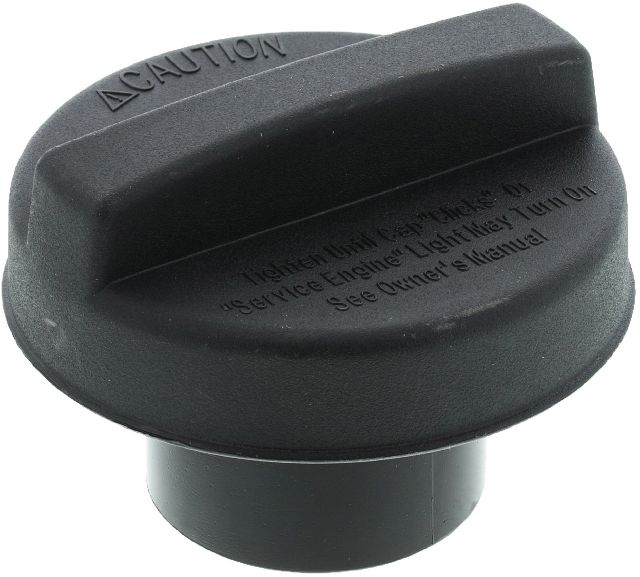
- Loose or Faulty Gas Cap 🔴 High Probability → Shop Fuel Tank Cap This is the most common cause for any EVAP code on any vehicle. The rubber seal on the cap can degrade over time, preventing a proper seal.
How to confirm: Ensure the gas cap is tightened until it clicks. Inspect the cap's seal for cracks, stiffness, or damage. If in doubt, it's an inexpensive part to replace.
Typical fix: Tighten or replace the gas cap.
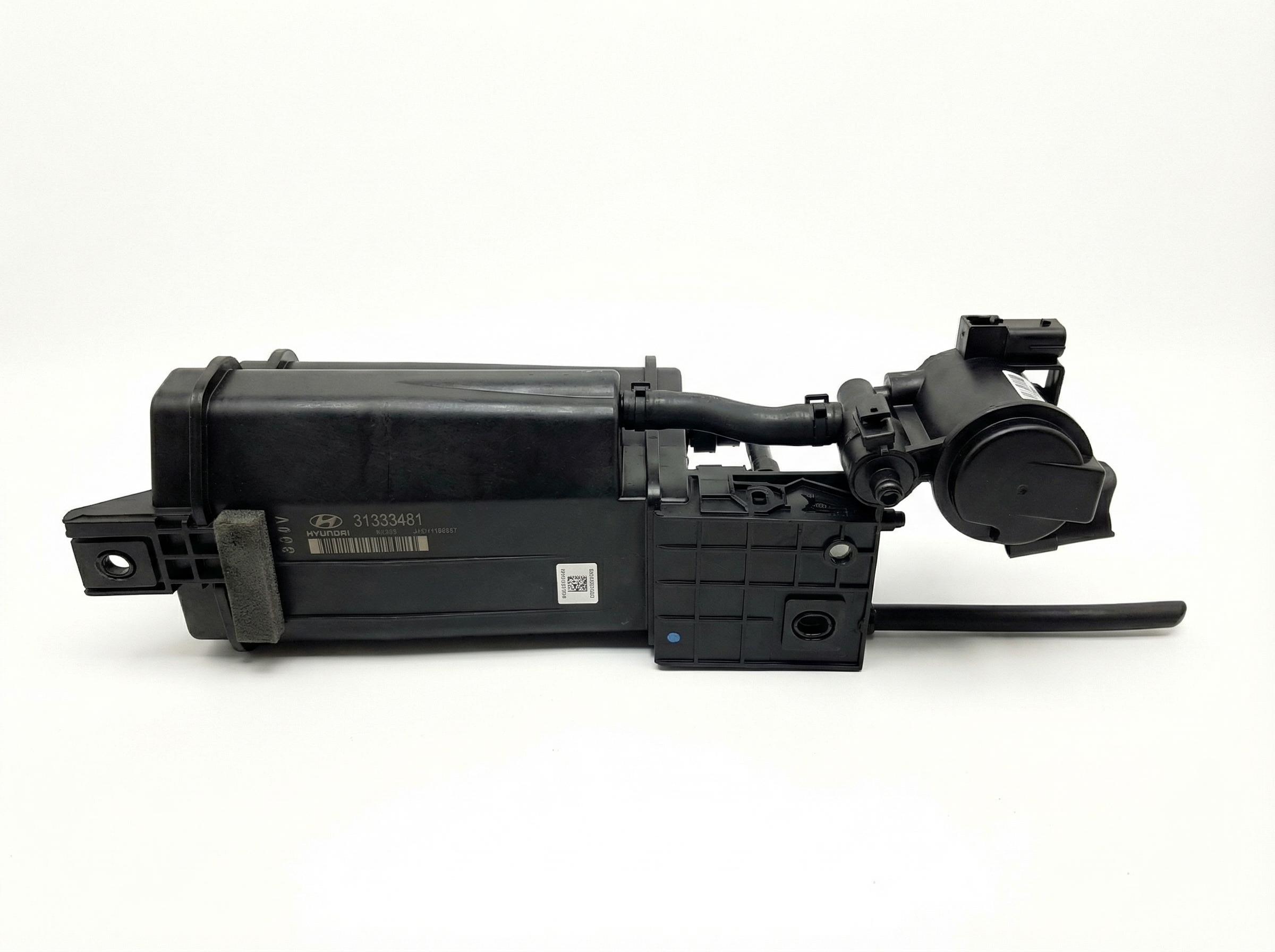
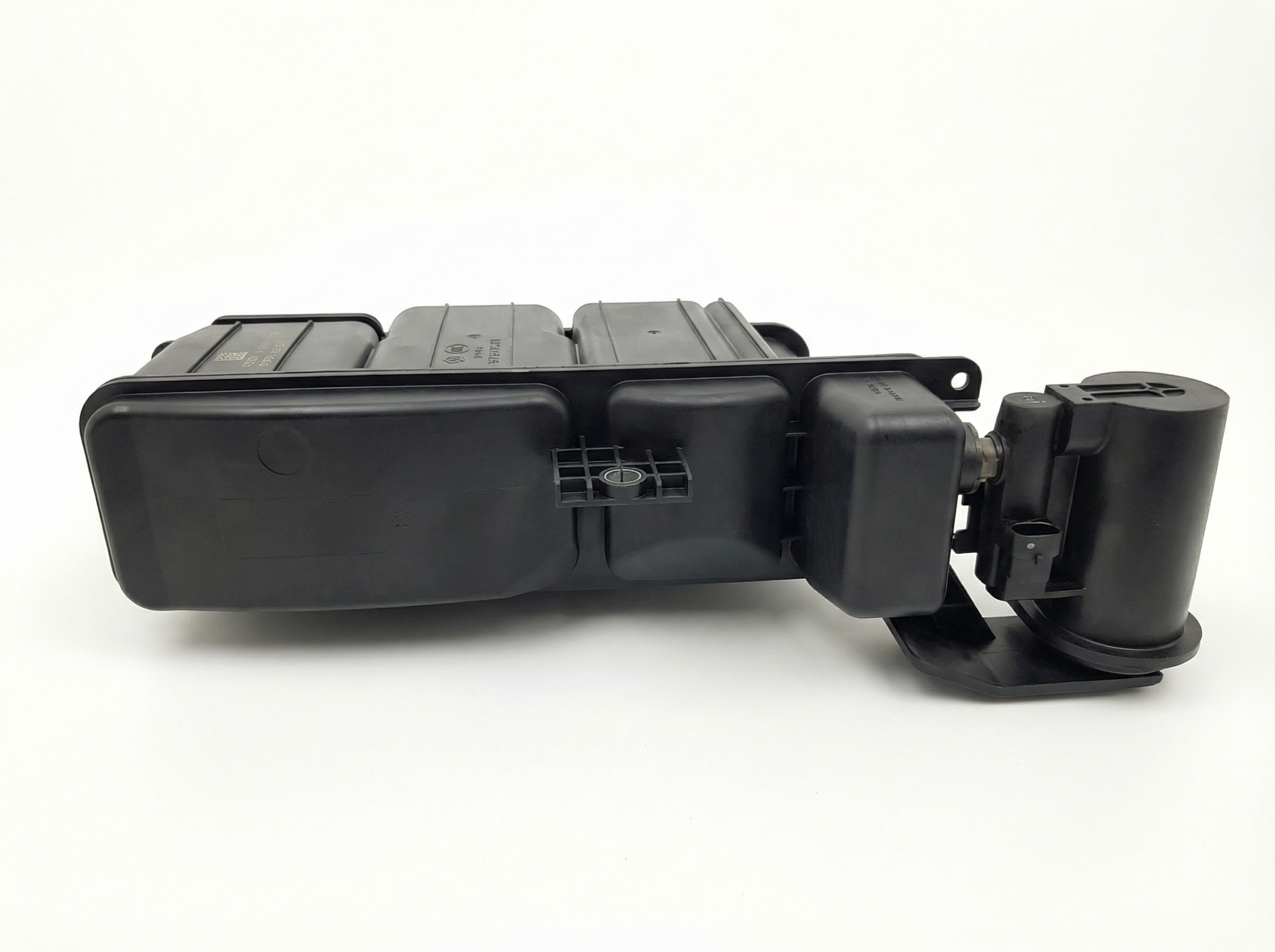
Est. part cost: $15-$40 - Failed Charcoal Canister 🟡 Medium Probability → Shop Vapor Canister There are documented cases of the canister breaking down internally on Hyundai vehicles, releasing charcoal pellets into the EVAP system. This can also be caused by habitually 'topping off' the fuel tank, which forces liquid fuel into the canister, destroying the charcoal media.
How to confirm: Remove the canister (located near the fuel tank) and check for physical cracks. Shake it to see if it rattles, which can indicate broken internal baffles. Disconnect a hose and check for any black charcoal pellets falling out.
Typical fix: Replace the entire charcoal canister assembly. If pellets have contaminated the system, the EVAP lines and other valves must be blown out with compressed air to prevent repeat failures.
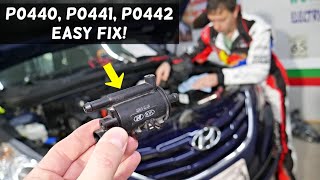
Est. part cost: $150-$300 - Failed Canister Purge Valve / Purge Control Solenoid 🟡 Medium Probability → Shop Vapor Canister Purge Solenoid This is a common failure item on many modern vehicles, including Hyundai. The valve can get stuck open or closed, causing a leak or a flow issue.
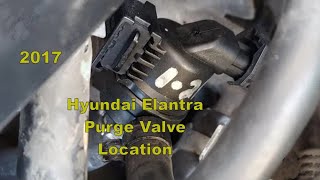
How to confirm: The purge valve is typically located in the engine bay. With the engine running, you can disconnect the vacuum hose and feel for suction when there should be none (it should be closed at idle). A more definitive test involves applying 12v power to see if the solenoid clicks and opens/closes.
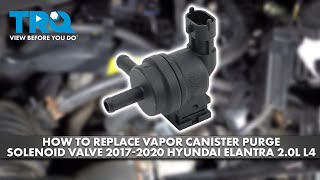
Typical fix: Replace the canister purge valve. This is often a straightforward repair. 🎬 See this walkthrough for replacing the purge solenoid valve.
Est. part cost: $50-$100 - Failed or Clogged Canister Close Valve (Vent Valve) ⚪ Low Probability → Shop Vapor Canister This valve, located on or near the charcoal canister, can fail on its own but is often a secondary failure caused by charcoal debris clogging it open or shut.
How to confirm: The valve can be tested with a scan tool that can command it to open and close. It can also be removed and tested by applying 12v power to see if it operates. Visually inspect the valve and its hoses for black charcoal pellets.
Typical fix: Replace the canister close valve. It is often sold as part of the charcoal canister assembly or can be purchased separately.
Est. part cost: $40-$80
Rare But Worth Checking
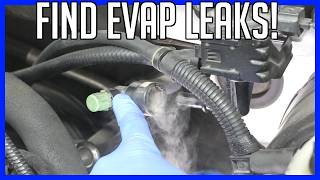
- Cracked or Disconnected EVAP Hoses: Over time, the rubber and plastic lines can become brittle and crack. This is best found using a smoke test, which forces smoke into the EVAP system to reveal hard-to-see leaks. 🎬 Watch: How to find EVAP leaks using a smoke machine.
- Faulty Fuel Tank Pressure Sensor: → Shop Fuel Tank The sensor can send incorrect readings to the computer, making it think there is a leak when there isn't one.
- Cracked Fuel Filler Neck: → Shop Fuel Filler Neck Rust or damage to the metal tube leading to the gas tank can cause a leak that will trigger a P0440 code. A visual inspection is often sufficient to spot this issue.
Diagnosis Steps
- Check the Gas Cap: Remove and reinstall the gas cap, ensuring it clicks several times. Inspect the seal for any cracks or damage. Clear the code and drive for a few days to see if it returns. This is the most common and cheapest fix.
- Visual Inspection: Visually inspect all accessible EVAP hoses in the engine bay and under the car near the fuel tank for obvious cracks, disconnections, or damage.
- Inspect the Canister Purge Valve: Locate the purge valve in the engine bay. With the engine off, disconnect the electrical connector and check for resistance across the two pins with a multimeter. With the engine running, check if vacuum is being pulled through the valve when it shouldn't be (it should be closed at idle on a cold start).
- Inspect the Charcoal Canister and Vent Valve: Raise the rear of the vehicle and locate the charcoal canister near the fuel tank. Check for any physical damage or cracks. Disconnect a hose to check for black charcoal pellets, which indicates an internal failure of the canister.
- Perform a Smoke Test: If no obvious issues are found, the most effective way to find a leak is with an automotive smoke machine. This tool fills the EVAP system with a light smoke under low pressure. Any leaks will be visible as smoke escapes from the cracked hose, seal, or component.
Parts You'll Likely Need
- Gas Cap
(OEM #31010-3L600)— This is the most frequent and simplest fix for any EVAP code.
Trusted brands: Hyundai OE, Gates, Stant
OEM price range: $25-$40
Aftermarket price range: $15-$25 - Canister Purge Valve (Purge Control Solenoid)
(OEM #28910-2E000)— A common failure point that can get stuck open or closed, causing a system malfunction. This part fits a wide range of Hyundai Elantra models from 2011-2020.
Trusted brands: Hyundai OE, Bosch, Dorman, Beck/Arnley, TRQ
OEM price range: $30-$50
Aftermarket price range: $25-$70 - Charcoal Canister Assembly
(OEM #31420-F2000)— Known to fail internally on this platform, causing widespread clogging and system failure. The assembly often includes a new canister close valve. Part number 31420-F2000 is specified for the 2017-2020 Elantra (non-turbo). Another possible OEM number is 31420-F2500.
Trusted brands: Hyundai OE
OEM price range: $200-$300
Aftermarket price range: $150-$220
Related Codes That Often Appear With This One
- P0455 — P0455 indicates a 'Gross Leak Detected'. If the fault in the system is large enough, such as a very loose gas cap or a disconnected hose, the computer may set both the general P0440 and the more specific P0455.
- P0441 — P0441 indicates 'Incorrect Purge Flow'. This often points directly to a malfunctioning canister purge valve, which can also trigger the general P0440 code.
- P0442 — P0442 indicates a 'Small Leak Detected'. A component that is beginning to fail might initially set a P0440 and then a P0442 as the leak becomes more consistent.
Platform-Specific Known Issues
- A notable issue on some Hyundai platforms is the internal failure of the charcoal canister, which spills activated charcoal pellets into the EVAP lines, clogging the canister close valve and other parts of the system. This can cause a P0440 code and make it difficult to refuel the car. This failure is sometimes induced by owners habitually overfilling the fuel tank past the first click, which floods the canister with liquid fuel it isn't designed to handle.
Mechanic-Grade Diagnostic Values
- Canister Purge Valve (Solenoid) Coil Resistance — expected: Approximately 29.1 Ω. Failure: Readings significantly higher or lower than the expected value, or an open circuit (infinite resistance), indicate a failed coil. Used valves have been observed with inconsistent readings from 12Ω to 47Ω, suggesting wear and unreliability.
Scan Tool Commands That Help
- Hyundai GDS (or capable professional scanner): EVAP System Active Test / Bidirectional Control — This function is crucial for isolating a failed component without manual testing. It allows the technician to command the Canister Purge Solenoid Valve (PCSV) and Canister Close Valve (CCV) to open or close independently. This helps verify if the valves are responding to electrical commands or are mechanically stuck, which is a common cause for P0440.
Wiring & Ground Locations
- Instrument Panel Fuse Box — Located on the driver's side of the instrument panel, behind a cover.. This panel contains fuses for various electronic modules. While a blown fuse is not a common cause for P0440, checking relevant fuses (e.g., for the ECU) is a basic step in diagnosing any electronic fault code.
- Engine Compartment Fuse Box — Located on the left side of the engine compartment.. This box contains relays and fuses for engine-related components, including potentially the EVAP system solenoids. A visual inspection for blown fuses or corroded relays is a quick check that can rule out simple electrical issues.
OEM Part Supersession History
31420-F2000→31420-F2500 or 31420-F3500— Part variation based on vehicle's manufacturing location.
Heads up: For the 2017-2020 Elantra, the charcoal canister part number depends on where the vehicle was built. 31420-F2500 is listed for 'Korea built' models, while 31420-F3500 is for 'US built' models. Using the wrong one may result in fitment issues.
Model Year Variations Within This Range
- 2017-2020: The 2019 model year was a significant facelift for the Elantra, but the primary 2.0L engine and associated EVAP system components like the purge valve (28910-2E000) and charcoal canister appear to remain consistent across the 2017-2020 range. However, different part numbers exist for the charcoal canister depending on whether the car was built in the US or Korea, a critical detail for ordering the correct replacement.
Diagnostic Flowchart
Other Known Issues on This Vehicle
Issues unrelated to this code that are worth knowing about as an owner of this generation:
- Premature Engine Failure (2.0L Nu MPI) 🔴 High — A significant number of 2019-2020 models were recalled for improperly heat-treated piston oil rings, leading to engine damage, oil consumption, and potential failure. Issues like piston slap and oil consumption are reported across the generation. (Ref: NHTSA Recall 21V301000)
- Peeling White Paint 🟠 Medium — Widespread complaints of white paint, and sometimes other colors, bubbling and peeling off in large sheets, particularly on the roof and hood. This is a well-documented issue across many Hyundai models of this era. (Ref: Hyundai offered a warranty extension (Program Z05) for some models/years.)
- Excessive Engine Vibration at Idle 🟡 Low — Owners report noticeable shaking when the car is in park or stopped at a light, often appearing under 40,000 miles. The cause is frequently a prematurely worn passenger-side engine mount. (Ref: No recall, but it is a known issue addressed by TSBs for other models and recognized by mechanics.)
- Brake Booster Failure 🔴 High — A recall was issued for some 2017 models due to a manufacturing defect that could cause a loss of power brake assist, increasing stopping distance. (Ref: NHTSA Recall 17V063000)
Used vs. New Parts: Buying Guide for This Vehicle
When a used part is the smart pick: For purely mechanical or structural parts like EVAP hoses, brackets, or the fuel filler neck, a used part from a junkyard can be a cost-effective option, provided it is in good physical condition with no cracks or rust.
Donor-vehicle mileage cap: roughly under 80000 miles for the part to have meaningful remaining life.
What to inspect on the donor part:
- For hoses, ensure the rubber is still pliable and not brittle or cracked.
- For a charcoal canister, visually inspect for any cracks in the plastic housing and shake it to ensure nothing rattles inside, which would indicate broken charcoal media.
- For electronic components like valves, check for corrosion on the electrical pins.
OEM-only on this vehicle (don't cheap out):
- Charcoal Canister: Due to the known issue of internal failure and pellet contamination, using a new OEM part is highly recommended to ensure longevity and avoid repeat failures from a used part that may be near the end of its life.
- Gas Cap: This is an inexpensive but critical sealing component. An aftermarket cap may not seal to the exact factory specification, making a new OEM cap a safer bet to resolve the code.
Aftermarket brands forum-validated for this vehicle:
- For the Canister Purge Valve, brands like Bosch, Dorman, and Standard Motor Products (SMP) are generally considered reliable alternatives to OEM.
Brands owners have reported issues with on this vehicle:
- Avoid unbranded, extremely low-cost electronic parts (like purge valves) from online marketplaces, as their coil resistance and internal seals may not meet OEM specifications, leading to premature failure or incorrect operation.
Real Owner Stories
Aggregated from forums and TSBs cited above. Mileages and costs reflect what owners reported in those sources.
2020 Hyundai Elantra
Symptoms: Whenever I fill the tank at a normal or higher flow rate, the pump clicks off prematurely—sometimes when the tank's definitely not full. The only workaround so far is to trickle-fill at a really slow speed.
What fixed it: A suggested fix involved checking for a canister vent valve staying closed, a crimped hose, or a filter clogged with debris/spiders.
Source hint: owner_reports: Reddit r/Hyundai
2017 Elantra 2.0L — ~90000 miles
Symptoms: Multiple engine issues including ignition coil failure and a stretched timing chain before reaching 90,000 miles.
What fixed it: The report highlights general reliability concerns and engine component failures rather than a specific EVAP fix.
Source hint: forum_citations: Reddit r/Hyundai - Thread 'What are all the different problems you've had with your 6th gen Hyundai Elantra's? (2017-2020)'
Related OBD-II Codes
Frequently Asked Questions
Why does the gas pump nozzle keep clicking off when I try to fill my 2017-2020 Elantra?
Is there a recall for the engine issues on my 2019-2020 Elantra?
My 2017 Elantra loses power braking assist; is this related to P0440?
Can 'topping off' my gas tank cause the P0440 code on this vehicle?
Where is the purge valve located on the 2017-2020 Elantra for inspection?
Is the peeling white paint on my Elantra covered by Hyundai?
Helpful Videos
Used OEM Parts in Stock

New Aftermarket Parts Available


The information in this article is provided for general reference and educational purposes only. Vehicle specifications, procedures, and part compatibility can vary by production date, trim level, and region. Always consult your vehicle's factory service manual and verify part numbers before purchasing or performing repairs. Safety-critical components such as airbags, seat belts, and braking systems should be installed by a qualified professional.
- Hyundai Elantra:
- 🧭 Diagnostic Flowchart
- 🎬 Helpful Videos
- 🛍️ Shop This Part
- What's Unique About the 2017-2020 Hyundai Elantra
- Symptoms You May Notice
- Most Likely Causes
- Rare But Worth Checking
- Diagnosis Steps
- Parts You'll Likely Need
- Related Codes That Often Appear With This One
- Platform-Specific Known Issues
- Mechanic-Grade Diagnostic Values
- Scan Tool Commands That Help
- Wiring & Ground Locations
- OEM Part Supersession History
- Model Year Variations Within This Range
- Other Known Issues on This Vehicle
- Used vs. New Parts: Buying Guide for This Vehicle
- Real Owner Stories
- 2020 Hyundai Elantra
- 2017 Elantra 2.0L — ~90000 miles
- Related OBD-II Codes
- Frequently Asked Questions
- 🎟️ Get 5% Off