

P0440 on 2019-2020 Jeep Wrangler: EVAP System Malfunction Causes and Fixes
P0440 on a 2019-2020 Jeep Wrangler indicates a general fault in the evaporative emissions (EVAP) system. The most common cause is a loose or faulty gas cap. If that's not the issue, suspect a bad purge valve, a cracked EVAP hose, or a failed EVAP System Integrity Module (ESIM) located on the charcoal canister.
- P0440 is a general EVAP system fault; it doesn't point to a specific leak size.
- Always start with the simplest fix: check that the gas cap is tight and its seal is intact.
- The next most likely culprit is the EVAP purge valve located in the engine bay.
- Due to the Wrangler's design, inspect underbody hoses and the charcoal canister for physical damage.
- A smoke test is the most reliable way to find a leak if visual inspection fails.
What's Unique About the 2019-2020 Jeep WRANGLER
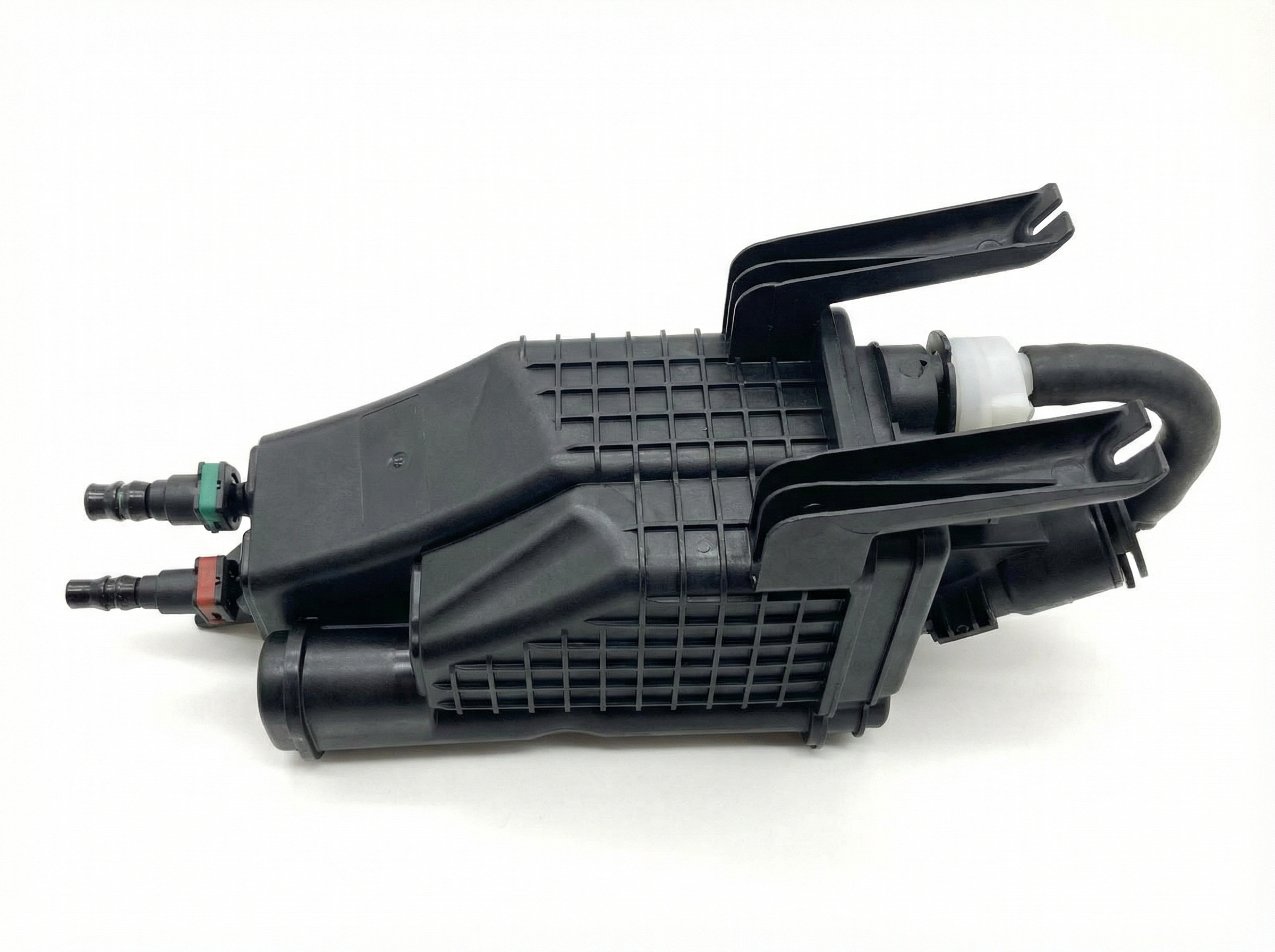
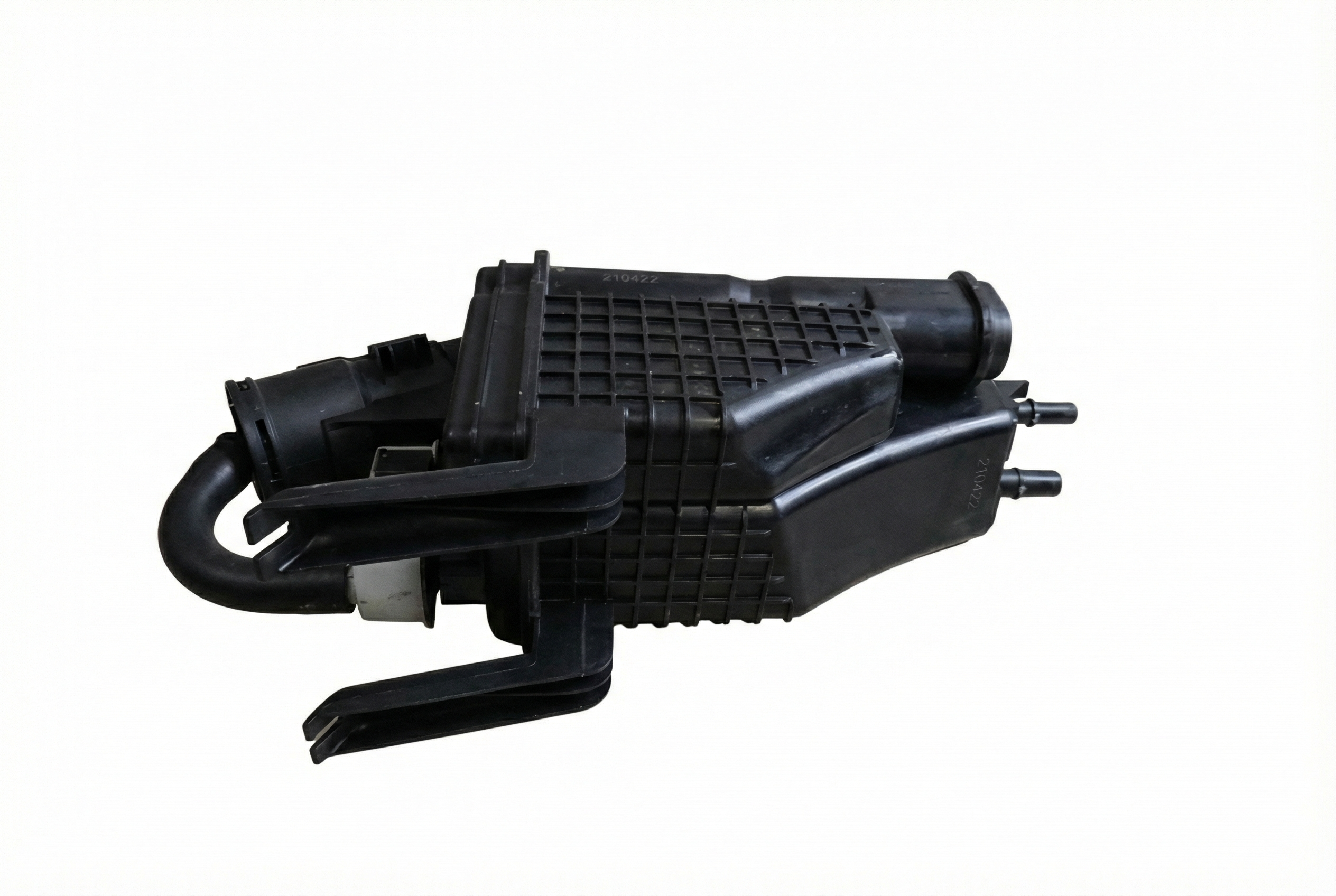
For the Jeep Wrangler JL (2018-present), the P0440 code often points to the same common culprits as other vehicles, like the gas cap or purge valve. However, due to the Wrangler's intended off-road use, components located underneath the vehicle, such as the charcoal canister and its associated hoses, are more susceptible to damage from trail debris or flexing. A unique point of failure can also be the fuel filler neck area, which on some models can be prone to cracking or damage, leading to leaks that are hard to spot. The charcoal canister and its attached EVAP System Integrity Module (ESIM) are located inside the passenger-side rear wheel well, requiring removal of the fender liner for access.
Diagnostic Flowchart
Tap your situation to follow the diagnostic path that matches what you're seeing on this vehicle.
Symptoms You May Notice
- Check Engine Light is on
- A faint smell of fuel, particularly around the rear of the vehicle near the gas tank or under the hood
- A 'gascap' message may appear on the dashboard display, even if the cap is tight
- Remote start feature may be disabled
- Replacing the charcoal canister when only a hose or the ESIM switch has failed.
- Replacing the purge valve without first checking the gas cap.
- Assuming a 'gascap' message on the dash means the gas cap is the only possible problem; it can also be triggered by a faulty ESIM.
Most Likely Causes
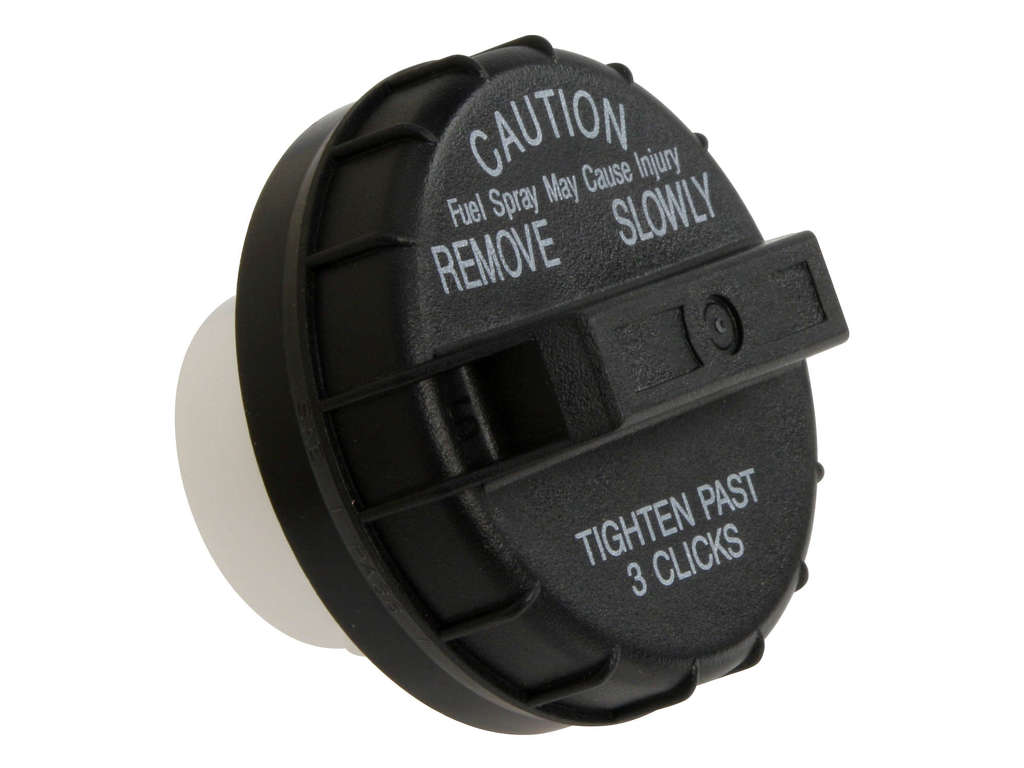
- Loose or Faulty Gas Cap 🔴 High Probability → Shop Fuel Tank Cap This is the most common cause for any EVAP code on any vehicle. The cap's seal can wear out or it may not have been tightened correctly after refueling.
How to confirm: Ensure the gas cap is tightened until it clicks at least once. Inspect the rubber O-ring on the cap for cracks, dirt, or signs of wear. A worn or incorrect cap will fail to seal properly.
Typical fix: Tighten the cap. If the seal is damaged or the cap is old, replace it with a new OEM Mopar cap to ensure a perfect fit.
Est. part cost: $15-$35 - Faulty EVAP Purge Valve/Solenoid 🟡 Medium Probability → Shop Vapor Canister The purge valve controls the flow of stored vapors to the engine and can get stuck open or closed over time, causing a system malfunction. It's a frequently replaced part in the EVAP system.
How to confirm: The purge valve is located in the engine bay. With the engine running, you can sometimes hear it clicking. A scan tool can command the valve to open and close to test its function. You can also disconnect the vacuum hose to feel for suction when it should be closed.
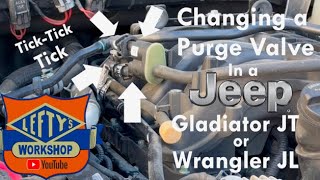
Typical fix: Replacement of the purge valve is straightforward, typically involving disconnecting two hoses and an electrical connector.
Est. part cost: $30-$70 - Cracked or Disconnected EVAP Hoses 🟡 Medium Probability Rubber and plastic hoses can become brittle and crack over time, especially the hard plastic lines in the engine bay. On a Wrangler, hoses routed underneath the vehicle are also vulnerable to damage from off-roading or simple degradation.
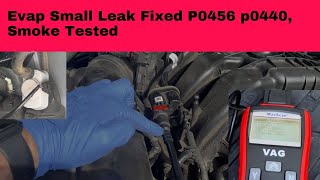
How to confirm: Visually inspect all accessible EVAP lines running from the gas tank, to the charcoal canister, and up to the purge valve in the engine bay. Pay close attention to connections and areas where the lines bend. The most definitive way to find a leak is with a smoke test, which forces smoke through the system to reveal the source of the leak. 🎬 See how a smoke test identifies small EVAP leaks.
Typical fix: Replace the damaged section of hose and secure it with clamps. Sometimes a small crack can be repaired, but replacement is recommended for long-term reliability.
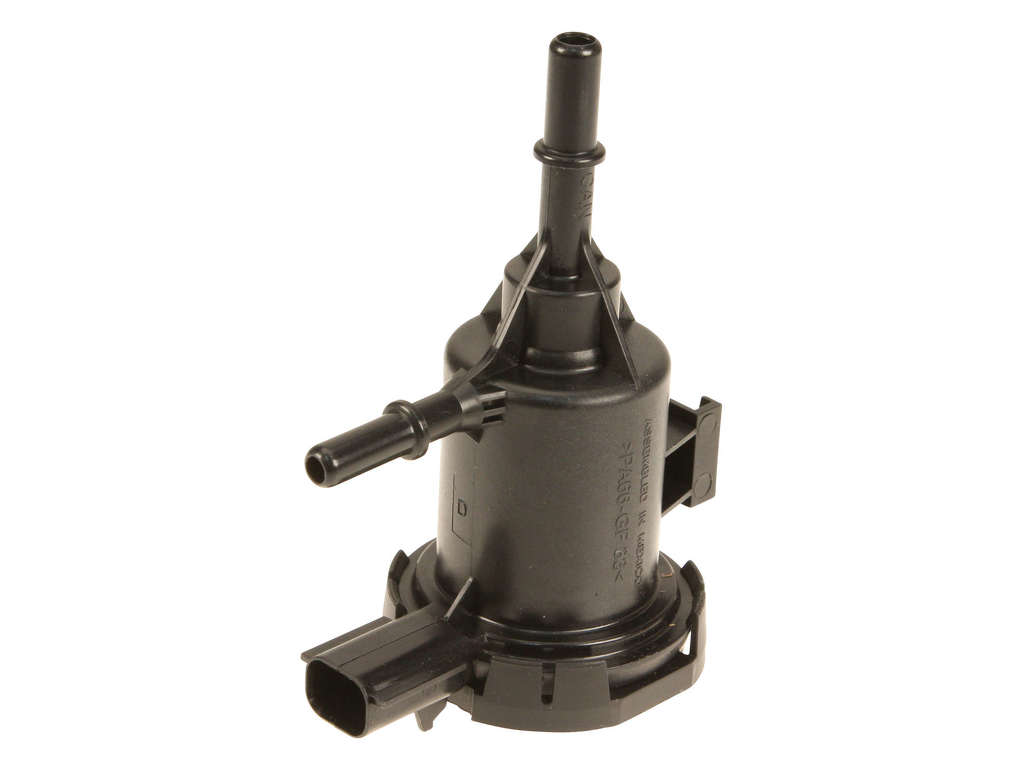
Est. part cost: $10-$50 - Faulty EVAP System Integrity Module (ESIM) 🟡 Medium Probability → Shop Vapor Canister Also known as a leak detection pump switch, this component is mounted on or near the charcoal canister and is responsible for testing the system's integrity. It's a very common failure point on many Chrysler/Jeep/Dodge models, including Wranglers.
How to confirm: Diagnosis typically requires a bi-directional scan tool to run the ESIM force monitor test and check if the switch state changes from 'Open' to 'Closed' correctly. A failure during this test, where the switch remains open, strongly points to a bad ESIM.
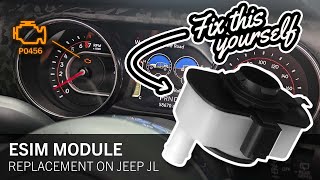
Typical fix: The ESIM is located on the charcoal canister inside the passenger rear wheel well, requiring removal of the fender liner. It is removed by twisting it counter-clockwise. Always replace the rubber gasket at the same time. 🎬 Watch: Step-by-step guide to replacing the ESIM module.
Est. part cost: $45-$75
Rare But Worth Checking
- Cracked Charcoal Canister: → Shop Vapor Canister The canister itself can crack, especially from an impact during off-roading or from over-filling the fuel tank repeatedly. It is located inside the passenger rear wheel well on the JL Wrangler.
- Faulty Fuel Tank Pressure Sensor: → Shop Fuel Tank This sensor monitors pressure in the EVAP system. If it provides incorrect readings to the computer, it can falsely trigger a P0440 code.
- Cracked Fuel Filler Neck: → Shop Fuel Filler Neck The neck where you insert the fuel nozzle can develop cracks, preventing the gas cap from sealing the system. This has been a reported issue on Wranglers, leading to persistent EVAP codes.
Diagnosis Steps
- Read the code with an OBD-II scanner.
- Inspect the gas cap. Ensure it is tight and the seal is not cracked or worn. If in doubt, replace it with an OEM Mopar cap, clear the code, and drive for a few days.
- Perform a thorough visual inspection of all EVAP hoses and connections between the fuel tank, charcoal canister (inside the passenger rear wheel well), and the purge valve (in the engine bay). Look for any obvious cracks, damage, or disconnections, especially brittle plastic lines.
- Inspect the EVAP purge valve in the engine bay. Listen for a clicking sound while the engine is running. Use a scan tool to command it open and closed to verify function.
- If no obvious issues are found, the most effective next step is to have a smoke test performed. This test fills the EVAP system with a harmless smoke, making even the smallest leaks visible. This is the best way to find cracked hoses or a leaking filler neck.
- If the smoke test reveals no leaks, the focus should shift to the ESIM. Use a bi-directional scan tool to run the 'ESIM Force Monitor' or 'Large Leak Test'. If the test fails and the 'ESIM Switch' status reads 'Open', the ESIM has likely failed and needs replacement.
- If all else fails, the issue could be a faulty Fuel Tank Pressure Sensor, a wiring issue, or even a low vehicle voltage problem from failing batteries tricking the sensors.
Parts You'll Likely Need
- Gas Cap
(OEM #52124512AA)— This is the most frequent and simplest fix. The seal wears out over time, preventing the system from holding pressure.
Trusted brands: Mopar, Stant
OEM price range: $20-$35
Aftermarket price range: $15-$25 - EVAP Purge Valve / Solenoid
(OEM #4891735AD (for 2.0L Engine), 68516862AD (for 3.6L Engine))— A common failure point that gets stuck open or closed, preventing the EVAP system from functioning correctly. Part number varies by engine.
Trusted brands: Mopar, Dorman, Bosch
OEM price range: $40-$100
Aftermarket price range: $30-$60 - EVAP System Integrity Module (ESIM)
(OEM #4861962AD)— This leak detection switch is a very common failure item on Jeeps that can trigger a general EVAP fault code. It is often the culprit when a smoke test shows no leaks.
Trusted brands: Mopar, Dorman
OEM price range: $60-$80
Aftermarket price range: $45-$65
Related Codes That Often Appear With This One
- P0441 — Incorrect Purge Flow. This often appears with P0440 and can point more directly to a faulty purge valve or a blockage in the system. The NHTSA TSB S2008000112 lists these codes together.
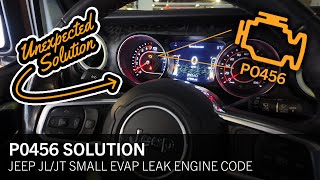
- P0456 — EVAP System Small Leak. If the system has a very small leak, it may set both the general P0440 code and the specific small leak code. This is a very common companion code.
- P0457 — EVAP System Leak Detected (Fuel Cap Loose/Off). This code specifically points to the gas cap, and often appears with P0440 if the cap is the root cause.
Technical Service Bulletins (TSBs) & Recalls
- S2008000112: MIL Lamp On Setting DTC’s P0440, P0441, P0456, P0457
Platform-Specific Known Issues
- The provided Technical Service Bulletin (TSB) #S2008000112 for the 2019 Wrangler indicates that the check engine light can come on and set P0440 along with other EVAP codes like P0441, P0456, and P0457. This suggests a potential software update may be required to fix the diagnostic logic, or a common component failure that affects the entire system test.
- Owners on forums frequently report chasing this code by replacing multiple parts. A common story involves replacing the gas cap, then the purge valve, only to find the final fix was the ESIM on the charcoal canister.
Mechanic-Grade Diagnostic Values
- EVAP Purge Valve resistance — expected: 30 to 38 ohms (when engine is cool). Failure: A reading significantly outside this range, or an open circuit (infinite resistance), indicates a failed solenoid coil.
- EVAP Canister Vent Solenoid resistance — expected: 48 to 65 ohms. Failure: A reading outside this range suggests the vent solenoid is faulty.
- Purge Valve control circuit wiring resistance — expected: Less than 3.0 ohms. Failure: Resistance higher than 3.0 ohms between the solenoid's connector pin and the corresponding PCM pin indicates excessive resistance or an open in the wiring harness.
- Fuel Tank Pressure (FTP) Sensor voltage (Key On, Engine Off) — expected: Approximately 1.3V to 1.7V (Ideal is ~1.5V).. Failure: A reading stuck high (near 5V) or low (near 0V) suggests a faulty sensor or wiring issue.
- Voltage supply to Purge and Vent Solenoids — expected: 12 volts with the key on. Failure: No voltage indicates a problem with the power supply circuit, fuse, or relay.
Hidden / Shadow Codes Worth Checking
- Nuisance P0456 (Small Leak) after battery replacement: On 2018-2019 models, a known software glitch in the Powertrain Control Module (PCM) can cause a false P0456 code to set after the battery has been disconnected or replaced. This is not a physical leak. (see via A standard OBD-II scanner will show P0456. The key context is its appearance shortly after a power loss event. The fix is a PCM software update (reference PCM Update #68440959) performed by a dealer.)
Scan Tool Commands That Help
- wiTECH (or advanced aftermarket): Small Leak Verification Test (SLVT) — This is the official FCA diagnostic step to confirm if a small leak (like P0456) is actually present before replacing parts. It must be run to validate the repair.
- wiTECH (or advanced aftermarket): EVAP System Test / Bay Test — This function forces the PCM to run the entire EVAP monitor sequence while the vehicle is in the service bay, allowing a technician to check for system integrity without having to perform a full drive cycle.
- wiTECH (or advanced aftermarket): Purge Valve Actuation — This command manually opens and closes the purge valve solenoid, allowing a technician to listen for the click of actuation and check if it is sealing properly or stuck.
Wiring & Ground Locations
- G908A (example) — Driver's side of the engine bay, on the inner fender, often near the brake booster.. The EVAP purge solenoid is located in the engine bay and relies on a clean, solid ground to function. A corroded or loose ground point in this area can cause intermittent electrical issues for the purge valve, leading to a P0440 or related circuit code like P0443.
- SOL-EVAP/PURGE Connector — In the engine bay, connected directly to the purge valve solenoid on top of the engine.. This is the primary connection point for testing voltage and resistance of the purge valve circuit. Corrosion or damage here is a common point of failure.
- SW-EVAP SYSTEM MONITOR Connector — Inside the passenger rear wheel well, connected to the ESIM on the charcoal canister.. This connector provides power and signal for the ESIM. It is located in an area exposed to road spray and debris, making it susceptible to corrosion or damage that can cause a P0440 code.
Real Owner Repair Stories
- YouTube channel 'EvolvedJeepin' (2019 Jeep Wrangler JL Rubicon) — Persistent Check Engine Light with code P0456 (small leak) for over 6 months.
❌ Tried (didn't work) Replacing the ESIM module, Replacing the EVAP purge valve, Replacing the gas cap
✅ What actually fixed it Initially, the code was resolved for a period of time by replacing both the main (Group 94R) and auxiliary (AUX14) batteries. The theory was that low voltage from the aging batteries was causing a sensor to malfunction and give a false positive reading. However, the code later returned, and a smoke test finally revealed a hairline crack on the charcoal canister itself, which was then sealed with JB Weld to ultimately fix the leak. - YouTube video on a 2007 Jeep Wrangler (JK) (2007 Jeep Wrangler (JK) 3.8L) — P0440 and P0456 codes after multiple parts were replaced by a previous shop, including the canister and purge solenoid.
❌ Tried (didn't work) Replacing gas cap, Replacing charcoal canister, Replacing purge solenoid
✅ What actually fixed it The ESIM switch on the new (aftermarket) charcoal canister was installed in the wrong orientation. The technician found that the electrical connector needed to be at the 3 o'clock position. After rotating the ESIM to the correct position, the system was able to seal properly.
"I Checked Everything" — The Actual Cause
- In one documented case for a 2019 JL, after replacing the purge valve, ESIM, and gas cap, the P0456 code persisted. A smoke test would have likely come back clean at this stage. The actual, albeit temporary, fix was replacing both the main and auxiliary batteries. The low voltage from the old batteries was suspected of causing a sensor in the EVAP system to report a false leak.
- A faulty Fuel Tank Pressure (FTP) sensor can send incorrect data to the computer, making the PCM believe there is a leak when the system is perfectly sealed. A smoke test will show no leaks, but the sensor's incorrect voltage output will continue to trigger the code.
When the Usual Fixes Don't Work
- While the most common fixes for P0440 are the gas cap, purge valve, and ESIM, there are documented cases where none of these resolved the issue. In one extensive troubleshooting saga on a 2019 Wrangler, the code was only temporarily fixed by replacing the vehicle's main and auxiliary batteries, pointing to an underlying electrical issue causing false sensor readings. The code ultimately returned and was traced via smoke machine to a tiny crack in the body of the charcoal canister itself, a location often missed during diagnosis.
OEM Part Supersession History
4861962AA, 4861962AB, 4861962AC→04861962AD— Component revision and improvement by the manufacturer.
Heads up: The latest part number, 04861962AD, is the correct service replacement for the 2019-2020 Wrangler and is backward compatible with the older parts.
Model Year Variations Within This Range
- 2019: A software issue in the PCM on 2018-2019 models can cause a false P0456 (small leak) code after a battery disconnect. This is not a physical leak and requires a dealer software update to permanently fix. While the primary code is P0440, this is a critical diagnostic consideration for companion codes.
Helpful Videos
Used OEM Parts in Stock
New Aftermarket Parts Available


The information in this article is provided for general reference and educational purposes only. Vehicle specifications, procedures, and part compatibility can vary by production date, trim level, and region. Always consult your vehicle's factory service manual and verify part numbers before purchasing or performing repairs. Safety-critical components such as airbags, seat belts, and braking systems should be installed by a qualified professional.
- Jeep WRANGLER:
- 🧭 Diagnostic Flowchart
- 🎬 Helpful Videos
- 🛍️ Shop This Part
- What's Unique About the 2019-2020 Jeep WRANGLER
- Symptoms You May Notice
- Most Likely Causes
- Rare But Worth Checking
- Diagnosis Steps
- Parts You'll Likely Need
- Related Codes That Often Appear With This One
- Technical Service Bulletins (TSBs) & Recalls
- Platform-Specific Known Issues
- Mechanic-Grade Diagnostic Values
- Hidden / Shadow Codes Worth Checking
- Scan Tool Commands That Help
- Wiring & Ground Locations
- Real Owner Repair Stories
- "I Checked Everything" — The Actual Cause
- When the Usual Fixes Don't Work
- OEM Part Supersession History
- Model Year Variations Within This Range
- 🎟️ Get 5% Off