

P0440 on 2014-2018 Kia Forte: EVAP System Malfunction Causes and Fixes
For a 2014-2018 Kia Forte, code P0440 is most often caused by a loose gas cap or a faulty canister purge valve. First, tighten or replace the gas cap ($15-$40). If the code returns, the purge valve (OEM P/N 28910-2E000) is the next likely failure and costs around $25-$75 for the part. This is a very common failure on Kia/Hyundai vehicles of this era.
- Always start with the simplest fix: check that your gas cap is tight and its seal is not cracked. This resolves the issue a significant amount of the time.
- The most likely component to have failed on your 2014-2018 Forte is the canister purge valve in the engine bay. It's an inexpensive and easy part to replace.
- Do not immediately assume you need an expensive charcoal canister. The valves that control the system are far more likely to fail and are much cheaper to replace.
- If a new gas cap and purge valve do not fix the code, the next step should be a smoke test to find the exact location of the leak before buying more parts.
What's Unique About the 2014-2018 Kia Forte
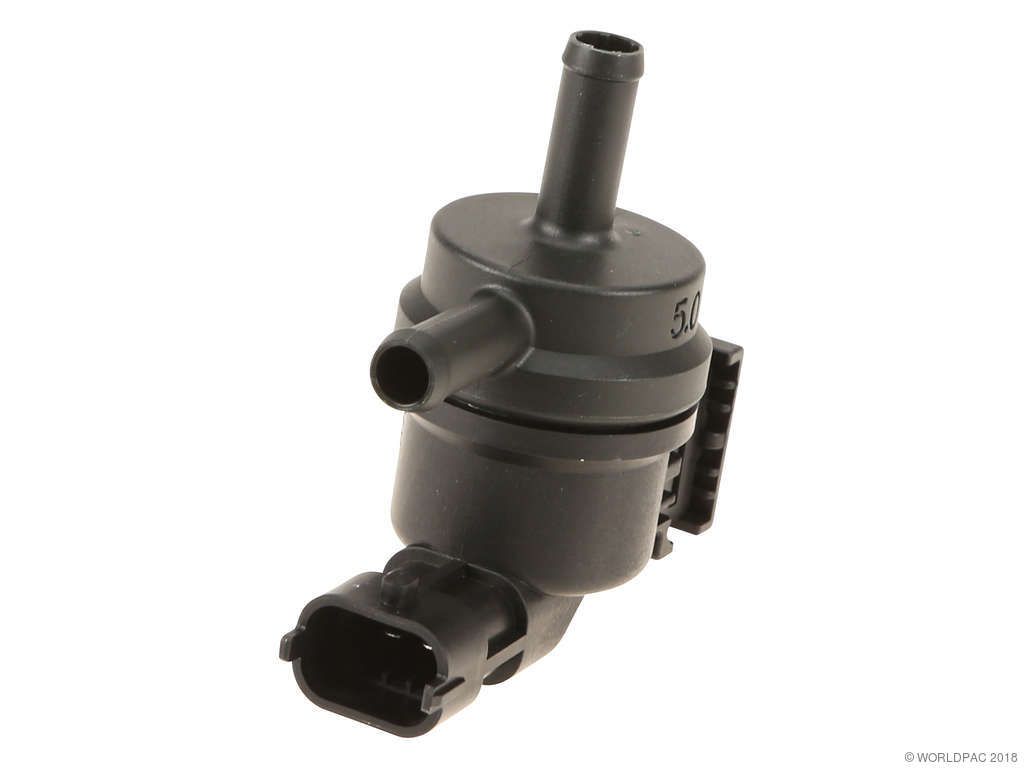
On this generation of Kia Forte and related Hyundai/Kia platforms, while a loose gas cap is always the first thing to check, the canister purge valve (often called the purge solenoid or PCSV) located in the engine bay is a very frequent point of failure that can trigger a general P0440 code. Many owners and mechanics report that replacing this specific valve resolves not only the more specific P0441 (Incorrect Purge Flow) code but also the general P0440 malfunction code, as it often gets stuck open or closed.
Symptoms You May Notice
- Check Engine Light is on
- A faint smell of fuel, especially around the rear of the car or after refueling.
- In some related cases (like a stuck-open purge valve), difficulty starting immediately after refueling or a slightly rough idle.
- Difficulty filling the fuel tank (gas pump nozzle clicks off repeatedly) if the canister or vent valve is clogged.
- Replacing the expensive charcoal canister assembly when only the much cheaper canister close valve or purge valve has failed.
- Replacing other EVAP components before checking for a loose or faulty gas cap, which is the most common and simplest fix.
Most Likely Causes
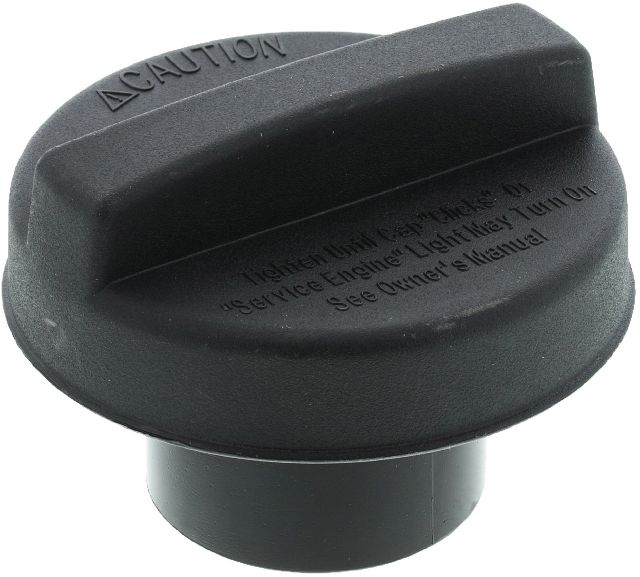
- Loose or Faulty Gas Cap 🔴 High Probability → Shop Fuel Tank Cap This is the most common cause for an EVAP code on any vehicle due to user error (not tightening) or the seal wearing out over time. The rubber O-ring can crack and lose its sealing ability.
How to confirm: Ensure the gas cap clicks at least once when tightened. Inspect the rubber O-ring seal on the cap for cracks, stiffness, or damage. Check the fuel filler neck for rust or debris that could prevent a good seal.
Typical fix: Tighten the cap until it clicks. If the seal is damaged or the code returns, replace the gas cap with a new OEM or high-quality aftermarket part. It is often recommended to use an OEM cap to ensure a perfect seal.
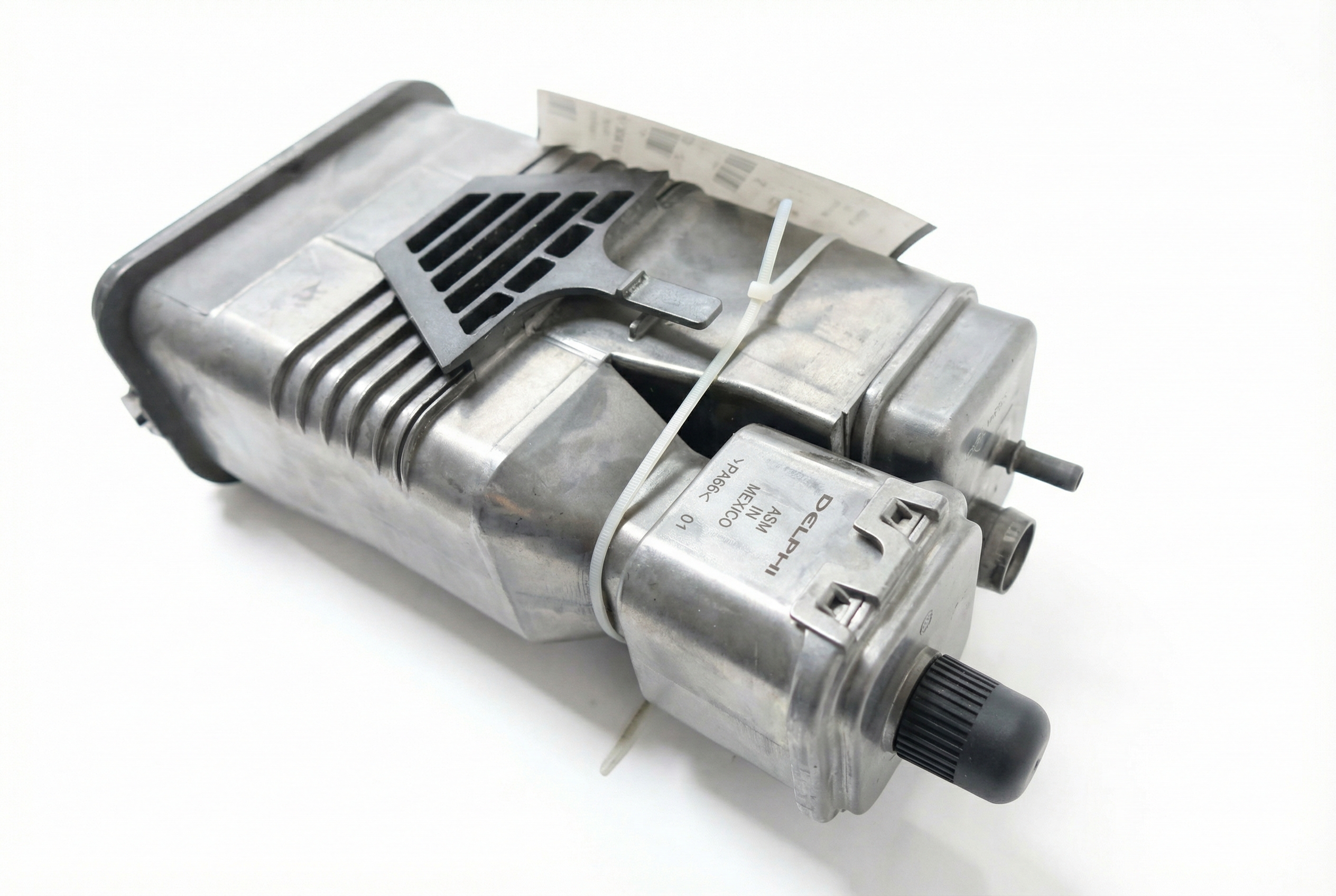
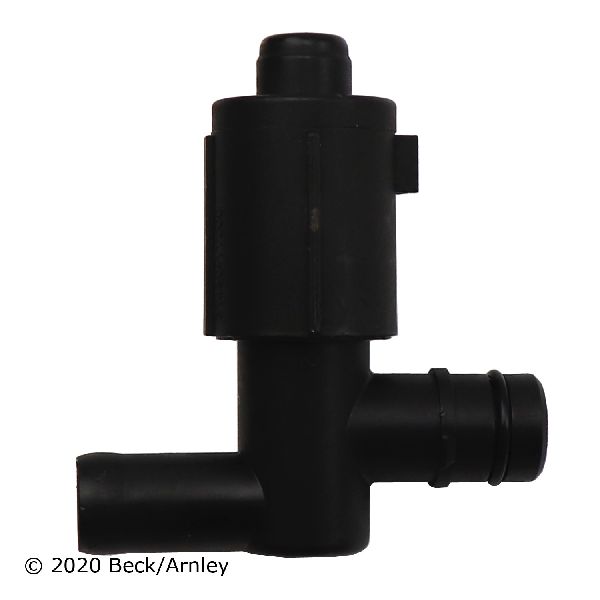
Est. part cost: $15-$40 - Faulty Canister Purge Valve (PCSV) 🟡 Medium Probability → Shop Vapor Canister This is a well-documented high-failure item on many Kia and Hyundai vehicles of this era, including the Forte. The valve can get stuck open or closed, leading to various EVAP codes.
How to confirm: The valve is located in the engine bay, on or near the intake manifold, with two hoses and an electrical connector. Disconnect the electrical connector and hoses. Try to blow through it. If air passes through freely with the vehicle off, the valve is stuck open and is bad. A scan tool can also be used to command the valve open and closed while checking for flow.
Typical fix: Replace the canister purge valve. This is typically a simple repair involving disconnecting two hoses and an electrical connector, often taking less than 30 minutes.
Est. part cost: $25-$75 - Cracked or Disconnected EVAP Hoses ⚪ Low Probability Rubber and plastic hoses in the engine bay and under the car become brittle over time due to heat cycles and can develop small cracks, especially at connection points.
How to confirm: Visually inspect all accessible EVAP lines running from the purge valve in the engine bay and around the charcoal canister near the fuel tank. A professional smoke test is the most effective way to find a leak that isn't visually obvious.
Typical fix: Replace the cracked or damaged section of hose. Small cracks can sometimes be temporarily sealed, but replacement is the correct long-term fix.
Est. part cost: $10-$50 - Faulty Canister Close Valve (CCV) / Vent Valve ⚪ Low Probability → Shop Vapor Canister This valve is located under the car near the charcoal canister and is exposed to road debris and moisture, which can cause it to fail, get stuck, or for its wiring to corrode.
How to confirm: A scan tool can be used to command the valve to close. A smoke test will then reveal if the valve is failing to seal the system. It can also be tested with a multimeter for proper electrical function. Sometimes the valve gets stuck open due to charcoal pellets from a deteriorating canister.
Typical fix: Replace the canister close valve. It is often mounted on the charcoal canister itself and may be sold as part of the canister assembly.
Est. part cost: $40-$80
Rare But Worth Checking
- Cracked Charcoal Canister: → Shop Vapor Canister The canister itself can develop a crack from road debris or age, creating a leak. This is usually found during a smoke test when no other leaks are apparent. Overfilling the gas tank can also saturate the charcoal and ruin the canister.
- Faulty Fuel Tank Pressure Sensor: → Shop Fuel Tank The sensor can fail and send incorrect data to the computer, making it believe there is a leak when the system is perfectly sealed. This is often diagnosed after a smoke test reveals no leaks and all valves are confirmed to be working.
Diagnosis Steps
- Check the gas cap. Remove and retighten it, ensuring it clicks. Clear the code and drive for a few days. If the light returns, inspect the cap's seal for damage and consider replacing it, preferably with an OEM part.
- Visually inspect the engine bay. Look for any obvious cracks or disconnected rubber hoses around the canister purge valve (PCSV), which is typically mounted on the intake manifold.
- Test the Canister Purge Valve (PCSV). With the engine off, disconnect the hoses from the valve. If you can blow air through it, it is stuck open and needs to be replaced. This is a very common failure.
- Perform a visual inspection under the vehicle. Check the charcoal canister (located near the fuel tank, usually above the rear axle) and its associated hoses for any visible cracks or damage.
- If the simple checks do not reveal the issue, the most effective next step is a professional smoke test. A machine fills the EVAP system with a harmless, visible smoke, and any leaks will be made obvious as the smoke escapes from the cracked component.
- Based on the smoke test, replace the leaking component, which could be a hose, the canister close valve, the charcoal canister, or a fuel tank seal.
- If a smoke test shows no leaks, further electrical diagnosis of the Canister Close Valve, Purge Valve, and Fuel Tank Pressure Sensor may be required using a multimeter or advanced scan tool.
Parts You'll Likely Need
- Gas Cap
(OEM #31010-3L600U)— This is the most common cause of P0440. The seal wears out over time, causing a leak the system detects.
Trusted brands: Kia (OEM), Stant, Gates
OEM price range: $25-$40
Aftermarket price range: $15-$30 - Canister Purge Valve / Purge Control Solenoid Valve
(OEM #28910-2E000)— A very common failure point on this platform that causes a variety of EVAP codes, including P0440. It often gets stuck open.
Trusted brands: Kia/Hyundai (OEM), Bosch, Standard Motor Products (SMP), Dorman
OEM price range: $30-$50
Aftermarket price range: $25-$45 - Canister Close Valve / Vent Control Valve
(OEM #31430-1D500)— Fails less often than the purge valve but is a common cause of leaks, as it's responsible for sealing the canister end of the system for tests. Its location under the car makes it prone to corrosion and debris.
Trusted brands: Kia (OEM), Dorman
OEM price range: $60-$80
Aftermarket price range: $40-$60
Related Codes That Often Appear With This One
- P0441 — Indicates incorrect purge flow, often caused by the same faulty purge valve that can trigger a general P0440.
- P0442 — Indicates a small EVAP leak. The underlying cause (like a bad gas cap seal or small hose crack) could be interpreted by the computer as either a general malfunction (P0440) or a small leak.
- P0455 — Indicates a large EVAP leak. A very loose gas cap or a completely disconnected hose could trigger both P0440 and P0455.
Platform-Specific Known Issues
- A user on BobIsTheOilGuy forums identified a bad Canister Close Valve (P/N 314301D500) as the cause for their EVAP monitor not becoming ready on a Forte, which would also trigger a P0440 code.
- Multiple YouTube repair channels highlight the purge valve as the primary culprit for P0440, P0441, and P0442 on a wide range of Kia models including the Forte, Soul, Optima, and Sorento, confirming it as a fleet-wide issue.
Mechanic-Grade Diagnostic Values
- Canister Purge Valve (PCSV) Coil Resistance — expected: 15 to 30 Ohms. Failure: A reading significantly outside this range, or infinite (open circuit), indicates a bad valve.
- Canister Close Valve (CCV) Coil Resistance — expected: 12 to 15 Ohms. Failure: A reading outside this specification suggests the valve's internal coil is faulty.
- Voltage at Purge Valve Connector (Power Supply Pin) — expected: Battery Voltage (approx. 12V) with Key On. Failure: No voltage suggests a blown fuse (e.g., 'Sensors 2' in the fuse panel) or a break in the wiring.
Scan Tool Commands That Help
- Kia GDS (Global Diagnostic System): EVAP Leakage Test — This is a dealer-level function used to force the EVAP system to perform a self-test. The tool commands the Canister Close Valve (CCV) shut, then monitors the Fuel Tank Pressure Sensor (FTPS) to verify the system can hold pressure. It's used to confirm a leak exists after initial checks are inconclusive.
- Kia GDS (Global Diagnostic System): Actuation Test — This function allows a technician to individually command the Purge Valve and Vent Valve to open and close. While monitoring the live data, the technician can confirm if the valves are physically responding to the computer's commands, which helps distinguish between a bad component and a wiring issue.
Wiring & Ground Locations
- CCV Chassis Ground — Near the EVAP canister assembly at the rear of the vehicle, under the car.. The Canister Close Valve requires a solid ground to function. This ground point is exposed to road salt and moisture, and corrosion here can cause an open circuit, preventing the valve from closing and leading to EVAP leak codes.
- Fuel Filler Neck Ground Wire — A small wire connecting the metal fuel filler neck to the vehicle's chassis.. This ground wire is for static electricity dissipation during refueling. While not a direct cause of P0440, its corrosion is an indicator of overall rust and decay in the filler neck area, which can lead to the filler neck itself rusting through and causing a leak.
Real Owner Repair Stories
- Reddit user on r/kia (2017 Kia Forte with 95,000 miles) — Persistent Check Engine Light for EVAP issues, code P0441 also present.
❌ Tried (didn't work) Cleaning components, Replacing the gas cap, Having a shop replace the 'vapor can purge sol' after a smoke test
✅ What actually fixed it The user's post details the unsuccessful attempts to fix the recurring light. While a final resolution isn't posted by the original author, the journey highlights a common scenario where replacing the purge valve (solenoid) after a smoke test does not resolve the issue, pointing towards a more complex or intermittent problem.
"I Checked Everything" — The Actual Cause
- A common edge case for a P0440 is a rusted fuel filler neck. A smoke test may not reveal a leak if the test adapter seals past the rusted area, or if the rust creates a very small, intermittent leak. The actual cause is the metal surface where the gas cap O-ring seals has become pitted and uneven, preventing a proper seal. A visual and tactile inspection of the filler neck lip is required.
OEM Part Supersession History
28910-2E000→28910-2E000 (current)— This part number has remained stable for the 2014-2018 Forte with the 1.8L and 2.0L engines. It is a widely used part across many Hyundai/Kia models.
Heads up: While the part number is stable for this Forte generation, be aware that other Kia models use different purge valves. Always verify fitment with a VIN.
Model Year Variations Within This Range
- 2014-2018: While the core EVAP system is consistent, vehicles can have either federal (ULEV) or California (PZEV) emissions packages, which may use slightly different charcoal canisters or have minor hose routing variations. This is most relevant when ordering a replacement charcoal canister assembly.
Diagnostic Flowchart
Other Known Issues on This Vehicle
Issues unrelated to this code that are worth knowing about as an owner of this generation:
- Theta II / Nu Engine Failure 🔴 High — Widespread across multiple model years, particularly those with 2.0L and 2.4L GDI engines, but also noted in MPI engines. Problems like rod bearing failure can occur, often around 90k miles. (Ref: Multiple recalls (e.g., SC210 for 2017-18 Forte 2.0L Nu oil pump) and class-action lawsuit settlements have been issued, extending warranties to 15 years/150,000 miles for affected vehicles.)
- MDPS Steering Coupler Degradation 🟠 Medium — Extremely common. Owners report a distinct clicking or clunking noise from the steering column when turning at low speeds, starting as early as 40k-50k miles. (Ref: Kia issued TSB CHA-074 and extended the warranty for this specific part on many affected models, though Forte owners have reported being excluded at times. The flexible coupler part itself is inexpensive, but labor is involved.)
- Airbag Control Unit (ACU) Malfunction 🔴 High — Affects 2017-2018 models. The ACU cover can contact the circuit board, potentially disabling the airbags. (Ref: NHTSA Recall 22V031000 was issued to address this safety-critical issue.)
- Ignition Coil Failure 🟡 Low — Some owners report premature ignition coil failure, leading to engine misfires, rough idle, and stalling. This can occur at relatively low mileage (20k-40k miles).
Used vs. New Parts: Buying Guide for This Vehicle
When a used part is the smart pick: For this specific repair, used parts are generally not recommended. However, a rust-free fuel filler neck assembly or hard plastic EVAP lines from a junkyard vehicle in a dry climate could offer good value if your original parts are rusted or cracked.
Donor-vehicle mileage cap: roughly under 75000 miles for the part to have meaningful remaining life.
What to inspect on the donor part:
- For a fuel filler neck, inspect for any signs of rust, especially on the sealing lip and ground wire attachment point.
- For plastic hoses/lines, check for brittleness or hairline cracks. Bend them slightly to see if they are still pliable.
- Avoid any parts from a vehicle that shows signs of being in a major collision, as hidden cracks are likely.
OEM-only on this vehicle (don't cheap out):
- Gas Cap: Aftermarket gas caps are a notorious source of recurring EVAP codes. It is strongly recommended to use a genuine Kia OEM cap (P/N: 31010-3L600U) to ensure a perfect seal.
Aftermarket brands forum-validated for this vehicle:
- Canister Purge Valve: Bosch, Standard Motor Products (SMP), and Gates are reputable brands that are considered reliable alternatives to OEM.
Brands owners have reported issues with on this vehicle:
- Unbranded 'no-name' parts from online marketplaces like eBay or Amazon. While inexpensive, forum members and mechanics frequently report these parts failing within a short period, leading to the code returning.
Real Owner Stories
Aggregated from forums and TSBs cited above. Mileages and costs reflect what owners reported in those sources.
2014-2018 Kia Forte 2.4L
Symptoms: EVAP monitor would not become ready, preventing emissions testing; triggered P0440 code.
What fixed it: Replacement of the Canister Close Valve (P/N 314301D500).
Source hint: bobistheoilguy.com: A thread specifically on a Forte 2.4L identified the Canister Close Valve P/N 314
2014-2018 Kia Forte
Symptoms: Check engine light on; difficulty starting the car immediately after refueling and a slightly rough idle.
What fixed it: Replacement of the canister purge valve (PCSV), a simple repair taking less than 30 minutes.
Source hint: forteforums.com: Corroborated that the canister purge valve is a common, easy-to-replace part for EVAP codes on this platform.
Related OBD-II Codes
Frequently Asked Questions
Is there a specific part number for the Canister Close Valve that fails on the Kia Forte?
I have a 2017 Forte with a 2.0L Nu engine; is there a recall I should know about while fixing my EVAP system?
Why does my gas pump nozzle keep clicking off when I try to fill my Forte?
Is the purge valve failure unique to the Forte?
Can I test the Canister Purge Valve (PCSV) myself?
Does my 2017 Forte have a recall for the airbag system as well?
Helpful Videos
Used OEM Parts in Stock
New Aftermarket Parts Available


The information in this article is provided for general reference and educational purposes only. Vehicle specifications, procedures, and part compatibility can vary by production date, trim level, and region. Always consult your vehicle's factory service manual and verify part numbers before purchasing or performing repairs. Safety-critical components such as airbags, seat belts, and braking systems should be installed by a qualified professional.
- Kia Forte:
- 🧭 Diagnostic Flowchart
- 🎬 Helpful Videos
- 🛍️ Shop This Part
- What's Unique About the 2014-2018 Kia Forte
- Symptoms You May Notice
- Most Likely Causes
- Rare But Worth Checking
- Diagnosis Steps
- Parts You'll Likely Need
- Related Codes That Often Appear With This One
- Platform-Specific Known Issues
- Mechanic-Grade Diagnostic Values
- Scan Tool Commands That Help
- Wiring & Ground Locations
- Real Owner Repair Stories
- "I Checked Everything" — The Actual Cause
- OEM Part Supersession History
- Model Year Variations Within This Range
- Other Known Issues on This Vehicle
- Used vs. New Parts: Buying Guide for This Vehicle
- Real Owner Stories
- 2014-2018 Kia Forte 2.4L
- 2014-2018 Kia Forte
- Related OBD-II Codes
- Frequently Asked Questions
- 🎟️ Get 5% Off