

P0440 on 2011-2015 Kia Optima: EVAP System Malfunction Causes and Fixes
For a 2011-2015 Kia Optima, a P0440 code is most often caused by a loose gas cap or a faulty purge control valve. First, tighten or replace the gas cap. If that doesn't work, the purge valve is the next likely part to fail and costs between $50 and $100 for a replacement. A smoke test is the most effective way to find other, less obvious leaks.
- Always start with the simplest fix: check that your gas cap is tight and its seal is intact.
- If the gas cap isn't the issue, the purge control valve (PCSV) is the next most likely culprit on a 2011-2015 Optima.
- Do not replace expensive parts like the charcoal canister without confirming the failure. A professional smoke test is the best way to accurately find a leak before buying parts.
- If you live in an area with road salt, pay special attention to the fuel filler neck for rust and corrosion, as it can cause hidden leaks.
What's Unique About the 2011-2015 Kia Optima
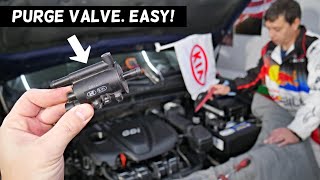
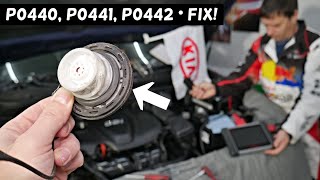
On this generation of Kia Optima, while the universal causes like a loose gas cap are common, the purge control valve (PCSV) is a frequent failure point, often getting stuck open. Additionally, owners in regions that use road salt should be aware of potential corrosion on the fuel filler neck causing leaks, an issue noted in service bulletins for related EVAP codes on these vehicles. A thorough visual inspection of the filler neck 🎬 Watch: Locate the purge valve, sensor, and canister on your Optima. is often more productive than immediately replacing other components. The 2011-2015 Hyundai Sonata, a direct platform mate, shares these exact same common failure points for EVAP codes.
Symptoms You May Notice
- Check Engine Light is on
- A faint smell of gasoline, particularly around the rear of the car or after refueling.
- Slight decrease in fuel economy.
- Difficulty starting the engine right after filling up the gas tank (a strong indicator of a stuck-open purge valve).
- Replacing the charcoal canister when only the attached canister close valve (CCV) is faulty.
- Replacing the purge valve or gas cap when the actual leak is a small, hard-to-see crack in an EVAP hose or a corroded fuel filler neck.
- Assuming any EVAP code means a specific part is bad without performing a smoke test to confirm the leak's location.
Most Likely Causes
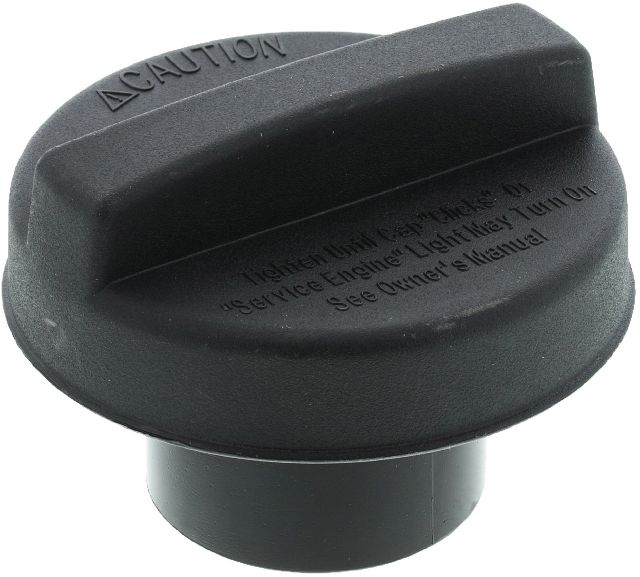
- Loose or Faulty Gas Cap 🔴 High Probability → Shop Fuel Tank Cap This is the most common cause for an EVAP code on any vehicle due to frequent use and wear of the cap's seal. The rubber O-ring can crack and dry out, preventing a proper seal.
How to confirm: Ensure the gas cap is tightened until it clicks at least once. Inspect the cap's seal for cracks, stiffness, or damage. If the seal is compromised, the cap needs replacement. A new OEM cap is often recommended.
Typical fix: Tighten the cap. If the code returns or the cap is visibly damaged, replace it with a new one. It is often recommended to use an OEM (Original Equipment Manufacturer) cap to ensure a perfect seal.
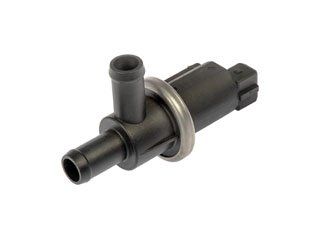
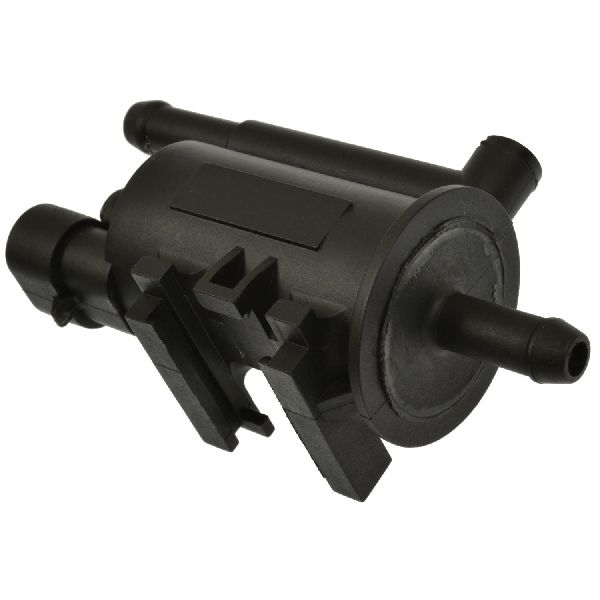
Est. part cost: $15-$40 - Faulty Purge Control Solenoid Valve (PCSV) 🟡 Medium Probability → Shop Vapor Canister Purge Solenoid The purge valve is a very common failure item on many Kia and Hyundai vehicles of this era, including the Optima. It can get stuck open or closed, causing a system fault.
How to confirm: The valve is normally closed. Locate it on the engine (often near the intake manifold). With the engine off, remove the valve and try to blow through it. If air passes through, it's stuck open and is faulty. You can also test it by applying 12V power; it should click open and allow air to pass. A blown fuse, specifically the 'sensor 2' fuse in the engine bay fuse box, can also cause this part to fail electrically.
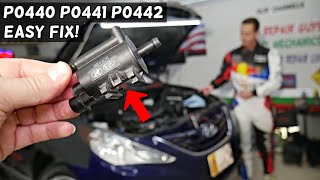
Typical fix: Replace the purge control solenoid valve. This is a straightforward DIY job for many owners. 🎬 See this walkthrough on how to remove and replace the valve.
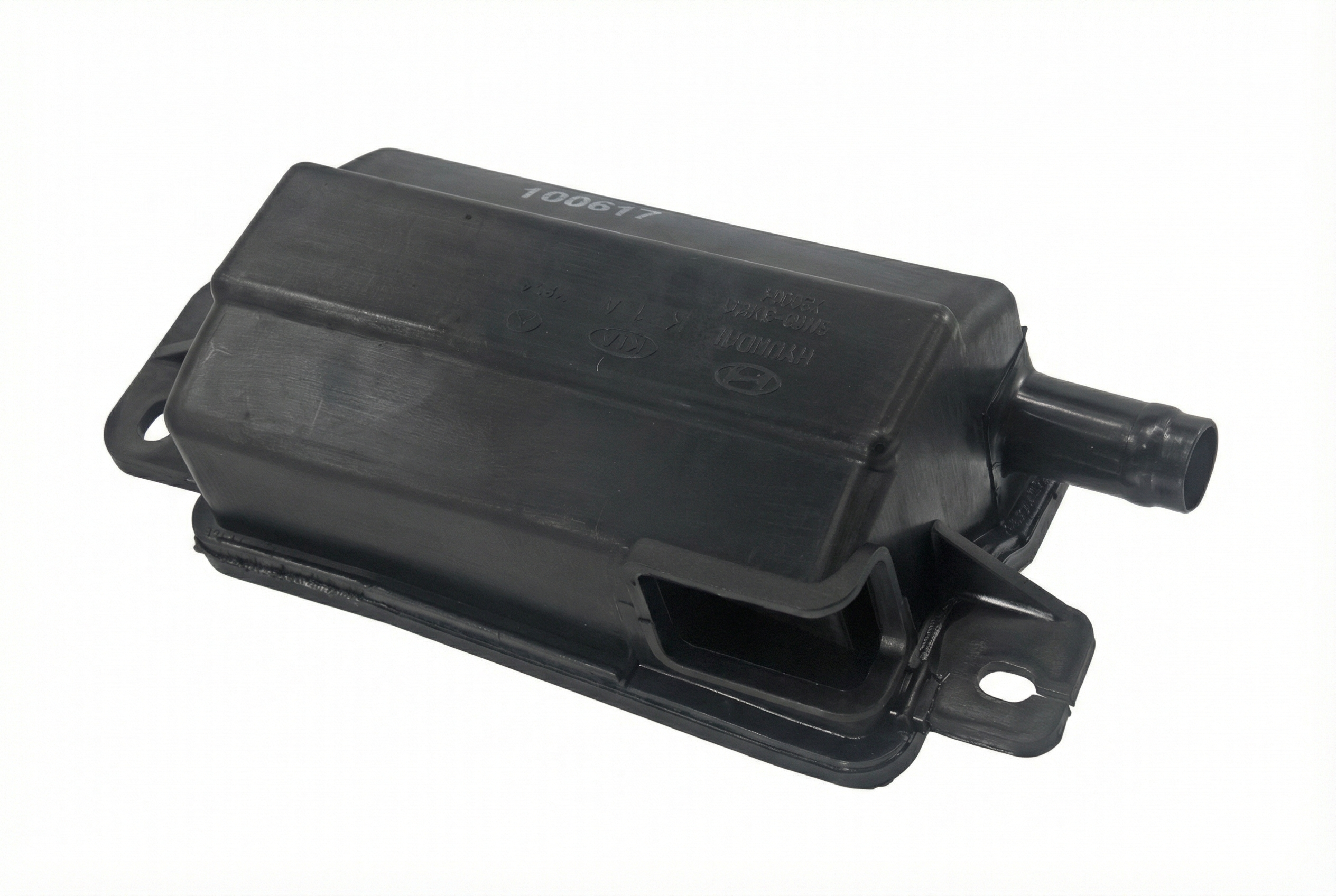
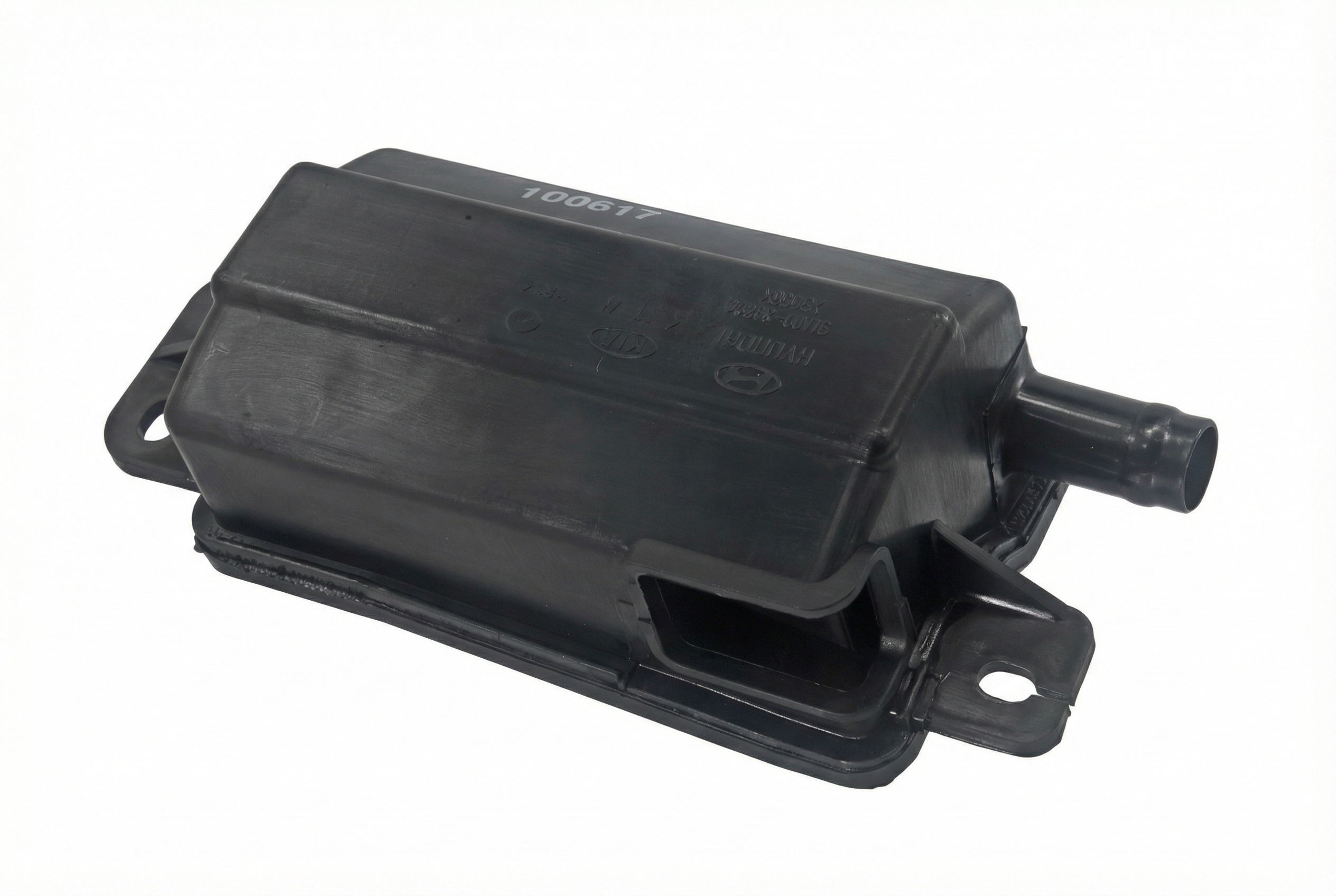
Est. part cost: $50-$100 - Faulty Canister Close Valve (CCV) / Vent Valve 🟡 Medium Probability → Shop Vapor Canister This valve, located near the charcoal canister at the rear of the vehicle, can get stuck open or fail electronically, especially in areas with corrosion or dirt ingress.
How to confirm: The vent valve is normally open and closes when powered to seal the system for a test. A diagnostic scan tool can command it to close. A smoke test is the most effective way to confirm if it's failing to seal the system when commanded shut; smoke will be seen exiting the valve.
Typical fix: Replace the canister close valve. It is attached to the charcoal canister assembly under the rear of the car.
Est. part cost: $40-$80 - Cracked or Disconnected EVAP Hoses ⚪ Low Probability Over time, the rubber and plastic hoses in the EVAP system can become brittle, crack, or be damaged by road debris, causing leaks.
How to confirm: Visually inspect all accessible EVAP lines running from the engine bay to the fuel tank area. A smoke test is the most reliable method to find small, hard-to-see cracks in the hoses.
Typical fix: Replace the damaged section of hose.
Est. part cost: $10-$50
Rare But Worth Checking
- Leaking Fuel Filler Neck: → Shop Fuel Filler Neck In areas where road salt is used, the metal fuel filler neck can corrode and develop pinhole leaks, which will trigger an EVAP code. This is often missed during initial diagnosis and is best found with a smoke test.
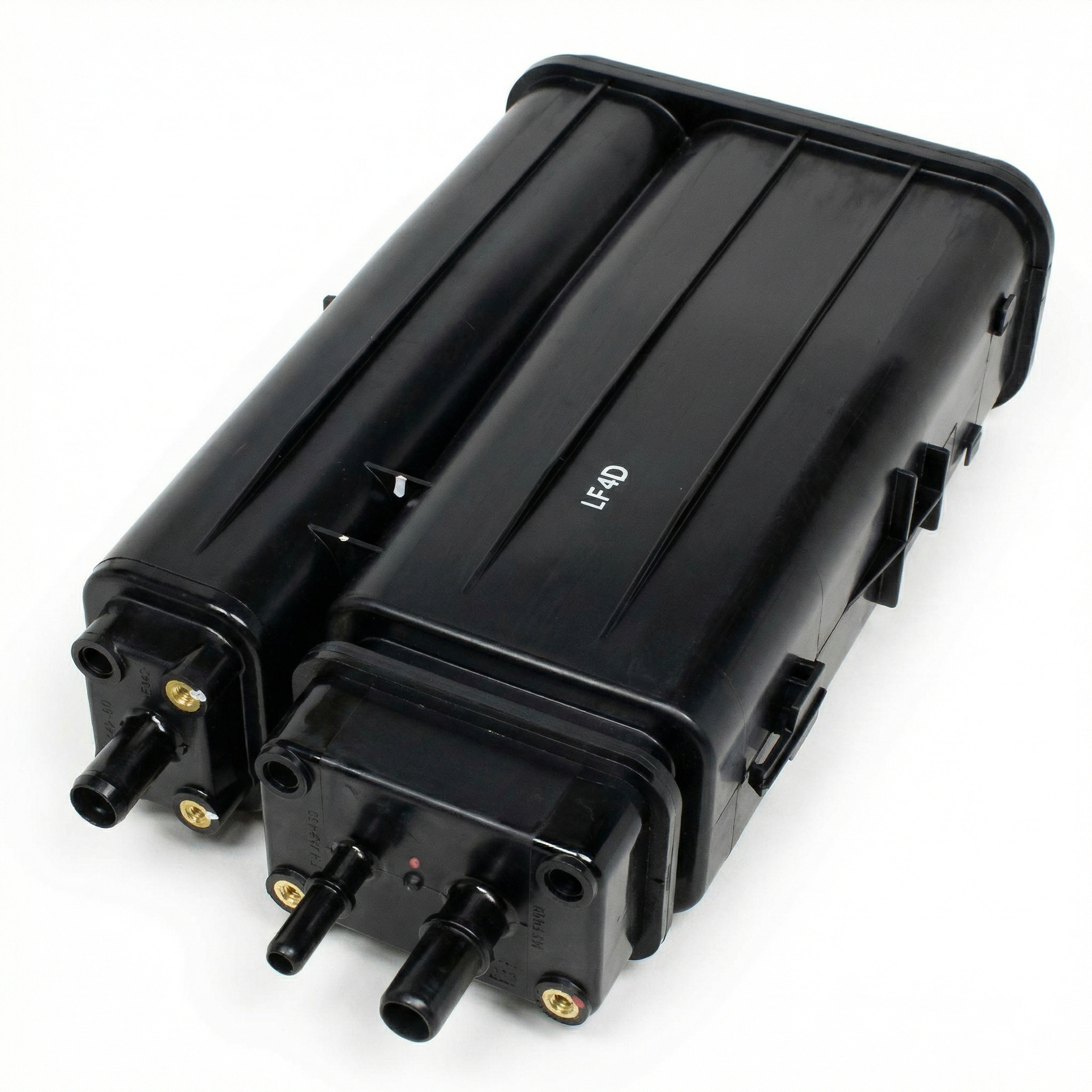
- Cracked Charcoal Canister: → Shop Vapor Canister The canister itself can crack from road debris impact or age, creating a large leak. This is less common than valve failures but should be inspected, especially if a smoke test shows smoke coming from the canister body itself.
- Faulty Fuel Tank Pressure Sensor: → Shop Fuel Tank A faulty sensor can send incorrect data to the computer, making it think there is a leak when there isn't one. This is uncommon and should be considered after all other leak sources have been ruled out. On some models, this sensor is integrated with the fuel pump assembly.
Diagnosis Steps
- Check the Gas Cap: This is the simplest and most common fix. Ensure the cap is tight and clicks. Inspect the rubber seal for any signs of cracking or damage. If in doubt, replace it with an OEM part.
- Visual Inspection: Carefully inspect all visible EVAP hoses in the engine bay and under the vehicle for obvious cracks, disconnections, or damage. Check the electrical connectors on the purge and vent valves for corrosion or damage.
- Inspect the Purge Control Valve (PCSV): Locate the PCSV on the side of the engine. With the engine off, disconnect it and try to blow through it. If air passes, it is stuck open and must be replaced. Also check the 'Sensor 2' fuse in the engine bay fuse box.
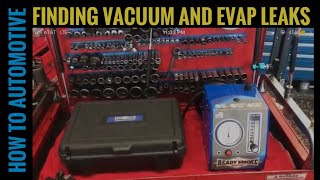
- Perform a Smoke Test: This is the most effective way to find leaks. A smoke machine forces low-pressure, visible smoke into the EVAP system via a service port. Smoke will exit from any cracks or leaks, pinpointing the source of the problem. 🎬 Watch: How to use a smoke machine to find hidden leaks. This can identify leaks in hoses, the canister, the filler neck, or faulty valve seals.
- Inspect the Canister Close Valve (CCV): The CCV is located under the rear of the vehicle, attached to the charcoal canister. During a smoke test, a scan tool can be used to command the valve closed. If smoke escapes from the valve's vent port, the valve is faulty and needs replacement.
- Test the Fuel Tank Pressure Sensor: If no leaks are found, the fuel tank pressure sensor may be faulty. This requires a diagnostic scan tool to monitor the sensor's voltage or pressure readings to see if they are logical and change when the gas cap is removed.
Parts You'll Likely Need
- Gas Cap
(OEM #31010-3L600U)— The seal wears out over time, causing pressure loss. It's the most common and easiest part to replace for any EVAP code.
Trusted brands: Kia (OEM), Stant
OEM price range: $25-$40
Aftermarket price range: $15-$30 - Purge Control Solenoid Valve (PCSV)
(OEM #28910-2E000 (Fits many 2.4L/2.0T models, but confirm with VIN))— This is a known high-failure item on Kia/Hyundai vehicles from this period. It commonly gets stuck open. Part number may vary by engine, so confirm with VIN.
Trusted brands: Kia/Hyundai (OEM), Dorman, Standard Motor Products
OEM price range: $30-$50
Aftermarket price range: $25-$45 - Canister Close Valve (CCV)
(OEM #31453-3Q500 (Often sold with canister assembly))— This valve controls the venting of the system and can fail, especially due to corrosion or dirt ingress, preventing the system from sealing properly for its self-test.
Trusted brands: Kia (OEM), Dorman
OEM price range: $60-$80
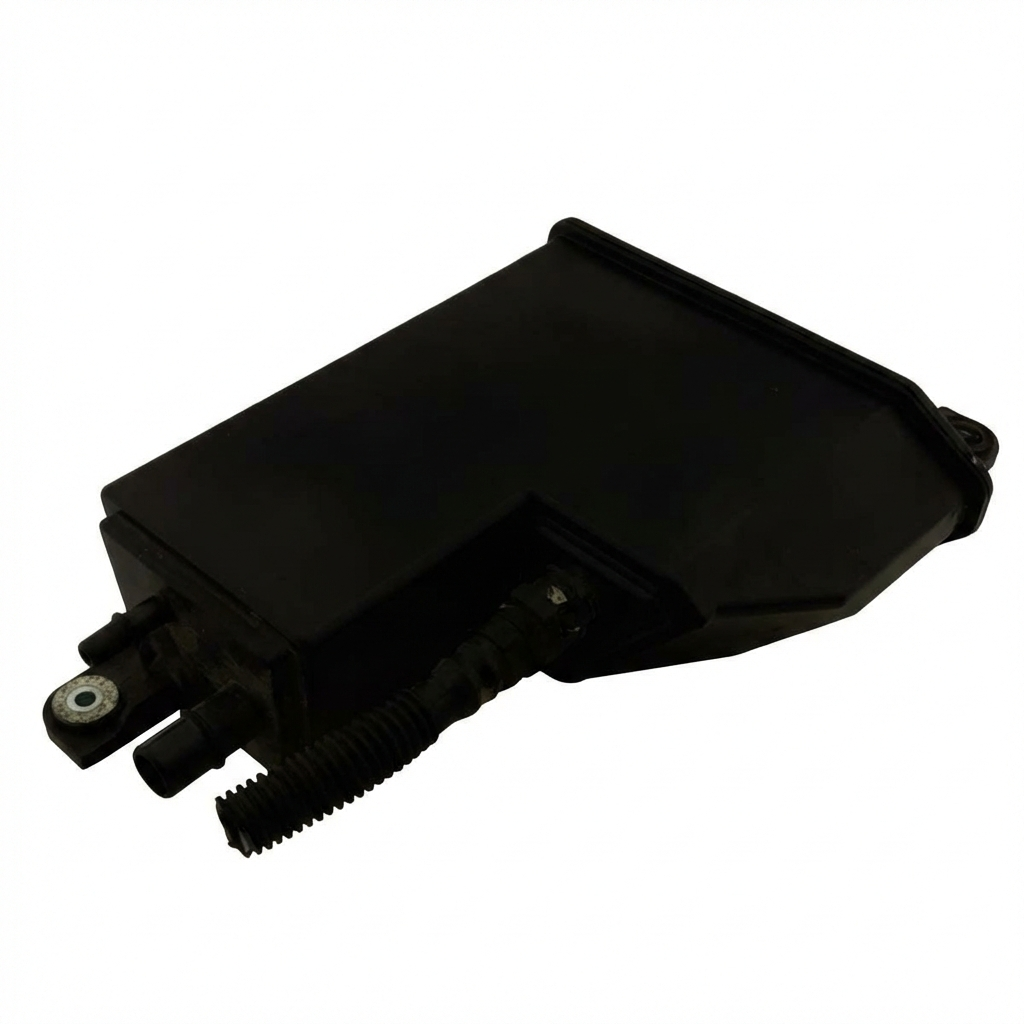
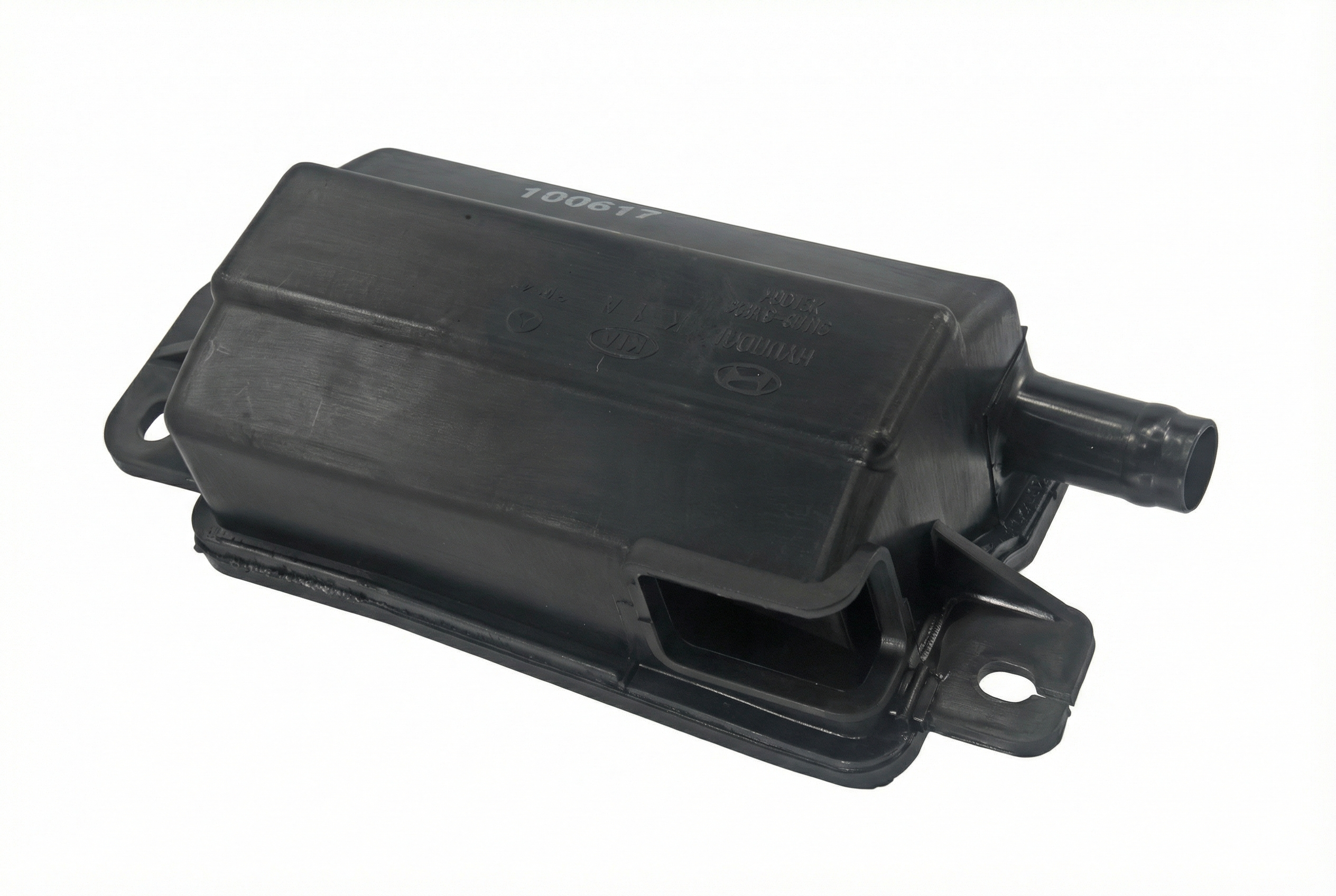
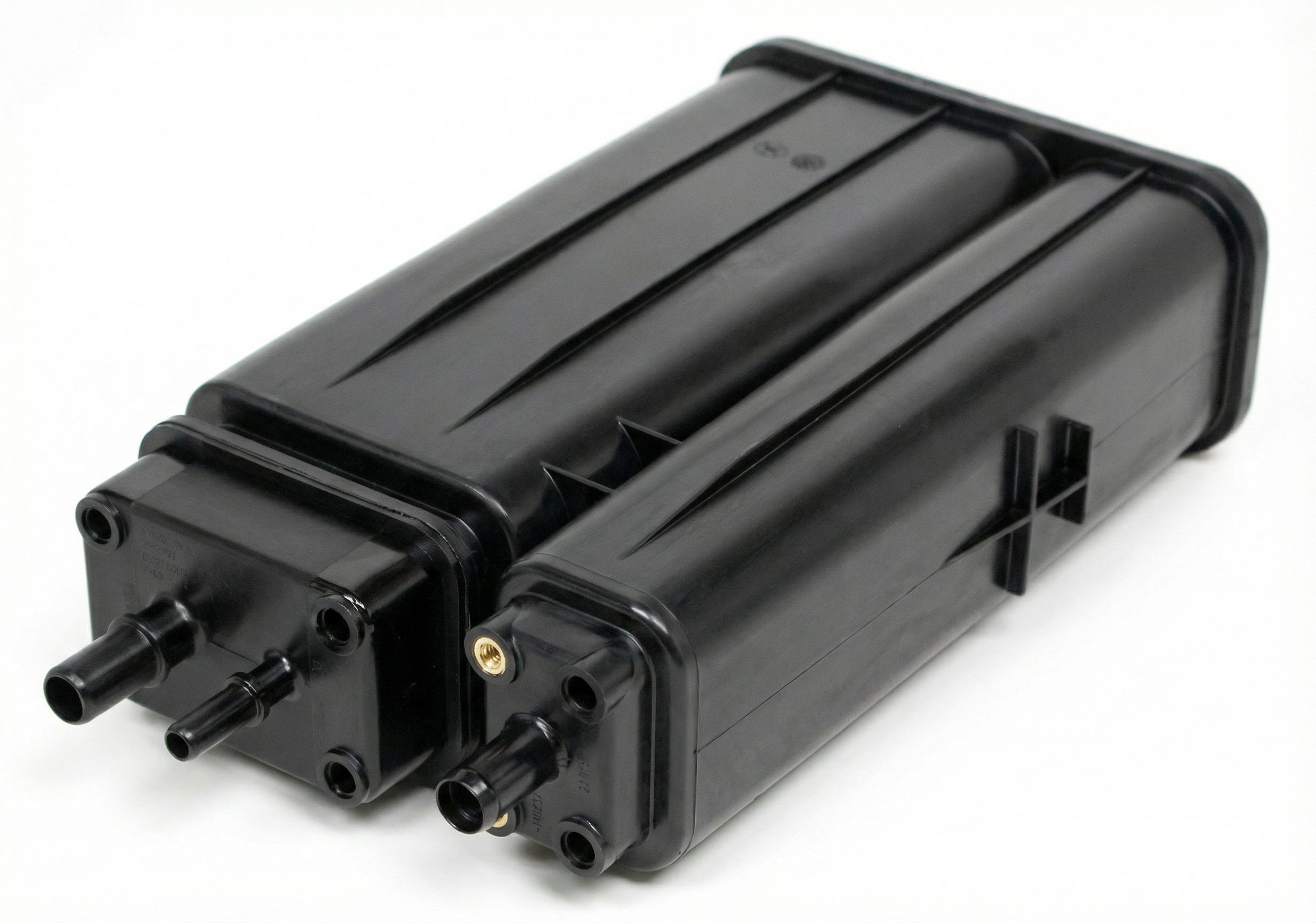
Aftermarket price range: $40-$60 - Vapor Canister Assembly
(OEM #31420-3Q500 (For 2.4L, US build, non-PZEV))— While less common, the canister itself can crack or the integrated CCV may fail, sometimes requiring replacement of the whole assembly.
Trusted brands: Kia (OEM)
OEM price range: $400-$600
Aftermarket price range: $250-$400
Related Codes That Often Appear With This One
- P0441 — P0441 indicates incorrect purge flow, which is very commonly caused by a faulty purge valve that is stuck open or closed, a condition that can also trigger the general system malfunction code P0440.
- P0442 — P0442 indicates a small EVAP leak. If the leak size is borderline or intermittent, the system may set either P0442 or the more general P0440.
- P0455 — P0455 indicates a large EVAP leak. P0440 is a more general fault, but the underlying cause (like a very bad gas cap seal or a large crack in a hose) could also be interpreted as a large leak by the system.
Technical Service Bulletins (TSBs) & Recalls
- While no specific TSB for P0440 on this exact model was found, TSBs for other Kia/Hyundai models (e.g., #00-06-04-011A for general EVAP diagnostics) describe the system's self-test procedure, which requires specific conditions related to fuel level and engine temperature to run. This explains why the light may not appear immediately after a fault occurs.
Platform-Specific Known Issues
- Frequent Purge Control Valve (PCSV) Failure: The most commonly reported vehicle-specific failure for this code on the 2011-2015 Optima is the purge control valve getting stuck open. This not only triggers the P0440/P0441 codes but also leads to a very specific and noticeable symptom: the engine cranking for a long time or stalling immediately after refueling. This happens because raw fuel vapor floods the intake manifold when it shouldn't. Multiple YouTube channels like 'World Mechanics' have videos dedicated to this specific repair on the Optima and its platform-mate, the Sonata.
Mechanic-Grade Diagnostic Values
- Purge Control Solenoid Valve (PCSV) Coil Resistance — expected: 15 to 38 Ohms. Failure: A reading of infinity (open circuit) or near zero (short circuit) indicates a failed coil.
- Canister Close Valve (CCV) Coil Resistance — expected: 48 to 65 Ohms. Failure: A reading significantly outside this range indicates a failed internal coil.
- Fuel Tank Pressure Sensor (FTPS) Power Supply — expected: 5-volt reference signal at the connector with Key On, Engine Off (KOEO).. Failure: No voltage suggests a wiring or ECM issue.
- Fuel Tank Pressure Sensor (FTPS) Signal Voltage — expected: Approximately 1.5V (within a 1.3V to 1.7V range) with the gas cap on and system sealed.. Failure: A reading stuck high (near 5V) or low (near 0V) after the system has stabilized indicates a faulty sensor.
Scan Tool Commands That Help
- Kia KDS/GDS (OEM Scan Tool): Evap. Leakage Test — This is the manufacturer-specified automated test to check the integrity of the entire EVAP system after initial checks (like the gas cap) are complete.
- Professional Bi-Directional Scanner (Autel, Snap-on, etc.): Canister Close Valve (CCV) / Vent Valve Command — This command manually closes the normally-open vent valve, sealing the EVAP system from the atmosphere. This is a critical step to perform before introducing smoke for a leak test.
- Professional Bi-Directional Scanner (Autel, Snap-on, etc.): Purge Control Solenoid Valve (PCSV) Command — This command allows you to manually open and close the purge valve while monitoring fuel trims or system pressure. Commanding it open should cause a drop in fuel tank pressure (or vacuum to build), confirming the valve can open electronically.
Wiring & Ground Locations
- Fuse 'SENSOR 2' (10A) — In the main fuse box located in the engine compartment.. This fuse provides power to multiple EVAP components, including the Purge Control Solenoid Valve (PCSV) and the Canister Close Valve (CCV). A blown fuse will render these components inoperative and trigger fault codes.
- PCSV Connector — On the Purge Control Solenoid Valve, located on the side of the engine under the air intake assembly.. This 2-pin connector is where voltage and resistance tests are performed for the purge valve. One pin should receive battery voltage with the key on (from the 'SENSOR 2' fuse), while the other is the control wire to the ECM.
- FTPS Connector — On top of the fuel pump assembly, accessible by removing a plate under the rear passenger seat.. This connector provides the 5V reference, ground, and signal wires for the Fuel Tank Pressure Sensor. Checking for 5V here is a key step if a faulty sensor is suspected.
"I Checked Everything" — The Actual Cause
- While no specific Kia Optima stories were found, a common pattern on other vehicles for a P0440 that passes a smoke test is a faulty Fuel Tank Pressure Sensor (FTPS). The sensor itself doesn't cause a leak but provides incorrect pressure readings to the computer, making the system believe a leak exists.
- In a case involving a Toyota Tacoma with similar EVAP codes, a smoke test came back clean, but the actual cause was a leaking fuel pump gasket seal on top of the tank. This leak was not detected by the low-pressure smoke test but was significant enough to splash fuel and vent vapors, triggering the code.
OEM Part Supersession History
28910-2E000→28910-3E100— Part update for later production models.
Heads up: Models built on or before 10/20/2011 may use P/N 28910-2E000, while models built after that date typically use 28910-3E100. Always verify with VIN.
Model Year Variations Within This Range
- 2011-2015: Vehicles were built with either PZEV (Partial Zero-Emission Vehicle) or ULEV (Ultra-Low-Emission Vehicle) emissions packages, often based on the state where they were originally sold. These systems use different, non-interchangeable vapor canisters. You must verify which system your car has via the under-hood emissions sticker before ordering a replacement canister.
- 2011-2015 (Especially in 'Salt Belt' states): Kia issued TSB SC135R1 for vehicles in 28 'salt belt' states due to a higher likelihood of corrosion-related EVAP leaks. This makes the fuel filler neck, canister close valve, and other under-vehicle components more susceptible to failure from rust.
Diagnostic Flowchart
Real Owner Stories
Aggregated from forums and TSBs cited above. Mileages and costs reflect what owners reported in those sources.
2011-2015 Kia Optima
Symptoms: Engine cranking for a long time or stalling immediately after refueling, accompanied by P0440 and P0441 codes.
What fixed it: Replaced the purge control valve (PCSV) which was stuck open and flooding the intake manifold with raw fuel vapor.
Source hint: YouTube channels like 'World Mechanics' covering the Optima and Sonata
2011-2015 Kia Optima (TF)
Symptoms: Check engine light on with EVAP-related codes including P0440.
What fixed it: Replaced the purge valve and canister close valve, which are widely identified as the primary culprits for EVAP codes on this platform.
Source hint: Kia-Forums.com discussions for the TF Optima (2011-2015)
Kia Optima
Symptoms: EVAP codes present, requiring diagnosis of the charcoal canister and pressure sensor.
What fixed it: Checked for cracks in the charcoal canister itself and confirmed the fuel tank pressure sensor's operation using a scan tool and vacuum gauge.
Source hint: BobIsTheOilGuy.com thread titled 'Kia Optima evap codes'
Related OBD-II Codes
Frequently Asked Questions
Why does my 2011-2015 Kia Optima have a hard time starting right after I get gas with a P0440 code?
Is there a specific TSB for the P0440 code on my 2011-2015 Optima?
I replaced the gas cap on my Optima, but the P0440 code came back. What should I check next?
Can a blown fuse cause a P0440 code on my Kia Optima?
Are there other vehicles that share this exact P0440 issue with the Optima?
How can I test the Purge Control Solenoid Valve (PCSV) on my Optima at home?
Helpful Videos
Used OEM Parts in Stock
New Aftermarket Parts Available


The information in this article is provided for general reference and educational purposes only. Vehicle specifications, procedures, and part compatibility can vary by production date, trim level, and region. Always consult your vehicle's factory service manual and verify part numbers before purchasing or performing repairs. Safety-critical components such as airbags, seat belts, and braking systems should be installed by a qualified professional.
- Kia Optima:
- 🧭 Diagnostic Flowchart
- 🎬 Helpful Videos
- 🛍️ Shop This Part
- What's Unique About the 2011-2015 Kia Optima
- Symptoms You May Notice
- Most Likely Causes
- Rare But Worth Checking
- Diagnosis Steps
- Parts You'll Likely Need
- Related Codes That Often Appear With This One
- Technical Service Bulletins (TSBs) & Recalls
- Platform-Specific Known Issues
- Mechanic-Grade Diagnostic Values
- Scan Tool Commands That Help
- Wiring & Ground Locations
- "I Checked Everything" — The Actual Cause
- OEM Part Supersession History
- Model Year Variations Within This Range
- Real Owner Stories
- 2011-2015 Kia Optima
- 2011-2015 Kia Optima (TF)
- Kia Optima
- Related OBD-II Codes
- Frequently Asked Questions
- 🎟️ Get 5% Off