

P0440 on 2012-2017 Kia Rio: EVAP System Malfunction Causes and Fixes
For a 2012-2017 Kia Rio, code P0440 most often means you have a loose gas cap or a faulty canister purge valve. Always check that the gas cap is tight and its seal is good first. If that's not the issue, the purge valve in the engine bay is the next most likely and affordable part to fail. A faulty canister close valve (CCV) is also a strong possibility on this specific model due to a known issue.
- Always start with the simplest fix: check that your gas cap is tight and its seal is intact. This resolves the issue a majority of the time.
- If the gas cap isn't the problem, the canister purge valve in the engine bay is the next most likely and easily replaceable part.
- Be aware of TSB FUE040, which points to the Canister Close Valve (near the rear of the car) as a known weak point on your specific Rio.
- The vehicle is safe to drive with this code, but it will not pass an emissions inspection until it is fixed.
- For hard-to-find leaks, a smoke test performed by a mechanic is the most reliable diagnostic method.
What's Unique About the 2012-2017 Kia Rio
The 2012-2017 Kia Rio (generation UB) and its platform-mate, the Hyundai Accent, share the 1.6L Gamma GDI engine and a common EVAP system architecture. A known issue for this generation is a faulty Canister Close Valve (CCV). Kia issued a Technical Service Bulletin (TSB FUE040) for this specific generation due to the CCV sticking open and causing EVAP leak codes P0455 and P0456. While P0440 is a more general code, a faulty CCV is a very probable cause on this vehicle if the gas cap and purge valve are not the issue. This makes inspecting the CCV more important on this Rio than on other vehicles.
Symptoms You May Notice
- Check Engine Light is on
- A faint smell of fuel, particularly around the outside of the vehicle near the gas cap or engine bay.
- Possible rough idle or difficulty starting immediately after refueling (if the purge valve is stuck open).
- Slight decrease in fuel economy over time.
- Replacing the charcoal canister when only a small, inexpensive valve (like the CCV or purge valve) has failed.
- Immediately assuming a complex leak exists before thoroughly checking the gas cap seal and replacing it with an OEM part if it's worn.
Most Likely Causes
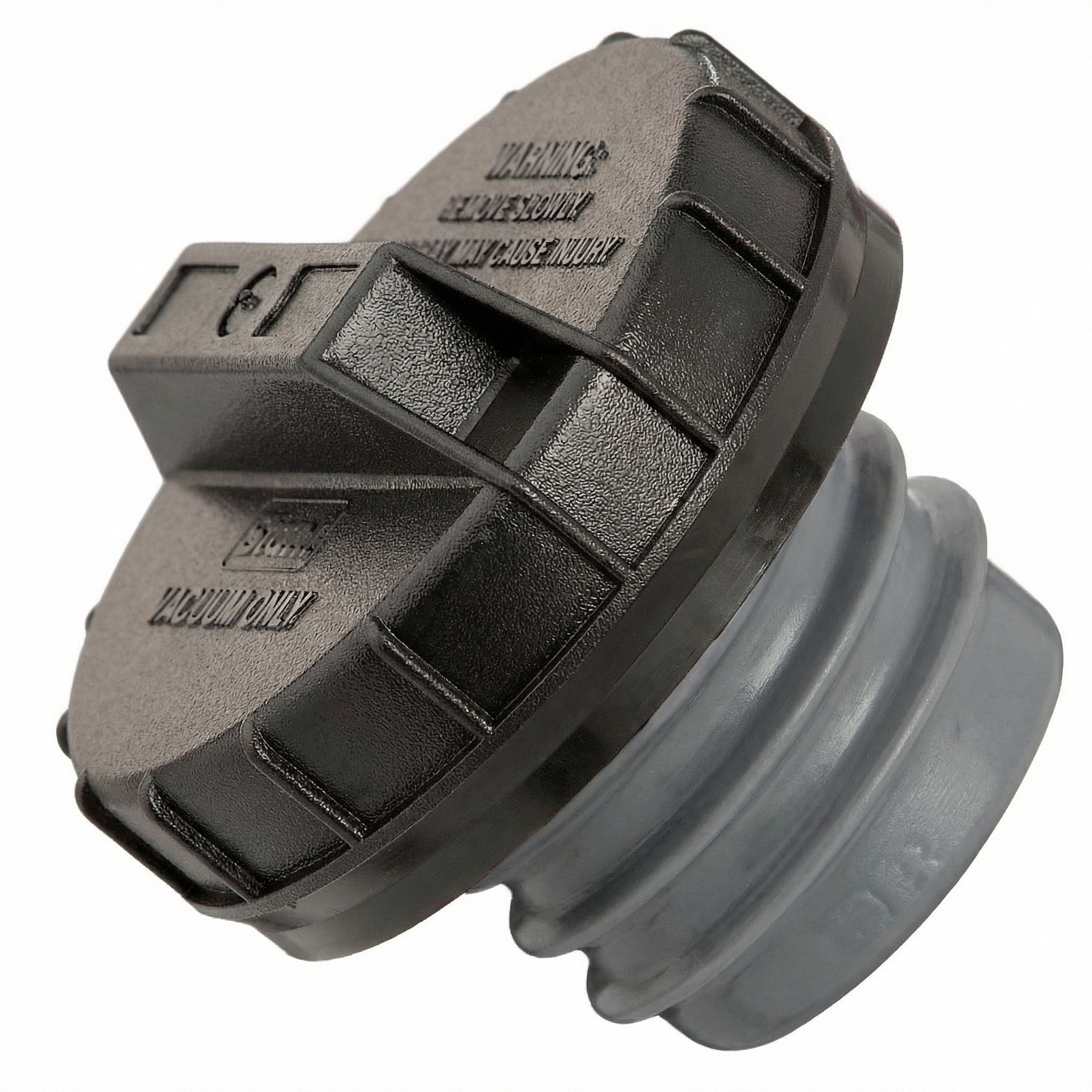
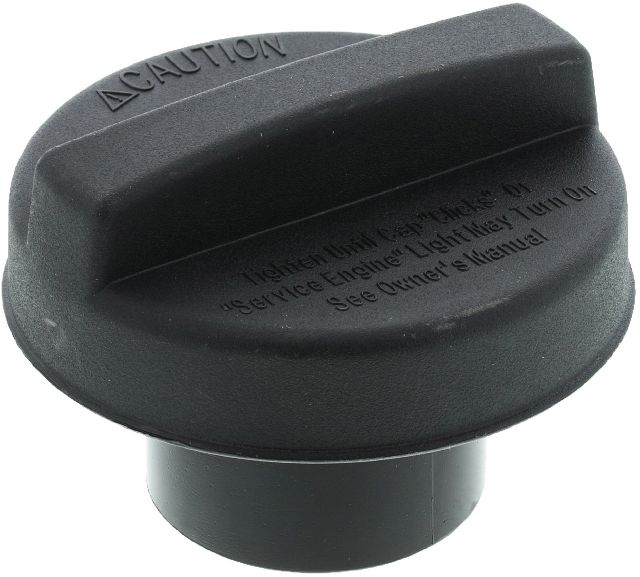
- Loose or Faulty Gas Cap 🔴 High Probability → Shop Fuel Tank Cap This is the most common cause for any EVAP code on all vehicles. The rubber seal on the cap degrades, cracks, or gets hard over time, preventing a proper seal. It is highly recommended to use a genuine OEM Kia gas cap, as some aftermarket caps are known to cause sealing issues.
How to confirm: Ensure the gas cap is tightened until it clicks multiple times. Remove the cap and inspect the rubber O-ring for any cracks, stiffness, or visible damage.
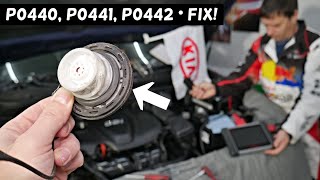
Typical fix: Tighten the cap. If the seal is damaged or the cap is old, replace it with a new OEM cap. After replacement, the code may take a few drive cycles to clear on its own.
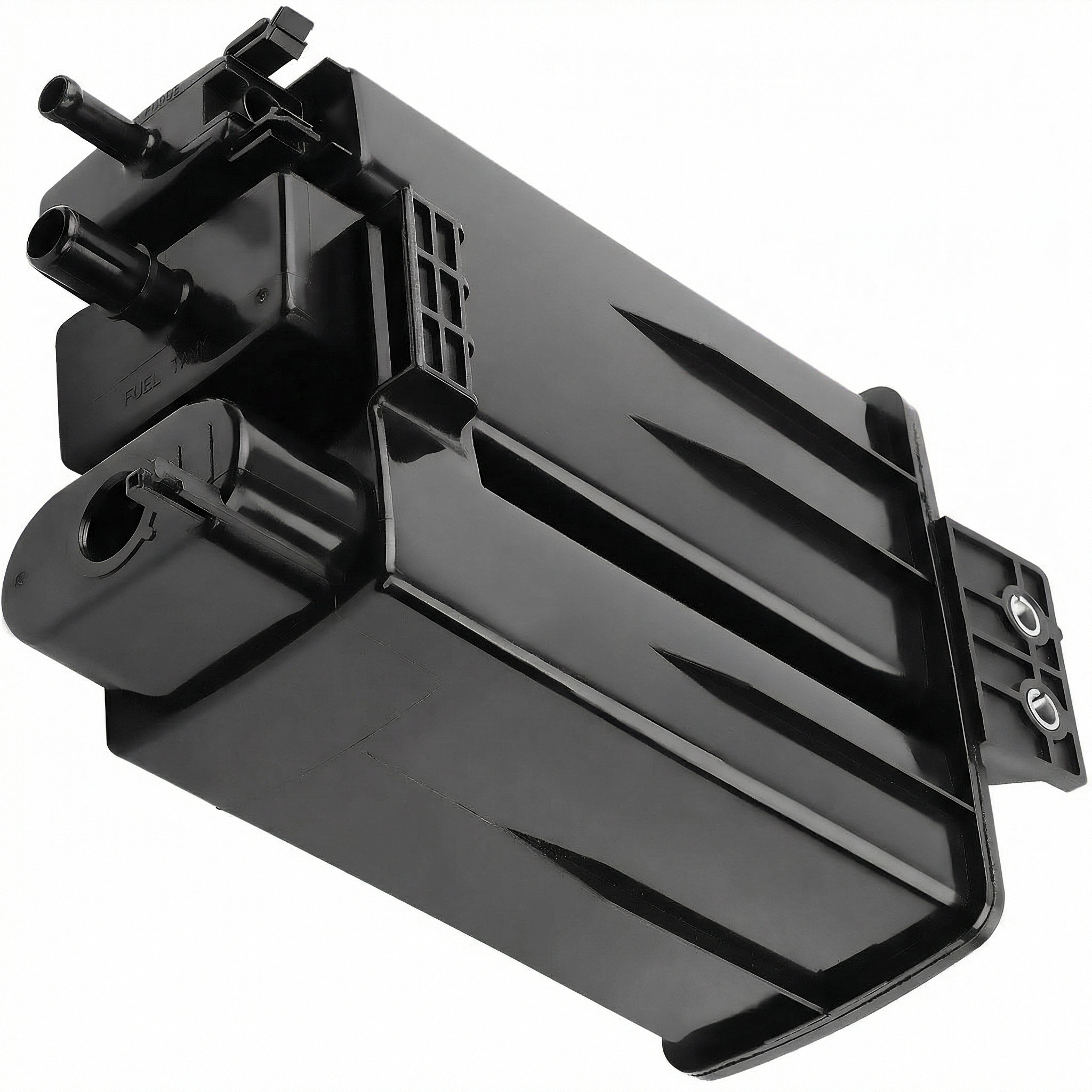
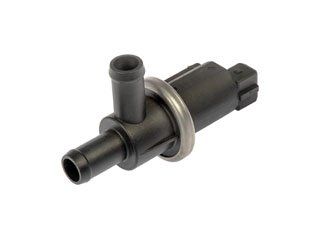
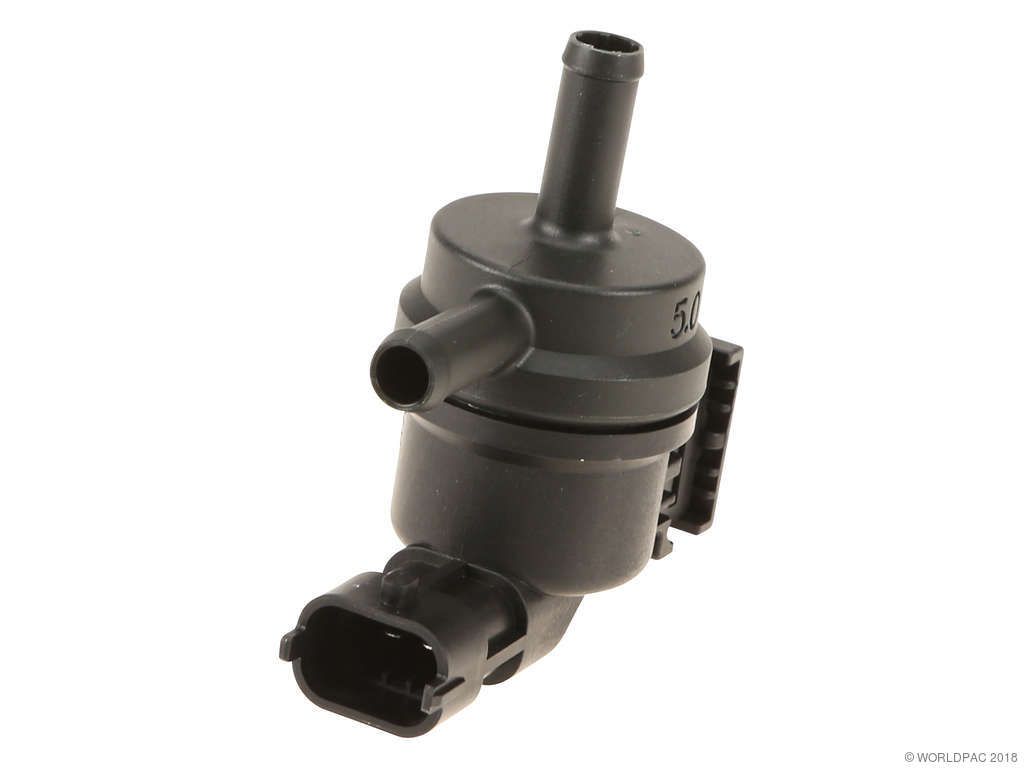
Est. part cost: $20-$35 - Faulty Canister Purge Valve (Purge Solenoid) 🟡 Medium Probability → Shop Vapor Canister The purge valve is a very common failure point on many Kia and Hyundai models of this era, including the Rio. It can become stuck open or closed, causing the EVAP system self-test to fail. A valve stuck open is often the cause of hard starting after refueling.
How to confirm: The valve is located in the engine bay, on top of the engine near the intake manifold. With the engine off, disconnect the valve and try to blow through it; it should be closed (no air should pass). A stuck-open valve will allow air through. You can also test it by applying 12V to the connector to see if it clicks open.
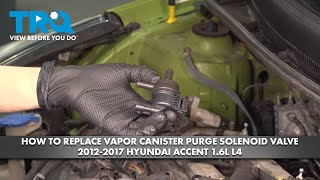
Typical fix: Replace the canister purge valve. This is a simple DIY job that involves disconnecting two hoses and one electrical connector. 🎬 Watch: Step-by-step guide to replacing the purge solenoid valve.
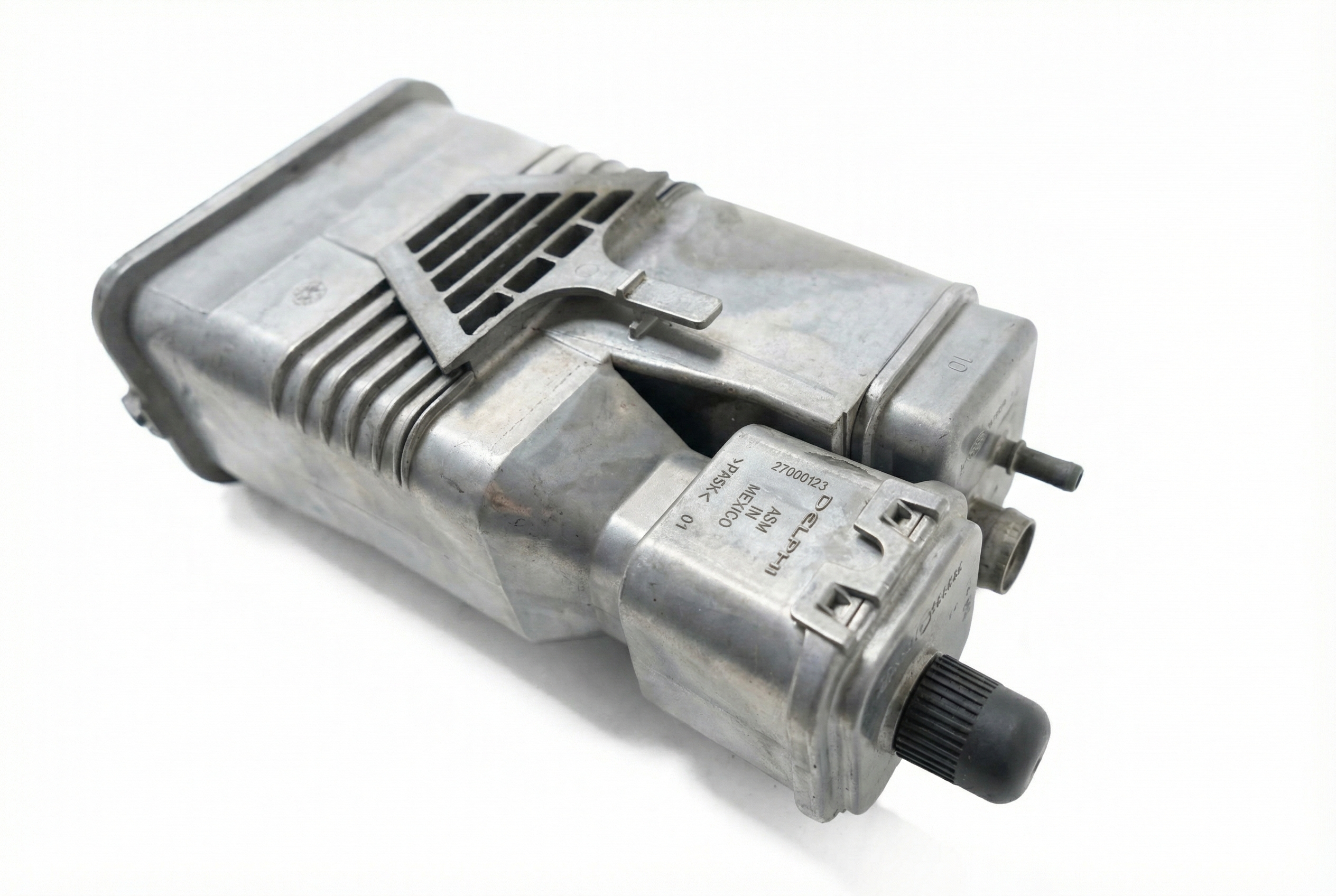
Est. part cost: $40-$75 - Faulty Canister Close Valve (CCV) / Vent Valve 🟡 Medium Probability → Shop Vapor Canister Kia issued TSB FUE040 for the 2012-2017 Rio, specifically for the CCV sticking open and causing EVAP leak codes. Though P0440 isn't listed on the TSB, it's a known weak point on the vehicle that can cause a general system fault. This part is located at the rear of the vehicle, attached to the charcoal canister.
How to confirm: This valve is located at the rear of the vehicle near the charcoal canister. Confirmation usually requires a smoke test. Smoke is introduced into the EVAP system, and if it escapes from the vent valve when it's commanded closed, the valve has failed.
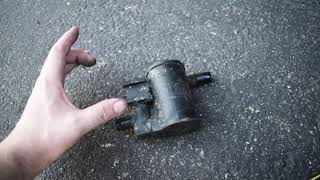
Typical fix: Replace the Canister Close Valve. The TSB recommends an improved part (31453 3K600FFF), though the original part number may have been 31453-3K600. 🎬 See this walkthrough for replacing the canister vent valve.
Est. part cost: $10-$25 - Cracked or Disconnected EVAP Hoses ⚪ Low Probability Over time, rubber and plastic hoses can become brittle from heat and age, leading to cracks. This is more common in older vehicles or those in harsh climates.
How to confirm: A visual inspection may reveal obvious cracks or disconnected lines, especially around the purge valve in the engine bay. However, small leaks are hard to spot. A professional smoke test is the most reliable method to find a hose leak.
Typical fix: Replace the cracked or damaged section of the hose.
Est. part cost: $5-$50
Rare But Worth Checking
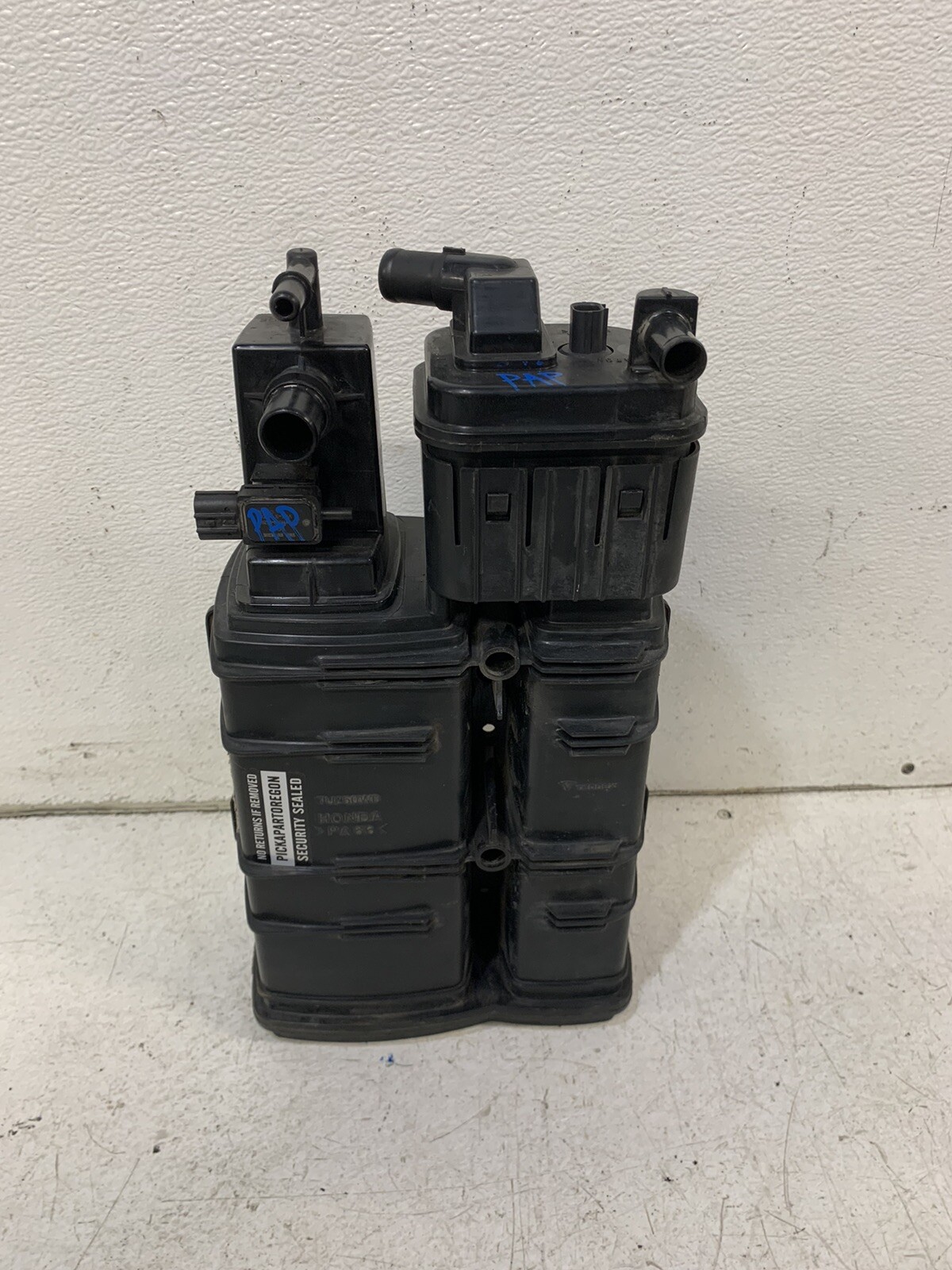
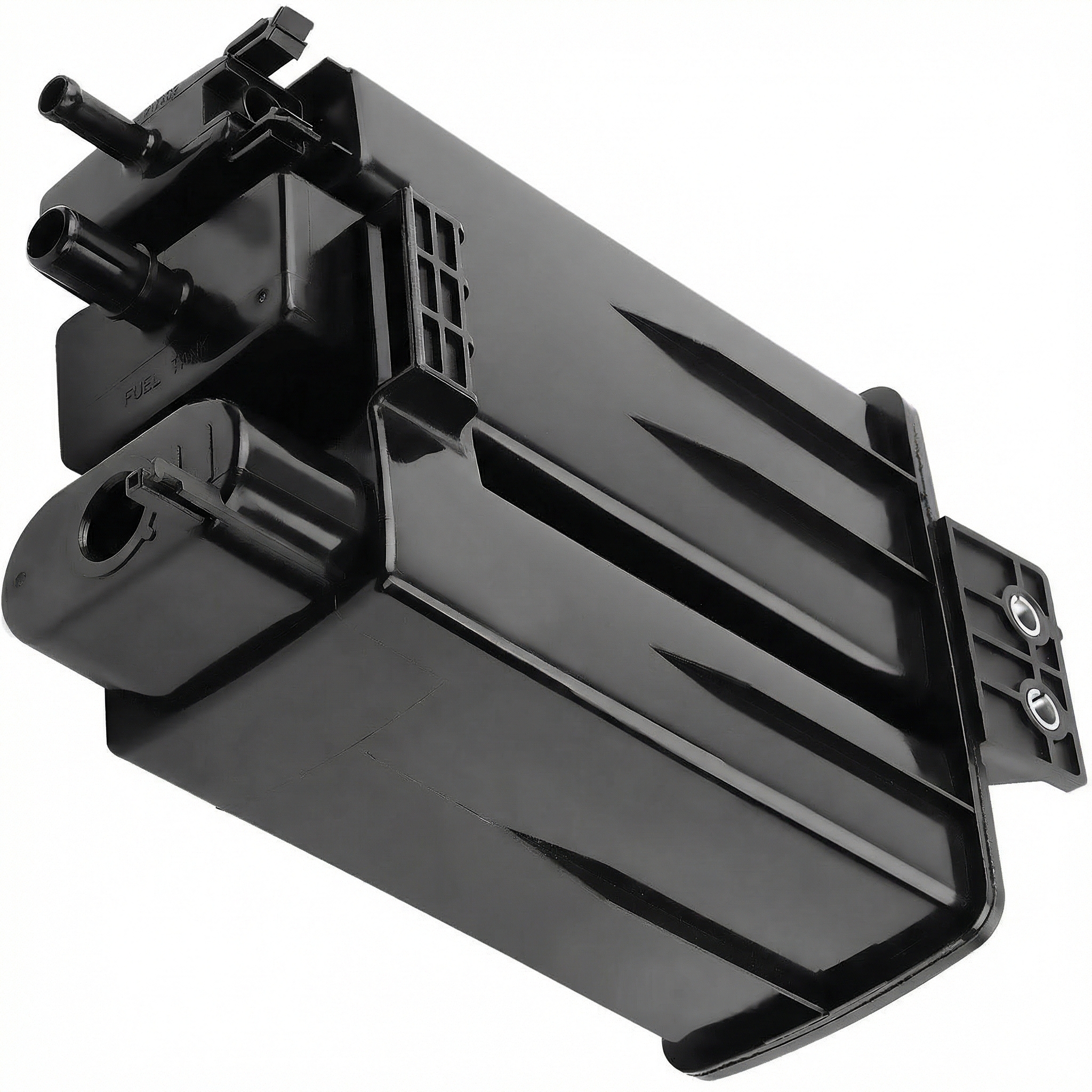
- Cracked Charcoal Canister: → Shop Vapor Canister While not common, the charcoal canister can crack, especially from physical damage or in regions where road salt is used, which can corrode the mounting brackets. A visual inspection for cracks or damage is warranted if other causes are ruled out. Overfilling the gas tank can also saturate the canister with liquid fuel, causing it to fail.
- Faulty Fuel Tank Pressure Sensor: → Shop Fuel Tank Rarely, the sensor that monitors the EVAP system's pressure can fail. It won't cause a physical leak, but it will send incorrect data to the computer, making it think a leak exists. This is usually diagnosed after a smoke test finds no leaks.
Diagnosis Steps
- Check the gas cap. Ensure it is tight and clicks when secured. Remove it and inspect the rubber seal for cracks, hardening, or damage. If it looks worn, replace it with a genuine OEM part, clear the code, and drive for a few days to see if the light returns.
- Visually inspect the engine bay for any obvious cracked or disconnected vacuum hoses around the intake manifold and purge valve.
- Locate the canister purge valve on the engine. With the engine off, disconnect it and try to blow through it. If air passes through, the valve is stuck open and needs to be replaced.
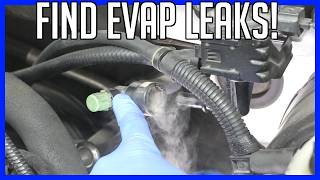
- If the above steps do not resolve the issue, the next step is a professional smoke test. This involves injecting smoke into the EVAP system to visually identify where the leak is originating from (e.g., a hose, the canister, or the canister close valve). 🎬 Watch: How to perform a smoke test to find leaks.
- Pay close attention to the canister close valve (CCV) at the rear of the vehicle during the smoke test, as this is a known failure point identified in TSB FUE040.
Parts You'll Likely Need
- Gas Cap
(OEM #31010-3L600U)— This is the most frequent cause of P0440. The seal wears out, preventing the system from holding pressure. Using an OEM cap is strongly recommended.
Trusted brands: Kia (Genuine), Stant, Gates
OEM price range: $20-$35
Aftermarket price range: $15-$25 - Canister Purge Valve
(OEM #28910-26900)— A very common failure item on Kia/Hyundai vehicles that gets stuck open or closed. It's located in the engine bay and is easy to replace. A stuck open valve often causes hard starts after refueling.
Trusted brands: Kia (Genuine), Bosch, Standard Motor Products (SMP), Dorman
OEM price range: $60-$90
Aftermarket price range: $25-$60 - Canister Close Valve (CCV)
(OEM #31453-3K600FFF)— This is an improved part specified in a TSB for this vehicle generation to fix a known issue with the original valve sticking open. It is a high-probability cause if the gas cap and purge valve are good.
Trusted brands: Kia (Genuine), Dorman (911-803)
OEM price range: $10-$25
Aftermarket price range: $10-$20
Related Codes That Often Appear With This One
- P0455 — Indicates a large EVAP leak. The same component failure (like a missing gas cap or stuck-open CCV) can sometimes be interpreted by the ECU as either a general malfunction (P0440) or a large leak.
- P0456 — Indicates a small EVAP leak. A component that is beginning to fail, like a cracked gas cap seal, might initially set a P0440 before the leak becomes more defined and triggers a small leak code.
- P0441 — Indicates incorrect purge flow, which is almost always caused by a faulty canister purge valve—a primary cause of P0440 as well.
Technical Service Bulletins (TSBs) & Recalls
- FUE040: Addresses a stuck-open Canister Close Valve (CCV) causing EVAP leak codes P0455 and P0456 on 2012-2017 Rio vehicles, and provides an improved part number. While P0440 is not explicitly mentioned, it is highly relevant as a known EVAP system weakness on this platform.
Platform-Specific Known Issues
- Owner Experience with P0440: On forums like Kia-Forums.com and Reddit, owners of 2012-2017 Rios frequently report resolving a persistent P0440 code by replacing the canister purge valve (solenoid) after first trying a new gas cap. The symptom of the engine struggling to start for a few seconds after filling the gas tank is a very strong indicator that the purge valve is the culprit, as it's stuck open and flooding the intake with vapor.
Mechanic-Grade Diagnostic Values
- Canister Purge Valve (Solenoid) Coil Resistance — expected: 15 to 30 Ohms. Failure: A reading of infinity (open circuit) or near-zero (short circuit) indicates a failed coil.
- Canister Close Valve (CCV) Coil Resistance — expected: 48 to 65 Ohms. Failure: A reading significantly outside this range indicates a failed internal coil.
- Fuel Tank Pressure Sensor (FTPS) Signal Voltage (Key On, Engine Off, Gas Cap Off) — expected: ~2.5V (Atmospheric Pressure). Failure: Voltage is significantly different, 0V, or 5V. 0V may indicate a wiring issue, while 5V could be a short.
Scan Tool Commands That Help
- Kia GDS (Global Diagnostic System) or equivalent professional scanner: EVAP System Leak Test (S/W Actuation) — This is the dealer-level automated test to force the system to check itself. The tool commands the CCV to close and monitors the FTPS for a pressure drop, confirming system integrity after a repair or when a leak is suspected but not obvious.
- Kia GDS (Global Diagnostic System) or equivalent professional scanner: Canister Close Valve (CCV) Actuation — This command manually closes the normally-open CCV. It is a critical step to perform before starting a smoke test to ensure the system is sealed from the atmosphere, allowing the smoke to pressurize the system and reveal leaks.
Wiring & Ground Locations
- SENSOR Fuse (10A) — In the engine compartment fuse/relay box.. This fuse supplies power to multiple EVAP components, including the Purge Control Solenoid Valve and the Canister Close Valve. If this fuse is blown, multiple parts of the system will be inoperative, leading to a circuit or general malfunction code.
- Ground Points (e.g., GF01, GF02) — Various locations in the engine bay and on the chassis frame near the rear of the vehicle.. The EVAP solenoids and sensors rely on a clean ground connection to function correctly. A corroded or loose ground point, particularly for the rear-mounted Canister Close Valve, can cause intermittent operation and trigger a P0440 code.
"I Checked Everything" — The Actual Cause
- In cases on similar platforms where a smoke test reveals no leaks, the root cause has sometimes been a faulty Fuel Tank Pressure Sensor (FTPS). The sensor itself does not leak but provides incorrect data to the ECU, tricking it into believing a leak exists.
OEM Part Supersession History
31453-3K600→31453-3K600FFF— The improved part (ending in FFF) features a change in the rubber seal material to prevent it from sticking open, which was the cause for TSB FUE040. The port color also changed from black to tan on the new part.
Diagnostic Flowchart
Other Known Issues on This Vehicle
Issues unrelated to this code that are worth knowing about as an owner of this generation:
- MDPS Steering Coupler Failure 🟠 Medium — Very common, typically occurs between 50,000 and 100,000 miles. Causes a distinct 'clunking' or 'clicking' noise when turning the steering wheel at low speeds. (Ref: Kia extended the warranty for this part to 10 years/unlimited mileage under program CS1604.)
- Engine Stalling and Performance Issues 🟠 Medium — Frequently reported between 50,000 and 100,000 miles. Can be caused by failing ignition coils, a dirty throttle body, or carbon buildup on intake valves.
- GDI Engine Carbon Buildup 🟠 Medium — A characteristic of all GDI engines, including the Rio's 1.6L. Symptoms like rough idle and hesitation can appear after 60,000 miles. Requires periodic intake valve cleaning (e.g., walnut blasting) for removal.
- Automatic Transmission Problems 🔴 High — Common between 40,000 and 80,000 miles. Owners report harsh shifting, hesitation, or slipping. Often linked to the transmission control module or fluid issues.
- Radiator Fan Motor Failure 🟠 Medium — Prone to failure between 60,000 and 100,000 miles, which can lead to engine overheating, especially in traffic.
Used vs. New Parts: Buying Guide for This Vehicle
When a used part is the smart pick: Used parts for this repair are generally not recommended due to the low cost of new parts and the high failure rate of used electronic solenoids and valves. A used charcoal canister could be a cost-effective option if it's from a low-mileage, non-corroded donor vehicle and the original has failed from physical damage (cracking).
Donor-vehicle mileage cap: roughly under 60000 miles for the part to have meaningful remaining life.
What to inspect on the donor part:
- For a charcoal canister, ensure there are no visible cracks or signs of physical impact.
- Check that all hose ports are intact and not brittle.
- For any used valve, inspect the electrical connector for corrosion or bent pins.
- Avoid parts from vehicles located in the salt belt, as corrosion is a major factor in CCV failure.
OEM-only on this vehicle (don't cheap out):
- Gas Cap: Aftermarket gas caps are notoriously problematic and often do not seal correctly, leading to persistent EVAP codes. It is strongly recommended to use a genuine Kia OEM cap (31010-3L600U).
- Canister Close Valve (CCV): Given the known issue and the TSB-recommended improved part (31453-3K600FFF), using the genuine Kia part is the safest bet to ensure a permanent fix.
Aftermarket brands forum-validated for this vehicle:
- Dorman: Dorman offers replacements for both the Purge Valve and the Canister Close Valve (911-803). They are a widely available and generally accepted alternative to OEM parts.
- Standard Motor Products (SMP): SMP is a reputable aftermarket brand that manufactures EVAP components like purge valves.
Brands owners have reported issues with on this vehicle:
- No-name, unbranded parts from online marketplaces should be avoided. The failure rate for these cheap electronic components is very high, and they often do not perform to OEM specifications, causing the code to return.
Real Owner Stories
Aggregated from forums and TSBs cited above. Mileages and costs reflect what owners reported in those sources.
2012-2017 Kia Rio 1.6L GDI
Symptoms: The engine was struggling to start for a few seconds specifically after filling the gas tank with fuel.
What fixed it: Replacing the canister purge valve (solenoid) after an initial attempt to fix it with a new gas cap failed.
Source hint: Owner Experience with P0440 section (referencing Kia-Forums.com and Reddit)
Related OBD-II Codes
Frequently Asked Questions
Does TSB FUE040 apply to my 2012-2017 Kia Rio if I have a P0440 code?
Why does my Rio struggle to start only after I fill up the gas tank?
Can I use an aftermarket gas cap to fix the P0440 code on my Rio?
Where is the Canister Close Valve located on a 2012-2017 Rio?
Is there an improved part I should use if my vent valve has failed?
Does the Hyundai Accent share the same EVAP issues as my Kia Rio?
Helpful Videos
Used OEM Parts in Stock
New Aftermarket Parts Available


The information in this article is provided for general reference and educational purposes only. Vehicle specifications, procedures, and part compatibility can vary by production date, trim level, and region. Always consult your vehicle's factory service manual and verify part numbers before purchasing or performing repairs. Safety-critical components such as airbags, seat belts, and braking systems should be installed by a qualified professional.
- Kia Rio:
- 🧭 Diagnostic Flowchart
- 🎬 Helpful Videos
- 🛍️ Shop This Part
- What's Unique About the 2012-2017 Kia Rio
- Symptoms You May Notice
- Most Likely Causes
- Rare But Worth Checking
- Diagnosis Steps
- Parts You'll Likely Need
- Related Codes That Often Appear With This One
- Technical Service Bulletins (TSBs) & Recalls
- Platform-Specific Known Issues
- Mechanic-Grade Diagnostic Values
- Scan Tool Commands That Help
- Wiring & Ground Locations
- "I Checked Everything" — The Actual Cause
- OEM Part Supersession History
- Other Known Issues on This Vehicle
- Used vs. New Parts: Buying Guide for This Vehicle
- Real Owner Stories
- 2012-2017 Kia Rio 1.6L GDI
- Related OBD-II Codes
- Frequently Asked Questions
- 🎟️ Get 5% Off