

P0440 on 2014-2019 Kia Soul: EVAP System Malfunction Causes and Fixes
For a 2014-2019 Kia Soul, the P0440 code is most often caused by a loose or faulty gas cap or a failing canister purge valve. Always check that the gas cap clicks when tightened; if it doesn't, replacement is a cheap first step. If the light returns, the purge valve is the next likely culprit. The correct OEM part number varies by engine, but it is an easy DIY replacement located on top of the engine.
- Always start with the simplest fix: check that your gas cap is tight and its seal is not cracked or brittle.
- The most likely failed part on a 2014-2019 Kia Soul for code P0440 is the canister purge valve (PCSV) located in the engine bay.
- Driving with P0440 is not dangerous, but it will cause you to fail an emissions test.
- If a new gas cap and purge valve do not fix the issue, a smoke test is the most reliable way to find the leak without guessing.
- If you have a 2014-2016 1.6L model, be aware of TSB ENG164, which addresses a related EVAP code with a software update.
What's Unique About the 2014-2019 Kia Soul
The 2014-2019 Kia Soul belongs to the second generation (PS). While it suffers from the usual EVAP issues like a loose gas cap, these models are particularly prone to failure of the canister purge valve (also called a purge solenoid or PCSV). This part can get stuck open or closed, causing a variety of EVAP codes. Kia even issued a Technical Service Bulletin (TSB ENG164) for the closely related code P0441 on 2014-2016 1.6L models, which involves a software update to improve the system's diagnostic logic, highlighting the sensitivity of this component and its related programming.
Generation note: The 2014-2019 model years all fall within the second generation (PS) of the Kia Soul. However, TSB ENG164 for a related EVAP code P0441 specifically applies to the 2014-2016 models with the 1.6L GDI engine, requiring an ECU software update.
Symptoms You May Notice
- Check Engine Light is on
- A faint smell of fuel, especially around the gas cap or rear of the vehicle
- Vehicle will automatically fail an emissions inspection
- In some cases with a stuck-open purge valve, a rough idle may be noticeable.
- Replacing the charcoal canister when only the canister close valve (vent valve) has failed. The valve is often replaceable separately and is much cheaper.
- Replacing O2 sensors or other unrelated emissions components before properly diagnosing the EVAP system with a visual inspection and smoke test.
Most Likely Causes
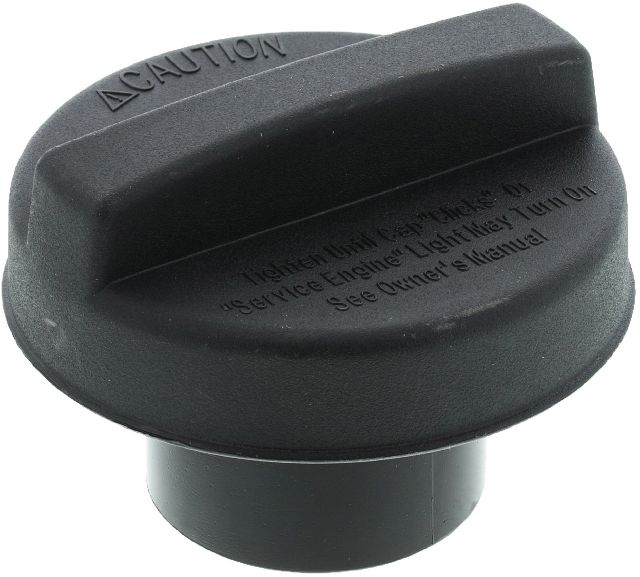
- Loose or Faulty Gas Cap 🔴 High Probability → Shop Fuel Tank Cap This is the most common cause for any EVAP code on any vehicle. The rubber O-ring on the cap wears out, cracks, or hardens over time, preventing a proper seal. A cap that no longer clicks when tightened is a tell-tale sign of failure.
How to confirm: Ensure the gas cap is tightened until it clicks multiple times. Remove the cap and inspect the rubber seal for any visible cracks, stiffness, or damage. If the seal looks compromised or it doesn't click, it needs replacement.
Typical fix: Tighten the cap and clear the code. If the code returns or the cap is damaged, replace the gas cap. Using an OEM cap (Part No. 31010-3L600U) is often recommended for a perfect seal.
Est. part cost: $15-$40 - Faulty Canister Purge Valve (PCSV) 🔴 High Probability → Shop Vapor Canister The purge valve is a known high-failure item on many Kia and Hyundai models from this era, including the Soul and its platform mates like the Elantra. It can get stuck open or closed, disrupting the flow of fuel vapors.
How to confirm: The valve is located in the engine bay on a bracket, making it easy to access. With the engine off, you can try to blow through the valve; if air passes, it's stuck open. A more definitive test involves applying 12V power to its connector and listening for a click. A scan tool can also command it to open and close.
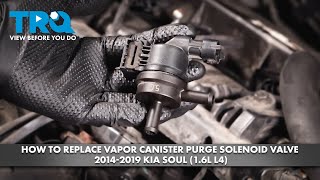
Typical fix: Replacement of the valve. It is mounted on a bracket in the engine bay and secured by two hoses and an electrical connector, making it a simple DIY job that can be done in minutes. 🎬 Watch: Step-by-step guide to replacing the purge solenoid valve.
Est. part cost: $30-$80 - Faulty Canister Close Valve (CCV) / Vent Valve 🟡 Medium Probability → Shop Vapor Canister Located near the charcoal canister at the rear of the vehicle, this valve is exposed to road debris and moisture, which can cause it to fail or its electrical connector to corrode. Failure is a known issue on sister platforms like the Kia Rio.
How to confirm: The valve should be open by default when the car is off. It can be tested with a scan tool that can command it to close or by applying 12V power to see if it actuates. Visually inspect the valve and its connector for rust or damage.
Typical fix: Replace the canister close valve. It is typically mounted on or near the charcoal canister. The correct part for the 2014-2019 Soul is likely 31430-B2000 🎬 See how to locate and remove the canister vent solenoid. or 31430-1Y000.
Est. part cost: $45-$85 - Cracked or Disconnected EVAP Hoses 🟡 Medium Probability
How to confirm: Visually inspect all accessible EVAP lines running from the engine bay to the fuel tank area for cracks, brittleness, or loose connections. The most reliable method is to have a professional perform a smoke test, which forces smoke into the EVAP system to reveal the exact location of any leaks. 🎬 Watch: How a smoke machine pinpointed a difficult EVAP leak.
Typical fix: Replace the damaged section of hose or reconnect it securely.
Est. part cost: $10-$50
Rare But Worth Checking
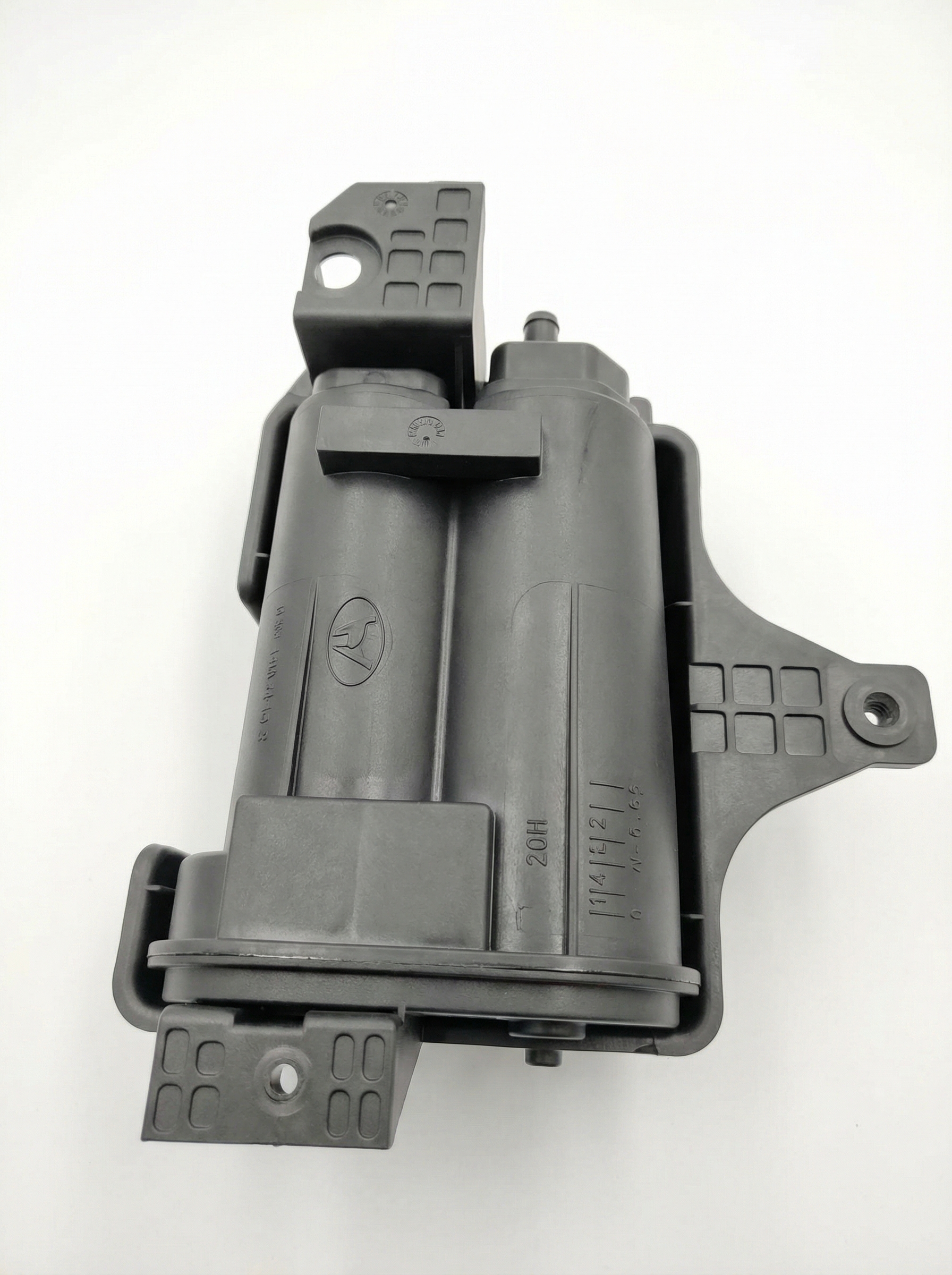
- Cracked Charcoal Canister: → Shop Vapor Canister The canister itself can develop cracks from road debris impact or age. More critically, on some Hyundai/Kia platforms, the canister can fail internally, releasing charcoal pellets that clog the vent valve and hoses, which can also make the vehicle difficult to fuel. This is less common than simple valve failure but should be checked if a smoke test reveals a leak from the canister body or other symptoms are present.
- Faulty Fuel Tank Pressure Sensor: → Shop Fuel Tank Rarely, the sensor that monitors EVAP system pressure can fail. It may send incorrect data to the computer, making it think there is a leak when there isn't one. This is usually diagnosed after all other components and a smoke test check out fine.
Diagnosis Steps
- Read the code with an OBD-II scanner to confirm P0440 and check for any other related codes.
- Inspect the gas cap. Ensure it is tight and clicks. Remove it and check the rubber seal for cracks or damage. If in doubt, it's an inexpensive first part to replace.
- Clear the codes and drive the vehicle for a few days to see if the light returns. Some EVAP tests only run under specific conditions (e.g., certain fuel level and ambient temperature).
- If the code returns, perform a thorough visual inspection of all EVAP hoses and lines you can see in the engine bay and under the car near the fuel tank.
- Locate the canister purge valve in the engine bay. Test its function by removing it and trying to blow through it (it should be closed when off). You can also apply 12V to its terminals to see if it clicks open.
- Locate the canister close valve at the rear of the vehicle. Inspect it and its wiring for corrosion or damage. A scan tool can command it closed for testing.
- If no obvious faults are found, the most effective next step is a professional smoke test to pinpoint the exact source of the leak. This can identify hard-to-see cracks in hoses, the canister, or even the fuel filler neck.
Parts You'll Likely Need
- Gas Cap
(OEM #31010-3L600U)— This is the most frequent cause of EVAP codes due to wear and tear on the seal. A cap that doesn't click is a sure sign of failure.
Trusted brands: Kia (OEM), Stant
OEM price range: $25-$40
Aftermarket price range: $15-$30 - Canister Purge Valve / Solenoid
(OEM #28910-2E000 (for 1.6L) or 29010-03AA0 (for 2.0L))— A very common failure point on this generation of Kia Soul, causing this general EVAP code. Part number varies by engine, so confirm with VIN.
Trusted brands: Kia (OEM), Dorman, Standard Motor Products
OEM price range: $50-$80
Aftermarket price range: $30-$60 - Canister Close Valve / Vent Valve
(OEM #31430-B2000 or 31430-1Y000)— This valve, located at the rear of the car, often fails due to exposure to the elements, preventing the system from sealing correctly for its self-test. Part number should be confirmed with VIN.
Trusted brands: Kia (OEM), Dorman, SKP
OEM price range: $80-$115
Aftermarket price range: $45-$70
Related Codes That Often Appear With This One
- P0441 — This code for 'Incorrect Purge Flow' is very common with P0440 and often points directly to a faulty purge valve that is stuck open or closed.
- P0442 — Indicates a small EVAP leak. The underlying cause could be the same (e.g., a failing gas cap seal), but the computer interprets the leak size differently, sometimes setting both codes.
- P0455 — Indicates a large EVAP leak. A very bad gas cap seal, a completely disconnected hose, or a stuck-open vent valve could trigger P0440 and P0455 simultaneously.
Technical Service Bulletins (TSBs) & Recalls
- ENG164 (Rev 2) / SA280 - For the related code P0441 on
Platform-Specific Known Issues
- Purge Valve Failure is Extremely Common: → Shop Vapor Canister Owners on forums like kiasoulforums.com and Reddit's /r/KiaSoulClub frequently report that replacing the canister purge valve (PCSV) in the engine bay resolves P0440 and related P0441 codes. Many owners consider it a routine maintenance item.
- Gas Cap Seal Wear: → Shop Fuel Tank Cap Multiple DIY videos and forum posts confirm that the first step is always to check the gas cap. A video from The Garage USA shows a common scenario where the cap no longer clicks, indicating a failed internal spring mechanism, which is enough to trigger the code.
Mechanic-Grade Diagnostic Values
- Canister Purge Valve (PCSV) Coil Resistance — expected: ~26 Ohms at 68°F (20°C). Failure: A reading of infinity (open circuit), zero (short circuit), or a value significantly different from 26 Ohms indicates a faulty coil.
- Canister Close Valve (CCV) Coil Resistance — expected: 48 - 65 Ohms. Failure: A reading outside of this range suggests the valve's solenoid coil is failing.
- Fuel Tank Pressure Sensor (FTPS) Signal Voltage (Key On, Engine Off, Gas Cap Removed) — expected: Approximately 1.5V (normal range 1.3V - 1.7V) or ~2.5V depending on the specific sensor version.. Failure: Voltage is stuck high (near 5V), low (near 0V), or does not change when vacuum is applied to the system.
- PCSV Connector Power Pin Voltage (Key On, Engine Off) — expected: Approximately 12V (Battery Voltage). Failure: No voltage suggests a blown fuse (e.g., 'SENSORS 2' fuse) or a break in the power wire from the main relay.
Scan Tool Commands That Help
- Kia GDS (Global Diagnostic System) or equivalent professional scan tool: EVAP System Leak Test — This is a guided, automated test that commands the vent valve closed and the purge valve open to monitor for pressure changes, confirming the system's integrity without manual testing. It's the dealership-level first step after checking for codes.
- Kia GDS or equivalent professional scan tool: Canister Close Valve (CCV) On/Off — This bidirectional command allows a technician to manually close the CCV. This is used during a smoke test to seal the system; if smoke escapes from the CCV while it is commanded closed, the valve itself is leaking.
- Kia GDS or equivalent professional scan tool: Purge Control Solenoid Valve (PCSV) Duty Cycle Control — Allows the technician to manually operate the purge valve at different percentages (duty cycles) while the engine is running to check for a response in fuel trims and engine RPM, confirming if the valve is physically opening and closing as commanded.
Wiring & Ground Locations
- PCSV Connector — On the Canister Purge Solenoid Valve, located on a bracket in the engine bay, typically near the intake manifold.. This connector provides power and the control signal from the ECM. Checking for 12V power at this connector is a key diagnostic step to rule out a wiring or fuse issue before replacing the valve.
- ECM Pin 72 (for 2019 1.6L GDI) — On the main Engine Control Module (ECM) connector.. This is the specific pin that provides the ground-side control signal to the Purge Control Solenoid Valve. A continuity test from this pin to the PCSV connector can verify the integrity of the control wire, ruling out a wiring break.
- CCV Connector — On the Canister Close Valve, located near the charcoal canister at the rear of the vehicle, under the car.. This connector is exposed to road salt and moisture, making it a common point of corrosion. A visual inspection for green or white crust and testing for power are crucial when diagnosing a P0440, as a bad connection can prevent the valve from closing and sealing the system.
Real Owner Repair Stories
- YouTube video by 'T-bucket' (2000 Toyota Celica GT (demonstrates a universal P0440 issue)) — Persistent P0440 check engine light.
❌ Tried (didn't work) Replaced the gas cap, Inspected all visible EVAP hoses in the engine compartment
✅ What actually fixed it The fuel tank vent valve, located on the gas tank itself, had a small, hard-to-see crack. The owner dropped the fuel tank to access and replace the valve, which resolved the code.
"I Checked Everything" — The Actual Cause
- In some cases, a smoke test may not reveal a leak if the issue is an intermittently failing component. For example, the Fuel Tank Pressure Sensor (FTPS) could be sending faulty data to the ECM, making it believe there is a leak when the system is actually sealed. This is diagnosed by monitoring the sensor's voltage with a scan tool; if the voltage is erratic or doesn't correspond to known pressure states (e.g., gas cap off), the sensor is likely the culprit despite a clean smoke test.
OEM Part Supersession History
28910-2E000→28910-2E000 remains a valid part number for many 2012-2018 models.— N/A
Heads up: While 28910-2E000 fits many Souls in this range, some sources indicate it is primarily for 2012-2016 models. The 2019+ Kia Soul with the 2.0L Nu engine may use a different part, such as 28910-3C200. Always verify the part number with the vehicle's VIN.
Model Year Variations Within This Range
- 2019+: The 2019 Kia Soul, while part of the same generation, may use a different purge valve (e.g., 28910-3C200) for the 2.0L Nu MPi engine compared to the 28910-2E000 used in earlier 1.6L and 2.0L models. The physical mounting and connector may be different, requiring VIN confirmation before purchase.
Diagnostic Flowchart
Other Known Issues on This Vehicle
Issues unrelated to this code that are worth knowing about as an owner of this generation:
- Engine Failure & Fire Risk (1.6L GDI & 2.0L Nu) 🔴 High — Widespread across multiple model years, leading to numerous recalls and a class-action lawsuit. Can occur at various mileages, often before 100k miles. (Ref: Recalls SC176, 20V750000. Involves installing Knock Sensor Detection System (KSDS) software and potential engine replacement.)
- Excessive Oil Consumption 🔴 High — Very common, especially on the 2.0L Nu and 1.6L GDI engines. Owners report needing to add a quart of oil every 1,000-2,000 miles. Often begins after 60,000 miles. (Ref: No specific recall, but related to the engine issues covered by recalls and warranty extensions. Dealers perform oil consumption tests to verify the problem.)
- Catalytic Converter Failure 🟠 Medium — Common on 1.6L GDI engines due to high exhaust temperatures, which can lead to engine damage. Often occurs before 100k miles. (Ref: Recall SC176 / SC147 includes inspection and replacement of the catalytic converter if damaged by the underlying engine condition. Federal emissions warranty also covers it for 8 years/80,000 miles.)
- Steering Pinion Plug Separation 🔴 High — Affected 2014-2016 models. The pinion gear could separate from the steering gear assembly, causing a loss of steering. (Ref: Recall SC155 (supersedes 14V-332 and 15V-736).)
Used vs. New Parts: Buying Guide for This Vehicle
When a used part is the smart pick: For this repair, buying used parts is generally not recommended. The primary failure components (purge valve, vent valve, gas cap) are relatively inexpensive new and fail due to internal wear or electrical faults that are impossible to assess visually. A used electronic valve from a junkyard carries a high risk of being near the end of its own service life.
Donor-vehicle mileage cap: roughly under 50000 miles for the part to have meaningful remaining life.
What to inspect on the donor part:
- For a structural part like a fuel filler neck, check for zero rust or visible cracks.
- For a charcoal canister, ensure the plastic housing is not cracked and there are no loose charcoal pellets in the ports.
- Avoid all used electronic parts like valves and sensors, as their remaining lifespan is unknown.
OEM-only on this vehicle (don't cheap out):
- Gas Cap: While aftermarket caps exist, many owners report persistent EVAP codes until an OEM cap is installed, as the seal tolerance is critical.
Aftermarket brands forum-validated for this vehicle:
- Standard Motor Products (SMP)
- Bosch (for sensors)
Brands owners have reported issues with on this vehicle:
- Dorman: While some Dorman parts are considered OE-level fixes, their quality for EVAP components can be hit-or-miss according to forum discussions. Some users report success, while others state the check engine light returned, necessitating a second replacement with an OEM or different aftermarket brand.
Real Owner Stories
Aggregated from forums and TSBs cited above. Mileages and costs reflect what owners reported in those sources.
2014 Kia Soul
Symptoms: Check engine light on with code P0441 (often appearing with P0440).
What fixed it: Replacement of the canister purge valve (PCSV) in the engine bay.
Source hint: reddit.com/r/KiaSoulClub - A thread titled 'Purge valve issues' from a 2014 Soul owner
2014-2019 Kia Soul
Symptoms: The gas cap no longer clicks when tightened, triggering an EVAP code.
What fixed it: Replacing the gas cap because the internal spring mechanism failed.
Source hint: youtube.com - A video from The Garage USA
2014-2019 Kia Soul
Symptoms: Check engine light; owner performed a DIY replacement of the purge solenoid valve.
What fixed it: Replacement of the Vapor Canister Purge Solenoid Valve.
Source hint: youtube.com - A video by '1A Auto' titled 'How to Replace Vapor Canister Purge Solenoid Valve 2014-19 Kia Soul'
Related OBD-II Codes
Frequently Asked Questions
Is there a specific Kia part number recommended for the gas cap on my 2014-2019 Soul?
Does TSB ENG164 apply to the Kia Soul's EVAP system?
Where is the canister purge valve located on the 2014-2019 Kia Soul?
What is the part number for the Canister Close Valve (CCV) on this vehicle?
Could my P0440 code be related to the widespread Kia engine recalls?
Why does my Kia Soul smell like fuel near the rear of the car?
Helpful Videos
![How to Fix P0440 Engine Code in 3 Minutes [2 DIY Methods / Only $4.73]](https://img.youtube.com/vi/-kSpB9clrrs/mqdefault.jpg)
![SMOKE Machine Diagnose Evap P0440 [Problem Found] #automobile #diyrepair #mechanic](https://img.youtube.com/vi/tYMqzzdXO58/mqdefault.jpg)
Used OEM Parts in Stock
New Aftermarket Parts Available


The information in this article is provided for general reference and educational purposes only. Vehicle specifications, procedures, and part compatibility can vary by production date, trim level, and region. Always consult your vehicle's factory service manual and verify part numbers before purchasing or performing repairs. Safety-critical components such as airbags, seat belts, and braking systems should be installed by a qualified professional.
- Kia Soul:
- 🧭 Diagnostic Flowchart
- 🎬 Helpful Videos
- 🛍️ Shop This Part
- What's Unique About the 2014-2019 Kia Soul
- Symptoms You May Notice
- Most Likely Causes
- Rare But Worth Checking
- Diagnosis Steps
- Parts You'll Likely Need
- Related Codes That Often Appear With This One
- Technical Service Bulletins (TSBs) & Recalls
- Platform-Specific Known Issues
- Mechanic-Grade Diagnostic Values
- Scan Tool Commands That Help
- Wiring & Ground Locations
- Real Owner Repair Stories
- "I Checked Everything" — The Actual Cause
- OEM Part Supersession History
- Model Year Variations Within This Range
- Other Known Issues on This Vehicle
- Used vs. New Parts: Buying Guide for This Vehicle
- Real Owner Stories
- 2014 Kia Soul
- 2014-2019 Kia Soul
- 2014-2019 Kia Soul
- Related OBD-II Codes
- Frequently Asked Questions
- 🎟️ Get 5% Off