

P0440 on 2000-2007 Mercedes-Benz C-Class: EVAP Malfunction Causes and Fixes
For a 2000-2007 C-Class (W203), code P0440 usually means a loose gas cap or a faulty EVAP component like a purge or vent valve. Always check the gas cap first. If that's not it, a smoke test is the best way to find the leak, which is often a cracked hose or a bad valve. The charcoal canister shut-off valve, located behind the rear passenger wheel well liner, is a very common failure point on this specific platform.
- P0440 is a general EVAP system malfunction code; it is not a threat to your engine's health.
- Always start diagnosis by checking that the gas cap is tight and its seal is in good condition. This is the most common and cheapest fix.
- If the gas cap isn't the issue, common culprits are the purge valve, vent valve, or cracked hoses.
- A professional smoke test is the most reliable way to find a leak without guessing and replacing unnecessary parts.
- You can continue driving with this code, but you will not pass an emissions inspection until the problem is resolved.
What's Unique About the 2000-2007 Mercedes-Benz C-Class
The 2000-2007 C-Class belongs to the W203 generation. Like many vehicles of this era, its EVAP system components, particularly rubber hoses and plastic valves, are now old enough to become brittle and fail. While the causes are typical for most cars (gas cap, valves, hoses), the specific location of parts like the charcoal canister and vent valve (often behind the rear passenger-side wheel well liner) is key for diagnosis on this platform. This shut-off valve is a well-documented failure item on the W203 and related platforms. Some owners report that when replacing a failed, older-style shut-off valve, an updated wiring harness adapter is also required.
Generation note: This range primarily covers the W203 generation of the Mercedes-Benz C-Class (2000-2007). Some very early 2000 models could be the previous W202 generation, but the EVAP system principles and common failures are largely the same. The W203 was produced from 2000 to 2007 and included sedan (W203), wagon (S203), and SportCoupé (CL203) body styles.
Symptoms You May Notice
- Check Engine Light is on.
- A faint fuel smell, especially around the rear of the car or after refueling.
- Difficulty filling the gas tank (the fuel pump nozzle clicks off repeatedly), which can point to a stuck-closed vent valve.
- No noticeable symptoms other than the Check Engine Light are very common.
- Replacing the charcoal canister when only a less expensive valve or hose has failed. A smoke test should always be performed before condemning an expensive part like the canister.
- Replacing parts randomly without diagnosis. Starting with the gas cap is logical, but beyond that, a smoke test is the most efficient way to find the leak source.
Most Likely Causes
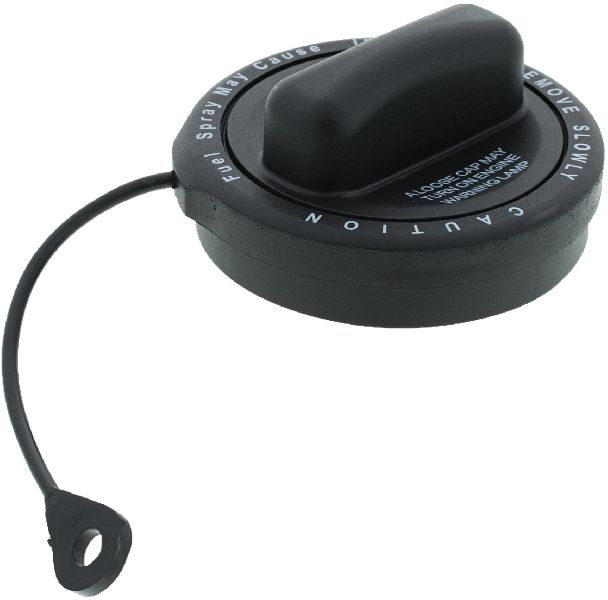
- Loose or Faulty Gas Cap 🔴 High Probability → Shop Fuel Tank Cap This is the most common cause for P0440 on any vehicle. The rubber O-ring seal on the cap degrades over time, preventing a proper seal.
How to confirm: Ensure the gas cap is tightened until it clicks. Inspect the rubber seal for cracks, stiffness, or damage. If the seal is worn, the cap needs replacement. An OEM cap is recommended as some aftermarket caps do not seal correctly.
Typical fix: Tighten or replace the gas cap.
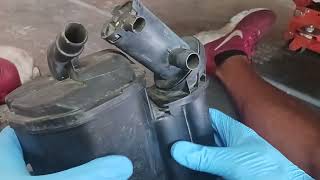
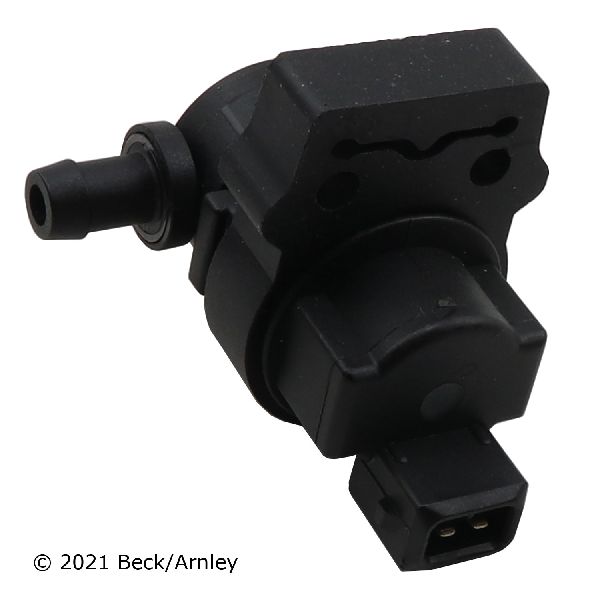
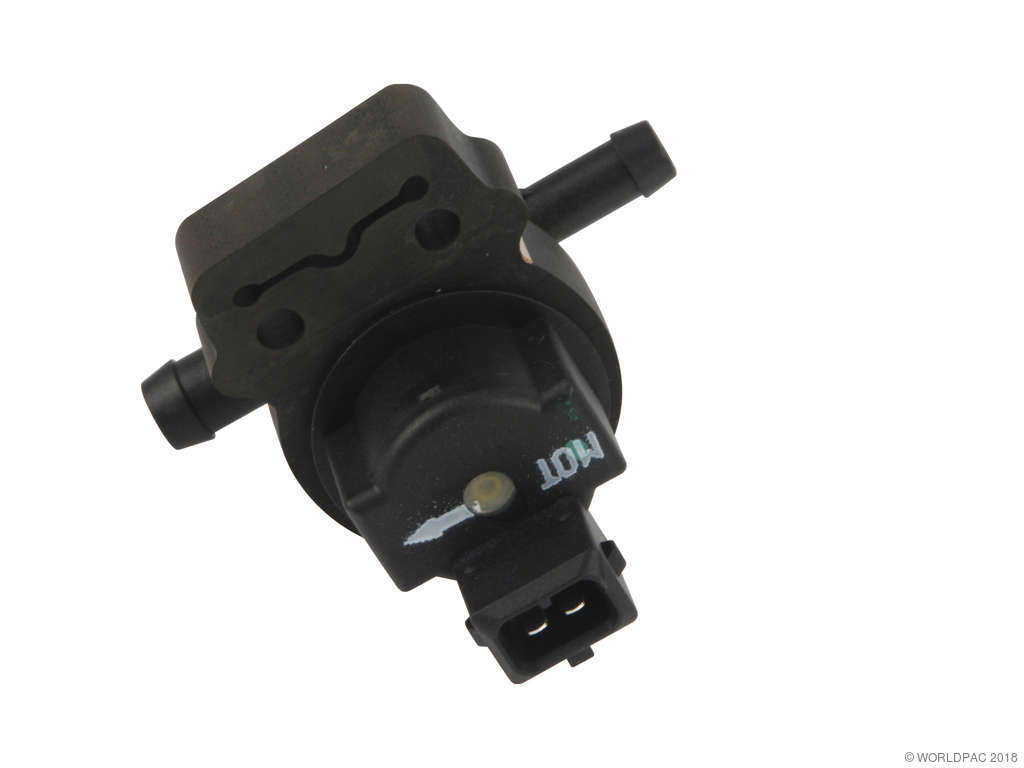
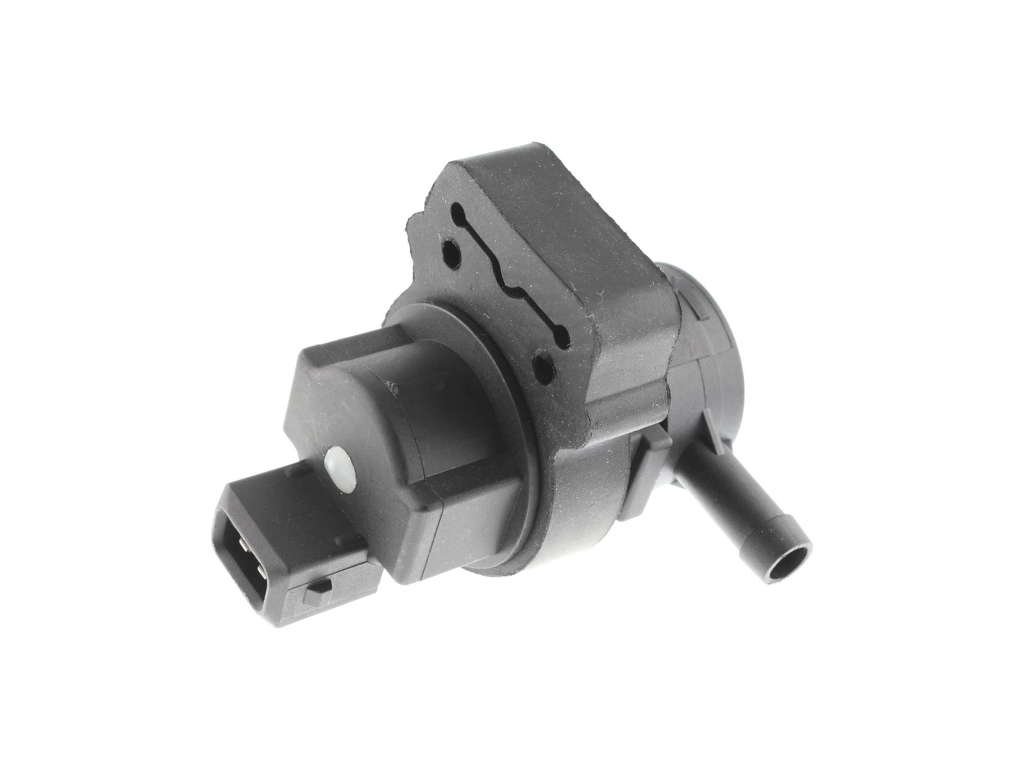
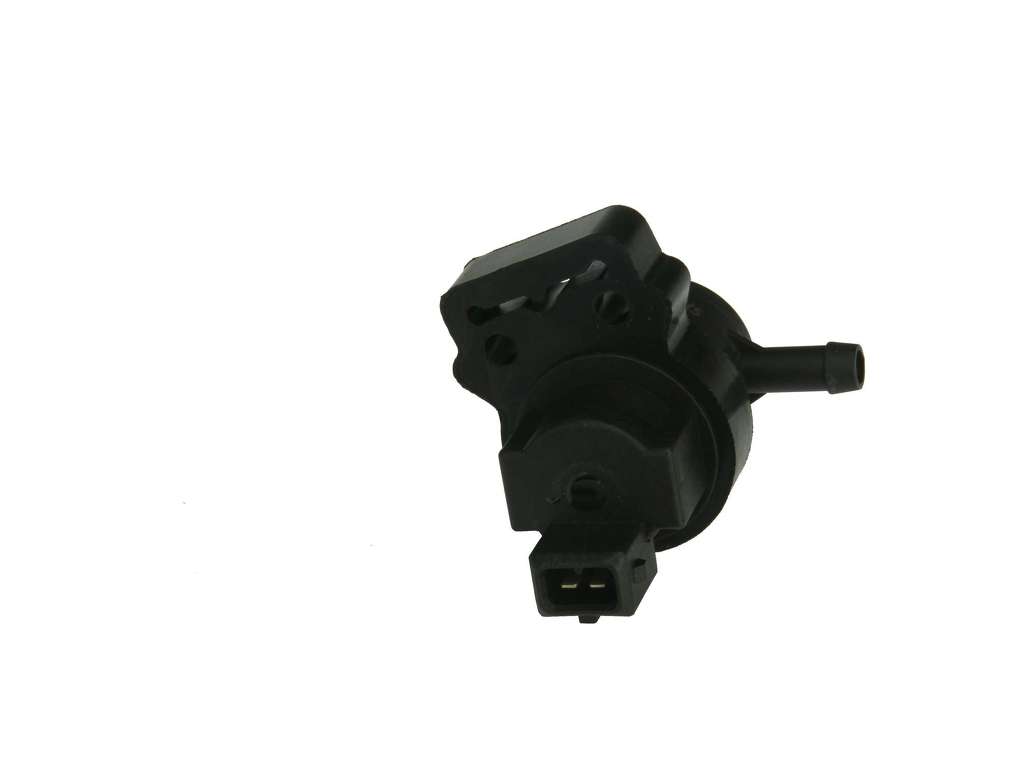
Est. part cost: $25-$50 - Faulty Charcoal Canister Vent Valve / Shut-Off Valve 🔴 High Probability → Shop Vapor Canister This valve is responsible for sealing the EVAP system for pressure testing and is a very well-documented failure item on the W203 and related W211 E-Class. It is located in a vulnerable position behind the rear passenger wheel well liner, exposed to road debris and moisture.
How to confirm: The valve is typically located near the charcoal canister, behind the rear passenger wheel well liner. It can be tested with a scan tool to see if it actuates. A user on MBWorld.org with a 2002 C320 Wagon tested his by applying 12V directly to the pins; when it failed to activate, he confirmed it was faulty. If it's stuck closed, you'll often have trouble refueling.
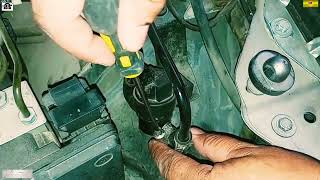
Typical fix: Replace the vent valve. On some models, an updated wiring harness adapter may be required if the part has been revised. A DIY replacement is possible in about an hour. 🎬 See how to locate and remove the vent solenoid
Est. part cost: $80-$180 - Cracked or Disconnected EVAP Hoses 🟡 Medium Probability After 15-20+ years, the rubber and plastic hoses in the engine bay and under the car become brittle from heat and age, leading to cracks. The hoses connected to the purge valve in the engine bay are a common area to check.
How to confirm: Visually inspect all accessible EVAP lines for obvious cracks or disconnections. The most definitive method is to have a smoke test performed, which will force smoke through the system and reveal the exact location of any leaks.
Typical fix: Replace the cracked section of the hose. Some owners may choose to use standard hose clamps instead of the original Clic-R style clamps for easier service.
Est. part cost: $10-$100 - Faulty EVAP Purge Valve 🟡 Medium Probability → Shop Vapor Canister This valve controls the flow of fuel vapors to the engine. It's an electromechanical part that can get stuck open or closed, a common failure on many vehicles including Mercedes-Benz. A stuck-open valve will create a vacuum leak.
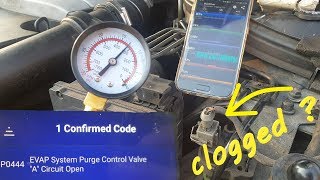
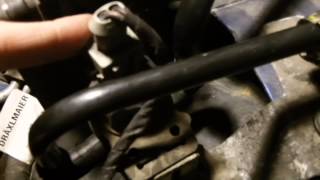
How to confirm: The valve is located in the engine bay. With the engine running, you can sometimes feel for suction on the intake side hose when the valve should be closed. A scan tool can also be used to command the valve open and closed while listening for a click. Several YouTube videos demonstrate the replacement procedure on a W203. 🎬 Watch this step-by-step purge valve replacement walkthrough
Typical fix: Replace the purge valve.
Est. part cost: $70-$150
Rare But Worth Checking
- Cracked Charcoal Canister: → Shop Vapor Canister The canister itself can develop cracks from age or physical damage. This is less common than valve or hose failures but is often found during a smoke test. Overfilling the fuel tank can also saturate the canister with liquid fuel, blocking vapor flow and triggering a P0440 code without an actual leak.
- Faulty Fuel Tank Pressure Sensor: → Shop Fuel Tank The sensor that monitors EVAP system pressure can fail and send incorrect readings to the computer, triggering the code even if no leak exists.
- Leaking Fuel Filler Neck: → Shop Fuel Filler Neck Rust or damage to the fuel filler neck where the gas cap seals can prevent a proper seal, causing a leak that the system will detect.
Diagnosis Steps
- Read the code with an OBD-II scanner to confirm P0440 is present and note any other codes.
- Inspect the gas cap. Ensure it is tight and the seal is not cracked or brittle. If in doubt, it's an inexpensive first step to replace it with an OEM part.
- Clear the codes and drive the vehicle for a few days to see if the light returns.
- If the code comes back, perform a thorough visual inspection of all visible EVAP hoses in the engine bay and under the vehicle for obvious cracks or damage.
- Locate the purge valve in the engine bay. Listen for a ticking sound, which indicates operation. 🎬 Watch this guide on diagnosing EVAP system leaks Use a scan tool to command it open and closed to verify function.
- If no obvious issues are found, the most effective diagnostic step is a smoke test. A mechanic will inject smoke into the EVAP system to quickly and accurately find the source of the leak.
- Based on the smoke test results, replace the identified leaking component, which could be a hose, valve, the canister, or a gasket.
- Pay special attention to the charcoal canister shut-off valve behind the rear passenger wheel well liner, as this is a known high-failure part.
Parts You'll Likely Need
- Fuel Cap — This is the most frequent and easiest fix. The seal wears out over time, causing a leak.
Trusted brands: Genuine Mercedes-Benz, Blau
OEM price range: $30-$50
Aftermarket price range: $20-$40 - Vapor Canister Purge Valve
(OEM #A0004708893 (or superseded numbers like 0004705593, 0004703593))— A common failure item that gets stuck open or closed, preventing the system from working correctly. Located in the engine bay.
Trusted brands: Bosch, Genuine Mercedes-Benz
OEM price range: $120-$180
Aftermarket price range: $70-$150 - Vapor Canister Vent Valve (Shut-Off Valve)
(OEM #0004707193 (check specific VIN, may be part of canister))— This valve, located near the charcoal canister, is a very common failure on W203 vehicles, preventing the system from sealing for tests.
Trusted brands: Bosch, Genuine Mercedes-Benz
OEM price range: $100-$200
Aftermarket price range: $80-$150
Related Codes That Often Appear With This One
- P0442 — This code indicates a 'Small EVAP Leak.' It can appear with P0440 if the system's self-test identifies a general malfunction and also categorizes the leak size.
- P0455 — This code indicates a 'Large EVAP Leak.' It is often triggered by a completely missing or very loose gas cap, which would also cause a general P0440 fault.
- P0456 — This code for a 'Very Small EVAP Leak' can be triggered by the same issues as P0440, such as a failing gas cap seal or a pinhole in a hose.
- P0446 — This code indicates a fault in the EVAP Vent Control Circuit, often pointing directly to a faulty charcoal canister shut-off/vent valve, its wiring, or the ECU. An owner on MBWorld.org documented troubleshooting this code on a 2002 C320, which led him to test the shut-off valve.
Mechanic-Grade Diagnostic Values
- EVAP Purge Valve (in engine bay) Coil Resistance — expected: 20 - 50 Ohms. Failure: A reading of OL (infinity) indicates an open coil, while a reading near 0-1 Ohm indicates a shorted coil. Either requires replacement.
- EVAP Shut-Off Valve (at charcoal canister) Coil Resistance — expected: 48 - 65 Ohms. Failure: A reading near 1 Ohm indicates a shorted coil, which is a common failure mode for this part.
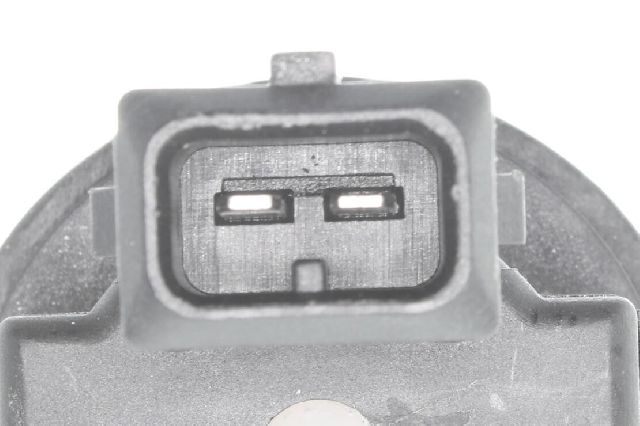
- Voltage at EVAP Shut-Off Valve Connector — expected: ~12V (Battery Voltage) on one pin with Key On, Engine Off.. Failure: No voltage suggests a wiring issue, blown fuse, or problem with the ECU driver circuit.
- Fuel Tank Pressure (FTP) Sensor Voltage — expected: Approximately 1.5V - 2.5V at Key On, Engine Off (KOEO) at atmospheric pressure. The sensor's full range is typically 0.5V to 4.5V.. Failure: Voltage is stuck at 0V, 5V, or a value that does not change during an EVAP system test, indicating a faulty sensor or wiring.
Hidden / Shadow Codes Worth Checking
- Y58/1 Fault: This is the Mercedes component identifier for the EVAP Purge Valve located in the engine bay. A dealer-level scan tool may specify a fault with this component, such as 'permanently open' or 'circuit open,' which provides more detail than a generic P0440. (see via Mercedes-Benz STAR/Xentry/DAS diagnostic software or a high-end professional scanner with Mercedes-specific software.)
- Y58/4 Fault: This is the Mercedes component identifier for the EVAP Shut-Off Valve (Vent Valve) located by the charcoal canister. A specific fault here, like a circuit malfunction, points directly to the valve or its wiring as the cause for the P0440. (see via Mercedes-Benz STAR/Xentry/DAS diagnostic software or a high-end professional scanner.)
Scan Tool Commands That Help
- Mercedes STAR/Xentry/DAS: EVAP System Leak Test (Guided Function) — This is the primary function used to command the system to seal itself (by closing the vent valve) and monitor for pressure decay. The software guides the technician through the test steps.
- Mercedes STAR/Xentry/DAS: Actuations -> Activate Purge Valve (Y58/1) — To manually command the purge valve open and closed while listening for a click or checking for vacuum flow. A technician can observe live data (fuel trims, O2 sensors) to see the effect of an open valve on the air/fuel mixture, confirming if it's stuck.
- Mercedes STAR/Xentry/DAS: Actuations -> Activate Shut-Off Valve (Y58/4) — To command the shut-off valve closed to seal the system for an external smoke test, or to verify the valve is receiving a signal and actuating correctly.
Wiring & Ground Locations
- Shut-Off Valve Wiring Harness Adapter — Connects the main vehicle harness to the updated EVAP Shut-Off Valve (part 0004707193) located behind the rear passenger wheel well liner.. When replacing an original, failed shut-off valve with the updated part, the connector is different. This adapter (Part No. 211 440 01 34 or 211 440 03 34) is required to complete the installation. Failure to use it will result in an open circuit and persistent codes.
- Fuel Tank Pressure Sensor Wiring — The sensor is often located on top of the fuel tank, accessible by removing the rear seat cushions to get to the fuel pump/sending unit access covers.. In cases of electrical fault codes related to the EVAP system (e.g., short to ground), the wiring harness leading to the top of the fuel tank can be a failure point. A user chasing a short circuit was advised this is the location to inspect.
Real Owner Repair Stories
- MBWorld.org user, Thread: 'Charcoal Eavap Canister Shut-Off Valve' (2002 Mercedes-Benz C320 Wagon (S203)) — Check Engine Light with code P0446 (EVAP Vent Control Circuit Malfunction).
❌ Tried (didn't work) Visual inspection showed the valve was clean and not physically stuck.
✅ What actually fixed it The owner tested the shut-off valve's coil and measured only 1 Ohm of resistance, indicating a short circuit. He then applied 12V directly to the valve pins, and it failed to activate. This confirmed the valve's solenoid had failed internally. Replacing the shut-off valve resolved the issue. - MBWorld.org user, Thread: 'Evap system in 2005 c230 Kompressor coupe' (2005 Mercedes-Benz C230 Kompressor Coupe (CL203)) — Check Engine Light with code P0456 (Very Small EVAP Leak), often appearing after refueling.
❌ Tried (didn't work) Replacing the gas cap with an OEM part., Replacing the purge valve (in engine bay) by the dealer., A smoke test performed by an independent mechanic, which found no leaks.
✅ What actually fixed it After the code returned, the owner took it back to the dealer. They removed the rear wheel and fender liner and discovered a severed EVAP line running from near the fuel filler neck area toward the front of the car. Repairing this line fixed the leak.
"I Checked Everything" — The Actual Cause
- A faulty Fuel Tank Pressure (FTP) sensor can send incorrect readings to the ECU, causing it to believe there is a leak when the system is perfectly sealed. A smoke test will show no leaks, leading to misdiagnosis if the sensor's live data is not checked.
- A charcoal canister that is saturated with liquid fuel (often from habitually overfilling the gas tank) will not allow vapor to flow correctly. The ECU's self-test interprets this blockage as a system malfunction, triggering P0440, but a smoke test will not show a leak.
- An intermittent leak in a hose or valve that only opens under specific temperature or vibration conditions. A smoke test on a cold vehicle may not reveal the leak, as documented by an owner whose code only appeared after refueling and driving.
When the Usual Fixes Don't Work
- While the most common causes are the gas cap and EVAP valves, several owners have chased the P0440 (or related small leak codes like P0456) for months, even after passing a smoke test. In one documented case on a 2005 C230, after replacing the gas cap and purge valve with no success, the ultimate cause was a severed EVAP line near the fuel filler neck that was missed by an initial smoke test. This highlights that even with a 'clean' smoke test, a persistent physical leak can be the root cause, requiring a more thorough inspection of all lines, especially around the filler neck and canister area.
OEM Part Supersession History
Multiple, including 0004701593, 0004703593, 0004705593→A0004708893— Part consolidation and potential design improvements over time.
Heads up: This is for the Purge Valve in the engine bay. These numbers are generally interchangeable as they are superseded by the latest version.Older version of Shut-Off Valve (PN varies)→0004707193 (Updated Shut-Off Valve)— Redesign of the valve to improve reliability.
Heads up: The updated valve (0004707193) has a different electrical connector than the original part on many early-to-mid W203 models. A wiring harness adapter, part number 2114400134 or 2114400334, is required to connect the new valve to the old harness.
Model Year Variations Within This Range
- 2000-2004 (Pre-facelift): These models are more likely to have the older style EVAP shut-off valve and will almost certainly require the wiring harness adapter (e.g., 2114400134) when replacing it with the current part (0004707193).
- 2005-2007 (Post-facelift): Later models may have come from the factory with the updated shut-off valve and connector style, potentially not requiring the adapter harness for replacement. However, it is critical to verify the connector on the vehicle before ordering parts.
Diagnostic Flowchart
Other Known Issues on This Vehicle
Issues unrelated to this code that are worth knowing about as an owner of this generation:
- Valeo Radiator Glycol Contamination 🔴 High — Affects pre-facelift models (before ~2004) equipped with specific Valeo-brand radiators. A faulty seal allows engine coolant (glycol) to mix with automatic transmission fluid, destroying the transmission and torque converter. (Ref: No official recall, but dealer TSBs were issued. A class-action lawsuit was filed regarding this issue.)
- M271 Engine Timing Chain Stretch 🔴 High — Common on the 1.8L supercharged M271 engine, especially on earlier models or with extended oil change intervals. The single-row timing chain can stretch, causing rattling on startup, timing-related codes, and potentially catastrophic engine failure if it jumps time.
- Front SAM Module Water Damage 🟠 Medium — The Front Signal Acquisition Module (SAM), located in a box in the engine bay, is prone to water intrusion from clogged cowl drains or a poor box seal. This causes a wide range of bizarre, unrelated electrical gremlins.
- M272 V6 Balance Shaft Gear Wear 🔴 High — Affects M272 engines produced between 2004-2008 (found in late-model W203s). The balance shaft gear, made of soft material, wears prematurely, causing timing-related codes (P0016, P0017) and requiring a very expensive, engine-out repair. (Ref: A class-action lawsuit was settled for this issue, but the coverage period has likely expired for most vehicles.)
- Early Model Rust 🟠 Medium — Pre-facelift models (2000-2004) are particularly susceptible to rust, especially on the bottom of the doors, wheel arches, and trunk lid.
- Camshaft Adjuster Magnet Leaks 🟡 Low — Common on M271 and M272 engines. The electrical connectors for the camshaft adjuster magnets leak oil, which can then wick through the wiring harness all the way to the ECU, causing further damage. A cheap fix (pigtail harnesses) can prevent expensive damage.
Used vs. New Parts: Buying Guide for This Vehicle
When a used part is the smart pick: For purely structural, non-electronic parts, used can be an option. This includes the plastic body of the charcoal canister (if not cracked) or the fuel filler neck from a rust-free donor car. Inspect carefully for any signs of damage or brittleness.
Donor-vehicle mileage cap: roughly under 80000 miles for the part to have meaningful remaining life.
What to inspect on the donor part:
- For a charcoal canister, ensure it doesn't rattle (broken carbon) and has no fuel smell (not saturated).
- For a filler neck, check for zero rust or pitting, especially around the sealing surface for the gas cap.
- Avoid any rubber hoses from a donor car; they are guaranteed to be as old and brittle as the ones you are replacing.
OEM-only on this vehicle (don't cheap out):
- Fuel Tank Pressure Sensor: Aftermarket sensors can have different voltage scaling, leading to persistent incorrect readings and codes. OEM or the original supplier (Bosch) is critical.
- Gas Cap: Many owners report that cheap aftermarket gas caps fail to seal properly on the W203 filler neck, causing the code to return. A Genuine Mercedes-Benz cap is strongly recommended.
- EVAP Valves (Purge & Shut-Off): While a top-tier brand like Bosch is acceptable (as they are an OEM supplier), cheap, unbranded electronic valves are known to have high failure rates and should be avoided.
Aftermarket brands forum-validated for this vehicle:
- Bosch (often the original equipment manufacturer for Mercedes-Benz)
Brands owners have reported issues with on this vehicle:
- Unbranded, 'white-box' electronic parts from online marketplaces like eBay or Amazon. Forum users report these parts often fail within months or are dead on arrival.
Real Owner Stories
Aggregated from forums and TSBs cited above. Mileages and costs reflect what owners reported in those sources.
2002 Mercedes-Benz C320 Wagon
Symptoms: The owner was dealing with an EVAP system fault (specifically P0446 in this instance, which is closely related to P0440) and needed to verify the shut-off valve function.
What fixed it: The owner performed an electrical test by applying 12V directly to the pins of the charcoal canister shut-off valve; when it failed to activate, the valve was confirmed faulty and replaced.
Source hint: MBWorld.org, Thread: 'Charcoal Eavap Canister Shut-Off Valve'
Related OBD-II Codes
Frequently Asked Questions
I'm having trouble refueling my C-Class and the pump nozzle keeps clicking off. Is this related to P0440?
Where is the charcoal canister shut-off valve located on my W203?
Can I use an aftermarket gas cap to fix the P0440 code on my Mercedes?
Is there a specific engine-related issue on the 2005-2007 C-Class I should be aware of while diagnosing codes?
My 2002 C320 has a P0440; could it be the purge valve?
Are there any wiring concerns when replacing the vent valve on this model?
Helpful Videos
We Have This Part in Stock

The information in this article is provided for general reference and educational purposes only. Vehicle specifications, procedures, and part compatibility can vary by production date, trim level, and region. Always consult your vehicle's factory service manual and verify part numbers before purchasing or performing repairs. Safety-critical components such as airbags, seat belts, and braking systems should be installed by a qualified professional.
- Mercedes-Benz C-Class:
- 🧭 Diagnostic Flowchart
- 🎬 Helpful Videos
- 🛍️ Shop This Part
- What's Unique About the 2000-2007 Mercedes-Benz C-Class
- Symptoms You May Notice
- Most Likely Causes
- Rare But Worth Checking
- Diagnosis Steps
- Parts You'll Likely Need
- Related Codes That Often Appear With This One
- Mechanic-Grade Diagnostic Values
- Hidden / Shadow Codes Worth Checking
- Scan Tool Commands That Help
- Wiring & Ground Locations
- Real Owner Repair Stories
- "I Checked Everything" — The Actual Cause
- When the Usual Fixes Don't Work
- OEM Part Supersession History
- Model Year Variations Within This Range
- Other Known Issues on This Vehicle
- Used vs. New Parts: Buying Guide for This Vehicle
- Real Owner Stories
- 2002 Mercedes-Benz C320 Wagon
- Related OBD-II Codes
- Frequently Asked Questions
- 🎟️ Get 5% Off