

P0440 on 2017-2023 Mercedes-Benz E-Class: EVAP System Malfunction Causes and Fixes
For a 2017-2023 Mercedes-Benz E-Class, a P0440 code most often points to a loose or faulty gas cap. If tightening or replacing the cap doesn't work, the next most likely culprit is a failing canister purge valve. A new gas cap is around $30-$80, while a purge valve can cost between $75 and $180. A smoke test is the most definitive way to find leaks that are not obvious.
- P0440 indicates a general fault in the EVAP (emissions) system, not a critical engine problem.
- Always start with the simplest and most common fix: check that your gas cap is tight and its seal is intact.
- If a new gas cap doesn't solve the issue, the canister purge valve is the next most likely part to have failed.
- While you can drive the car with this code, it will cause an automatic failure on an emissions test.
- For leaks that aren't obvious, a smoke test performed by a mechanic is the most reliable diagnostic method before replacing expensive parts like the charcoal canister.
What's Unique About the 2017-2023 Mercedes-Benz E-Class
The 2017-2023 E-Class (W213 generation) uses a sophisticated and generally reliable EVAP system with components often supplied by Bosch. While the system is robust, certain parts like the purge valve are common failure points across many modern Mercedes-Benz vehicles. An emissions recall campaign was issued for some 2018-2019 E-Class models for an incorrect charcoal canister being installed from the factory, highlighting the importance of using correct, quality parts for any repair. The purge valve on these models is known to sometimes produce a ticking noise, which can be a sign of normal operation or impending failure.
Symptoms You May Notice
- Check Engine Light is on.
- A faint smell of fuel, especially around the outside of the vehicle.
- Difficulty starting the car, particularly after refueling (less common, more associated with a purge valve stuck open).
- Rough idling (if the purge valve is stuck open).
- Audible ticking noise from the engine bay, which could be the purge valve operating or failing.
- Replacing the O2 sensors, as they are not related to the EVAP system.
- Replacing the charcoal canister when the actual problem is a small, hard-to-see cracked hose or a faulty purge valve. A smoke test should be performed before replacing expensive components.
Most Likely Causes
- Loose or Faulty Gas Cap 🔴 High Probability → Shop Fuel Tank Cap This is the most common cause for an EVAP code on any vehicle. The cap's seal can degrade over time or it may simply not have been tightened correctly after refueling. The W213 uses a specific cap design, and using a non-OEM cap can also lead to sealing issues.
How to confirm: Ensure the gas cap is tightened until it clicks. Inspect the rubber seal on the cap for cracks or damage. If the light returns after tightening, a new OEM cap is an inexpensive and highly effective diagnostic step.
Typical fix: Tighten or replace the gas cap. An OEM replacement is recommended.
Est. part cost: $30-$80 - Faulty Canister Purge Valve (Solenoid) 🟡 Medium Probability → Shop Vapor Canister The purge valve is an electromechanical part that cycles frequently and can get stuck open or closed, or fail electrically. It's a known failure point on many modern German vehicles, including Mercedes, and can sometimes be identified by a loud ticking noise.
How to confirm: With the engine running, you can disconnect the hose from the intake side and feel for vacuum when it should be closed (e.g., at cold start). A scan tool can also command the valve to open and close to check for an audible click. A definitive test involves using a handheld vacuum pump to see if it holds vacuum when de-energized.
Typical fix: Replace the purge valve. It is typically located in the engine bay, mounted near the intake manifold, and is accessible for DIY replacement.
Est. part cost: $75-$180 - Cracked or Disconnected EVAP Hoses 🟡 Medium Probability
How to confirm: Visually inspect all accessible EVAP lines running from the fuel tank area to the charcoal canister and up to the purge valve in the engine bay. The most definitive method is to have a mechanic perform a smoke test, which forces smoke into the EVAP system to reveal the exact location of any leaks.
Typical fix: Replace the cracked or broken hose section.
Est. part cost: $20-$100 - Leaking Charcoal Canister or Vent Valve ⚪ Low Probability → Shop Vapor Canister The plastic housing of the canister can develop cracks over time due to age or road debris. The vent valve, often attached to the canister, can also fail. Repeatedly overfilling the fuel tank (topping off after the pump clicks off) can saturate the charcoal media with liquid fuel, causing it to fail.
How to confirm: A smoke test is the best way to confirm a leak in the canister or vent valve. Visual inspection may reveal cracks in the housing. The canister is typically located near the rear of the vehicle, often behind a wheel well liner.
Typical fix: Replace the charcoal canister assembly and/or the vent valve.
Est. part cost: $200-$400
Rare But Worth Checking
- Faulty Fuel Tank Pressure Sensor: → Shop Fuel Tank This sensor monitors the pressure within the EVAP system. If it provides incorrect readings to the ECM, it can falsely trigger a P0440 code even if no leak exists. On many Mercedes models, this sensor is located on top of the fuel tank and can be difficult to access, sometimes requiring the tank to be dropped.
Diagnosis Steps
- Read the code with an OBD-II scanner to confirm P0440 is present and note any other codes.
- Inspect the gas cap. Remove it, check the seal for damage, and reinstall it, ensuring it clicks several times. Clear the code and drive for a few days to see if it returns. Consider replacing it with an OEM cap as a cheap and effective first step.
- If the code returns, perform a thorough visual inspection of all visible EVAP hoses in the engine bay and under the car for obvious cracks, disconnections, or damage.
- Locate the canister purge valve in the engine bay. On the W213, it's often on the driver's side of the engine. Test its function by listening for a click when activated with a scan tool or by checking if it holds vacuum when closed.
- If the cause is still not apparent, the most effective next step is a professional smoke test. This involves injecting pressurized smoke into the EVAP system to quickly and accurately locate the source of the leak.
- Inspect the charcoal canister and vent valve, located near the rear axle, for any visible cracks or signs of fuel saturation.
Parts You'll Likely Need
- Fuel Cap
(OEM #222-470-02-05 (verify by VIN))— This is the most frequent and simplest fix. The seal wears out over time, causing a pressure leak.
Trusted brands: Genuine Mercedes-Benz
OEM price range: $50-$80
Aftermarket price range: $20-$40 - Canister Purge Valve / Solenoid
(OEM #001-476-44-32-64 or 213-470-69-01-64 (verify by VIN as multiple parts exist))— This valve is a common failure item that gets stuck open or closed, disrupting the EVAP system's ability to manage fuel vapors.
Trusted brands: Bosch, Genuine Mercedes-Benz, Vitesco
OEM price range: $120-$180
Aftermarket price range: $70-$120
Related Codes That Often Appear With This One
- P0441 — Incorrect Purge Flow. This often appears with P0440 if the purge valve is malfunctioning or a line is blocked.
- P0455 — EVAP System Leak Detected (Large Leak). This is a more specific version of P0440 and frequently points to a very loose gas cap or a disconnected hose.
- P0456 — EVAP System Leak Detected (Very Small Leak). This code indicates a tiny leak and often requires a smoke test to find, pointing to hairline cracks in hoses or a failing seal.
Platform-Specific Known Issues
- An emissions recall campaign (NHTSA Campaign 2020090018) was issued for some 2018-2019 E-Class models because an incorrect charcoal canister may have been installed at the factory, which could lead to emissions non-compliance and potentially trigger EVAP codes.
- Some owners on forums report chasing this code, replacing the gas cap and purge valve, only to find the issue was a pinhole leak in a hose that was only discoverable via a smoke test.
Mechanic-Grade Diagnostic Values
- Canister Purge Valve (Y104) Coil Resistance — expected: 15-38 Ohms (general range, verify for specific part number). Failure: A reading of infinite resistance (open circuit) or near-zero resistance (short circuit) indicates a failed solenoid coil.
- Fuel Tank Pressure (FTP) Sensor Signal Voltage — expected: Approx. 0.5V to 4.5V, varying with pressure. Often 1.5V - 2.5V at Key On, Engine Off (KOEO).. Failure: Voltage stuck at 0V, 5V, or a value that does not change when pressure/vacuum is applied indicates a faulty sensor or wiring issue.
- Fuel Tank Pressure (FTP) Sensor Ground Circuit Voltage Drop — expected: Less than 500mV (0.5V). Failure: Voltage significantly higher than 0.5V indicates a poor ground connection, which can cause inaccurate sensor readings.
Scan Tool Commands That Help
- Mercedes-Benz XENTRY / DAS: EVAP System Leak Test / Actuations — This is the dealer-level guided test. It allows a technician to command the purge valve (Y58/1 or Y104) and canister shut-off valve to cycle on and off, while monitoring the fuel tank pressure sensor to pinpoint a fault without guesswork.
- Mercedes-Benz XENTRY / DAS: Adaptations — After replacing an EVAP system component like the purge valve or ECU, this function can be used to reset learned values and ensure the system operates correctly with the new part.
Wiring & Ground Locations
- Y104 — Engine bay, typically mounted on or near the intake manifold.. This is the Mercedes-Benz component designation for the Canister Purge Valve. Identifying it on a wiring diagram is key to tracing its power and control wires back to the ECU.
- Fuses 101, 102, 103, 104, 118, 119 — Engine compartment fuse box (front SAM).. These fuses are designated for 'Engine Electronics' on the W213 and provide power to the Engine Control Module (ECU), which controls the entire EVAP system. A fault in this circuit could mimic an EVAP component failure.
"I Checked Everything" — The Actual Cause
- A common edge case is when a smoke test reveals no leaks, yet the P0440 code persists. This can happen if the charcoal canister is saturated with liquid fuel from repeatedly 'topping off' the gas tank. The saturated carbon blocks the system, preventing it from functioning correctly during the self-test, but it does not present as a physical leak of smoke. The fix is to replace the canister and blow out all connected EVAP lines with compressed air.
- A faulty Fuel Tank Pressure (FTP) sensor can send incorrect (but plausible) data to the ECU, causing it to believe there is a leak when there isn't one. A smoke test will show no leaks, but the sensor's inaccurate reading will still cause the EVAP monitor to fail its self-test.
OEM Part Supersession History
2134706901→213-470-69-01-64— Part revision or supplier change.
Heads up: The superseding part number 213-470-69-01-64 is now listed as 'No longer available' by some Mercedes-Benz parts dealers, indicating it has likely been superseded by another part number. Always verify the current correct part number with a dealer using the vehicle's VIN.
Model Year Variations Within This Range
- 2017-2019: E300 models from these years may use a purge valve from supplier Vitesco, part number 000-476-06-00-64.
- 2019-2023: Models with the 3.0L engine (Sedans/Wagons) use a specific vapor canister, part number 2134700502. This part does not fit the 2-door Coupe or Convertible models, indicating different EVAP system layouts based on body style.
Diagnostic Flowchart
Other Known Issues on This Vehicle
Issues unrelated to this code that are worth knowing about as an owner of this generation:
- 48V Mild-Hybrid Battery Failure 🔴 High — Affects models from 2019 onwards with EQ Boost (e.g., E450). Can occur at very low mileage, causing the vehicle to not start or shut down while driving. (Ref: No official recall, but widespread dealer-level repairs and software updates are documented.)
- M274 Engine Piston Cracking / Wrist Pin Failure 🔴 High — More common on earlier models (pre-2018) of the 2.0L M274 engine (E300). Can lead to engine noise (rattling/knocking) and eventual catastrophic engine failure. (Ref: Subject of class-action lawsuits, but no universal recall.)
- M274 Engine Timing Chain Stretch & Cam Adjuster Noise 🟠 Medium — Can occur around 60,000-80,000 miles. Presents as a rattling noise on cold starts. If ignored, can lead to timing failure. (Ref: Updated parts were introduced in later production years.)
- Interior Rattles and Squeaks 🟡 Low — Common complaint from owners, particularly from the dashboard, center console, and door panels, especially on uneven roads.
- Air Suspension (Airmatic) Failures 🟠 Medium — On models equipped with optional air suspension, leaks in the air struts or compressor failure can occur, leading to a sagging suspension and an uneven ride.
- Infotainment System Glitches 🟡 Low — Some owners report issues with the COMAND or later MBUX systems freezing, rebooting, or having connectivity problems. Often resolved with a software update from the dealer.
Used vs. New Parts: Buying Guide for This Vehicle
When a used part is the smart pick: For purely mechanical and non-electronic parts like EVAP hoses, a used part can be a cost-effective option. A charcoal canister from a low-mileage, non-salt-belt donor vehicle can also be a good value, as aftermarket options are often unavailable.
Donor-vehicle mileage cap: roughly under 60000 miles for the part to have meaningful remaining life.
What to inspect on the donor part:
- For a charcoal canister, inspect the plastic housing thoroughly for any hairline cracks or signs of physical impact.
- Check for any evidence of fuel staining or wetness, which indicates it was saturated with liquid fuel and is likely faulty.
- Ensure all hose connection nipples and electrical connector housings are intact and not brittle.
OEM-only on this vehicle (don't cheap out):
- Fuel Cap: Aftermarket caps are a frequent cause of persistent EVAP codes due to improper sealing. Always use a Genuine Mercedes-Benz cap.
- Fuel Tank Pressure Sensor: As a critical sensor for the system's self-test, using a non-OEM part risks incorrect readings and repeat failures.
- Canister Purge Valve: While OES brands like Bosch are reliable, cheap unbranded aftermarket solenoids have a high failure rate. Stick to OEM or the original equipment supplier.
Aftermarket brands forum-validated for this vehicle:
- Bosch (Often the Original Equipment Supplier for valves and sensors)
- Vitesco (Mentioned as an OES for the purge valve on some models)
Brands owners have reported issues with on this vehicle:
- Generic, unbranded electronic components (valves, sensors) from online marketplaces like Amazon or eBay.
Real Owner Stories
Aggregated from forums and TSBs cited above. Mileages and costs reflect what owners reported in those sources.
2019 Mercedes-Benz E450 (W213)
Symptoms: Owner was diagnosing a small EVAP leak and seeking the location of the purge valve.
What fixed it: Identification and inspection of the purge valve in the engine bay.
Source hint: Reddit r/mercedes_benz thread titled 'W213 2019 E450 Purge Valve Location'
2018-2019 Mercedes-Benz E-Class
Symptoms: Emissions non-compliance and potential EVAP codes due to a factory error.
What fixed it: Replacement of the incorrect charcoal canister under NHTSA Campaign 2020090018.
Source hint: NHTSA Campaign 2020090018
2017-2023 Mercedes-Benz E-Class
Symptoms: Owner replaced the gas cap and purge valve, but the P0440 code kept returning.
What fixed it: A smoke test revealed a pinhole leak in a hose that was otherwise invisible.
Source hint: vehicle_specific_issues
Related OBD-II Codes
Frequently Asked Questions
Is there a recall for the EVAP system on my 2018-2019 E-Class?
I hear a loud ticking noise from the engine bay of my E-Class; is this related to P0440?
Can I use an aftermarket gas cap on my W213 E-Class to fix this code?
Why does my E-Class have trouble starting only after I fill up the gas tank?
Where is the charcoal canister located on the W213 E-Class?
My E300 has a P0440 code and a rough idle; are these connected?
Helpful Videos
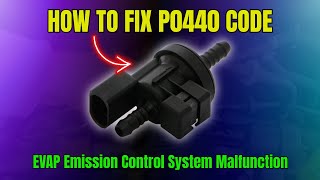
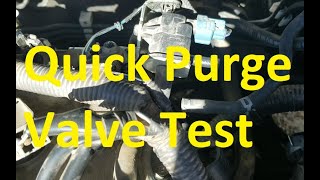
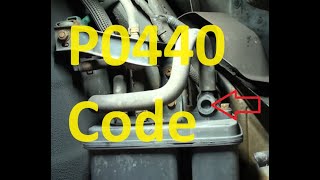
We Have This Part in Stock
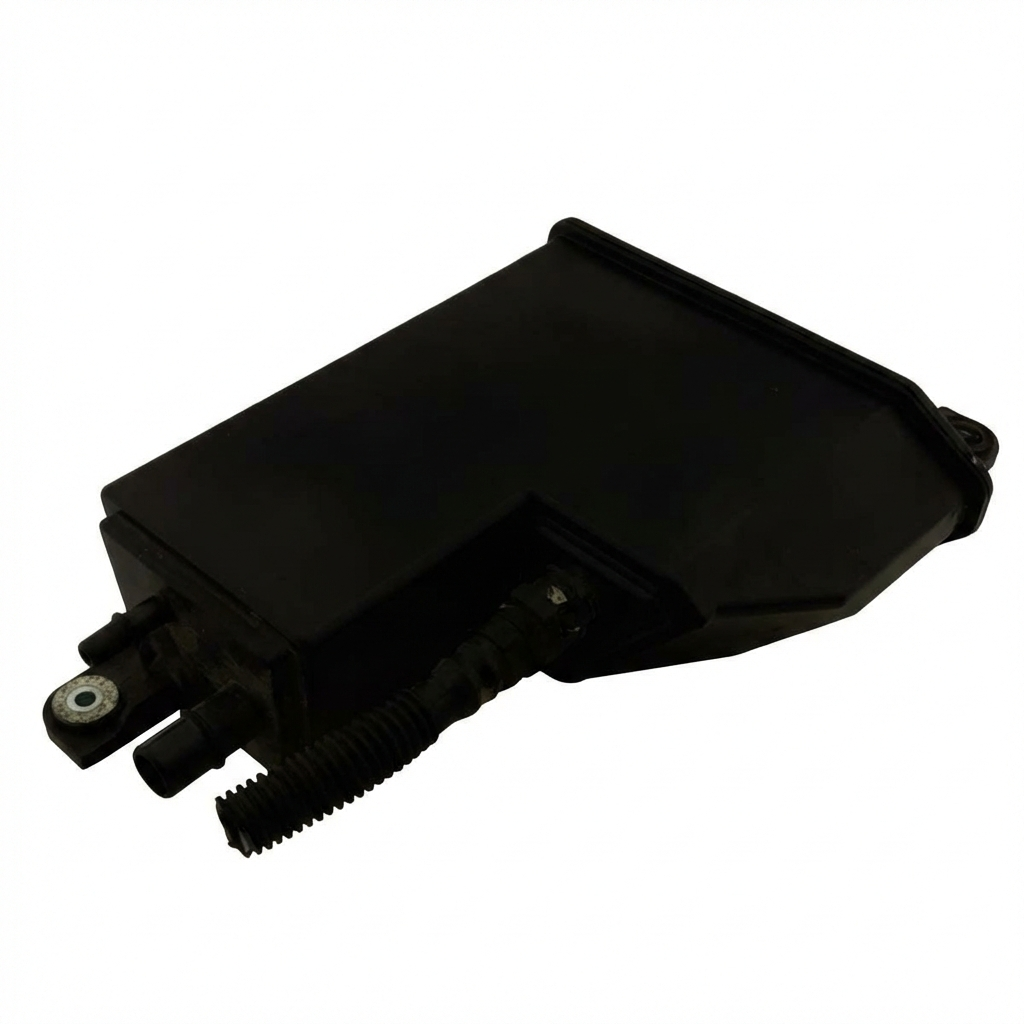

The information in this article is provided for general reference and educational purposes only. Vehicle specifications, procedures, and part compatibility can vary by production date, trim level, and region. Always consult your vehicle's factory service manual and verify part numbers before purchasing or performing repairs. Safety-critical components such as airbags, seat belts, and braking systems should be installed by a qualified professional.
- Mercedes-Benz E-Class:
- 🧭 Diagnostic Flowchart
- 🎬 Helpful Videos
- 🛍️ Shop This Part
- What's Unique About the 2017-2023 Mercedes-Benz E-Class
- Symptoms You May Notice
- Most Likely Causes
- Rare But Worth Checking
- Diagnosis Steps
- Parts You'll Likely Need
- Related Codes That Often Appear With This One
- Platform-Specific Known Issues
- Mechanic-Grade Diagnostic Values
- Scan Tool Commands That Help
- Wiring & Ground Locations
- "I Checked Everything" — The Actual Cause
- OEM Part Supersession History
- Model Year Variations Within This Range
- Other Known Issues on This Vehicle
- Used vs. New Parts: Buying Guide for This Vehicle
- Real Owner Stories
- 2019 Mercedes-Benz E450 (W213)
- 2018-2019 Mercedes-Benz E-Class
- 2017-2023 Mercedes-Benz E-Class
- Related OBD-II Codes
- Frequently Asked Questions
- 🎟️ Get 5% Off