

P0440 on 2003-2006 Mitsubishi Outlander: EVAP System Malfunction Causes and Fixes
For a 2003-2006 Outlander, P0440 usually points to a simple fix like a loose or worn-out gas cap. If a new cap doesn't solve it, the next most likely causes are a faulty EVAP purge or vent solenoid, or a rusted fuel filler neck in salt-belt states. Expect to pay $15-$30 for a new gas cap, $50-$150 for a solenoid, and over $250 for a filler neck replacement.
- Always start by checking the gas cap. Make sure it's tight and the seal is in good condition before attempting any other repairs.
- If the gas cap isn't the issue, the purge and vent solenoids are the next most likely culprits and are relatively simple to test and replace.
- Visually inspect the underside of the vehicle for significant rust on the EVAP canister cradle and fuel filler neck, as this is a known weak point on older vehicles from rust-prone areas.
- For persistent issues, a smoke test is the most effective diagnostic tool and will save you from replacing parts unnecessarily.
What's Unique About the 2003-2006 Mitsubishi Outlander
On the first-generation Mitsubishi Outlander, the EVAP system components, particularly the charcoal canister and its mounting cradle located at the rear of the vehicle, are susceptible to rust and corrosion, especially in regions that use road salt. This can lead to cracks in the canister or leaks in the attached hoses and valves. Furthermore, the fuel filler neck is a well-documented weak point for rust-through holes. While the core components are similar to other vehicles, owners should pay close attention to rust damage on the filler neck, canister cradle, and front crossmember during diagnosis.
Symptoms You May Notice
- Check Engine Light is on
- A faint smell of fuel, possibly near the rear of the vehicle or gas cap area
- Failure to pass an emissions inspection
- Difficulty filling the fuel tank (nozzle clicks off prematurely) if the vent solenoid is stuck closed.
- Replacing oxygen (O2) sensors, as they are common maintenance items but are unrelated to the EVAP system.
- Replacing the charcoal canister when the actual fault is a much cheaper vent or purge solenoid, or a rusted filler neck.
Most Likely Causes
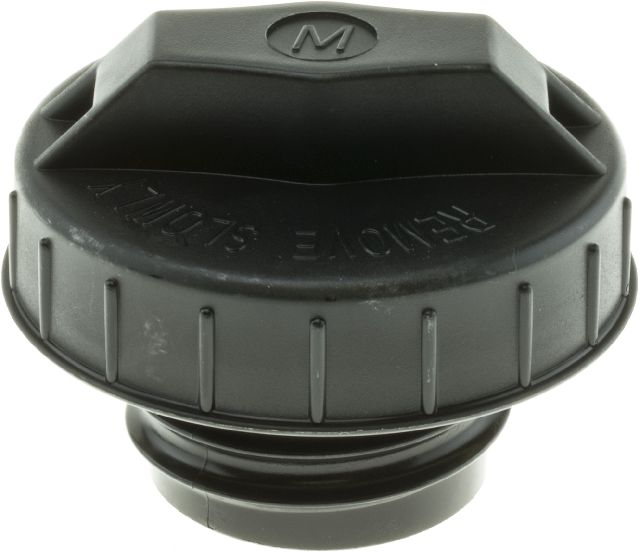
- Loose or Faulty Gas Cap 🔴 High Probability → Shop Fuel Tank Cap This is the most common cause for P0440 on almost all vehicles due to the frequent use and wear of the cap's seal. Aftermarket caps are a known source of issues, so an OEM replacement is recommended if the original is faulty.
How to confirm: Ensure the gas cap is tightened until it clicks. Inspect the rubber O-ring on the cap for cracks, stiffness, or damage. If the seal is compromised, the cap needs replacement.
Typical fix: Tighten or replace the fuel cap with a genuine OEM part.
Est. part cost: $15-$40 - Rusted Fuel Filler Neck 🔴 High Probability → Shop Fuel Filler Neck Common in salt-belt states, the metal pipe leading from the gas cap to the fuel tank can rust through, creating a leak in the EVAP system. This is a frequently cited issue for P0440/P0442 codes on Mitsubishis of this era.
How to confirm: Visually inspect the fuel filler neck for rust, especially around the area where the gas cap seals and along its length behind the wheel well liner. A smoke test will definitively show a leak from a rusted neck. You may also smell fuel in this area after filling up.
Typical fix: Replace the fuel filler neck. This can be a difficult DIY job due to rust.
Est. part cost: $100-$250 - Failed EVAP Vent Solenoid 🟡 Medium Probability → Shop Vapor Canister This valve is located underneath the vehicle near the charcoal canister, exposing it to road debris, salt, and moisture, which can lead to failure by sticking open or closed.
How to confirm: The valve is normally open. You can test it by applying 12V power and ground to its terminals; it should click and close. If it doesn't operate or is stuck, it has failed. A scan tool can also command it closed for testing. 🎬 Watch: How to test an EVAP vent valve
Typical fix: Replace the vent solenoid/valve assembly.
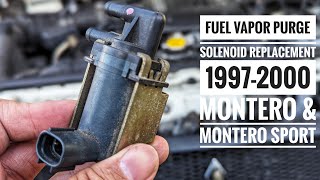
Est. part cost: $100-$150 - Failed EVAP Purge Solenoid/Valve 🟡 Medium Probability → Shop Vapor Canister This valve is located in the engine bay and cycles frequently, leading to eventual wear and tear. It can get stuck open, creating a constant vacuum leak into the EVAP system.
How to confirm: With the engine off, disconnect the vacuum line from the intake manifold side. There should be no vacuum present. If you can blow through it or if it holds vacuum when off, it's stuck open and needs replacement.
Typical fix: Replace the purge solenoid.
Est. part cost: $50-$100 - Cracked or Disconnected EVAP Hoses ⚪ Low Probability Rubber hoses become brittle and crack with age and exposure to heat and cold cycles. The lines running to and from the charcoal canister underneath the car are most vulnerable.
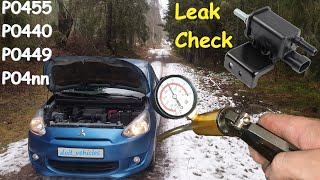
How to confirm: Visually inspect all accessible EVAP hoses in the engine bay and underneath the vehicle near the fuel tank for obvious cracks, disconnections, or rot. A smoke test is the most effective way to find small, hard-to-see leaks.
Typical fix: Replace the damaged section of hose.
Est. part cost: $10-$50
Rare But Worth Checking
- Cracked Charcoal Canister: → Shop Vapor Canister The plastic canister itself can crack from road debris impact or from rust compromising its mounting cradle. Overfilling the fuel tank can also saturate the canister with liquid fuel, causing it to fail. This is usually found during a smoke test.
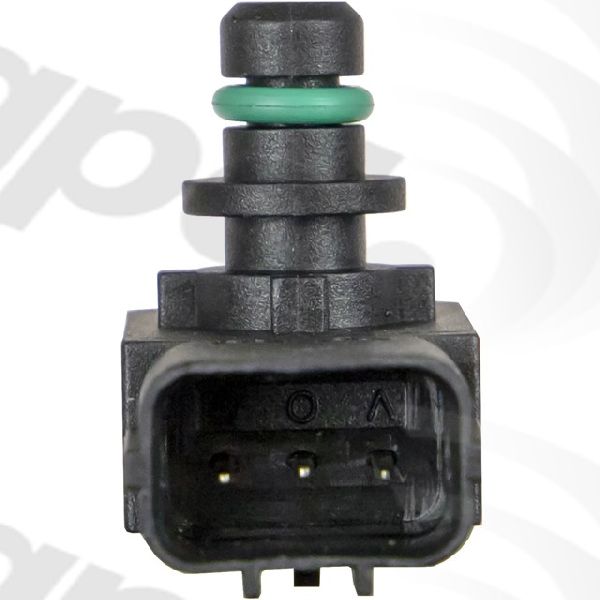
- Faulty Fuel Tank Pressure Sensor: → Shop Fuel Tank While uncommon, the sensor that monitors EVAP system pressure can fail and send incorrect readings to the ECM, falsely triggering the P0440 code.
Diagnosis Steps
- Scan for any other stored trouble codes. Address those first if they are not EVAP-related.
- Inspect the gas cap. Ensure it is tight and the seal is not cracked or worn. If in doubt, it's an inexpensive first part to replace. Clear the code and drive for a few days.
- If the code returns, perform a thorough visual inspection of the fuel filler neck for any signs of bubbling paint, rust, or holes. This is a very common failure point.
- Perform a thorough visual inspection of all accessible EVAP hoses and lines in the engine bay and under the vehicle near the fuel tank. Look for any obvious cracks, damage, or loose connections.
- Locate the purge solenoid in the engine bay (on the left side of the engine block) and test it to ensure it is not stuck open.
- Locate the vent solenoid on or near the charcoal canister at the rear of the vehicle. Test it to ensure it is not stuck closed and operates when voltage is applied.
- If the solenoids and hoses appear to be in good condition, the most reliable next step is to have a smoke test performed. This involves injecting pressurized smoke into the EVAP system to quickly and accurately find the source of any leaks, such as a cracked canister, a rusted filler neck, or a pinhole in a hose.
Parts You'll Likely Need
- Fuel Cap — This is the most frequent cause of a P0440 code due to a worn or damaged seal. Using an OEM cap is highly recommended.
Trusted brands: Stant, Gates, Genuine Mitsubishi
OEM price range: $25-$40
Aftermarket price range: $15-$30 - Vapor Canister Purge Solenoid
(OEM #MR507781)— A common failure point that can get stuck open or closed, causing a system malfunction. Located in the engine bay.
Trusted brands: Standard Motor Products (CP864), Dorman, Genuine Mitsubishi
OEM price range: $90-$140
Aftermarket price range: $50-$100 - Vapor Canister Vent Solenoid
(OEM #MR404641)— Located under the car, this valve is prone to failure from corrosion and debris. It often fails by sticking.
Trusted brands: Genuine Mitsubishi (W0133-2040362), Standard Motor Products
OEM price range: $120-$160
Aftermarket price range: $80-$130 - Fuel Tank Filler Neck — Highly susceptible to rust in salt-belt regions, leading to EVAP leaks. Aftermarket options are available.
Trusted brands: Genuine Mitsubishi, Dorman, Spectra Premium
OEM price range: $250-$400
Aftermarket price range: $100-$200
Related Codes That Often Appear With This One
- P0442 — P0442 indicates a small leak. If the system has an intermittent or borderline leak, it may trigger the general P0440 code at times and the more specific P0442 at other times. Both can be caused by a rusted filler neck or faulty gas cap.
- P0455 — P0455 indicates a large leak. Some systems may log the general P0440 code first before determining the leak is large and setting P0455. A cap left off would typically cause P0455.
- P0441 — P0441 indicates incorrect purge flow, often caused by a stuck-open purge solenoid, which can also contribute to a general system malfunction code like P0440.
Technical Service Bulletins (TSBs) & Recalls
- tsb: TSB #0355008 / #0355008R | note: While not directly for P0440, this TSB notes that debris can clog the evaporator housing drain tube, highlighting a general susceptibility to debris intrusion in underbody/cowl areas.
Platform-Specific Known Issues
- The cradle holding the charcoal canister is made of steel and is known to rust severely, potentially damaging the canister or attached hoses.
- The fuel filler neck is a common point of failure due to rust, causing P0440 and P0442 codes. One owner of a related Mitsubishi model fixed a P0442 code by replacing a completely rusted-out filler neck.
Mechanic-Grade Diagnostic Values
- Vapor Canister Purge Solenoid Coil Resistance — expected: 29 - 35 Ohms at 68°F (20°C). Failure: A reading significantly outside this range, or an open circuit (infinite resistance), indicates a failed coil.
- Vapor Canister Vent Solenoid Coil Resistance — expected: 20 - 30 Ohms. Failure: A reading outside this range suggests the solenoid winding is damaged.
- Purge Solenoid Connector Voltage (Key On, Engine Off) — expected: Approximately 12V (Battery Voltage) at Pin 1 (Red/Blue wire). Failure: No voltage at the power feed pin indicates a problem with the MFI relay or the wiring from the fuse block.
Scan Tool Commands That Help
- Mitsubishi M.U.T.-III (or advanced aftermarket scanner): Actuator Test - Item 10: Evaporative Emission Purge Solenoid — This command allows a technician to manually cycle the purge solenoid on and off to verify its mechanical and electrical operation while observing fuel tank pressure data. It is the definitive way to confirm if the solenoid is responding to ECM commands.
- Mitsubishi M.U.T.-III (or advanced aftermarket scanner): Actuator Test - Item 15: Evaporative Emission Ventilation Solenoid — This command forces the normally-open vent solenoid to close, sealing the EVAP system for pressure or vacuum testing. It confirms the solenoid's ability to operate on command from the ECM.
- Mitsubishi M.U.T.-III: Emission Test — This is a guided diagnostic function on the factory scan tool to test the entire Evaporative Emission Control System of the vehicle.
Wiring & Ground Locations
- EVAP System Wiring — Wiring diagrams for the 2003-2006 Outlander are available online, showing the routing from the ECM to the various EVAP components like the purge solenoid, vent solenoid, and pressure sensor.. A short or open in the wiring to any EVAP component can mimic a component failure and set a P0440 code. Checking for voltage at the component connector is a key diagnostic step.
Real Owner Repair Stories
- YouTube video (Mitsubishi vehicle (model not specified, but similar EVAP system)) — Persistent P0440 Check Engine Light.
❌ Tried (didn't work) Replaced gas cap, Inspected engine bay hoses, Replaced some electronic components from a junkyard
✅ What actually fixed it The final cause was a cracked fuel tank vent valve seal, located where the filler neck assembly enters the gas tank. The crack was only visible after dropping the fuel tank and closely inspecting the seal. Replacing the vent valve assembly resolved the code.
OEM Part Supersession History
MR507781→MR507781— This part number remains current and covers a wide range of Mitsubishi vehicles from 2002-2018, including the Outlander.
Model Year Variations Within This Range
- 2003-2006: The first-generation Outlander was available with a 2.4L 4G64 or 4G69 MIVEC engine, and a 2.0L 4G63 engine. However, the fundamental design of the EVAP system, including the common failure points like the filler neck and solenoids, appears to be consistent across these engine options and the entire 2003-2006 model year range.
Diagnostic Flowchart
Other Known Issues on This Vehicle
Issues unrelated to this code that are worth knowing about as an owner of this generation:
- Premature Automatic Transmission Failure 🔴 High — Commonly reported between 60,000 and 100,000 miles, especially on 2003-2004 models. Symptoms include whining, erratic shifting, and loss of power.
- Front Crossmember/Subframe Rust 🔴 High — Widespread in salt-belt regions, leading to potential separation of control arms. A recall was issued for this problem. (Ref: Transport Canada Recall 2016338, NHTSA Recall 20V-279)
- Clear Coat / Paint Peeling 🟡 Low — Many owners report premature peeling and chipping of the clear coat and paint, particularly on silver and gold colored vehicles. This is a cosmetic issue but very common.
- Failed Cooling Fan Controller 🟠 Medium — Reported on 2003-2005 models, causing the cooling fan to not activate, leading to engine overheating in traffic or at idle.
- Failing Blower Motor Resistor 🟡 Low — Causes the interior HVAC fan to only work on certain speeds or not at all. A very common and inexpensive DIY fix.
Used vs. New Parts: Buying Guide for This Vehicle
When a used part is the smart pick: A used fuel filler neck can be a smart buy if sourced from a vehicle in a dry, salt-free climate. This avoids the primary failure mode (rust) at a lower cost than a new part. Used charcoal canisters can also be viable if they are visually inspected for cracks and there is no evidence of being saturated with fuel.
Donor-vehicle mileage cap: roughly under 120000 miles for the part to have meaningful remaining life.
What to inspect on the donor part:
- For a filler neck, look for zero rust, especially around the gas cap sealing area and along the pipe's seams.
- For any used part, check for brittle plastic or cracked rubber hoses and connectors.
- When buying a used solenoid, ensure the electrical connector pins are clean and not corroded.
OEM-only on this vehicle (don't cheap out):
- Fuel Cap - While not strictly 'OEM-only,' aftermarket caps are a very common source of EVAP codes. Using a Genuine Mitsubishi cap is a cheap and effective way to eliminate a major variable.
Aftermarket brands forum-validated for this vehicle:
- Spectra Premium - A well-regarded brand for fuel system components, including filler necks and fuel tanks. They often feature dual-coating for corrosion protection.
- Dorman - Offers a wide range of replacement parts, including filler necks and EVAP solenoids. Generally considered a reliable, budget-friendly option.
- Standard Motor Products (SMP) - A trusted name for electronic components like purge and vent solenoids.
Brands owners have reported issues with on this vehicle:
- No specific brands were consistently reported as problematic for this application, but extreme low-cost, unbranded parts from online marketplaces should be treated with caution, especially for electronic components like solenoids.
Real Owner Stories
Aggregated from forums and TSBs cited above. Mileages and costs reflect what owners reported in those sources.
2003 Mitsubishi Outlander
Symptoms: Owner was dealing with multiple EVAP codes, including a P0456, after previously fixing a hole in the gas tank.
What fixed it: The owner discussed various EVAP system issues and common codes while troubleshooting the system's integrity.
Source hint: Mitsubishi Forum thread titled 'Trouble with trouble codes - Mitsubishi Forum'
2005 Mitsubishi Outlander
Symptoms: Vehicle threw a P0441 code (related to EVAP flow).
What fixed it: The owner sought the location of the purge solenoid on the left of the engine block to address the flow issue.
Source hint: Reddit r/mitsubishi thread titled '05 outlander evap purge solenoid location'
2003-2006 Mitsubishi Outlander (General)
Symptoms: EVAP codes triggered after the owner overfilled the fuel tank a few weeks prior.
What fixed it: Replacing the saturated charcoal canister.
Source hint: RamForum.com thread titled 'P0440 troubleshooting... I over filled my fuel tank a few weeks ago'
2003-2006 Mitsubishi Outlander (General)
Symptoms: P0442 code (small leak) triggered by severe corrosion.
What fixed it: Replacing a completely rusted-out fuel filler neck.
Source hint: vehicle_specific_issues section regarding Mitsubishi fuel filler neck failure
Related OBD-II Codes
Frequently Asked Questions
I live in a salt-belt state; is there a specific part I should check for my P0440 code on my 2003 Outlander?
Can I use an aftermarket gas cap to fix the P0440 code on my Outlander?
Where is the EVAP purge solenoid located on the 2003-2006 Outlander?
Does TSB #0355008 apply to my EVAP system issues?
I'm having trouble filling my gas tank and the nozzle clicks off; is this related to P0440?
Is the charcoal canister bracket a known issue on this model?
Helpful Videos

We Have This Part in Stock


The information in this article is provided for general reference and educational purposes only. Vehicle specifications, procedures, and part compatibility can vary by production date, trim level, and region. Always consult your vehicle's factory service manual and verify part numbers before purchasing or performing repairs. Safety-critical components such as airbags, seat belts, and braking systems should be installed by a qualified professional.
- Mitsubishi Outlander:
- 🧭 Diagnostic Flowchart
- 🎬 Helpful Videos
- 🛍️ Shop This Part
- What's Unique About the 2003-2006 Mitsubishi Outlander
- Symptoms You May Notice
- Most Likely Causes
- Rare But Worth Checking
- Diagnosis Steps
- Parts You'll Likely Need
- Related Codes That Often Appear With This One
- Technical Service Bulletins (TSBs) & Recalls
- Platform-Specific Known Issues
- Mechanic-Grade Diagnostic Values
- Scan Tool Commands That Help
- Wiring & Ground Locations
- Real Owner Repair Stories
- OEM Part Supersession History
- Model Year Variations Within This Range
- Other Known Issues on This Vehicle
- Used vs. New Parts: Buying Guide for This Vehicle
- Real Owner Stories
- 2003 Mitsubishi Outlander
- 2005 Mitsubishi Outlander
- 2003-2006 Mitsubishi Outlander (General)
- 2003-2006 Mitsubishi Outlander (General)
- Related OBD-II Codes
- Frequently Asked Questions
- 🎟️ Get 5% Off