

P0440 on 2007-2012 Nissan Altima: EVAP System Malfunction Causes and Fixes
For a 2007-2012 Nissan Altima, a P0440 code is most often caused by a loose gas cap or a failed EVAP canister vent control valve. Always check the gas cap first. If that's not the issue, the vent valve, located near the rear tire, is the next most likely culprit and costs around $70-$120 for the part. This valve is known to crack or get stuck from road debris and corrosion.
- Always start with the simplest fix: check that your gas cap is tight and the seal is intact. Use an OEM replacement if needed.
- The EVAP canister vent control valve, located at the rear of the car, is the most likely component to fail on a 2007-2012 Altima, often due to cracks or corrosion.
- While you can drive with a P0440 code, you will fail an emissions test and are releasing fuel vapors into the atmosphere.
What's Unique About the 2007-2012 Nissan Altima
On this generation of Nissan Altima, while the code is a generic EVAP fault, owner experiences overwhelmingly point to the EVAP canister vent control valve as a primary failure point, second only to a loose gas cap. This valve is located on the charcoal canister at the rear of the vehicle, exposed to road salt and debris, which causes it to stick, clog, or develop cracks in its plastic housing. Unlike some vehicles where the purge valve in the engine bay is the more common issue, for the 2007-2012 Altima, diagnosis should focus on the components at the rear canister assembly first.
Symptoms You May Notice
- Check Engine Light is on
- A faint smell of fuel, particularly around the rear of the vehicle
- Failure to pass a state emissions inspection
- Difficulty starting the engine immediately after refueling (in some cases)
- Replacing the purge valve in the engine bay when the more common failure point on this vehicle is the vent control valve at the rear canister.
- Replacing other expensive EVAP components before installing a new, genuine OEM gas cap to rule it out.
Most Likely Causes
- Loose or Faulty Gas Cap 🔴 High Probability → Shop Fuel Tank Cap This is the most common cause for an EVAP code on any vehicle. The rubber O-ring on the cap can dry out and crack over time, preventing a proper seal.
How to confirm: Ensure the gas cap is tightened until it clicks at least once. Inspect the cap's seal for cracks or damage. If the light returns after tightening and clearing the code, a new OEM cap is a cheap and effective diagnostic step.
Typical fix: Replace the gas cap. It is highly recommended to use an OEM part from Nissan, as aftermarket caps are known to cause sealing issues and may not resolve the code.
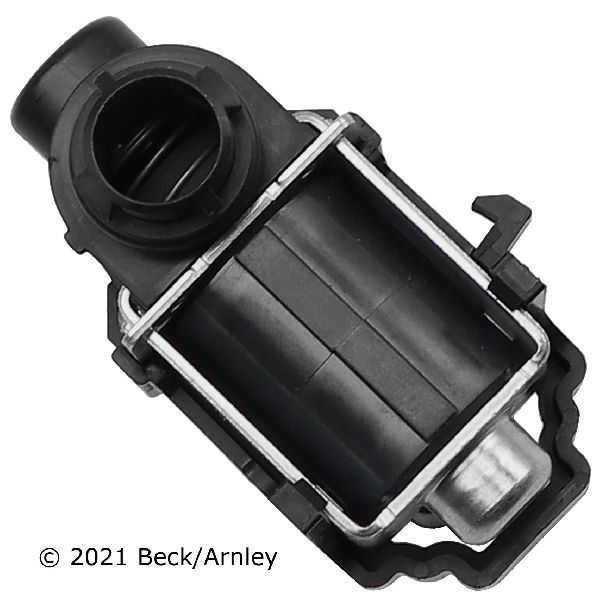
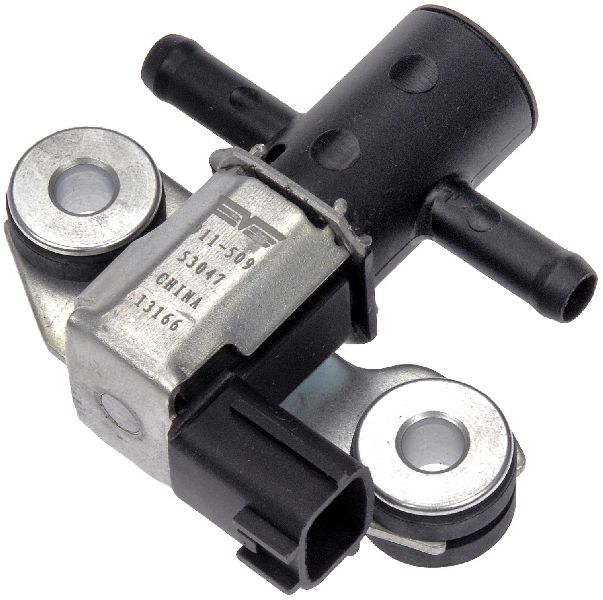
Est. part cost: $20-$40 - Failed EVAP Canister Vent Control Valve 🔴 High Probability → Shop Vapor Canister Vent Valve This solenoid valve is exposed to the elements near the rear wheel and is a very common failure point on Nissans of this era. It can get stuck open or closed due to dirt and corrosion, or the plastic housing can crack.
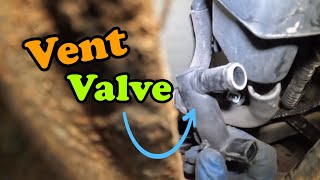
How to confirm: The valve is located on the charcoal canister near the rear driver's side tire. A mechanic can command it open and closed with a scan tool while listening for a click. A DIY method is to remove the valve and apply 12V power to its terminals to see if the solenoid actuates. Visually inspect the valve housing for cracks.
Typical fix: Replace the vent control valve. The part typically twists into the EVAP canister and can be replaced without removing the entire canister assembly.
Est. part cost: $70-$120 - Failed EVAP Purge Volume Control Solenoid/Valve 🟡 Medium Probability → Shop Vapor Canister This valve is located in the engine bay and can become stuck open, creating a constant vacuum leak into the EVAP system. While less common than the vent valve on this car, it is still a frequent failure point in EVAP systems generally.
How to confirm: Locate the valve in the engine bay, typically with two hoses and an electrical connector. With the engine off, try to blow through the valve; it should be closed. You can also test its function by applying 12V power and listening for a click.
Typical fix: Replace the purge valve.
Est. part cost: $50-$100 - Cracked or Disconnected EVAP Hoses ⚪ Low Probability
How to confirm: Visually inspect all EVAP lines running from the fuel tank, to the charcoal canister, and up to the engine bay for obvious cracks, rot, or loose connections. The most definitive way to find a small leak is with a smoke test, where a machine fills the system with a light smoke to reveal the leak's location.
Typical fix: Replace the damaged section of hose.
Est. part cost: $10-$50
Rare But Worth Checking
- Cracked Charcoal Canister: → Shop Vapor Canister The canister itself can develop a crack from road debris or age, causing a leak. This is usually found during a smoke test.
- Faulty Fuel Tank Pressure Sensor: → Shop Fuel Tank The sensor that monitors EVAP system pressure can fail and send incorrect readings to the ECM, triggering the code even if no leak exists.
Diagnosis Steps
- Read the code with an OBD-II scanner to confirm P0440 is present. Note any other related codes like P0455, P0456, or P1448.
- Inspect the gas cap. Ensure it is tight and the seal is not cracked or worn. If in doubt, replace it with a genuine Nissan cap, clear the code, and drive for a few days.
- If the code returns, visually inspect all visible EVAP hoses and lines for cracks, damage, or loose connections, especially around the canister and filler neck.
- Locate the EVAP canister vent control valve near the rear driver's side tire. Visually inspect it for cracks. Test its operation using a scan tool's bidirectional control or by removing it and applying 12V power to its terminals and listening for a click.
- Locate the purge valve in the engine bay and test its operation. Ensure it is closed when the engine is off.
- If no obvious issues are found with the valves or cap, the most reliable next step is to have a smoke test performed on the EVAP system to pinpoint the exact location of the leak.
Parts You'll Likely Need
- EVAP Canister Vent Control Valve
(OEM #14935-JF02C (supersedes 14935-JF00A, 14935-JF00B, 14935-JF00C, 14935-JF00D, 14935-JF00E, 14935-JF01B, 14935-JF01C))— This is a very common failure item on this platform, often cracking, sticking open, or closing due to its location and exposure to the elements.
Trusted brands: Hitachi, Dorman, Nissan Genuine
OEM price range: $85-$140
Aftermarket price range: $50-$110 - Fuel Cap
(OEM #17251-79960 (Verify with VIN))— The gas cap is the simplest and most common cause of all EVAP codes; its seal wears out over time. Aftermarket caps are not recommended.
Trusted brands: Nissan Genuine
OEM price range: $20-$40
Aftermarket price range: $15-$30 - EVAP Vapor Canister Purge Valve
(OEM #14930-JA10C (may supersede 14930-JA10A, 14930-JA10B))— Though less common than the vent valve on this car, the purge valve can stick open and is a frequent cause of EVAP codes in general.
Trusted brands: Bosch, Delphi, Nissan Genuine
OEM price range: $80-$120
Aftermarket price range: $40-$70
Related Codes That Often Appear With This One
- P0455 — P0455 indicates a large EVAP leak. If the fault that triggers P0440 is significant, such as a cracked canister or a stuck-open valve, it may also be flagged as a large leak.
- P0456 — P0456 indicates a very small EVAP leak. Sometimes a failing component like a gas cap seal can cause intermittent or variable leaks that trigger different codes at different times.
- P1448 — This is a Nissan-specific code that directly points to a fault in the EVAP Canister Vent Control Valve circuit, often appearing alongside the generic P0440.
Technical Service Bulletins (TSBs) & Recalls
- NTB13-097g: Applies to 2012 and newer Nissan vehicles, providing diagnostic information for EVAP leak codes P0442, P0455, and P0456. This bulletin guides technicians on troubleshooting the sensitive EVAP system.
Platform-Specific Known Issues
- A user on a DIY forum fixed their P0440 code by replacing the fuel tank vent valve after discovering a visible crack in the plastic housing, which was causing the leak. After replacing the part, the check engine light did not return after 400 miles of driving.
Mechanic-Grade Diagnostic Values
- EVAP Canister Purge Valve Solenoid Resistance — expected: 30 - 38 ohms. Failure: A reading significantly lower (shorted) or higher (open) than the specified range.
- EVAP Canister Vent Control Valve Solenoid Resistance — expected: 20 - 50 ohms. Failure: An open circuit (infinite resistance) or a reading far outside the expected range.
- EVAP Canister Vent Control Valve Connector Voltage — expected: 12V (battery voltage) on one pin with key on, engine off.. Failure: No voltage, indicating a wiring or fuse issue upstream of the valve.
- Fuel Tank Pressure (FTP) Sensor Voltage — expected: Approximately 1.5V at atmospheric pressure (system open/vented). Voltage should decrease as vacuum is applied.. Failure: Voltage is stuck high or low, or does not change when the system is sealed and vacuum is applied.
Scan Tool Commands That Help
- Nissan CONSULT-III plus: Active Test - Close Vent Control Valve — Used to manually close the normally-open vent valve to seal the EVAP system. This is a critical step to confirm a repair or to isolate a leak for a smoke test or pressure decay monitoring.
- Advanced Bi-Directional Scan Tool (e.g., Autel, Snap-on): EVAP System Test / Purge & Seal — This automated test commands the purge and vent valves to seal the system and applies engine vacuum, while monitoring the fuel tank pressure sensor to check for a leak. It's a comprehensive way to verify system integrity after a repair.
Wiring & Ground Locations
- EVAP Canister Vent Control Valve — Below center rear of vehicle, near or on the EVAP canister.. This is the location of the most common electrical component to fail for this code. The wiring harness connector (E44) and the component itself are exposed to road debris and moisture, making them prone to corrosion and damage.
- EVAP Control System Pressure Sensor — Below center rear of vehicle, near the EVAP canister.. Shares a similar vulnerable location with the vent control valve. Wiring issues here can send false data to the ECM, triggering a P0440 code even if no leak exists.
- Ground E15 / E9 — Lower left side of the engine compartment.. These are primary ground points for the Engine Control Module (ECM). A poor ground connection at these locations can cause a wide range of erratic sensor readings and component behavior, including those in the EVAP system.
Real Owner Repair Stories
- CarKiller Forum (2001 Nissan Altima, 145k Miles (Note: older model but same P0440 diagnostic principles apply)) — Persistent P0440 Check Engine Light despite numerous part replacements. Vehicle drives perfectly.
❌ Tried (didn't work) Replaced EGR valve & gasket, Replaced Purge Valve, Replaced EGR vacuum solenoid & modulator, Replaced all EVAP system hoses, Replaced Gas Cap, Replaced Fuel Pump & Filter, Replaced MAF sensor, Replaced Throttle Body
✅ What actually fixed it The user suspected a rusted metal line leading to the canister or the canister vent valve solenoid itself. The final resolution was not posted, but the extensive list of replaced parts highlights a common owner experience of chasing this code by replacing less-likely components before addressing the most probable rear-mounted culprits (vent valve, canister, or rusted lines). - NHTSA ODI #10212046 (Nissan Cross-Model Reference) — An owner reported a P0440 code accompanied by a fuel smell near the left rear side and fuel cap area. The report mentions inquiries regarding a faulty fuel fill tube, illustrating how physical damage in the rear assembly can trigger this specific fault.
OEM Part Supersession History
14935-JF00A→14935-JF02C— Part has undergone multiple revisions by Nissan to improve reliability and address common failure modes (cracking, sticking) that cause EVAP codes.
Heads up: The current part number 14935-JF02C replaces all previous versions including -JF00B, -JF00C, -JF00D, -JF00E, -JF01B, and -JF01C. All previous versions are considered obsolete.
Model Year Variations Within This Range
- 2007-2009 vs 2010-2012: While the EVAP system is fundamentally the same, earlier models (2007-2009) of this generation reported a higher incidence of general problems, including issues with the CVT transmission and other minor electrical faults. The 2010-2012 models are generally considered more reliable.
Diagnostic Flowchart
Other Known Issues on This Vehicle
Issues unrelated to this code that are worth knowing about as an owner of this generation:
- Premature CVT Transmission Failure 🔴 High — Very common, particularly in 2007-2012 models. Symptoms like shuddering, whining, and hesitation can appear well before 100,000 miles. Failures were frequent enough that Nissan extended the powertrain warranty for 2007-2010 models to 10 years/120,000 miles. (Ref: NTB09-138 was issued for some 2009+ models to reprogram the TCM to address vibration issues, but widespread failures often require full replacement.)
- Electronic Steering Column Lock (ESCL) Failure 🔴 High — A very common issue on 2009-2010 models that prevents the car from starting. The ESCL module fails, and the vehicle does not recognize the intelligent key. (Ref: Nissan issued a voluntary service campaign (PC516 / NTB17-018) to replace the faulty ESCL unit with a new part that eliminates the locking function.)
- Rear Subframe Corrosion 🟠 Medium — While a major recall and warranty extension existed for the previous generation (2002-2005), the 2007-2012 models are also known to suffer from significant subframe rust, especially in the salt belt. This can lead to noise and eventual structural failure. (Ref: No official recall for the 2007-2012 generation, unlike the earlier models.)
- Cracked Radiators Leading to Transmission Failure 🟠 Medium — An issue where the internal transmission fluid cooler within the radiator can crack, allowing coolant and transmission fluid to mix. This contamination quickly destroys the CVT.
- Oil Cooler Gasket Leaks (QR25DE & VQ35DE) 🟡 Low — Both the 4-cylinder and V6 engines are prone to oil leaks from the oil cooler seals/gaskets, often appearing as drips under the passenger side of the engine.
Used vs. New Parts: Buying Guide for This Vehicle
When a used part is the smart pick: A complete, used charcoal canister assembly from a low-mileage, non-rust-belt donor vehicle can be a cost-effective choice if the entire canister is confirmed to be cracked. However, for individual electronic components like valves and sensors, new is almost always better.
Donor-vehicle mileage cap: roughly under 80000 miles for the part to have meaningful remaining life.
What to inspect on the donor part:
- Check for a lack of rust or corrosion on the canister body and metal brackets.
- Ensure the plastic housing of the vent valve is free of any visible cracks or stress marks.
- Verify the electrical connector pins are clean, straight, and free of corrosion.
- Ask for the VIN of the donor car to check its history for accidents, especially rear-end collisions.
OEM-only on this vehicle (don't cheap out):
- Fuel Cap - Aftermarket caps are notoriously problematic and often fail to create a proper seal, leading to a repeat of the P0440 code.
Aftermarket brands forum-validated for this vehicle:
- Hitachi - Often the Original Equipment Manufacturer (OEM) for Nissan's electronic parts, providing OEM quality without the dealer markup.
- Bosch - A reputable brand for electronic components and valves.
- Dorman - Offers a wide range of replacement parts, including redesigned components that may address original failure points.
Brands owners have reported issues with on this vehicle:
- Unbranded, 'white-box' parts from online marketplaces. While cheap, they have a very high failure rate for sensitive EVAP system components.
Real Owner Stories
Aggregated from forums and TSBs cited above. Mileages and costs reflect what owners reported in those sources.
2012 Nissan Altima
Symptoms: Persistent check engine light linked to a P0440 code.
What fixed it: Replaced the original purge solenoid with a new unit.
Source hint: owner_reports source AliExpress
2007-2012 Nissan Altima — ~400 miles
Symptoms: Check engine light (P0440) caused by a visible crack in the plastic housing of the fuel tank vent valve.
What fixed it: Replacing the fuel tank vent valve.
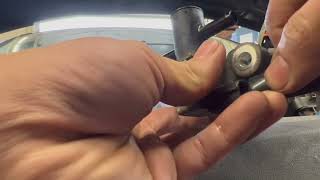
Source hint: vehicle_specific_issues / YouTube/Small Mods
Related OBD-II Codes
Frequently Asked Questions
Does TSB NTB13-097g apply to my 2007-2012 Nissan Altima?
Can I use an aftermarket gas cap to fix the P0440 code on my Altima?
Where is the EVAP canister vent control valve located on this model?
Is there a recall for the rear subframe rust on the 2007-2012 Altima?
Why does my Altima have difficulty starting only after I fill up the gas tank?
Did Nissan extend the warranty for any major components on the 2007-2010 Altima?
Helpful Videos
Used OEM Parts in Stock

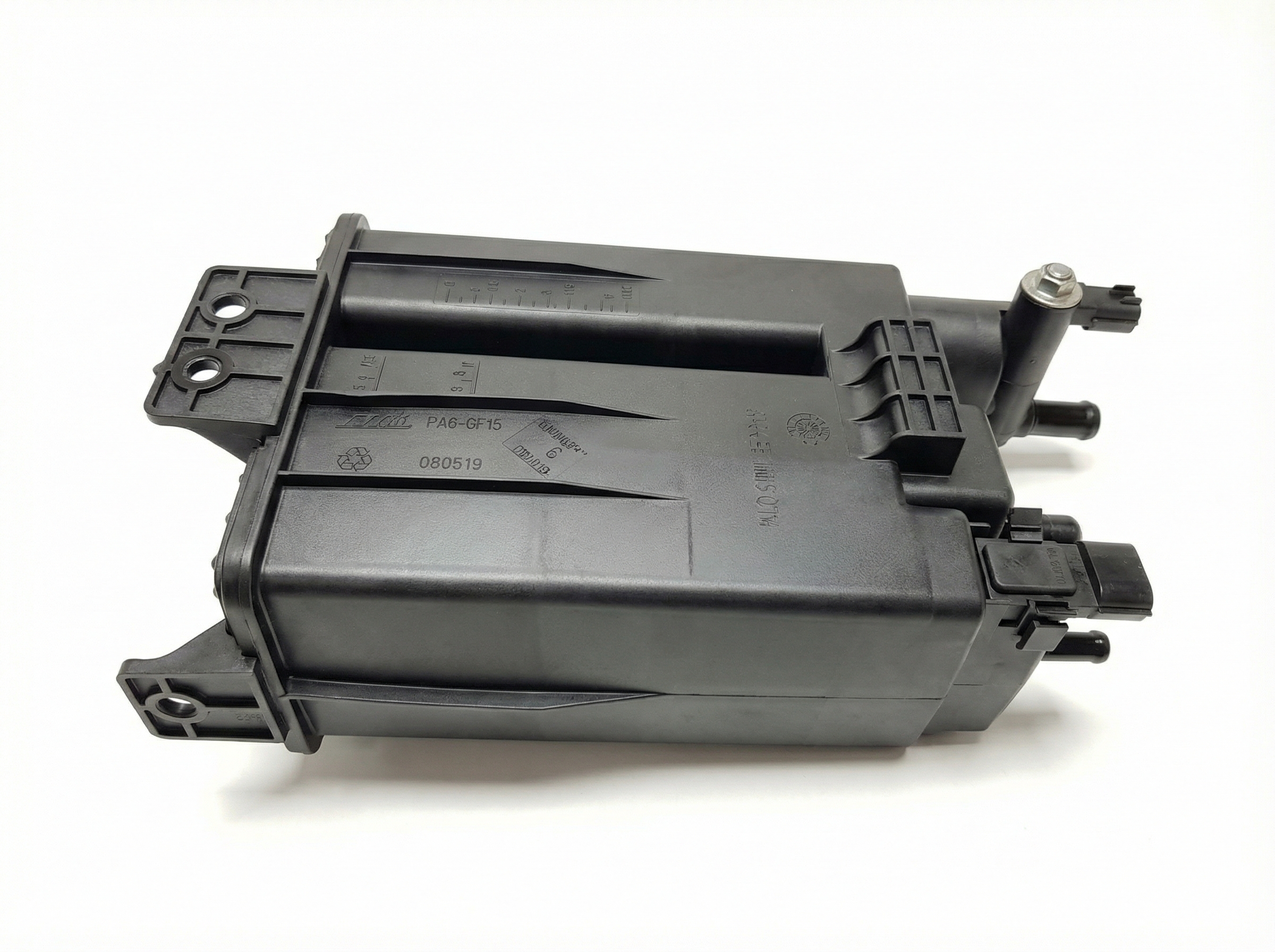
New Aftermarket Parts Available


The information in this article is provided for general reference and educational purposes only. Vehicle specifications, procedures, and part compatibility can vary by production date, trim level, and region. Always consult your vehicle's factory service manual and verify part numbers before purchasing or performing repairs. Safety-critical components such as airbags, seat belts, and braking systems should be installed by a qualified professional.
- Nissan Altima:
- 🧭 Diagnostic Flowchart
- 🎬 Helpful Videos
- 🛍️ Shop This Part
- What's Unique About the 2007-2012 Nissan Altima
- Symptoms You May Notice
- Most Likely Causes
- Rare But Worth Checking
- Diagnosis Steps
- Parts You'll Likely Need
- Related Codes That Often Appear With This One
- Technical Service Bulletins (TSBs) & Recalls
- Platform-Specific Known Issues
- Mechanic-Grade Diagnostic Values
- Scan Tool Commands That Help
- Wiring & Ground Locations
- Real Owner Repair Stories
- OEM Part Supersession History
- Model Year Variations Within This Range
- Other Known Issues on This Vehicle
- Used vs. New Parts: Buying Guide for This Vehicle
- Real Owner Stories
- 2012 Nissan Altima
- 2007-2012 Nissan Altima — ~400 miles
- Related OBD-II Codes
- Frequently Asked Questions
- 🎟️ Get 5% Off