

P0440 on 2017-2022 Nissan Rogue Sport: EVAP System Malfunction Causes and Fixes
For a 2017-2022 Nissan Rogue Sport, code P0440 most often points to a loose or faulty gas cap. If tightening or replacing the cap (~$15-$35) doesn't fix it, the next most likely causes are a failed EVAP purge valve or vent valve. It is highly recommended to use an OEM gas cap to ensure a proper seal.
- Start with the simplest fix: check that your gas cap is tight. If it's old or the seal is cracked, replace it with an OEM part.
- P0440 will not cause driving problems, but it will cause you to fail an emissions test.
- If the gas cap isn't the issue, the problem is most likely a faulty purge valve (on the engine) or vent valve (near the gas tank).
- Do not confuse the Rogue Sport with the standard Rogue; major engine recalls for the Rogue do not apply to the 2017-2022 Rogue Sport.
- A smoke test is the most effective way for a mechanic to find the exact location of a leak if it's not obvious.
What's Unique About the 2017-2022 Nissan Rogue Sport
The 2017-2022 Nissan Rogue Sport uses a reliable 2.0L 4-cylinder engine (MR20DD). Unlike the newer Nissan Rogue models with the 1.5L VC-Turbo engine, the Rogue Sport is not involved in the major engine-related recalls from 2025-2026. For the P0440 code, there isn't a single, well-documented 'pattern failure' specific to the Rogue Sport. The causes are typical of many modern Nissan vehicles, requiring a systematic diagnosis rather than pointing to one specific known faulty part. However, the platform is known for other issues like CVT transmission problems and a recall for the folding ignition key.
Symptoms You May Notice
- Check Engine Light is on
- A faint smell of gasoline, especially around the rear of the vehicle or after refueling.
- Replacing the oxygen (O2) sensors. O2 sensors are not part of the EVAP system and will not cause a P0440 code.
- Replacing the catalytic converter. This is an expensive exhaust component that is unrelated to the fuel vapor system.
Most Likely Causes
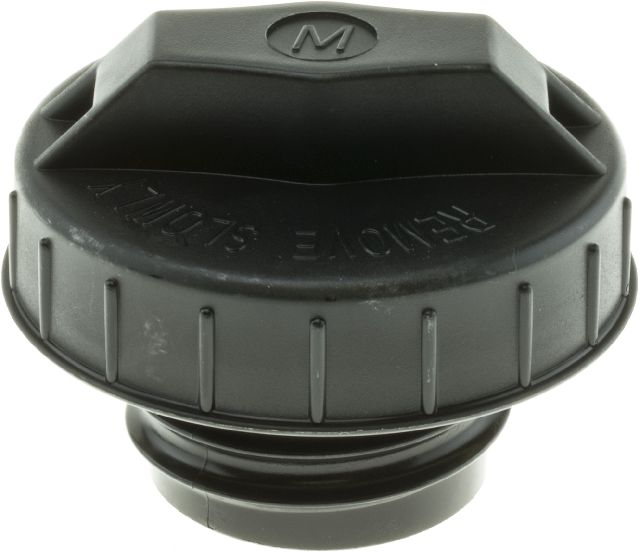
- Loose or Faulty Gas Cap 🔴 High Probability → Shop Fuel Tank Cap This is the most common cause for this code across all vehicles, as the cap's seal can degrade over time or it may not be tightened correctly after refueling.
How to confirm: Ensure the gas cap is tightened until it clicks at least once. Inspect the cap's rubber O-ring or seal for cracks, stiffness, or damage. If it looks worn, it's suspect.
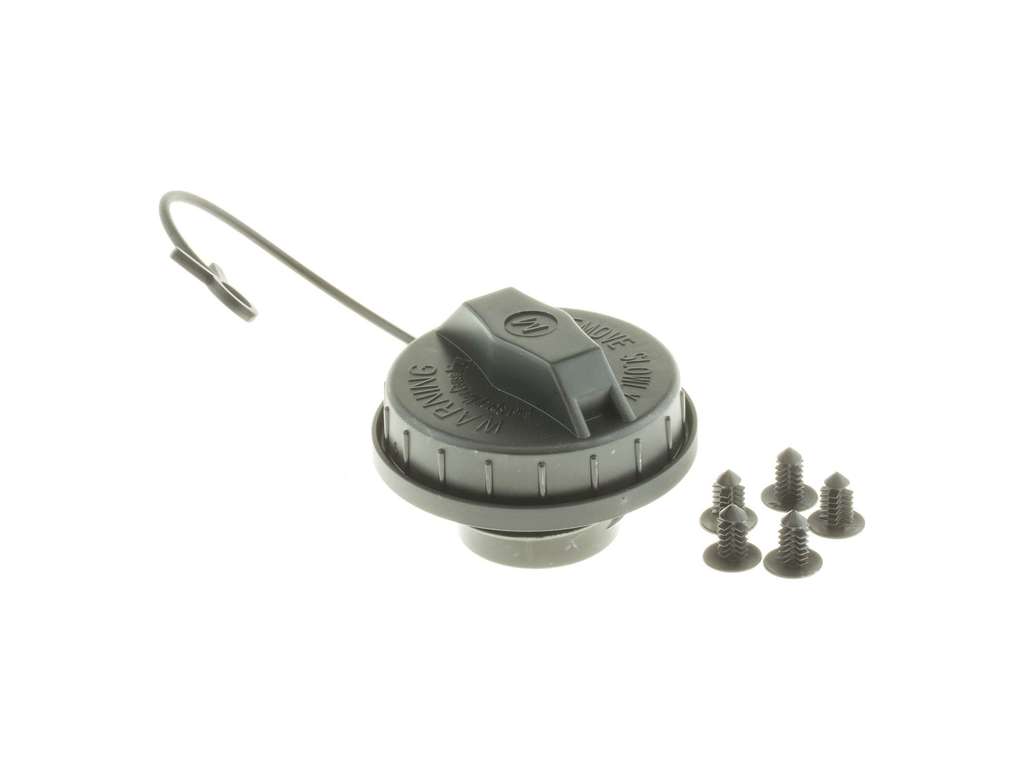
Typical fix: First, try tightening the cap. If the code returns, replace the gas cap. It is highly recommended to use an OEM (Original Equipment Manufacturer) cap from Nissan, as some aftermarket caps do not seal correctly.
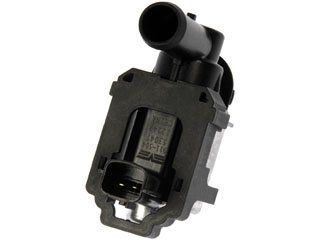
Est. part cost: $15-$50 - EVAP System Purge Valve Failure 🟡 Medium Probability → Shop Vapor Canister The purge valve is an electronic solenoid that opens and closes frequently, and can get stuck open or closed over its lifespan, causing a leak in the system.
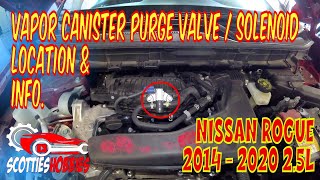
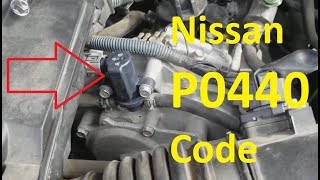
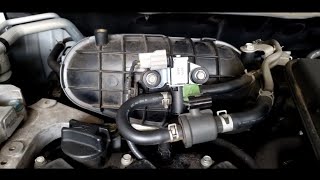
How to confirm: The purge valve is located on the top front side of the intake manifold, making it relatively easy to access. With the engine off, you can try to blow through it; if air passes, it is stuck open and faulty. A mechanic can also command it to open and close with a scan tool to check its function.
Typical fix: Replace the EVAP purge valve solenoid. This involves removing two small bolts and disconnecting the electrical connector and two hoses.
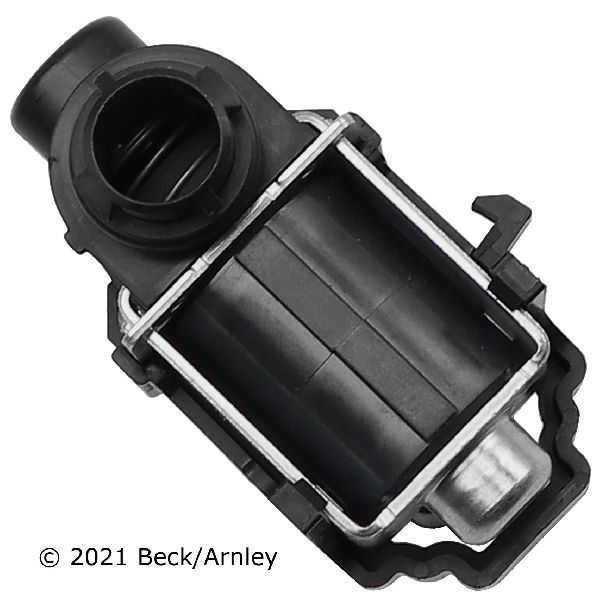
Est. part cost: $50-$150 - EVAP Canister Vent Valve/Solenoid Failure 🟡 Medium Probability → Shop Vapor Canister Located under the vehicle near the charcoal canister, this valve is exposed to road debris and moisture, which can cause it to fail or stick. On the Rogue Sport, it is typically found at the rear of the vehicle on the passenger side.
How to confirm: A mechanic can use a scan tool to command the valve to open and close, listening for an audible click. It can also be removed and tested with a 12V power source to see if the solenoid actuates. The valve can be removed by pressing a lock tab and rotating it off the canister.
Typical fix: Replace the vent valve. On the Rogue Sport, the vent valve is often serviced separately from the canister, but sometimes they are replaced as an assembly.
Est. part cost: $70-$200 - Cracked or Disconnected EVAP Hoses ⚪ Low Probability Rubber hoses become brittle with age and exposure to heat and can develop small cracks, especially at connection points.
How to confirm: A visual inspection may reveal obvious cracks, especially at connection points. The most effective method is a smoke test, where a machine fills the EVAP system with a harmless, visible smoke to reveal the exact location of any leaks.
Typical fix: Replace the specific section of cracked hose.
Est. part cost: $10-$40
Rare But Worth Checking
- Cracked Charcoal Canister: → Shop Vapor Canister The charcoal canister itself can develop a crack from road debris impact or age, creating a leak. This is usually found during a smoke test if no other cause is apparent.
- Faulty Fuel Tank Pressure Sensor: → Shop Fuel Tank The sensor that monitors the EVAP system's pressure can fail and send incorrect data to the ECM, tricking it into setting a P0440 code even if there is no leak.
Diagnosis Steps
- Check the Gas Cap: Ensure it is tight and clicks. Inspect the seal for damage. If in doubt, replace it with an OEM cap (Part No. 17251-4BA0B), clear the code, and drive for a few days to see if it returns.
- Visual Inspection: Look over all accessible EVAP hoses in the engine bay and under the vehicle for obvious cracks, disconnections, or damage.
- Inspect the Purge Valve: Locate the purge valve on the engine's intake manifold. Check its electrical connector and hoses. Test for proper function if possible.
- Inspect the Vent Valve: Locate the charcoal canister and vent valve assembly under the car, near the fuel tank on the passenger side. Check for damage or corrosion on the valve and its connector.
- Perform a Smoke Test: If the cause is still not obvious, the most reliable diagnostic step is to have a smoke test performed. This will pressurize the system with smoke and make even the smallest leaks visible.
- Component Testing: Based on the smoke test results, test the specific component (purge valve, vent valve, pressure sensor) indicated as the source of the leak or fault.
Parts You'll Likely Need
- Fuel Cap
(OEM #17251-4BA0B)— This is the most frequent and simplest fix for a P0440 code. The seal fails over time. Using an OEM cap is strongly recommended.
Trusted brands: Nissan (OEM)
OEM price range: $25-$50
Aftermarket price range: $15-$30 - Vapor Canister Purge Valve
(OEM #14930-6FM0A (for 2019-22 models))— This valve cycles frequently and can wear out, getting stuck open or closed.
Trusted brands: Nissan (OEM), Bosch, Dorman, Hitachi
OEM price range: $90-$150
Aftermarket price range: $50-$100 - Vapor Canister / Charcoal Canister
(OEM #14950-6MA0B (replaces 14950-6MA0A, for models up to 09/2018))— The canister or its integrated vent valve can fail, causing a system leak. It is typically replaced if the vent valve is faulty and not sold separately, or if the canister body is cracked.
Trusted brands: Nissan (OEM)
OEM price range: $250-$450
Aftermarket price range: $150-$300
Technical Service Bulletins (TSBs) & Recalls
- NTB21-034: Addresses an inoperative A/C on related Nissan models due to a stored DTC, which is relevant to the platform's known A/C issues.
- P9327 Service Campaign: A voluntary campaign to reprogram control units related to the Automatic Emergency Braking (AEB) system on 2017-2018 models.
Platform-Specific Known Issues
- Ignition Key Recall: A recall was issued for 2017-2022 Rogue Sports with a folding 'jackknife' key. The key could fold during operation, shutting off the engine and disabling safety systems. While unrelated to the P0440 code, it's a critical safety issue for owners to be aware of.
Mechanic-Grade Diagnostic Values
- EVAP Purge or Vent Valve Solenoid Coil Resistance — expected: 12 to 30 Ohms. Failure: A reading of infinity (open circuit) or near zero (short circuit) indicates a failed solenoid coil.
- Fuel Tank Pressure (FTP) Sensor Voltage — expected: With the sensor receiving a 5V reference from the ECM, the signal voltage should be around 3.0V-3.6V at atmospheric pressure (key on, engine off).. Failure: Voltage that is stuck high (near 5V) or low (near 0V) regardless of pressure, or does not change when a vacuum/pressure is applied during testing, indicates a faulty sensor.
Scan Tool Commands That Help
- Nissan CONSULT: Function Test / Active Test — This mode allows a technician to manually command specific EVAP components, like the purge valve or vent valve, to open or close. It is used to verify if the component is responding to ECM commands and to listen for the audible 'click' of the solenoid actuating.
- Nissan CONSULT: EVAP System Self-Test / Work Support — This initiates the vehicle's onboard EVAP leak detection monitor. It is used after a repair to confirm the fix is effective and that no other, smaller leaks are present that may have been masked by the original fault.
Wiring & Ground Locations
- EVAP Canister Vent Control Valve Location — Under the right rear of the vehicle, typically mounted on or near the charcoal canister assembly.. This valve is a common failure point. Knowing its location is critical for visual inspection of its wiring, testing, and replacement.
- EVAP System Fuse — In the engine compartment fuse box.. A fuse box diagram for a related 2018 Rogue indicates the 'EVAP Canister Purge Volume Control Solenoid Valve' is powered by a 20A fuse. A blown fuse would cause the component to be inoperative, leading to a fault code.
"I Checked Everything" — The Actual Cause
- In some cases, a P0440 code can be set even when a smoke test shows no leaks in the system. This often points to a non-leak failure, such as a faulty Fuel Tank Pressure (FTP) sensor. The sensor may be sending incorrect pressure readings to the ECM, tricking it into thinking there is a leak when the system is actually sealed. Diagnosis would involve testing the sensor's voltage output to see if it responds correctly to pressure and vacuum.
OEM Part Supersession History
14950-6MA0A→14950-6MA0B— Standard part revision by the manufacturer.
Heads up: The new part number 14950-6MA0B is specified for models built up to September 2018. Models built after this date may use a different canister assembly.
Model Year Variations Within This Range
- 2017 - early 2019 (up to 09/2018 build date): These models use the Vapor Canister assembly part number 14950-6MA0B (which replaced 14950-6MA0A).
- 2019 - 2022: These later models use a different Vapor Canister Purge Valve, part number 14930-6FM0A. This indicates a change in the EVAP system components around the 2019 model year.
Diagnostic Flowchart
Other Known Issues on This Vehicle
Issues unrelated to this code that are worth knowing about as an owner of this generation:
- CVT Transmission Problems 🔴 High — A widely reported issue across many Nissan models of this era, including the Rogue Sport. Symptoms include hesitation, jerking, shuddering, and premature failure. Problems were more prevalent in earlier models of the generation. (Ref: Nissan has issued multiple recalls and extended warranties for CVTs on various models over the years, though no single recall covers all vehicles.)
- Automatic Emergency Braking (AEB) Malfunction 🟠 Medium — Some owners report the AEB system activating unexpectedly when no collision is imminent. This has been a complaint across several Nissan models. (Ref: Nissan issued a voluntary service campaign (P9327) for some 2017-2018 Rogue Sport models to reprogram the control units related to this system.)
- A/C Compressor Failure 🟠 Medium — Reports of the A/C system blowing warm air are common, often traced back to a failed A/C compressor or its electrical control valve. This can be an expensive repair if out of warranty. (Ref: TSB NTB21-034 was issued for the related 2021 Rogue (and other models) for an inoperative A/C due to a stored DTC, sometimes requiring a software update or IPDM replacement.)
- Folding Ignition Key Failure 🔴 High — Affects models equipped with the 'jackknife' style key. The key can inadvertently fold while in the ignition, causing the engine to shut off while driving. (Ref: Nissan Recall Campaign for 2017-2022 Rogue Sport. Owners are advised not to use accessories on the key fob until a remedy (a spacer inserted into the key) is applied by a dealer.)
Used vs. New Parts: Buying Guide for This Vehicle
When a used part is the smart pick: A used charcoal canister body can be a good value if it comes from a low-mileage, non-corrosion-region donor vehicle and is carefully inspected for cracks or damage. Hoses and brackets are also generally safe to source from a salvage yard.
Donor-vehicle mileage cap: roughly under 80000 miles for the part to have meaningful remaining life.
What to inspect on the donor part:
- For a charcoal canister, check for any hairline cracks, especially around the mounting tabs and hose ports.
- Ensure all plastic hose connectors and lock tabs on the used part are intact and not brittle.
- Avoid parts from vehicles that show signs of significant underbody rust or impact damage near the rear axle.
OEM-only on this vehicle (don't cheap out):
- Fuel Cap: Aftermarket gas caps are a frequent cause of recurring P0440 codes on Nissan vehicles due to improper sealing. Always use a genuine Nissan OEM cap (17251-4BA0B) to ensure a correct fit and seal.
Aftermarket brands forum-validated for this vehicle:
- For sensors and valves, brands like Bosch, Hitachi, and Denso are often OEM suppliers and provide a reliable alternative to dealer parts.
- Dorman is a common aftermarket supplier, but quality can be inconsistent; check reviews for the specific part number.
Brands owners have reported issues with on this vehicle:
- Avoid unbranded, 'white-box' electronic parts (valves, sensors) from online marketplaces, as their calibration and durability are often poor and can cause persistent diagnostic issues.
Real Owner Stories
Aggregated from forums and TSBs cited above. Mileages and costs reflect what owners reported in those sources.
2021 Nissan Rogue
Symptoms: Air conditioner issues where the system was blowing warm air.
What fixed it: Dealer visit involving TSB NTB21-034 which can require a software update or IPDM replacement.
Source hint: Reddit thread '2021 rogue air conditioner issues' at https://www.reddit.com/r/NissanRogue/comments/1dd2t37/2021_rogue_air_conditioner_issues/
2017-2022 Nissan Rogue Sport
Symptoms: The folding 'jackknife' style key could inadvertently fold during operation, potentially shutting off the engine.
What fixed it: Application of a spacer inserted into the key by a dealer as part of a Nissan Recall Campaign.
Source hint: Vehicle Specific Issues: Ignition Key Recall
Nissan EVAP System Leak
Symptoms: An owner of a related Nissan model reported a check engine code P0440 along with a gasoline smell near the left rear side of the vehicle, specifically near the fuel cap area.
What fixed it: The owner inquired about a campaign regarding a faulty fuel fill tube (NHTSA ODI #10212046).
Source hint: NHTSA ODI #10212046
Related OBD-II Codes
Frequently Asked Questions
Is there a specific gas cap I should buy for my Rogue Sport to fix P0440?
Where is the EVAP vent valve located on the 2017-2022 Rogue Sport?
Does the recall for the folding 'jackknife' key cause the P0440 code?
My A/C stopped working and I have a stored code; is this related to P0440?
Can I use parts from a Nissan Qashqai to fix my Rogue Sport's EVAP system?
Is there a service campaign for the braking system on my 2018 Rogue Sport?
Helpful Videos
![How to Fix P0440 Engine Code in 3 Minutes [2 DIY Methods / Only $4.73]](https://img.youtube.com/vi/-kSpB9clrrs/mqdefault.jpg)
Used OEM Parts in Stock

New Aftermarket Parts Available


The information in this article is provided for general reference and educational purposes only. Vehicle specifications, procedures, and part compatibility can vary by production date, trim level, and region. Always consult your vehicle's factory service manual and verify part numbers before purchasing or performing repairs. Safety-critical components such as airbags, seat belts, and braking systems should be installed by a qualified professional.
- Nissan Rogue Sport:
- 🧭 Diagnostic Flowchart
- 🎬 Helpful Videos
- 🛍️ Shop This Part
- What's Unique About the 2017-2022 Nissan Rogue Sport
- Symptoms You May Notice
- Most Likely Causes
- Rare But Worth Checking
- Diagnosis Steps
- Parts You'll Likely Need
- Technical Service Bulletins (TSBs) & Recalls
- Platform-Specific Known Issues
- Mechanic-Grade Diagnostic Values
- Scan Tool Commands That Help
- Wiring & Ground Locations
- "I Checked Everything" — The Actual Cause
- OEM Part Supersession History
- Model Year Variations Within This Range
- Other Known Issues on This Vehicle
- Used vs. New Parts: Buying Guide for This Vehicle
- Real Owner Stories
- 2021 Nissan Rogue
- 2017-2022 Nissan Rogue Sport
- Nissan EVAP System Leak
- Related OBD-II Codes
- Frequently Asked Questions
- 🎟️ Get 5% Off