

P0440 on 1995-1999 Nissan Sentra: EVAP System Malfunction Causes and Fixes
For a 1995-1999 (B14) Nissan Sentra, code P0440 usually indicates a general EVAP system leak. Before replacing parts, check for a loose or worn gas cap. The most common culprits are a faulty EVAP vent control valve near the rear wheel or cracked, brittle vacuum hoses. A rusted fuel filler neck can also prevent a good seal.
- Start with the easiest and cheapest fix: inspect and tighten the gas cap. If it's old, replacing it is a worthwhile first step.
- The P0440 code on a 1995-1999 Sentra is very often accompanied by a P0446, strongly suggesting the problem is with the vent control valve or its circuit at the rear of the car.
- Visually inspect all vacuum hoses for age-related cracks, especially the ones connected to the purge valve in the engine bay and the canister components at the rear.
- Avoid overfilling your fuel tank; stop at the first click to prevent damaging the charcoal canister.
- If a simple inspection doesn't reveal the cause, a smoke test is the most effective method to accurately locate the source of the leak.
What's Unique About the 1995-1999 Nissan Sentra
The 1995-1999 Nissan Sentra, also known as the B14 chassis, is known for having EVAP components located in exposed areas. The EVAP canister and vent control valve are situated near the rear passenger-side wheel, making them susceptible to road debris, moisture, and corrosion. Owners frequently report that overfilling the gas tank can saturate the charcoal canister, leading to this code and eventual component failure. Rust on the fuel filler neck is also a common issue on older vehicles like this, which can prevent the gas cap from sealing properly, a problem discussed by owners even after replacing the cap.
Symptoms You May Notice
- Check Engine Light is on
- A faint smell of fuel, particularly around the rear of the car or after refueling
- Vehicle will automatically fail an emissions/smog test
- Audible 'hiss' of escaping vacuum when removing the gas cap (can be a sign of a faulty vent system)
- Replacing the oxygen (O2) sensor. O2 sensors are not related to the EVAP system.
- Replacing the catalytic converter. This is an expensive part of the exhaust system and has no connection to the P0440 code.
Most Likely Causes
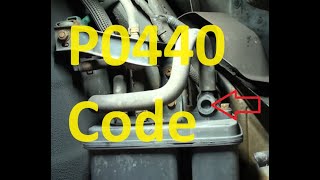
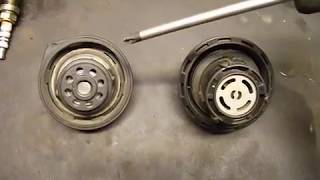
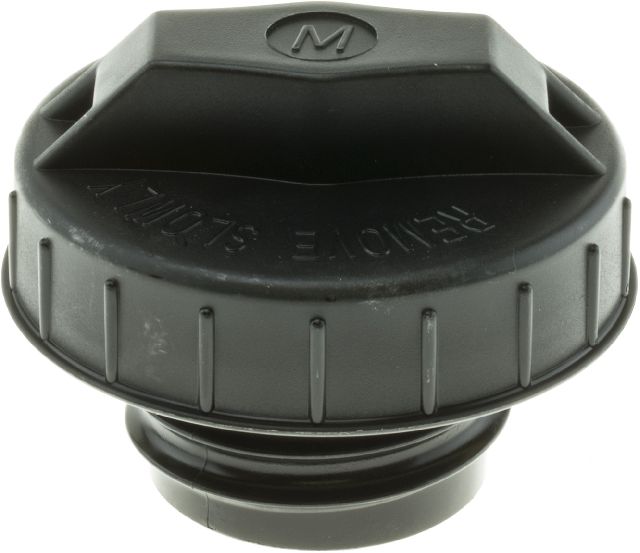
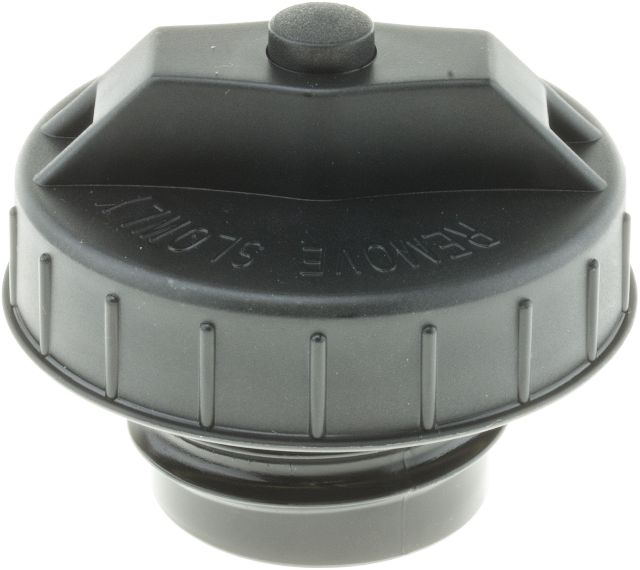
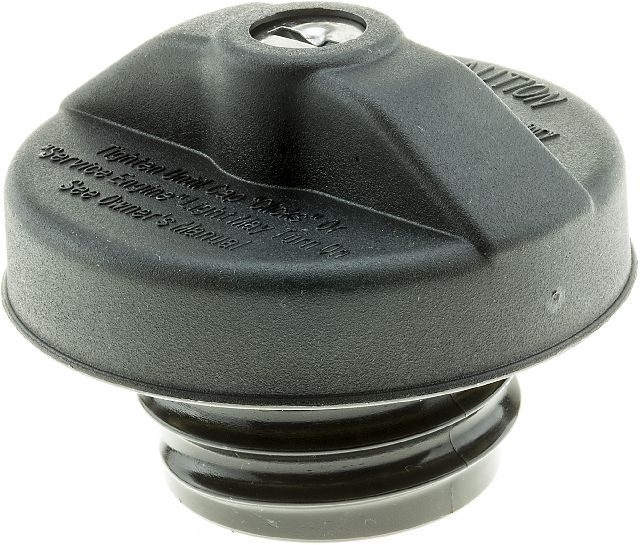
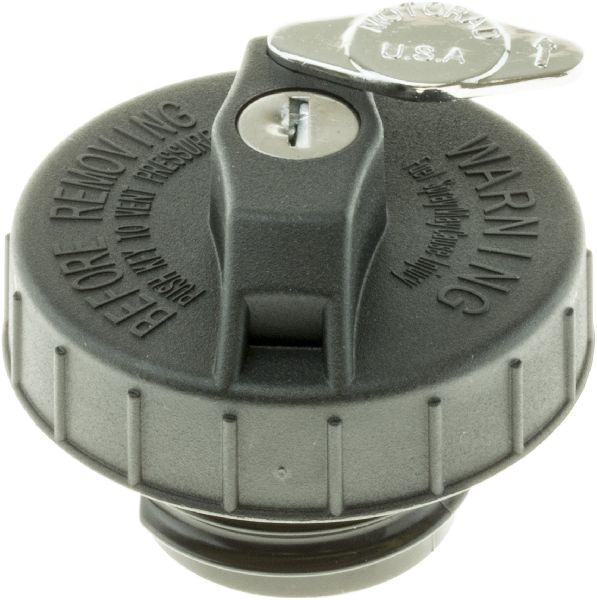
- Loose or Faulty Gas Cap 🔴 High Probability → Shop Fuel Tank Cap As a common wear item, the seal on the gas cap can degrade over time, preventing a proper seal required for the EVAP system. It is the most common and easiest fix for a P0440 code. 🎬 Watch: How to diagnose and fix common P0440 EVAP leaks
How to confirm: Ensure the gas cap is tightened until it clicks. Inspect the cap's rubber seal for cracks, stiffness, or damage. Check the fuel filler neck for rust or debris that could prevent a good seal.
Typical fix: Tighten the gas cap. If the code returns, replace the gas cap, preferably with an OEM part as aftermarket caps can sometimes cause issues.
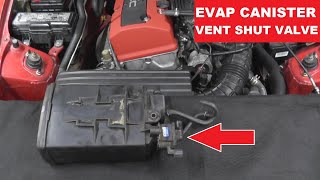
Est. part cost: $10-$30 - Failed EVAP Canister Vent Control Valve 🔴 High Probability → Shop Vapor Canister Vent Valve The valve is located under the car near the rear wheel, exposing it to water, salt, and road debris, which can cause it to fail electrically or get stuck. This is a very common failure point for the P0446 code that often accompanies P0440.
How to confirm: Locate the valve near the charcoal canister. You can test it by applying 12V power and ground to its terminals; a working valve should make an audible click as it opens or closes. Inspect the electrical connector and wiring for corrosion or damage.
Typical fix: Replace the EVAP canister vent control valve. Aftermarket versions like the Dorman 911-501 are widely available and fit this model. 🎬 Watch: How to test and replace the vent shut valve
Est. part cost: $50-$110 - Cracked or Disconnected EVAP Hoses 🟡 Medium Probability After decades of service, the rubber and plastic hoses in the EVAP system become brittle and are prone to cracking, especially at connection points and bends.
How to confirm: Visually inspect all accessible EVAP hoses, from the engine bay (purge valve) to the rear of the car (canister, vent valve, and tank). Look for obvious cracks, breaks, or loose connections. A smoke test is the most effective way to find a leak that isn't visually obvious.
Typical fix: Replace the damaged section of hose. It may require removing the old hose and cutting a new piece of vacuum hose to the correct length.
Est. part cost: $5-$25 - Faulty EVAP Canister Purge Valve/Solenoid 🟡 Medium Probability → Shop Vapor Canister This valve is located in the engine bay and controls the flow of stored vapors to the engine. It can become stuck open or closed over time due to age and contamination.
How to confirm: The valve is typically located on or near the intake manifold. With the engine running, you can disconnect the vapor line to feel for vacuum at idle (there shouldn't be any if the valve is working correctly). It can also be tested with a hand-held vacuum pump or by applying 12V power to check for actuation.
Typical fix: Replace the purge valve/solenoid.
Est. part cost: $40-$90 - Cracked EVAP Charcoal Canister ⚪ Low Probability → Shop Vapor Canister Repeatedly overfilling the fuel tank (topping off after the pump clicks) can force liquid gasoline into the canister, saturating the charcoal and eventually causing it to fail or crack. Physical damage from road debris is also possible due to its location.
How to confirm: Visually inspect the canister (the black box near the rear wheel) for physical cracks or damage. If you notice small black charcoal pellets in the EVAP lines, the canister has failed internally.
Typical fix: Replace the charcoal canister. If charcoal pellets have contaminated the system, all EVAP lines and valves must be cleaned out or replaced per Nissan TSB NTB00-085.
Est. part cost: $100-$200
Rare But Worth Checking
- Rusted Fuel Filler Neck: → Shop Fuel Filler Neck On older vehicles, the metal filler neck where the gas cap seals can rust and become pitted. This prevents even a new gas cap from creating a proper seal, causing a persistent EVAP leak code. Owners have reported sanding the rust off and applying a light coat of grease as a temporary fix.
- Faulty Fuel Tank Pressure Sensor: → Shop Fuel Tank While less common, the sensor that monitors pressure within the EVAP system can fail and send incorrect readings to the computer, falsely triggering a P0440 code.
Diagnosis Steps
- Check the gas cap. Ensure it is tight and clicks. Inspect the cap's seal and the fuel filler neck for damage or rust. Clear the code and drive to see if it returns.
- If the code returns, perform a thorough visual inspection of all EVAP system components. Start in the engine bay, checking the purge solenoid and its vacuum lines.
- Move to the rear of the vehicle. Inspect the charcoal canister, vent control valve, and all associated hoses for cracks, corrosion, or loose connections. Pay close attention to the electrical connector on the vent control valve.
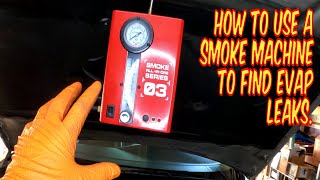
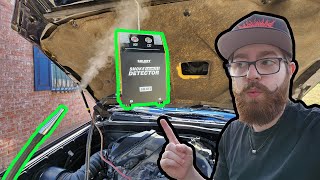
- If no visual faults are found, a smoke test is the most reliable way to find small or hidden leaks. This involves introducing low-pressure smoke into the EVAP system (usually via the service port) and watching for where the smoke escapes.
- If no leaks are found, test the functionality of the vent control valve and purge solenoid. The vent valve can be tested by applying 12V power to see if it actuates (clicks). The purge valve can be tested with a vacuum pump.
- If an owner on a forum cleaned rust from their filler neck and the code persisted, it indicates the leak is elsewhere and a smoke test is the definitive next step.
- If all components and lines are confirmed to be good, the issue could be a faulty fuel tank pressure sensor, though this is less common.
Parts You'll Likely Need
- Gas Cap
(OEM #17251-0M000)— This is the simplest and often most overlooked cause. The seal wears out over time.
Trusted brands: Nissan OEM, Stant
OEM price range: $20-$35
Aftermarket price range: $10-$20 - EVAP Canister Vent Control Valve
(OEM #14935-5M001 (or superseded part))— This is a very common failure point on the B14 Sentra due to its exposed location under the car, leading to P0440 and P0446 codes.
Trusted brands: Dorman (911-501), Standard Motor Products, Nissan OEM
OEM price range: $90-$150
Aftermarket price range: $50-$110 - EVAP Canister Purge Valve
(OEM #14930-5M001 (or superseded part))— This valve in the engine bay can get stuck open or closed, preventing the EVAP system from functioning correctly.
Trusted brands: Hitachi, Bosch, Nissan OEM
OEM price range: $70-$120
Aftermarket price range: $40-$90 - EVAP Charcoal Canister
(OEM #14950-0M219 (supersedes multiple previous numbers))— Fails due to age, physical damage, or being saturated by fuel from overfilling the tank.
Trusted brands: Nissan OEM
OEM price range: $150-$250
Aftermarket price range: N/A
Related Codes That Often Appear With This One
- P0446 — P0446 specifically points to a fault in the EVAP Vent Control Circuit. Since P0440 is a general EVAP malfunction, a fault in the vent control system (P0446) will almost always trigger the more general P0440 code as well.
Technical Service Bulletins (TSBs) & Recalls
- NTB00-085: While the full text is not publicly available without a subscription, this TSB is widely cited in relation to EVAP canister failures. It reportedly details the procedure for cleaning charcoal pellets from the entire EVAP system after a canister failure.
Platform-Specific Known Issues
- A Nissan Technical Service Bulletin (NTB00-085) exists for multiple models of this era, including the Sentra, detailing the procedure for cleaning charcoal particles out of the EVAP system after a canister failure. This highlights that canister disintegration was a known issue.
Mechanic-Grade Diagnostic Values
- EVAP Canister Vent Control Valve / Purge Valve Solenoid Resistance — expected: 20 - 50 Ohms. Failure: A reading of 0 Ohms indicates a short circuit. A reading of infinite resistance (OL) indicates an open circuit in the coil.
Hidden / Shadow Codes Worth Checking
- Mode 6 Data (TID/CID): This vehicle generation supports Mode 6, which provides raw test data from the ECM's self-diagnostics. A technician can view the test values and limits for 'EVAP control system (Small leak)' and 'EVAP control system purge flow monitoring' to see how close the system is to passing or failing, even before a code is set. (see via A generic scan tool (GST) with Mode 6 capability or the Nissan CONSULT dealer scanner.)
Scan Tool Commands That Help
- Generic Scan Tool (GST) or Nissan CONSULT: EVAP System Vent Valve Active Test — This bidirectional command allows the technician to manually close the normally-open vent valve. You should hear an audible 'click' from the valve. This confirms the valve's solenoid is activating and is essential for sealing the system to perform a smoke test.
Wiring & Ground Locations
- EVAP Canister Vent Control Valve — On the left rear underside of the vehicle, typically mounted to the charcoal canister.. This is the component's physical location for inspection and testing. Its exposed position makes its wiring and connector prone to corrosion and damage, which can cause P0440/P0446.
- EVAP Canister Purge Valve (1.6L GA16DE) — In the engine bay, on the right side of the engine.. Location for testing the purge valve and inspecting its vacuum lines for cracks, which are a common source of leaks.
- EVAP Canister Purge Valve (2.0L SR20DE) — In the engine bay, on the top right side of the engine.. Slightly different location than the 1.6L model, important for correct identification on SE models.
- G201 — Behind the right side of the dashboard.. A primary interior ground point. A poor connection here could potentially affect the ECM or other in-cabin electronics that interface with the EVAP system.
- G407 — In the trunk, at the center rear.. This is a rear body ground. It could be the ground point for rear-mounted components like the Fuel Tank Pressure sensor or the vent valve, making it a critical point to check for corrosion on a vehicle of this age.
Real Owner Repair Stories
- 2CarPros Forum User (1997 Nissan Sentra) — Check Engine Light with codes P0440 and P0446 that return after being cleared. No other running or starting issues were present.
❌ Tried (didn't work) The user had already considered and likely inspected the gas cap and hoses, narrowing the search down to the canister, vent valve, or purge valve.
✅ What actually fixed it The combination of P0440 (general leak) and P0446 (vent control circuit) strongly indicates the failure is the EVAP Canister Vent Control Valve or its circuit. This is the most common resolution for this specific code combination on the B14 Sentra.
"I Checked Everything" — The Actual Cause
- If a smoke test is performed and no leaks are found, the cause is likely not a physical leak in a hose or the canister. The two most probable causes are an intermittently failing EVAP vent or purge valve that seals during the test but fails during the vehicle's self-test, or a faulty Fuel Tank Pressure (FTP) sensor providing incorrect readings to the ECM.
Model Year Variations Within This Range
- 1998-1999: In 1998, Nissan introduced the SE model with a 2.0L SR20DE engine, while other trims retained the 1.6L GA16DE. The physical location of the EVAP purge valve in the engine bay differs between these two engines, with the 1.6L part being on the side and the 2.0L part being on the top right.
Diagnostic Flowchart
Other Known Issues on This Vehicle
Issues unrelated to this code that are worth knowing about as an owner of this generation:
- Rust in Rear Wheel Wells and Rocker Panels 🔴 High — Very common on vehicles used in the rust belt or areas with high humidity. Often becomes noticeable after 10+ years.
- Automatic Transmission Hesitation/Failure 🟠 Medium — Some owners report issues with the 4-speed automatic transmission, including slow engagement or slipping, particularly at higher mileage (100k+ miles).
- Distributor Failure (GA16DE) 🟠 Medium — The distributor, which houses the ignition coil and camshaft position sensor, can fail, leading to no-start or stalling conditions. This is a known issue on many 90s Nissan engines.
- Blinking Airbag Light 🟡 Low — A commonly reported issue where the airbag warning light flashes, often due to a fault in the airbag control module or a sensor.
Used vs. New Parts: Buying Guide for This Vehicle
When a used part is the smart pick: For this vehicle, sourcing a used (junkyard) part is a reasonable option for structural components like the EVAP charcoal canister (if not cracked) or the fuel filler neck. These parts have no complex electronics and their condition is easy to visually assess.
Donor-vehicle mileage cap: roughly under 120000 miles for the part to have meaningful remaining life.
What to inspect on the donor part:
- For canisters: Check for cracks in the plastic housing and ensure no loose charcoal pellets are falling out of the ports.
- For filler necks: Inspect the gas cap sealing surface for any rust, pitting, or warping. Ensure the metal is smooth.
- For valves/solenoids: Check the plastic for brittleness and the electrical connector pins for any green or white corrosion.
- Source parts from a vehicle in a dry, non-salt-belt climate if possible to minimize corrosion.
OEM-only on this vehicle (don't cheap out):
- Gas Cap: It is strongly recommended to use an OEM Nissan gas cap. Many forum and mechanic reports indicate that aftermarket caps, even from reputable brands, may not seal perfectly on this model, leading to a persistent P0440 code.
Aftermarket brands forum-validated for this vehicle:
- Dorman (911-501) for the EVAP Canister Vent Control Valve is a widely cited and used aftermarket replacement.
- Stant for gas caps (if an OEM one is not available).
Brands owners have reported issues with on this vehicle:
- No-name or unbranded gas caps from online marketplaces are frequently reported to have sealing issues.
Real Owner Stories
Aggregated from forums and TSBs cited above. Mileages and costs reflect what owners reported in those sources.
1997 Nissan Sentra
Symptoms: Check engine light on with codes P0440 and P0446. The owner tried a new gas cap and cleaned rust from the filler neck, but the codes persisted.
What fixed it: The discussion led to testing the vent and purge valves after initial DIY attempts failed.
Source hint: Car Talk Community - 'Nissan Sentra P0440 P0446 MIL code EVAP leak'
1997 Nissan Sentra
Symptoms: The owner had both P0440 and P0446. A new gas cap successfully resolved the P0446, but the P0440 code remained.
What fixed it: Experts recommended a smoke test and identified the charcoal canister as the likely culprit for the remaining P0440.
Source hint: 2CarPros - 'Code P0440 - 1997 nissan sentra'
Documented NHTSA Reports
NHTSA ODI #10212046
Symptoms: An owner reported a fuel smell near the left rear side of the vehicle, specifically near the fuel cap area, accompanied by a P0440 check engine code. The report mentions inquiries regarding a faulty fuel fill tube (referencing NHTSA campaign 07V435000).
Related OBD-II Codes
Frequently Asked Questions
My 1997 Sentra has charcoal pellets in the EVAP lines; is there an official Nissan procedure for this?
I replaced my gas cap with an aftermarket one but the P0440 code is still there. What should I do?
Where is the vent control valve located on a 1995-1999 Sentra?
Can I use parts from a Nissan 200SX to fix the EVAP system on my Sentra?
How can I test if the EVAP canister vent control valve is actually broken?
Is there a specific part number for an aftermarket vent control valve for this model?
Helpful Videos
We Have This Part in Stock


The information in this article is provided for general reference and educational purposes only. Vehicle specifications, procedures, and part compatibility can vary by production date, trim level, and region. Always consult your vehicle's factory service manual and verify part numbers before purchasing or performing repairs. Safety-critical components such as airbags, seat belts, and braking systems should be installed by a qualified professional.
- Nissan Sentra:
- 🧭 Diagnostic Flowchart
- 🎬 Helpful Videos
- 🛍️ Shop This Part
- What's Unique About the 1995-1999 Nissan Sentra
- Symptoms You May Notice
- Most Likely Causes
- Rare But Worth Checking
- Diagnosis Steps
- Parts You'll Likely Need
- Related Codes That Often Appear With This One
- Technical Service Bulletins (TSBs) & Recalls
- Platform-Specific Known Issues
- Mechanic-Grade Diagnostic Values
- Hidden / Shadow Codes Worth Checking
- Scan Tool Commands That Help
- Wiring & Ground Locations
- Real Owner Repair Stories
- "I Checked Everything" — The Actual Cause
- Model Year Variations Within This Range
- Other Known Issues on This Vehicle
- Used vs. New Parts: Buying Guide for This Vehicle
- Real Owner Stories
- 1997 Nissan Sentra
- 1997 Nissan Sentra
- Documented NHTSA Reports
- NHTSA ODI #10212046
- Related OBD-II Codes
- Frequently Asked Questions
- 🎟️ Get 5% Off