

P0440 on 1998-2001 Oldsmobile Bravada: EVAP System Malfunction Causes and Fixes
For a P0440 code on a 1998-2001 Oldsmobile Bravada, the most likely causes are a loose or faulty gas cap, a rusted-out fuel filler neck, or a failed EVAP vent solenoid located near the gas tank. A new gas cap is under $20, while a filler neck or vent solenoid can cost between $30 and $100 for the part. The filler neck is a very common failure point on these trucks due to rust.
- Always check the gas cap first. Ensure it's tight and the seal is in good condition before attempting any other repairs.
- On a 1998-2001 Bravada, a rusted fuel filler neck is a very high-probability cause of a P0440 code. Inspect it carefully before buying any parts.
- The second most likely part to fail is the EVAP vent solenoid, located near the gas tank. It's relatively inexpensive and accessible to replace.
- If a visual inspection doesn't reveal the problem, a smoke test is the most definitive way to locate the source of an EVAP leak.
What's Unique About the 1998-2001 Oldsmobile Bravada
The Oldsmobile Bravada from this era is based on the GM S-10 truck platform, shared with the Chevrolet Blazer, GMC Jimmy, and Isuzu Hombre. On these vehicles, a very common source for a P0440 code is a rusted fuel filler neck—the metal pipe you put the gas nozzle into. These trucks, especially when driven in regions that use road salt (the "Rust Belt"), are highly prone to the filler neck corroding and developing holes, which creates a system leak that the computer detects. Beyond that, the EVAP vent solenoid, located near the fuel tank above the rear axle, is another frequent failure point due to its exposure to the elements.
Symptoms You May Notice
- Check Engine Light is on
- A faint smell of fuel, particularly around the rear of the vehicle.
- Difficulty filling the fuel tank (gas pump clicks off repeatedly) can occur if the vent solenoid is stuck closed.
- A "whoosh" sound when opening the gas cap can indicate a pressure regulation issue within the EVAP system.
- Replacing the EVAP purge or vent solenoid without first checking the gas cap and thoroughly inspecting the fuel filler neck for rust, which are the two most common culprits on this platform.
- Replacing the charcoal canister when the actual fault is the vent solenoid attached to it.
Most Likely Causes
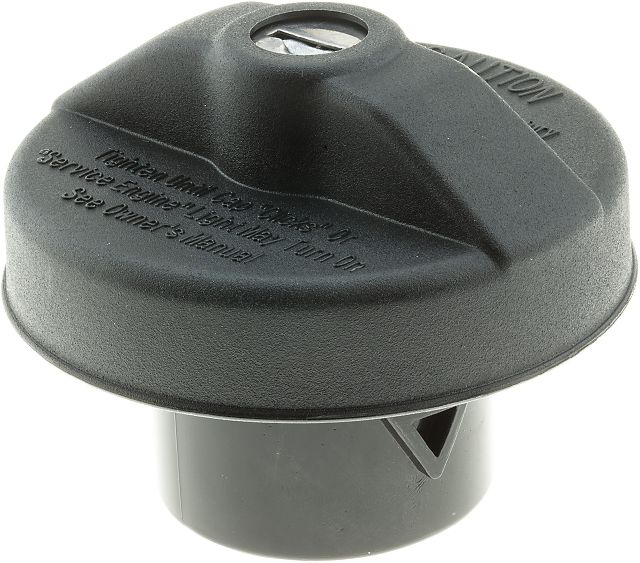
- Loose or Faulty Gas Cap 🔴 High Probability → Shop Fuel Tank Cap This is the most common and simplest cause for a P0440 on any vehicle. The rubber seal on the cap can crack, stiffen, and degrade over time, preventing a proper seal.
How to confirm: First, ensure the cap is tightened until it clicks at least once. Visually inspect the rubber O-ring for any cracks, stiffness, or visible damage. If it looks worn, it's the cheapest and easiest part to replace first.
Typical fix: Replace the gas cap. Use a quality OEM or aftermarket cap, as very cheap ones can also fail to seal properly.
Est. part cost: $10-$25 - Rusted or Leaking Fuel Filler Neck 🔴 High Probability → Shop Fuel Filler Neck The metal filler neck on the S-10 platform is highly susceptible to rust, especially in the salt belt. The rust creates pinholes or large holes that allow fuel vapor to escape, directly causing a leak code like P0440.
How to confirm: Use a flashlight to perform a thorough visual inspection of the entire metal filler neck, from the gas cap opening down to where it connects to the tank. Look for visible rust, flaking metal, and holes. You may see dark, wet-looking stains from fuel vapor residue or even smell raw gas in that area.
Typical fix: The rusted filler neck must be replaced. This involves removing the rear driver's side wheel, dropping the spare tire for access, disconnecting the old neck, and installing the new one. Some owners drill a small drain hole in the plastic surround to prevent water from pooling and causing future rust.
Est. part cost: $50-$100 - Failed EVAP Vent Solenoid 🟡 Medium Probability → Shop Vapor Canister Located near the fuel tank and charcoal canister, this part is exposed to road debris, water, and salt, causing it to fail. It can get stuck open or closed, or fail electrically. A forum user with a 2001 Bravada confirmed this part fixed their P0440 and subsequent P0449 code after replacing the filler neck.
How to confirm: The solenoid is located above the rear axle, near the spare tire. It can be tested with a scan tool that can command it open and closed. A DIY method is to remove it and apply 12V to its terminals; you should hear a distinct click as it actuates. If it's stuck, clogged with dirt, or doesn't click, it has failed.
Typical fix: Replace the vent solenoid. It is typically mounted on a crossmember next to the charcoal canister under the vehicle.
Est. part cost: $25-$60 - Failed EVAP Purge Solenoid/Valve ⚪ Low Probability → Shop Vapor Canister This valve is located in the engine bay and controls the flow of stored vapors to the engine. It can fail by getting stuck open, causing a constant vacuum leak. While less common than the vent solenoid, it's a known failure point.
How to confirm: With the engine running, disconnect the vacuum hose from the valve that leads to the canister. There should be no vacuum felt at the port. If you feel suction, the valve is stuck open and needs to be replaced.
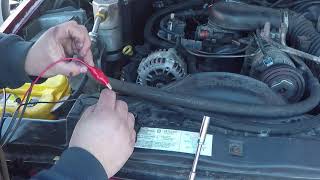
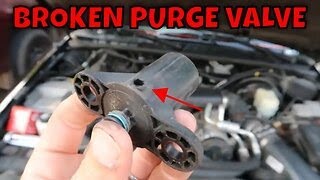
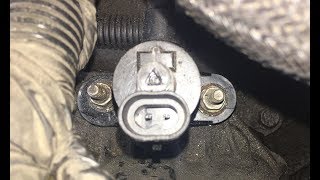
Typical fix: Replace the purge solenoid. On the 4.3L V6, it is usually mounted on the intake manifold. 🎬 See this walkthrough for inspecting and replacing the purge valve.
Est. part cost: $25-$50 - Cracked or Disconnected EVAP Hoses ⚪ Low Probability Over time, the rubber and plastic hoses that make up the EVAP system can become brittle from age and heat cycles, leading to cracks or disconnections that cause a leak.
How to confirm: Visually inspect all accessible EVAP lines running from the gas tank, along the frame rail, and to the purge solenoid in the engine bay. A professional smoke test is the most effective way to find a small, hard-to-see leak in the hose network.
Typical fix: Replace the cracked section of hose or reconnect any loose fittings.
Est. part cost: $5-$30
Rare But Worth Checking
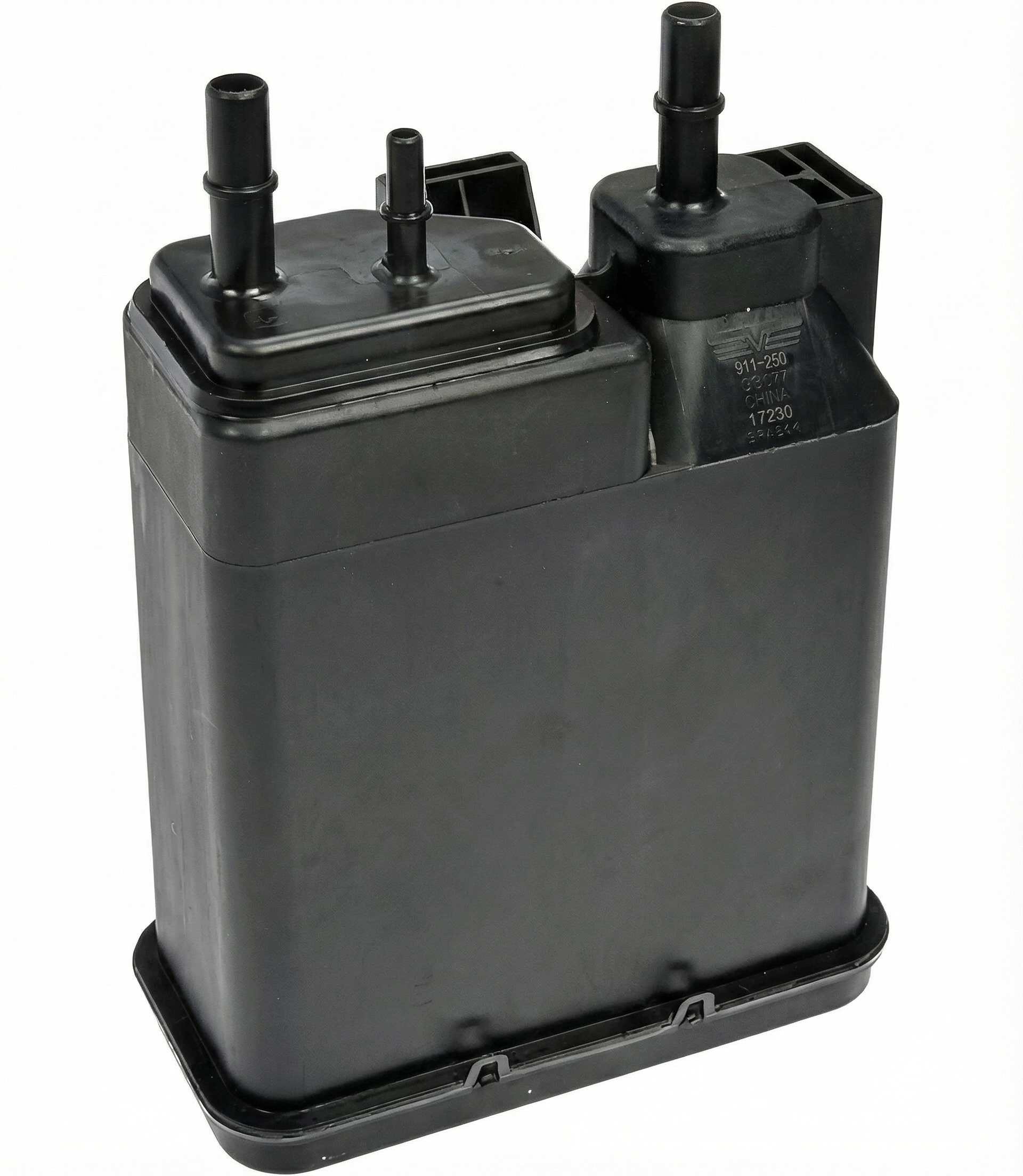
- Cracked Charcoal Canister: → Shop Vapor Canister The plastic housing of the charcoal canister can be damaged by road debris or become brittle with age, causing a large leak. Inspect it for any visible cracks or damage while checking the vent solenoid.
- Faulty Fuel Tank Pressure Sensor (FTPS): → Shop Fuel Tank This sensor monitors the pressure in the EVAP system. If it provides incorrect readings to the computer, it may falsely trigger a P0440 code. Diagnosis typically requires a scan tool to observe the sensor's live data to see if it's reporting pressure changes correctly.
- Leaking Fuel Tank Vent Valve Gasket: → Shop Fuel Tank A user on a forum with a similar platform found a crack in the fuel tank vent valve gasket on top of the fuel tank itself after replacing many other parts. This required dropping the tank to access and replace the seal.
Diagnosis Steps
- Tighten the gas cap until it clicks several times. Clear the code with a scanner and drive for a few days to see if it returns.
- If the code returns, replace the gas cap with a new, quality part. This is the cheapest and easiest first step.
- Get under the vehicle and thoroughly inspect the entire fuel filler neck for any signs of rust, flaking, or holes. Pay close attention to the area where it bends and where it connects to the fuel tank hose. This is a known weak point.
- Inspect the EVAP hoses in the engine bay and along the frame for obvious cracks, breaks, or disconnections.
- Locate the EVAP vent solenoid. On the Bravada, it's mounted to a crossmember above the rear axle, near the spare tire. Inspect it and its wiring for damage. Test its operation by applying 12V power and listening for a click.
- Locate the EVAP purge solenoid in the engine bay, typically on the intake manifold. Test it for being stuck open by checking for vacuum at its inlet port with the engine running.
- If no obvious faults are found, the most reliable way to find the source of the leak is to have a professional smoke test performed on the EVAP system. This will force smoke through the lines and reveal the location of any hard-to-find leaks. 🎬 Watch: How to use a smoke machine to find leaks.
Parts You'll Likely Need
- Fuel Tank Filler Neck — This is a very common failure point on the Bravada/Blazer/Jimmy platform due to rust, directly causing a P0440 leak.
Trusted brands: Spectra Premium, Dorman (e.g., 577-933, verify fitment), Lil-Mag
OEM price range: $80-$150
Aftermarket price range: $50-$100 - EVAP Vapor Canister Vent Solenoid
(OEM #214-2149 (Superseded by 214-2324, verify connector))— This solenoid is exposed to the elements and frequently fails by getting stuck or clogged, causing a system malfunction. It is often the cause when P0449 is also present.
Trusted brands: ACDelco (GM Genuine), Standard Motor Products (e.g., CVS6), Dorman (e.g., 911-021)
OEM price range: $40-$70
Aftermarket price range: $25-$50 - Gas Cap — A worn gas cap is the simplest and most frequent cause of EVAP codes on any vehicle.
Related Codes That Often Appear With This One
- P0449 — P0449 specifically points to a fault in the EVAP vent solenoid control circuit. If the vent solenoid fails electrically, it can trigger both a general system fault (P0440) and the specific circuit fault (P0449).
- P0455 — P0455 indicates a large EVAP leak. A severely rusted-through filler neck, a disconnected hose, or a vent solenoid stuck wide open can be large enough to trigger both a general malfunction (P0440) and a large leak code.
- P0442 — P0442 indicates a small EVAP leak. This code can appear alongside P0440 if the leak is on the borderline between small and large, or if the computer runs different tests that classify the same leak differently.
Technical Service Bulletins (TSBs) & Recalls
- TSB #02-06-04-037H: While this TSB is officially for code P0446 (EVAP Vent Restricted) on GM trucks, it is highly relevant. It addresses issues caused by dirt and dust clogging the EVAP vent system. The fix involves replacing the vent valve solenoid and relocating the air filter intake to a cleaner location, like higher up in the frame rail or above the transmission, using a service kit. This procedure can prevent repeat failures of the vent solenoid, which can also contribute to a P0440 code.
Platform-Specific Known Issues
- Filler Neck Rust Prevention: The design of the fuel door area can trap water and debris around the filler neck, accelerating rust. After replacing a rusted neck, some owners drill a small drainage hole in the lowest point of the plastic housing to allow water to escape, potentially extending the life of the new part.
Mechanic-Grade Diagnostic Values
- Fuel Tank Pressure (FTP) Sensor Voltage — expected: Approximately 1.4V to 1.6V with key on, engine off, and gas cap removed (atmospheric pressure).. Failure: Voltage is stuck and does not change when the system is sealed and a vacuum is applied via scan tool commands. A raw voltage less than 0.1V for 5 seconds can also indicate a fault.
- EVAP Purge Solenoid Resistance — expected: Typically between 18 and 30 Ohms for GM vehicles of this era.. Failure: A reading far outside this range indicates a failed solenoid coil.
- EVAP Vent Solenoid Resistance — expected: Typically between 18 and 30 Ohms, similar to the purge solenoid.. Failure: An open circuit (infinite resistance) or a short (near zero resistance) indicates a failed solenoid.
Scan Tool Commands That Help
- Tech 2 (or equivalent emulator like VCX Nano): EVAP Service Bay Test — This function allows the technician to force the PCM to run the entire EVAP self-test sequence on demand, without having to perform a full drive cycle. It commands the vent and purge solenoids to seal and test the system's integrity, confirming if a leak is present. Note: GM eliminated this test on some 2001 models via a TSB, so it may not be available.
- Tech 2 / High-End Scan Tool: Vent Solenoid Control — Used to command the EVAP vent solenoid open and closed while observing system pressure on the scan tool. This directly tests the solenoid's function and the system's ability to seal without physically accessing the part.
- Tech 2 / High-End Scan Tool: Purge Solenoid Control — Used to command the purge solenoid open by a specific percentage. This verifies the solenoid's operation and helps check for restrictions in the line from the canister to the engine.
Wiring & Ground Locations
- EVAP Canister Purge Solenoid Valve — Top rear of the engine, on the intake manifold.. This is a key actuator. A wiring issue or bad ground can prevent it from operating correctly, causing a system malfunction.
- EVAP Canister Vent Valve — Mounted on a crossmember above the spare tire/rear axle.. Its location exposes its wiring to road debris and corrosion. A bad connection here is a common cause of P0449 and can contribute to P0440.
- G114 — Left rear of the engine.. This is a potential ground point for engine-mounted components. A corroded or loose ground here could affect sensor or solenoid operation.
- EVAP Line Routing — Runs from the purge solenoid over the back of the engine/bell housing, then along the inboard side of the driver's side frame rail to the canister in the rear.. This long run of tubing is susceptible to physical damage or chafing against the frame, which can cause a hard-to-find leak.
Real Owner Repair Stories
- 2CarPros forum user 'LADYRIDER61' (2001 Oldsmobile Bravada, 130,000 miles) — P0440 code, Check Engine Light flashing during hard acceleration, gas pump nozzle clicking off during fueling, engine 'fibrillation' at normal speeds.
❌ Tried (didn't work) Replaced gas cap, Replaced corroded fuel filler neck, Replaced fuel pump
✅ What actually fixed it After clearing the codes, a new code P0449 appeared. The final fix was replacing the EVAP canister vent solenoid, which resolved the fueling issue and the codes.
"I Checked Everything" — The Actual Cause
- A common scenario on this platform where a smoke test passes is when the leak is at the O-ring seal for the fuel pump module on top of the gas tank. A low-pressure smoke test may not reveal this leak, but it can be large enough to set a P0440 code. This requires dropping the fuel tank to visually inspect and replace the seal.
OEM Part Supersession History
ACDelco 214-2149→ACDelco 214-2324— Updated part design.
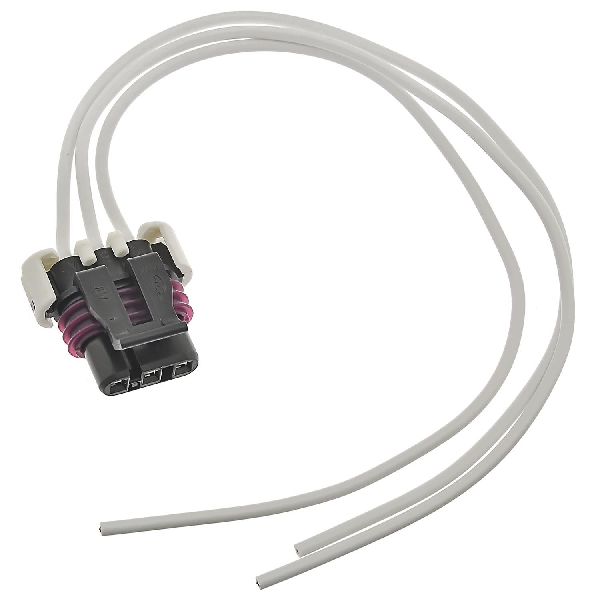
Heads up: The newer part (214-2324) may have a different electrical connector than the original. Some applications may require a jumper harness adapter, such as GM part #19257603, to connect the new style solenoid to the old style vehicle harness.
Diagnostic Flowchart
Real Owner Stories
Aggregated from forums and TSBs cited above. Mileages and costs reflect what owners reported in those sources.
2001 Chevrolet Blazer (Platform Mate)
Symptoms: Experienced a P0440 code after fuel spilled out during a fill-up. The owner also noted that their fuel filler neck was 'crazy rusty' and likely the next part to fail.
What fixed it: Replaced the gas cap due to a cracked seal.
Source hint: BlazerForum.com - 'Help! Code P0440' (2017)
2001 Oldsmobile Bravada
Symptoms: Reported a P0440 code after replacing a 'badly corroded' fuel filler neck and fuel pump. After clearing the P0440 code, a P0449 code subsequently appeared.
What fixed it: Replaced the canister vent solenoid, confirming a common failure progression on this platform.
Source hint: 2CarPros.com - '2001 Oldsmobile Bravada P0440' (2014)
GM Trucks / S-10 Platform
Symptoms: EVAP vent system restricted due to dirt and dust clogging the components, leading to repeat failures of the vent solenoid.
What fixed it: Replaced the vent valve solenoid and relocated the air filter intake to a cleaner location (like higher up in the frame rail or above the transmission) using a service kit.
Source hint: TSB #02-06-04-037H
Related OBD-II Codes
Frequently Asked Questions
Is there a specific TSB for the EVAP vent solenoid on my 1998-2001 Bravada?
Why does the gas pump keep clicking off repeatedly when I try to fill my Bravada's tank?
I replaced the gas cap on my Bravada, but the P0440 code came back. What is the next most likely cause?
How can I prevent my new fuel filler neck from rusting out again?
Where is the EVAP purge solenoid located on the 4.3L V6 engine, and how do I test it?
Are the Chevy Blazer and GMC Jimmy prone to the exact same P0440 issues as my Bravada?
Helpful Videos
![SMOKE Machine Diagnose Evap P0440 [Problem Found] #automobile #diyrepair #mechanic](https://img.youtube.com/vi/tYMqzzdXO58/mqdefault.jpg)
Used OEM Parts in Stock
New Aftermarket Parts Available


The information in this article is provided for general reference and educational purposes only. Vehicle specifications, procedures, and part compatibility can vary by production date, trim level, and region. Always consult your vehicle's factory service manual and verify part numbers before purchasing or performing repairs. Safety-critical components such as airbags, seat belts, and braking systems should be installed by a qualified professional.
- Oldsmobile Bravada:
- 🧭 Diagnostic Flowchart
- 🎬 Helpful Videos
- 🛍️ Shop This Part
- What's Unique About the 1998-2001 Oldsmobile Bravada
- Symptoms You May Notice
- Most Likely Causes
- Rare But Worth Checking
- Diagnosis Steps
- Parts You'll Likely Need
- Related Codes That Often Appear With This One
- Technical Service Bulletins (TSBs) & Recalls
- Platform-Specific Known Issues
- Mechanic-Grade Diagnostic Values
- Scan Tool Commands That Help
- Wiring & Ground Locations
- Real Owner Repair Stories
- "I Checked Everything" — The Actual Cause
- OEM Part Supersession History
- Real Owner Stories
- 2001 Chevrolet Blazer (Platform Mate)
- 2001 Oldsmobile Bravada
- GM Trucks / S-10 Platform
- Related OBD-II Codes
- Frequently Asked Questions
- 🎟️ Get 5% Off