

P0440 on 1999-2005 Pontiac Grand Am: EVAP System Malfunction Causes and Fixes
For a 1999-2005 Pontiac Grand Am, code P0440 most often points to a loose gas cap or a rusted fuel filler neck. Before replacing parts, check that the gas cap is tight and inspect the filler neck for rust where the cap seals. A new gas cap is about $15-$30, while a filler neck replacement can cost $200-$400. The rust forms between the metal pipe and an inner plastic sleeve, breaking the seal.
- Always start with the simplest fix: check that the gas cap is tight.
- On a 1999-2005 Grand Am, if a new gas cap doesn't fix P0440, the next most likely cause is a rusted fuel filler neck.
- A smoke test is the most reliable method to accurately diagnose the location of an EVAP system leak.
- Other potential causes include a faulty EVAP vent solenoid (under the car) or purge solenoid (in the engine bay).
- This code will not affect how the car drives, but it will cause an automatic failure on an emissions test.
What's Unique About the 1999-2005 Pontiac Grand Am
On the 1999-2005 Pontiac Grand Am and its platform mate, the Oldsmobile Alero, a very common and often misdiagnosed cause for P0440 is rust forming on the fuel filler neck. This rust develops between the outer metal pipe and an inner plastic insert that the gas cap actually seals against. This creates a gap that prevents even a brand-new gas cap from creating a proper seal. Owners have reported replacing the gas cap multiple times without success, only to find the leak was at the filler neck. A smoke test is the definitive way to diagnose this, as smoke will be seen escaping from the base of the filler neck, not the cap itself.
Symptoms You May Notice
- Check Engine Light is on.
- A faint smell of fuel around the vehicle, especially near the gas cap area.
- Difficulty passing an emissions test.
- Hearing a whoosh of air when opening the gas cap is a sign the system is holding pressure correctly; absence of this sound may indicate a leak.
- Replacing the gas cap multiple times when the actual problem is a rusted fuel filler neck.
Most Likely Causes
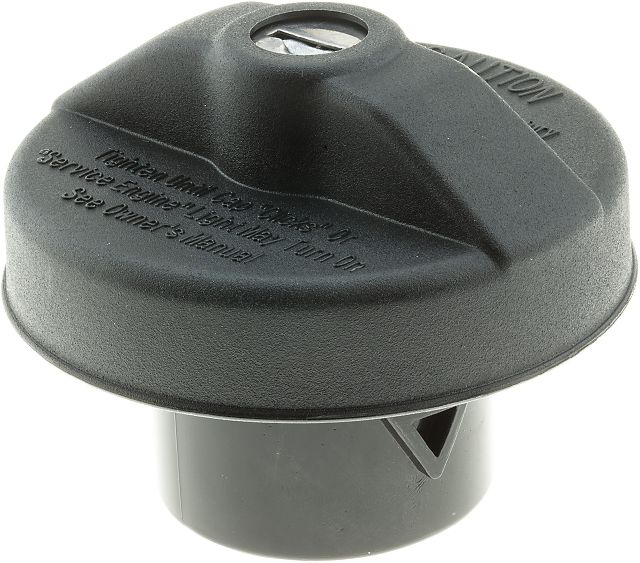
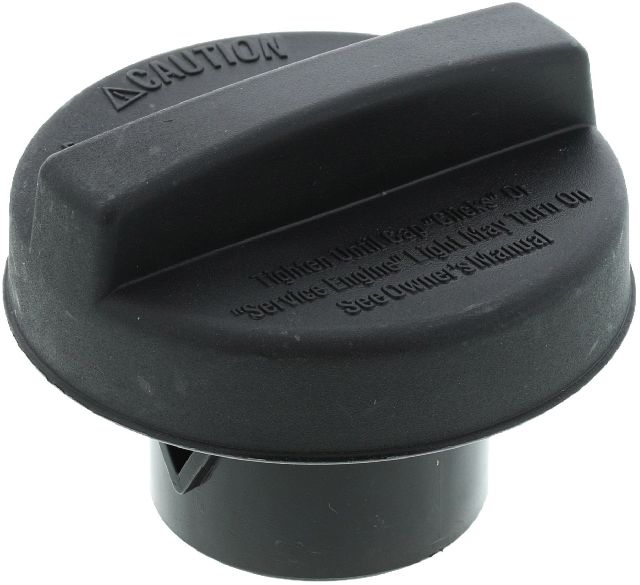
- Loose or Faulty Gas Cap 🔴 High Probability → Shop Fuel Tank Cap This is the most common cause for any EVAP code on any vehicle. The seal can wear out, crack, or become stiff over time, or the cap may not have been tightened correctly after refueling.
How to confirm: Ensure the gas cap is tightened until it clicks several times. Inspect the rubber O-ring on the cap for cracks, stiffness, or damage.
Typical fix: If tightening doesn't resolve the code after a few drive cycles, replace the gas cap. An OEM cap is often recommended over cheaper aftermarket options which may not seal as well.
Est. part cost: $15-$30 - Rusted or Corroded Fuel Filler Neck 🔴 High Probability → Shop Fuel Filler Neck The filler neck on this platform uses a plastic insert within the metal pipe. Over time, especially in rust-belt states, rust develops between the metal and plastic, creating a gap that prevents the gas cap from sealing properly. In a related Pontiac case, NHTSA ODI #10195326 describes a mechanic finding a P0440 code where the leak was specifically at the tank filler neck connection.
How to confirm: Visually inspect the rim of the filler neck where the gas cap seal makes contact. Look for rust, pitting, or bubbling. A definitive diagnosis requires a smoke test, which will show smoke escaping from around the base of the plastic insert, even if the cap itself is good.
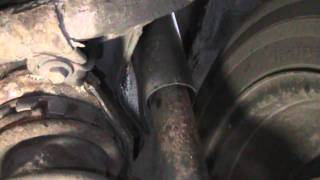
Typical fix: The fuel filler neck must be replaced. 🎬 See this walkthrough on replacing a rusted fuel filler neck. Cleaning the rust off is usually a temporary fix at best, as the rust originates between the layers. Aftermarket parts are widely available from brands like Dorman and Spectra Premium.
Est. part cost: $60-$120 - Failed EVAP Vent Solenoid 🟡 Medium Probability → Shop Vapor Canister The vent solenoid is located under the car near the passenger rear wheel, mounted to or near the charcoal canister. Its exposed location makes it vulnerable to road debris, moisture, and corrosion, causing it to get stuck open or closed.
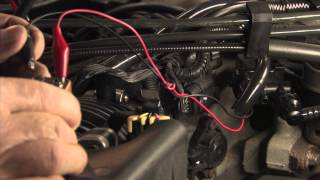
How to confirm: The valve is normally open. It can be commanded closed with a capable scan tool while observing system pressure. It can also be removed and tested by applying 12V power to see if the valve actuates (clicks). Also inspect the wiring harness at the connector, as wires can break internally.
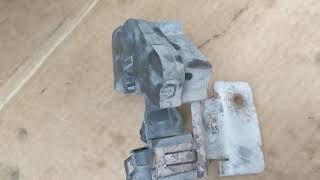
Typical fix: Replace the EVAP vent solenoid. A common aftermarket part number is Standard Motor Products PV157. 🎬 Watch: How to locate and replace the vent valve solenoid. The ACDelco OEM part is 214-2149.
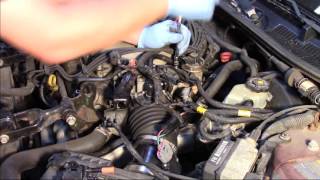
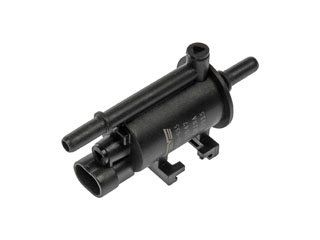
Est. part cost: $25-$50 - Failed EVAP Purge Solenoid/Valve ⚪ Low Probability → Shop Vapor Canister This valve is located in the engine bay and can fail by getting stuck open, creating a constant vacuum leak into the EVAP system, or by failing to open on command.
How to confirm: The valve is normally closed. With the engine off, try to blow through it; no air should pass. With the engine running, you can disconnect the hose leading to the intake manifold to check for vacuum at idle (there shouldn't be any).
Typical fix: Replace the purge solenoid. The ACDelco OEM part number is 214-641.
Est. part cost: $20-$45 - Cracked or Disconnected EVAP Hoses ⚪ Low Probability
How to confirm: Visually inspect all accessible EVAP lines running from the fuel tank, to the charcoal canister, and to the purge solenoid in the engine bay. A smoke test is the most effective way to find small cracks or leaks that are not visible.
Typical fix: Replace the damaged section of hose.
Est. part cost: $5-$20
Rare But Worth Checking
- Leaking Charcoal Canister: → Shop Vapor Canister The plastic housing of the canister can develop cracks over time, leading to a leak. This is usually found with a smoke test.
- Faulty Fuel Tank Pressure Sensor (FTPS): → Shop Fuel Tank A bad sensor can incorrectly report a leak to the computer when one doesn't exist. This is less common than an actual leak. It is located on top of the fuel tank as part of the fuel pump module, making replacement difficult as the tank must be dropped or an access panel cut.
- PCM Issues: While rare, some owners of similar Pontiac models have reported that codes P0440 and P0441 were related to the PCM, which was believed to be causing incorrect fuel pump readings (NHTSA ODI #10556465).
Diagnosis Steps
- Check the Gas Cap: Ensure it is tight and clicks at least three times. Clear the code and drive for a few days to see if it returns.
- Inspect the Gas Cap and Filler Neck: Remove the cap and inspect its rubber seal for cracks or damage. Carefully inspect the fuel filler neck for any signs of rust or corrosion, especially between the outer metal lip and the inner plastic sleeve.
- Visual Inspection: Visually inspect all accessible EVAP hoses and components in the engine bay and under the vehicle near the fuel tank for obvious cracks, damage, or disconnections.
- Test Solenoids: If you have a bidirectional scan tool, command the EVAP vent and purge solenoids on and off to check for operation. You should hear a clicking sound from each. The vent solenoid is near the passenger rear wheel; the purge solenoid is in the engine bay.
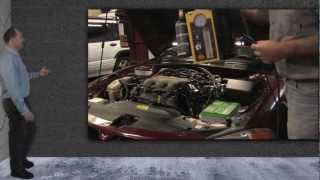
- Perform a Smoke Test: This is the most effective way to find the source of the leak. Introduce smoke into the EVAP test port. 🎬 Watch: Professional diagnostic steps for P0440 on a Grand Am. Smoke will exit from any cracks in hoses, faulty seals, or bad components. Pay close attention to the fuel filler neck area, vent solenoid, and purge solenoid. Note: A check valve in the system may prevent smoke from reaching the filler neck unless the hose is pinched off and smoke is introduced closer to the tank.
- Replace the Faulty Component: Based on the smoke test results, replace the part that is leaking.
Parts You'll Likely Need
- Fuel Filler Neck
(OEM #10339430)— A rusted filler neck is a very common cause of P0440 on this vehicle, as it prevents the gas cap from sealing.
Trusted brands: ACDelco (OEM), Dorman (e.g., 577-937), Spectra Premium
OEM price range: $90-$150
Aftermarket price range: $60-$120 - Gas Cap
(OEM #GT231)— This is the simplest and most common fix for any EVAP code. The seal wears out over time.
Trusted brands: ACDelco (OEM), Stant, Gates
OEM price range: $20-$35
Aftermarket price range: $15-$25 - EVAP Canister Vent Solenoid
(OEM #214-2149 (supercedes earlier numbers))— Its location under the car makes it prone to failure from dirt and moisture, causing it to stick open or closed.
Trusted brands: ACDelco (OEM), Delphi, Standard Motor Products (PV157)
OEM price range: $35-$60
Aftermarket price range: $25-$50 - EVAP Canister Purge Solenoid
(OEM #214-641)— Located in the engine bay, this part can get stuck open or fail electronically, causing a leak.
Trusted brands: ACDelco (OEM), Dorman, Delphi
OEM price range: $30-$50
Aftermarket price range: $20-$45
Related Codes That Often Appear With This One
- P0442 — P0442 indicates a 'Small EVAP Leak.' A component that is beginning to fail might initially set a P0440 and later set the more specific P0442 as the leak characteristics change.
- P0455 — P0455 indicates a 'Large EVAP Leak.' While P0440 is a general malfunction code, some systems may throw P0455 for the same root causes, such as a very rusty filler neck or a stuck-open vent valve.
Technical Service Bulletins (TSBs) & Recalls
- While no specific TSB for P0440 on the Grand Am was found, GM issued TSB 02-06-04-037 for other models which addresses difficult-to-find EVAP leaks and recommends using a smoke machine with UV dye to pinpoint the s
Platform-Specific Known Issues
- A recurring P0440 code after replacing the gas cap is a strong indicator that the fuel filler neck has rusted and is the source of the leak.
- When performing a smoke test, a check valve inside the fuel tank may prevent smoke from reaching the filler neck. The hose may need to be pinched off past the canister to properly test the filler neck area.
- The EVAP vent solenoid is located by the passenger side rear wheel, near the EVAP canister, and is a common failure point due to its exposure to the elements.
Mechanic-Grade Diagnostic Values
- EVAP Canister Vent Solenoid Resistance — expected: 48 - 65 ohms. Failure: A reading outside this range indicates a faulty solenoid coil.
- EVAP Canister Purge Valve Resistance — expected: 30 - 38 ohms. Failure: A resistance reading outside this range, when the engine is cool, suggests a bad valve.
- Fuel Tank Pressure (FTP) Sensor Voltage (Key On, Engine Off, Gas Cap Off) — expected: 1.3V - 1.7V (nominal is ~1.5V). Failure: A voltage significantly outside this range suggests a faulty sensor or wiring issue. A reading stuck high (near 5V) or low (near 0V) points to a circuit or sensor failure.
Scan Tool Commands That Help
- GM Tech2 / High-End Bidirectional Scanner: EVAP System Service Bay Test / Purge & Seal — This function allows a technician to command the entire EVAP system through a self-test sequence. It will close the vent solenoid, open the purge solenoid to draw a vacuum, and then seal the system to monitor for vacuum decay. This is used to confirm the PCM's ability to test the system and to verify the integrity of the solenoids and lines without a smoke machine.
- GM Tech2 / High-End Bidirectional Scanner: EVAP Vent Solenoid Control — This command manually closes the normally-open vent solenoid. It is essential for performing a smoke test, as it seals the system's atmospheric vent, allowing the system to be pressurized with smoke to find leaks.
- GM Tech2 / High-End Bidirectional Scanner: EVAP Purge Solenoid Control — This command manually opens and closes the normally-closed purge solenoid. It's used to verify the solenoid is not stuck and is functioning electrically. A technician can command it open while checking for vacuum or introducing smoke to confirm flow.
Wiring & Ground Locations
- G103 — On the left side of the engine, on a transmission stud (for 3.4L V6).. This is a major ground point for engine electronics. While not directly for the EVAP solenoids, a poor ground here can cause erratic behavior in the PCM, potentially leading to incorrect diagnostic trouble codes or faulty sensor readings. A clean, tight ground connection is critical for overall system stability.
- EVAP Vent Solenoid Connector — Under the vehicle at the rear, near the passenger side wheel, attached to the EVAP canister or a bracket nearby.. This connector and its wiring are highly susceptible to corrosion and damage from road debris and weather. Wires can break inside the insulation, causing an intermittent open circuit that is not visually apparent but will set a P0440 or related circuit code. A 'pull test' on the wires can sometimes reveal these hidden breaks.
- EVAP Purge Solenoid Connector — On top of the engine's intake manifold (for 3.4L V6).. While less exposed than the vent solenoid, engine heat can make the plastic connector and wire insulation brittle over time, leading to cracks and poor connections that can trigger circuit-related EVAP codes.
Real Owner Repair Stories
- MyPartsGarage on YouTube (2000 Pontiac Grand Am, 3.4L V6, 154,000 miles) — Recurring Check Engine Light with code P0440.
❌ Tried (didn't work) Replacing the gas cap twice., Performing a smoke test that initially showed no leaks when testing from the EVAP test port.
✅ What actually fixed it The fuel filler neck was rusted between the outer metal pipe and the inner plastic sleeve that the gas cap seals against. This created a leak that was not at the cap seal itself, but at the body of the filler neck. Replacing the entire fuel filler neck resolved the code. - 2CarPros Forum User (2000 Pontiac Grand Am) — P0440 and P0440 pending codes.
❌ Tried (didn't work) Replacing the gas cap., Replacing the EVAP vent valve, even though a previous smoke test had indicated it was leaking.
✅ What actually fixed it The user's report ends after replacing the vent valve and gas cap did not solve the P0440 code, strongly implying the next step would be to investigate another cause, like the common filler neck issue, though the final fix was not posted.
"I Checked Everything" — The Actual Cause
- In a documented case on a 2000 Grand Am, a standard smoke test from the engine bay test port showed the system was sealed and holding pressure. However, the technician noticed no smoke escaped when the gas cap was removed. This indicated a blockage or check valve was preventing smoke from reaching the tank and filler neck area. The actual leak, a rusted filler neck, was only found after further investigation that bypassed the initial test's misleading 'no leak' result.
OEM Part Supersession History
Various older GM part numbers→ACDelco 214-2149— Consolidation of part numbers and potential design improvements.
Heads up: ACDelco 214-2149 is a widely used vent solenoid across many GM platforms from the early 2000s. While it is the correct service replacement, ensure the mounting bracket from the old solenoid on the Grand Am is transferred to the new part, as the new part may not include the vehicle-specific bracket.
Diagnostic Flowchart
Used vs. New Parts: Buying Guide for This Vehicle
When a used part is the smart pick: For this repair, used parts are generally not recommended. The most common failure points—gas cap seal, filler neck rust, and solenoid valves—are all wear-and-tear or corrosion items. A used part from a junkyard is likely to have similar age-related issues or a very limited remaining lifespan, making the labor of replacement not worthwhile.
Donor-vehicle mileage cap: roughly under 50000 miles for the part to have meaningful remaining life.
What to inspect on the donor part:
- For a filler neck, inspect the donor vehicle for any signs of rust in the rear quarter panel and fuel door area. Only consider a part from a dry, southern/western state vehicle.
- For solenoids, look for clean, corrosion-free electrical pins and intact plastic housings. Avoid any parts that are caked in dirt or show signs of rust on their metal components.
OEM-only on this vehicle (don't cheap out):
- Gas Cap: While not strictly 'OEM-only', many technicians and owners report that cheap aftermarket gas caps fail to seal properly on this platform, leading to a quick return of the P0440 code. Using an OEM ACDelco cap is a strong recommendation to avoid a misdiagnosis.
Aftermarket brands forum-validated for this vehicle:
- Dorman (for Fuel Filler Neck, e.g., 577-937)
- Spectra Premium (for Fuel Filler Neck)
- Standard Motor Products (for EVAP Solenoids, e.g., PV157)
- Delphi (for EVAP Solenoids)
Brands owners have reported issues with on this vehicle:
- No-name, unbranded 'white box' gas caps and electrical solenoids from online marketplaces are frequently reported as being defective out of the box or failing shortly after installation.
Real Owner Stories
Aggregated from forums and TSBs cited above. Mileages and costs reflect what owners reported in those sources.
2000 Pontiac Grand Am
Symptoms: The owner had a persistent P0440 code and had already replaced the gas cap twice without success.
What fixed it: A smoke test revealed the leak was between the metal fuel filler pipe and its plastic insert. The fuel filler neck had to be replaced.
Source hint: YouTube: 'P0440 Diagnostics on a 2000 Pontiac Grand Am' by Wells Vehicle Electronics
2000 Pontiac Grand Am 3.4 V6
Symptoms: The vehicle had a P0440 Check Engine Light code.
What fixed it: The owner replaced the EVAP vent valve solenoid (part number Standard PV157), which resolved the code.
Source hint: YouTube: 'SOLVED! 2000 PONTIAC GRAND AM 3.4 V6 Vent Valve Solenoid P0440' by Mobile Auto Repairs
Pontiac Bonneville (similar GM system)
Symptoms: The owner chased a P0440 code for years due to a rusted filler neck.
What fixed it: A temporary fix of brazing the filler neck failed and the code returned. The only permanent solution was the complete replacement of the corroded filler neck.
Source hint: GM Forum: 'Lessons Learned for DTC P0440'
2001 Oldsmobile Alero (platform mate)
Symptoms: The owner reported a P0440 code accompanied by strong fuel fumes around the vehicle.
What fixed it: The source confirms the causes are identical to the Grand Am, with the most likely fixes being a gas cap, rusted filler neck, or faulty EVAP solenoid.
Source hint: Car Talk Community: '01 Olds Alero - EVAP problem'
Documented NHTSA Reports
Pontiac Vibe (Cross-Model Reference)
Symptoms: A consumer was informed by a mechanic that codes P0440 and P0441 were related to the PCM, which was believed to be causing issues with the fuel pump readings.
Source: NHTSA ODI #10556465
Pontiac Aztek (Cross-Model Reference)
Symptoms: A mechanic found a P0440 code indicating a large EVAP leak.
What fixed it: The technician determined the leak was located at the tank filler neck connection, which was found to be split.
Source: NHTSA ODI #10195326
Related OBD-II Codes
Frequently Asked Questions
I replaced the gas cap on my Grand Am, but the P0440 code came back. What's the most likely problem?
Where is the EVAP vent solenoid located on a 1999-2005 Pontiac Grand Am?
I'm trying to smoke test my Grand Am for a P0440 leak, but no smoke is coming out of the filler neck. What's wrong?
What are the OEM or common aftermarket part numbers for the EVAP solenoids on my Grand Am?
Does this P0440 information also apply to my Oldsmobile Alero?
Is it normal to hear a 'whoosh' of air when I open the gas cap on my Grand Am?
Is there a specific Technical Service Bulletin (TSB) for code P0440 on the Grand Am?
Helpful Videos
We Have This Part in Stock


The information in this article is provided for general reference and educational purposes only. Vehicle specifications, procedures, and part compatibility can vary by production date, trim level, and region. Always consult your vehicle's factory service manual and verify part numbers before purchasing or performing repairs. Safety-critical components such as airbags, seat belts, and braking systems should be installed by a qualified professional.
- Pontiac Grand Am:
- 🧭 Diagnostic Flowchart
- 🎬 Helpful Videos
- 🛍️ Shop This Part
- What's Unique About the 1999-2005 Pontiac Grand Am
- Symptoms You May Notice
- Most Likely Causes
- Rare But Worth Checking
- Diagnosis Steps
- Parts You'll Likely Need
- Related Codes That Often Appear With This One
- Technical Service Bulletins (TSBs) & Recalls
- Platform-Specific Known Issues
- Mechanic-Grade Diagnostic Values
- Scan Tool Commands That Help
- Wiring & Ground Locations
- Real Owner Repair Stories
- "I Checked Everything" — The Actual Cause
- OEM Part Supersession History
- Used vs. New Parts: Buying Guide for This Vehicle
- Real Owner Stories
- 2000 Pontiac Grand Am
- 2000 Pontiac Grand Am 3.4 V6
- Pontiac Bonneville (similar GM system)
- 2001 Oldsmobile Alero (platform mate)
- Documented NHTSA Reports
- Pontiac Vibe (Cross-Model Reference)
- Pontiac Aztek (Cross-Model Reference)
- Related OBD-II Codes
- Frequently Asked Questions
- 🎟️ Get 5% Off