

P0440 on 1997-2004 Porsche 911 (996): EVAP System Malfunction Causes and Fixes
On a 1997-2004 Porsche 911 (996), code P0440 almost always points to a minor leak in the EVAP system, not a major one. The most common culprits are a loose or faulty gas cap, a bad EVAP purge valve near the throttle body, or the fuel line vent valve in the passenger wheel well. Start with the gas cap before buying any parts, as its seal is a known weak point.
- P0440 on a 996 means 'minor leak', not 'large leak'. Don't panic.
- Always start with the simplest fix: check that your gas cap is tight. If it's old, replace it. It's the most likely cause.
- The second most likely culprit is the EVAP purge valve in the engine bay, followed by the fuel line vent valve in the passenger wheel well.
- A smoke test is the most efficient way to diagnose the leak if the gas cap isn't the issue.
- This code will not stop you from driving the car, but it will cause you to fail an emissions test.
What's Unique About the 1997-2004 Porsche 911
The 996-generation 911 was the first to feature a water-cooled engine and a more complex emissions system compared to its air-cooled predecessors. Owners and technicians on forums like Rennlist and RennTech frequently report that P0440 is triggered by a few specific, well-known failure points on this platform. Unlike the generic definition which can mean a large leak, the Porsche-specific fault is for a 'minor leak,' making diagnosis slightly different and focused on components known to fail in a subtle way, such as the purge valve or hairline cracks in plastic components.
Generation note: The 1997-2004 year range covers the entire Porsche 996 generation. This includes the earlier 996.1 models (1997-2001) with the 3.4L engine and 'fried-egg' headlights, and the facelifted 996.2 models (2002-2004) with the 3.6L engine and revised styling. The common causes and diagnostic procedures for P0440 are consistent across both 996.1 and 996.2 variants, as well as the related 986 Boxster platform.
Symptoms You May Notice
- Check Engine Light is on
- A faint smell of fuel, particularly around the rear of the car or after refueling
- In some cases, difficulty starting after refueling, requiring extended cranking
- A subtle whistling sound at light throttle, often described as blowing over a coke bottle, which can point to a failing purge valve
- Replacing the O2 sensors. O2 sensors are not related to the EVAP system and will not fix a P0440 code.
- Replacing the fuel tank pressure sensor without proper diagnosis. While this sensor can fail, it is much less common than the gas cap or EVAP valves. A faulty sensor would typically trigger different, specific codes (e.g., P0450).
Most Likely Causes
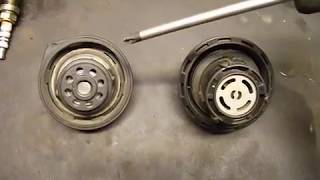
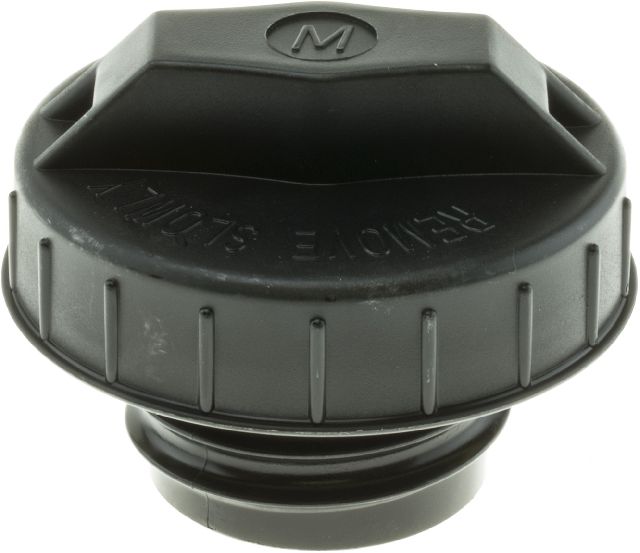
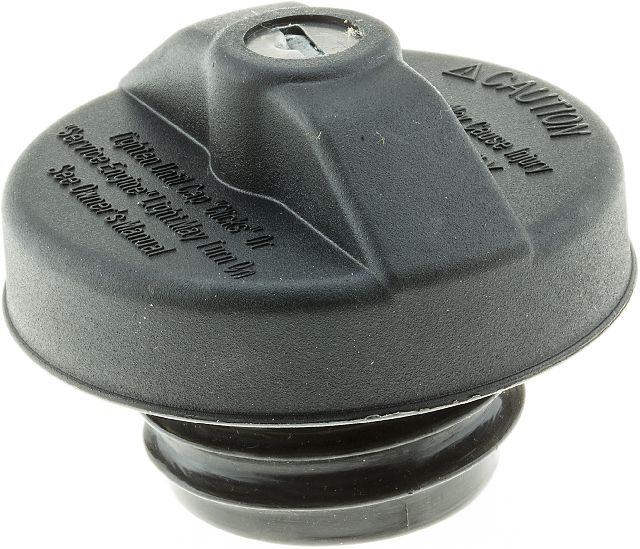
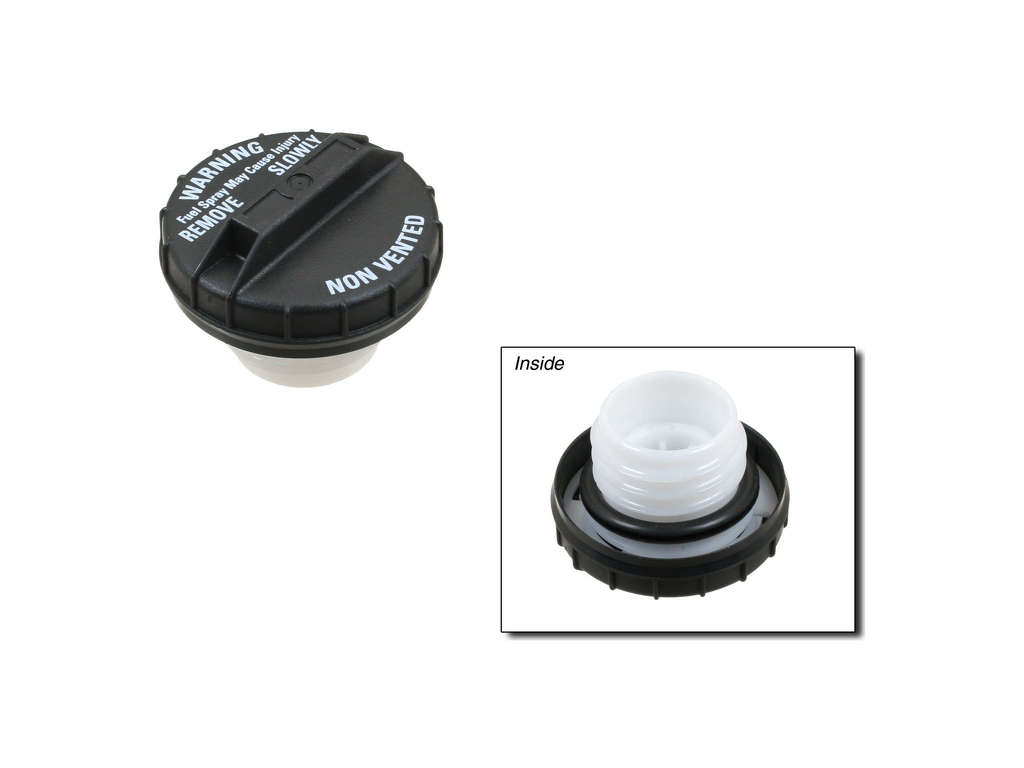
- Loose or Faulty Gas Cap 🔴 High Probability → Shop Fuel Tank Cap The gas cap is a frequent point of failure on many vehicles. The rubber O-ring seal can degrade, crack, and harden over time, preventing a proper seal. The cap's ratchet mechanism can also wear out. This is the most common and cheapest potential fix.
How to confirm: First, ensure the cap is tightened until it clicks several times. Inspect the rubber O-ring for visible cracks, stiffness, or damage. A new cap is an inexpensive diagnostic step if the current one is old.
Typical fix: Replace the gas cap. It's a simple DIY job involving removing a single plastic rivet.
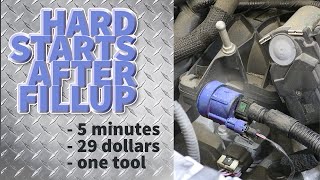
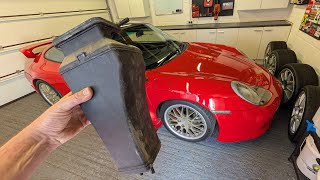
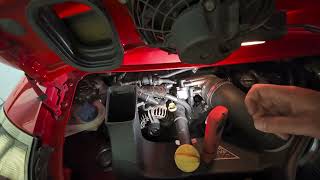
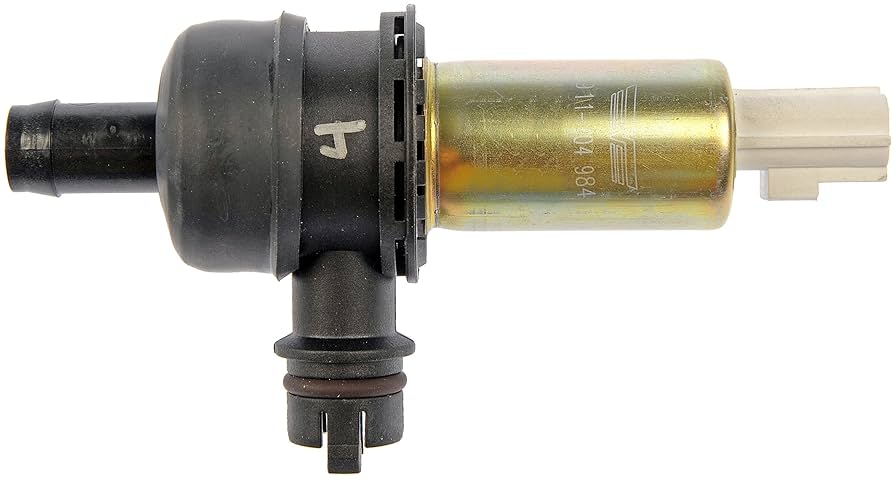
Est. part cost: $15-$30 - Faulty EVAP Purge Valve (Regeneration Valve) 🟡 Medium Probability → Shop Vapor Canister This solenoid valve, located in the engine bay near the throttle body, is a very common failure point known to stick open or not seal properly, creating a small, constant leak in the system. Owners report hearing a faint whistling sound at light throttle when this valve begins to fail. 🎬 Watch: How to check and clean your regeneration valve solenoid. A stuck-open valve can also lead to hard starting after refueling because it allows un-metered fuel vapor into the intake manifold.
How to confirm: With the engine off, remove the valve and try to blow through it. It should be closed and not allow air to pass. A diagnostic tool like a Durametric can also be used to actuate the valve; a healthy valve will make an audible click, while a failed one may be silent or pass air when it should be closed.
Typical fix: Replace the EVAP purge valve. The Bosch aftermarket part is significantly cheaper than the Genuine Porsche part.
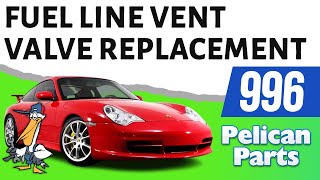
Est. part cost: $50-$250 - Faulty Fuel Line Vent Valve 🟡 Medium Probability This plastic valve is located in the front passenger-side wheel well, attached to the fuel filler neck. It becomes brittle with age and can crack. Its internal mechanism can also fail, causing a leak. Failure of this valve is also a classic cause of the gas pump nozzle clicking off repeatedly during refueling. 🎬 See this walkthrough on replacing the fuel line vent valve.
How to confirm: Access requires removing the passenger front wheel and wheel well liner. Visually inspect the valve and its connecting hoses for cracks or damage. A smoke test is the most definitive way to confirm a leak from this component.
Typical fix: Replace the fuel line vent valve. This is a DIY-possible job that requires some patience to access the bolts holding the valve bracket.
Est. part cost: $200-$250 - Cracked EVAP Hoses or Lines ⚪ Low Probability The plastic and rubber hoses that make up the EVAP system can become brittle and crack with age and heat exposure, especially the lines in the engine bay around the purge valve.
How to confirm: A visual inspection may reveal obvious cracks, but small leaks are hard to spot. A smoke test is the most effective method, where smoke is introduced into the EVAP system and any leaks become visible.
Typical fix: Replace the specific cracked hose or line section.
Est. part cost: $20-$100
Rare But Worth Checking
- Cracked Fuel Pump/Sending Unit Cover: → Shop Fuel Pump On all-wheel-drive models (Carrera 4/4S), the fuel sending unit cover is located under the battery tray. Forum users have reported finding numerous hairline cracks in this plastic cover, which can cause a P0440 code and a strong fuel smell in the cabin. This can be diagnosed with a smoke test or sometimes by filling the fuel tank completely and checking for any fuel wetness on top of the unit after removing the battery.
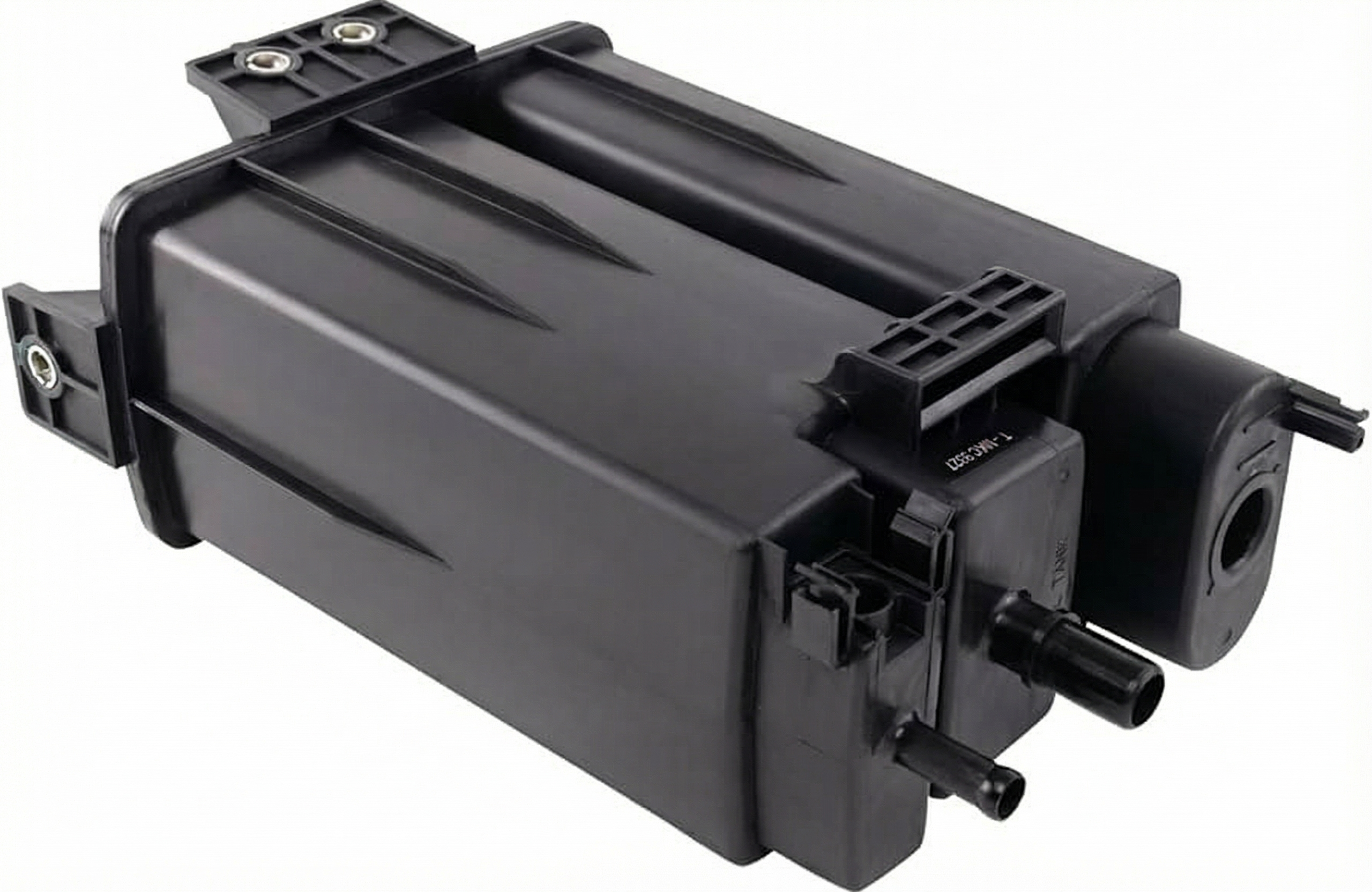
- Leaking Charcoal Canister: → Shop Vapor Canister The charcoal canister, located in the front passenger wheel well area, can develop cracks in its plastic body or its connections can become loose, though this is less common than valve failures. A smoke test would identify a leak from the canister body. Over time, the internal charcoal can also break down and clog the system, leading to refueling issues.
Diagnosis Steps
- Read the Code: Confirm P0440 is the only code present using an OBD-II scanner. If other EVAP codes like P0446 or P0455 are present, it may point to a different component failure.
- Inspect the Gas Cap: Remove, inspect the seal for cracks and brittleness, and reinstall, ensuring it clicks at least 3 times. Clear the code and drive for a few days. If the light returns, proceed.
- Consider a New Gas Cap: If the cap is old or the seal looks worn, replacing it is a cheap and easy potential fix. This is the most common solution.
- Visual Inspection & Purge Valve Test: Visually inspect the EVAP purge valve and hoses in the engine bay for any obvious cracks. To test the purge valve, remove it (located near the throttle body) and try to blow through it; it should be sealed shut when not powered. If air passes through, the valve is faulty and needs replacement. A Durametric tool can also command the valve to open and close to test for an audible click.
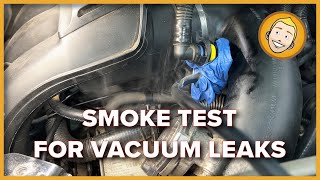
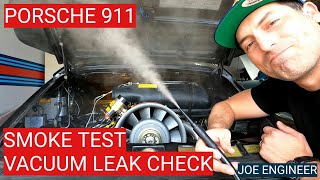
- Smoke Test: The most definitive diagnostic step. A smoke machine is connected to the EVAP system (often via the purge valve line). Smoke is pumped into the system under low pressure, and any leaks will be revealed by escaping smoke. 🎬 Watch: How to perform a smoke test on your Porsche. Check around the gas cap, filler neck, fuel line vent valve (in the wheel well), purge valve, charcoal canister, and all connected hoses.
- Inspect the Fuel Line Vent Valve: If the smoke test points to the front passenger wheel well, or if you have trouble refueling, remove the wheel and liner to inspect the vent valve and its connections for cracks.
- Inspect Fuel Sending Unit Cover (AWD Models): On C4/C4S models, if a fuel smell is present in the cabin and other causes are ruled out, remove the battery and battery tray to inspect the plastic fuel sending unit cover for hairline cracks.
Parts You'll Likely Need
- Fuel Filler Gas Cap
(OEM #99620124103)— This is the most common cause. The seal wears out over time, preventing the system from holding pressure.
Trusted brands: Genuine Porsche
OEM price range: $19-$30
Aftermarket price range: $15-$25 - EVAP Purge Valve (Regeneration Valve)
(OEM #99611012953)— A very common failure point on the 996. This solenoid gets stuck open, creating a persistent small leak. It is located on the top of the engine near the throttle body. Supersedes part numbers 99611012951 and 99611012952.
Trusted brands: Bosch (OEM supplier, part # 0280142353 or 0280142380), Genuine Porsche
OEM price range: $200-$250
Aftermarket price range: $45-$150 - Fuel Line Vent Valve
(OEM #99620114301)— Located in the front passenger wheel well, this plastic valve is prone to cracking with age, causing a leak. Failure can also lead to issues with refueling. Supersedes part number 99620114300.
Trusted brands: Genuine Porsche
OEM price range: $210-$250
Aftermarket price range: $130
Platform-Specific Known Issues
- The cracked fuel sending unit cover is a known issue primarily affecting all-wheel-drive (C4/C4S) models due to the location of the unit under the battery tray, which differs from RWD models.
Mechanic-Grade Diagnostic Values
- EVAP Canister Purge Valve (Regeneration Valve) Coil Resistance — expected: 26 ± 4 Ω at 20°C (68°F). Failure: A reading significantly outside this range indicates an internal electrical fault in the valve's solenoid.
- EVAP Canister Purge Valve (Regeneration Valve) Bench Test — expected: With no power applied, the valve should be closed and not allow air to pass through. When 12V is applied to the pins, the valve should make an audible 'click' and open, allowing air to pass.. Failure: Air passes through when unpowered (stuck open), or no click/air passage when 12V is applied (stuck closed or electrically failed).
Hidden / Shadow Codes Worth Checking
- 93: Fuel tank ventilation minor leak. This is the Porsche-specific fault code that corresponds to the generic OBD-II code P0440. (see via Porsche dealer scanner (PIWIS) or a Porsche-specific aftermarket scanner like Durametric.)
Scan Tool Commands That Help
- Durametric: Fuel Evaporative Valve Activation — Use this with the engine off to test the EVAP Purge Valve (Regeneration Valve) in the engine bay. A healthy valve will produce a quiet but audible click about once every two seconds. If no click is heard, the valve is likely faulty.
- Durametric: Carbon Canister Valve Activation — Use this with the engine off to test the EVAP canister shut-off valve located in the passenger front wheel well. This valve should produce a more distinct click than the purge valve when activated.
- PIWIS: Guided Fault Finding — The Porsche dealer tool provides a step-by-step diagnostic plan for fault codes. For P0440, it will guide the technician through a sequence of checks on the system's valves, sensors, and lines.
Wiring & Ground Locations
- EVAP Purge Valve Ground — The purge valve is part of the main engine wiring harness. The harness itself has major ground points on the cylinder heads.. A poor engine ground could potentially cause erratic behavior in various solenoids, including the purge valve, although it would likely be accompanied by other codes.
- Fuel Line Vent Valve Ground — An electrical ground wire is secured to the chassis along with the fuel line vent valve's mounting bracket inside the front passenger-side wheel well.. This valve is electrically operated. A corroded or loose ground at this location can prevent the valve from functioning correctly, causing a system fault.
- EVAP Canister Shutoff Valve Wiring — The signal wire for the EVAP canister shutoff valve runs to Pin 7 of DME connector IV (on a 7.2 DME).. A technician can test for continuity or signal from the DME to the valve at this pin to diagnose a wiring issue without having to trace the entire harness.
- Fuel Tank Pressure Sensor Wiring — The sensor and its wiring are located under the battery tray. The harness runs from there into the main vehicle harness.. The wires to the sensor are in a location prone to battery acid corrosion or physical damage during battery service. Broken wires here will cause a fault.
Real Owner Repair Stories
- Rennlist forum member (Porsche 996 (year not specified)) — P0440 code and hard starting after refueling.
❌ Tried (didn't work) Initial diagnosis was uncertain.
✅ What actually fixed it Replacing the EVAP Purge Valve (Regeneration Valve), P/N 996-110-129-53. The old valve was tested and found to pass air at all times (stuck open) and did not click when power was applied. - Pelican Parts forum member (Porsche Boxster (shares 996 EVAP architecture)) — P0446 (related EVAP code), P1128, P1130.
❌ Tried (didn't work) Replacing MAF, O2 sensors, AOS, and carbon canister valve.
✅ What actually fixed it The user discovered the 'Fuel Evaporative Valve' (Purge Valve) did not click during a Durametric activation test. After replacing the valve, the new part audibly clicked during the same test, and the codes were resolved. - Rennlist forum member advice (Porsche 996 C4 (AWD)) — P0440 code.
❌ Tried (didn't work) Standard checks like gas cap and purge valve are often tried first.
✅ What actually fixed it A commonly cited fix for AWD models is replacing the fuel pump/sending unit cover located under the battery tray. The diagnostic procedure is to fill the fuel tank, drive briefly, then remove the battery and tray to inspect for fuel wetness on top of the cover, which indicates hairline cracks.
"I Checked Everything" — The Actual Cause
- A smoke test is designed to find physical leaks in hoses, seals, or component bodies. However, it will not identify an electrically failed or stuck-closed valve that is otherwise sealed. Forum experts note that many EVAP faults on the 996 are due to non-functioning valves, not split hoses. A technician may get a 'pass' on a smoke test, but the code returns because a valve (like the purge valve or vent valve) is not opening or closing on command from the DME. The correct diagnosis in this case requires a bidirectional scan tool (like Durametric or PIWIS) to command the valves to actuate and verify their function electrically and audibly.
OEM Part Supersession History
99611012951, 99611012952→99611012953— Component revision and improvement by the manufacturer.
Heads up: The newer part is a direct replacement for the older versions.99620114300→99620114301— Component revision and improvement by the manufacturer.
Heads up: The newer part is a direct replacement for the older version.Porsche P/N for Purge Valve→Bosch 0280142353— This is the OEM supplier part, available as a more affordable aftermarket alternative.
Heads up: This Bosch part is a direct cross-reference for multiple VW, Audi, and Porsche applications and is a common replacement for the 996.
Model Year Variations Within This Range
- 1997-2001 vs 2002-2004: The DME (engine computer) was updated through the 996's life, from DME M5.2.2 to ME7.2 and ME7.8. The 2001+ models with ME7.8 have different wiring and diagnostic logic than earlier cars. While the EVAP components and their failure modes are very similar, a technician diagnosing a wiring fault would need the correct diagram for the specific model year DME.
Diagnostic Flowchart
Real Owner Stories
Aggregated from forums and TSBs cited above. Mileages and costs reflect what owners reported in those sources.
Porsche 996
Symptoms: CEL with P0440 (Porsche fault code 93), difficult to start with long cranking, stalled at a light, cranked for 15 seconds to fire up, and cranked twice for 20 seconds after getting gas.
What fixed it: A Porsche mechanic identified the purge valve as the likely culprit based on the hard-starting symptoms after refueling.
Source hint: RennTech.org thread 'CEL and code P0440'
Porsche 996
Symptoms: Check Engine Light illuminated with code P0440.
What fixed it: Replaced the regeneration valve (part number 996-110-129-53) after removing the old one and confirming it passed air when de-energized.
Source hint: Rennlist.com thread 'Diagnosing P0440'
Porsche 996
Symptoms: A faint whistling noise at light throttle.
What fixed it: Sourced a cheaper Bosch VW/Audi purge valve (280 142 308) and adapted it to fit the 996, successfully fixing the whistling noise.
Source hint: RennTech.org thread 'Canister Purge Valve Replacement'
Porsche 996 C4S
Symptoms: Strong fuel smell and a noticeable fuel leak.
What fixed it: Traced the leak to hairline cracks on the fuel sending unit cover located under the battery tray, a known issue for AWD models.
Source hint: Rennlist.com thread 'Fuel Line Fitting/Coupler Leak'
Related OBD-II Codes
Frequently Asked Questions
Why is my 996 hard to start after refueling with a P0440 code?
I hear a whistling sound at light throttle on my 996, like blowing over a coke bottle. Is this related to P0440?
Do I have to buy the expensive Genuine Porsche purge valve to fix this?
I have a P0440 code and a strong fuel smell inside my Carrera 4S. Where should I look?
The gas pump keeps clicking off repeatedly when I try to refuel my 911. What causes this?
How can I test the purge valve on my 996 using a Durametric tool?
Helpful Videos
Used OEM Parts in Stock
New Aftermarket Parts Available


The information in this article is provided for general reference and educational purposes only. Vehicle specifications, procedures, and part compatibility can vary by production date, trim level, and region. Always consult your vehicle's factory service manual and verify part numbers before purchasing or performing repairs. Safety-critical components such as airbags, seat belts, and braking systems should be installed by a qualified professional.
- Porsche 911:
- 🧭 Diagnostic Flowchart
- 🎬 Helpful Videos
- 🛍️ Shop This Part
- What's Unique About the 1997-2004 Porsche 911
- Symptoms You May Notice
- Most Likely Causes
- Rare But Worth Checking
- Diagnosis Steps
- Parts You'll Likely Need
- Platform-Specific Known Issues
- Mechanic-Grade Diagnostic Values
- Hidden / Shadow Codes Worth Checking
- Scan Tool Commands That Help
- Wiring & Ground Locations
- Real Owner Repair Stories
- "I Checked Everything" — The Actual Cause
- OEM Part Supersession History
- Model Year Variations Within This Range
- Real Owner Stories
- Porsche 996
- Porsche 996
- Porsche 996
- Porsche 996 C4S
- Related OBD-II Codes
- Frequently Asked Questions
- 🎟️ Get 5% Off