

P0440 on 1997-2004 Porsche Boxster (986): EVAP System Malfunction Causes and Fixes
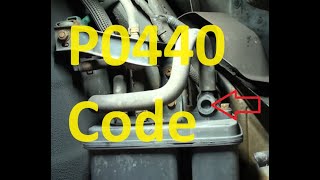
On a 1997-2004 Porsche Boxster (986), code P0440 indicates a general fault in the EVAP system, often a small leak. The most common fixes are replacing the gas cap or the EVAP purge valve. A smoke test is the best way to find the exact source of the leak, which could also include a cracked fuel filler neck or a cracked fuel sending unit cover.
- P0440 on a 986 Boxster indicates a fault, usually a small leak, in the fuel vapor recovery system.
- Always start with the simplest and most common fix: inspect and likely replace the gas cap with an OEM part.
- If the gas cap doesn't solve the issue, the next most likely culprit is the EVAP purge valve.
- A professional smoke test is the fastest and most accurate way to diagnose the exact location of a leak if it's not the gas cap.
- You can safely drive the car with this code, but it will need to be fixed to pass an emissions test.
What's Unique About the 1997-2004 Porsche Boxster
The first-generation Boxster (986) is prone to several specific failures that trigger a P0440 code. Unlike many cars where this code is a mystery, on the 986 it frequently points to a handful of known issues. Owners often report that a faulty gas cap is a primary suspect, and using an aftermarket cap is a common cause of recurring codes. Additionally, a failing EVAP purge valve (also called the regeneration valve) can get stuck slightly open, causing a leak detectable by the system and sometimes leading to hard starting after refueling. Another well-documented issue, though less common, is a cracked fuel tank sending unit cover located under the battery tray, which can cause a strong fuel smell in the front of the car.
Symptoms You May Notice
- Check Engine Light is on
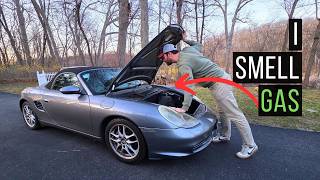
- A faint fuel smell, particularly around the car or in the cabin.
- Difficulty starting the engine, especially after refueling.
- Vehicle will fail an emissions inspection.
- Rough idle.
- Replacing the oxygen sensors. O2 sensors are not related to the EVAP system and will not fix a P0440 code. 🎬 Watch: A breakdown of P0440 causes and common fixes.
- Replacing the fuel pump. While a cracked sending unit cover (part of the fuel pump assembly) can be a cause, the pump itself is rarely the issue for this specific code.
Most Likely Causes
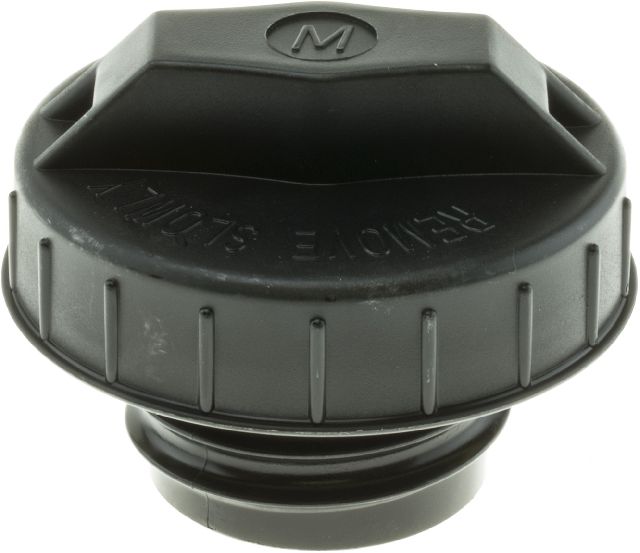
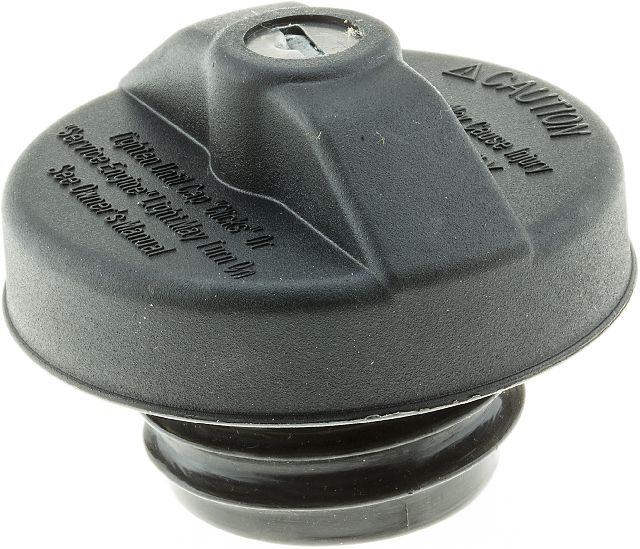
- Loose or Faulty Gas Cap 🔴 High Probability → Shop Fuel Tank Cap The rubber O-ring seal on the gas cap can dry out, crack, and fail over time, preventing a proper seal. Aftermarket caps are a frequent cause of sealing issues, and it is highly recommended to use an OEM cap.
How to confirm: Inspect the gas cap's rubber seal for any cracks, stiffness, or damage. Ensure the cap clicks when tightened. If the seal looks old or worn, or if the cap is not from the original manufacturer, replacement is the best confirmation.
Typical fix: Replace the gas cap with a new OEM part.
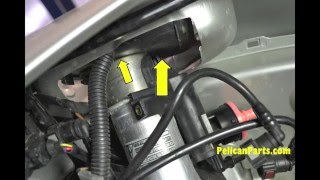
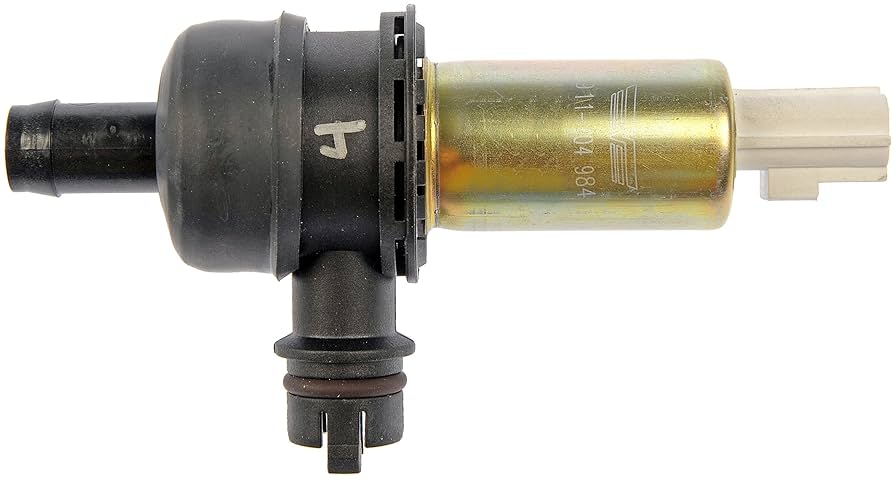
Est. part cost: $20-$40 - Faulty EVAP Purge Valve (Regeneration Valve) 🟡 Medium Probability → Shop Vapor Canister This valve, located near the throttle body, can get stuck open or closed, causing a leak or incorrect flow in the EVAP system. It is a common failure point mentioned frequently by mechanics and owners. A failing valve can allow un-metered air into the intake, sometimes causing hard starts after refueling.
How to confirm: A definitive diagnosis involves removing the valve and trying to blow through it; when unpowered, it should be completely closed. A mechanic confirmed that being able to pass any air through it in its resting state indicates a fault. A smoke test will also show smoke passing through the valve when it should be closed. Hard starting after filling the gas tank is a strong circumstantial symptom.
Typical fix: Replace the EVAP purge valve. This part is located under the driver's side intake manifold and can be difficult to access.
Est. part cost: $45-$130 - Cracked or Leaking EVAP Hoses 🟡 Medium Probability The plastic and rubber hoses in the EVAP system become brittle with age and heat, leading to cracks and leaks, especially at connection points.
How to confirm: A smoke test is the most effective way to find a leak in the EVAP hose network. A visual inspection may reveal obvious cracks, especially at connection points near the engine and fuel tank.
Typical fix: Replace the specific section of hose that is leaking.
Est. part cost: $15-$75 per hose section - Cracked Fuel Filler Neck ⚪ Low Probability → Shop Fuel Filler Neck The plastic filler neck can develop cracks over time, creating a leak path for fuel vapors. The associated fuel line vent valve, attached to the neck, can also fail, 🎬 See this walkthrough for replacing the fuel filler vent valve. causing fueling issues or a leak code.
How to confirm: A visual inspection of the filler neck (behind the passenger-side front wheel well liner) may show cracks. A smoke test will definitively show smoke escaping from this area if it's the source of the leak.
Typical fix: Replace the fuel filler neck assembly or the attached vent valve.
Est. part cost: $100-$200
Rare But Worth Checking
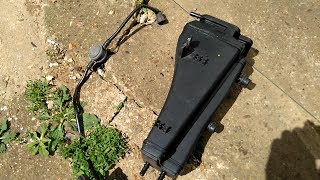
- Cracked Fuel Level Sending Unit Cover: → Shop Fuel Tank Sending Unit The plastic cover for the fuel sending unit, located under the battery tray, can develop hairline cracks, particularly at the hose connection nipples. 🎬 Watch: How to find and fix fuel sending unit leaks. This is often found after all other common causes have been ruled out and may be accompanied by a strong fuel smell. A smoke test or visual inspection after removing the battery will confirm the leak.
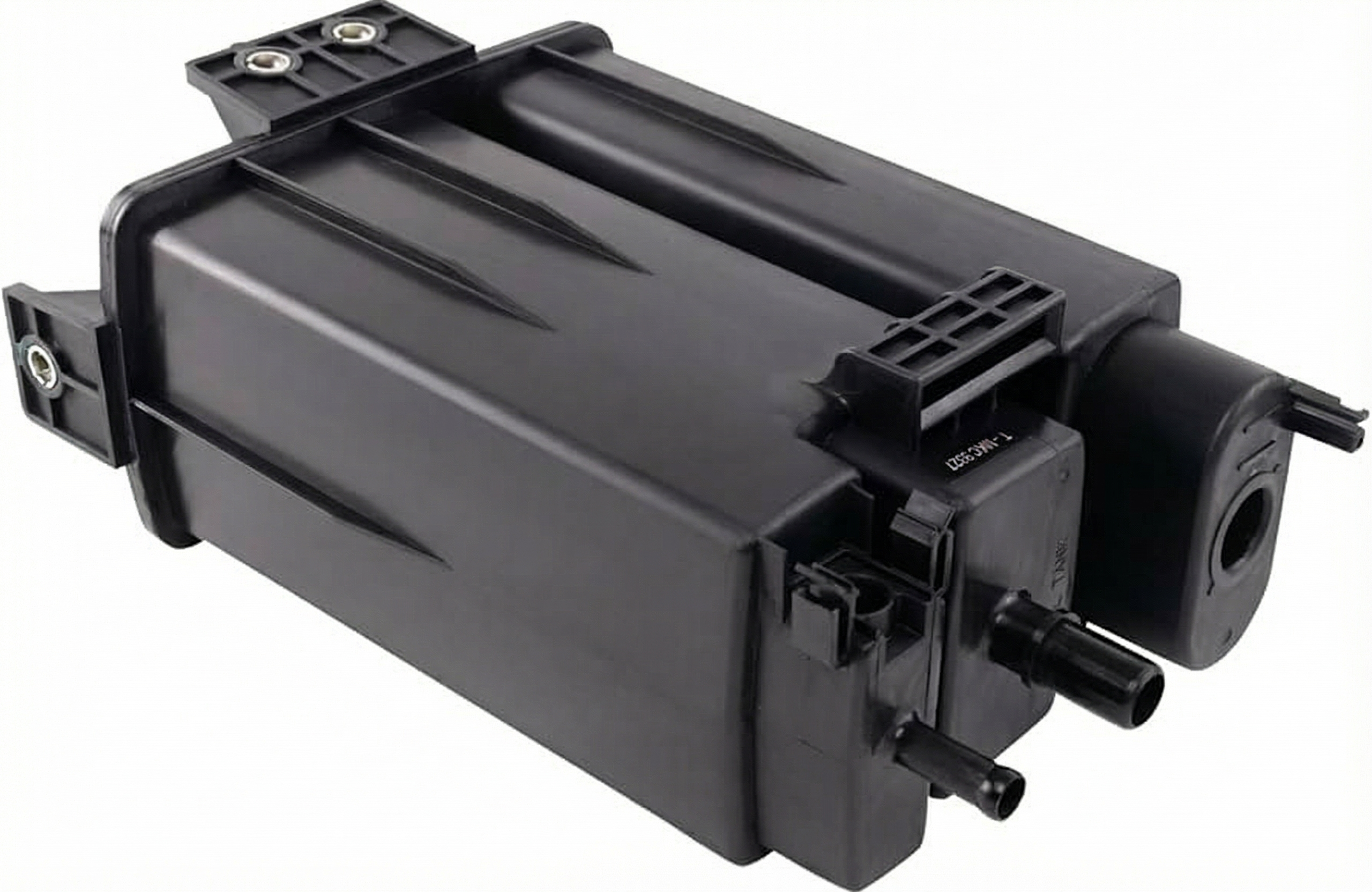
- Leaking Charcoal Canister: → Shop Vapor Canister The charcoal canister itself can crack or the valves attached to it can fail, causing a leak. This is usually diagnosed with a smoke test after checking more common components. It is located in the front passenger wheel well area.
Diagnosis Steps
- Read the code with an OBD-II scanner to confirm P0440 is present. Note any other codes, as they can help pinpoint the issue.
- Inspect the gas cap. Ensure it is tight. Remove it and check the rubber seal for cracks, dirt, or damage. If it's old, suspect, or an aftermarket brand, replace it with an OEM cap as the first step. Clear the code and drive for a few days to see if it returns.
- If the code returns, perform a thorough visual inspection of all accessible EVAP hoses in the engine bay and around the fuel tank area for obvious cracks, disconnections, or damage.
- The most effective next step is to perform a smoke test. This involves injecting low-pressure smoke into the EVAP system (often through the purge valve line) and watching for where it escapes. This is the fastest way to find cracks in hoses, the filler neck, or other components.
- During the smoke test, pay close attention to the EVAP purge valve (near the throttle body), the fuel filler neck (in the front passenger wheel well), and the top of the fuel tank under the battery.
- Test the EVAP purge valve's function. Remove the valve and try to blow air through it. It should be completely sealed when no power is applied. If air passes through, it is faulty and needs replacement.
- If a strong fuel smell is present in the front trunk (frunk), remove the battery and the battery tray to visually inspect the top of the fuel sending unit for cracks or pooled fuel.
- If a leak is found at the fuel level sending unit cover, the cover (which is the top part of the sending unit assembly) will need to be replaced.
Parts You'll Likely Need
- Gas Cap
(OEM #99620124103)— This is the most common and easiest fix. The seal fails over time, causing a pressure leak that triggers the code. Using a non-OEM cap is a known cause of this code.
Trusted brands: Porsche (OEM)
OEM price range: $25-$40
Aftermarket price range: $15-$30 - EVAP Purge Valve (Regeneration Valve)
(OEM #99611012953)— This valve is a frequent failure point, getting stuck slightly open and causing a system malfunction or leak. It can also cause hard starting after refueling. The part number has been superseded by Porsche from 99611012951 and 99611012952.
Trusted brands: Bosch, Porsche (OEM)
OEM price range: $100-$150
Aftermarket price range: $45-$90 - Fuel Filler Neck
(OEM #99620104306)— The plastic can crack with age, creating a vapor leak near the top of the system.
Trusted brands: Porsche (OEM)
OEM price range: $100-$200 - Fuel Level Sending Unit
(OEM #98662080600)— The top plastic cover of this unit, located under the battery, is prone to developing hairline cracks at the hose nipples, causing a fuel vapor leak and often a strong gas smell.
Trusted brands: VDO, Porsche (OEM)
OEM price range: $300-$400
Aftermarket price range: $200-$280
Platform-Specific Known Issues
- Owner Experience: Hard Starts After Refueling Points to Purge Valve: → Shop Vapor Canister On RennTech.org, a user reported a P0440 code accompanied by difficult starting, especially after getting gas. A Porsche mechanic immediately identified the likely culprit as the EVAP purge valve (part #996-110-129-53), stating he has seen this exact combination of symptoms many times.
- Owner Experience: Cracked Fuel Sending Unit Nipple: Multiple owners on 986forum.com reported smelling fuel and eventually tracing the leak to the top of the fuel sending unit, located under the battery. The plastic nipples where the fuel lines connect are known to develop small cracks. The fix is to replace the entire sending unit assembly.
- Owner Experience: Aftermarket Gas Caps Often Fail: → Shop Fuel Tank Cap A user on 986forum.com shared that after chasing a recurring P0440, the problem was finally solved by replacing a new aftermarket gas cap with a genuine Porsche OEM cap, which sealed the system correctly.
Mechanic-Grade Diagnostic Values
- EVAP Purge Valve Solenoid Resistance — expected: 26 ± 4 Ohms (at 20°C / 68°F). Failure: A resistance reading far outside this range indicates a faulty internal coil in the solenoid.
- Voltage at EVAP Purge Valve Connector Pin 1 (Supply) — expected: Approximately 12V (Battery Voltage) with ignition on.. Failure: No voltage or significantly low voltage points to a problem in the power supply circuit or a wiring issue leading to the valve.
- Voltage at EVAP Purge Valve Connector Pin 2 (Signal) — expected: 0V with ignition on, engine off. The DME grounds this pin to activate the valve.. Failure: Voltage present when it should be 0V, or the voltage not changing when the valve is commanded on by a scan tool, indicates a wiring or DME driver fault.
Scan Tool Commands That Help
- Durametric: Fuel Evaporative Valve Activation (Drive Links) — This function is used to test the EVAP purge valve with the engine off. When activated, a healthy valve should produce an audible click approximately every two seconds. A lack of clicking indicates a faulty valve. This is a crucial step to confirm valve functionality before attempting the difficult replacement, as the valve is located in a hard-to-reach area under the intake manifold.
Wiring & Ground Locations
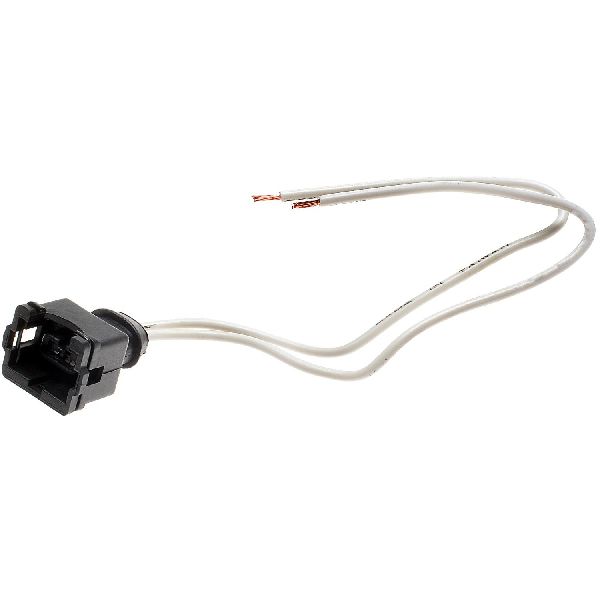
- EVAP Purge Valve Connector — Under the driver's side intake manifold, connected to the purge valve.. This connector provides power and signal to the purge valve. Pin 1 is the 12V power supply, and Pin 2 is the ground signal from the DME. Testing voltage at these pins is essential for diagnosing whether a non-functioning valve is due to the valve itself or a wiring/DME issue.
- Ground Point (GP) adjacent to fuse panel — In the driver's footwell, next to the fuse panel. The carpeted trim piece surrounding the fuse panel must be removed to see it.. While not exclusively for the EVAP system, a poor ground at this common point can cause a variety of difficult-to-diagnose electrical issues. It's a known location to check when troubleshooting any electrical gremlins in the cabin area.
- Ground Point 5 (GP5) — General electronics ground, location varies but is a central grounding point.. A technical manual identifies GP5 as the 'Electronics ground'. Intermittent or faulty operation of any electronic component, including EVAP valves and sensors, can sometimes be traced back to a poor main electronics ground.
Real Owner Repair Stories
- RennTech.org user 'dbmies' (Porsche Boxster (year not specified, 986 generation)) — Intermittent whistling at light throttle from the fuel filler area.
❌ Tried (didn't work) Initial diagnosis pointed to either the canister valve or the throttle body purge valve.
✅ What actually fixed it The user diagnosed a faulty EVAP purge valve using a Durametric tool. Instead of buying the expensive Porsche-branded part (Bosch P/N ending in 323), he bought a much cheaper Bosch valve for an Audi/VW (P/N ending in 308) that had the same electrical connector. He cut the unique hose connector from his old part and adapted it to the new, cheaper valve, saving over $200 and resolving the issue. - YouTube channel 'Paul1962' via summary (Porsche Boxster 986 (year not specified)) — Poor running condition and engine performance issues.
❌ Tried (didn't work) Spent four to five weeks trying to diagnose the running issue through other means.
✅ What actually fixed it As a simple diagnostic step, the user unplugged the electrical connector to the EVAP purge valve. The engine immediately began to run better. This confirmed the purge valve was stuck open, causing a constant vacuum leak and upsetting the air-fuel mixture. Replacing the valve fixed the problem.
OEM Part Supersession History
99611012951, 99611012952→99611012953— Standard part evolution and revision by Porsche.
Heads up: The Bosch OEM equivalent (P/N 0280142380) often comes without the plastic line attached. The technician must carefully remove and reuse the plastic line from the original valve. The Genuine Porsche part typically includes this line.
Model Year Variations Within This Range
- 1997-2004: While the 986 generation was updated in 2000 and again for the 2003 model year (sometimes called 986.2), the fundamental EVAP system design and the common causes for a P0440 code remained consistent across the entire 1997-2004 range. Diagnostics and repairs for this code do not significantly differ between a 1997 and a 2004 model.
Diagnostic Flowchart
Other Known Issues on This Vehicle
Issues unrelated to this code that are worth knowing about as an owner of this generation:
- Intermediate Shaft (IMS) Bearing Failure 🔴 High — Affects all 1997-2004 models. Failure rate is debated but is highest on 2000-2005 models with the single-row bearing. Failure can be catastrophic to the engine.
- Air-Oil Separator (AOS) Failure 🟠 Medium — A common failure item. Symptoms include excessive white/blue smoke on startup, increased oil consumption, and a rough idle. If it fails completely, it can cause engine damage (hydrolock).
- Cracked Coolant Expansion Tank 🟠 Medium — The plastic coolant tank located in the rear trunk is notorious for developing cracks and leaking, often after a new, higher-pressure cap is installed. Porsche redesigned the part multiple times.
- Rear Main Seal (RMS) Leak 🟡 Low — A common oil leak that appears between the engine and transmission. It's often more of an annoyance than a critical issue, but can contaminate the clutch. A failing AOS can sometimes cause or worsen an RMS leak due to excess crankcase vacuum.
- Cylinder Head / Cylinder Liner Cracks 🔴 High — A rare but severe issue, more common on the 2.5L base engine, where cracks can form in the cylinder liners ('D-chunk' failure), leading to intermix of oil and coolant and requiring an engine rebuild.
Used vs. New Parts: Buying Guide for This Vehicle
When a used part is the smart pick: For this specific repair, buying used parts is generally not recommended. The primary failure components (gas cap seal, plastic hoses, plastic valve bodies, plastic filler neck, plastic sending unit cover) all degrade with age and heat cycles. A used part from a donor vehicle is likely to have similar wear and a limited remaining lifespan, offering poor value.
What to inspect on the donor part:
- Not applicable as used parts are not recommended for this repair.
OEM-only on this vehicle (don't cheap out):
- Gas Cap: Aftermarket gas caps are a very common cause of P0440 on this vehicle. The seal design and material must be exact. It is highly recommended to use a Genuine Porsche OEM gas cap to ensure a proper seal.
Aftermarket brands forum-validated for this vehicle:
- Bosch: Bosch is the Original Equipment Manufacturer (OEM) for the EVAP Purge Valve. Purchasing the Bosch-branded valve (P/N 0280142380) instead of the Porsche-branded part provides the exact same quality and performance at a significantly lower cost.
Brands owners have reported issues with on this vehicle:
- Generic/unbranded gas caps.
Real Owner Stories
Aggregated from forums and TSBs cited above. Mileages and costs reflect what owners reported in those sources.
Porsche Boxster (986)
Symptoms: P0440 code accompanied by difficult starting, especially after getting gas.
What fixed it: Replacement of the EVAP purge valve (part #996-110-129-53).
Source hint: RennTech.org - https://www.renntech.org/topic/42220-cel-and-code-p0440/
Porsche Boxster (986)
Symptoms: Smelling fuel and tracing a leak to the front of the car under the battery.
What fixed it: Replacing the entire fuel sending unit assembly because the plastic nipples where the fuel lines connect had developed small cracks.
Source hint: 986forum.com - https://www.986forum.com/forums/boxster-general-discussions/69383-fuel-leak.html
Porsche Boxster (986)
Symptoms: Chasing a recurring P0440 code after initially replacing the gas cap with a non-factory version.
What fixed it: Replacing the new aftermarket gas cap with a genuine Porsche OEM cap.
Source hint: 986forum.com - https://www.986forum.com/forums/boxster-general-discussions/46828-p0440-ohhh-my.html
Related OBD-II Codes
Frequently Asked Questions
Why does my Boxster have trouble starting only after I fill up the gas tank?
I smell fuel near the front of my car; could this be related to the P0440 code?
Should I buy an aftermarket gas cap to fix my P0440 code?
Where is the EVAP purge valve located on the 1997-2004 Boxster?
Can I use a smoke test to find the leak on my 986 Boxster?
Is the P0440 code related to the IMS bearing or AOS issues common on these cars?
Helpful Videos
Used OEM Parts in Stock
New Aftermarket Parts Available


The information in this article is provided for general reference and educational purposes only. Vehicle specifications, procedures, and part compatibility can vary by production date, trim level, and region. Always consult your vehicle's factory service manual and verify part numbers before purchasing or performing repairs. Safety-critical components such as airbags, seat belts, and braking systems should be installed by a qualified professional.
- Porsche Boxster:
- 🧭 Diagnostic Flowchart
- 🎬 Helpful Videos
- 🛍️ Shop This Part
- What's Unique About the 1997-2004 Porsche Boxster
- Symptoms You May Notice
- Most Likely Causes
- Rare But Worth Checking
- Diagnosis Steps
- Parts You'll Likely Need
- Platform-Specific Known Issues
- Mechanic-Grade Diagnostic Values
- Scan Tool Commands That Help
- Wiring & Ground Locations
- Real Owner Repair Stories
- OEM Part Supersession History
- Model Year Variations Within This Range
- Other Known Issues on This Vehicle
- Used vs. New Parts: Buying Guide for This Vehicle
- Real Owner Stories
- Porsche Boxster (986)
- Porsche Boxster (986)
- Porsche Boxster (986)
- Related OBD-II Codes
- Frequently Asked Questions
- 🎟️ Get 5% Off