

P0440 on 2002-2007 Saturn Vue 2.2L: EVAP System Malfunction Causes and Fixes
For a P0440 code on a 2002-2007 Saturn Vue, the most common fix is tightening or replacing the gas cap, preferably with an OEM part. If the cap is good, the EVAP purge or vent valve is the next likely culprit, often due to contamination. On 2002-2003 models, a known software issue can falsely trigger this code, requiring a dealer ECU update if no physical leak is found after a smoke test.
- Always check the gas cap first; it's the easiest and most common fix for P0440.
- If the gas cap is not the issue, suspect one of the EVAP valves (purge or vent) before assuming a more complex leak.
- If you have a 2002-2003 Saturn Vue, be aware that the code can be triggered falsely. A professional diagnosis to rule out leaks is necessary before considering an expensive ECM reprogram.
- A smoke test is the most reliable way to find a physical leak in the EVAP system if a visual inspection reveals nothing.
What's Unique About the 2002-2007 Saturn Vue
The first-generation Saturn Vue with the 2.2L engine has a well-documented issue where the P0440 code can be triggered without an actual leak. A Technical Service Bulletin (TSB #04-06-04-033A) for 2002-2003 models states that fuel sloshing in the tank (when over 50% full) can cause an incorrect reading from the fuel tank pressure sensor. If a thorough diagnosis, including a smoke test, reveals no physical leaks, the official fix is to have a dealer reprogram the Engine Control Module (ECM) with updated software. The TSB specifies that technicians should use TIS software version 7.0 2004 or later for the reflash.
Symptoms You May Notice
- Check Engine Light is on.
- A faint smell of gasoline, especially near the rear of the vehicle or after refueling.
- Failure to pass an emissions inspection.
- Replacing the charcoal canister when only a valve or hose has failed. The canister is often durable; its associated valves are more likely to fail.
- Replacing EVAP components on a 2002-2003 model before checking for the TSB related to a false code.
- Replacing the gas cap with a cheap aftermarket version that doesn't seal properly, leading to the code returning.
Most Likely Causes
- Loose, Damaged, or Incorrect Gas Cap 🔴 High Probability → Shop Fuel Tank Cap The gas cap seal is a simple rubber part that degrades over time, making it the most frequent cause of all EVAP codes. Owners on Saturn forums strongly recommend using an OEM GM replacement cap, as some aftermarket caps may not seal correctly and allow the code to return.
How to confirm: Ensure the cap is tightened until it clicks. Inspect the rubber O-ring seal for cracks, stiffness, or tearing. An incorrect aftermarket cap can also cause a poor seal.
Typical fix: Tighten the cap. If the seal is bad or the cap is incorrect, replace it with a new, high-quality OEM part.
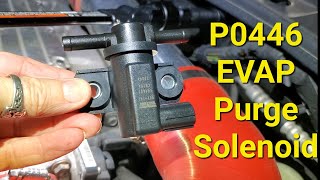
Est. part cost: $15-$35 - Faulty EVAP Canister Purge Valve 🟡 Medium Probability → Shop Vapor Canister This solenoid valve operates frequently and can become stuck open or closed over time, which the system detects as a fault. Dust and debris can be drawn into the valve, preventing it from sealing properly.
How to confirm: The purge valve is located on the engine. With the engine running, you can sometimes feel for suction on the vacuum port; if there is constant suction at idle, it's likely stuck open. A professional can command it open and closed with a scan tool to verify function.
Typical fix: Replace the purge valve solenoid. On the 2.2L engine, it is easily accessible on the driver's side of the engine near the intake.
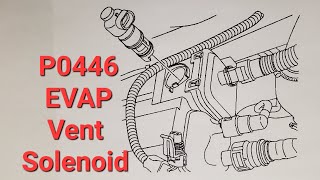
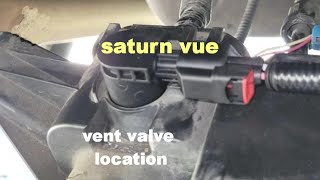
Est. part cost: $25-$70 - Faulty EVAP Canister Vent Valve/Solenoid 🟡 Medium Probability → Shop Vapor Canister Located under the vehicle near the charcoal canister, this valve is exposed to road grime, moisture, and dust, which can cause it to fail, its electrical connector to corrode, or become clogged with debris.
How to confirm: The valve should be normally open and close when 12V is applied. A scan tool can command it closed to test the seal during a smoke test. Visual inspection for corrosion is also recommended. In some cases, the valve and its filter box can become packed with fine dust, preventing it from sealing.
Typical fix: Replace the vent valve solenoid. It is often sold with the charcoal canister or as part of a hose assembly.
Est. part cost: $45-$80 - Cracked or Disconnected EVAP Hoses ⚪ Low Probability The rubber and plastic hoses running from the fuel tank to the engine can become brittle and crack with age and heat exposure.
How to confirm: Visually inspect all accessible EVAP lines for obvious cracks, especially at connection points and bends. The most reliable method is to have a mechanic perform a smoke test, which forces smoke through the system to reveal the exact location of any leaks.
Typical fix: Replace the cracked section of hose or the entire hose assembly.
Est. part cost: $20-$60
Rare But Worth Checking
- False Code Requiring ECM Reprogramming: Specifically for 2002-2003 models, TSB #04-06-04-033A indicates that if no physical leak is found after a thorough smoke test, the ECM may need a software update from a GM/Saturn dealer to correct its sensitivity to fuel slosh.
- Cracked Charcoal Canister: → Shop Vapor Canister The canister itself can be damaged by road debris or develop cracks from age, causing a leak. This is usually found during a smoke test.
- Faulty Fuel Tank Pressure Sensor: → Shop Fuel Tank If the sensor that monitors EVAP system pressure fails, it can send incorrect data to the computer, falsely triggering a P0440 code. The fuel slosh TSB for 2002-2003 models is related to this sensor's readings being misinterpreted by the old software.
Diagnosis Steps
- Read the code with an OBD-II scanner and check for any other related codes.
- Inspect the gas cap. Ensure it is tight and the seal is not cracked or worn. A loose cap is the most common cause. If in doubt, replace it with an OEM cap.
- Clear the code and drive for a few days to see if it returns. Sometimes a loose cap is the only issue.
- If the code returns, perform a thorough visual inspection of all accessible EVAP hoses and lines under the hood and under the vehicle, looking for obvious cracks, damage, or disconnections.
- Locate and inspect the EVAP purge valve on the engine and the vent valve near the charcoal canister at the rear of the vehicle. Check for damage and corroded electrical connectors.
- If no obvious issues are found, the most effective next step is a professional smoke test to pinpoint the exact source of the leak.
- For 2002-2003 models: If a smoke test reveals no leaks, consult a dealer about TSB #04-06-04-033A. A technician may use a Tech 2 scan tool to check the current ECM calibration ID against the updated numbers in the bulletin before performing a reprogram.
Parts You'll Likely Need
- Fuel Tank Cap
(OEM #GT265)— This is the most common failure point. The seal wears out, causing a pressure leak that triggers the code. Owners report aftermarket caps can be problematic, so an OEM part is recommended.
Trusted brands: ACDelco (OEM), Stant
OEM price range: $20-$35
Aftermarket price range: $10-$20 - Vapor Canister Purge Valve / Solenoid
(OEM #12597567)— A frequently used valve on the engine that can get stuck open or closed, causing a system fault. It is a common failure point for this code on the 2.2L engine.
Trusted brands: ACDelco, Dorman, Standard Motor Products (SMP)
OEM price range: $40-$70
Aftermarket price range: $25-$50 - Vapor Canister Vent Valve / Solenoid
(OEM #15252781)— Located under the car, this valve is prone to failure from exposure to the elements, especially dust and road grime which can clog the mechanism. It's essential for sealing the system for pressure tests.
Trusted brands: ACDelco, Dorman
OEM price range: $50-$90
Aftermarket price range: $40-$60
Related Codes That Often Appear With This One
- P0442 — P0442 indicates a 'small leak' while P0440 is a general malfunction. They often share the same root causes, and the TSB for the Vue specifically mentions both codes being triggered by the fuel splash issue.
- P0455 — This code indicates a 'large leak.' If a hose is completely disconnected or the gas cap is missing, the system may log a P0455 instead of or in addition to P0440.
Technical Service Bulletins (TSBs) & Recalls
- 04-06-04-033A: Check Engine Light On with P0440 or P0442 Stored (Diagnose Evaporative Emission [EVAP] System and/or Reprogram Engine Control Module [ECM]).
Platform-Specific Known Issues
- TSB #04-06-04-033A: On 2002-2003 models with the 2.2L engine, fuel sloshing in the tank can cause a false P0440 or P0442 code. If no leak is found, the ECM requires reprogramming by a dealer.
Mechanic-Grade Diagnostic Values
- EVAP Canister Purge Valve Solenoid Coil Resistance — expected: 14 to 38 Ohms (general spec for this type of solenoid).. Failure: A reading near 0 Ohms indicates a short; an infinite (O.L.) reading indicates an open coil.
- EVAP Canister Vent Solenoid Coil Resistance — expected: 20 to 50 Ohms.. Failure: A reading of 0 Ohms indicates a short; an infinite (O.L.) reading indicates an open circuit.
- Fuel Tank Pressure (FTP) Sensor Voltage (Key On, Engine Off, Gas Cap Off) — expected: Approximately 1.5 Volts.. Failure: Voltage stuck near 0V (below 0.22V) indicates a circuit low fault (P0452); voltage stuck near 5V indicates a circuit high fault (P0453).
- FTP Sensor 5V Reference at Connector — expected: 5.0 Volts.. Failure: Significantly less than 5.0V points to a problem with the wiring or the ECM's 5V reference circuit.
- EVAP Purge Valve Connector Power Pin Voltage (Key On, Engine Off) — expected: Battery Voltage (approx. 12.6V).. Failure: Little to no voltage suggests a blown 'EMISS' fuse or a break in the power supply wire from the under-hood fuse block.
Scan Tool Commands That Help
- GM Tech 2 / High-End Bidirectional Scanner: EVAP System Test / Output Control — This function allows a technician to command the EVAP purge and vent solenoids open or closed manually. It is essential for diagnosis. For example, during a smoke test, the technician will command the vent solenoid closed to seal the system and then command the purge solenoid open and closed to check its function. This verifies the solenoids are responding to commands from the ECM.
- GM Tech 2: Check ECM Calibration ID — For 2002-2003 models exhibiting P0440 with no physical leak found, this command is used to check the existing software version on the Engine Control Module. The technician compares this ID to the updated calibration numbers listed in TSB #04-06-04-033A to confirm if the ECM reflash is required.
Wiring & Ground Locations
- G101 — At the left front of the engine compartment.. This is a primary engine compartment ground. A poor connection here can cause erratic behavior for multiple engine and emissions components controlled by the ECM, including the EVAP purge solenoid.
- G401 — Under the left side of the luggage compartment.. This ground point is located in the rear of the vehicle and serves components in that area. A corroded or loose G401 could potentially affect the electrical circuit for the EVAP vent solenoid or the fuel tank pressure sensor, which are located near the fuel tank.
- EVAP Purge Solenoid Connector — On the EVAP purge solenoid, located on the driver's side of the 2.2L engine near the intake manifold.. This two-pin connector provides power and control to the purge solenoid. One pin should have battery voltage with the key on (from the 'EMISS' fuse), and the other is the ground-side control wire from the ECM. Corrosion or damage here will cause a circuit fault.
- EVAP Vent Solenoid Connector — On the EVAP vent solenoid, located near the charcoal canister under the vehicle, often in front of the canister.. This connector is exposed to road spray and debris, making it susceptible to corrosion. A bad connection will prevent the vent valve from closing, causing the system to fail its pressure test and setting a P0440.
Real Owner Repair Stories
- SaturnFans.com forum user (2003 Saturn Vue 2.2L) — P0440 code present.
❌ Tried (didn't work) Initial diagnosis pointed to common EVAP components.
✅ What actually fixed it The owner was advised about TSB #04-06-04-033A. After confirming no physical leaks were present, the ultimate fix was having a GM dealer reprogram the ECM to correct the false code being triggered by fuel slosh. - Reddit r/MechanicAdvice (2002-2007 Saturn Vue (specific year not mentioned)) — Persistent P0455 (large leak) code after replacing other EVAP parts.
❌ Tried (didn't work) Gas cap replacement, Purge/vent valve replacement
✅ What actually fixed it The metal fuel filler neck had rusted through, creating a large, permanent leak. Replacing the filler neck resolved the code. This is noted as a common issue in rust-prone areas.
"I Checked Everything" — The Actual Cause
- On 2002-2003 models, it is very common for the vehicle to pass a smoke test with no leaks found, yet the P0440 or P0442 code persists. The root cause in this specific scenario is not a physical leak but a software sensitivity issue in the Engine Control Module (ECM). Per TSB #04-06-04-033A, fuel sloshing in the tank gives a false reading to the Fuel Tank Pressure sensor, which the original software interprets as a leak. The official GM fix is to reprogram the ECM with updated software that filters out these false readings.
OEM Part Supersession History
12597567 (Purge Valve)→12735397.— Standard part evolution and consolidation across multiple GM platforms.
Heads up: Part 12597567 also replaces older numbers like 12606684, 12597566, and 12570469. It is a widely used part across many GM vehicles with 2.2L and 2.4L engines.
Model Year Variations Within This Range
- 2002-2003: These model years are subject to TSB #04-06-04-033A, which identifies a potential for false P0440/P0442 codes due to ECM software sensitivity. Models from 2004-2007 have updated software from the factory and are not affected by this specific fuel-slosh issue.
Diagnostic Flowchart
Other Known Issues on This Vehicle
Issues unrelated to this code that are worth knowing about as an owner of this generation:
- Timing Chain Tensioner and Guide Failure 🔴 High — Common, especially on earlier models. Often signaled by a rattling noise on cold startup. Can occur from 80,000 miles onward. Failure can cause catastrophic engine damage. (Ref: TSB #03-06-01-017 was issued for 2002-2003 models to install an updated oiler nozzle for better chain lubrication.)
- VTi Continuously Variable Transmission (CVT) Failure 🔴 High — Extremely common on 2002-2005 FWD models equipped with the VTi transmission. Failures often occurred around 100,000 miles, leading to a class-action lawsuit. (Ref: GM extended the warranty to 5 years/75,000 miles, but many failures occurred outside this window.)
- Ignition Switch and Cylinder Malfunction 🔴 High — Widespread on 2002-2004 models. The key can be removed while the vehicle is not in Park, creating a rollaway risk. Owners also report keys getting stuck or not turning. (Ref: GM Recall #14113 (NHTSA #14V266000) was issued in 2014 to inspect and replace the ignition cylinder and keys.)
- Leaking Valve Cover Gasket 🟡 Low — A widely reported issue, particularly on 2006 models but also seen in other years. Oil leaks onto the exhaust manifold, causing a burning smell and smoke. Typically occurs after 100,000 miles.
Used vs. New Parts: Buying Guide for This Vehicle
When a used part is the smart pick: Used parts can be a cost-effective option for larger, less failure-prone components like the charcoal canister itself, provided it is not cracked or saturated with fuel. A used fuel filler neck from a donor vehicle in a dry, rust-free climate can also be a good value.
Donor-vehicle mileage cap: roughly under 120000 miles for the part to have meaningful remaining life.
What to inspect on the donor part:
- For a charcoal canister, inspect for any physical cracks or signs of being soaked in liquid fuel. It should be dry and free of debris.
- For a fuel filler neck, inspect thoroughly for any signs of rust, especially at welds and bends. Only source from a vehicle that lived outside the rust belt.
- For any electrical component (valves, sensors), check that the connector pins are clean, straight, and free of corrosion.
OEM-only on this vehicle (don't cheap out):
- Gas Cap: Forum members and mechanics strongly advise using a genuine GM/ACDelco gas cap (GT265). Aftermarket caps are frequently reported to have sealing issues, causing the P0440 code to return.
- Fuel Tank Pressure Sensor: While aftermarket sensors are available, some owners have reported issues with incorrect voltage readings from non-OEM parts, leading to persistent codes. Using an ACDelco sensor is the safest bet to ensure correct calibration.
Aftermarket brands forum-validated for this vehicle:
- Dorman: Offers a wide range of EVAP components including valves and sometimes canisters that are generally considered reliable direct replacements.
- Standard Motor Products (SMP): A well-regarded aftermarket manufacturer for electrical components like purge/vent valves and connector pigtails.
Brands owners have reported issues with on this vehicle:
- No-name/unbranded gas caps: These are a frequent source of recurring EVAP codes due to poor seal quality.
- Generic, unbranded electrical sensors: Can have voltage outputs outside the precise range expected by the ECM, as noted in a real-world repair story involving a Fuel Tank Pressure Sensor.
Real Owner Stories
Aggregated from forums and TSBs cited above. Mileages and costs reflect what owners reported in those sources.
2003 Saturn Vue 2.2L
Symptoms: Service engine soon light on for P0440 and a loose hose was noticed underneath the vehicle.
What fixed it: The owner investigated the EVAP system components, including the purge valve and vent valve, following advice regarding TSB #04-06-04-033A and the importance of an OEM gas cap.
Source hint: SaturnFans.com owner report and thread '03 Vue - EVAP Explained'
2004 Saturn Vue 2.2L — 226000 miles
Symptoms: High-mileage vehicle context with common L61 engine issues.
What fixed it: General maintenance and addressing common Ecotec failure points like the EVAP system and timing components to maintain longevity.
Source hint: SaturnFans.com Thread 'Trying to solve timing issue in 2004 Vue 2.2L'
Related OBD-II Codes
Frequently Asked Questions
I have a 2003 Saturn Vue 2.2L with a P0440 code but no leaks were found during a smoke test. Is there a known software issue?
Should I buy an aftermarket gas cap for my 2.2L Vue to save money?
Where is the EVAP purge valve located on my 2.2L L61 engine?
My 2002 Vue has a P0440 and a rattling noise when I start it. Are these related?
Can road grime cause the P0440 code on my Saturn Vue?
Is there a recall for the P0440 code on the 2002-2007 Saturn Vue?
Helpful Videos
Used OEM Parts in Stock
New Aftermarket Parts Available


The information in this article is provided for general reference and educational purposes only. Vehicle specifications, procedures, and part compatibility can vary by production date, trim level, and region. Always consult your vehicle's factory service manual and verify part numbers before purchasing or performing repairs. Safety-critical components such as airbags, seat belts, and braking systems should be installed by a qualified professional.
- Saturn Vue:
- 🧭 Diagnostic Flowchart
- 🎬 Helpful Videos
- 🛍️ Shop This Part
- What's Unique About the 2002-2007 Saturn Vue
- Symptoms You May Notice
- Most Likely Causes
- Rare But Worth Checking
- Diagnosis Steps
- Parts You'll Likely Need
- Related Codes That Often Appear With This One
- Technical Service Bulletins (TSBs) & Recalls
- Platform-Specific Known Issues
- Mechanic-Grade Diagnostic Values
- Scan Tool Commands That Help
- Wiring & Ground Locations
- Real Owner Repair Stories
- "I Checked Everything" — The Actual Cause
- OEM Part Supersession History
- Model Year Variations Within This Range
- Other Known Issues on This Vehicle
- Used vs. New Parts: Buying Guide for This Vehicle
- Real Owner Stories
- 2003 Saturn Vue 2.2L
- 2004 Saturn Vue 2.2L — 226000 miles
- Related OBD-II Codes
- Frequently Asked Questions
- 🎟️ Get 5% Off