

P0440 on 2008-2010 Saturn Vue: EVAP System Malfunction Causes and Fixes
For a 2008-2010 Saturn Vue, a P0440 code is most often caused by a loose or faulty gas cap. If that's not the issue, the next most likely culprits are the EVAP purge solenoid on the engine or the vent solenoid near the fuel tank. A new gas cap is about $15-$30. Always use an OEM cap for best results, as aftermarket caps are a known cause of this code on Vues.
- Always check the gas cap first. Make sure it's tight and the seal is in good condition before spending any money.
- If your Vue has trouble starting immediately after you fill the gas tank, the EVAP purge solenoid is the most likely culprit.
- The EVAP vent solenoid is located under the car and can fail due to exposure to road grime and moisture.
- A smoke test is the most effective way to find a leak if the gas cap and solenoids are not the issue.
- Ensure you are buying the correct part for your specific engine (2.4L, 3.5L, or 3.6L), as the purge valves are different.
What's Unique About the 2008-2010 Saturn Vue
The 2008-2010 Saturn Vue is the second generation, a rebadged GM vehicle sharing its 'Theta' platform with the Chevrolet Captiva Sport and Opel Antara. This means many of its parts, including the EVAP system components, are standard GM parts, making them widely available. A very common symptom of a failing purge valve on this platform is difficulty starting the vehicle immediately after refueling. While there are no major recalls for this specific code on these model years, the causes are well-understood GM issues, and owners frequently report success fixing the issue by replacing common EVAP components.
Symptoms You May Notice
- Check Engine Light is on
- Difficulty starting the engine right after getting gas (a classic sign of a stuck-open purge valve)
- A faint smell of fuel, particularly around the rear of the vehicle or in the cabin
- Rough or shaky idle due to a vacuum leak from a faulty purge valve
- Replacing the O2 sensors. Oxygen sensors are not part of the EVAP system and will not cause a P0440 code.
- Replacing the catalytic converter. This is an expensive exhaust component and is unrelated to the EVAP system.
- Assuming an expensive repair is needed before checking the gas cap. Always start with the simplest and most common solution, which is often an OEM gas cap.
Most Likely Causes
- Loose, Worn, or Incorrect Gas Cap 🔴 High Probability → Shop Fuel Tank Cap The gas cap is a frequently used and simple seal that can easily be forgotten, installed incorrectly, or wear out over time, causing the EVAP system to fail its pressure test. Saturn Vue owners specifically report issues with aftermarket caps, especially locking ones, failing to seal properly and triggering a P0440 code.
How to confirm: Ensure the cap is tightened until it clicks at least three times. Inspect the rubber seal on the cap for cracks, stiffness, or damage. Check the filler neck for rust or debris that could prevent a good seal. If you have an aftermarket cap, replacing it with an OEM one is a very common fix.
Typical fix: Tighten the cap. If the seal is bad or it's a non-OEM cap, replace it with a quality OEM or equivalent part (ACDelco is the GM OEM brand).
Est. part cost: $15-$30 - Faulty EVAP Purge Solenoid/Valve 🟡 Medium Probability → Shop Vapor Canister This valve is in the hot engine bay and cycles frequently, leading to eventual failure where it can stick open or closed. A stuck-open valve is a known cause of hard starting after refueling on these vehicles and often triggers code P0496 alongside or instead of P0440. Overfilling the fuel tank can also saturate the valve with liquid fuel, causing it to fail.
How to confirm: With the engine off, try to blow through the valve; it should be closed (no air passes). You can also use a scan tool to command it open and closed while listening for a click. A stuck-open valve will often cause a rough idle or the hard-start-after-fueling issue.
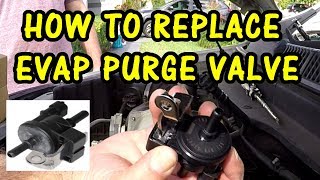
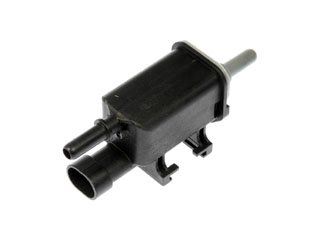
Typical fix: Replace the purge solenoid. It is located on the engine, typically between the firewall and intake manifold on V6 models. 🎬 Watch this step-by-step guide to replacing the V6 purge valve.
Est. part cost: $25-$75 - Faulty EVAP Vent Solenoid/Valve 🟡 Medium Probability → Shop Vapor Canister This component is located under the car near the charcoal canister, exposing it to road grime, moisture, and corrosion which can cause it to stick open or fail to seal. Its location under the rear of the vehicle near the muffler makes it susceptible to damage.
How to confirm: The valve is normally open. A scan tool can command it closed for testing. If it fails to close, the system cannot build pressure for its self-test. A smoke test will show smoke exiting a stuck-open vent valve. A video guide shows its location near the driver's side rear wheel.
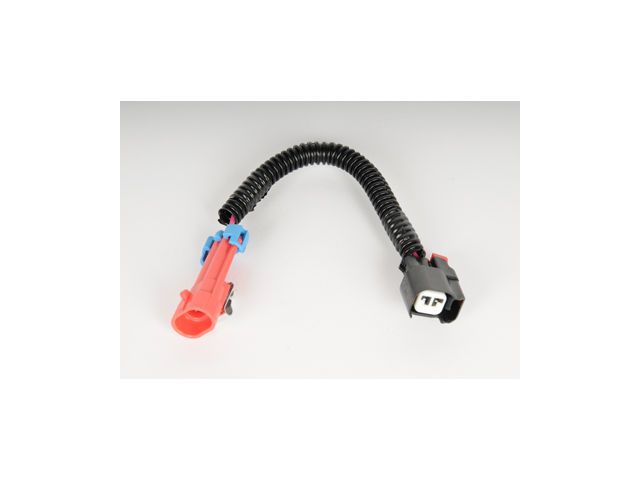
Typical fix: Replace the vent solenoid. It is located near the EVAP charcoal canister under the rear of the vehicle. Often, the replacement part comes with a new wiring pigtail, as the connector design may have been updated.
Est. part cost: $20-$50 - Cracked or Disconnected EVAP Hoses ⚪ Low Probability Over time, the rubber and plastic lines that carry fuel vapor can become brittle from heat and age, leading to cracks and small leaks.
How to confirm: A visual inspection may reveal obvious cracks, but the most effective method is a smoke test, which forces low-pressure smoke into the EVAP system to reveal the exact location of any leaks.
Typical fix: Replace the damaged section of hose or the entire line assembly.
Est. part cost: $10-$100
Rare But Worth Checking
- Cracked EVAP Charcoal Canister: → Shop Vapor Canister The canister itself can be damaged by road debris or develop stress fractures, creating a leak. This is usually found during a smoke test if no other leaks are apparent. Overfilling the gas tank (topping off) can flood the canister with liquid fuel, destroying the activated carbon inside and causing a blockage that triggers P0440.
- Faulty Fuel Tank Pressure Sensor: → Shop Fuel Tank While uncommon, the sensor that monitors the system's pressure can fail and send incorrect data to the computer, triggering a P0440 code even if there is no physical leak.
Diagnosis Steps
- Check the Gas Cap: Ensure the gas cap is tight and clicks several times. Inspect the cap's seal for any cracks or damage. If it's an aftermarket or locking cap, replace it with an OEM ACDelco cap, as this is a very common fix for the Vue.
- Scan and Clear: Use an OBD-II scanner to confirm P0440 is the only code and check for others like P0496, P0442, or P0455. Clear the code and drive for a few days to see if it returns. The EVAP monitor runs only under specific conditions, so it may take time.
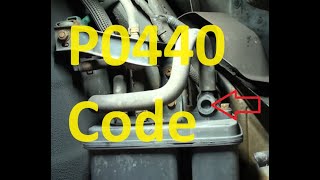
- Visual Inspection: Carefully inspect all visible EVAP hoses in the engine bay (around the purge valve) and under the vehicle near the fuel tank (around the charcoal canister). Look for any obvious cracks, 🎬 Watch this overview of the Vue's canister and emissions components. loose connections, or signs of deterioration.
- Test the Purge Solenoid: Locate the purge solenoid on the engine. A key symptom of its failure is difficulty starting immediately after refueling. With the engine off, disconnect the hose and try to blow through it; it should be sealed. If air passes, it's stuck open and needs replacement.
- Test the Vent Solenoid: Locate the vent solenoid under the car near the charcoal canister, by the driver's side rear wheel. It is normally open and should close when commanded by a scan tool. Its exposed location makes it a common failure point due to corrosion and debris.
- Perform a Smoke Test: If the cause is still not found, a smoke test is the most reliable method. A mechanic will inject low-pressure, UV-dyed smoke into the EVAP system's service port. Smoke will escape from the location of the leak, making it easy to pinpoint, even if it's a tiny crack in a hose or the canister itself.
Parts You'll Likely Need
- Fuel Tank Cap
(OEM #20882859)— This is the most frequent cause of P0440. The seal wears out or the cap is not tightened properly. Aftermarket caps are a known problem on this vehicle.
Trusted brands: ACDelco (OEM), Gates
OEM price range: $20-$35
Aftermarket price range: $15-$25 - Vapor Canister Purge Valve / Solenoid
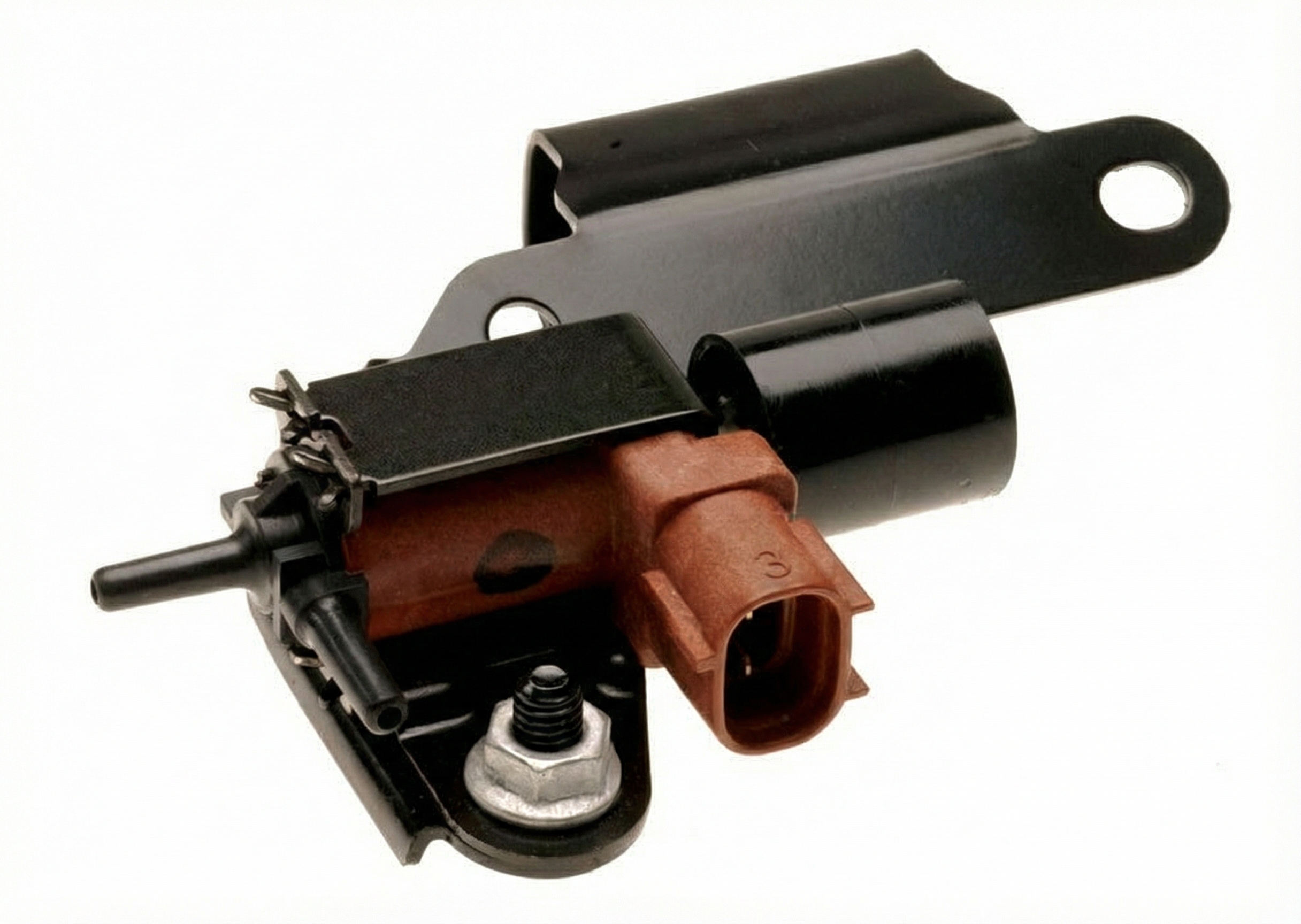
(OEM #12597567)— This valve gets stuck open or closed, disrupting the flow of vapors. A stuck-open valve is a primary suspect if the car is hard to start after getting gas. Part numbers may differ between engines. The 2.4L 4-cylinder and 3.5L/3.6L V6 engines use different parts.
Trusted brands: ACDelco, Dorman, Standard Motor Products (SMP)
OEM price range: $35-$70
Aftermarket price range: $25-$50 - Vapor Canister Vent Valve / Solenoid
(OEM #84524035)— Located under the car, this valve is prone to failure from road debris and moisture, preventing the EVAP system from sealing properly for its self-test. The replacement part may include a new wiring harness adapter.
Trusted brands: ACDelco, Dorman, Standard Motor Products (SMP)
OEM price range: $25-$45
Aftermarket price range: $20-$35
Related Codes That Often Appear With This One
- P0442 — This code indicates a small leak. Sometimes a general fault (P0440) can be accompanied by or later turn into a more specific small leak code as the computer continues its tests.
- P0455 — This code indicates a large leak. If a hose is completely disconnected or the gas cap is missing, the system may log a P0455 in addition to, or instead of, the general P0440.
- P0496 — This code indicates 'EVAP Flow During a Non-Purge Condition,' which almost always points directly to a faulty purge valve that is stuck open. It's a very common companion code or even the primary code instead of P0440 when the purge valve is the culprit.
Technical Service Bulletins (TSBs) & Recalls
- While not for P0440 directly, GM Special Coverage programs like N192210240 and N232395300 were issued for failing purge valves (often causing P0496) on other vehicles using the same parts as the Vue. It's worth checking with a GM dealer if your VIN might be covered under a similar, unlisted policy.
Platform-Specific Known Issues
- A thread on 2CarPros.com highlights a common scenario where a smoke test shows no leak, yet the P0440 code persists. The expert technician points out that aftermarket gas caps are a frequent cause of this exact issue on the Vue, even if they seem to fit correctly.
- A SaturnFans.com forum discussion confirms that using a non-OEM gas cap can cause persistent EVAP codes, and switching to a genuine GM cap often resolves the problem after other attempted fixes have failed.
- A YouTube video specifically for the 2008 Saturn Vue shows the location of the EVAP components, noting the purge valve is between the engine and firewall, and the canister and vent valve are under the car near the gas tank and muffler.
Mechanic-Grade Diagnostic Values
- EVAP Canister Purge Valve Solenoid Resistance — expected: 20-40 Ohms. Failure: A reading of infinite resistance (OL) indicates an open circuit, while a reading of zero indicates a short. Either requires replacement.
- EVAP Canister Vent Valve Solenoid Resistance — expected: 20-50 Ohms. Failure: A reading outside this range, or an open (OL) or shorted (0) circuit, points to a failed solenoid coil.
- Fuel Tank Pressure (FTP) Sensor Voltage (Key On, Engine Off, Gas Cap Off) — expected: Approximately 1.5 Volts. Failure: A reading stuck at 0V or near 5.0V indicates a failed sensor. Some non-OEM sensors may read a slightly incorrect voltage, preventing the EVAP monitor from running correctly.
- Voltage at Purge Valve Connector (Ignition ON, Engine OFF) — expected: Battery voltage (approx. 12V) on one pin.. Failure: No voltage suggests a blown fuse (e.g., 'EMISS' fuse) or a wiring issue between the fuse block and the solenoid.
Scan Tool Commands That Help
- GM Tech II / High-End Bidirectional Scanner: EVAP System Test / Service Bay Test — To command the EVAP system to run its self-test on demand in the service bay, rather than waiting for the specific drive cycle conditions to be met. This allows a technician to quickly verify if a repair was successful.
- GM Tech II / High-End Bidirectional Scanner: Vent Valve Solenoid Control (On/Off) — Used to command the normally-open vent valve to close. This is essential for sealing the system to perform a smoke test or a vacuum decay test. A technician will command it closed and listen for a click, or check if smoke now stays contained.
- GM Tech II / High-End Bidirectional Scanner: Purge Valve Solenoid Control (% or On/Off) — Used to command the normally-closed purge valve to open. This confirms the solenoid is not seized. A technician can command it open while the engine is idling; a noticeable change in idle quality or fuel trims indicates the valve is opening and allowing vapor/air into the intake.
Wiring & Ground Locations
- G103 — On the cowl at the left rear of the engine compartment, above the brake booster.. This is a major ground point for the Body Control Module (BCM) and other modules. While not a direct ground for the EVAP solenoids, a poor connection here can cause a wide range of bizarre electrical issues and communication errors between modules that control the EVAP system.
- Purge Solenoid Connector — On the EVAP purge solenoid itself, located on the engine.. This 2-pin connector provides power and control. Pin A (often Pink/Black) receives ignition voltage, while Pin B is the ground-side control from the ECM. A corroded or loose connection here will cause a circuit fault (like P0443) or prevent the valve from operating, leading to a P0440 or P0496.
- EMISS Fuse — Located in the under-hood fuse block.. This fuse often supplies the 12V power to the EVAP purge solenoid. If it's blown, the solenoid will have no power, preventing operation and potentially setting a circuit code or contributing to a P0440.
Real Owner Repair Stories
- Reddit user post (Saturn (model not specified, but GM platform)) — Persistent Check Engine light for an EVAP code after having the Fuel Tank Pressure Sensor (FTPS) replaced.
❌ Tried (didn't work) Replacing the FTPS with a generic, non-OEM part.
✅ What actually fixed it The shop replaced the generic FTPS with a genuine AC Delco part. The generic sensor had a slightly incorrect voltage output that the car's computer rejected, even though the part was 'new'. The OEM-spec sensor resolved the code. - YouTube video by user 'Toughen Up' (Vehicle with P0440) — P0440 code returned after checking gas cap and hoses.
❌ Tried (didn't work) Replacing gas cap, Visual inspection of engine bay hoses, Replacing some electronic components from a junkyard
✅ What actually fixed it The owner dropped the gas tank and found a small crack on the fuel tank vent valve, which is a plastic component attached to the filler neck assembly on top of the tank. Replacing this component, which was only visible after removing the tank, finally fixed the leak and the code.
"I Checked Everything" — The Actual Cause
- In some cases, particularly on older GM models, a P0440 can be triggered by a sensitive or faulty Fuel Tank Pressure (FTP) sensor even if a smoke test shows no leaks. The sensor may send an incorrect voltage reading that the ECM interprets as a leak. If all components pass a smoke test and bidirectional scan tool tests, the FTP sensor itself becomes a primary suspect.
OEM Part Supersession History
Unknown→84524035 (ACDelco)— Part consolidation and design updates.
Heads up: The connector design for the vent solenoid may have been updated. Many replacement kits come with a new wiring harness pigtail that must be spliced in or adapted to the original vehicle harness.
Model Year Variations Within This Range
- 2008-2010: The EVAP purge valve part number differs depending on the engine. The 2.4L I4 uses a different part (e.g., ACDelco 214-1680) than the 3.5L & 3.6L V6 engines (e.g., ACDelco 214-1685 / GM 12597567). It is critical to order the part specific to the engine installed in the vehicle.
Diagnostic Flowchart
Other Known Issues on This Vehicle
Issues unrelated to this code that are worth knowing about as an owner of this generation:
- Premature Timing Chain Stretch (3.6L V6) 🔴 High — Very common, often occurring between 70,000 and 120,000 miles. Triggers codes like P0008, P0017, P0018, P0019. (Ref: GM Special Coverage Adjustment #11340C (Expired) and TSB #12-06-01-009F.)
- Broken 3-5-R Wave Plate in 6T70/6T75 Transmission 🔴 High — Common failure in V6 models, leading to loss of 3rd, 5th, and Reverse gears, often with harsh shifting. Typically occurs under 120,000 miles. (Ref: GM Special Coverage #14404B extended the warranty to 10 years/120,000 miles, but has now expired.)
- Excessive Oil Consumption 🟠 Medium — Reported by some owners, particularly with the 2.4L Ecotec and 3.6L V6 engines, requiring frequent oil top-offs.
- Power Steering Malfunctions 🟠 Medium — Complaints include intermittent loss of power steering or noises from the power steering system. The 2009 model year had numerous NHTSA complaints for steering issues. (Ref: A TSB (#060232002) was issued for the Electric Power Steering (EPS) system's operating characteristics, though not a direct recall for failure.)
Used vs. New Parts: Buying Guide for This Vehicle
When a used part is the smart pick: For this repair, used parts are generally not recommended. The key failure components (solenoids, gas cap seal) are wear items. A used part may have very little life left or could be the source of the same problem. The only exception might be a large, expensive, non-wear component like the charcoal canister assembly if it was damaged by road debris, but only from a very low-mileage, non-salt-belt donor vehicle.
Donor-vehicle mileage cap: roughly under 40000 miles for the part to have meaningful remaining life.
What to inspect on the donor part:
- For a charcoal canister, inspect for any physical cracks, especially around mounting tabs.
- Ensure all hose connection ports are intact and not brittle.
- Check the donor vehicle's history to confirm it's from a dry, non-rust-belt region to minimize corrosion risk on electrical components.
OEM-only on this vehicle (don't cheap out):
- Fuel Tank Cap: Aftermarket caps are a widely reported cause of P0440 on this platform. Always use an OEM ACDelco cap.
- Fuel Tank Pressure Sensor: As documented in repair stories, aftermarket sensors can have incorrect voltage scaling, causing the code to persist. Use an OEM ACDelco sensor to avoid this.
Aftermarket brands forum-validated for this vehicle:
- Standard Motor Products (SMP)
- Dorman (often provides redesigned parts that address OEM weaknesses, like including new wiring pigtails)
Brands owners have reported issues with on this vehicle:
- Unbranded, 'white box' parts, especially for electrical sensors like the FTPS and solenoids.
Real Owner Stories
Aggregated from forums and TSBs cited above. Mileages and costs reflect what owners reported in those sources.
2008 Saturn Vue
Symptoms: The P0440 code persisted even though a smoke test showed no visible leaks in the EVAP system.
What fixed it: Replacing an aftermarket gas cap with a genuine GM/OEM gas cap.
Source hint: 2CarPros.com thread regarding P0440 persistence on Saturn Vue
2008 Saturn Vue V6
Symptoms: Difficulty starting the engine immediately after getting gas and a Check Engine Light.
What fixed it: Replacement of the EVAP purge solenoid located between the firewall and intake manifold.
Source hint: YouTube video for 2008 Saturn Vue EVAP component locations and symptoms
2003-2009 Saturn Vue
Symptoms: Persistent EVAP codes that would not clear with standard aftermarket parts.
What fixed it: Switching to a genuine GM gas cap after other attempted fixes failed.
Source hint: SaturnFans.com forum discussion on EVAP system guides and OEM gas caps
Related OBD-II Codes
Frequently Asked Questions
I replaced my gas cap with a locking one from the auto parts store, but the P0440 code is still there. Why?
My 2008 Saturn Vue is very hard to start right after I fill up the gas tank. Is this related to P0440?
Are there any GM special coverage programs for the EVAP system on my Vue?
Where is the EVAP vent solenoid located on the 2008-2010 Vue?
I have a P0440 code and a smoke test showed no leaks. What should I check next?
Helpful Videos

Used OEM Parts in Stock
New Aftermarket Parts Available


The information in this article is provided for general reference and educational purposes only. Vehicle specifications, procedures, and part compatibility can vary by production date, trim level, and region. Always consult your vehicle's factory service manual and verify part numbers before purchasing or performing repairs. Safety-critical components such as airbags, seat belts, and braking systems should be installed by a qualified professional.
- Saturn Vue:
- 🧭 Diagnostic Flowchart
- 🎬 Helpful Videos
- 🛍️ Shop This Part
- What's Unique About the 2008-2010 Saturn Vue
- Symptoms You May Notice
- Most Likely Causes
- Rare But Worth Checking
- Diagnosis Steps
- Parts You'll Likely Need
- Related Codes That Often Appear With This One
- Technical Service Bulletins (TSBs) & Recalls
- Platform-Specific Known Issues
- Mechanic-Grade Diagnostic Values
- Scan Tool Commands That Help
- Wiring & Ground Locations
- Real Owner Repair Stories
- "I Checked Everything" — The Actual Cause
- OEM Part Supersession History
- Model Year Variations Within This Range
- Other Known Issues on This Vehicle
- Used vs. New Parts: Buying Guide for This Vehicle
- Real Owner Stories
- 2008 Saturn Vue
- 2008 Saturn Vue V6
- 2003-2009 Saturn Vue
- Related OBD-II Codes
- Frequently Asked Questions
- 🎟️ Get 5% Off