

P0440 on 1993-2001 Subaru Impreza: EVAP Malfunction Causes and Fixes
On a first-generation Subaru Impreza, code P0440 is almost always caused by a rusted-out fuel filler neck or its associated vent pipes. Expect a strong fuel smell. The fix involves replacing the filler neck assembly, costing between $100-$250 for the part.
- For a 1993-2001 Impreza, suspect a rusted fuel filler neck before anything else for a P0440 code.
- A strong fuel smell near the rear passenger wheel is a key symptom pointing to a rusted filler neck.
- Diagnosis requires removing the rear passenger wheel and splash guard to visually inspect the filler neck and its associated vent pipes for rust holes.
What's Unique About the 1993-2001 Subaru Impreza
For the 1993-2001 Impreza, this code is overwhelmingly caused by a single, well-documented issue: rust. Unlike many other vehicles where a loose gas cap is the top culprit, on these Subarus, the metal fuel filler neck and its smaller vent pipes are extremely prone to rusting through, especially in regions that use road salt. This creates a significant leak in the EVAP system, often accompanied by a strong gasoline odor that owners notice long before the Check Engine Light appears. Some owners even report fuel dumping on the ground during refueling when the rust becomes severe.
Symptoms You May Notice
- Check Engine Light is on
- Strong smell of raw gasoline, especially near the rear passenger-side wheel or after refueling.
- Inability to fill the gas tank completely or fuel pump nozzle clicks off repeatedly.
- Audible sound of a vacuum leak near the rear of the car.
- Vehicle will automatically fail an emissions inspection.
- Immediately replacing the gas cap without inspecting the filler neck. While a bad cap is possible, on this car, the rust issue is far more probable.
- Replacing the purge solenoid or charcoal canister before performing a thorough visual inspection of the filler neck and a smoke test to confirm the leak location.
Most Likely Causes
- Rusted Fuel Filler Neck and/or Vent Pipe 🔴 High Probability → Shop Fuel Filler Neck The metal pipes are located in the rear passenger wheel well, where a plastic splash guard traps moisture, road salt, and debris, accelerating corrosion. This is a very common failure on Subarus of this era, including the Legacy and Forester. The rust often occurs where the pipes pass through a grommet in the frame.
How to confirm: Visually inspect the filler neck assembly. Safely jack up the rear passenger side of the car, remove the wheel, and unbolt the plastic splash guard (typically three 10mm bolts). Carefully inspect the main filler pipe and the smaller vent pipes for visible rust, holes, or wetness from fuel. Probing gently with a screwdriver can reveal weak, rusted-through spots.
Typical fix: Replace the entire fuel filler neck assembly. Some owners have documented a successful DIY fix on the smaller vent pipe using 5/8" OD copper tubing if the main pipe is still intact.
Est. part cost: $100 - $250 - Cracked or Disconnected EVAP Hoses 🟡 Medium Probability The rubber hoses connected to the charcoal canister and filler neck become brittle and crack with age and exposure to the elements.
How to confirm: While inspecting the filler neck, check all accessible rubber hoses in the area for cracks, splits, or loose connections. A smoke test is the most effective way to find small hose leaks.
Typical fix: Replace the damaged section of hose. Ensure clamps are secure.
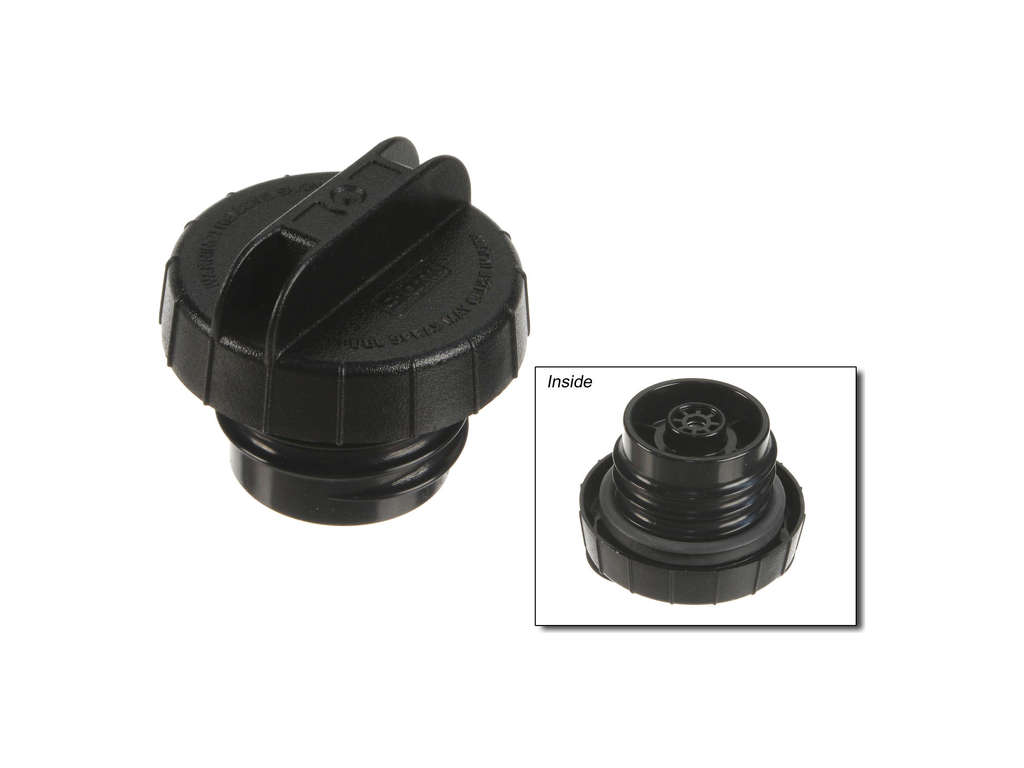
Est. part cost: $10 - $30 - Loose or Faulty Gas Cap ⚪ Low Probability → Shop Fuel Tank Cap While a common cause on many cars, it's less likely to be the primary issue on this specific Impreza compared to rust. The cap's rubber O-ring seal can still degrade and crack over time.
How to confirm: Ensure the gas cap is tightened until it clicks. Check the rubber O-ring on the cap for cracks or damage. If it looks worn, replacement is a cheap and easy first step, though often not the final solution for this car.
Typical fix: Replace the gas cap with a new OEM or equivalent part.
Est. part cost: $15 - $40
Rare But Worth Checking
- Faulty Purge Control Solenoid Valve: → Shop Vapor Canister Purge Solenoid This valve is located in the engine bay, under the intake manifold runners on the passenger side. It can get stuck open or closed. It can be tested by applying 12V power and listening for a click or by using a hand vacuum pump to see if it holds vacuum when de-energized.
- Faulty Drain/Vent Valve or Charcoal Canister: → Shop Vapor Canister The charcoal canister (a black plastic box) and its associated vent valve are located behind the rear passenger wheel. On 1998 and later models, it's in the rear, while some earlier models may have it under the hood. The canister can become saturated with fuel or crack, and the valve can fail, but this is less frequent than the filler neck rusting out. A sign of a bad canister is finding charcoal pellets in the EVAP lines.
Diagnosis Steps
- Check the gas cap. Ensure it is tight and the seal is not cracked or brittle. If in doubt, it's an inexpensive part to replace as a first step.
- Scan for any other pending or active trouble codes.
- Perform a thorough visual inspection of the fuel filler neck area. This requires safely jacking up the vehicle, removing the rear passenger wheel, and removing the plastic splash shield held by 10mm bolts.
- Inspect the main filler pipe and all smaller vent pipes that run alongside it for signs of heavy rust, flaking, or holes. Pay close attention to where the pipes pass through the body and any associated valves mounted on the neck.
- Inspect all rubber EVAP hoses connected to the filler neck and the charcoal canister (the black box in the same area) for cracks or loose connections.
- If no visual leak is found, the most effective next step is to have a professional perform an EVAP smoke test. This will push low-pressure smoke through the system and reveal the exact location of any leaks.
- If no leaks are found, test the function of the purge control solenoid (on the intake manifold) and the vent/drain valve (near the canister). The purge solenoid can be tested with a multimeter and by applying 12V to check for operation.
Parts You'll Likely Need
- Fuel Filler Neck Assembly
(OEM #42066FA030 (for 1993-1998 Impreza/Legacy), 42066FA140 (for 1998-2001 Impreza/Forester). Always verify with VIN.)— This is the most common point of failure due to rust, causing the P0440 code on this specific vehicle.
Trusted brands: Subaru (OEM), Spectra Premium (e.g., FN672, FN633), Dorman, SKP
OEM price range: $175-$250
Aftermarket price range: $100-$180 - Gas Cap — An easy and inexpensive first step in diagnosis, although less likely to be the root cause than the filler neck.
Trusted brands: Subaru (OEM), Stant, Gates
OEM price range: $25-$40
Aftermarket price range: $15-$25
Technical Service Bulletins (TSBs) & Recalls
- While no specific TSB number for P0440 was found in the search, a Subaru Service Technical Information index from 1997 lists P0440, indicating it was a known issue at the time.
Platform-Specific Known Issues
- The plastic protector shield in the rear passenger wheel well is notorious for trapping salt and moisture, directly causing the filler neck and vent pipes to rust out.
- A DIY repair for a rusted-out vent pipe (not the main filler) can be performed using 5/8" OD copper tubing, bent to shape, as documented by owners.
Mechanic-Grade Diagnostic Values
- EVAP Canister Purge Valve Resistance — expected: 30 to 38 ohms (when engine is cool). Failure: A reading outside this range, or an open/short circuit, indicates a faulty valve coil.
- EVAP Canister Vent Solenoid Resistance — expected: 48 to 65 ohms. Failure: A reading outside this range suggests the solenoid coil is bad.
Scan Tool Commands That Help
- Subaru Select Monitor: Evaporative System Leak Test — This is a dealer-level function used to force the EVAP system self-test to run without having to perform a full drive cycle. It seals the system and monitors for pressure loss, confirming if a leak is present after a repair or during advanced diagnosis.
Wiring & Ground Locations
- ECU Grounds — The primary grounds for the Engine Control Unit (ECU) are sourced from the top of the intake manifold, not directly from the chassis or engine block.. A poor ground connection at the intake manifold can cause erratic behavior from sensors and solenoids controlled by the ECU, including the EVAP purge and vent valves. While not a primary cause for P0440, it's a critical check if electrical testing of components yields strange results.
- GB-7 / GB-8 — Wiring diagrams for a '99 Impreza show ground points GB-7 and GB-8 located near or behind the rear passenger seats.. These grounds serve various rear-body electrical components. While not directly tied to the EVAP system solenoids in most diagrams, their proximity to the charcoal canister and filler neck area means corrosion in this area could potentially affect wiring integrity for the fuel tank pressure sensor or vent valve on some models.
Real Owner Repair Stories
- ultimatesubaru.org forum user 'edrach' ('97 Impreza L wagon) — P0440 code would clear but return the next day.
❌ Tried (didn't work) Replacing the gas cap. The code stayed gone for a few days but returned after refueling.
✅ What actually fixed it The user later confirmed the common issue for these cars is a rusted fuel filler neck, implying this was the subsequent and successful repair path after the gas cap failed to solve it. - Hearth.com forum user 'Don2222' (1999 Subaru Legacy (platform mate)) — P0440 code returned 25 miles after being reset.
❌ Tried (didn't work) Initial diagnosis from AutoZone suggested gas cap, EVAP canister, or solenoids.
✅ What actually fixed it The owner was advised by a Subaru tech that the issue is almost always a rusted gas tank filler tube. Visual inspection confirmed the filler pipe was rusted where it meets the rubber hose going to the tank. The implied fix was the replacement of the filler neck. - NHTSA ODI #10283295 (Subaru platform mate) — An owner reported that fuel filler tube corrosion caused a leak of fuel and fuel vapor, which illuminated the Check Engine Light with code P0440. The repair required replacing the fuel filler tube and valve assembly.
OEM Part Supersession History
42066FA031→42066FA030— Part number consolidation and revision by Subaru.
Heads up: 42066FA030 is the correct replacement for earlier parts like 42066FA020, 42066FA021, and 42066FA031 for the 1995-1997 Impreza and Legacy. Always verify with VIN, but these are generally interchangeable for the specified model years.
Model Year Variations Within This Range
- Early-generation (approx. 1993-1997): On some earlier models, the charcoal canister may be located under the hood on the passenger side, behind the headlight.
- Mid-to-late generation (approx. 1998-2001): The charcoal canister is located in the rear of the car, behind the passenger-side rear wheel, near the fuel filler neck assembly.
- 1997-1998 (V4): The interior was facelifted with white-faced gauges and an airbag steering wheel, which has no bearing on the P0440 code but helps identify the vehicle's specific version (V4).
Diagnostic Flowchart
Used vs. New Parts: Buying Guide for This Vehicle
When a used part is the smart pick: A used fuel filler neck assembly is a viable option ONLY if it comes from a donor vehicle in a dry, salt-free climate (e.g., Arizona, California). A used part from a 'salt belt' region will likely have the same rust issues and fail soon after installation.
Donor-vehicle mileage cap: roughly under 120000 miles for the part to have meaningful remaining life.
What to inspect on the donor part:
- Inspect the entire length of the main pipe and smaller vent pipes for any signs of flaking, bubbling paint, or surface rust. Pay special attention to the bends and where brackets are welded on.
- Probe the pipes firmly with a screwdriver; if there is any flex or soft spots, reject the part.
- Check the condition of any included rubber hoses. If they are cracked or hard, they will need to be replaced anyway, reducing the value of the used part.
- Ensure there are no dents or kinks in the pipes that could restrict flow.
Aftermarket brands forum-validated for this vehicle:
- Spectra Premium
- Dorman
Brands owners have reported issues with on this vehicle:
- No specific brands are consistently reported as poor quality, but ultra-low-cost, unbranded parts from online marketplaces may have fitment issues or use thinner gauge metal that will rust through faster.
Real Owner Stories
Aggregated from forums and TSBs cited above. Mileages and costs reflect what owners reported in those sources.
Subaru Legacy GT (similar to Impreza of the era)
Symptoms: P0440 code for a year, fuel dumping on the ground while refueling.
What fixed it: Implied replacement of the fuel filler neck and/or the valve at the top of the neck which had rotted out.
Source hint: Ultimate Subaru Message Board thread titled 'P0440 code - 1990 to Present Legacy, Impreza, Outback...'
1999 Subaru Impreza Outback Sport
Symptoms: P0440 code for two months.
What fixed it: Replaced the fuel filler neck and the shut valve mounted on it after discovering the old one was full of holes and a 'blob of rust'.
Source hint: Ultimate Subaru Message Board thread titled '99 OBS trouble code...P0440 (purge solenoid)'
1997 Subaru Legacy (similar to Impreza)
Symptoms: CEL code P0440, horrendous gasoline fume smell, especially with more than 1/2 tank of gas.
What fixed it: Repaired the rusted-out metal fill vent pipe where it passes through the frame using a piece of 5/8 OD copper tubing.
Cost: $0
Source hint: Ultimate Subaru Message Board thread titled 'Fill Vent Repair - P0440 Code'
Related OBD-II Codes
Frequently Asked Questions
Where is the most common place for the P0440 leak to occur on my 1993-2001 Impreza?
I checked my gas cap and it's tight. What should I do next to diagnose P0440?
I smell a strong odor of gasoline near the back of my car. Is this related to the P0440 code?
My Impreza is suddenly very difficult to refuel; the gas pump handle clicks off constantly. Is this a P0440 symptom?
Is this filler neck rust issue also a problem on other Subarus from this era?
The smaller vent pipe on my filler neck is rusted through, but the main pipe is fine. Can I repair just the small pipe?
We Have This Part in Stock


The information in this article is provided for general reference and educational purposes only. Vehicle specifications, procedures, and part compatibility can vary by production date, trim level, and region. Always consult your vehicle's factory service manual and verify part numbers before purchasing or performing repairs. Safety-critical components such as airbags, seat belts, and braking systems should be installed by a qualified professional.
- Subaru Impreza:
- 🧭 Diagnostic Flowchart
- 🛍️ Shop This Part
- What's Unique About the 1993-2001 Subaru Impreza
- Symptoms You May Notice
- Most Likely Causes
- Rare But Worth Checking
- Diagnosis Steps
- Parts You'll Likely Need
- Technical Service Bulletins (TSBs) & Recalls
- Platform-Specific Known Issues
- Mechanic-Grade Diagnostic Values
- Scan Tool Commands That Help
- Wiring & Ground Locations
- Real Owner Repair Stories
- OEM Part Supersession History
- Model Year Variations Within This Range
- Used vs. New Parts: Buying Guide for This Vehicle
- Real Owner Stories
- Subaru Legacy GT (similar to Impreza of the era)
- 1999 Subaru Impreza Outback Sport
- 1997 Subaru Legacy (similar to Impreza)
- Related OBD-II Codes
- Frequently Asked Questions
- 🎟️ Get 5% Off