

P0440 on 2002-2007 Subaru Impreza: EVAP Malfunction Causes and Fixes
On a 2002-2007 Subaru Impreza, code P0440 is most often caused by a rusted-out fuel filler neck. Before buying any parts, inspect the metal pipes in the rear passenger-side wheel well for corrosion. A replacement filler neck costs between $100 and $250. This is a very common issue on Subarus of this era, including the Forester and Baja.
- For a 2002-2007 Impreza, suspect a rusted fuel filler neck for a P0440 code before anything else.
- A strong fuel smell near the rear passenger wheel is a key symptom pointing to a rusted filler neck.
- Diagnosis requires removing the rear passenger wheel and a plastic splash guard to visually inspect the filler neck for rust holes.
- While a new gas cap is an easy thing to try, it is much less likely to be the root cause than the filler neck on this specific car.
What's Unique About the 2002-2007 Subaru Impreza
For the second-generation Impreza (model years 2002-2007), the P0440 code is overwhelmingly linked to a specific design flaw: rust. The fuel filler neck, located in the rear passenger-side wheel well, is protected by a plastic shield that unfortunately traps moisture and road salt. This causes the metal filler pipe and its smaller associated vent pipes to corrode and develop leaks, making it the most common point of failure by a wide margin compared to other vehicles. Owners and mechanics in online forums frequently refer to this shield as a 'salt trap' and note that this issue is almost a certainty for vehicles in rust-belt states.
Symptoms You May Notice
- Check Engine Light is on
- A noticeable smell of raw fuel, particularly around the rear passenger side of the car or after refueling.
- Difficulty filling the gas tank (fuel pump nozzle clicks off repeatedly). This often points to a clog in the vent lines, which are part of the same filler neck assembly that rusts.
- Automatic failure of an emissions/smog test.
- Cruise control may be disabled.
- Replacing the gas cap when the true cause is a rusted filler neck. Always perform a visual inspection of the filler neck before spending money on other parts, especially on cars from rust-prone regions.
Most Likely Causes
- Rusted Fuel Filler Neck and/or Vent Pipes 🔴 High Probability → Shop Fuel Filler Neck A plastic splash guard in the rear passenger wheel well traps moisture and road salt against the metal pipes, causing severe corrosion over time. This is a well-documented issue on Subarus from this era, with some technicians claiming it accounts for 95% of P0440 cases.
How to confirm: Visually inspect the filler neck. Safely jack up the vehicle, remove the rear passenger wheel, and take off the plastic shield (typically held by three 10mm bolts, which may be rusted and break). Check the main pipe and smaller vent pipes for flaking, rust holes, or wetness from fuel. Probing gently with a screwdriver can reveal weak spots.
Typical fix: Replace the entire fuel filler neck assembly. Some owners suggest not reinstalling the plastic shield to prevent future rust. Patching with JB Weld can be a temporary fix for small holes but is not a permanent solution and may not hold for long.
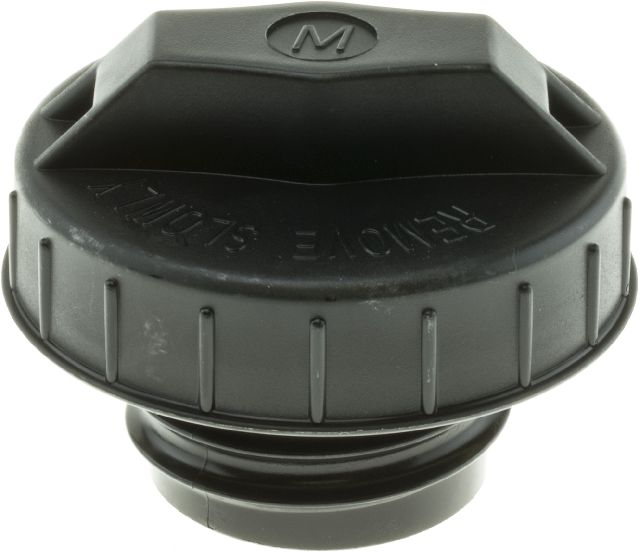
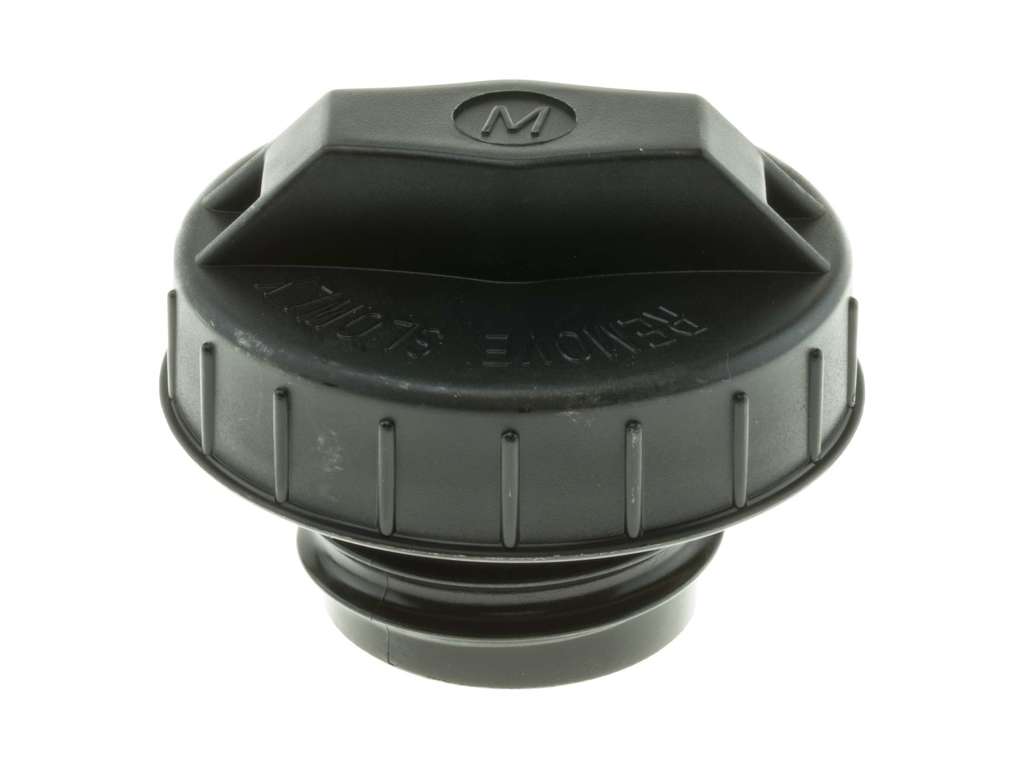
Est. part cost: $100 - $250 - Loose or Faulty Gas Cap 🟡 Medium Probability → Shop Fuel Tank Cap While a common cause on all vehicles, it's often checked first but is less likely to be the root problem on this Impreza compared to the filler neck. The cap's rubber O-ring can dry out, crack, and fail to seal over time.
How to confirm: Ensure the cap is tightened until it clicks at least once. Inspect the rubber seal for cracks or brittleness. Applying a thin layer of petroleum jelly to the O-ring has been reported by some owners as a temporary fix for a poor seal.
Typical fix: Replace the gas cap.
Est. part cost: $15 - $40 - Cracked or Disconnected EVAP Hoses 🟡 Medium Probability
How to confirm: Visually inspect all accessible rubber hoses connected to the charcoal canister, purge valve, and filler neck for cracks, splits, or loose connections. Pay special attention to the small vent lines that run alongside the filler neck. A smoke test is the most effective way to find small hose leaks.
Typical fix: Replace the damaged section of hose and secure it with new clamps.
Est. part cost: $10 - $50 - Faulty Purge Control Solenoid Valve ⚪ Low Probability → Shop Vapor Canister Purge Solenoid
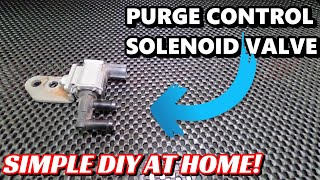
How to confirm: This valve is typically located in the engine bay, often on the passenger side of the intake manifold below the throttle body. 🎬 See how to test and replace the purge control solenoid It can be tested with a multimeter or a capable scan tool that can command it to open and close. Listen for a clicking sound when it's activated.
Typical fix: Replace the purge control solenoid valve.
Est. part cost: $40 - $90 - Faulty Vent Valve / Drain Valve ⚪ Low Probability
How to confirm: This valve is located near the charcoal canister at the rear of the vehicle, in front of the rear subframe. It can fail electrically or become stuck open or closed. It can be tested with a scan tool or by applying direct voltage to see if it actuates. Wires leading to the valve can also corrode and break.
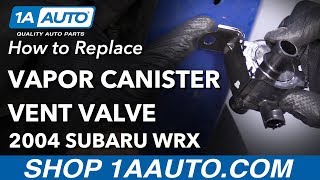
Typical fix: Replace the vent valve. On some models, it is integrated with the charcoal canister. An OEM part number for some models is 42084SA020. 🎬 Watch: How to replace the vapor canister vent valve
Est. part cost: $50 - $120
Rare But Worth Checking
- Cracked Charcoal Canister: → Shop Vapor Canister The plastic canister itself, located near the rear suspension, can be damaged by road debris or become saturated with fuel over time, causing it to fail. Spiders are also known to build nests in the vent lines connected to the canister, causing blockages.
- Faulty Fuel Tank Pressure Sensor: → Shop Fuel Tank The sensor that monitors EVAP system pressure can fail and send incorrect data to the ECU, triggering the code even if no leak exists.
Diagnosis Steps
- Check the Gas Cap: Ensure it is tight and the seal is not cracked or brittle. If it's old, consider replacing it as a cheap first step, then clear the code and drive for a few days.
- Scan for Other Codes: Use an OBD-II scanner to check for any other pending or active trouble codes that could provide more clues, such as P0442 (small leak) or P0455 (large leak).
- Inspect the Fuel Filler Neck: This is the most crucial step for this vehicle. Safely raise the rear of the car, remove the passenger-side rear wheel, and remove the plastic splash guard (typically held by three 10mm bolts that are prone to breaking).
- Visually Examine Pipes: Carefully inspect the main filler pipe and the smaller vent pipes that run alongside it. Look for heavy rust, flaking metal, or obvious holes. Pay close attention to where the pipes are held by clamps or pass through grommets. A YouTube video from 1A Auto provides a detailed visual guide for this process on a 2004 WRX.
- Inspect Hoses: While under the vehicle, check all visible EVAP hoses running to and from the charcoal canister for cracks or disconnections. The canister is located near the rear subframe.
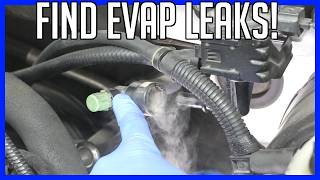
- Perform a Smoke Test: If no visual faults are found, the most reliable way to find the leak is with an EVAP smoke machine. A mechanic can perform this service, which involves feeding pressurized smoke into the system and watching where it escapes. 🎬 Watch: How to find an EVAP leak using a smoke test
- Test Solenoids: If no leaks are found, the purge and vent solenoids should be tested to ensure they are functioning correctly. The purge solenoid is in the engine bay, while the vent solenoid is near the rear charcoal canister.
Parts You'll Likely Need
- Fuel Filler Neck
(OEM #42066FE061 (Verify with VIN))— This is the most common failure point on 2002-2007 Imprezas due to a design that traps moisture and causes rust. Aftermarket part numbers include Spectra Premium FN923.
Trusted brands: Subaru (OEM), Spectra Premium, Dorman
OEM price range: $200 - $300
Aftermarket price range: $100 - $250 - Fuel Cap
(OEM #42031FE000 (Verify with VIN))— A worn-out gas cap seal is a common cause for EVAP codes on any vehicle and is an easy and inexpensive first part to replace during diagnosis.
Trusted brands: Subaru (OEM), Stant, Gates
OEM price range: $25 - $40
Aftermarket price range: $15 - $25
Related Codes That Often Appear With This One
- P0442 — This code indicates a small EVAP leak. A developing crack in a hose or a failing gas cap seal might first trigger P0442 before worsening and causing the general P0440 fault.
- P0455 — This code indicates a large EVAP leak. It is very likely to appear alongside or instead of P0440 if the fuel filler neck has a significant hole rusted through it.
- P0457 — This code specifically indicates a leak due to a loose or missing fuel cap. While P0440 is more general, a faulty cap can sometimes trigger this more specific code first.
Platform-Specific Known Issues
- The plastic shield in the rear passenger wheel well is known to trap salt and moisture, directly leading to the corrosion of the fuel filler neck assembly. Owners in rust-belt states are almost certain to encounter this issue.
- The small bolts holding the splash shield and filler neck collar are often severely rusted and may break during removal, requiring extraction or replacement.
Documented NHTSA Reports
- A report for a similar Subaru model, NHTSA ODI #10283295, confirms that fuel filler tube corrosion causes leaks of fuel and fuel vapor, triggering the P0440 code. The report notes this is a common problem and describes the necessary replacement of the fuel filler tube and valve assembly.
Mechanic-Grade Diagnostic Values
- EVAP Purge Control Solenoid Valve Resistance — expected: 30 - 38 Ohms. Failure: A reading outside this range (open circuit or short) indicates a failed solenoid coil.
- EVAP Vent/Drain Valve Resistance — expected: 20 - 30 Ohms. Failure: A reading significantly outside this range, or an open circuit, indicates a faulty valve coil. Some sources state up to 50 Ohms may be acceptable, but readings below 30 are more common for a good part.
- EVAP Vent/Drain Valve Harness Voltage — expected: ~12 Volts (Battery Voltage). Failure: With the key on, one of the two pins in the connector should have battery voltage. If not, there is a wiring or fuse issue upstream of the valve.
- Fuel Tank Pressure (FTP) Sensor Signal Voltage (KOEO) — expected: ~2.5 Volts. Failure: A reading of 5V or 0V suggests a wiring issue or a failed sensor. The voltage should decrease from ~2.5V when a light vacuum is applied to the sensor port.
Scan Tool Commands That Help
- Subaru Select Monitor (SSM): Evaporative System Leak Test — This is a dealer-level automated test that commands the system to seal and pressurize itself to check for leaks, providing a pass/fail result without a smoke machine.
- Subaru Select Monitor (SSM): Compulsory Valve Operation Check Mode — This function allows a technician to manually cycle individual solenoids like the drain valve or purge valve to listen for an audible 'click', confirming the component is mechanically actuating.
- Hardware 'Green Connector' Test Mode: Connect the two green test mode connectors under the driver's side dash. — With the connectors joined and the key turned to 'ON' (engine off), the ECU will cycle all relays and solenoids on a one-second interval. This allows a technician to physically feel or listen to the vent valve at the rear of the car to confirm it is clicking without needing a scan tool.
Wiring & Ground Locations
- R69 — On the rear wiring harness, near the charcoal canister assembly on the rear passenger side.. This is the 2-pin electrical connector for the EVAP Drain/Vent Valve. Corrosion or damage to its pins or wiring is a common point of failure for vent valve circuit codes that can accompany a P0440.
- R68 — On the rear wiring harness, near the other EVAP components at the rear of the vehicle.. This is the 2-pin connector for the Pressure Control Solenoid Valve. A bad connection here can cause system malfunctions.
- ECU Grounds — Multiple grounds for the ECU are bundled in the main loom and terminate on the back of the intake manifold.. A poor ground connection at this central point can cause a wide range of difficult-to-diagnose electrical issues, including erratic sensor readings for the EVAP system.
- GB-8 (Body Ground) — On older models, this ground point is located near the rear passenger seat or license plate area. Its exact location on the 2002-2007 model may vary but it serves components in the rear of the car.. The rear-mounted EVAP components, like the vent valve and fuel tank pressure sensor, rely on a solid chassis ground. Corrosion at this ground point can cause intermittent electrical faults.
Real Owner Repair Stories
- YouTube channel 'Kevin AutoTechU' (Subaru (model unspecified, but with identical EVAP components and test procedures)) — Check Engine Light with an EVAP vent control solenoid code (P1443, often related to P0440).
❌ Tried (didn't work) The solenoid was still clicking when activated with the 'green connector' test mode, suggesting it was mechanically functional.
✅ What actually fixed it The vent valve was removed and tested. Its resistance measured 26.1 Ohms, which was just out of the specified 30-50 Ohm range for that particular valve. More importantly, when power was applied and the technician blew through the valve, air could be felt leaking past the internal diaphragm. The valve was faulty despite clicking, causing the system to fail its pressure test. Replacing the vent valve resolved the code.
"I Checked Everything" — The Actual Cause
- A faulty Fuel Tank Pressure (FTP) sensor can be the cause. In some cases, an internal check valve within the sensor itself can fail, causing it to bleed off pressure during the ECU's self-test. This triggers a leak code even though the system is externally sealed and will pass a smoke test.
- The EVAP vent/drain valve can have an internal diaphragm leak. The valve may still 'click' when activated and appear to function electrically, but it fails to seal completely when closed. This leak can be too small or conditional to be easily found with a smoke test but is detected by the ECU's more sensitive pressure decay test over time.
Model Year Variations Within This Range
- 2005-2007: The EVAP Vent/Drain Valve for these later 'Blobeye' and 'Hawkeye' models is commonly listed as part number 42084SA020.
- 2002-2004: The Vent/Drain valve for the earlier 'Bugeye' models may be a different part number. While functionally similar, the mounting or connector could be different. Verification with a VIN is critical when ordering this part for an early second-generation Impreza.
Diagnostic Flowchart
Other Known Issues on This Vehicle
Issues unrelated to this code that are worth knowing about as an owner of this generation:
- Head Gasket Failure (Naturally Aspirated 2.5L EJ25 Engine) 🔴 High — Very common, typically occurs between 100,000 and 150,000 miles. Affects non-turbo 2.5L models most severely.
- Rear Quarter Panel / Wheel Arch Rust 🟠 Medium — Extremely common, especially in rust-belt states. Rust often starts behind a rubber trim piece on the wheel arch and under the bumper cover.
- Manual Transmission Synchro Wear 🟠 Medium — Reported by some owners, particularly on performance models (WRX). Leads to grinding or difficulty shifting, most often between 2nd and 3rd gear.
- Failed Knock Sensor 🟡 Low — A relatively common sensor failure that can cause a Check Engine Light and affect performance and fuel economy.
Used vs. New Parts: Buying Guide for This Vehicle
When a used part is the smart pick: For purely mechanical or plastic components like the charcoal canister, a used part from a dry, non-rust-belt state can be a cost-effective option. Ensure the donor vehicle was not in a collision that could have cracked the plastic.
Donor-vehicle mileage cap: roughly under 120000 miles for the part to have meaningful remaining life.
What to inspect on the donor part:
- For a Fuel Filler Neck: Absolutely no visible rust, flaking, or previous patch repairs (e.g., JB Weld). Must come from a verified dry-climate vehicle.
- For Electrical Components (Valves/Solenoids): Check that electrical connector pins are bright and free of any green or white corrosion.
- For Hoses: Squeeze the rubber to ensure it is still pliable and not hard or brittle. Check for any surface cracking.
OEM-only on this vehicle (don't cheap out):
- Fuel Cap: Aftermarket gas caps are a frequent source of recurring EVAP codes due to poor seal quality. It is strongly recommended to use an OEM Subaru cap.
- Fuel Tank Pressure Sensor: As a critical sensor for the diagnostic system, an OEM part is recommended to ensure accurate voltage readings and prevent chasing phantom leaks.
Aftermarket brands forum-validated for this vehicle:
- Spectra Premium (for Fuel Filler Neck)
- Dorman (for Fuel Filler Neck)
- Stant (for Fuel Cap, though OEM is preferred)
- Gates (for Fuel Cap, though OEM is preferred)
Brands owners have reported issues with on this vehicle:
- Generic, unbranded electrical sensors and valves from online marketplaces are often reported by forum users to be dead-on-arrival or fail prematurely.
Real Owner Stories
Aggregated from forums and TSBs cited above. Mileages and costs reflect what owners reported in those sources.
2004 Subaru Impreza WRX STI
Symptoms: Check Engine Light with P0440 code.
What fixed it: Replacing the purge valve with the 42084FE010 genuine part.
Source hint: AliExpress Review
Subaru Owner Report (NHTSA ODI #10283295)
Symptoms: Check Engine Light illuminates with code P0440 (EVAP emissions malfunction) and a leak of fuel and fuel vapor.
What fixed it: Replacement of the fuel filler tube and valve assembly. The owner noted this is a common problem caused by corrosion.
Related OBD-II Codes
Frequently Asked Questions
Why does my 2002-2007 Subaru Impreza have difficulty filling the gas tank along with the P0440 code?
Is there a specific part number for the vent valve on this era of Impreza?
Why is the fuel filler neck so prone to failure on the GD/GG Impreza platform?
Can I use a temporary fix like JB Weld for a rusted filler neck?
Where is the purge control solenoid valve located on my Impreza?
Should I reinstall the plastic splash shield after replacing my filler neck?
Helpful Videos
We Have This Part in Stock


The information in this article is provided for general reference and educational purposes only. Vehicle specifications, procedures, and part compatibility can vary by production date, trim level, and region. Always consult your vehicle's factory service manual and verify part numbers before purchasing or performing repairs. Safety-critical components such as airbags, seat belts, and braking systems should be installed by a qualified professional.
- Subaru Impreza:
- 🧭 Diagnostic Flowchart
- 🎬 Helpful Videos
- 🛍️ Shop This Part
- What's Unique About the 2002-2007 Subaru Impreza
- Symptoms You May Notice
- Most Likely Causes
- Rare But Worth Checking
- Diagnosis Steps
- Parts You'll Likely Need
- Related Codes That Often Appear With This One
- Platform-Specific Known Issues
- Documented NHTSA Reports
- Mechanic-Grade Diagnostic Values
- Scan Tool Commands That Help
- Wiring & Ground Locations
- Real Owner Repair Stories
- "I Checked Everything" — The Actual Cause
- Model Year Variations Within This Range
- Other Known Issues on This Vehicle
- Used vs. New Parts: Buying Guide for This Vehicle
- Real Owner Stories
- 2004 Subaru Impreza WRX STI
- Subaru Owner Report (NHTSA ODI #10283295)
- Related OBD-II Codes
- Frequently Asked Questions
- 🎟️ Get 5% Off