

P0440 on 1995-1999 Subaru Legacy: EVAP System Malfunction Causes and Fixes
On a 1995-1999 Subaru Legacy, code P0440 is most often caused by a rusted fuel filler neck or a loose/faulty gas cap. Inspecting the filler neck for rust behind its plastic shield in the rear passenger wheel well is the key diagnostic step before replacing any other parts.
- For a 1995-1999 Legacy, always suspect a rusted fuel filler neck first for a P0440 code.
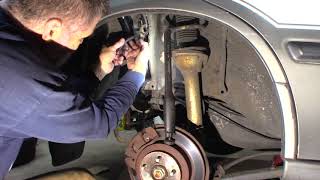
- Before buying any parts, remove the rear passenger wheel and the plastic shield (three 10mm bolts) to physically inspect the filler neck and the smaller vent pipe.
- A new gas cap is a cheap and easy thing to try, but it is less likely to be the root cause than the filler neck on this car.
- This code will cause an automatic failure on an emissions test, so it must be resolved to stay compliant.
- This issue is also extremely common on Subaru Imprezas and Foresters from the same era.
What's Unique About the 1995-1999 Subaru Legacy
For the second-generation Subaru Legacy, the P0440 code is notoriously linked to rust. These vehicles are highly susceptible to rust on the fuel filler neck, the metal tube you put the gas nozzle into. A plastic shield in the rear passenger-side wheel well, often called a 'salt trap' by owners, traps dirt and moisture against the pipe, causing it to corrode and create a leak that triggers the code. While a bad gas cap is always a possibility, the filler neck is the most common point of failure on this specific platform, with some mechanics citing it as the cause in 95% of cases.
Symptoms You May Notice
- Check Engine Light is on
- A noticeable smell of raw fuel, especially around the rear of the vehicle or after filling up.
- Failure to pass an emissions inspection.
- Difficulty filling the gas tank (the pump clicks off repeatedly) can indicate a clogged charcoal canister or vent line, which can also trigger P0440.
- Replacing the EVAP purge solenoid or charcoal canister before thoroughly inspecting the fuel filler neck for rust. On this specific vehicle, the filler neck is the most likely culprit by a wide margin.
Most Likely Causes
- Rusted Fuel Filler Neck 🔴 High Probability → Shop Fuel Filler Neck A design where a plastic shield in the wheel well traps moisture and road salt against the steel filler neck, causing severe rust over time. This is a very common issue in 'salt-belt' states.
How to confirm: Jack up the rear passenger side of the car, remove the wheel, and unbolt the plastic shield covering the filler neck (typically three 10mm bolts, which may be rusted and break). Visually inspect the entire length of the metal pipe for rust, holes, or flaking metal. Poking suspect areas with a screwdriver can reveal hidden holes.
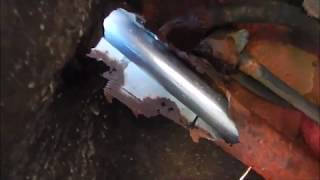
Typical fix: Replacement of the fuel filler neck assembly. Some owners have successfully patched small holes with JB Weld 🎬 See how to apply a temporary patch to a leaky neck. as a temporary fix.
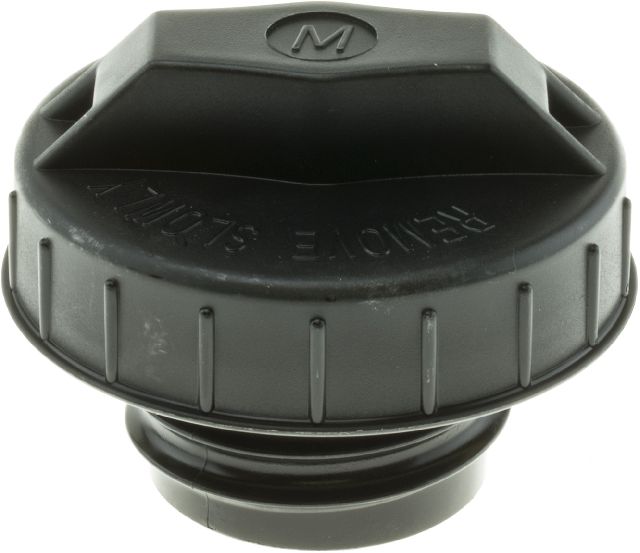
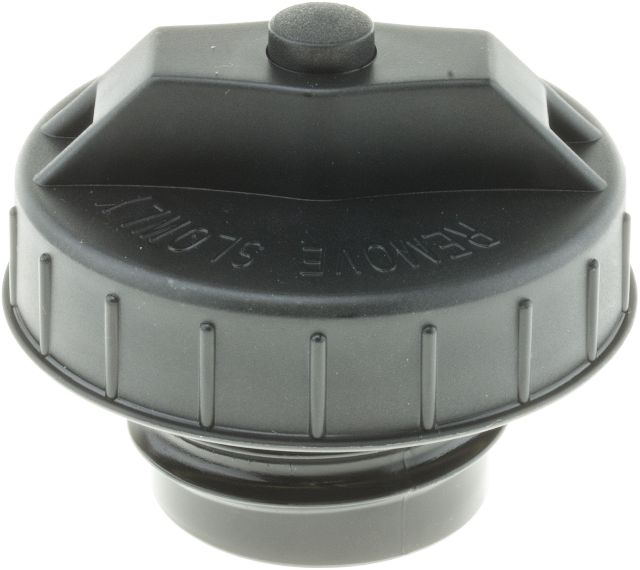
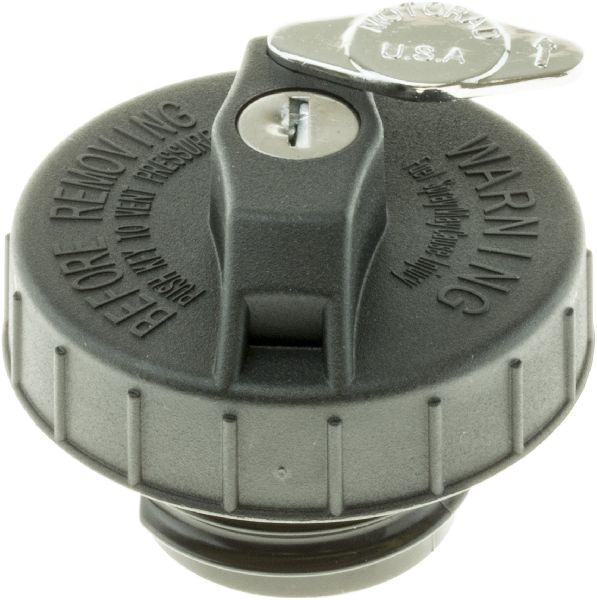
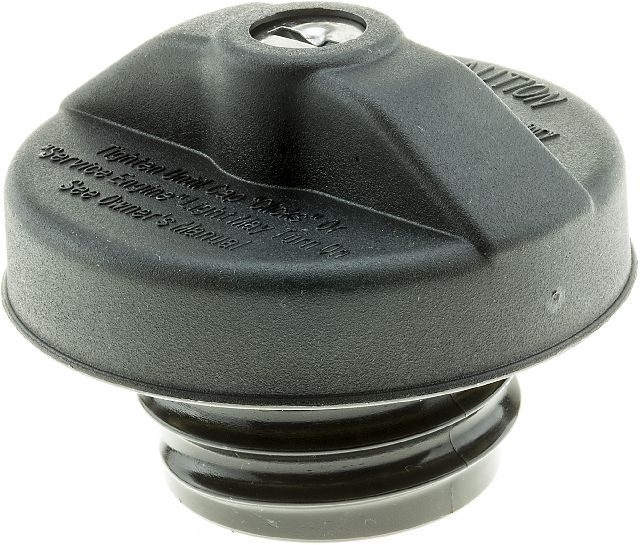
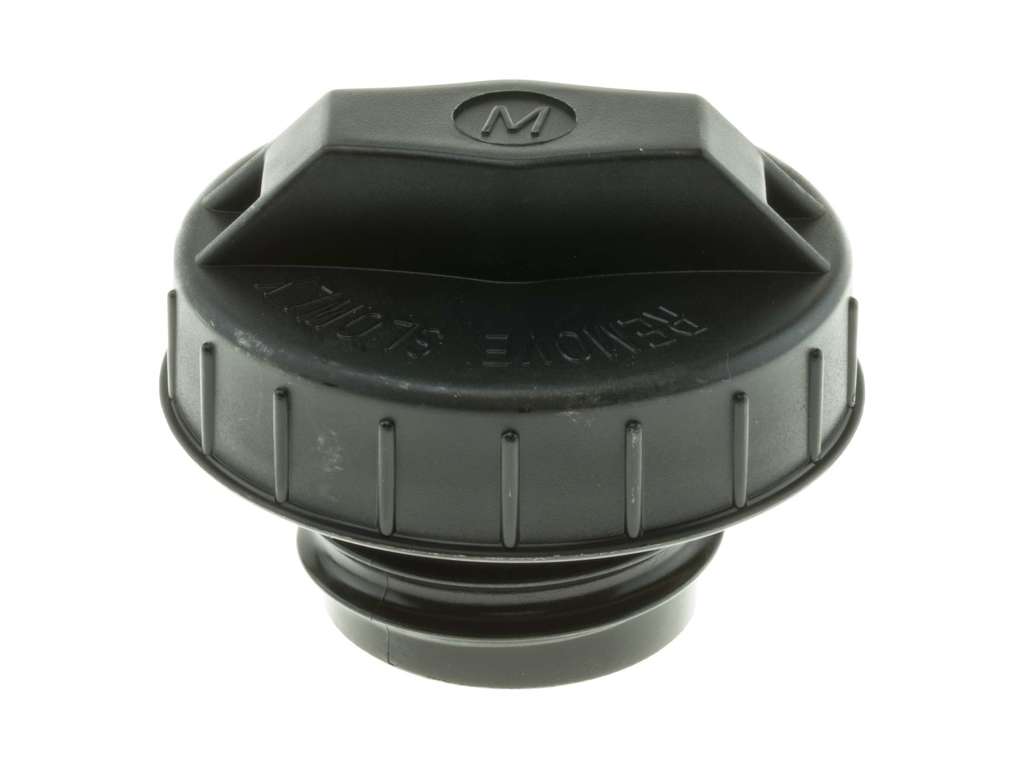
Est. part cost: $70-$150 - Loose or Faulty Gas Cap 🟡 Medium Probability → Shop Fuel Tank Cap This is a common failure on all vehicles. The cap's rubber O-ring seal can crack, stiffen, or degrade over time, or it may simply not have been tightened correctly (at least one click).
How to confirm: Ensure the gas cap clicks at least once when tightened. Inspect the rubber O-ring on the cap for cracks, stiffness, or damage. If it looks worn, replacement is a cheap and easy first step. A 'whoosh' sound when opening the cap can be a good sign the system is holding pressure, but doesn't rule out an intermittent leak.
Typical fix: Tighten or replace the gas cap.
Est. part cost: $10-$30 - Cracked or Disconnected EVAP Hoses 🟡 Medium Probability After 25+ years, the rubber and plastic vacuum lines become brittle and can easily crack or break, especially the lines connected to the charcoal canister and purge solenoid.
How to confirm: Visually inspect all accessible EVAP system hoses, particularly around the charcoal canister (located in the rear passenger side for '98-'99 models, engine bay for '95-'97) and the purge solenoid (in the engine bay, often on the intake manifold). A smoke test is the most effective way to find a small leak.
Typical fix: Replace the cracked section of hose.
Est. part cost: $5-$20 - Failed EVAP Purge Control Solenoid ⚪ Low Probability → Shop Vapor Canister Purge Solenoid
How to confirm: The solenoid is typically located on the passenger side of the intake manifold, under the throttle body. You can test its coil for electrical resistance with a multimeter or apply 12V power to see if it clicks open and closed. A stuck-open valve will cause a leak.
Typical fix: Replace the purge control solenoid.
Est. part cost: $40-$80
Rare But Worth Checking
- Failed Charcoal Canister or Vent Valve: → Shop Vapor Canister The charcoal canister can become saturated with fuel or crack, and the vent valve (often mounted on or near it) can fail or have corroded wires. On some models, spiders can build nests in the vent lines, causing a blockage.
- Rusted Fill Vent Pipe: Similar to the main filler neck, the smaller metal vent pipe that runs alongside it can also rust through where it passes through a plastic grommet in the frame rail, causing a fuel smell and a P0440 code. One owner documented a DIY repair using 5/8" OD copper tubing.
Diagnosis Steps
- Check the gas cap. Ensure it is tight (clicks at least once) and the seal is in good condition. If in doubt, replace it as it's an inexpensive first step.
- Clear the code and drive the vehicle to see if the light returns. If it does, proceed to the next step.
- Perform a thorough visual inspection of the fuel filler neck. This requires removing the rear passenger-side wheel and the plastic splash guard (three 10mm bolts) to see the pipe. Look for any signs of rust, flaking, or pinholes. Pay attention to the main pipe and the smaller vent pipe.
- Inspect all visible EVAP hoses in the engine bay and near the charcoal canister for cracks, loose connections, or brittleness.
- If no visual faults are found, the next step is a smoke test. A mechanic can inject low-pressure smoke into the EVAP system to quickly and accurately reveal the source of any leaks.
- If no leaks are found, test the function of the EVAP purge control solenoid and the vent valve. Check for proper electrical resistance and listen for a click when power is applied. Check wiring for corrosion.
Parts You'll Likely Need
- Fuel Filler Neck
(OEM #42066AC150 (fits '97-'99 Legacy 2.2L & Impreza), 42066AC130 (fits '97-'99 Legacy 2.5L Calif.))— This is the most common failure point on 1995-1999 Legacys due to a design that promotes rust. Part numbers vary by year and engine, so confirm with VIN.
Trusted brands: Subaru OE, Spectra Premium, Dorman
OEM price range: $150-$250
Aftermarket price range: $70-$150 - Gas Cap — A common and inexpensive part to fail, causing a pressure leak in the EVAP system.
Trusted brands: Subaru OE, Stant, Gates
OEM price range: $25-$40
Aftermarket price range: $10-$30 - EVAP Purge Control Solenoid
(OEM #16102AA080)— Can fail electrically or become stuck, but is less common than leaks. The part number is for reference and may vary.
Trusted brands: Subaru OE, Denso, Standard Motor Products
OEM price range: $90-$140
Aftermarket price range: $40-$80
Platform-Specific Known Issues
- The fuel filler neck is highly prone to rusting out behind a protective plastic cover in the rear passenger wheel well, making it the primary cause of P0440 on these cars.
- The smaller vent pipe running alongside the main filler neck can also rust through where it passes through the frame, causing the same code and a strong fuel smell.
Mechanic-Grade Diagnostic Values
- EVAP Purge and Vent Solenoid Coil Resistance — expected: 12–15 Ω. Failure: A reading outside this range indicates a faulty coil in the solenoid.
- Fuel Tank Pressure (FTP) Sensor Voltage - Key On, Engine Off — expected: Approximately 2.5V with the gas cap removed (atmospheric pressure).. Failure: A reading stuck at 5V or 0V indicates a failed sensor or wiring issue. Voltage should decrease slightly as vacuum is applied.
- FTP Sensor Reference Voltage — expected: 5V. Failure: No voltage indicates a wiring problem or an issue with the ECU's 5V reference circuit.
Scan Tool Commands That Help
- Subaru Select Monitor: Compulsory Valve Operation Check Mode — This dealer-level tool can be used to manually command the drain valve or vent control solenoid to cycle, allowing a technician to listen for the operating sound (a click) to confirm mechanical function without having to remove the part.
Wiring & Ground Locations
- ECU/TCU Grounds — On the back of the intake manifold. A forum user notes that ALL ECU/TCU grounds go to this spot.. A poor ground at this central location can cause a host of bizarre electrical issues, including false sensor readings from the EVAP system. Running an additional ground wire from this point directly to the battery negative terminal is a common reliability modification.
- GB-1 / GB-2 — Mount on the side of the frame rails in the engine bay.. These are primary chassis ground points. Corrosion here can affect any system grounded to the chassis, potentially including EVAP components or the fuel pump assembly.
- Other Engine Bay Grounds — Both strut towers, the radiator support, and a ground strap near the transmission 'dogbone' mount.. The EVAP purge solenoid is located in the engine bay and relies on a solid ground. Ensuring all engine bay grounds are clean and tight is a crucial step in diagnosing any electrical fault.
- EVAP Canister Sensor Wires (Rear) — For 1998+ models with the rear-mounted canister, the wiring for the vent valve/solenoid is behind the passenger side rear wheel.. This wiring is exposed to road salt and moisture. Wires can corrode and break, causing a P0440 code even if all the EVAP components and hoses are perfectly fine.
Real Owner Repair Stories
- allwheeldad on Ultimate Subaru Message Board (Subaru Legacy GT (year not specified, but within generation)) — Persistent P0440 code for a year.
❌ Tried (didn't work) Implied previous diagnostics that did not identify the issue.
✅ What actually fixed it The owner discovered the wires to a sensor on the charcoal canister (behind the passenger rear wheel) had corroded and broken. Soldering on new wires fixed the code. This was a separate issue from a rotted filler neck which was also found later. - 4Runner Forum user (similar platform) (Toyota 4Runner (body-on-frame, but relevant EVAP issue)) — P0440, P0441, P0446 codes for over a year.
❌ Tried (didn't work) Replaced gas cap, Passed a smoke test, Replaced charcoal canister, Replaced PCV valve, Replaced overfill check valve, Replaced purge valve, Inspected all hoses
✅ What actually fixed it The issue was suspected to be the O-ring on the fuel pump assembly, which seals the top of the fuel tank. This leak source would not be found by a standard smoke test if the test port is used, as it pressurizes the system downstream of the tank. - NHTSA ODI #10283295 (Subaru Outback) — An owner reported that fuel filler tube corrosion caused a leak of fuel and fuel vapor, which illuminated the check engine light with code P0440. The report noted this as a common problem.
"I Checked Everything" — The Actual Cause
- A smoke test can pass, but the code can still be caused by an electrical failure. In one documented case on a similar GM system, a P0455 (large leak) was caused by a purge solenoid that was stuck *closed*. The system passed a smoke test because the valve was sealed, but when the ECU tried to run its self-test by opening the valve, it couldn't, and interpreted the inability to draw a vacuum as a massive leak.
- Corroded and broken wires on the rear charcoal canister's vent valve or sensor can cause a P0440 code without any physical leak being present. The ECU sees an open electrical circuit and logs a general system fault.
OEM Part Supersession History
Unknown→42066AC150— Likely a consolidation of part numbers for various trims and years.
Heads up: Part 42066AC150 is listed for the 2.2L Legacy/Outback and Impreza from '97-'99. The 2.5L California emissions model used a different part (42066AC130). Using the wrong neck can result in incorrect hose connections or fitment issues.
Model Year Variations Within This Range
- 1995-1997: The charcoal canister is located in the engine bay on the passenger side, behind the headlight. All associated EVAP lines and the purge solenoid are in the engine bay.
- 1998-1999: The charcoal canister was moved to the rear of the vehicle, behind the passenger-side rear wheel. This also moved the vent valve and associated wiring to the rear, making them more susceptible to corrosion from road spray.
- 1997 vs 1998: The intake manifolds differ. A 1997 EJ25 engine had metal lines on the intake manifold for the front-mounted canister, while a 1998 engine did not, as the lines went to the rear. This is a critical detail for engine swaps, as using a '98+ engine in a '97- chassis requires re-routing the EVAP lines.
Diagnostic Flowchart
Used vs. New Parts: Buying Guide for This Vehicle
When a used part is the smart pick: For the Fuel Filler Neck, a used part from a donor vehicle in a dry, rust-free climate (e.g., Arizona, California) is an excellent, cost-effective choice. It is likely to be in better condition than a new aftermarket part and significantly cheaper than a new OEM part.
Donor-vehicle mileage cap: roughly under 200000 miles for the part to have meaningful remaining life.
What to inspect on the donor part:
- For a filler neck, ask the seller for clear photos of the entire pipe, especially the areas that would be hidden by the plastic shield.
- Look for original paint or coating; surface rust is okay, but avoid anything with flaking, scaling, or visible pinholes.
- Ensure all mounting brackets and hose connection points are intact and not bent.
- Verify the donor car's location was in a 'no-salt' state.
OEM-only on this vehicle (don't cheap out):
- Gas Cap - Aftermarket gas caps are notoriously unreliable and can cause EVAP codes. It is strongly recommended to use a genuine Subaru cap to avoid a misdiagnosis.
Aftermarket brands forum-validated for this vehicle:
- Spectra Premium - Generally considered a reliable brand for fuel system components like filler necks and fuel tanks. They often feature corrosion-resistant coatings.
- Denso - As an OEM supplier for many Japanese brands, Denso is a trusted choice for electronic components like the purge solenoid.
Brands owners have reported issues with on this vehicle:
- Dorman - Owner experiences with Dorman parts can be 'hit or miss'. While they offer a wide range of parts at low prices, quality can be inconsistent, especially for fuel system components.
Real Owner Stories
Aggregated from forums and TSBs cited above. Mileages and costs reflect what owners reported in those sources.
1998 Subaru Legacy
Symptoms: Check engine light came on with a P0440 EVAP error.
What fixed it: Replacing the rusted filler tube fixed the issue after months of checking other components like the gas cap and vacuum lines.
Source hint: YouTube comment from video titled 'Subaru Legacy EVAP 440 Error on Fuel Vapor Recovery System'
Subaru Legacy LGT (2nd Gen)
Symptoms: Had a P0440 code for a year, which eventually led to fuel dumping on the ground while refueling.
What fixed it: The owner discovered the valve at the top of the fuel filler neck had completely rotted out after removing the plastic shroud.
Source hint: Ultimate Subaru Message Board thread titled 'P0440 code - 1990 to Present Legacy, Impreza, Outback, Forester...'
1999 Legacy Wagon
Symptoms: Check Engine Light on with error code P0440.
What fixed it: The cause was confirmed to be the rusted filler pipe where it meets the rubber hose going into the gas tank.
Source hint: Hearth.com Forum thread titled 'subaru-check-engine-light-on-and-error-code-is-p0440-what-needs-to-be-fixed-finally-a-fix-found'
1997 Legacy
Symptoms: P0440 code accompanied by a fuel smell.
What fixed it: The issue was confirmed to be the common rusted filler neck.
Source hint: LegacyGT.com thread titled 'code-p0440-170138'
Related OBD-II Codes
Frequently Asked Questions
I have a P0440 code on my 1998 Legacy. Where is the fuel filler neck everyone talks about, and how do I inspect it?
Is the rusted fuel filler neck really the most common cause for P0440 on these older Legacys?
My gas pump keeps clicking off when I try to fill the tank. Is this related to the P0440 code?
What is the very first thing I should check if my 1995-1999 Legacy throws a P0440 code?
Can I just patch the rusted filler neck instead of replacing the whole thing?
Does the location of the charcoal canister differ on my 1996 Legacy versus a 1999 model?
Are other Subarus from this era, like the Impreza or Forester, also known for this P0440 issue?
Helpful Videos
We Have This Part in Stock


The information in this article is provided for general reference and educational purposes only. Vehicle specifications, procedures, and part compatibility can vary by production date, trim level, and region. Always consult your vehicle's factory service manual and verify part numbers before purchasing or performing repairs. Safety-critical components such as airbags, seat belts, and braking systems should be installed by a qualified professional.
- Subaru Legacy:
- 🧭 Diagnostic Flowchart
- 🎬 Helpful Videos
- 🛍️ Shop This Part
- What's Unique About the 1995-1999 Subaru Legacy
- Symptoms You May Notice
- Most Likely Causes
- Rare But Worth Checking
- Diagnosis Steps
- Parts You'll Likely Need
- Platform-Specific Known Issues
- Mechanic-Grade Diagnostic Values
- Scan Tool Commands That Help
- Wiring & Ground Locations
- Real Owner Repair Stories
- "I Checked Everything" — The Actual Cause
- OEM Part Supersession History
- Model Year Variations Within This Range
- Used vs. New Parts: Buying Guide for This Vehicle
- Real Owner Stories
- 1998 Subaru Legacy
- Subaru Legacy LGT (2nd Gen)
- 1999 Legacy Wagon
- 1997 Legacy
- Related OBD-II Codes
- Frequently Asked Questions
- 🎟️ Get 5% Off