

P0440 on 2000-2004 Subaru Outback: EVAP System Malfunction Causes and Fixes
On a 2000-2004 Subaru Outback, the P0440 code is almost always caused by a rusted fuel filler neck. This is a very common problem for this vehicle. Expect to pay around $80-$120 for an OEM replacement part and 1-2 hours for labor.
- For a P0440 code on a 2000-2004 Outback, immediately suspect a rusted fuel filler neck.
- Before buying any parts, remove the rear passenger wheel and plastic shield to visually inspect the filler neck for rust holes.
- While a new gas cap is an easy and cheap thing to try first, the filler neck is the most probable root cause.
- Replacing the filler neck is a manageable DIY job for those with some mechanical experience, typically taking 1-2 hours.
What's Unique About the 2000-2004 Subaru Outback
For this specific generation of Subaru Outback and Legacy, the P0440 code is notoriously linked to a design flaw. A plastic shield in the rear passenger-side wheel well traps moisture and road salt against the metal fuel filler neck. This causes the pipe to rust through, creating a leak in the EVAP system. While a loose gas cap can cause this code on any car, a rusted filler neck is the most common point of failure by a wide margin on this particular platform. A Subaru technician in one forum thread claimed this was the cause 95% of the time for this generation.
Symptoms You May Notice
- Check Engine Light is on
- A noticeable smell of raw fuel, particularly around the rear passenger side of the car or after refueling
- Difficulty filling the gas tank (the fuel pump nozzle clicks off repeatedly), which can indicate a clog in the vent lines associated with the filler neck assembly
- Slight decrease in fuel economy over time.
- Cruise control may be disabled as a fail-safe when an emissions-related check engine light is active.
- Replacing the charcoal canister or purge valve before thoroughly inspecting the fuel filler neck. On this vehicle, the filler neck is the most likely culprit and should be inspected first to avoid unnecessary parts replacement. 🎬 Watch: Understanding P0440 causes and fixes
- Using a cheap aftermarket gas cap that does not seal properly, leading to a persistent code and further unnecessary diagnosis.
Most Likely Causes
- Rusted Fuel Filler Neck 🔴 High Probability → Shop Fuel Filler Neck A plastic cover in the rear passenger wheel well traps moisture, road salt, and dirt against the metal filler neck, causing it to corrode and develop leaks. This is a widely documented issue on this generation of Subaru.
How to confirm: Remove the rear passenger-side wheel and the plastic splash guard (typically held by three 10mm bolts which may be rusted and break). Visually inspect the metal fuel filler pipe and its smaller associated vent pipes for obvious rust, flaking, and holes. Poking suspect areas with a screwdriver can reveal hidden weak spots. A professional smoke test can also pinpoint the leak.
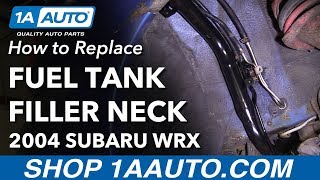
Typical fix: The rusted filler neck assembly must be replaced. This involves disconnecting the hoses, unbolting the neck from the chassis, and carefully separating it from the main rubber hose connected to the gas tank. Applying rust penetrant can help with removal. 🎬 See this step-by-step filler neck replacement walkthrough
Est. part cost: $80-$120 for an OEM part, $50-$90 for aftermarket. - Loose or Worn Gas Cap 🟡 Medium Probability → Shop Fuel Tank Cap
How to confirm: Ensure the gas cap is tightened until it clicks. Inspect the rubber O-ring on the cap for cracks, dryness, or damage. If the seal is compromised, the cap cannot hold pressure.
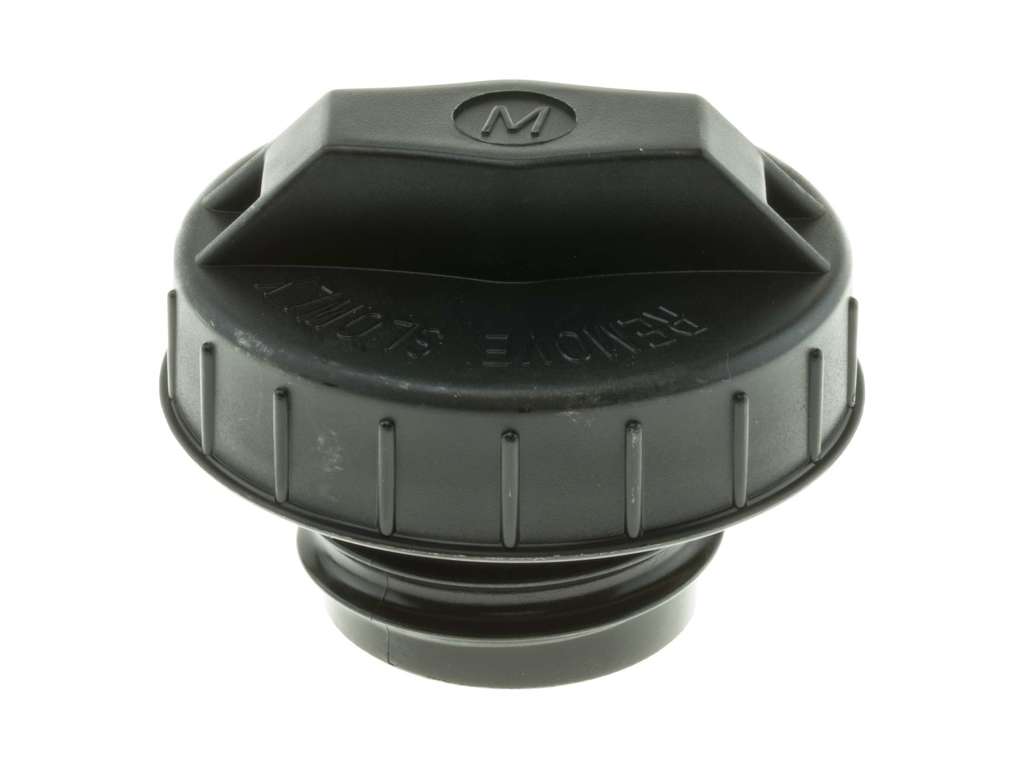
Typical fix: Tighten the cap. If the seal is bad, replace the cap. It is highly recommended to use a genuine OEM Subaru gas cap, as some aftermarket caps are known to have sealing issues on these vehicles.
Est. part cost: $15-$30 - Cracked or Disconnected EVAP Hoses ⚪ Low Probability Rubber hoses become brittle with age and exposure to the elements.
How to confirm: Visually inspect all accessible rubber and plastic hoses connected to the charcoal canister, purge valve, and filler neck for cracks, breaks, or loose connections. A smoke test is the most effective way to find small hose leaks.
Typical fix: Replace the damaged section of hose.
Est. part cost: $10-$50
Rare But Worth Checking
- Faulty Purge Control Solenoid or Vent Valve: → Shop Vapor Canister Purge Solenoid These valves control the flow of fuel vapors. If one sticks open or closed, it can trigger a P0440 code. They are less common failures than the filler neck but should be considered if the neck and cap are in good condition.
- Cracked Charcoal Canister: → Shop Vapor Canister The charcoal canister can be damaged by road debris or develop cracks over time, though this is not a frequent cause for this specific code on this vehicle.
- Faulty Fuel Tank Pressure Sensor: → Shop Fuel Tank A defective Fuel Tank Pressure (FTP) sensor can send incorrect data to the ECU, causing it to believe there is a leak when the system is actually sealed.
Diagnosis Steps
- Check the Gas Cap: Ensure it is present, tightened until it clicks, and that the rubber seal is not cracked or damaged. If in doubt, a new OEM cap is an inexpensive first step.
- Visually Inspect the Fuel Filler Neck: Safely lift and support the rear of the vehicle. Remove the rear passenger-side wheel and the plastic inner fender liner (expect the 10mm bolts to be rusty).
- Thoroughly examine the entire length of the metal fuel filler neck and the smaller vent tubes attached to it. Look for heavy rust, flaking metal, or obvious holes. Pay close attention to the bottom of the neck where debris collects.
- Perform a Smoke Test: If the visual inspection is inconclusive, the most reliable way to find the leak is with an EVAP smoke machine. A mechanic will introduce smoke into the EVAP system and look for where it escapes. 🎬 Watch: How to perform an EVAP smoke test This will definitively identify leaks in the filler neck, hoses, canister, or valves.
- Test Solenoids and Valves: If no leaks are found, the purge and vent solenoids can be tested with a scan tool to ensure they are actuating correctly.
Parts You'll Likely Need
- Fuel Tank Filler Neck
(OEM #42075AE12A)— This is the most common failure point on 2000-2004 Outbacks due to a design that promotes rust.
Trusted brands: Subaru (Genuine), Dorman, Spectra Premium
OEM price range: $80-$120
Aftermarket price range: $50-$90 - Fuel Tank Cap
(OEM #42031AE00A)— A worn out seal on the gas cap is a common cause for EVAP codes on any vehicle and is an easy and inexpensive part to replace as a first step. Using an OEM cap is highly recommended for proper sealing.
Trusted brands: Subaru (Genuine), Stant, Gates
OEM price range: $20-$30
Aftermarket price range: $10-$20
Related Codes That Often Appear With This One
- P0442 — This code indicates a small EVAP leak. A small rust hole in the filler neck might initially trigger a P0442 before it grows larger and triggers the general P0440 fault.
- P0455 — This code indicates a large EVAP leak. A significant hole rusted through the filler neck is very likely to trigger this code, sometimes alongside P0440.
- P0457 — This code specifically indicates a leak due to a loose or missing fuel cap. While it points to the cap, a large enough leak from the filler neck can sometimes trigger this code as well.
Platform-Specific Known Issues
- The fuel filler neck is highly susceptible to rust due to a plastic shield in the wheel well that traps moisture and debris. This is the primary cause of P0440 on this platform.
- The bolts holding the plastic splash shield in the wheel well are prone to rusting and breaking off during removal, which can add time to the repair.
Mechanic-Grade Diagnostic Values
- EVAP Purge Control Solenoid Resistance — expected: Approximately 30-38 ohms at room temperature.. Failure: A reading far outside this range (e.g., open circuit/infinite resistance or a dead short) indicates a failed solenoid coil.
- EVAP Canister Vent Valve/Solenoid Resistance — expected: Approximately 30-50 ohms.. Failure: A reading significantly outside this range, particularly a very low reading, suggests an internal short or failure.
Scan Tool Commands That Help
- Subaru Select Monitor (or equivalent professional scanner): Evaporative System Leak Test — This is a dealer-level function to force the vehicle's onboard EVAP leak test to run on command, rather than waiting for the specific drive cycle conditions to be met. It allows a technician to verify a repair without extensive driving.
- Physical Connector (No Scan Tool): Initiate "Test Mode" — On this generation of Subaru, there is a pair of green connectors under the driver's side dashboard. Connecting these two plugs and turning the ignition to 'ON' (engine off) puts the car into a diagnostic test mode. In this mode, all relays and solenoids, including the EVAP purge and vent valves, will cycle on and off continuously (about once per second). This allows a technician to physically touch or listen to the components to confirm they are mechanically actuating without needing a scan tool.
Real Owner Repair Stories
- Reddit user in r/SubaruForester (2000 Subaru Forester (similar platform and EVAP system)) — Persistent P0440 code.
❌ Tried (didn't work) Replaced gas cap, Visually inspected filler neck, Checked charcoal canister and vacuum hoses
✅ What actually fixed it Applying Vaseline to the gas cap O-ring. The user suspected the leak was not from the cap or O-ring itself, but from the mating surface between the O-ring and the filler neck threads, and the lubricant helped create a better seal.
When the Usual Fixes Don't Work
- The P0440 code on this platform has a "two-trip detection logic." This means the ECU must detect the fault during two consecutive qualifying drive cycles before it will illuminate the Check Engine Light. Therefore, after a repair (like tightening a gas cap), the light will not go off immediately. The code must be manually cleared with a scanner, or the vehicle must complete several drive cycles without the fault reoccurring for the light to extinguish on its own.
Diagnostic Flowchart
Other Known Issues on This Vehicle
Issues unrelated to this code that are worth knowing about as an owner of this generation:
- Head Gasket Failure (EJ25 Engine) 🔴 High — Very common, typically occurs between 120,000 and 150,000 miles. Affects the naturally aspirated 2.5L engines.
- Wheel Bearing Failure 🟠 Medium — Common failure item. Symptoms include a humming or grinding noise that gets louder with speed and changes pitch when turning.
- Failing Front CV Axles 🟠 Medium — The CV joints wear out, causing a distinct clicking or popping sound when making sharp turns at low speeds.
- Rear Quarter Panel / Strut Tower Rust 🔴 High — Common in regions that use road salt. Rust forms in the rear wheel wells and can progress to the strut towers and subframe, potentially compromising structural integrity.
- Vibration or Shudder on Acceleration 🟡 Low — A widely reported issue for this generation, often related to torque converter or transmission issues.
Used vs. New Parts: Buying Guide for This Vehicle
When a used part is the smart pick: For the primary failure part, the fuel filler neck, a used part is a viable option ONLY if it is sourced from a vehicle in a dry, salt-free climate (e.g., Arizona, California, Texas). A used part from a 'rust belt' state will likely have the same corrosion issue and is not a smart purchase.
Donor-vehicle mileage cap: roughly under 150000 miles for the part to have meaningful remaining life.
What to inspect on the donor part:
- For a used filler neck, inspect the entire length for any signs of flaking, bubbling paint, or surface rust, especially around bends and mounting brackets.
- Ensure the smaller vent lines attached to the main pipe are intact and not corroded.
- Confirm the gas cap mating surface is clean and free of pitting.
- Check that all associated rubber hoses are pliable and not cracked or swollen.
OEM-only on this vehicle (don't cheap out):
- Fuel Tank Cap - While aftermarket caps are available, many owners report sealing issues. Given the low cost of an OEM Subaru cap, it is the highly recommended choice to avoid a persistent code.
Aftermarket brands forum-validated for this vehicle:
- Dorman
- Spectra Premium
Brands owners have reported issues with on this vehicle:
- No-name or unbranded filler necks from online marketplaces may have issues with bracket alignment or poor quality corrosion coating.
Real Owner Stories
Aggregated from forums and TSBs cited above. Mileages and costs reflect what owners reported in those sources.
1999 Subaru Legacy
Symptoms: Check Engine Light with P0440 code; found a hole in the filler neck about the size of a half dollar.
What fixed it: Patched the rust hole with a metal square and JB Weld as a temporary fix.
Source hint: Hearth.com - Subaru Check Engine Light on and Error Code is P0440
1999 Subaru Outback — 198000 miles
Symptoms: Check engine light with P0440 code, fuel spilling from filler neck area when refueling.
What fixed it: Replaced the corroded fuel filler neck, gas cap, and shut valve. Some metal evap lines were also replaced with rubber hose.
Cost: $225
Source hint: Ultimate Subaru Message Board
2000-2004 Subaru Outback
Symptoms: Check engine light active; owner noted it is a 'rite of passage' for this generation.
What fixed it: Replacement of the fuel filler neck after identifying rust at the specific location behind the plastic shield.
Source hint: subaruoutback.org
Subaru Owner Report
Symptoms: An owner reported that fuel filler tube corrosion caused a leak of fuel and fuel vapor, triggering the check engine light with code P0440 (NHTSA ODI #10283295).
What fixed it: Replacement of the fuel filler tube and valve assembly.
Related OBD-II Codes
Frequently Asked Questions
Why does my 2000-2004 Subaru Outback smell like raw fuel near the rear passenger side?
Why does the gas pump nozzle keep clicking off when I try to refuel my Outback?
Should I use an aftermarket gas cap to fix a P0440 code on my Subaru?
Why did my cruise control stop working at the same time the Check Engine Light came on?
What is the most reliable way to find the leak if I can't see any rust on the filler neck?
Are there other Subaru models that have this same P0440 filler neck issue?
Helpful Videos
We Have This Part in Stock


The information in this article is provided for general reference and educational purposes only. Vehicle specifications, procedures, and part compatibility can vary by production date, trim level, and region. Always consult your vehicle's factory service manual and verify part numbers before purchasing or performing repairs. Safety-critical components such as airbags, seat belts, and braking systems should be installed by a qualified professional.
- Subaru Outback:
- 🧭 Diagnostic Flowchart
- 🎬 Helpful Videos
- 🛍️ Shop This Part
- What's Unique About the 2000-2004 Subaru Outback
- Symptoms You May Notice
- Most Likely Causes
- Rare But Worth Checking
- Diagnosis Steps
- Parts You'll Likely Need
- Related Codes That Often Appear With This One
- Platform-Specific Known Issues
- Mechanic-Grade Diagnostic Values
- Scan Tool Commands That Help
- Real Owner Repair Stories
- When the Usual Fixes Don't Work
- Other Known Issues on This Vehicle
- Used vs. New Parts: Buying Guide for This Vehicle
- Real Owner Stories
- 1999 Subaru Legacy
- 1999 Subaru Outback — 198000 miles
- 2000-2004 Subaru Outback
- Subaru Owner Report
- Related OBD-II Codes
- Frequently Asked Questions
- 🎟️ Get 5% Off