

P0440 on 1996-2002 Toyota 4Runner: EVAP System Malfunction Causes and Fixes
For a 3rd Gen 4Runner, code P0440 usually points to a simple fix like a loose or faulty gas cap. If that doesn't solve it, the next most common culprits are a cracked charcoal canister or a faulty vacuum switching valve (VSV) located near the fuel tank. An OEM gas cap is highly recommended, as aftermarket caps are a frequent source of this code.
- Always start with the gas cap. Make sure it's tight and preferably an OEM part.
- If the gas cap isn't the issue, the most likely culprits are a cracked charcoal canister or a faulty VSV near the tank.
- A smoke test is the most reliable way to find the leak without guessing and replacing unnecessary parts.
- Do not overfill your fuel tank; stop pumping when the handle first clicks off to protect your charcoal canister.
- This code does not indicate a serious mechanical problem, and the vehicle is safe to drive while you diagnose the issue.
What's Unique About the 1996-2002 Toyota 4Runner
On the 3rd generation (1996-2002) 4Runner, the P0440 code is frequently traced back to physical cracks in the plastic body of the charcoal canister, which is mounted near the fuel tank and spare tire. These older plastics become brittle over time. Additionally, the various vacuum switching valves (VSVs) that control the system are known to fail due to age and corrosion, especially in rust-prone climates. Owners and mechanics overwhelmingly report that using only an OEM Toyota gas cap is critical, as aftermarket caps often fail to create a proper seal. For 2001-2002 models specifically, a cracked fuel tank check valve is another common, model-year-specific failure point.
Symptoms You May Notice
- Check Engine Light is on
- VSC and TRAC OFF lights may also illuminate (on 2001-2002 models).
- A faint to strong smell of raw fuel, especially near the rear of the vehicle by the gas tank or filler cap.
- Difficulty filling the fuel tank (the pump may click off repeatedly).
- A 'whoosh' sound of pressure releasing when opening the gas cap may be absent.
- Replacing O2 sensors. The P0440 code is unrelated to the oxygen or air/fuel ratio sensors.
Most Likely Causes
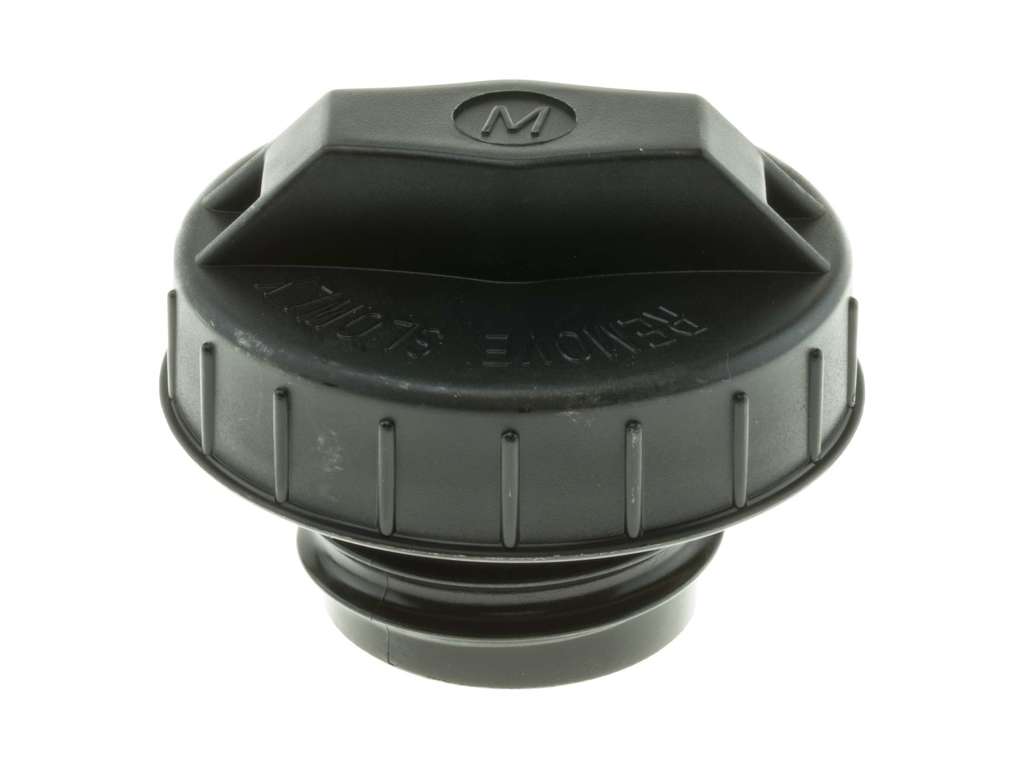
- Loose, Damaged, or Incorrect Gas Cap 🔴 High Probability → Shop Fuel Tank Cap This is the most common cause for any EVAP code. Aftermarket caps are frequently reported to cause issues on this platform; an OEM cap is strongly recommended by owners on forums.
How to confirm: Ensure the cap is tightened until it clicks several times. Inspect the cap's O-ring or seal for cracks and brittleness. If it's not a Toyota/Denso branded cap, it is the prime suspect.
Typical fix: Replace the gas cap with a genuine Toyota part.
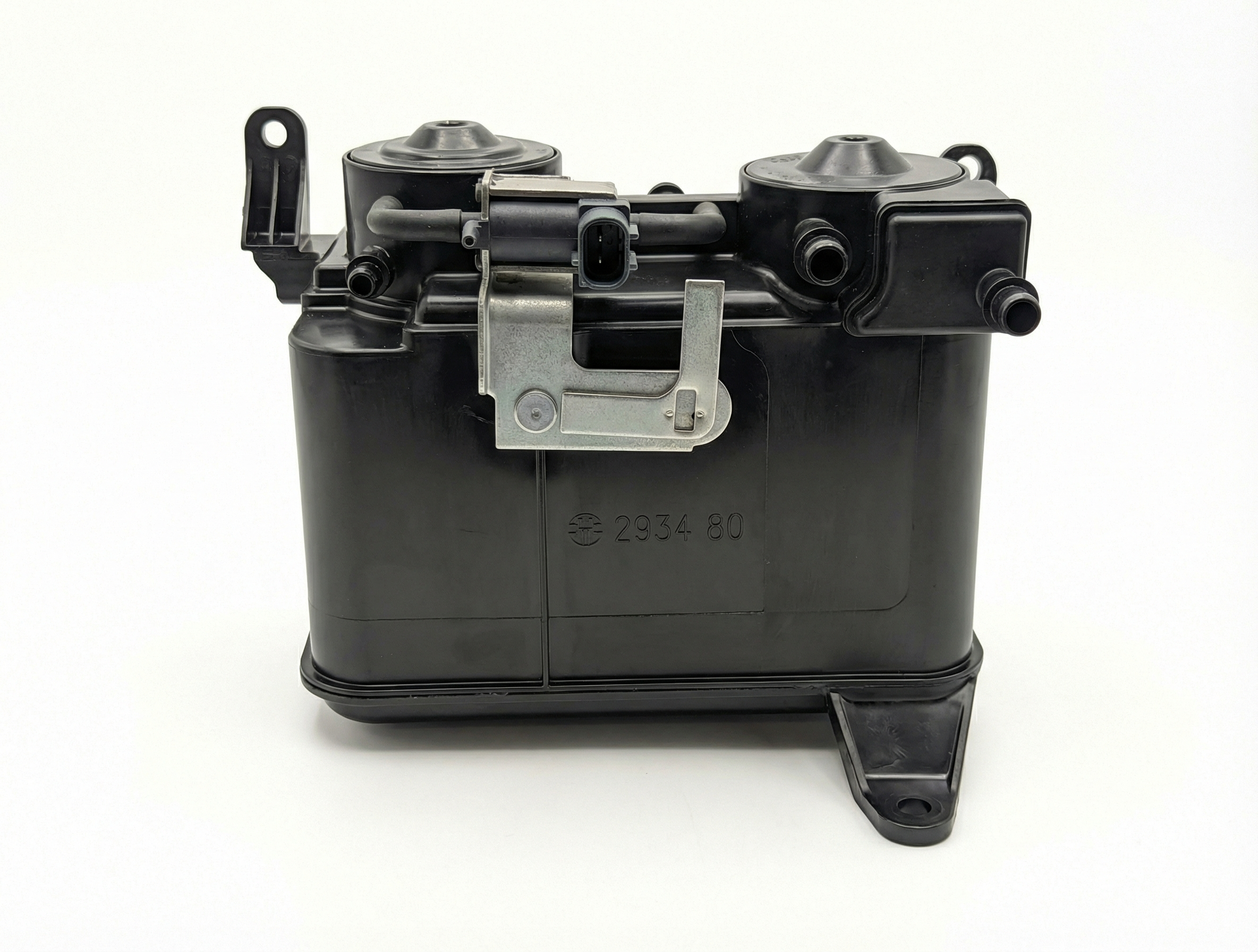
Est. part cost: $20-$40 - Cracked Charcoal Canister 🔴 High Probability → Shop Vapor Canister The plastic housing of the original charcoal canister, located near the spare tire, becomes brittle with age and develops hairline cracks, causing a leak. Overfilling the fuel tank can also saturate the canister with liquid fuel, damaging the charcoal media and leading to failure.
How to confirm: Visually inspect the canister for cracks, especially along the seams. A smoke test is the definitive method; smoke will be seen escaping from any cracks in the housing.
Typical fix: Replace the entire charcoal canister assembly. Some owners have attempted to repair cracks with epoxy, but replacement is the correct fix.
Est. part cost: $200-$350 - Faulty Vacuum Switching Valve (VSV) 🟡 Medium Probability The 3rd Gen 4Runner uses several VSVs for the EVAP system. The valves located on or near the charcoal canister are exposed to the elements and can fail from rust and corrosion, getting stuck open or closed. The purge VSV in the engine bay can also fail.
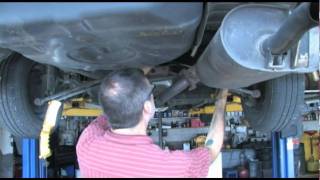
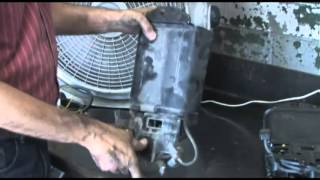
How to confirm: With a scan tool, you can command the valves to open and close while listening for a click. You can also test them by applying 12V directly to their terminals and listening for a click. A non-clicking valve is faulty. You can also check for vacuum passage with a hand pump. 🎬 Watch: How to test VSVs and replace the charcoal canister.
Typical fix: Replace the specific VSV that has failed.
Est. part cost: $40-$90 per valve - Cracked or Disconnected EVAP Hoses 🟡 Medium Probability Rubber hoses become brittle and crack over 20+ years. This is especially common for the small vacuum lines in the engine bay and the larger hoses connected to the charcoal canister.
How to confirm: Visually inspect all accessible EVAP system hoses for cracks, loose connections, or deterioration. A smoke test is the most effective way to find a small hose leak.
Typical fix: Replace the cracked section of hose.
Est. part cost: $5-$30 - Cracked Fuel Tank Overfill Check Valve ⚪ Low Probability → Shop Fuel Tank On 2000-2002 models in particular, a plastic check valve on top of the fuel tank is known to crack, causing a leak and fuel smell. This is a well-documented failure point in owner forums.
How to confirm: A strong fuel smell near the driver's side rear wheel is a key indicator. A smoke test will confirm the leak location, with smoke emerging from the top of the fuel tank. Access requires lowering the fuel tank.
Typical fix: Replace the fuel tank check valve (part #77390-35010) and its gasket. This requires dropping the fuel tank. 🎬 Watch: Step-by-step guide to replacing the fuel tank check valve.
Est. part cost: $60-$100
Rare But Worth Checking
- Rusted Fuel Tank Filler Neck: → Shop Fuel Tank A manufacturer service bulletin for other Toyota models of this era, TSB #EG022-06, notes that a defective fuel filler tube can trigger P0440, as cited in NHTSA ODI #10276828.
Diagnosis Steps
- Read the code with an OBD-II scanner. Note any other codes present, as P0441, P0442, or P0446 can help narrow the search.
- Inspect the gas cap. Ensure it is tight and the seal is not cracked. If it's an aftermarket cap, replace it with an OEM Toyota cap (Part #77310-48020) as the first and cheapest step.
- Clear the code and drive for a few days to see if it returns. If it does, proceed with further diagnosis.
- Visually inspect all vacuum lines in the engine bay related to the EVAP system, particularly those around the intake manifold and the purge VSV.
- Get under the vehicle and visually inspect the charcoal canister (located near the spare tire) for any visible cracks in its plastic body. Pay close attention to the seams.
- Inspect the rubber hoses connected to and surrounding the canister for cracks or loose fittings.
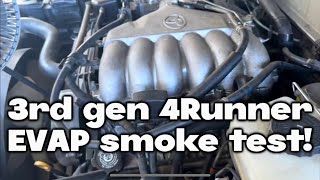
- If no obvious issues are found, perform a smoke test. A mechanic can do this, or DIY kits are available. Introduce smoke into the EVAP test port in the engine bay. Look for smoke from the gas cap, canister, hoses, or from above the fuel tank (indicating the check valve). 🎬 See how to properly hook up a smoke machine for testing.
- If no leaks are found, test the functionality of the VSVs (purge valve, vent valve, bypass valve) using a scan tool with bidirectional controls or by applying 12V power and listening for a click.
Parts You'll Likely Need
- Gas Cap
(OEM #77310-48020)— The most common and easiest fix. The original seal wears out, and aftermarket caps often don't seal properly on these vehicles.
Trusted brands: Toyota (OEM)
OEM price range: $25-$40
Aftermarket price range: $10-$20 - Charcoal Canister Assembly
(OEM #77740-35481 (superseded by 77740-35482, verify with VIN))— The plastic housing is a very common failure point, developing cracks that cause a system leak.
Trusted brands: Toyota (OEM), Denso
OEM price range: $250-$350
Aftermarket price range: $150-$250 - Fuel Tank Overfill Check Valve
(OEM #77390-35010)— A known failure point on 2000-2002 models, this plastic valve on top of the tank cracks, causing a leak and often a fuel smell.
Trusted brands: Toyota (OEM)
OEM price range: $60-$80
Aftermarket price range: $40-$60 - EVAP Vacuum Switching Valve (VSV)
(OEM #90910-12271 (Purge VSV, verify with VIN))— These electronic valves control vapor flow and can get stuck or fail electronically, especially the ones mounted on the canister.
Trusted brands: Toyota (OEM), Dorman
OEM price range: $70-$100
Aftermarket price range: $30-$50
Related Codes That Often Appear With This One
- P0441 — Incorrect Purge Flow. This often appears with P0440 and points towards a faulty purge valve (VSV) or a blockage in the system. NHTSA ODI #10735783 notes this combination of codes during emissions inspections.
- P0442 — EVAP System Small Leak Detected. This code may appear alongside P0440 if the computer's test detects a leak that it categorizes as small. The root causes are the same.
- P0446 — EVAP System Vent Control Circuit Malfunction. This points more specifically to a problem with the vent valve or its circuit, which is often part of the charcoal canister assembly or a nearby VSV. NHTSA ODI #11171743 describes a vehicle displaying both P0440 and P0446 accompanied by a slight smell.
Technical Service Bulletins (TSBs) & Recalls
- While no TSB is specific to the 1996-2002 4Runner for P0440, Toyota TSB EG013-03 addresses P0440, P0441, and P0446 on other models from the era (like Camry and Solara) due to a faulty Canister Closed Valve VSV. This indicates a pattern of VSV failures across Toyota's lineup during this period. Additionally, NHTSA ODI #10354544 notes that failures represented by codes P0440, P0441, and P0442 have been reported across various Toyota models built from the late 1990s through the early 2000s.
Platform-Specific Known Issues
- On 2001-2002 models, the Check Engine Light for an EVAP fault is often accompanied by the VSC and TRAC OFF lights, which can be alarming but is normal behavior for the system.
- Overfilling the fuel tank (continuing to pump after the nozzle clicks off) is a known way to flood the charcoal canister with liquid fuel, causing permanent damage and triggering P0440.
- The fuel tank overfill check valve (P/N 77390-35010) is a particularly common failure on 2000-2002 models, causing a leak on top of the fuel tank that requires dropping the tank to repair.
Mechanic-Grade Diagnostic Values
- EVAP VSV (Purge Valve, Canister Close Valve, etc.) Coil Resistance — expected: 30 - 34 Ω at 68°F (20°C). Failure: A reading outside of this range, or an open circuit (infinite resistance), indicates a faulty valve coil.
- Fuel Tank Pressure Sensor Voltage (via Scan Tool) — expected: Approximately 3.3V with the gas cap off (atmospheric pressure). Voltage should decrease as vacuum is applied and increase as pressure is applied.. Failure: Voltage that is stuck high (e.g., 5V) or low (e.g., 0V), or does not change when pressure/vacuum is applied to the tank.
Hidden / Shadow Codes Worth Checking
- Mode $06, Test ID $39 (TID $39): This monitor test specifically checks the EVAP system for large leaks. A failure here is the direct trigger for code P0440. (see via A scan tool capable of reading Mode $06 data. The tool will display the test ID, a measured value, and the min/max allowable limits. If the measured value is outside the limits, the test fails.)
Scan Tool Commands That Help
- Toyota Techstream: Active Test: 'Activate the VSV for EVAP Control' — This command allows you to manually open and close the purge VSV to check for an audible click and to see if it holds vacuum, confirming its mechanical and electrical operation without removing it from the vehicle.
- Toyota Techstream: Utility: 'Evaporative System Check' — This automated test sequences the EVAP valves and monitors the fuel tank pressure sensor to check the entire system's integrity. It can confirm if a leak is present and if a repair was successful.
- Advanced OBD-II Scanner (e.g., Launch, Autel, Snap-on): EVAP System Test / Vent Solenoid Command — Many professional-grade scanners offer bidirectional controls to command the vent and purge solenoids ON or OFF. This is essential for performing a smoke test, as you need to command the vent valve closed to seal the system.
Wiring & Ground Locations
- Engine Control Module (ECM) — Behind the right side of the dashboard, accessible by removing the glove box.. The ECM is the source of the 12V command signal for the EVAP VSVs. A faulty driver in the ECM could prevent a valve from operating, though this is a rare failure.
- Ground Point G112 — On the left side of the engine.. This is a potential ground point for engine-bay components. A corroded or loose ground here could cause intermittent electrical issues for sensors and solenoids, including the purge VSV.
- Ground Point G200 — Located in the left kick panel area.. This is a major body ground point. While not directly tied to the rear-mounted EVAP components, poor grounding here can cause a host of strange electrical issues.
Real Owner Repair Stories
- Reddit user in r/4Runner (2001 4Runner SR5 4WD 3.4L V6) — Persistent P0440 code for over a year, smell of gas around the rear of the truck after highway driving.
❌ Tried (didn't work) Replacing the gas cap, even lubricating the new seal.
✅ What actually fixed it The user ultimately found the fix by replacing the original, brittle vacuum hoses in the engine bay and ensuring the intake tubing was clean and tightly reassembled. This suggests that multiple small, age-related vacuum leaks were combining to trigger the large leak code. - YouTube video from 'tonennorcal' (2001 4Runner 3.4L) — P0440 and P0442 codes.
❌ Tried (didn't work) Initial visual inspection did not reveal the leak.
✅ What actually fixed it After a smoke test, a leak was traced to the top of the fuel tank. The final repair was replacing the cracked fuel tank overfill check valve, a common issue on 2000-2002 models that requires dropping the fuel tank for access.
"I Checked Everything" — The Actual Cause
- A common scenario is passing a smoke test (which uses low pressure) but still having a leak under vacuum. The most frequent cause for this on the 3rd Gen 4Runner is a cracked fuel tank overfill check valve on top of the fuel tank (2000-2002 models). While a smoke test *should* reveal this, the leak can be very difficult to see without dropping the tank slightly, and the smell of fuel is often a better indicator. A technician might perform a smoke test, see nothing from the canister or lines, and miss the true source on top of the tank.
OEM Part Supersession History
77740-35481→77740-35482— Standard part revision and update by Toyota.
Heads up: While the parts may look similar, there were variations in canister design and valve placement throughout the generation. Always verify the correct part number with the vehicle's VIN.
Model Year Variations Within This Range
- 1996-2000: The charcoal canister and some associated VSVs were located in the engine bay on earlier models.
- 2001-2002: The charcoal canister assembly was moved to the rear of the vehicle, underneath the body near the spare tire. This newer, box-style canister is the one most commonly associated with cracking.
- 2000-2002: These model years are particularly susceptible to a cracked fuel tank overfill check valve (P/N 77390-35010) on top of the fuel tank, which was not a common failure point on earlier years.
Diagnostic Flowchart
Real Owner Stories
Aggregated from forums and TSBs cited above. Mileages and costs reflect what owners reported in those sources.
2001 Toyota 4Runner 2WD
Symptoms: Check engine light with P0440 and P0442, gas smell coming from under the car.
What fixed it: Replaced the fill check valve on top of the gas tank after a Toyota dealership ran a smoke machine test.
Cost: $90
Source hint: 96'-02' Toyota 4Runner P0440 Fill Check valve replacement - YouTube
2001 Toyota 4Runner Limited
Symptoms: P0440 and P0442 codes, smelled like gas by the rear driver side after driving for a bit.
What fixed it: Replaced the charcoal canister and the fuel check valve. Dropping the gas tank was required to access the valve.
Cost: $60-$80
Source hint: Reddit r/3rdGen4Runner
Related OBD-II Codes
Frequently Asked Questions
Why are my VSC and TRAC OFF lights on along with the Check Engine Light for P0440?
I keep getting P0440 after replacing my gas cap. What should I do?
Is there a TSB for the P0440 code on my 1996-2002 4Runner?
I smell raw fuel near the rear driver's side wheel. What is the most likely cause?
Can overfilling my gas tank cause the P0440 code?
Will EVAP parts from a Toyota Tacoma fit my 4Runner to fix this code?
Helpful Videos

Used OEM Parts in Stock
New Aftermarket Parts Available


The information in this article is provided for general reference and educational purposes only. Vehicle specifications, procedures, and part compatibility can vary by production date, trim level, and region. Always consult your vehicle's factory service manual and verify part numbers before purchasing or performing repairs. Safety-critical components such as airbags, seat belts, and braking systems should be installed by a qualified professional.
- Toyota 4Runner:
- 🧭 Diagnostic Flowchart
- 🎬 Helpful Videos
- 🛍️ Shop This Part
- What's Unique About the 1996-2002 Toyota 4Runner
- Symptoms You May Notice
- Most Likely Causes
- Rare But Worth Checking
- Diagnosis Steps
- Parts You'll Likely Need
- Related Codes That Often Appear With This One
- Technical Service Bulletins (TSBs) & Recalls
- Platform-Specific Known Issues
- Mechanic-Grade Diagnostic Values
- Hidden / Shadow Codes Worth Checking
- Scan Tool Commands That Help
- Wiring & Ground Locations
- Real Owner Repair Stories
- "I Checked Everything" — The Actual Cause
- OEM Part Supersession History
- Model Year Variations Within This Range
- Real Owner Stories
- 2001 Toyota 4Runner 2WD
- 2001 Toyota 4Runner Limited
- Related OBD-II Codes
- Frequently Asked Questions
- 🎟️ Get 5% Off