

P0440 on 2002-2006 Toyota Camry: EVAP System Malfunction Causes and Fixes
For a 2002-2006 Camry, code P0440 is most often caused by a loose gas cap or a failed Vacuum Switching Valve (VSV) near the charcoal canister. Always check the gas cap first, but be prepared to replace a VSV, which is a common failure documented in Toyota service bulletins. The specific part is often the Canister Closed Valve (CCV) VSV, part number 90910-12276 (superseded by 90910-TC001).
- Always check the gas cap first; ensure it's tight and the seal is in good condition.
- If the gas cap isn't the issue, the most likely culprit on a 2002-2006 Camry is a failed Vacuum Switching Valve (VSV), especially if you also have codes P0441 or P0446.
- The two main VSVs to check are the purge valve in the engine bay and the canister closed valve near the charcoal canister at the rear of the car.
- Avoid replacing the expensive charcoal canister unless it is confirmed to be cracked (via a smoke test) or you are certain the valves attached to it are faulty and not sold separately.
- An OEM gas cap is strongly recommended, as aftermarket versions can have sealing problems that continue to trigger the code.
What's Unique About the 2002-2006 Toyota Camry
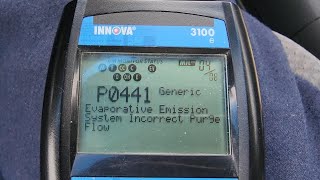
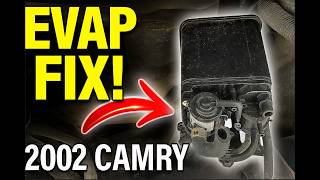
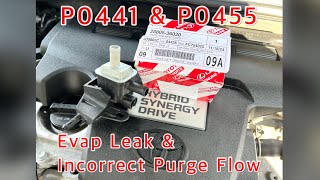
On this generation of Camry (XV30), the EVAP system has a known weakness with its Vacuum Switching Valves (VSVs). Toyota issued a Technical Service Bulletin (TSB EG013-03) for 2000-2003 models that specifically identifies an inoperative Canister Closed Valve (CCV) VSV as a frequent cause for P0440, P0441, and P0446. 🎬 Watch: How to diagnose and fix these three common codes. This valve is located at the rear of the car, mounted on or very near the charcoal canister, where it is exposed to the elements. While a gas cap is always the first suspect, owners of these Camrys should be aware that these small valves are a very common point of failure.
Symptoms You May Notice
- Check Engine Light is on
- A faint fuel odor may be noticeable in some cases
- Hearing a 'whoosh' of air when opening the gas cap may be absent if there is a large leak.
- Replacing the charcoal canister when only a small, inexpensive VSV attached to it has failed. Always test the VSVs before condemning the entire canister assembly.
- Replacing the gas cap with a cheap aftermarket version that doesn't seal properly, leading the technician to believe the cap was not the issue.
Most Likely Causes
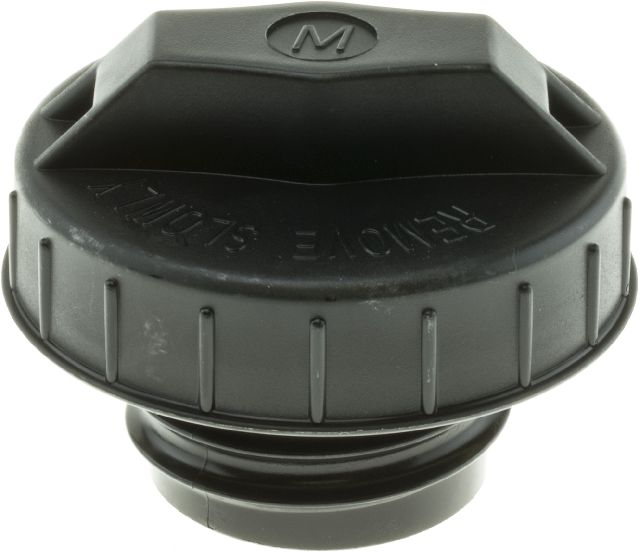
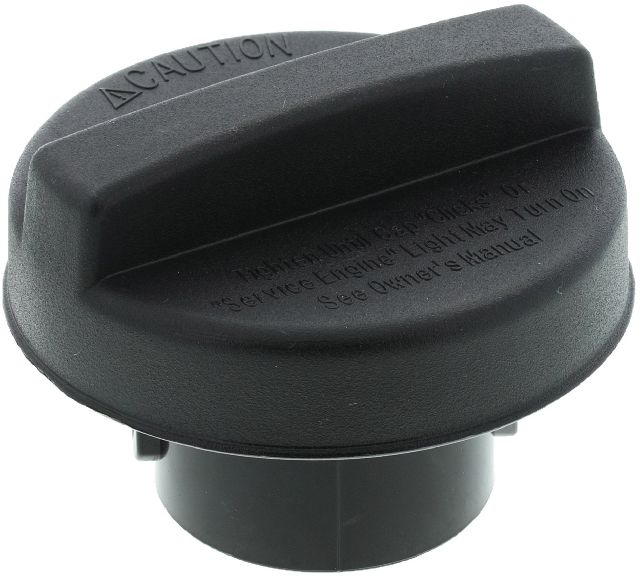
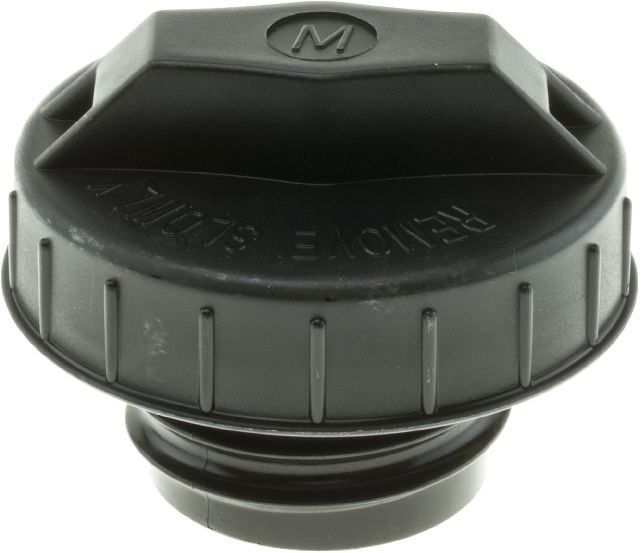
- Loose, Damaged, or Incorrect Gas Cap 🔴 High Probability → Shop Fuel Tank Cap This is the most common cause for P0440 on any vehicle. The rubber O-ring on the cap can dry out, crack, or get dirty, preventing a proper seal. Aftermarket caps are a frequent source of problems.
How to confirm: Ensure the cap is tightened until it clicks multiple times. Remove it and inspect the rubber seal for any cracks, stiffness, or debris. A hissing sound when opening the cap after the car has sat for a while is often a sign the cap and system are holding pressure correctly.
Typical fix: Clean the seal and filler neck opening, or replace the gas cap. Using an OEM (Original Equipment Manufacturer) cap is highly recommended as some aftermarket caps do not seal correctly, a point frequently made in owner forums.
Est. part cost: $20-$50 - Failed Canister Closed Valve (CCV) Vacuum Switching Valve (VSV) 🔴 High Probability This is a documented common failure point for this Camry generation, as confirmed by Toyota TSB EG013-03 for 2000-2003 models. The valve, located near the rear charcoal canister, gets stuck or fails electrically due to age and exposure.
How to confirm: The valve is typically located on or near the charcoal canister at the rear of the vehicle. It can be tested with a hand vacuum pump to see if it holds vacuum correctly when 12V is applied and released. An advanced scan tool can also perform an active test to command the valve on and off, during which you should hear a click.
Typical fix: Replace the faulty VSV. It is a small, relatively inexpensive part held on by a bolt with two vacuum lines and an electrical connector. The OEM part is 90910-12276, which has been superseded by part number 90910-TC001.
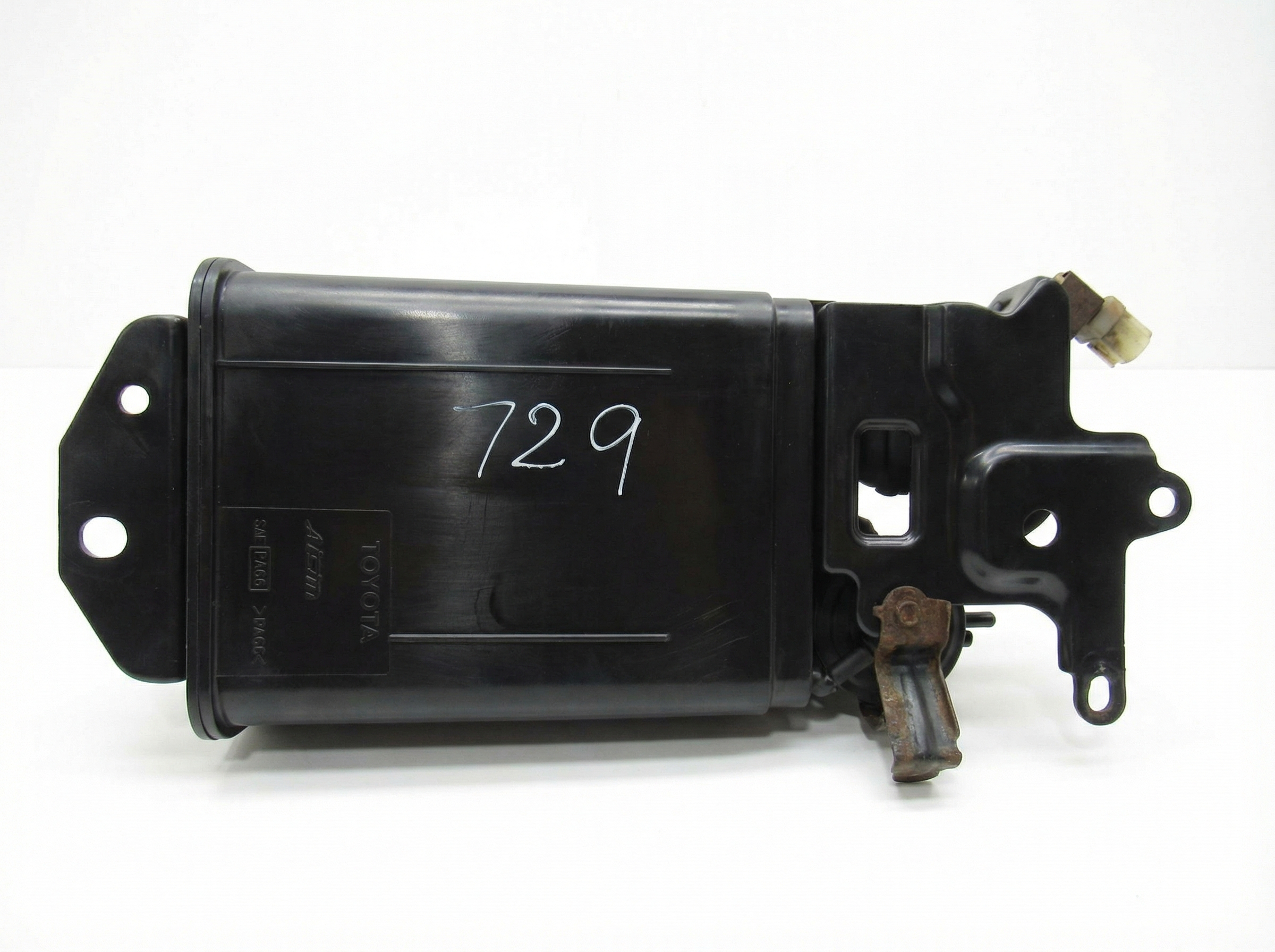
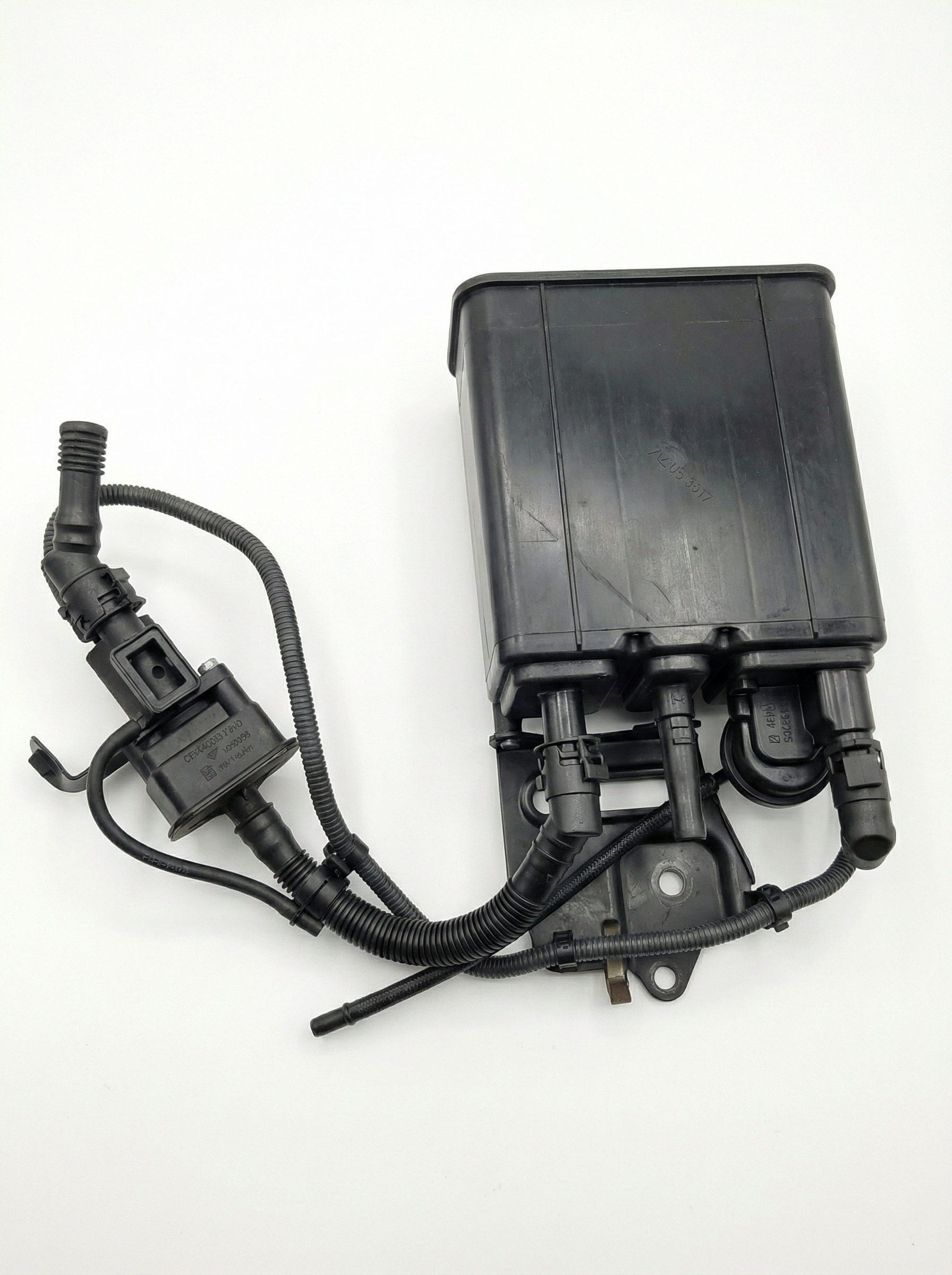
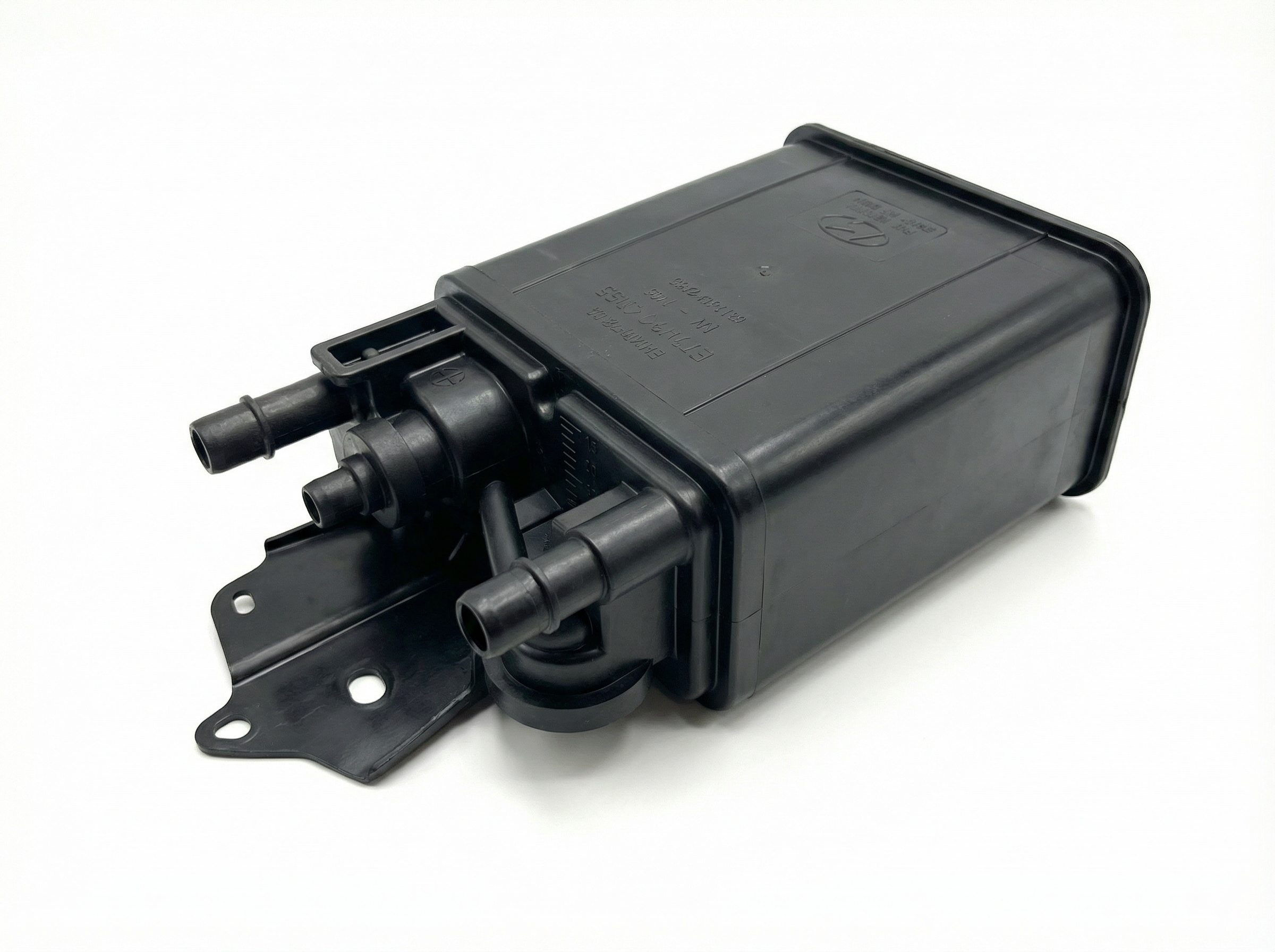
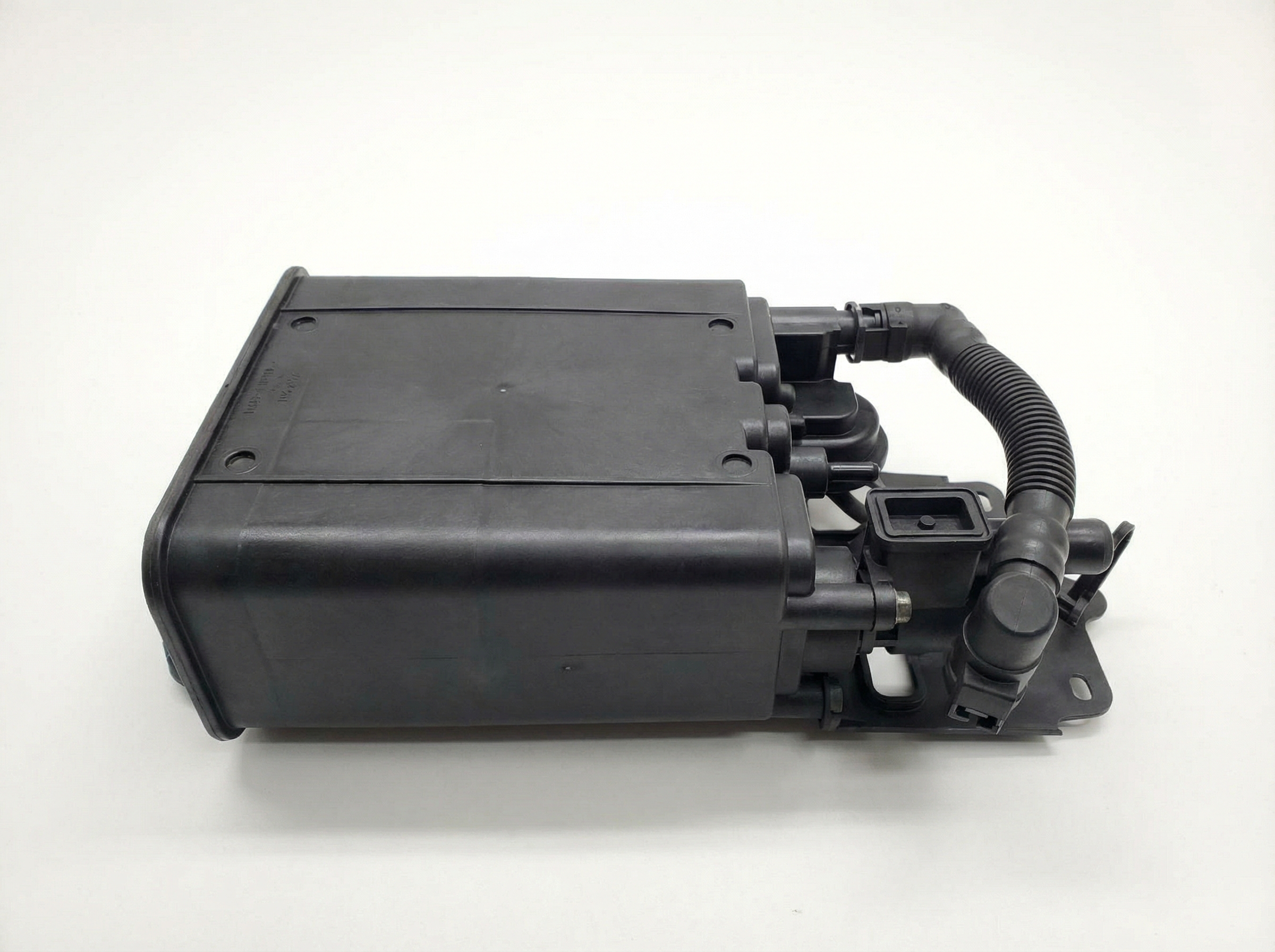
Est. part cost: $40-$90 - Cracked or Leaking Charcoal Canister 🟡 Medium Probability → Shop Vapor Canister The plastic housing of the canister can become brittle and crack over time due to age and exposure to the elements. It can also be damaged by road debris or become saturated with fuel from repeatedly overfilling the gas tank (topping off after the pump clicks).
How to confirm: A visual inspection may reveal cracks in the canister body. A smoke test is the most effective method, as smoke will visibly escape from any cracks in the canister or its connections.
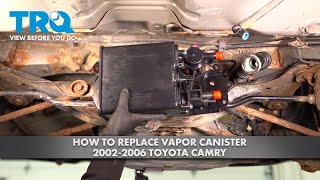
Typical fix: Replace the entire charcoal canister assembly. This is a more involved repair that may require lowering the rear subframe and/or exhaust for access. 🎬 Watch this step-by-step guide to replacing the charcoal canister.
Est. part cost: $350-$550 - Cracked or Disconnected EVAP Hoses 🟡 Medium Probability
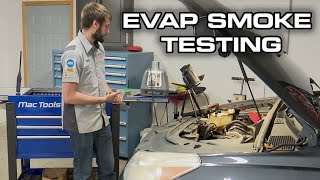
How to confirm: Visually inspect all accessible EVAP hoses, from the engine bay (around the air filter housing and purge valve) to the canister in the rear, for any signs of cracking, brittleness, or disconnection. The definitive method is to perform a smoke test, which will force smoke through the system and make even tiny leaks visible. 🎬 See how to perform a professional EVAP smoke test.
Typical fix: Replace the damaged section of hose and secure it with clamps.
Est. part cost: $10-$50
Rare But Worth Checking
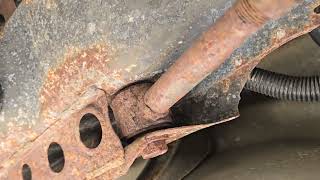
- Rusted Fuel Filler Neck: → Shop Fuel Filler Neck In regions where road salt is used, the metal fuel filler neck can rust through, creating a leak that will trigger P0440. If you notice rust around the gas cap area, inspect the entire neck carefully, as this is a known issue on older Toyotas.
- Faulty Purge Valve (VSV in Engine Bay): → Shop Vapor Canister While less common than the canister-mounted VSV for this code, the purge valve located in the engine compartment (often on the air filter box) can also fail and cause a P0440. It can be tested in the same manner as the other VSV.
- Cracked Fuel Tank Vent Valve: → Shop Fuel Tank A difficult-to-diagnose issue is a crack in the plastic fuel tank vent valve assembly, which sits on top of the fuel tank. One owner documented this failure on video, showing a hairline crack that was only found after dropping the gas tank. This should be considered a last resort after all other components have been checked.
Diagnosis Steps
- Read the codes: Use an OBD-II scanner to confirm P0440 and check for any other related codes like P0441 or P0446.
- Inspect the Gas Cap: Remove the gas cap. Check for a 'click' when tightening. Inspect the rubber seal for cracks, dirt, or damage. Clean the seal and the filler neck rim. If in doubt, replace it with an OEM part.
- Clear Codes and Drive: After checking the cap, clear the codes and drive for a few days to see if the light returns. If it does, proceed to the next steps.
- Visual Inspection: Inspect all visible EVAP hoses in the engine bay and under the car near the charcoal canister (located at the rear, near the gas tank). Look for obvious cracks, loose connections, or damage. Pay special attention to the small vacuum lines near the air filter housing.
- Test the VSVs: Locate and test the Canister Closed Valve (CCV) VSV near the canister and the purge valve in the engine bay. The purge valve is often mounted directly to the air filter box. Use a scan tool's active test function or a hand vacuum pump with a 12V power source to verify their operation.
- Perform a Smoke Test: If the cause is still not apparent, the most reliable way to find a leak is to have a smoke test performed. A machine injects non-toxic smoke into the EVAP system, and any leaks will be revealed by escaping smoke. This is the best way to find hairline cracks in hoses, the canister, or the fuel filler neck.
Parts You'll Likely Need
- Gas Cap
(OEM #77300-33070)— This is the most frequent and easiest fix. The seal wears out over time, causing a leak. An OEM cap is recommended for a perfect seal.
Trusted brands: Toyota Genuine
OEM price range: $25-$40
Aftermarket price range: $15-$30 - Canister Closed Valve / Vacuum Switching Valve (CCV VSV)
(OEM #90910-12276 (superseded by 90910-TC001))— This specific valve is a known weak point on this Camry generation and is cited in a Toyota TSB as the likely cause when P0440, P0441, and P0446 appear together.
Trusted brands: Toyota Genuine, Denso
OEM price range: $60-$90
Aftermarket price range: $30-$60 - Charcoal Canister Assembly
(OEM #77740-06110)— If the canister body is cracked or internally blocked (often from overfilling the fuel tank), it must be replaced. This is a more expensive and labor-intensive repair.
Trusted brands: Toyota Genuine
OEM price range: $400-$550
Aftermarket price range: $150-$300
Related Codes That Often Appear With This One
- P0441 — Incorrect Purge Flow. This code often appears with P0440 and P0446 and strongly points towards a faulty Vacuum Switching Valve (VSV), as noted in Toyota's TSB EG013-03.
- P0446 — Evaporative Emission Control System Vent Control Circuit Malfunction. This code also frequently accompanies P0440 and points to an issue with the vent valve or its circuit, often the Canister Closed Valve (CCV) VSV on this model.
Technical Service Bulletins (TSBs) & Recalls
- EG013-03 (September 2003): Addresses M.I.L. 'ON' with codes P0440, P0441, or P0446 on 2000-2003 Camry, Solara, Avalon, and Sienna models due to an inoperative Canister Closed Valve VSV. The TSB provides a procedure for testing the valve with a diagnostic tester and replacing it if it fails.
Platform-Specific Known Issues
- A detailed YouTube video by user 'soulor' shows a complete diagnosis for P0440 on an older Camry. After replacing the gas cap and purge solenoid with no success, the owner dropped the fuel tank and found a hairline crack in the plastic fuel tank vent valve assembly on top of the tank, which was the ultimate cause of the leak.
- In a thread on CamryForums, a user with a 2000 Camry reported getting codes P0440/441/446. They had replaced the canister VSV four years prior to fix the same issue. This time, replacing the VSV did not work. After testing all VSVs and checking for a hissing gas cap (which was present, indicating a good seal),
Mechanic-Grade Diagnostic Values
- Vacuum Switching Valve (VSV) Coil Resistance — expected: 50 - 100 ohms. Failure: An open circuit (infinite resistance) or a short (near zero resistance) indicates a failed coil.
- EVAP System Pressure Hold Test — expected: After applying 13.5–15.5 in.Aq (approx. 0.5 PSI) of pressure to the service port, the pressure should remain above 7.7–8.8 in.Aq for 2 minutes.. Failure: A pressure drop below the specified range indicates a leak in the system.
- Purge Port Vacuum Test — expected: When applying 3.43 kPa (1.01 in.Hg) of vacuum to the purge port with the air inlet port closed, the vacuum should not decrease.. Failure: A decrease in vacuum indicates a leak within the charcoal canister assembly.
Hidden / Shadow Codes Worth Checking
- Mode $06 Data: This is not a specific code, but a diagnostic mode accessible by advanced scan tools. It shows the results of the ECU's self-tests for individual emissions components before a full Diagnostic Trouble Code (like P0440) is set. A 'Fail' for a specific EVAP monitor ID (e.g., for gross leak or small leak test) can point to an emerging problem even if the Check Engine Light isn't on yet. (see via An OBD-II scanner that supports Mode $06 data display.)
- P043E, P043F, P2401, P2402, P2419, P2420: These are more specific EVAP codes that may accompany P0440 on models with more advanced (often PZEV) systems. They point to precise failures like 'Reference orifice high-flow' (P043F), 'Leak detection pump stuck OFF' (P2401), or 'Vent valve stuck closed' (P2419), providing much more diagnostic direction than the general P0440. (see via A professional scan tool like Toyota Techstream or equivalent.)
Scan Tool Commands That Help
- Toyota Techstream (or equivalent professional scanner): Evaporative System Check / EVAP SYS CHECK — This utility forces the EVAP system to run its entire self-test sequence on demand, which normally only runs automatically after a 5+ hour 'cold soak'. It's used to verify a repair or to trigger a fault without waiting overnight. The test can take 8-15 minutes.
- Toyota Techstream (or equivalent professional scanner): Active Test: 'PURGE VSV' or 'EVAP VSV(ALONE)' — This command allows the technician to manually open and close the purge solenoid. It's used to verify the solenoid is functioning electrically (you should hear a click) and mechanically (by checking for vacuum at the valve's port with a gauge).
Wiring & Ground Locations
- Canister Closed Valve (CCV) / Vent Valve — On or near the charcoal canister, located above the rear subframe, near the fuel tank.. This is a common failure point. For testing, apply 12V power to the Black-Red wire and ground to the Violet wire to energize the solenoid.
- Purge Valve (VSV for EVAP) — In the engine bay, often mounted to the air filter housing or nearby firewall.. This valve controls the flow of vapors to the engine. For testing on the 4-cylinder model, the two wires are both Black-White. Apply 12V and ground to test its operation.
- EVAP System Harness — Runs from the engine bay along the underbody to the rear of the vehicle to connect to the canister assembly.. The portion of the harness near the rear wheels and subframe is exposed to road debris, moisture, and corrosion, which can lead to damaged wires or connectors for the canister valves and sensors.
Real Owner Repair Stories
- YouTube user 'soulor' (Older Toyota Camry (exact year not specified, but consistent with XV30 generation)) — Persistent P0440 Check Engine Light.
❌ Tried (didn't work) Replacing the gas cap, Inspecting engine bay hoses, Replacing purge solenoid and other electronic components from a junkyard
✅ What actually fixed it After all other checks failed, the owner dropped the fuel tank and found a hairline crack in the plastic fuel tank vent valve assembly located on top of the tank. Replacing this valve assembly resolved the code. - Reddit user 'hourlyslugger' comment in r/MechanicAdvice (2002 Toyota Camry V6 (1MZ-FE)) — Owner reported P0440, P0441, P0446 and a strong fuel smell after fill-ups.
❌ Tried (didn't work) Replacing gas cap, Replacing charcoal canister
✅ What actually fixed it The story highlights a critical misdiagnosis path. A commenter pointed out the V6 engine has at least FOUR distinct VSVs in the EVAP system, each with a different function and part number (VSV for Pressure Switching, VSV for CCV, VSV for EGR, VSV for EVAP). The actual fix requires identifying which specific VSV has failed, as simply 'replacing the VSV' is too vague and often leads to replacing the wrong part.
"I Checked Everything" — The Actual Cause
- A smoke test may not reveal a hairline crack on the top of the fuel tank (e.g., in the vent valve assembly), as it is extremely difficult to see without dropping the tank. The leak may only appear under specific pressure or flex conditions not replicated by a standard smoke test.
- In some cases with code P0446, the system can pass a static smoke test (meaning it holds pressure) but still set the code. This happens when the ECM's diagnostic logic fails. The ECM commands the vent valve to open and looks for a corresponding drop in tank pressure. If the valve is mechanically sticky and doesn't open quickly enough, the ECM won't see the expected pressure change and will flag a fault, even though the valve isn't technically 'leaking'.
When the Usual Fixes Don't Work
- While the gas cap and canister-area VSV are the most common fixes, a significant number of owners have fixed the code only after addressing much rarer issues. One owner had to replace a cracked fuel tank vent valve, which required dropping the entire fuel tank to access and diagnose. This demonstrates that if the common fixes don't work, the root cause can be a hard-to-find, high-labor component rather than a simple electronic failure.
OEM Part Supersession History
90910-12276→90910-TC001— Standard part revision by Toyota.
Heads up: None found. 90910-TC001 is the direct, compatible replacement for 90910-12276.
Model Year Variations Within This Range
- 2002-2006: The V6 engine (1MZ-FE) has a much more complex EVAP system than the 4-cylinder (2AZ-FE). The V6 uses multiple, distinct VSVs for different functions (purge, canister close, pressure switching), making diagnosis more complicated. A P0440 on a V6 requires more specific testing to determine which of the several valves has failed.
- 2002-2003: Toyota TSB EG013-03, which points to a faulty Canister Closed Valve (CCV) VSV as a common cause for P0440/P0441/P0446, officially covers the 2002-2003 model years of this generation, suggesting the issue was most prevalent on the earlier models of the XV30 platform.
Diagnostic Flowchart
Other Known Issues on This Vehicle
Issues unrelated to this code that are worth knowing about as an owner of this generation:
- Excessive Oil Consumption (2.4L 2AZ-FE Engine) 🔴 High — Common, particularly in 2006-2011 models but can affect earlier years. Toyota issued TSB T-SB-0094-11 and a warranty enhancement program (ZE7) due to defective piston rings. Onset can be as early as 60,000 miles. (Ref: T-SB-0094-11, T-SB-0158-14)
- Stripped Cylinder Head Bolt Threads (2.4L 2AZ-FE Engine) 🔴 High — A known, but less frequent, design flaw where the aluminum block's head bolt threads can strip, especially after an overheating event. It is a significant and costly repair requiring thread inserts (e.g., Time-Sert or NS300L kit). Often occurs between 100,000-200,000 miles.
- Transmission Hesitation or Failure (U241E 4-Speed Auto) 🟠 Medium — Owners of 2002-2003 models, particularly, report issues like harsh shifting, hesitation, and outright failure. Problems like a 2-3 shift flare are common and often related to valve body wear. Issues often surface after 100,000 miles.
- Faulty Oxygen (Air/Fuel Ratio) Sensors 🟡 Low — Failure of the front A/F sensor is a common issue on this generation, leading to poor engine performance and reduced fuel economy.
Used vs. New Parts: Buying Guide for This Vehicle
When a used part is the smart pick: For large, non-electronic components, a used part can be a cost-effective option. A complete charcoal canister assembly, fuel filler neck, or EVAP hoses from a low-mileage, non-rust-belt donor vehicle can be a good value, provided they are inspected for cracks and corrosion before purchase.
Donor-vehicle mileage cap: roughly under 80000 miles for the part to have meaningful remaining life.
What to inspect on the donor part:
- Check for date codes on plastic parts; newer is better.
- Inspect plastic for chalkiness or brittleness, which indicates UV/heat degradation.
- Look for rust on any metal components, especially the filler neck and canister brackets.
- Ensure all hose connection points are intact and not cracked.
- Ask about the donor vehicle's history (e.g., accident, flood, region of operation).
OEM-only on this vehicle (don't cheap out):
- Gas Cap: Aftermarket gas caps are a notorious cause of EVAP codes. Always use a genuine Toyota cap to ensure a proper seal.
Aftermarket brands forum-validated for this vehicle:
- Denso: Denso is an original equipment manufacturer for Toyota, and their VSVs and sensors are considered a reliable alternative to dealer parts.
- Aisin: Another OEM supplier for Toyota, Aisin parts are also considered a high-quality option.
Brands owners have reported issues with on this vehicle:
- Unbranded / 'white-box' electronic sensors and valves: Cheaper electronic components from unknown brands have a high failure rate and can make diagnosis more difficult. It is better to invest in a known-good brand or OEM part.
Real Owner Stories
Aggregated from forums and TSBs cited above. Mileages and costs reflect what owners reported in those sources.
2000 Toyota Camry
Symptoms: Check engine light with codes P0440, P0441, and P0446; gas cap produced a hissing sound when opened (indicating a seal was present).
What fixed it: Replacing leaking vacuum hoses in the engine compartment after testing the VSVs and gas cap.
Source hint: CamryForums.com thread 'P0440/441/446 - VSV's are ok'
Older Toyota Camry
Symptoms: P0440 code remained after replacing the gas cap and purge solenoid.
What fixed it: Replacing the plastic fuel tank vent valve assembly on top of the fuel tank after finding a hairline crack.
Source hint: YouTube video by user 'soulor'
2006 Toyota Camry 2.4L — ~60000 miles
Symptoms: Excessive oil consumption.
What fixed it: Toyota warranty enhancement program (ZE7) for defective piston rings.
Source hint: TSB T-SB-0094-11 / Warranty Enhancement ZE7
Related OBD-II Codes
Frequently Asked Questions
Does TSB EG013-03 apply to my 2005 Toyota Camry?
Should I use an aftermarket gas cap to fix my P0440 code?
Where is the Canister Closed Valve (CCV) VSV located on this generation of Camry?
Can overfilling my gas tank cause the P0440 code on my Camry?
What is the specific Toyota part number for the VSV mentioned in the TSB?
Is there a common engine issue on the 2006 Camry that I should be aware of while fixing emissions codes?
Helpful Videos
Used OEM Parts in Stock

New Aftermarket Parts Available


The information in this article is provided for general reference and educational purposes only. Vehicle specifications, procedures, and part compatibility can vary by production date, trim level, and region. Always consult your vehicle's factory service manual and verify part numbers before purchasing or performing repairs. Safety-critical components such as airbags, seat belts, and braking systems should be installed by a qualified professional.
- Toyota Camry:
- 🧭 Diagnostic Flowchart
- 🎬 Helpful Videos
- 🛍️ Shop This Part
- What's Unique About the 2002-2006 Toyota Camry
- Symptoms You May Notice
- Most Likely Causes
- Rare But Worth Checking
- Diagnosis Steps
- Parts You'll Likely Need
- Related Codes That Often Appear With This One
- Technical Service Bulletins (TSBs) & Recalls
- Platform-Specific Known Issues
- Mechanic-Grade Diagnostic Values
- Hidden / Shadow Codes Worth Checking
- Scan Tool Commands That Help
- Wiring & Ground Locations
- Real Owner Repair Stories
- "I Checked Everything" — The Actual Cause
- When the Usual Fixes Don't Work
- OEM Part Supersession History
- Model Year Variations Within This Range
- Other Known Issues on This Vehicle
- Used vs. New Parts: Buying Guide for This Vehicle
- Real Owner Stories
- 2000 Toyota Camry
- Older Toyota Camry
- 2006 Toyota Camry 2.4L — ~60000 miles
- Related OBD-II Codes
- Frequently Asked Questions
- 🎟️ Get 5% Off