

P0440 on 2000-2003 Toyota Prius: EVAP System Malfunction Causes and Fixes
For a 2000-2003 Prius, code P0440 most often means you have a loose or worn-out gas cap. Start by replacing the gas cap for about $25. If that doesn't work, the issue is likely a leak in an EVAP hose or a failure of the charcoal canister assembly, which is a more complex and expensive repair.
- Start with the simplest fix: inspect and likely replace the gas cap (OEM Part # 77300-47010).
- If a new gas cap doesn't solve the problem, carefully inspect all EVAP system hoses for cracks and brittleness.
- Do not habitually top off your fuel tank after the pump clicks off; this can damage the expensive charcoal canister.
- If the issue persists, a professional smoke test is the most efficient way to find the leak, which is often related to the charcoal canister assembly (OEM Part # 77740-47030).
What's Unique About the 2000-2003 Toyota Prius
The first-generation Prius (2000-2003, model NHW11) uses a unique and complex EVAP system centered around a fuel tank with an internal, flexible bladder. This design, intended to minimize the air space where fuel can evaporate, involves several specific valves like a Canister Closed Valve (CCV) and a Purge Flow Switching Valve. Due to the vehicle's age, components like the gas cap seal, rubber hoses, and even small hose clamps are prone to drying out, cracking, or rusting, leading to the leaks that trigger this code. The system's complexity can make pinpointing the exact leak source more challenging than on conventional vehicles.
Symptoms You May Notice
- Check Engine Light is on
- A faint smell of fuel (in some cases).
- No 'whoosh' sound of pressure releasing when opening the gas cap after the car has been sitting (indicates the system is not holding a seal).
- Replacing the oxygen (O2) sensors. O2 sensors are not part of the EVAP system and will not cause a P0440 code.
- Replacing the purge valve (VSV) for P0440 alone. While a faulty purge valve can cause EVAP issues, it more commonly triggers specific flow-related codes like P0441 or P0446.
Most Likely Causes
- Loose or Worn Gas Cap 🔴 High Probability → Shop Fuel Tank Cap The rubber O-ring or gasket on the gas cap hardens, cracks, and loses its sealing ability over 20+ years. This is the most common and simple cause for an EVAP leak.
How to confirm: First, ensure the cap is tight (clicks multiple times). Inspect the rubber seal on the cap for any visible cracks, stiffness, or damage. If the seal looks worn, it's best to replace it. An OEM cap is strongly recommended as aftermarket caps can have sealing issues.
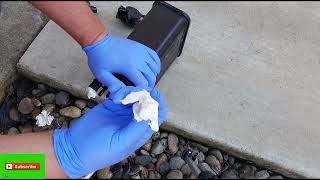
Typical fix: Replace the gas cap with a genuine Toyota part. After replacement, you may need to drive for a day or two for the Check Engine Light to turn off on its own, or clear the code with an OBD-II scanner. 🎬 Watch: How to diagnose and clear P0440 codes on Toyotas.
Est. part cost: $20-$40 - Cracked or Disconnected EVAP Hoses 🟡 Medium Probability The vehicle's age makes the rubber and plastic vacuum and vapor hoses under the hood and near the fuel tank brittle and susceptible to cracking or breaking. Forum users have specifically reported rusted-through hose clamps near the canister assembly causing leaks that were otherwise hard to find.
How to confirm: Visually inspect all accessible EVAP hoses, especially around the engine's purge valve (VSV) and the charcoal canister in the rear of the vehicle. Look for obvious cracks, holes, or loose connections. A smoke test is the most effective way to find small, hard-to-see leaks.
Typical fix: Replace the damaged section of hose and any faulty clamps. Hoses can be purchased by the foot or as pre-formed OEM parts.
Est. part cost: $10-$50 - Failed Charcoal Canister Assembly 🟡 Medium Probability → Shop Vapor Canister This assembly is complex, containing the canister itself, the Canister Closed Valve (CCV), and other solenoids. The plastic housing can crack over time, or the internal valves can fail and get stuck open or closed. Repeatedly overfilling the gas tank past the first click can also flood the canister with liquid fuel, ruining the charcoal media and causing premature failure.
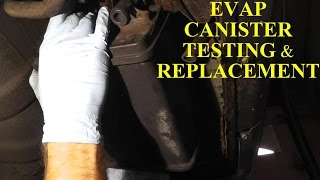
How to confirm: Diagnosis is difficult without a bi-directional scan tool to command the valves to open and close. A smoke test is often required to confirm if the canister housing or an integrated valve is leaking. The canister is located near the fuel tank, and may require removing a heat shield for access. 🎬 Watch this helpful guide on testing and replacing the canister.
Typical fix: Replacement of the entire charcoal canister assembly is usually required, as many of the valves are integrated into it. This is a costly part.
Est. part cost: $400-$500 (OEM)
Rare But Worth Checking
- Faulty Vapor Pressure Sensor: The sensor itself can fail and send incorrect readings to the computer, making it think there is a leak when there isn't one. This is less common than an actual leak. On the Gen 1 Prius, it is located on the fuel tank assembly.
- Corroded Fuel Filler Neck: → Shop Fuel Filler Neck A TSB (EG051-06) was issued for 2003-2004 Corolla/Matrix models for this exact issue, where rust on the filler neck prevents the gas cap from sealing properly. While not officially for the Prius, owners have reported smoke test failures from this area, indicating it's a possible, though less common, cause due to age and rust.
- Failed Fuel Tank Rollover Valve: → Shop Fuel Tank This valve is located on top of the fuel tank and prevents fuel from spilling in a rollover accident. On older Toyotas, the plastic or gasket material can crack, creating a significant EVAP leak. This is difficult to diagnose as it requires dropping the fuel tank to inspect. A smoke test may show smoke or wetness around the top of the tank.
Diagnosis Steps
- Read the code with an OBD-II scanner to confirm P0440 is present.
- Check the gas cap. Remove it, inspect the seal for cracks or damage, and listen for a 'whoosh' of air. No sound may indicate a pre-existing leak. Reinstall the cap, ensuring it clicks several times. If the seal is suspect, replace the cap with an OEM part. Clear the code and drive to see if it returns.
- Perform a visual inspection. Check all visible EVAP hoses in the engine bay and around the rear of the car near the fuel tank for any obvious cracks, disconnections, or signs of aging. Pay special attention to small hose clamps, which can rust away.
- If the cap and visible hoses are fine, the next step is a professional smoke test. A mechanic will inject non-harmful smoke into the EVAP system via the service port. Smoke will escape from any leaks, pinpointing the exact location of the fault, whether it's a pinhole in a hose, a cracked canister, or a faulty valve.
- Based on the smoke test results, test the specific component. If the leak points to a valve (like the purge VSV or canister vent valve), it can be tested with a scan tool or by applying 12V voltage to see if it operates correctly.
- If no leaks are found, the Vapor Pressure Sensor may be faulty and require testing, which typically involves checking its voltage output against specified values.
Parts You'll Likely Need
- Fuel Tank Cap
(OEM #77300-47010)— This is the most common failure point. The seal degrades over time, causing a leak that the system detects. It's the easiest and cheapest part to replace first. Using a genuine Toyota part is highly recommended to ensure a proper seal.
Trusted brands: Toyota (OEM), Stant, Gates
OEM price range: $25-$40
Aftermarket price range: $15-$25 - Vapor Canister Assembly
(OEM #77740-47030)— This assembly contains multiple potential failure points, including the canister housing itself (cracks), the charcoal media (saturation from over-filling the tank), and integrated valves/solenoids that can fail electrically or mechanically. It is often the culprit if the gas cap and hoses are not the issue.
Trusted brands: Toyota (OEM), Dorman
OEM price range: $400-$500
Aftermarket price range: $250-$350
Related Codes That Often Appear With This One
- P0441 — P0441 indicates 'Incorrect Purge Flow'. If the cause of the P0440 leak is a stuck-open or stuck-closed purge valve (VSV), the system may also detect incorrect flow and set P0441.
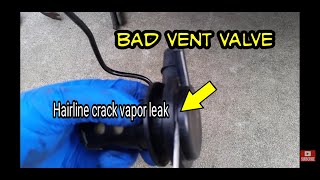
- P0446 — P0446 indicates a 'Vent Control Circuit Malfunction'. Since the vent valve (often part of the canister assembly) is a key component tested during the EVAP monitor, a fault here can accompany a general system malfunction code like P0440. 🎬 See how a bad vent valve causes these engine lights.
Technical Service Bulletins (TSBs) & Recalls
- EG051-06: While not directly for the Prius, this TSB for 2003-2004 Corolla and Matrix models details how corrosion on the fuel filler neck can cause various EVAP codes (including P0440) by preventing a proper gas cap seal. This is a relevant failure mode for any older Toyota.
Platform-Specific Known Issues
- Rusted EVAP Hose Clamps: A user on PriusChat with a 2001 model chased a P0440 code and, after inspecting hoses, discovered a small hose clamp on the EVAP system near the canister had completely rusted apart, causing a leak. Replacing the clamp resolved the issue. This highlights the need to inspect not just the hoses but also the small hardware securing them, especially in regions where road salt is used.
Mechanic-Grade Diagnostic Values
- Vapor Pressure Sensor Signal Voltage (Key On, Engine Off, Gas Cap Off) — expected: Approx. 3.2 - 3.33 Volts. Failure: Voltage is significantly different, or does not change during testing.
- Vapor Pressure Sensor Signal Voltage (During Active Purge Test) — expected: Drops to approx. 1.60 - 1.90 Volts. Failure: Voltage does not drop when the purge valve is commanded open, indicating a blockage or faulty valve.
- Vapor Pressure Sensor Supply Voltage — expected: 5V Reference. Failure: No voltage or significantly lower voltage indicates a wiring or ECM issue.
Scan Tool Commands That Help
- Toyota Techstream or equivalent bidirectional scanner: Active Test: Evaporative System Check — This function allows a technician to force the EVAP leak test to run on command, which normally only occurs hours after the vehicle is shut off. It is essential for verifying a repair without waiting.
- Toyota Techstream or equivalent bidirectional scanner: Active Test: Control the VSV (for EVAP) — This command manually opens and closes the purge valve (VSV). While monitoring the Vapor Pressure Sensor data, a technician can confirm if the valve is functioning electrically and mechanically by observing the expected drop in system pressure (vacuum).
- Toyota Techstream or equivalent bidirectional scanner: Active Test: Control the VSV (for CCV) — This command manually operates the Canister Closed Valve (CCV). This is used to seal the EVAP system during a test. A technician can command it closed, then apply smoke or vacuum to see if the valve is sealing properly.
- Toyota Techstream or equivalent bidirectional scanner: Active Test: Control the VSV (for Pressure Switching) — This command toggles the vapor pressure sensor's input between the fuel tank and the charcoal canister. By commanding the switch and watching for a pressure change, a technician can verify the valve is working and not stuck.
Wiring & Ground Locations
- General Ground Points — Throughout the vehicle, often designated with a two-character code (e.g., 'BO') on wiring diagrams.. A poor ground for the ECM or any EVAP system solenoid can cause erratic behavior or complete failure of the component, leading to false codes. In Toyota wiring manuals, ground points are typically indicated by a specific symbol and a code that corresponds to a location chart.
- EVAP Component Connectors — Connectors for the purge valve are in the engine bay, while connectors for the canister, vent valve, and pressure sensor are in the rear of the vehicle, near the fuel tank.. Corrosion or damage to the connectors or wiring leading to the EVAP components is a common point of failure. A visual inspection for damage and electrical testing for continuity and voltage at these connectors is a key diagnostic step.
OEM Part Supersession History
77740-47030→Discontinued— End of life for the part.
Heads up: This specific charcoal canister assembly for the 2001-2003 Prius is no longer manufactured by Toyota. Owners must source a New Old Stock (NOS) part, a used part from a donor vehicle, or an aftermarket equivalent. Canisters from later generations (e.g., 77740-47050) are not compatible.
Model Year Variations Within This Range
- 2000-2003: No significant variations to the EVAP system or its common failure points have been documented within this model year range. All vehicles belong to the NHW11 platform and share the same core components and design.
Diagnostic Flowchart
Other Known Issues on This Vehicle
Issues unrelated to this code that are worth knowing about as an owner of this generation:
- High Voltage (HV) Traction Battery Failure 🔴 High — Very common as the vehicles age. The original NiMH batteries have a lifespan of 8-12 years or 150,000-200,000 km before significant degradation or module failure occurs.
- Multi-Function Display (MFD) Screen Failure 🟠 Medium — Widespread issue where the central touch screen becomes unresponsive or fails completely, losing access to climate, audio, and energy monitor functions. Failures can occur at any time due to age.
- Electric Power Steering (EPS) Malfunction 🔴 High — Complaints of intermittent loss of power steering or steering wheel shaking, particularly at low speeds. A recall was issued for the steering linkage nuts. Steering torque sensors can also fail, though this is less common. (Ref: NHTSA Recall Campaign 11V304000)
- Transaxle Failure 🔴 High — Less common than battery issues, but catastrophic when it occurs. Failures of the motor-generators (MG1/MG2) or other internal transaxle components have been reported.
- Brake System Issues (ABS Actuator/ECU) 🟠 Medium — Problems with the ABS control unit and sensors have been documented, leading to warning lights and potential changes in brake feel.
Used vs. New Parts: Buying Guide for This Vehicle
When a used part is the smart pick: The charcoal canister assembly (77740-47030) is a primary candidate for a used part, as new OEM units are discontinued. Sourcing a complete assembly from a low-mileage, dry-climate donor car can be a cost-effective solution.
Donor-vehicle mileage cap: roughly under 120000 miles for the part to have meaningful remaining life.
What to inspect on the donor part:
- Inspect the plastic housing of the canister for any visible cracks or stress marks.
- Check for significant rust on any integrated metal brackets or valve bodies.
- Ensure all hose connection nipples are intact and not broken or brittle.
- If possible, use a multimeter to check the resistance of any integrated solenoids to ensure they are not open-circuited.
OEM-only on this vehicle (don't cheap out):
- Fuel Tank Cap - Aftermarket caps are a frequent source of sealing problems, leading to repeat P0440 codes. It is strongly recommended to use a genuine Toyota cap (77300-47010) to ensure a proper seal.
Real Owner Stories
Aggregated from forums and TSBs cited above. Mileages and costs reflect what owners reported in those sources.
2001 Toyota Prius 1NZ-FXE
Symptoms: The owner was chasing a P0440 code and performed a visual inspection of the EVAP hoses.
What fixed it: Replacing a small hose clamp near the charcoal canister that had completely rusted apart.
Source hint: PriusChat - 'P0440 code shortly after fill-up' (priuschat.com/threads/p0440-code-shortly-after-fill-up.88044/)
2001 Toyota Prius 1NZ-FXE
Symptoms: The vehicle displayed multiple EVAP codes (P0440, P0441, P0446) and underwent a professional smoke test.
What fixed it: The smoke test revealed a leak around the fuel filler neck, indicating a fault in the neck itself or its connection to the tank/canister.
Source hint: PriusChat - '2001 Prius: p0440, p0441, p0446' (priuschat.com/threads/2001-prius-p0440-p0441-p0446.129099/)
Related OBD-II Codes
Frequently Asked Questions
Does TSB EG051-06 apply to my 2000-2003 Toyota Prius?
Can I use an aftermarket gas cap to fix the P0440 code on my Prius?
Is there a recall for the steering issues on my 2001 Prius?
Why don't I hear a 'whoosh' sound when I open my gas tank?
Could overfilling my gas tank cause the P0440 code?
Where is the charcoal canister located on the 2000-2003 Prius?
Helpful Videos

The information in this article is provided for general reference and educational purposes only. Vehicle specifications, procedures, and part compatibility can vary by production date, trim level, and region. Always consult your vehicle's factory service manual and verify part numbers before purchasing or performing repairs. Safety-critical components such as airbags, seat belts, and braking systems should be installed by a qualified professional.
- Toyota Prius:
- 🧭 Diagnostic Flowchart
- 🎬 Helpful Videos
- What's Unique About the 2000-2003 Toyota Prius
- Symptoms You May Notice
- Most Likely Causes
- Rare But Worth Checking
- Diagnosis Steps
- Parts You'll Likely Need
- Related Codes That Often Appear With This One
- Technical Service Bulletins (TSBs) & Recalls
- Platform-Specific Known Issues
- Mechanic-Grade Diagnostic Values
- Scan Tool Commands That Help
- Wiring & Ground Locations
- OEM Part Supersession History
- Model Year Variations Within This Range
- Other Known Issues on This Vehicle
- Used vs. New Parts: Buying Guide for This Vehicle
- Real Owner Stories
- 2001 Toyota Prius 1NZ-FXE
- 2001 Toyota Prius 1NZ-FXE
- Related OBD-II Codes
- Frequently Asked Questions
- 🎟️ Get 5% Off