

P0440 on 2004-2009 Toyota Prius: EVAP System Malfunction Causes and Fixes
On a 2004-2009 Toyota Prius, code P0440 usually points to a cracked charcoal canister or a loose gas cap. While the gas cap is a cheap first check, the canister is a more common failure point on this specific vehicle, often requiring replacement of the entire assembly. Expect to pay between $350 and $600 for a replacement canister, with labor adding a few hundred dollars more if done professionally.
- P0440 on a Gen 2 Prius means there's a leak in the emissions system.
- Before complex diagnostics, always check that the gas cap is tight and its seal is intact.
- The most common failure is a cracked charcoal canister assembly, which is a more involved and expensive repair.
- A smoke test is the best method to accurately find the leak source.
What's Unique About the 2004-2009 Toyota Prius
The second-generation Prius (2004-2009) uses a unique flexible fuel bladder inside a rigid metal tank. While this design has its own quirks, like an occasionally inaccurate fuel gauge, the most common source for a P0440 code on this platform is a cracked charcoal canister, which is located above the fuel tank. Its location makes it susceptible to damage and corrosion, and the plastic housing can develop cracks over time, causing a system leak. The canister assembly also houses valves and sensors that are not sold separately, often forcing a complete replacement for a single failed component.
Symptoms You May Notice
- Check Engine Light is on.
- A faint smell of fuel, particularly around the rear of the vehicle. An owner report in NHTSA ODI #11171743 noted the check engine light appearing alongside a slight smell of fuel when codes P0440 and P0446 were present.
- In rare cases, irregularities with the fuel gauge reading after filling up have been anecdotally linked to EVAP system faults.
- Replacing the fuel tank bladder. The bladder itself is rarely the cause of a P0440 leak; the issue is almost always with an external component like the canister or gas cap. A bladder leak has its own specific diagnostic test procedure.
Most Likely Causes
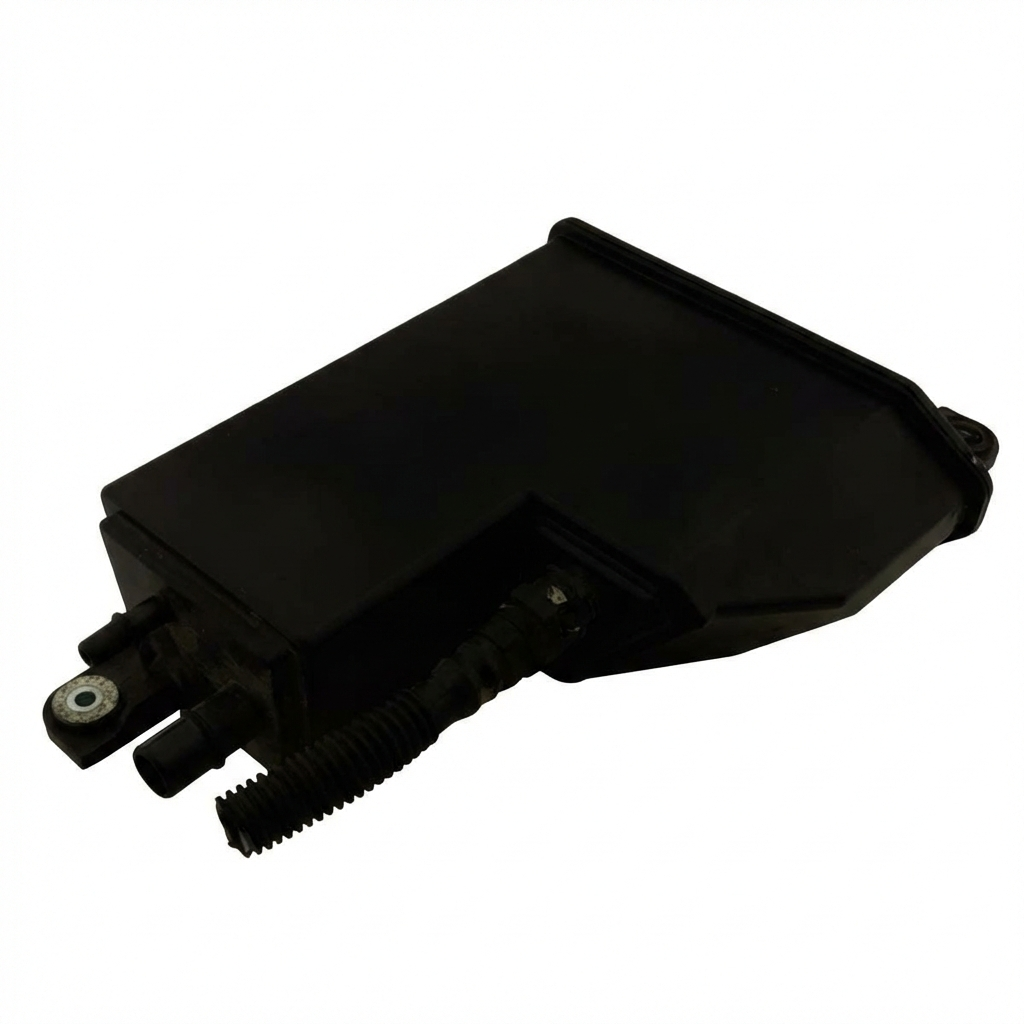
- Cracked or Failed Charcoal Canister Assembly 🔴 High Probability → Shop Vapor Canister Forum discussions and mechanic videos overwhelmingly point to the charcoal canister on the Gen 2 Prius as the most common failure point for P0440. The plastic housing can develop cracks, or the integrated components like the vapor pressure sensor or vent valve can fail. Since these parts are often not sold separately, the entire assembly must be replaced.
How to confirm: A smoke test is the most effective way to confirm a leak. A mechanic will introduce smoke into the EVAP system and look for where it escapes; on this Prius, it often escapes from cracks in the canister body itself or from attached hose nipples. If no leak is visible, the integrated vapor pressure sensor may have failed, which can also trigger P0440.
Typical fix: The charcoal canister assembly must be replaced. It is located above the rear passenger side of the fuel tank. Access can be difficult, sometimes requiring the fuel tank to be partially or fully lowered.
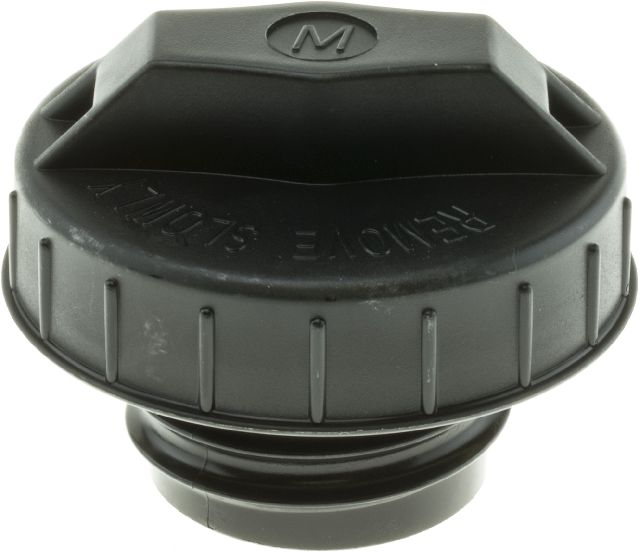
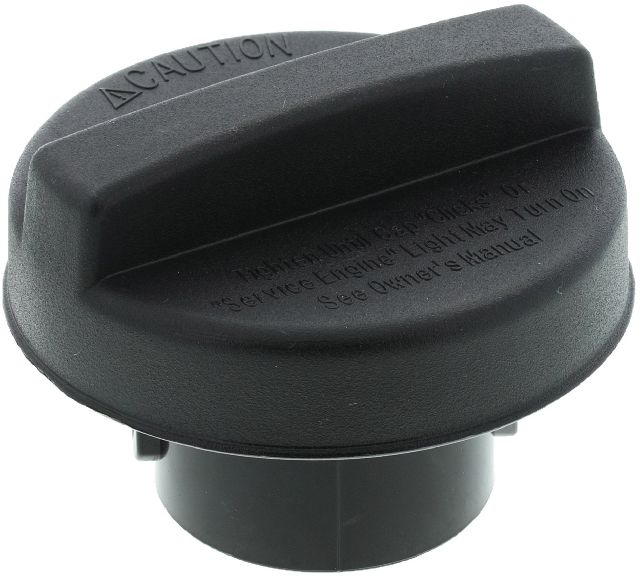
Est. part cost: $350-$600 - Loose or Faulty Gas Cap 🟡 Medium Probability → Shop Fuel Tank Cap This is a common cause for EVAP codes on all vehicles. The rubber O-ring on the cap can degrade over time, or the cap may simply not have been tightened correctly after refueling. It is always the first and cheapest part to check.
How to confirm: First, ensure the gas cap is tightened until it clicks. Clear the code and drive for a few days. If the light returns, inspect the cap's seal for cracks or damage. Replacing the cap with a new OEM part is an inexpensive diagnostic step.
Typical fix: Replace the gas cap with a new OEM or high-quality aftermarket part. Forum users often recommend sticking with an OEM cap to avoid compatibility issues.
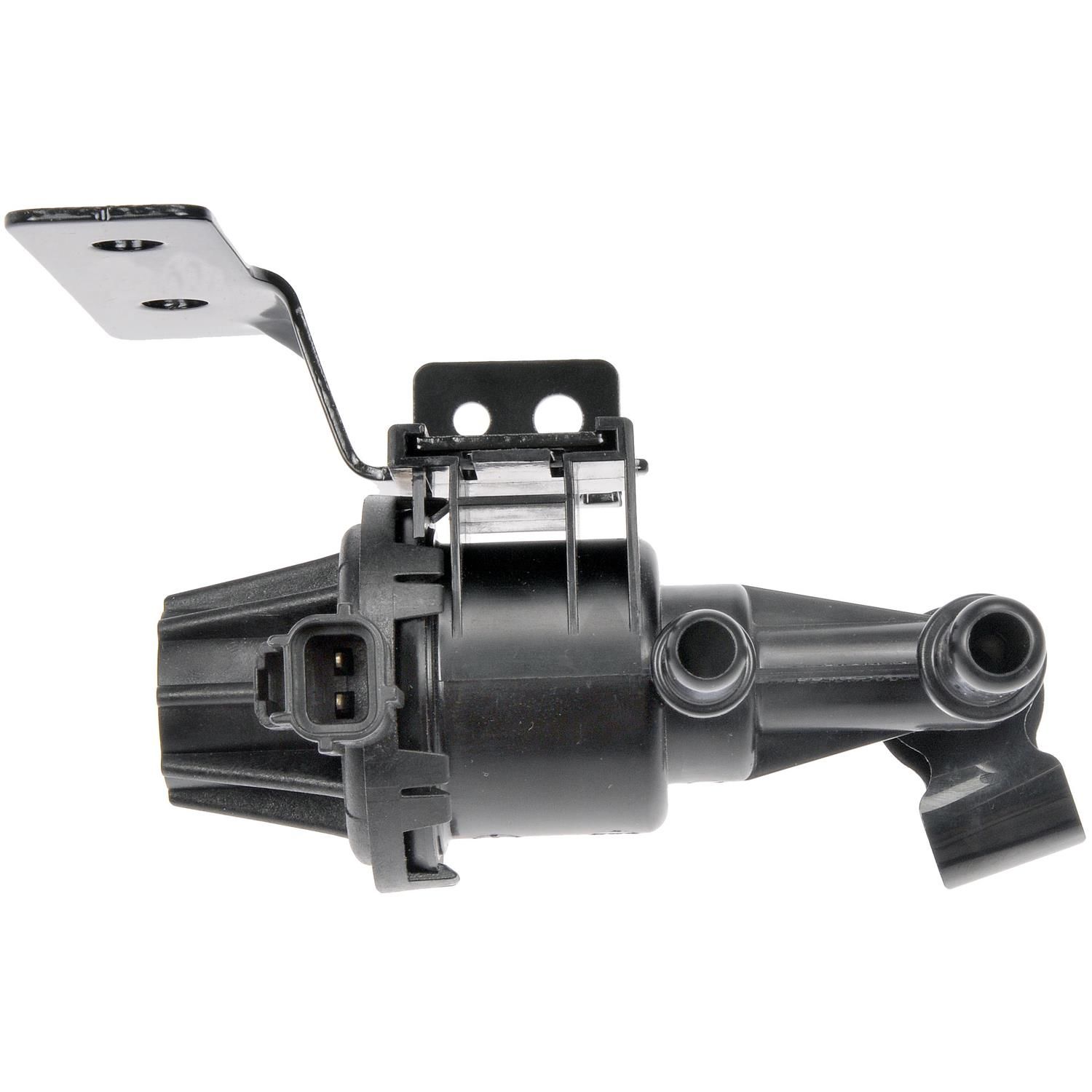
Est. part cost: $15-$40 - Failed Purge Valve / Vent Valve (VSV) ⚪ Low Probability → Shop Vapor Canister
How to confirm: The purge valve (VSV) is in the engine bay and can be tested by applying 12V to see if it clicks open and closed. The vent valve is typically integrated into the charcoal canister assembly on this model, making individual testing difficult. If a smoke test shows no leaks and the purge valve works, a faulty vent valve often necessitates replacing the whole canister.
Typical fix: Replace the faulty valve. The purge valve is an easy replacement in the engine bay. If the vent valve is the cause, the entire charcoal canister assembly usually needs to be replaced.
Est. part cost: $50-$150 for the purge valve; see canister cost if vent valve is the issue. - Cracked or Disconnected EVAP Hoses ⚪ Low Probability
How to confirm: Visually inspect all accessible EVAP hoses between the engine, canister, and fuel tank for cracks, brittleness, or loose connections. A smoke test will definitively identify any hose leaks.
Typical fix: Replace the damaged section of hose and secure the connections.
Est. part cost: $10-$50
Rare But Worth Checking
- Faulty Fuel Tank Pressure Sensor: → Shop Fuel Tank On the Gen 2 Prius, this sensor is integrated into the charcoal canister assembly. A failure of this sensor will trigger a P0440 code but requires replacing the entire canister as the sensor is not available separately from Toyota.
- Leaking Fuel Filler Neck: → Shop Fuel Filler Neck Rust or damage to the metal tube where you insert the gas nozzle can prevent the gas cap from sealing properly, causing a leak. While less common on the Prius, other Toyota models have seen similar issues; for instance, NHTSA ODI #10276828 references TSB #EG022-06 regarding fuel filler tube improvements for P0440.
Diagnosis Steps
- Check the gas cap. Ensure it is tight and the seal is not cracked or worn. If in doubt, replace it with an OEM cap, clear the code, and see if it returns.
- Visually inspect the EVAP system. Look for any obvious cracks or disconnected hoses, especially around the charcoal canister under the rear of the car and the purge valve in the engine bay.
- Perform a smoke test. This is the most reliable way to find the source of the leak. Introduce smoke into the EVAP test port (often a green cap in the engine bay) and watch for where it escapes. Pay close attention to the charcoal canister body and hose connections.
- Test the purge valve (VSV). This valve is located in the engine bay near the intake manifold. With the engine off, you can apply 12V power to its terminals to listen for a 'click', indicating it's not seized.
- Evaluate the charcoal canister. If no external leaks are found and the purge valve tests good, the fault is highly likely within the canister assembly (cracked housing, faulty integrated sensor, or stuck vent valve). Given the difficulty of access, many owners opt to replace the entire assembly at this point.
Parts You'll Likely Need
- Vapor Canister Assembly
(OEM #77740-47041 (supersedes 77740-47040))— This is the most frequent failure point for code P0440 on the 2004-2009 Prius. The plastic housing is known to crack, and the integrated sensors/valves can fail.
Trusted brands: Genuine Toyota, Aisan, Standard Motor Products, Dorman
OEM price range: $450-$600
Aftermarket price range: $250-$400 - Fuel Cap
(OEM #77300-52030)— A worn or loose gas cap is a common cause for all EVAP codes and is an easy and inexpensive first step in diagnosis.
Trusted brands: Genuine Toyota, Stant
OEM price range: $25-$40
Aftermarket price range: $15-$25 - Canister Purge Valve / Vacuum Switching Valve (VSV)
(OEM #90910-12276)— This valve, located in the engine bay, controls the flow of fuel vapors to the engine. If it sticks open or closed, it can trigger EVAP codes.
Trusted brands: Genuine Toyota, Denso, Standard Motor Products
OEM price range: $80-$120
Aftermarket price range: $40-$70
Related Codes That Often Appear With This One
- P0441 — Indicates incorrect purge flow, often pointing to a stuck purge valve (VSV) in the engine bay. NHTSA ODI #10735783 describes a vehicle failing emissions with a combination of P0440, P0441, and P0446.
- P0442 — Indicates a small leak was detected. While P0440 is a general or large leak fault, the root cause (like a cracked canister or bad gas cap) is often the same.
- P0455 — Specifically indicates a large leak was detected. Many vehicles use this instead of P0440, but on some Toyotas, they can appear together depending on the exact test that failed.
- P043E, P043F, P2401, P2402, P2419 — This cluster of codes points directly to a failure in the EVAP leak detection reference orifice or pump module, which is part of the charcoal canister assembly on the Gen 2 Prius. Seeing these codes strongly suggests the canister needs replacement.
Technical Service Bulletins (TSBs) & Recalls
- While no TSB is directly for P0440 on this model, TSB EG048-07 addresses other EVAP codes (P0441, P0446) on similar Toyota models by updating the ECU logic, highlighting Toyota's attention to EVAP system calibration during this era.
Platform-Specific Known Issues
- The fuel tank uses a flexible bladder design, which can cause the fuel gauge to be inaccurate, especially in cold weather or after filling up. This is generally unrelated to the P0440 code but is a well-documented quirk of this vehicle.
Documented NHTSA Reports
- NHTSA ODI #10354544: Reports that failures represented by codes P0440, P0441, and P0442 have been reported across various Toyota models built from the late 1990s through the mid-2000s, often linked to requirements limiting hydrocarbon emissions.
Mechanic-Grade Diagnostic Values
- Engine Bay Purge Valve (VSV) Coil Resistance — expected: Approximately 32 ohms at room temperature for OEM part 90910-12276.. Failure: An open circuit (infinite resistance), a short (near zero resistance), or readings significantly lower (e.g., 24-28 ohms) which may indicate a non-compliant aftermarket part.
- Vapor Pressure Sensor Voltage at Atmospheric Pressure — expected: 2.9 to 3.7 Volts with the system unsealed (e.g., gas cap off).. Failure: Voltage outside this range suggests a faulty sensor, which is integrated into the canister assembly.
- Vapor Pressure Sensor Voltage Under Vacuum/Pressure — expected: Voltage should drop to 1.3-2.1V under vacuum and increase to 4.2-4.8V under pressure.. Failure: If the sensor is stuck reading high voltage at all times, the ECU will incorrectly assume the system has high pressure and may set a P0440 code.
Scan Tool Commands That Help
- Toyota Techstream: Utility -> Evaporative System Check — This is a dealer-level automated test that forces the EVAP monitor to run without waiting for a 5-hour cold soak. It sequences through sealing the system, pulling a vacuum, and monitoring for decay, providing a definitive pass/fail result and often isolating the leak to a specific part of the system.
- Toyota Techstream: Active Test -> Activate the VSV for Evap Control — This command manually toggles the purge valve (VSV) in the engine bay. It's used to confirm if the valve clicks (is not seized) and to check for leaks through the valve by smoke testing when it's commanded closed.
- Toyota Techstream: Active Test -> Activate the VSV for CCV — This command manually operates the Canister Close Valve (Vent Valve) on the charcoal canister. This is essential for sealing the EVAP system during a smoke test to build pressure and find the source of a physical leak.
Wiring & Ground Locations
- Ground Point IC — Under the rear of the vehicle, near the fuel tank and charcoal canister assembly.. The charcoal canister assembly, which includes the integrated vent valve and vapor pressure sensor, relies on this ground. Corrosion from road salt and moisture is common in this area and can cause intermittent or total failure of the canister's electronic components, leading to P0440 and other EVAP codes.
- Charcoal Canister Connector — On the charcoal canister assembly, located above the rear passenger side of the fuel tank.. The connector provides power and ground to the integrated valves and sends the signal from the vapor pressure sensor. A visual inspection for corrosion or damage is crucial before condemning the canister. The vapor pressure sensor signal is the middle pin of the 3-pin connector.
Real Owner Repair Stories
- PriusChat Forum User (2005 Toyota Prius) — Persistent P0446 code (often related to P0440)
❌ Tried (didn't work) Replacement of all common EVAP components.
✅ What actually fixed it The final cause was a failed tank bypass valve (Part No. 77730-47030) located on top of the fuel tank. This part is extremely difficult to access, requiring the fuel tank to be lowered, making it a 'last resort' repair after all other possibilities are exhausted.
"I Checked Everything" — The Actual Cause
- If a smoke test reveals no leaks, the gas cap is good, and the purge valve tests okay, the most likely cause is an internal failure within the charcoal canister assembly. This could be a faulty, integrated vapor pressure sensor sending incorrect voltage readings, or a vent valve that is not sealing properly only when commanded by the ECU, even though it appears fine during a static test.
OEM Part Supersession History
77740-47040→77740-47041— Part revision by Toyota. The newer part is the correct service replacement.77300-52030→77300-06040— Part consolidation and design update by Toyota.
Heads up: The new part number is the correct service replacement and is fully compatible.
Model Year Variations Within This Range
- 2004-2005 vs. 2006-2009: The fuel tank design and EVAP system components/wiring differ between these two sub-generations. Notably, the 2006-2009 models include a leak detection pump as part of the canister assembly. Swapping major components like the fuel tank or canister assembly between these ranges will cause persistent diagnostic trouble codes due to incompatibility.
Diagnostic Flowchart
Other Known Issues on This Vehicle
Issues unrelated to this code that are worth knowing about as an owner of this generation:
- Combination Meter Failure 🔴 High — Very common, especially on 2004-2007 models. The dashboard display goes blank, which can prevent the car from being turned off or shifted properly. (Ref: Toyota issued a warranty enhancement (ZEE) for this issue, but it has since expired. Repair involves replacing a capacitor on the circuit board.)
- Inverter Coolant Pump Failure 🔴 High — A very common failure point. The pump cools the hybrid system's inverter; failure causes the car to overheat and shut down, displaying a master warning light. (Ref: Yes, Toyota issued a recall (NHTSA ID 12V536000) for this pump. However, even replaced pumps can fail due to age.)
- Brake Actuator Failure 🔴 High — Common at higher mileage. The electric pump in the ABS actuator wears out, leading to a loud, frequent buzzing noise from under the hood and eventually a loss of braking assist, accompanied by multiple warning lights. (Ref: Toyota offered a warranty enhancement program for this, but it had mileage and time limits that have expired for most vehicles.)
- Excessive Oil Consumption 🟠 Medium — Becomes more prevalent on higher-mileage examples (150k+ miles). Often attributed to piston rings getting stuck with carbon buildup. (Ref: No recall, but it is a widely discussed issue. Some owners report improvement after replacing the PCV valve or performing a 'piston soak' procedure.)
- Main Hybrid (HV) Battery Failure 🔴 High — Inevitable with age and mileage, typically after 10-15 years or 150,000-200,000 miles. Symptoms include poor fuel economy, reduced power, and the P0A80 trouble code.
- Inaccurate Fuel Gauge 🟡 Low — A well-known quirk related to the flexible fuel bladder design. The gauge may not read 'full' immediately after filling up or may drop from full prematurely. (Ref: No recall; considered a characteristic of the vehicle. Some owners report a dealer can perform a recalibration, but results vary.)
Used vs. New Parts: Buying Guide for This Vehicle
When a used part is the smart pick: For the charcoal canister assembly, a used part from a junkyard can be a cost-effective option, especially if it's from a low-mileage, rear-end collision vehicle (ensuring the canister area wasn't damaged). Given the high cost of a new OEM unit, this is a common DIY strategy.
Donor-vehicle mileage cap: roughly under 120000 miles for the part to have meaningful remaining life.
What to inspect on the donor part:
- Visually inspect the plastic housing for any hairline cracks, especially around the hose nipples and mounting tabs.
- Ensure all electrical connectors are intact and free of corrosion.
- If possible, find a donor vehicle from a dry, non-salt-belt climate to minimize the risk of corrosion on internal components and the ground point.
- Ask about the donor vehicle's history; avoid parts from cars that were junked for unknown engine/electrical issues.
OEM-only on this vehicle (don't cheap out):
- Fuel Cap: Aftermarket gas caps are notoriously problematic and a frequent cause of EVAP codes. Always use a genuine Toyota cap (OEM P/N 77300-52030 or its successor) for this specific repair.
Aftermarket brands forum-validated for this vehicle:
- Denso: For the engine bay purge valve (VSV), Denso is the original equipment manufacturer, and their aftermarket part is identical to the Toyota-branded one.
- Standard Motor Products (SMP): Generally considered a reliable alternative for valves and sensors if an OEM part is unavailable.
Brands owners have reported issues with on this vehicle:
- Dorman: While Dorman produces a replacement canister assembly, forum and user reviews are mixed. Some report success, while others experience premature failure or fitment issues. It is often considered a gamble compared to a used OEM part or a new Aisan/Toyota unit.
Real Owner Stories
Aggregated from forums and TSBs cited above. Mileages and costs reflect what owners reported in those sources.
2004-2009 Toyota Prius
Symptoms: A cluster of EVAP codes including P2401 and P043E; diagnosed as needing a new canister.
What fixed it: Replacement of the vapor canister assembly.
Source hint: PriusChat.com: Thread titled 'Vapor canister needs to be replaced' (2017)
Related OBD-II Codes
Frequently Asked Questions
Does TSB EG048-07 apply to my 2004-2009 Prius for code P0440?
Why is the charcoal canister so expensive to fix on this specific Prius?
Can I just replace the vent valve to fix P0440?
Is my inaccurate fuel gauge related to the P0440 code?
Where is the charcoal canister located on the 2004-2009 Prius?
Should I use an aftermarket gas cap to save money?
Helpful Videos
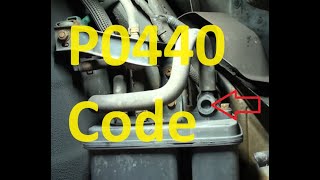
Used OEM Parts in Stock
New Aftermarket Parts Available


The information in this article is provided for general reference and educational purposes only. Vehicle specifications, procedures, and part compatibility can vary by production date, trim level, and region. Always consult your vehicle's factory service manual and verify part numbers before purchasing or performing repairs. Safety-critical components such as airbags, seat belts, and braking systems should be installed by a qualified professional.
- Toyota Prius:
- 🧭 Diagnostic Flowchart
- 🎬 Helpful Videos
- 🛍️ Shop This Part
- What's Unique About the 2004-2009 Toyota Prius
- Symptoms You May Notice
- Most Likely Causes
- Rare But Worth Checking
- Diagnosis Steps
- Parts You'll Likely Need
- Related Codes That Often Appear With This One
- Technical Service Bulletins (TSBs) & Recalls
- Platform-Specific Known Issues
- Documented NHTSA Reports
- Mechanic-Grade Diagnostic Values
- Scan Tool Commands That Help
- Wiring & Ground Locations
- Real Owner Repair Stories
- "I Checked Everything" — The Actual Cause
- OEM Part Supersession History
- Model Year Variations Within This Range
- Other Known Issues on This Vehicle
- Used vs. New Parts: Buying Guide for This Vehicle
- Real Owner Stories
- 2004-2009 Toyota Prius
- Related OBD-II Codes
- Frequently Asked Questions
- 🎟️ Get 5% Off