

P0440 on 2006-2012 Toyota RAV4: EVAP System Malfunction Causes and Fixes
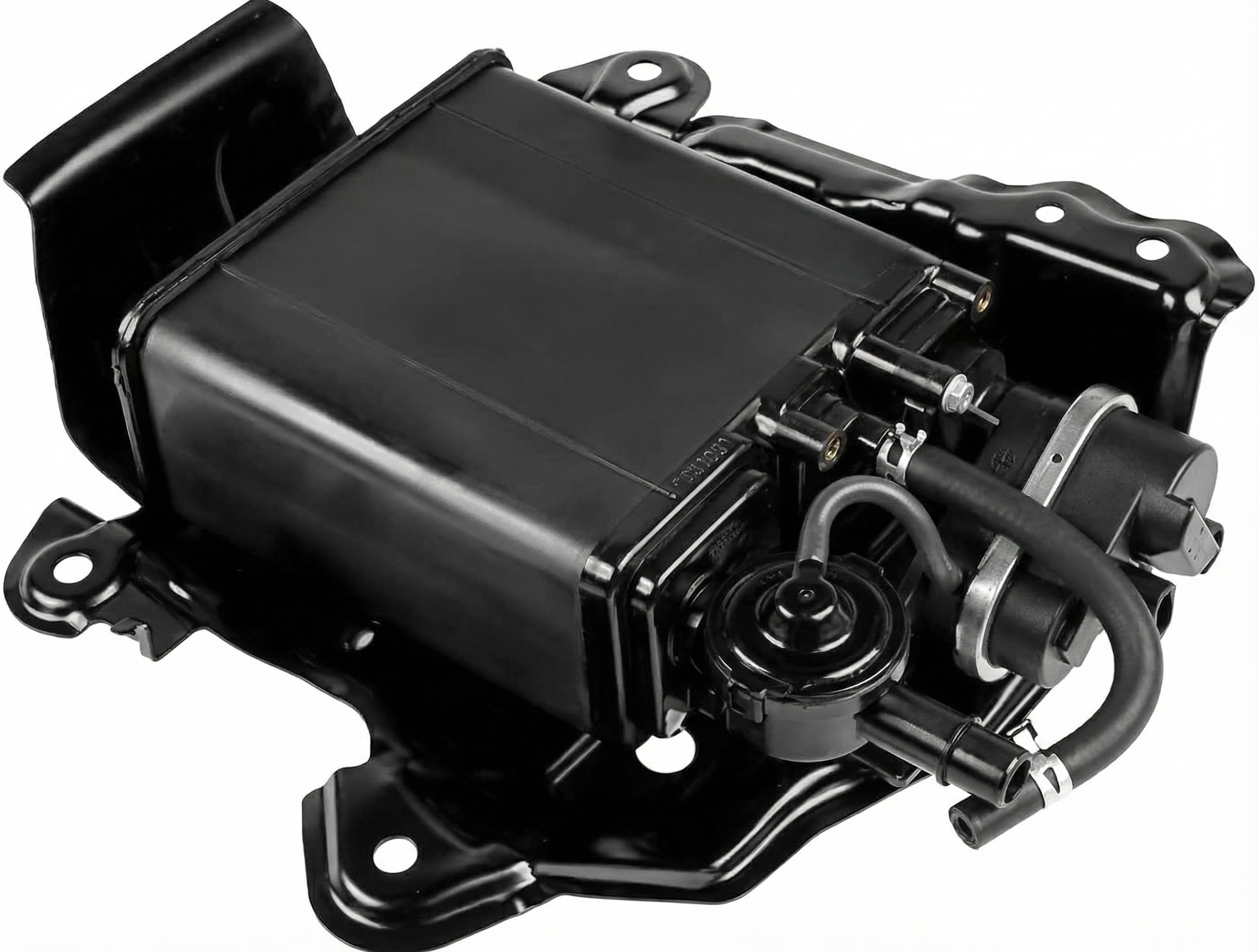
On a 2006-2012 RAV4, code P0440 is most often caused by a loose or faulty gas cap. If tightening or replacing the cap doesn't work, the next most likely causes are a failed purge valve in the engine bay (~$40-$90) or a cracked/failed charcoal canister under the car. The canister is a very common failure point on this specific vehicle and is a more expensive repair (~$500+ for the OEM part).
- Always check your gas cap first. Make sure it's tight and the seal is intact before buying any parts.
- The second step should be inspecting or replacing the purge valve in the engine bay; it's cheap, accessible, and a common point of failure.
- Avoid overfilling your fuel tank. Topping off after the pump automatically stops can flood the charcoal canister and cause it to fail prematurely.
- If simpler fixes don't work, a professional smoke test is the most efficient way to find the leak's true source, saving you from replacing unnecessary parts.
- If you need to replace the charcoal canister, be sure to use the correct part number: 77740-0R010.
What's Unique About the 2006-2012 Toyota RAV4
For the third-generation RAV4, the P0440 code follows a common Toyota diagnostic pattern, but with a platform-specific weakness. While diagnosis always starts with the gas cap and the easily accessible purge solenoid, a frequent and well-documented point of failure on these vehicles is the charcoal canister assembly located underneath the car. This part is known to crack or become internally clogged, leading to persistent EVAP codes. Due to its high cost relative to other potential causes, owners and shops often replace the gas cap and purge valve first, only to find the P0440 code returning until the canister itself is addressed.
Symptoms You May Notice
- Check Engine Light is on
- A faint smell of gasoline, particularly around the rear of the vehicle near the fuel tank and charcoal canister
- Slightly reduced fuel economy (rarely noticeable)
- Difficulty refueling, such as the gas pump nozzle shutting off repeatedly before the tank is full (a symptom of a clogged canister or vent valve).
- Replacing the oxygen (O2) sensors. O2 sensors are part of the exhaust system and are not related to the EVAP system.
- Replacing the catalytic converter. This is a very expensive exhaust component that has no connection to the P0440 code.
Most Likely Causes
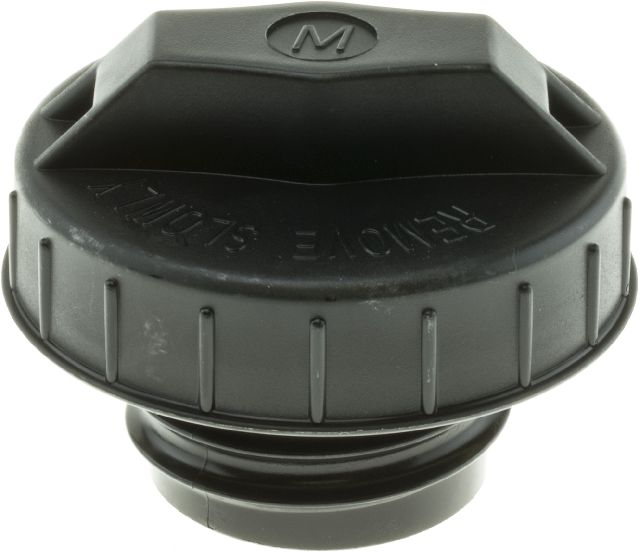
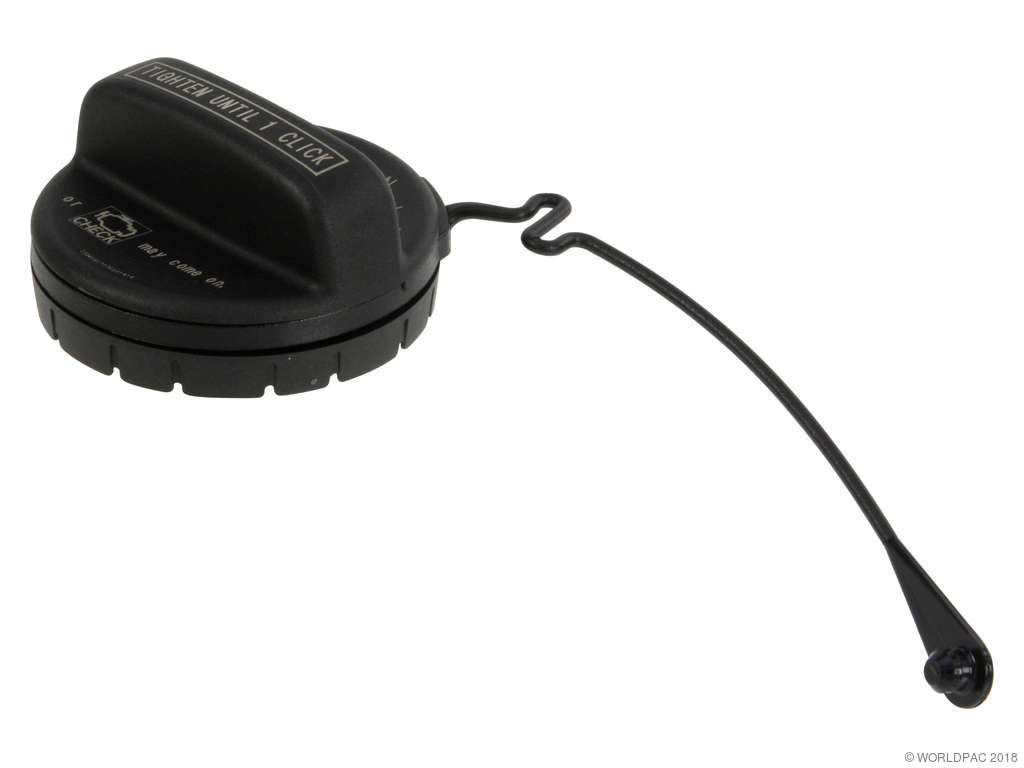
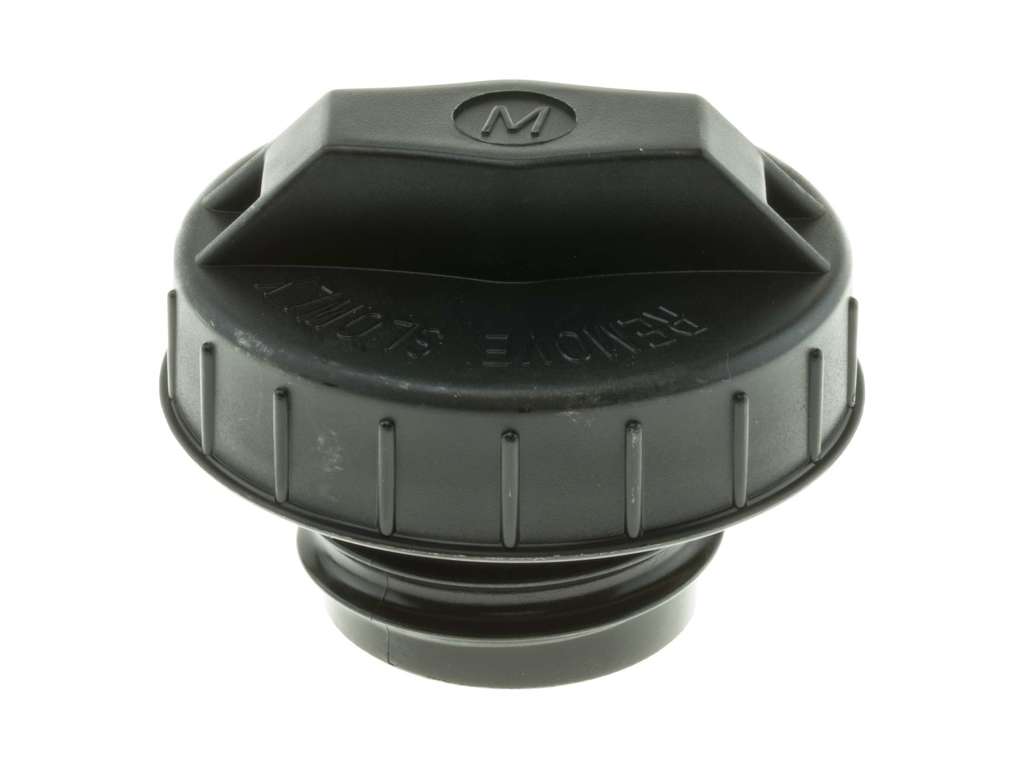
- Loose or Faulty Gas Cap 🔴 High Probability → Shop Fuel Tank Cap This is the most common cause for an EVAP code on almost any vehicle due to user error (not tightening it until it clicks) or the rubber seal wearing out over time.
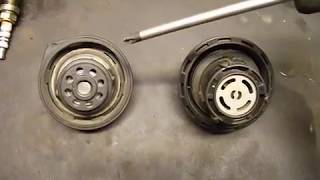
How to confirm: Ensure the gas cap is tightened until it clicks at least once. Inspect the rubber O-ring on the cap for cracks, dirt, or signs of wear. If the seal looks worn or damaged, it's a cheap replacement. Many forum users recommend trying this first before any other repairs.
Typical fix: Tighten or replace the gas cap. It is highly recommended to use an OEM (Original Equipment Manufacturer) cap, as some aftermarket caps can have sealing issues.
Est. part cost: $15-$40 - Failed Vapor Canister Purge Valve/Solenoid 🟡 Medium Probability → Shop Vapor Canister This solenoid is an electromechanical part that cycles frequently and can wear out or get stuck open or closed over time. It's a common failure item across many Toyota models that share this part.
How to confirm: The purge valve is located in the engine bay, typically mounted on the air filter housing or intake manifold, making it easy to inspect. Check for cracked hoses connected to it. A definitive test involves applying 12V to the solenoid's terminals to see if it clicks open and shut. When de-energized, it should be closed and hold a vacuum.
Typical fix: Replacement of the purge valve is a simple, 5-minute DIY job with basic tools like pliers.
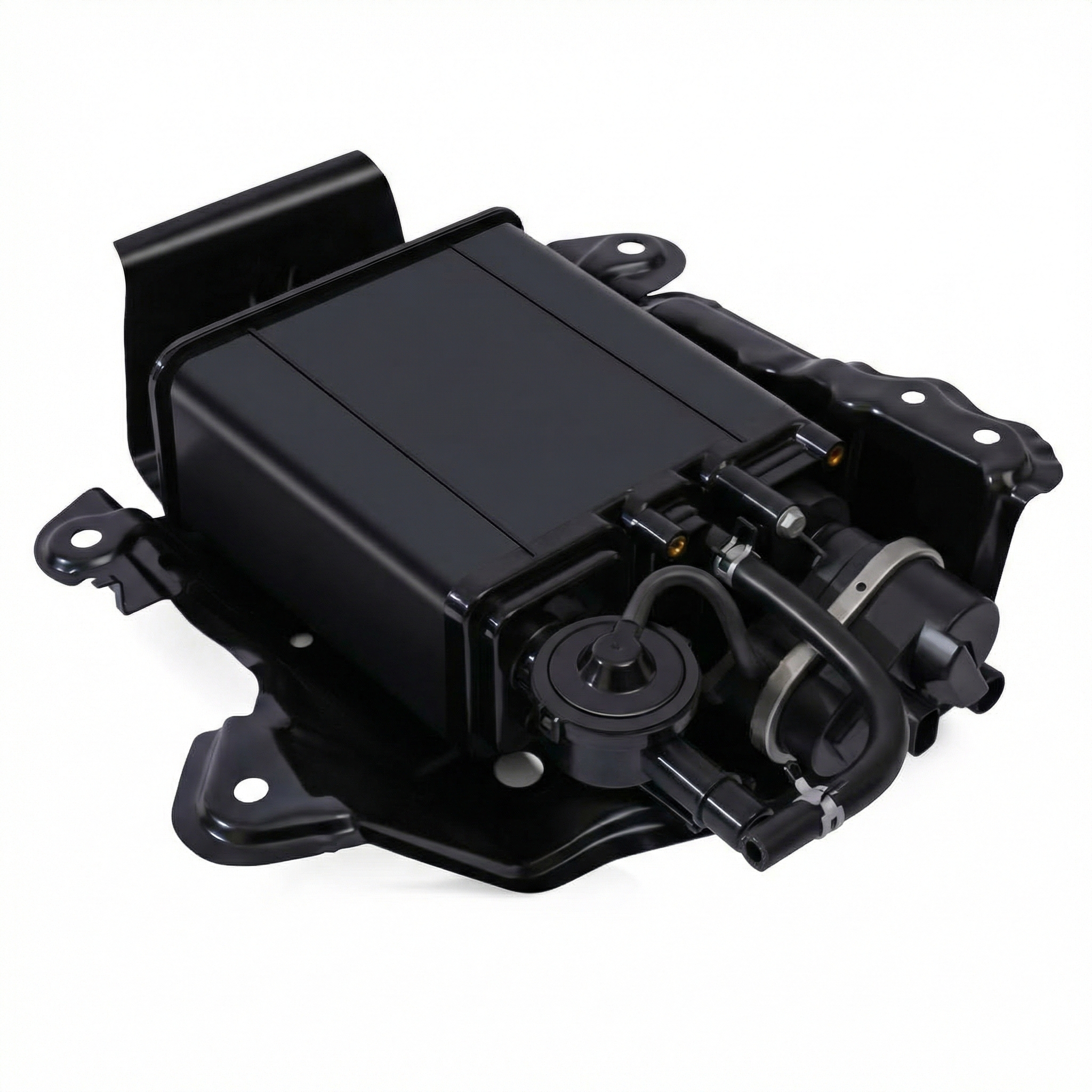
Est. part cost: $40-$90 - Failed Charcoal Canister Assembly 🟡 Medium Probability → Shop Vapor Canister This is a widely reported failure on the 3rd generation RAV4. The plastic housing can crack from age, vibration, and road debris. Internally, the charcoal can break down and clog the system's vent valve, or the canister can become saturated with fuel from repeatedly overfilling the gas tank.
How to confirm: A visual inspection may reveal obvious cracks in the canister housing. A common symptom of a clogged canister is the fuel pump nozzle clicking off repeatedly during refueling. The definitive diagnosis is typically a smoke test, where a technician injects smoke into the EVAP system to see where it leaks out. If smoke exits from the canister body, it needs replacement.
Typical fix: The entire charcoal canister assembly, which is located under the vehicle near the fuel tank on the driver's side, must be replaced. This is more involved than replacing the purge valve, requiring the vehicle to be safely lifted, but is a manageable DIY for experienced individuals.
Est. part cost: $450-$600 - Cracked or Disconnected EVAP Hoses ⚪ Low Probability Rubber and plastic hoses become brittle and crack with age and exposure to heat and the elements. This is a potential issue on any vehicle of this age.
How to confirm: Visually inspect all accessible EVAP lines, starting in the engine bay near the purge valve and then under the vehicle near the charcoal canister. A smoke test is the most effective way to find small, hard-to-see leaks.
Typical fix: Replace the cracked section of hose and secure it with clamps.
Est. part cost: $5-$30
Rare But Worth Checking
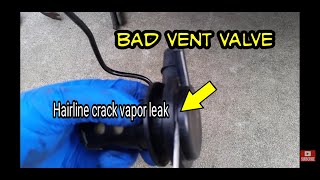
- Faulty Fuel Tank Vent Valve: → Shop Fuel Tank A user in a detailed video found a hairline crack in this valve, which is located on the fuel tank. This is a difficult part to access as it requires dropping the gas tank, but it can be the source of a persistent P0440 code when all other components check out.
- Faulty Fuel Tank Pressure Sensor: → Shop Fuel Tank While less common, the sensor that monitors pressure within the EVAP system can fail, sending incorrect data to the ECU and triggering a false P0440 code.
- Fuel Filler Tube Issues: While more common on other Toyota models, manufacturer service bulletin EG022-06 (referenced in NHTSA ODI #10276828) notes that a defective fuel filler tube can trigger DTC P0440, requiring an improved tube design.
Diagnosis Steps
- Read the code with an OBD-II scanner to confirm P0440 and check for any other related EVAP codes (P0441, P0442, P0455, P0446).
- Inspect the gas cap. Remove it, check the seal for cracks, and clean it. Reinstall it and ensure it clicks shut. Clear the code and drive for a few days to see if it returns. This is the cheapest and easiest first step.
- If the code returns, move to the engine bay. Locate the purge valve (VSV) on the air intake assembly. Inspect its connected vacuum lines for any visible cracks or loose connections.
- For a simple DIY test of the purge valve, apply 12V power to its terminals; you should hear a distinct click. With no power, it should be closed. You can also try to blow through it; it should not allow air to pass when unpowered.
- If the problem persists, a smoke test is the recommended next step to find the source of the leak accurately. This involves feeding pressurized smoke into the EVAP system (often through a service port) and watching where it escapes.
- Based on the smoke test results, inspect the indicated component. On this vehicle, pay close attention to the large charcoal canister assembly under the car. Leaks from cracks in its plastic body are very common.
- If the charcoal canister is the cause, it will need to be replaced. This is a more involved repair located underneath the vehicle near the fuel tank.
- If no leaks are found, the issue could be a component failure that doesn't cause a leak, such as a clogged vent valve (often due to charcoal pellets) or a faulty pressure sensor.
Parts You'll Likely Need
- Fuel Cap
(OEM #77300-06040 (supersedes 77300-52030))— This is the most frequent cause and the easiest part to replace. The seal fails over time. Always use an OEM cap for best results.
Trusted brands: Toyota (OEM)
OEM price range: $25-$40
Aftermarket price range: $15-$30 - Vapor Canister Purge Valve / Solenoid (VSV)
(OEM #90910-12276)— A very common failure point that is inexpensive and extremely easy to replace, located right in the engine bay. It can get stuck open or closed.
Trusted brands: Toyota (OEM), Denso (OEM supplier), Standard Motor Products
OEM price range: $70-$110
Aftermarket price range: $40-$90 - Charcoal Canister Assembly
(OEM #77740-0R010 (supersedes 77740-42090))— This is a common but expensive failure on the RAV4. It can crack or become saturated with fuel, requiring full replacement. The OEM part number 77740-0R010 supersedes the older part number 77740-42090.
Trusted brands: Toyota (OEM)
OEM price range: $500-$600
Aftermarket price range: $200-$400
Related Codes That Often Appear With This One
- P0441 — Indicates incorrect purge flow, often pointing directly to a faulty purge valve or a blockage in the system.
- P0442 — Indicates a small leak was detected, which is a more specific version of the general P0440 fault.
- P0455 — Indicates a large leak was detected, often caused by a very loose gas cap or a significant crack in a hose or the charcoal canister.
- P0446 — Indicates a fault in the vent control circuit. On this RAV4, this code is often seen when charcoal pellets from a deteriorating canister have clogged the vent valve.
Platform-Specific Known Issues
- The charcoal canister (77740-0R010) is a known weak point on this generation of RAV4. Many owners on forums like RAV4World and ToyotaNation report having to replace it to finally solve their P0440, P0441, and P0446 codes after trying the gas cap and purge valve first.
- Broader Toyota data suggests these failures are part of a trend; NHTSA ODI #10354544 notes that P0440, P0441, and P0442 failures have been reported across various Toyota models built from the late 1990s through the mid-2000s.
Mechanic-Grade Diagnostic Values
- EVAP Purge Valve / Vent Valve Solenoid Coil Resistance — expected: 20 - 50 Ohms. Failure: A reading of 0 Ohms (short circuit) or infinite/OL (open circuit) indicates a failed solenoid coil.
- EVAP Vent Valve Power Supply Voltage — expected: ~12V (Battery Voltage). Failure: No voltage at the connector with the key in the ON position indicates a wiring or fuse issue upstream of the valve.
Hidden / Shadow Codes Worth Checking
- Mode $06, Test ID $39: Mode $06 data provides results from non-continuous onboard diagnostic tests. For Toyota EVAP systems, Test ID $39 (and related IDs) shows the pressure change values recorded during the system's self-test. A value outside the minimum/maximum limit indicates a leak, even if it hasn't yet triggered a formal trouble code. (see via A professional scan tool or an advanced OBD-II reader that can access Mode $06 data. This is not a specific code but a test result that can pinpoint a borderline failure.)
Scan Tool Commands That Help
- Toyota Techstream: Evaporative System Check Utility — This is a powerful bidirectional test to manually command the EVAP system components. A technician can use it to close the vent valve and open the purge valve to pull a vacuum on the system, then seal the system and monitor the pressure decay. This allows for precise testing of the entire system or isolated parts (like the tank vs. the canister) to confirm a leak and verify a repair without waiting for the ECU's automatic monitor to run.
Wiring & Ground Locations
- Ground Point E1 — Located in the driver's side kick panel area.. This is a major ground point for various components in the instrument panel and engine control system. While not exclusively for the EVAP system, a poor connection at this shared ground could cause erratic behavior in the ECM or related sensors, potentially contributing to false codes. A wiring diagram should be consulted to confirm which specific circuits use this ground.
Real Owner Repair Stories
- YouTube user TONE DUBB (Older Toyota (model not specified, but demonstrates a common P0440 path applicable to the RAV4)) — Persistent P0440 Check Engine Light.
❌ Tried (didn't work) Replacing the gas cap, Inspecting engine bay hoses, Replacing engine bay EVAP components from a salvage yard
✅ What actually fixed it After extensive diagnosis, the owner dropped the fuel tank and found a hairline crack on the plastic fuel tank vent valve assembly located on top of the tank. Replacing this component finally resolved the code. - Reddit user in r/Toyota (2011 RAV4 with 2AR-FE engine) — Check Engine Light, 4WD light, and slip indicator light all came on. Codes indicated an EVAP system issue.
❌ Tried (didn't work) Initial diagnosis pointed to multiple possibilities.
✅ What actually fixed it The owner was quoted $3,000 for a full repair by a shop. Instead, they ordered the charcoal canister assembly online for ~$750 and had a local shop install it for ~$75. This fixed the issue and turned off the lights. The user notes that overfilling the gas tank is a likely cause of the canister failure. - NHTSA ODI #11171743 — An owner reported receiving codes P0440 and P0446 on a vehicle with 118,244 miles. They noted that the check engine light came on accompanied by a slight smell of fuel.
- NHTSA ODI #10735783 — A vehicle failed emissions inspection due to a cluster of EVAP faults including P0440, P0441, and P0446, alongside a P0420 catalyst efficiency code.
"I Checked Everything" — The Actual Cause
- In some cases, a smoke test may not reveal a leak if the issue is a component that is failing intermittently or not sealing under vacuum. A prime example is a faulty fuel tank vent valve that has a hairline crack only visible upon removal, or a purge/vent solenoid that tests correctly for resistance but is mechanically stuck.
OEM Part Supersession History
77740-42090→77740-0R010— This is a common part revision. The new part number is the currently supplied OEM replacement for the original canister that came on 2006-2012 RAV4s.
Heads up: The parts are interchangeable. When ordering, you will likely receive 77740-0R010 as 77740-42090 is the older number.
Model Year Variations Within This Range
- 2006-2012: While the core EVAP components like the charcoal canister (PN 77740-42090/77740-0R010) were used across all engine options (2.4L, 2.5L, 3.5L), the hose routing and specific access points in the engine bay for the purge valve may differ slightly between the 4-cylinder and V6 models due to the different engine layouts.
Diagnostic Flowchart
Other Known Issues on This Vehicle
Issues unrelated to this code that are worth knowing about as an owner of this generation:
- Excessive Oil Consumption (2.4L 2AZ-FE Engine) 🔴 High — Very common in 2006-2008 models with the 2AZ-FE engine, typically noticeble after 60,000 miles. Caused by faulty piston ring design. (Ref: Toyota issued a Warranty Enhancement Program (ZE7) and TSBs (e.g., T-SB-0094-11) to address this, but they have since expired.)
- Steering Intermediate Shaft Clunk 🟠 Medium — Common issue on 2006-2008 models, causing a clunking or knocking noise from the steering column when turning. (Ref: Toyota released TSB-0318-08 for this issue, involving the replacement of the intermediate shaft (Part No. 45260-42090).)
- Water Pump Failure (3.5L 2GR-FE V6 Engine) 🟠 Medium — The water pump on the V6 engine is a known weak point and often fails (starts leaking or making noise) between 100k-150k miles.
- VVT-i Oil Line Rupture (3.5L 2GR-FE V6 Engine) 🔴 High — On early V6 models (approx. 2006-2008), a rubber section of the VVT-i oil supply line could rupture, causing rapid and catastrophic oil loss. Toyota later issued a recall to replace it with an all-metal line. (Ref: Yes, a recall was issued to replace the rubber hose with a metal line.)
Used vs. New Parts: Buying Guide for This Vehicle
When a used part is the smart pick: A used purge valve (VSV) from a junkyard can be a cost-effective option, provided it can be tested (by applying 12V and checking for a click) before purchase. Used EVAP hoses in good condition can also be viable.
Donor-vehicle mileage cap: roughly under 80000 miles for the part to have meaningful remaining life.
What to inspect on the donor part:
- For a charcoal canister, avoid parts from vehicles in the rust belt, as corrosion can damage the housing and lines.
- Visually inspect the plastic housing of any used component for hairline cracks or stress marks.
- Ensure all hose connection nipples are intact and not broken or brittle.
- If possible, shake the canister to listen for loose charcoal pellets, which indicates internal failure.
OEM-only on this vehicle (don't cheap out):
- Fuel Cap: Strongly recommended to use an OEM Toyota cap. Aftermarket caps are notorious for having slightly different tolerances that fail to seal properly, causing the code to return.
- Charcoal Canister: Due to the high cost of the part and the labor involved, using a new OEM canister is the safest bet to avoid a repeat repair. While some aftermarket options exist, their long-term reliability is less documented than the OEM part.
Aftermarket brands forum-validated for this vehicle:
- Denso: Denso is the original equipment manufacturer for many Toyota electronic parts, including solenoids. A Denso-branded part is often identical to the Toyota-branded part without the dealership markup.
- Standard Motor Products (SMP): A generally well-regarded aftermarket brand for sensors and valves.
Brands owners have reported issues with on this vehicle:
- No-name/unbranded parts from online marketplaces. For a critical emissions component like the charcoal canister, the risk of premature failure and having to do the job twice often outweighs the initial cost savings.
Real Owner Stories
Aggregated from forums and TSBs cited above. Mileages and costs reflect what owners reported in those sources.
2006-2012 Toyota RAV4
Symptoms: Check Engine, TRAC, and VSC lights on; codes P0440, P0441, and P0455 present.
What fixed it: The owner started by replacing the gas cap and the purge valve, but the charcoal canister was ultimately found to be the culprit and required replacement.
Source hint: RAV4World: 'Check Engine, TRAC and VSC lights on - P0440, P0441, P0455'
2006-2012 Toyota RAV4
Symptoms: Persistent EVAP codes including P0440, P0441, and P0456.
What fixed it: Replacement of the charcoal canister assembly.
Source hint: ToyotaNation Forum: 'P0440, P0441, P0456 codes'
Related OBD-II Codes
Frequently Asked Questions
Where is the charcoal canister located on the 2006-2012 RAV4?
I'm having trouble refueling my RAV4; the pump keeps clicking off. Is this related to P0440?
Should I use an aftermarket gas cap to fix my P0440 code?
How long does it take to replace the purge valve on this vehicle?
Is there a specific part number for the charcoal canister known to fail on this RAV4?
My RAV4 also has a clunking noise in the steering; is that related to the EVAP system?
Helpful Videos
![How to Fix P0440 Engine Code in 3 Minutes [2 DIY Methods / Only $4.73]](https://img.youtube.com/vi/-kSpB9clrrs/mqdefault.jpg)
Used OEM Parts in Stock
New Aftermarket Parts Available


The information in this article is provided for general reference and educational purposes only. Vehicle specifications, procedures, and part compatibility can vary by production date, trim level, and region. Always consult your vehicle's factory service manual and verify part numbers before purchasing or performing repairs. Safety-critical components such as airbags, seat belts, and braking systems should be installed by a qualified professional.
- Toyota RAV4:
- 🧭 Diagnostic Flowchart
- 🎬 Helpful Videos
- 🛍️ Shop This Part
- What's Unique About the 2006-2012 Toyota RAV4
- Symptoms You May Notice
- Most Likely Causes
- Rare But Worth Checking
- Diagnosis Steps
- Parts You'll Likely Need
- Related Codes That Often Appear With This One
- Platform-Specific Known Issues
- Mechanic-Grade Diagnostic Values
- Hidden / Shadow Codes Worth Checking
- Scan Tool Commands That Help
- Wiring & Ground Locations
- Real Owner Repair Stories
- "I Checked Everything" — The Actual Cause
- OEM Part Supersession History
- Model Year Variations Within This Range
- Other Known Issues on This Vehicle
- Used vs. New Parts: Buying Guide for This Vehicle
- Real Owner Stories
- 2006-2012 Toyota RAV4
- 2006-2012 Toyota RAV4
- Related OBD-II Codes
- Frequently Asked Questions
- 🎟️ Get 5% Off