

P0440 on 2011-2018 Volkswagen Jetta: EVAP System Malfunction Causes and Fixes
For a 2011-2018 VW Jetta, code P0440 most often points to a loose gas cap or a failing N80 purge valve. Always check the gas cap first—it's a free fix. If that doesn't solve it, the N80 valve is the next likely culprit, costing around $40-$80 for a quality aftermarket part. If neither is the cause, a smoke test is necessary to find the leak, which could be a cracked hose, a faulty Leak Detection Pump (LDP), or the charcoal canister.
- P0440 is an emissions code that will not affect drivability but will cause you to fail an emissions test.
- Always start with the simplest fix: check that your gas cap is tight and its seal is intact. This resolves the issue a significant amount of the time.
- If the gas cap isn't the problem, the N80 purge valve is the next most likely part to have failed on a Mk6 Jetta.
- Do not replace expensive parts like the charcoal canister without confirming the leak source, preferably with a smoke test.
What's Unique About the 2011-2018 Volkswagen Jetta
Unlike some systems that use engine vacuum for testing, many Volkswagens of this era, including the Mk6 Jetta, use a dedicated Leak Detection Pump (LDP) to pressurize the system and check for leaks. This means that in addition to common culprits like the gas cap and purge valve, the LDP itself or its associated hoses can be a point of failure. While the P0440 code is generic, the diagnostic approach for VWs must include checking this specific pump if simpler fixes don't resolve the issue. A faulty LDP can trigger a P0440 without an actual leak being present.
Symptoms You May Notice
- Check Engine Light is on
- A faint smell of fuel, particularly around the gas cap area or outside the vehicle
- Slightly reduced fuel economy over time
- Difficulty starting immediately after refueling (a symptom of a purge valve stuck open)
- Replacing the oxygen sensors. O2 sensors are not related to the EVAP system.
- Replacing the catalytic converter. This is an expensive part of the exhaust system and has no connection to the P0440 code.
- Immediately replacing the charcoal canister without a proper diagnosis. While it can fail, it's less likely than a bad gas cap, N80 valve, or a simple hose leak. A smoke test should be performed first.
Most Likely Causes
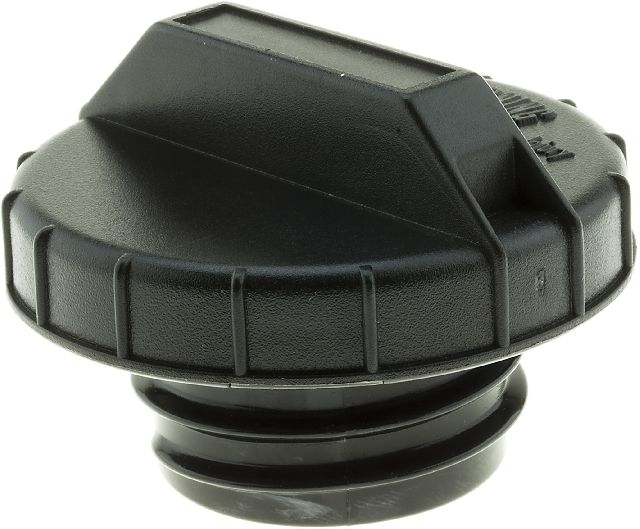
- Loose or Faulty Gas Cap 🔴 High Probability → Shop Fuel Tank Cap This is the most common cause for any vehicle. The seal on the cap can wear out, crack, or simply not be tightened correctly after refueling. VWs can be particularly sensitive to non-OEM gas caps.
How to confirm: Ensure the cap is tightened until it clicks at least once. Inspect the rubber O-ring on the cap for cracks, stiffness, or damage. A new OEM cap is a cheap and effective diagnostic step if the seal is suspect.
Typical fix: Tighten or replace the gas cap. Use an OEM or high-quality equivalent cap for a reliable seal. The OEM part number is often a variation of 5C0201550.
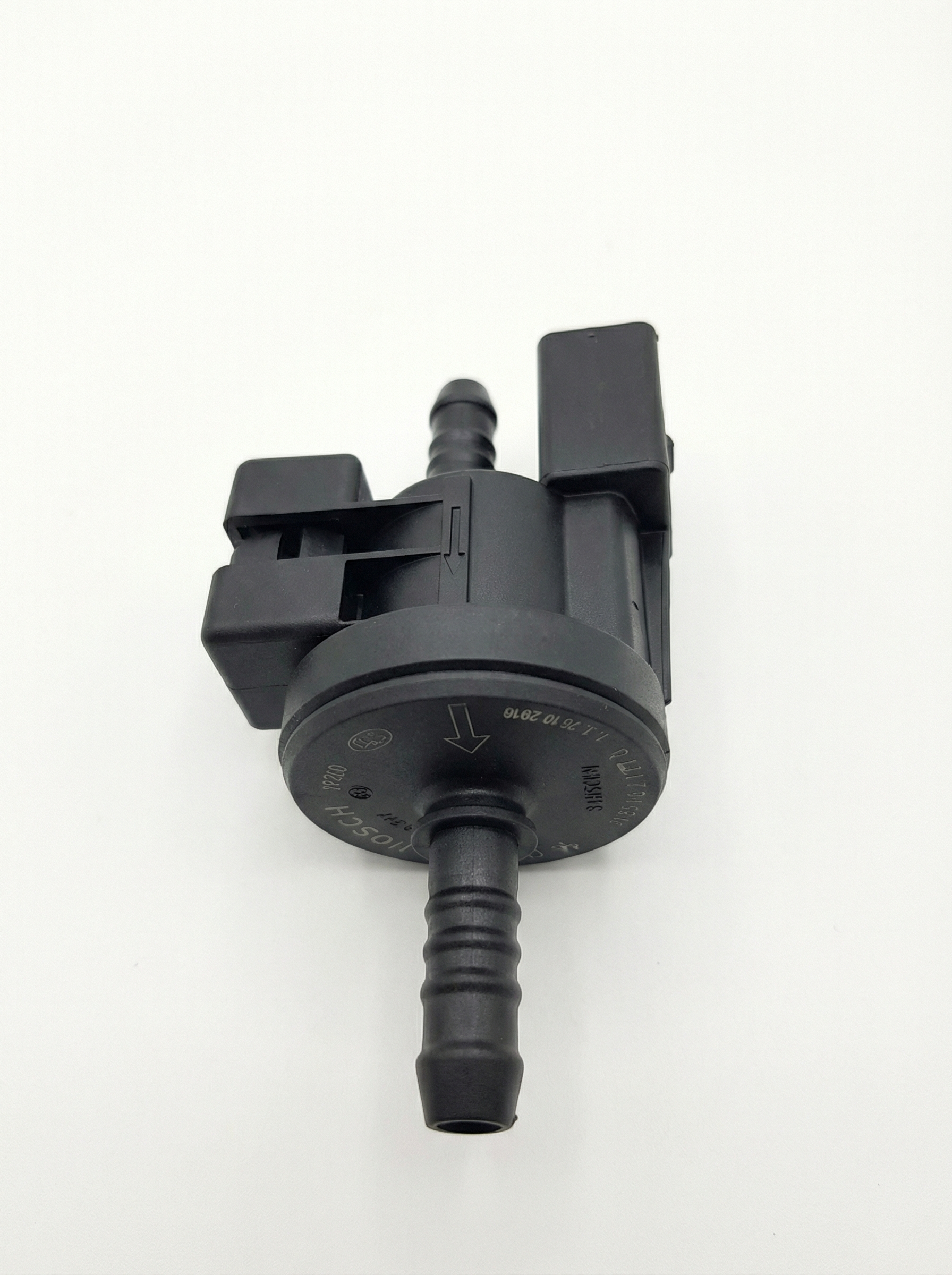
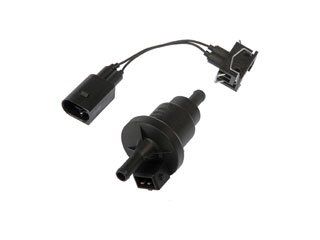
Est. part cost: $15-$40 - Faulty EVAP Purge Valve (N80 Solenoid) 🟡 Medium Probability → Shop Vapor Canister The N80 valve is a common failure point on many VW models. It can get stuck open, creating a constant vacuum leak in the EVAP system, or stuck closed, preventing vapors from being purged.
How to confirm: With the engine running, you can sometimes hear a clicking sound from a healthy valve. A more definitive test is to use a scan tool like VCDS to run an Output Test or Basic Settings Group 070. You can also remove the valve and try to blow through it; if air passes when it's de-energized (closed), it has failed. Its location varies by engine; on the 2.5L it's near the throttle body, while on turbo models it's often on the intake manifold.
Typical fix: Replace the N80 purge valve. This is a straightforward DIY job on most engines. 🎬 Watch: How to replace the N80 valve on a Mk6 Jetta.
Est. part cost: $40-$100 - Cracked or Disconnected EVAP Hoses 🟡 Medium Probability Over time, the plastic and rubber hoses in the engine bay and under the car can become brittle from heat and age, leading to cracks and leaks. The hoses connected to the N80 valve and the charcoal canister are common failure points.
How to confirm: A visual inspection may reveal obvious cracks or disconnected lines. The most effective method is to have a mechanic perform a smoke test, which forces smoke into the EVAP system and makes even tiny leaks visible as smoke escapes. 🎬 Watch: How to perform an EVAP leak test without a smoke machine.
Typical fix: Replace the damaged section of hose or the entire hose assembly.
Est. part cost: $20-$75 - Faulty Leak Detection Pump (LDP) ⚪ Low Probability → Shop Evaporative Emissions System Leak Detection Pump The LDP is the component that pressurizes the system for the leak test. If the pump motor fails or its internal diaphragm leaks, the system cannot perform the test correctly, triggering a fault. It is located near the charcoal canister in the rear of the vehicle.
How to confirm: This component is typically located near the charcoal canister by the rear axle, behind the wheel well liner. Diagnosis requires a capable scan tool (like VCDS) to run Basic Settings Group 071 to initiate the leak test. A functional test can also be performed on the bench with a vacuum source and a balloon to see if it holds pressure.
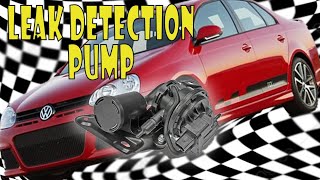
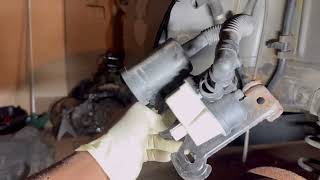
Typical fix: Replace the Leak Detection Pump. OEM part numbers include 7L0906243A. 🎬 See this walkthrough for replacing the leak detection pump.
Est. part cost: $80-$150
Rare But Worth Checking
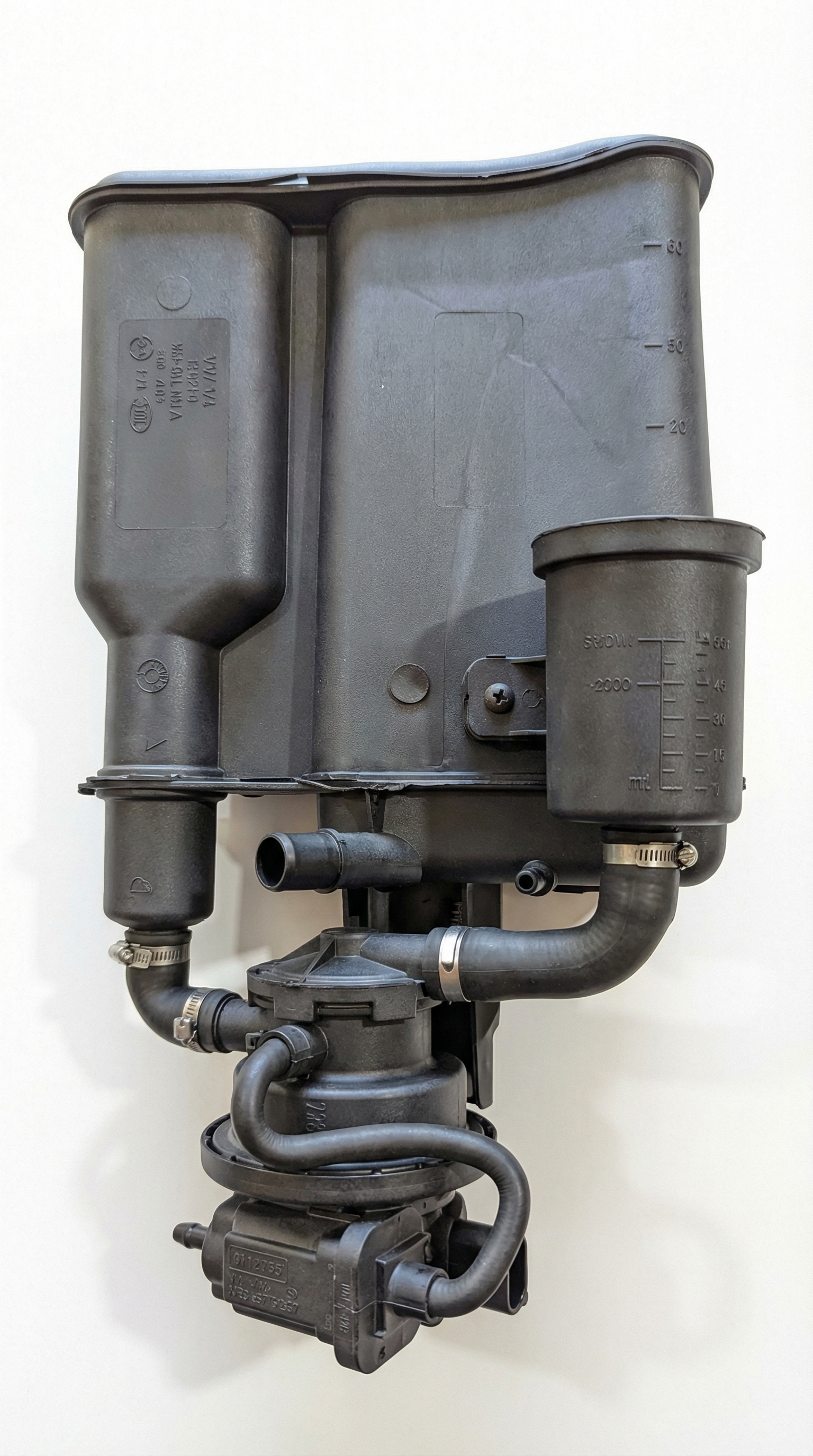
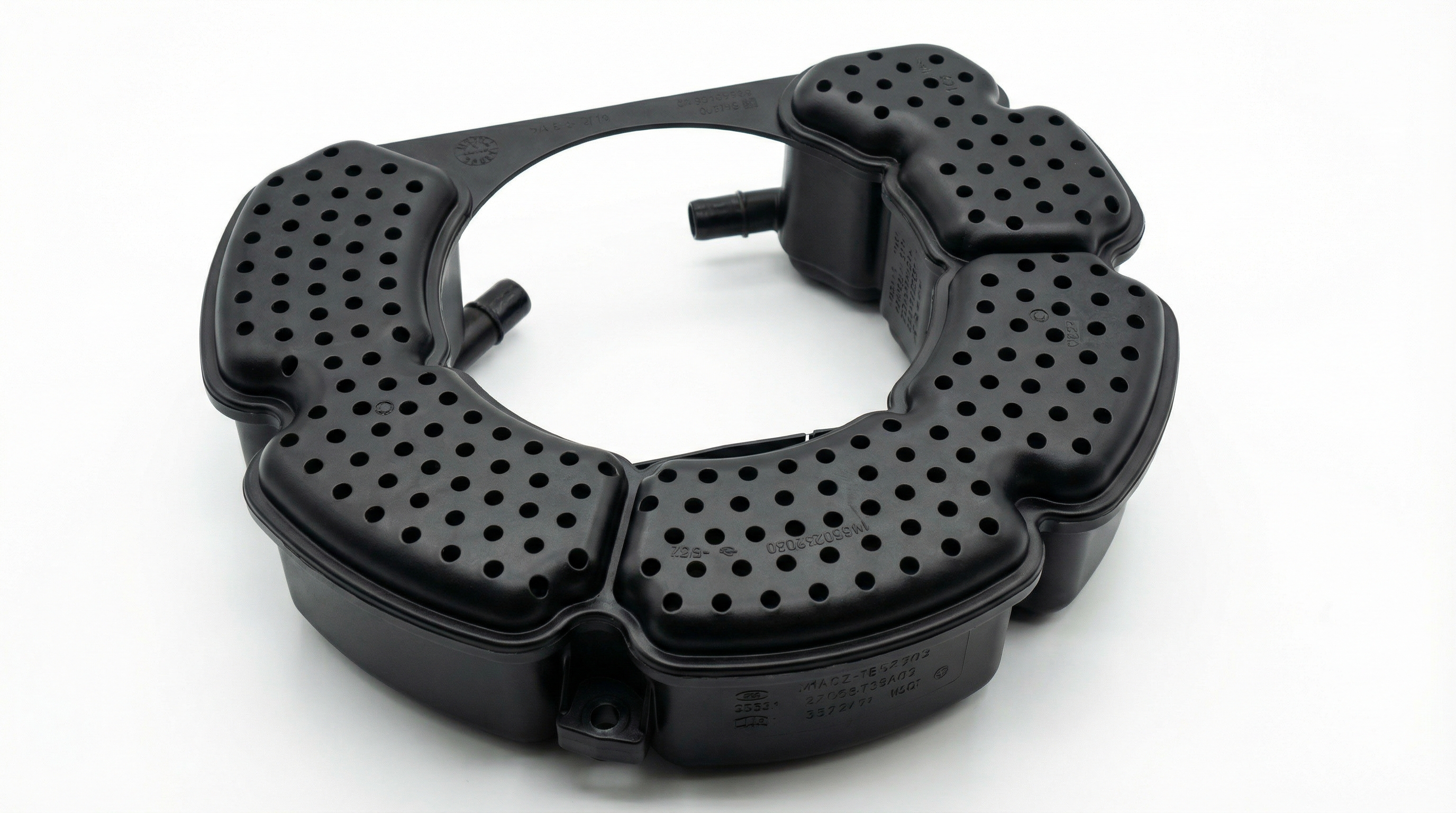
- Cracked Charcoal Canister: → Shop Vapor Canister The canister itself can develop cracks from road debris or age, creating a significant leak. This is less common than valve or hose failures but should be inspected, especially if a smoke test leads to this area. Overfilling the fuel tank can also saturate the canister with liquid fuel, causing it to fail.
- Leaking Fuel Tank Filler Neck: → Shop Fuel Tank Corrosion or damage to the metal filler neck where the gas cap seals can prevent a proper seal, even with a new cap. This is usually found during a smoke test.
- Faulty Fuel Tank Pressure Sensor (G400): → Shop Fuel Tank A defective fuel tank pressure sensor can send incorrect data to the ECM, causing it to believe there is a leak when there isn't one. This is a less common cause and should be considered after other components have been ruled out.
Diagnosis Steps
- Read the code with an OBD-II scanner to confirm P0440 is present and check for any other related codes.
- Inspect the gas cap. Remove it, check the seal for cracks, and retighten it until it clicks. Clear the code and drive for a few days to see if it returns. If in doubt, replace it with an OEM cap.
- If the code returns, perform a thorough visual inspection of all accessible EVAP hoses in the engine bay and under the vehicle, looking for obvious cracks, breaks, or disconnections.
- Locate and test the N80 purge valve. Check if it's clicking while the engine is running. If possible, use a scan tool to command it on and off to verify its function. Alternatively, remove it and attempt to blow through it; it should be closed when unpowered.
- If the cause is still not apparent, the most effective next step is a professional smoke test. This will pressurize the system with vaporous smoke and quickly reveal the location of any hard-to-see leaks.
- Based on the smoke test results, inspect the indicated component, which could be a hose, the charcoal canister, the Leak Detection Pump (LDP), or the fuel tank filler neck.
Parts You'll Likely Need
- Fuel Cap
(OEM #5C0201550T / 5C0201550E)— This is the most frequent and simplest fix. The seal wears out over time, and these vehicles can be sensitive to non-OEM caps.
Trusted brands: Volkswagen (OEM), Blau, Vaico, Stant
OEM price range: $30-$40
Aftermarket price range: $15-$25 - EVAP Purge Valve / N80 Solenoid
(OEM #Varies by engine: 06E906517A (common, used on 2.5L), 06H906517AE (common on 1.8T/2.0T Gen3). Verify with VIN.)— A very common failure point on VWs that gets stuck open or closed, directly causing a system fault.
Trusted brands: Bosch, Pierburg, Dorman
OEM price range: $70-$100
Aftermarket price range: $40-$80 - Leak Detection Pump (LDP)
(OEM #7L0906243A / 1K0906201C)— The pump used by VW to test the system can fail, preventing the EVAP monitor from running correctly.
Trusted brands: Bosch, Volkswagen (OEM), Standard Motor Products
OEM price range: $120-$180
Aftermarket price range: $80-$150
Related Codes That Often Appear With This One
- P0441 — P0441 indicates 'Incorrect Purge Flow'. It often appears with P0440 when the N80 purge valve is malfunctioning, as the ECU detects both a general system fault and a specific flow problem.
- P0455 — P0455 indicates a 'Large EVAP Leak'. While P0440 is a more general malfunction code, some systems may log both if a very large leak (like a missing gas cap or completely disconnected hose) is detected.
- P0456 — Indicates a 'Very Small EVAP Leak'. This can sometimes accompany a P0440 if the system is borderline between test thresholds, or if multiple issues are present.
Platform-Specific Known Issues
- On 2.0T TSI engines, the N80 purge valve is often located under the intake manifold, making replacement more labor-intensive than on other engines where it is easily accessible on top.
- For the 2.5L engine, a common oil leak from the vacuum pump at the end of the cylinder head is often mistaken for a more serious rear main seal leak. This is not related to P0440 but is a critical issue for owners to be aware of.
Mechanic-Grade Diagnostic Values
- Fuel Tank Pressure Sensor (G400) Voltage — expected: Approximately 1.5V with the system at atmospheric pressure (gas cap off).. Failure: A reading stuck near 0V - 0.3V may indicate a wiring short or bad sensor. A reading stuck near 5V may indicate an open circuit or bad sensor.
- N80 Purge Valve Coil Resistance — expected: No specific Ohm value is commonly published. The standard test is functional.. Failure: Apply 12V to the terminals; a healthy valve will make an audible 'click'. If it doesn't click, the coil is likely bad. If it clicks but still leaks when de-energized (test by blowing through it), the valve has failed mechanically.
Scan Tool Commands That Help
- VCDS (VAG-COM): Basic Settings - Group 070 — To run a functional test of the N80 purge valve. The ECU will cycle the valve and monitor for expected changes in the O2 sensor and mass airflow readings to confirm it's working. The screen should display 'EVAP OK' if it passes.
- VCDS (VAG-COM): Basic Settings - Group 071 — To command the Leak Detection Pump (LDP) to run its system leak test. This seals the system and pressurizes it to check for leaks. The screen will display test status and should report 'Syst. OK' if no leak is found.
- VCDS (VAG-COM): Output Tests (Sequential) — As an alternative to Basic Settings, Output Tests allow you to manually cycle individual components like the N80 purge valve and the LDP pump to listen for activation (clicks or thumping sounds) and confirm the ECU can command them.
- VCDS (UDS Controllers): Basic Settings - Drop-down menu (e.g., IDE00744-EVAP Valve test) — On newer Jetta models within this range that use the UDS protocol, numbered groups are replaced by a drop-down list of named tests. You would select the appropriate EVAP test from this list to perform diagnostics.
Wiring & Ground Locations
- EVAP System Grounds — Check ground point (13) located in the engine compartment on the right side, and ground point (43) at the bottom of the right side A-pillar.. The N80 valve is in the engine bay, and the LDP and canister are in the rear. A poor ground connection at either end of the vehicle can prevent solenoids and pumps from activating correctly, mimicking a component failure.
- Leak Detection Pump (LDP) — Located under the right rear wheel housing liner, near the charcoal canister.. This is the physical location to inspect for damage, check electrical connections, and listen for activation during a scan tool test.
Real Owner Repair Stories
- Reddit user 'justanotherelvis15' (2012 Jetta GLI (similar platform/system)) — P0442 (Small EVAP Leak) code present.
❌ Tried (didn't work) Initial diagnosis was inconclusive.
✅ What actually fixed it The mechanic performed two actions: 1) Replaced a third-party gas cap with an OEM Volkswagen cap, stating non-OEM caps frequently cause EVAP codes. 2) Addressed a very small fuel line 'seepage' in the engine bay. The combination of these two fixes resolved the code.
"I Checked Everything" — The Actual Cause
- In a documented case for a similar system, after replacing the gas cap and purge valve with no success, the P0440 code persisted. A smoke test did not reveal an obvious leak. The final root cause was discovered to be a hairline crack on the plastic body of the fuel tank vent valve assembly, located on top of the gas tank. This type of crack may not leak smoke under low pressure but can open up under specific temperature or vibration conditions, making it extremely difficult to diagnose with a standard smoke test alone.
OEM Part Supersession History
6E906517→06E906517A— Standard part revision and improvement by the manufacturer.
Heads up: The newer 'A' revision is a direct replacement for the older part. The Bosch equivalent part number is 0280142431.
Model Year Variations Within This Range
- 2011-2018: The core EVAP system logic (using an LDP) is consistent across the generation. The most significant variation is the physical location of the N80 purge valve, which differs based on the engine installed (e.g., 2.5L vs. 1.8T vs. 2.0T). The 2.5L N80 is typically easy to access on the intake manifold, while some 2.0T engines have it buried under the manifold, increasing labor time for replacement.
Diagnostic Flowchart
Other Known Issues on This Vehicle
Issues unrelated to this code that are worth knowing about as an owner of this generation:
- Timing Chain Tensioner Failure (2.0T TSI) 🔴 High — Common on pre-2013 models, typically between 60k-80k miles. Failure can be sudden and cause catastrophic engine damage. (Ref: Multiple lawsuits led to an extended warranty program, but no formal recall was issued for all vehicles.)
- Leaking Water Pump / Thermostat Housing (1.8T/2.0T Gen3) 🟠 Medium — Very common. The plastic housing is prone to cracking and leaking coolant, often noticed between 50k-100k miles. (Ref: A class-action lawsuit settlement provided extended warranty coverage for this part on certain models.)
- Oil Leak from Engine Vacuum Pump (2.5L) 🟠 Medium — Extremely common on the 2.5L 5-cylinder engine. The pump's seals fail, causing a significant oil leak onto the transmission bell housing, often misdiagnosed as a rear main seal leak. (Ref: No recall, but aftermarket reseal kits are widely available as a cost-effective fix.)
- Clogged Heater Core 🟡 Low — A frequent complaint on the Mk6 platform, leading to poor or no heat from the vents. Often requires flushing or replacement of the heater core.
- Ignition Coil Pack Failure 🟡 Low — Common across many VW engines of this era. Leads to engine misfires and a flashing Check Engine Light. Relatively easy and inexpensive to fix.
- Failing Clock Spring 🟠 Medium — A known issue causing the airbag light to come on and loss of steering wheel button/horn functionality. Subject to a recall investigation. (Ref: Potential recall, under investigation by NHTSA.)
Used vs. New Parts: Buying Guide for This Vehicle
When a used part is the smart pick: Structural, non-electronic components like the charcoal canister or fuel filler neck can be a good value from a used, low-mileage donor vehicle, especially if from a dry, salt-free climate. Visually inspect for any cracks or corrosion before purchase.
Donor-vehicle mileage cap: roughly under 60000 miles for the part to have meaningful remaining life.
What to inspect on the donor part:
- For charcoal canisters, ensure there are no visible cracks in the plastic housing.
- For filler necks, check for any rust or pitting on the sealing surface where the gas cap sits.
- Verify the donor car was not in a collision that could have damaged the EVAP components.
- Avoid parts from vehicles that show signs of sitting for a long time, as spiders or insects can build nests in vent lines, causing blockages.
OEM-only on this vehicle (don't cheap out):
- Gas Cap: Strongly recommended to use an OEM gas cap. Forum and mechanic experience shows that even new aftermarket caps can fail to seal properly and continue to trigger EVAP codes on this platform.
Aftermarket brands forum-validated for this vehicle:
- N80 Purge Valve: Bosch is the original equipment manufacturer (OEM) for VW, so their aftermarket part is identical to the dealer part.
- Leak Detection Pump (LDP): Bosch, Standard Motor Products (SMP), and Dorman are reputable brands offering replacements.
Brands owners have reported issues with on this vehicle:
- Avoid unbranded, 'white-box' electronic components like purge valves or leak detection pumps from online marketplaces. Failure rates are high, and they can introduce new, confusing diagnostic problems.
Real Owner Stories
Aggregated from forums and TSBs cited above. Mileages and costs reflect what owners reported in those sources.
2011-2018 Volkswagen Jetta (Mk6)
Symptoms: Check Engine Light on; forum discussions frequently point to the N80 purge valve and gas cap as the primary culprits.
What fixed it: Replacing the N80 purge valve or the gas cap.
Source hint: vwvortex.com: Forum discussions frequently point to the N80 purge valve and gas cap as the primary culprits for EVAP codes on Mk6 Jettas.
Related OBD-II Codes
Frequently Asked Questions
Why does my Jetta have trouble starting only after I fill up the gas tank?
Is there a specific gas cap I should buy for my 2011-2018 Jetta to fix P0440?
Where is the N80 purge valve located on the 2.0T TSI engine versus the 2.5L engine?
How can I use VCDS to diagnose the EVAP system on my Jetta?
I see an oil leak near my transmission; could this be related to the P0440 code?
Where is the Leak Detection Pump (LDP) located if I need to inspect it?
Helpful Videos
Used OEM Parts in Stock
New Aftermarket Parts Available


The information in this article is provided for general reference and educational purposes only. Vehicle specifications, procedures, and part compatibility can vary by production date, trim level, and region. Always consult your vehicle's factory service manual and verify part numbers before purchasing or performing repairs. Safety-critical components such as airbags, seat belts, and braking systems should be installed by a qualified professional.
- Volkswagen Jetta:
- 🧭 Diagnostic Flowchart
- 🎬 Helpful Videos
- 🛍️ Shop This Part
- What's Unique About the 2011-2018 Volkswagen Jetta
- Symptoms You May Notice
- Most Likely Causes
- Rare But Worth Checking
- Diagnosis Steps
- Parts You'll Likely Need
- Related Codes That Often Appear With This One
- Platform-Specific Known Issues
- Mechanic-Grade Diagnostic Values
- Scan Tool Commands That Help
- Wiring & Ground Locations
- Real Owner Repair Stories
- "I Checked Everything" — The Actual Cause
- OEM Part Supersession History
- Model Year Variations Within This Range
- Other Known Issues on This Vehicle
- Used vs. New Parts: Buying Guide for This Vehicle
- Real Owner Stories
- 2011-2018 Volkswagen Jetta (Mk6)
- Related OBD-II Codes
- Frequently Asked Questions
- 🎟️ Get 5% Off