

P0440 on 2004-2012 Volvo S40: EVAP System Malfunction Causes and Fixes
For a 2004-2012 Volvo S40, code P0440 is most often caused by a loose or faulty gas cap. If tightening or replacing the cap doesn't work, the next most likely culprits are a failed EVAP purge valve or cracked vacuum hoses. A new gas cap is around $20-$40, while a purge valve can cost between $50 and $150. A smoke test is the best way to find less obvious leaks.
- Always check the gas cap first for code P0440; it's the most common and cheapest fix.
- This code does not affect vehicle safety or performance, but it will cause an automatic failure on an emissions test.
- If the gas cap isn't the problem, the EVAP purge valve and cracked hoses are the next most likely culprits.
- A professional smoke test is the fastest and most accurate way to diagnose a leak that isn't obvious from a visual inspection.
What's Unique About the 2004-2012 Volvo S40
The second-generation Volvo S40 (2004.5-2012), built on the P1 platform shared with the V50, C30, and C70, uses a sophisticated EVAP system that can be sensitive. While many causes are universal, like a loose gas cap, this platform's issues often trace back to specific components like the purge valve or the network of hard plastic and rubber hoses that can become brittle with age. Unlike some other manufacturers that use a dedicated Leak Detection Pump (LDP) with its own set of codes, the P0440 on this Volvo is a more general starting point for diagnosis, often requiring a smoke test to pinpoint the exact leak source. A key difference is the need to identify the vehicle's specific emissions standard (ULEV or SULEV) via the under-hood sticker before replacing parts like the charcoal canister, as they are not interchangeable.
Generation note: This guide covers the second generation of the Volvo S40, which began in mid-2004 (as the 2004.5 model) and ran through 2012. The first generation ended in 2004, so be sure to verify which version a 2004 model is. The EVAP system components and locations are generally consistent across the 2004.5-2012 model years and its P1 platform mates (V50, C30, C70). However, it is critical to check the under-hood emissions label for ULEV vs. SULEV designation, as parts like the vapor canister are different and not cross-compatible.
Symptoms You May Notice
- Check Engine Light is on
- A faint smell of fuel, especially around the rear of the car or after refueling.
- Difficulty refueling (gas pump nozzle clicks off repeatedly), which can point towards a clogged charcoal canister or vent valve.
- Replacing the oxygen (O2) sensors. O2 sensors are not related to the EVAP system.
- Assuming a large, expensive part like the fuel tank is leaking without performing a smoke test first.
Most Likely Causes
- Loose or Faulty Gas Cap 🔴 High Probability → Shop Fuel Tank Cap This is the most common cause for an EVAP code on any vehicle. The cap's seal can degrade over time, or it may simply not have been tightened correctly after refueling.
How to confirm: Ensure the gas cap is tightened until it clicks. Inspect the rubber O-ring on the cap for cracks or signs of drying out. If the seal is damaged, the cap needs replacement. A worn thread on the cap can also be the cause.
Typical fix: Tighten or replace the gas cap. After replacement, the code may need to be cleared with a scanner, or it will clear itself after several drive cycles.
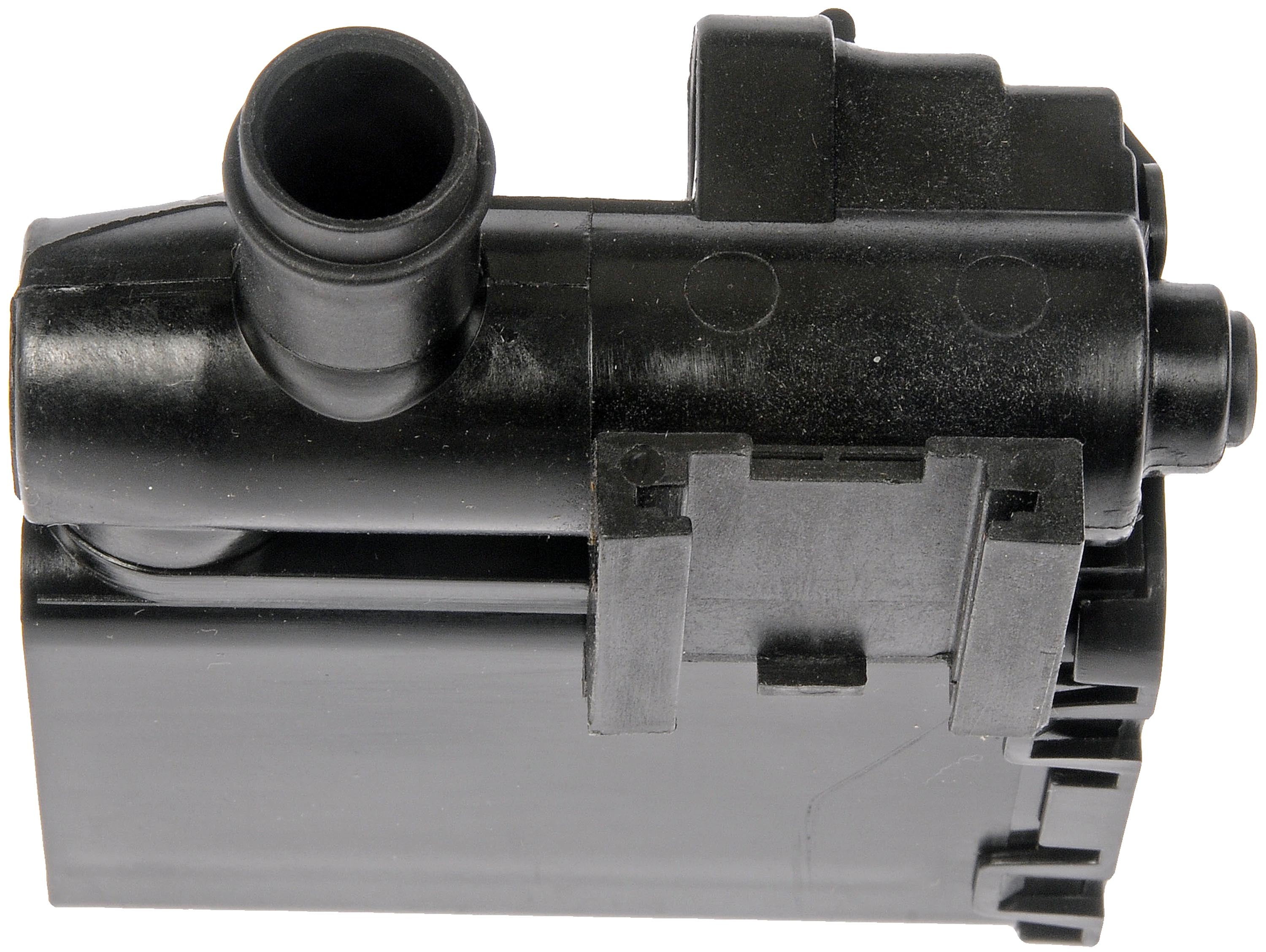
Est. part cost: $20-$40 - Failed EVAP Canister Purge Valve 🟡 Medium Probability → Shop Vapor Canister The purge valve (or solenoid) controls the flow of fuel vapors from the charcoal canister to the engine. It can become stuck open or closed, which the system detects as a malfunction. This is a frequent failure point on many modern vehicles, including Volvos.
How to confirm: The valve is typically located in the engine bay near the intake manifold. With the engine off, you can try to blow through it; it should be closed. A hand-held vacuum pump can also be used to test if it holds vacuum. A scan tool can command it to open and close to check for an audible click.
Typical fix: Replace the faulty purge valve. This is often a simple DIY job involving disconnecting two hoses and an electrical connector.
Est. part cost: $50-$150 - Cracked or Disconnected EVAP Hoses 🟡 Medium Probability The EVAP system uses a network of rubber and hard plastic lines that run from the gas tank to the engine bay. Over time, these hoses can become brittle from heat and age, leading to cracks and leaks, particularly at connection points. The 'J-hose' near the charcoal canister is a known weak point.
How to confirm: Perform a thorough visual inspection of all accessible EVAP lines, especially at connection points and bends. A professional smoke test is the most effective way to find a hard-to-see leak.
Typical fix: Replace the cracked section of hose or the entire hose assembly. Small rubber connectors are often the culprit.
Est. part cost: $10-$100
Rare But Worth Checking
- Faulty Fuel Tank Pressure Sensor: → Shop Fuel Tank This sensor monitors the pressure within the EVAP system. If it provides incorrect readings to the computer, it can falsely trigger a P0440 code even if no leak exists. On P1 platform Volvos, failure of this sensor is a known issue, making it a more likely cause than on other vehicles. Early Bosch sensors from 2004-2007 were particularly prone to premature failure.
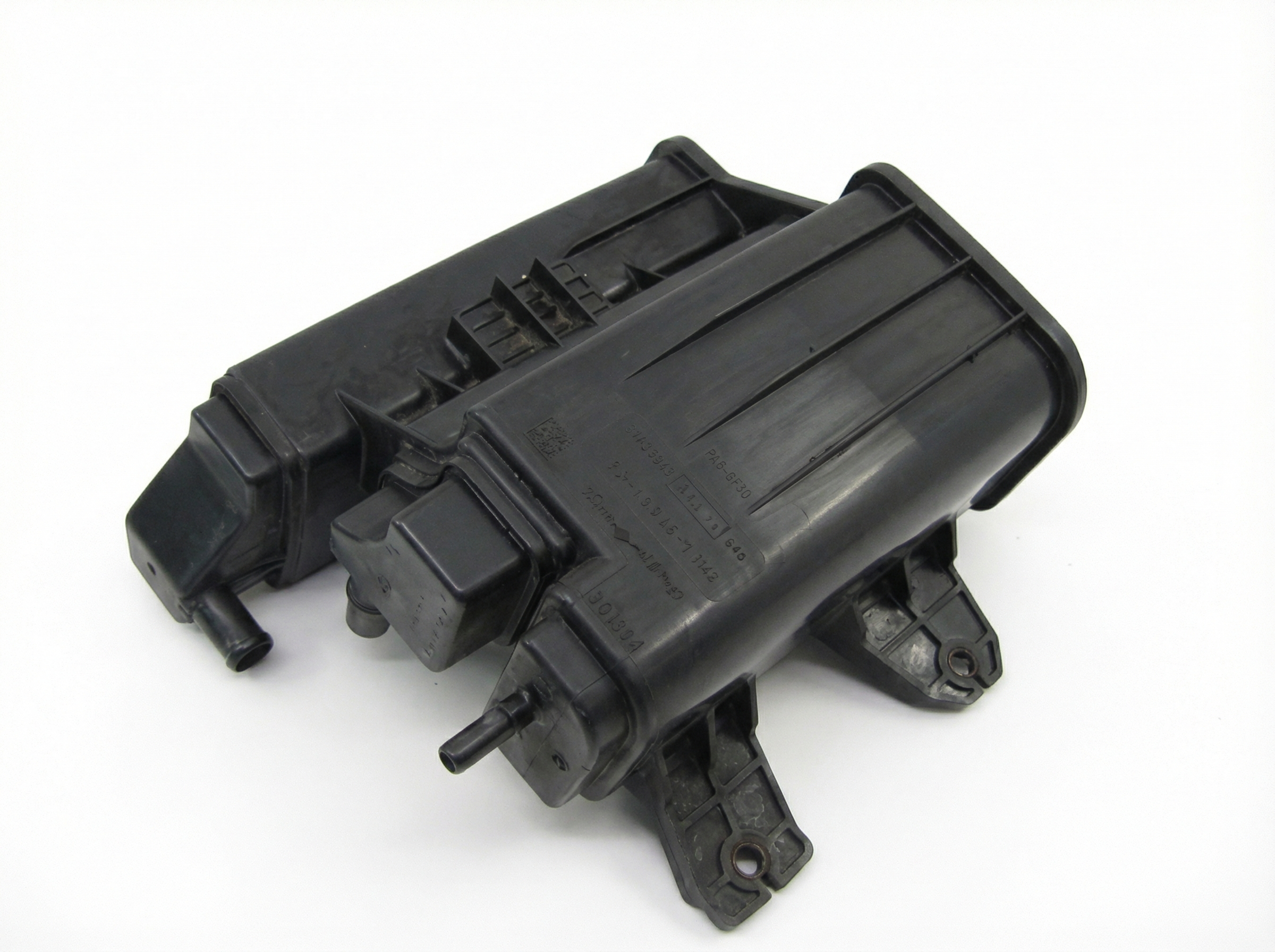
- Cracked Charcoal Canister: → Shop Vapor Canister The charcoal canister stores fuel vapors. While durable, it can be damaged from road debris or develop cracks due to age, creating a significant leak. On the S40, it is located above the rear subframe, and replacement can be difficult, sometimes requiring the subframe to be lowered.
- Faulty Canister Vent Valve/Solenoid: → Shop Vapor Canister This valve is responsible for letting fresh air into the canister to allow for purging. If it gets stuck, it can cause a P0440 or related codes like P0446. On many S40s, this valve is integrated into the charcoal canister assembly or part of the Leak Detection Pump (LDP).
Diagnosis Steps
- Read the Code: Use an OBD-II scanner to confirm P0440 is the active code and check for any other related codes.
- Check the Gas Cap: Remove and inspect the gas cap. Ensure it's the correct type for the vehicle and that the seal is not cracked or worn. Reinstall it and tighten until it clicks at least three times. Clear the code and drive for a few days to see if it returns.
- Visual Inspection: Visually inspect all accessible EVAP hoses in the engine bay and under the car near the fuel tank. Look for obvious cracks, breaks, or loose connections. Pay special attention to the hoses around the charcoal canister.
- Test the Purge Valve: Locate the EVAP purge valve in the engine bay. With the engine off, disconnect the electrical connector and the vacuum lines. Try to blow through it; no air should pass. If it's open, it has failed.
- Perform a Smoke Test: If the above steps do not reveal the issue, the most reliable method is to introduce smoke into the EVAP system using a specialized machine. Smoke will exit from any leaks, making them easy to spot. This is the definitive way to find hairline cracks in hoses or the canister itself.
- Inspect Charcoal Canister and Vent Valve: During the smoke test, pay close attention to the charcoal canister and its associated vent valve/solenoid, as these can also be sources of leaks. Before replacing, verify if your car is ULEV or SULEV via the under-hood sticker, as the parts are different.
Parts You'll Likely Need
- Fuel Cap
(OEM #31392044)— This is the most frequent cause of P0440. The seal wears out over time, preventing the system from holding pressure.
Trusted brands: Volvo (OEM), Stant, Gates
OEM price range: $30-$45
Aftermarket price range: $15-$25 - EVAP Canister Purge Valve
(OEM #31338153)— A common failure item that gets stuck open or closed, causing the system to fail its pressure/vacuum self-test. Bosch is often the original equipment manufacturer for this part.
Trusted brands: Bosch, Volvo (OEM), Dorman
OEM price range: $100-$150
Aftermarket price range: $50-$90 - EVAP System Hoses/Connectors — Rubber and plastic lines become brittle and crack with age, especially in the engine bay due to heat cycles and near the rear suspension due to road debris.
OEM price range: $20-$100
Aftermarket price range: $10-$50
Related Codes That Often Appear With This One
- P0455 — P0455 indicates a 'Large EVAP Leak Detected.' P0440 is a more general system malfunction code, but they often appear together when a significant leak, like a very loose gas cap or a disconnected hose, is present.
- P0442 — P0442 indicates a 'Small EVAP Leak Detected.' This can be a precursor to P0440 or appear alongside it, often pointing to a very small crack in a hose or a failing gas cap seal.
Technical Service Bulletins (TSBs) & Recalls
- TSB RTJ-16629 (May 15, 2009): While not for P0440 specifically, this TSB applies to 2003-2008 models and provides updated diagnostic procedures for technicians to better identify the source of general EVAP leak codes like P0455, which is highly relevant to diagnosing P0440.
Platform-Specific Known Issues
- Fuel Tank Pressure Sensor Failure: → Shop Fuel Tank The fuel tank pressure sensor on the P1 platform is known to fail more frequently than on other vehicles. It can send erroneous data to the ECU, triggering a P0440 code even when no physical leak is present. Diagnosis requires a scan tool capable of reading live data from the sensor. Early (2004-2007) Bosch sensors were particularly failure-prone.
- Charcoal Canister Replacement Difficulty: → Shop Vapor Canister On the S40 and its platform mates, the charcoal canister is located above the rear subframe. If it needs replacement, the job is more involved than on many other cars and may require partially lowering the subframe for access, increasing labor time.
Mechanic-Grade Diagnostic Values
- EVAP Canister Purge Valve Solenoid Resistance — expected: 20-50 Ω (Ohms). Failure: A reading of 0 Ω indicates a short, while an infinite reading (OL) indicates an open circuit. Readings outside the expected range suggest a faulty coil.
- Fuel Tank Pressure (FTP) Sensor Voltage Test — expected: With the key on, engine off, one of the three wires should show a 5V reference from the ECM. The signal wire voltage should change when vacuum is applied.. Failure: If applying a small amount of vacuum with a hand pump does not cause the signal voltage to decrease, the sensor is likely faulty. Do not apply excessive vacuum.
Hidden / Shadow Codes Worth Checking
- ECM-280C: Fuel pressure sensor - signal too high. While this is a fuel pressure code, a faulty sensor can cause erratic data that may contribute to the ECU flagging a general EVAP fault like P0440, especially on P1 platform vehicles where this sensor is a known weak point. (see via Volvo's VIDA diagnostic software or an advanced scan tool like VDASH.)
Scan Tool Commands That Help
- Volvo VIDA (Vehicle Information and Diagnostics for Aftersales): EVAP System Leak Test Activation — This function allows a technician to command the EVAP system's valves (purge and vent) to close, sealing the system. The technician can then monitor the fuel tank pressure sensor data to see if the system holds pressure or use it in conjunction with a smoke machine to find leaks without the engine running.
- Advanced OBD-II Scanner (e.g., BlueDriver, Autel): EVAP System Test (Mode $08) — Many advanced scanners can initiate the vehicle's own onboard EVAP system self-test. This can be used after a repair to quickly verify the fix without waiting for multiple drive cycles for the readiness monitor to complete.
Wiring & Ground Locations
- Central Electronic Module (CEM) — Located behind the right side of the dashboard, often behind the glove box.. The CEM is the central computer that controls many body and electronic functions. It communicates with the Engine Control Module (ECM) and powers many of the solenoids and sensors in the EVAP system. A poor connection or corrosion at the CEM can cause a variety of seemingly unrelated electrical issues, including EVAP faults.
- Ground Point G10 — At the right kick panel for S40 & V50 models.. This is a major chassis ground point for components in the passenger compartment and dashboard area. A loose or corroded ground here can cause intermittent or incorrect readings from sensors and modules controlled by the CEM, potentially leading to false EVAP codes.
- Engine Compartment Distribution Box — Located on the left side of the engine compartment.. This box contains fuses and relays that power critical engine and emissions components, including the EVAP purge valve and potentially the fuel tank pressure sensor circuit. Verifying fuses F1-F11 and F23-F33 is a key step if electrical issues are suspected.
Real Owner Repair Stories
- SwedeSpeed Forums (2005 Volvo S40 T5 AWD) — P0440 and P0446 codes, gas pump clicks off constantly when refueling.
❌ Tried (didn't work) Replacing the gas cap, Replacing the EVAP purge valve
✅ What actually fixed it The problem was ultimately solved by replacing the entire charcoal canister assembly. This fixed both the trouble codes and the refueling issue. - YouTube (d5t5) (2006 Volvo V50 T5 AWD (P1 Platform sibling)) — Sudden loss of power, Check Engine Light with code ECM-280C (Fuel pressure sensor signal too high).
❌ Tried (didn't work) Initial diagnosis pointed towards fuel delivery, but the specific code was key.
✅ What actually fixed it Replacing the fuel pressure sensor (Bosch P/N 0261230238) located on the end of the fuel rail. This is a high-value story because a failing fuel pressure sensor on this platform can cause a variety of codes, and owners chasing a P0440 might overlook it if they only focus on vacuum leaks.
"I Checked Everything" — The Actual Cause
- A common scenario for the P1 platform is passing a smoke test but still having a P0440 code. The cause is often not a physical leak but a faulty Fuel Tank Pressure (FTP) sensor. The sensor fails to report pressure changes correctly to the ECU, making the system think there's a malfunction even when it's perfectly sealed. Technicians confirm this by monitoring the sensor's live data on a scan tool while manually applying light pressure or vacuum to the system; if the readings don't change, the sensor is bad.
OEM Part Supersession History
30683039→31338153 (for Purge Valve)— Component revision for improved reliability.N/A→N/A— No supersession, but critical incompatibility exists.
Heads up: The vapor canister for ULEV (Ultra-Low Emission Vehicle) and SULEV (Super Ultra-Low Emission Vehicle) models are physically different and have different part numbers. They are NOT interchangeable. You must check the emissions sticker under the hood before ordering a replacement canister.
Model Year Variations Within This Range
- 2004-2007: Early P1 platform models were fitted with a Bosch fuel pressure sensor that had a higher premature failure rate. While the part is the same for later years, cars in this range are more likely to experience a P0440 caused by a faulty sensor rather than a physical leak.
Diagnostic Flowchart
Other Known Issues on This Vehicle
Issues unrelated to this code that are worth knowing about as an owner of this generation:
- PCV System Clogging/Failure 🔴 High — Common after 60,000-100,000 miles. The diaphragm in the oil filter housing tears, causing a loud whistling or howling noise at idle.
- Clogged Sunroof Drains 🟠 Medium — Very common. The drain tubes in the A-pillars get clogged with debris or disconnect, causing water to leak into the passenger footwell, potentially damaging the Central Electronic Module (CEM).
- Central Electronic Module (CEM) Failure due to Water Ingress 🔴 High — A direct consequence of clogged sunroof drains or a bad windshield seal. Water damages the CEM, causing a wide range of bizarre electrical issues and no-start conditions.
- Worn Front Engine Mount 🟡 Low — Common on higher mileage vehicles, leading to noticeable vibration in the cabin at idle.
- Plastic Cooling System Component Failure 🔴 High — The plastic coolant expansion tank, thermostat housing, and radiator hoses become brittle and can crack without warning, leading to rapid coolant loss and engine overheating.
- Brake Booster System Fault 🟠 Medium — Subject to a recall for 2008-2011 models where a faulty brake vacuum hose could make the brake pedal hard to press. (Ref: Volvo Recall R/2011/089)
Used vs. New Parts: Buying Guide for This Vehicle
When a used part is the smart pick: For parts like the charcoal canister, which can be expensive from the dealer and have limited aftermarket availability, a used OEM part from a low-mileage donor car is a smart choice. Ensure you match the ULEV/SULEV designation. Hoses and plastic lines can also be sourced used if they are in good, pliable condition.
Donor-vehicle mileage cap: roughly under 80000 miles for the part to have meaningful remaining life.
What to inspect on the donor part:
- For charcoal canisters, check for any visible cracks or signs of physical damage.
- For hoses, squeeze them to ensure the rubber is still flexible and not hard or brittle.
- Check the donor vehicle's VIN or under-hood sticker to confirm it's the same emissions type (ULEV/SULEV) as your car.
- Avoid parts from vehicles in the rust belt if possible, as corrosion can affect connectors and mounting points.
OEM-only on this vehicle (don't cheap out):
- Fuel Cap: While aftermarket caps exist, many owners report that only the genuine Volvo OEM cap (P/N 31392044) provides a perfect seal and reliably resolves the code.
Aftermarket brands forum-validated for this vehicle:
- Bosch: For the EVAP purge valve and fuel pressure sensor, Bosch is the Original Equipment Manufacturer (OEM). Buying a Bosch-branded part is equivalent to OEM quality, often at a lower price.
Brands owners have reported issues with on this vehicle:
- Generic, unbranded electronic parts (sensors, valves) from online marketplaces. These often have high failure rates and may not meet the precise specifications required by the Volvo ECU, leading to the code returning.
Real Owner Stories
Aggregated from forums and TSBs cited above. Mileages and costs reflect what owners reported in those sources.
2005 Volvo S40
Symptoms: Chasing P0440 and P0446 codes; the gas pump was constantly shutting off during refueling.
What fixed it: Replacing the entire charcoal canister assembly.
Source hint: SwedeSpeed Forums thread titled 'p0446-and-p0440-evap-codes'
2004-2012 Volvo S40 (P1 Platform)
Symptoms: EVAP leak code P0440 that was hard to spot visually.
What fixed it: Replacing the 'J-hose' near the charcoal canister after it became brittle and cracked.
Source hint: Matthews Volvo Site
Related OBD-II Codes
Frequently Asked Questions
Does TSB RTJ-16629 apply to my 2004-2012 Volvo S40?
Why does the gas pump nozzle keep clicking off when I try to refuel my S40?
I've checked for leaks but the P0440 code persists. Could it be a sensor issue?
Is the charcoal canister easy to replace myself on an S40?
Does it matter if my S40 is a ULEV or SULEV model when buying EVAP parts?
What is the 'J-hose' I keep hearing about in relation to Volvo EVAP codes?
Helpful Videos
We Have This Part in Stock

The information in this article is provided for general reference and educational purposes only. Vehicle specifications, procedures, and part compatibility can vary by production date, trim level, and region. Always consult your vehicle's factory service manual and verify part numbers before purchasing or performing repairs. Safety-critical components such as airbags, seat belts, and braking systems should be installed by a qualified professional.
- Volvo S40:
- 🧭 Diagnostic Flowchart
- 🎬 Helpful Videos
- 🛍️ Shop This Part
- What's Unique About the 2004-2012 Volvo S40
- Symptoms You May Notice
- Most Likely Causes
- Rare But Worth Checking
- Diagnosis Steps
- Parts You'll Likely Need
- Related Codes That Often Appear With This One
- Technical Service Bulletins (TSBs) & Recalls
- Platform-Specific Known Issues
- Mechanic-Grade Diagnostic Values
- Hidden / Shadow Codes Worth Checking
- Scan Tool Commands That Help
- Wiring & Ground Locations
- Real Owner Repair Stories
- "I Checked Everything" — The Actual Cause
- OEM Part Supersession History
- Model Year Variations Within This Range
- Other Known Issues on This Vehicle
- Used vs. New Parts: Buying Guide for This Vehicle
- Real Owner Stories
- 2005 Volvo S40
- 2004-2012 Volvo S40 (P1 Platform)
- Related OBD-II Codes
- Frequently Asked Questions
- 🎟️ Get 5% Off