

P0441 on 2009-2017 Audi Q5: Incorrect Purge Flow Causes and Fixes
On a 2009-2017 Audi Q5, code P0441 is most often caused by a faulty EVAP Purge Valve (N80 valve). Replacing this valve is a common and relatively simple DIY fix, with the part costing between $40 for an aftermarket version and $135 for an OEM part. This is a very common failure on VAG vehicles of this era.
- P0441 on a 2009-2017 Audi Q5 almost always points to a problem with the EVAP system's purge flow.
- The most likely culprit by a large margin is a faulty EVAP Purge Valve, also known as the N80 valve.
- The OEM part is made by Bosch (part #0280142431) and can be purchased for significantly less than the dealer-branded equivalent.
- Before buying any parts, check that the gas cap is tight and its seal is not cracked.
- Replacing the N80 valve is a straightforward DIY job that requires no special tools and can be completed in under 30 minutes.
- Always inspect the connected hoses for brittleness or cracks when replacing the valve.
What's Unique About the 2009-2017 Audi Q5
The first-generation Audi Q5 (Typ 8R), like many Volkswagen Auto Group (VAG) vehicles of its era built on the B8 platform, is known for issues with its EVAP Purge Valve, commonly called the N80 valve. This valve can become stuck open or closed, or simply fail electronically, directly causing the P0441 code. While other EVAP system issues can occur, the N80 valve is the most frequent point of failure on this specific platform and should be the first component checked, regardless of the engine (2.0T, 3.2L, or 3.0T).
Symptoms You May Notice
- Check Engine Light is on
- A slight fuel odor may be noticeable
- Slightly rough idle, especially after starting the engine
- Difficulty starting the engine after refueling (if the purge valve is stuck open)
- A 'whoosh' sound of pressure releasing when opening the gas cap (can indicate a blockage or stuck-closed valve).
- Replacing the charcoal canister when only the purge valve is faulty.
- Replacing oxygen sensors or other unrelated emissions components.
- Replacing the gas cap when the N80 valve is the actual issue.
Most Likely Causes
- Faulty EVAP Purge Valve (N80 Valve) 🔴 High Probability → Shop Vapor Canister The solenoid within the N80 valve is a known failure point on many VAG vehicles from this era. It can get stuck open, stuck closed, or fail to actuate correctly. It is the most common fix for a P0441 code.
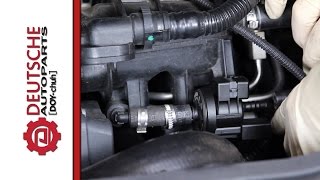
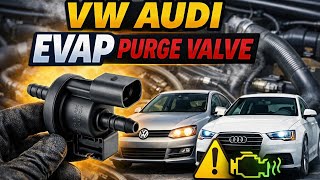
How to confirm: With the engine cold and off, disconnect the hose from the purge valve leading to the intake manifold. Attempt to blow through the valve; it should be closed and not allow air to pass. If air passes, it's stuck open. You can also use a scan tool like VCDS to perform an output test (in Basic Settings, Group 070), listening for a clicking sound as the valve actuates. 🎬 See how to diagnose and swap a faulty N80 valve. A lack of clicking indicates an electrical failure of the solenoid.
Typical fix: Replace the EVAP Purge Valve. It is a simple repair that involves disconnecting two hoses and one electrical connector.
Est. part cost: $40-$135 - Loose or Faulty Gas Cap ⚪ Low Probability → Shop Fuel Tank Cap While a loose gas cap typically causes a P0455 (large leak) or P0457 code, a failing seal on the cap can sometimes contribute to incorrect pressure readings that trigger a P0441. However, for P0441 specifically, this is less likely to be the root cause than the N80 valve.
How to confirm: Ensure the gas cap is tightened until it clicks. Inspect the rubber O-ring on the cap for cracks, dirt, or signs of wear. If it appears damaged, replacement is the best confirmation. Some owners report the code clearing after replacing an old battery, which resets the ECU, but the code often returns if the underlying issue isn't fixed.
Typical fix: Tighten or replace the gas cap.
Est. part cost: $20-$50 - Cracked or Disconnected EVAP Hoses ⚪ Low Probability
How to confirm: Visually inspect all vacuum and EVAP lines connected to the purge valve and charcoal canister for visible cracks, brittleness, or loose connections. The plastic lines can become brittle with heat and age. A smoke test is the most effective method to definitively identify hard-to-see leaks in the system.
Typical fix: Replace the damaged hose sections. Often the hose assembly is replaced with the N80 valve.
Est. part cost: $10-$50
Rare But Worth Checking
- Saturated or Clogged Charcoal Canister: → Shop Vapor Canister This can happen if the fuel tank is consistently overfilled, forcing raw fuel into the canister. A failed purge valve can also lead to a saturated canister over time. In some forum cases, users replaced the N80 valve and charcoal canister to resolve a persistent P0441 code, noting the old canister was significantly heavier.
- Faulty Fuel Tank Pressure Sensor: → Shop Fuel Tank The ECU relies on this sensor to verify the purge valve's operation. If the sensor provides incorrect readings, the ECU may falsely believe there is an incorrect purge flow.
Diagnosis Steps
- Read the code with an OBD-II scanner to confirm P0441 is present.
- Inspect the gas cap to ensure it is tight and the seal is intact.
- Locate the EVAP Purge Valve (N80) in the engine bay. On the Q5, it's typically mounted on or near the intake manifold, easily accessible.
- Visually inspect the vacuum hoses connected to and surrounding the purge valve for any cracks or disconnections.
- Test the purge valve. With the engine off, disconnect the electrical connector and the outlet hose. Try to blow through the valve. If air passes, the valve is stuck open and must be replaced.
- If the valve is not stuck open, use a scan tool (like VCDS) to command the valve to open (output test). You should hear an audible click. If not, check for voltage at the connector with a multimeter. If voltage is present but the valve doesn't click, it has failed electronically.
- If the purge valve and hoses seem fine, the next step is a smoke test to check the entire EVAP system for leaks, from the gas cap to the engine.
- If no leaks are found, investigate the charcoal canister. A canister that feels heavy or smells strongly of raw fuel may be saturated and require replacement.
- If all components test good, consider the possibility of a faulty Fuel Tank Pressure Sensor or, very rarely, an issue with the ECU.
Parts You'll Likely Need
- EVAP Canister Purge Valve (N80 Valve)
(OEM #06E906517A)— This is the most common failure point for the P0441 code on this specific vehicle. The internal solenoid fails, causing it to stick open or closed.
Trusted brands: Bosch (OEM), Genuine Audi/VW, Pierburg
OEM price range: $70-$140
Aftermarket price range: $40-$75 - EVAP Purge Valve Hose Assembly
(OEM #06H133781CK)— Often sold as an assembly with the valve, the plastic hoses can become brittle with age and crack during valve replacement. It's often wise to replace them together.
Trusted brands: OEM
OEM price range: $130-$160
Aftermarket price range: $60-$90
Related Codes That Often Appear With This One
- P0455 — If the purge valve is stuck wide open or a major hose is disconnected, the system may also register a 'Large Leak Detected' code.
- P0456 — A failing purge valve seal or a small crack in a connected hose could also be interpreted by the system as a 'Small Leak Detected'.
Platform-Specific Known Issues
- Owner Experience: P0441 Persists After N80 and Canister Replacement: An owner on AudiWorld forums with an A5 (platform mate) reported a persistent P0441 code even after replacing the N80 valve and the charcoal canister. They also noted a large pressure release from the gas cap and poor running conditions. This indicates that in rare cases, a blockage in the EVAP lines themselves or another system issue (like faulty O2 sensors affecting the test) could be the cause.
- DIY Success Story: Multiple forums and videos confirm that replacing the N80 valve is a simple, sub-30-minute job for most DIYers. A YouTube video demonstrates the process, which involves unplugging one electrical connector and two hoses, confirming the high likelihood of success for this repair. 🎬 Watch: Step-by-step N80 valve replacement on the 2.0T engine.
Mechanic-Grade Diagnostic Values
- N80 Purge Valve internal resistance — expected: 22 to 30 Ohms. Failure: A reading of 'OL' (open circuit) or a value outside the specified range indicates a faulty solenoid coil.
- Voltage at N80 Purge Valve connector, Pin 1 to Ground — expected: Battery voltage (~12V) with key on or while briefly operating the starter.. Failure: No voltage indicates a wiring issue, a blown fuse, or a problem with the power supply relay (e.g., Fuel Pump Relay J17).
- Continuity/Resistance of N80 Purge Valve control wire — expected: Max 1.5 Ohms. Failure: High resistance or an open circuit indicates a break in the wire between the N80 valve connector (Pin 2) and the Engine Control Module (ECM).
Scan Tool Commands That Help
- VCDS (VAG-COM): Basic Settings - Group 070 (or 071 for LDP systems) — This function runs the complete EVAP system test. It will actuate the N80 valve and monitor pressure changes to verify flow and check for leaks. The test result will display 'EVAP OK' or 'EVAP NOT OK'. A failure here points directly to a system fault.
- VCDS (VAG-COM): Output Test - EVAP Canister Purge Regulator Valve (N80) — This is a simple functional test to see if the N80 valve's solenoid is working. When activated, you should hear and feel the valve clicking rapidly. A lack of clicking confirms an electrical failure of the valve itself, assuming power and ground are good.
- VCDS (VAG-COM): Readiness Monitors — After a repair, check the readiness status for the 'Evaporative System'. If it shows 'Failed or Incomplete', the ECU has not yet successfully completed its self-test, and the code may return. Driving the vehicle under specific conditions is required to set this monitor to 'Passed'.
Wiring & Ground Locations
- N80 Connector Pin 1 — The 2-pin electrical connector on the N80 valve itself.. This is the power supply pin. It should receive battery voltage from a relay (like the Fuel Pump Relay J17 or Engine Component Power Supply Relay J757) when the ignition is on. Lack of voltage here means the valve cannot operate.
- N80 Connector Pin 2 — The 2-pin electrical connector on the N80 valve.. This is the control pin, which is ground-side switched by the Engine Control Module (ECM). The ECM pulses the ground connection to open and close the valve. A break in this wire will prevent the valve from actuating.
- Ground Point 12 — In the engine compartment on the left side, between the shock absorber strut and the water drainage box (plenum chamber).. This is a primary engine bay ground point. While not exclusively for the EVAP system, a corroded or loose ground here can cause a variety of intermittent electrical issues for engine bay components, including the ECM that controls the N80 valve.
Real Owner Repair Stories
- AudiWorld Forums (Audi A5 2.0T (platform mate to Q5)) — P0441 Check Engine Light, significant pressure release from gas cap, poor running, rough/low idle, surging at 3000 RPM, high fuel consumption.
❌ Tried (didn't work) Replacing the EVAP Purge Valve (N80), Replacing the charcoal canister
✅ What actually fixed it The user did not post a final resolution, but their experience highlights a critical diagnostic path: when the N80 valve and canister are replaced and the code persists with pressure symptoms, the issue is likely a physical blockage in an EVAP line or a failure of another component like the Leak Detection Pump (LDP) or related sensors.
"I Checked Everything" — The Actual Cause
- In some cases, a smoke test may pass because the N80 valve is not leaking at rest but is intermittently sticking open or closed only when actuated electronically or when hot. A Ross-Tech forum user noted that they have seen many N80 valves that pass the VCDS EVAP test but still cause the P0441 code to return after a few days, indicating an intermittent functional failure rather than a static leak.
OEM Part Supersession History
06E906517→06E906517A— Standard part revision and improvement by the manufacturer.
Heads up: The 'A' revision is the standard replacement and is fully compatible.
Diagnostic Flowchart
Other Known Issues on This Vehicle
Issues unrelated to this code that are worth knowing about as an owner of this generation:
- 2.0T EA888 Oil Consumption 🔴 High — Very common on 2009-2014 models. Caused by faulty piston ring design. Can lead to needing 1 quart of oil every 1,000 miles or less. (Ref: Subject of class-action lawsuits and extended warranty programs for piston/ring replacement.)
- 2.0T EA888 Timing Chain Tensioner Failure 🔴 High — Common on pre-2013 models with the original tensioner design. Failure can occur with little warning, typically between 60k-100k miles, leading to catastrophic engine damage. (Ref: An updated tensioner part was released. Visual inspection or checking via scan tool is recommended for early models.)
- 3.0T Water Pump / Thermostat Failure 🟠 Medium — A known weak point, especially on earlier 2013-2015 models. Leaks can cause overheating. (Ref: Subject of a class-action lawsuit. An updated water pump design was introduced in later models.)
- Carbon Buildup on Intake Valves 🟠 Medium — Common on all direct-injection engines (2.0T, 3.2L, 3.0T) over 60,000-80,000 miles. Causes rough idle, misfires, and loss of performance.
- Leaking Panoramic Sunroof 🟡 Low — Common issue where clogged drain tubes cause water to leak into the cabin, potentially damaging electronics and the headliner. (Ref: A recall was issued for a related issue where leaks could affect side airbag inflators.)
Used vs. New Parts: Buying Guide for This Vehicle
When a used part is the smart pick: For this specific repair, sourcing used parts is generally not recommended. The primary failure component, the N80 valve, is an electro-mechanical part with a known failure rate due to internal wear and sticking. A used valve carries a high risk of being near the end of its service life or already faulty. Structural components like hoses or the charcoal canister could be sourced used, but only after careful inspection.
Donor-vehicle mileage cap: roughly under 40000 miles for the part to have meaningful remaining life.
What to inspect on the donor part:
- For hoses: Check for any signs of cracking, brittleness, or swelling. Hoses should be pliable.
- For charcoal canister: Avoid any canister that feels unusually heavy (suggests fuel saturation), has a strong raw fuel smell, or shows any cracks in the plastic housing.
- For N80 valve (if considering): A used valve is a gamble, but at a minimum, it should be tested for resistance (22-30 ohms) and its ability to hold a vacuum before purchase.
OEM-only on this vehicle (don't cheap out):
- EVAP Canister Purge Valve (N80 Valve)
Aftermarket brands forum-validated for this vehicle:
- Bosch (This is the Original Equipment Manufacturer, so it is equivalent to Genuine Audi/VW).
- Pierburg (A reputable OEM supplier for many German brands).
Brands owners have reported issues with on this vehicle:
- Unbranded, low-cost valves from online marketplaces are frequently reported on forums as being dead-on-arrival or failing shortly after installation. A Ross-Tech forum professional explicitly advised against buying 'junk from Bezos'.
Real Owner Stories
Aggregated from forums and TSBs cited above. Mileages and costs reflect what owners reported in those sources.
2012 Audi A4 (B8) 2.0T
Symptoms: Owner initially suspected other causes but confirmed the P0441 code was present.
What fixed it: Replacing the N80 valve.
Source hint: AudiWorld Forums - P0441 Again (2012): https://www.audiworld.com/forums/a4-b8-platform-discussion-128/p0441-again-2832369/
2017 Audi A5 (B8) 2.0T
Symptoms: Persistent P0441 code, large pressure release from the gas cap, and poor running conditions.
What fixed it: The source notes that even after replacing the N80 valve and charcoal canister, the issue persisted, suggesting a potential blockage in EVAP lines or O2 sensor interference.
Source hint: AudiWorld Forums - EVAP system P0441 (2017): https://www.audiworld.com/forums/a5-s5-rs5-coupe-cabrio-b8-125/evap-system-p0441-2928900/
2009 Audi (B6 Platform)
Symptoms: P0441 EVAP Purge Valve problem.
What fixed it: Cleaning and then replacing the N80 valve.
Source hint: AudiForums.com - P0441 EVAP Purge Valve problem solved !!! (2009): https://www.audiforums.com/forum/b6-models-70/p0441-evap-purge-valve-problem-solved-129333/
Related OBD-II Codes
Frequently Asked Questions
Is there a specific part number for the N80 purge valve that I should look for on my Audi Q5?
I have a 2012 Audi Q5 with the 2.0T engine; are there other major issues I should watch for while fixing the P0441 code?
Can I use a specific diagnostic tool to test the N80 valve on my Q5?
Why does my Audi Q5 have trouble starting specifically after I fill up the gas tank?
Is the P0441 issue common to other Audi models similar to the Q5?
Could a 'whoosh' sound when I open my gas cap be related to the P0441 code?
Helpful Videos

Used OEM Parts in Stock


New Aftermarket Parts Available


The information in this article is provided for general reference and educational purposes only. Vehicle specifications, procedures, and part compatibility can vary by production date, trim level, and region. Always consult your vehicle's factory service manual and verify part numbers before purchasing or performing repairs. Safety-critical components such as airbags, seat belts, and braking systems should be installed by a qualified professional.
- Audi Q5:
- 🧭 Diagnostic Flowchart
- 🎬 Helpful Videos
- 🛍️ Shop This Part
- What's Unique About the 2009-2017 Audi Q5
- Symptoms You May Notice
- Most Likely Causes
- Rare But Worth Checking
- Diagnosis Steps
- Parts You'll Likely Need
- Related Codes That Often Appear With This One
- Platform-Specific Known Issues
- Mechanic-Grade Diagnostic Values
- Scan Tool Commands That Help
- Wiring & Ground Locations
- Real Owner Repair Stories
- "I Checked Everything" — The Actual Cause
- OEM Part Supersession History
- Other Known Issues on This Vehicle
- Used vs. New Parts: Buying Guide for This Vehicle
- Real Owner Stories
- 2012 Audi A4 (B8) 2.0T
- 2017 Audi A5 (B8) 2.0T
- 2009 Audi (B6 Platform)
- Related OBD-II Codes
- Frequently Asked Questions
- 🎟️ Get 5% Off