

P0441 on 2004-2010 BMW 5-Series: EVAP Incorrect Purge Flow Causes and Fixes
For the 2004-2010 BMW 5-Series (E60), code P0441 is most often caused by a faulty EVAP purge valve (tank breather valve) that is stuck open or closed. Expect to pay between $70-$150 for a new valve from an OEM brand like Bosch or Febi-Bilstein. It's a DIY-friendly fix, though access is tight under the intake manifold.
- P0441 on an E60 BMW almost always points to a faulty purge valve, not the gas cap or the DMTL pump.
- The purge valve is located in a tight spot under the intake manifold, making replacement a bit challenging but possible for a DIYer.
- Confirm which engine you have (N52, N54, etc.) to buy the correct part number for the purge valve.
- If you have trouble filling your gas tank or hear a loud 'whoosh' when opening the cap, suspect a clogged charcoal canister as a potential root cause.
What's Unique About the 2004-2010 BMW 5-Series
On this E60/E61 generation of 5-Series, the EVAP system uses a purge valve (in the engine bay) to control flow and a separate DMTL pump (at the rear of the car) to test for leaks. It's important not to confuse the two. The P0441 code specifically points to a flow problem related to the purge valve's operation, not a system leak which would typically set a different code (e.g., P0455, P0456). While the DMTL pump can fail, it usually triggers its own specific fault codes (like 2A17) and is not the primary cause of an incorrect purge flow fault.
Generation note: This guide covers the E60 (sedan) and E61 (wagon) generation of the BMW 5-Series. While the principle of operation is the same, different engines within this range (e.g., M54, N52, N54) may have slightly different part numbers and component locations for the purge valve. The N52 and N54 engines are particularly common in the later years of this generation.
Symptoms You May Notice
- Check Engine Light is on
- A slight fuel odor (rare).
- A 'whooshing' sound of air rushing in when opening the gas cap (can indicate a clogged canister or vent path).
- In rare cases, a slightly rough idle if the purge valve is stuck open, creating a small vacuum leak.
- Replacing the gas cap. While a faulty gas cap can cause other EVAP codes (typically for leaks, like P0455 or P0456), it is not a common cause for an 'incorrect flow' fault like P0441.
- Replacing the DMTL pump. The DMTL pump tests for leaks and has its own set of diagnostic codes. It is not directly responsible for controlling purge flow and is an unlikely cause for P0441.
Most Likely Causes
- Faulty EVAP Purge Valve (Tank Breather Valve) 🔴 High Probability → Shop Vapor Canister The purge valve is a solenoid that cycles thousands of times, leading to eventual mechanical failure (sticking open/closed) or electrical failure. It is the most common point of failure for this specific code.
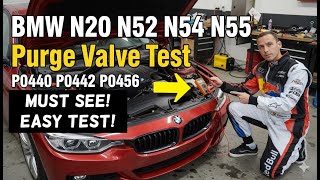
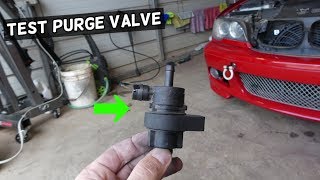
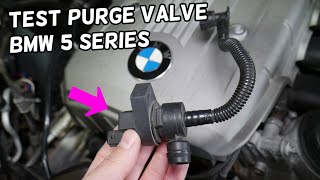
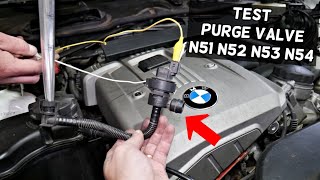
How to confirm: With the engine running, disconnect the hose on the outlet side of the valve; there should be no vacuum if the valve is properly closed at idle. Alternatively, apply 12V to the valve's electrical connector and listen for a distinct 'click'. You can also test the resistance across the two pins; a good valve should read around 28 ohms, while a failed one may show a much higher reading. A BMW-specific scan tool can also be used to command the valve to cycle, while monitoring vacuum on the outlet port.
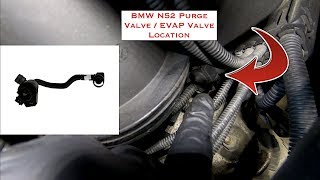
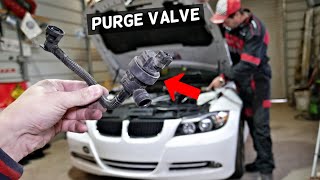
Typical fix: Replace the purge valve. On N52/N54 engines, it is located under the intake manifold, typically on the driver's side.
Est. part cost: $70-$150 - Cracked or Disconnected EVAP Hoses 🟡 Medium Probability The plastic and rubber hoses in the engine bay become brittle over time due to heat cycles and can easily crack, causing a vacuum leak that disrupts the purge flow.
How to confirm: Visually inspect all vacuum lines connected to the purge valve and running along the intake manifold. A smoke test is the most effective way to find small, hard-to-see cracks. Pay close attention to the connections at the valve itself and where the lines connect to the intake.
Typical fix: Replace the cracked or broken hose section. Sometimes the entire valve and hose assembly is replaced as one unit.
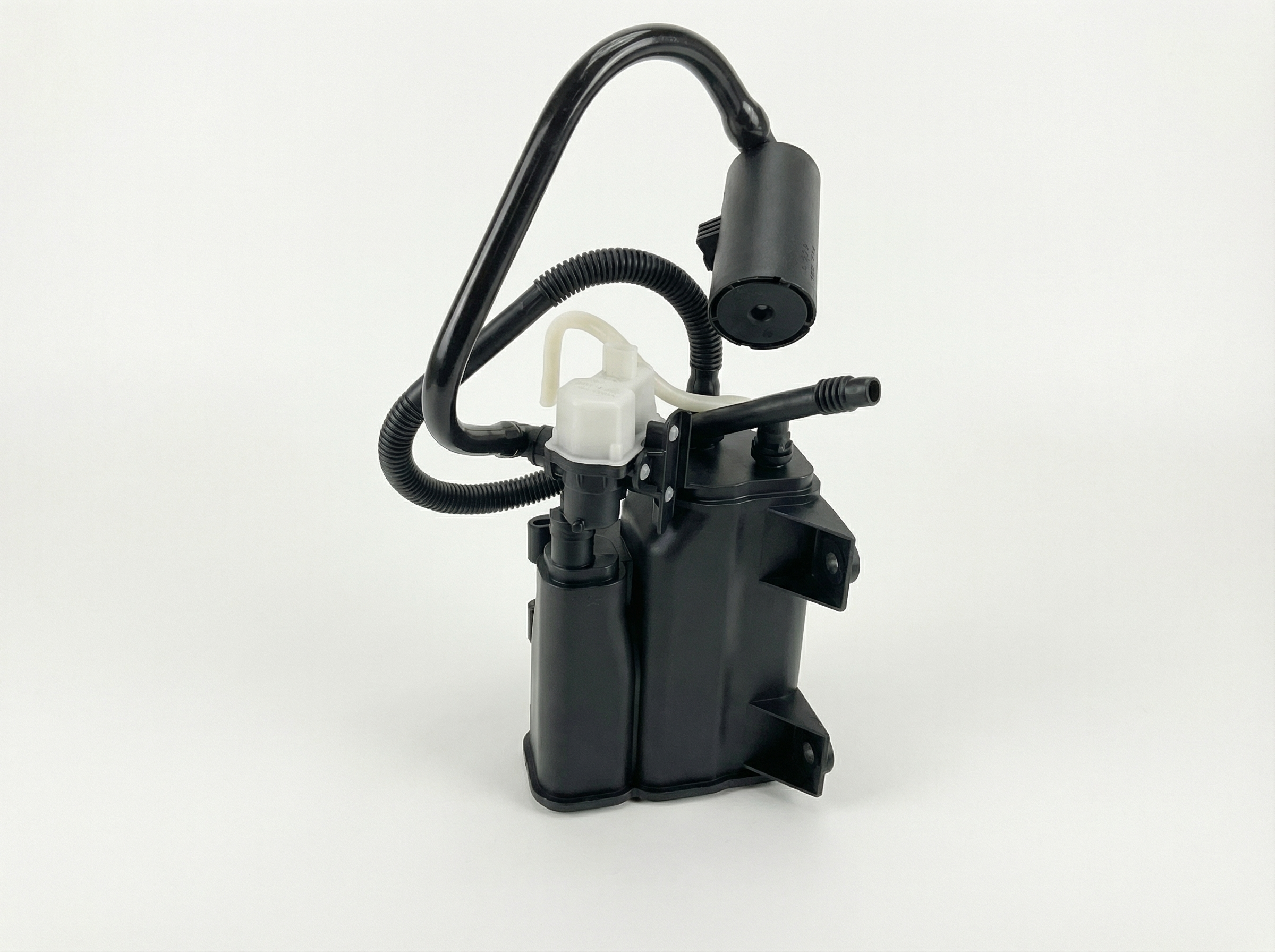
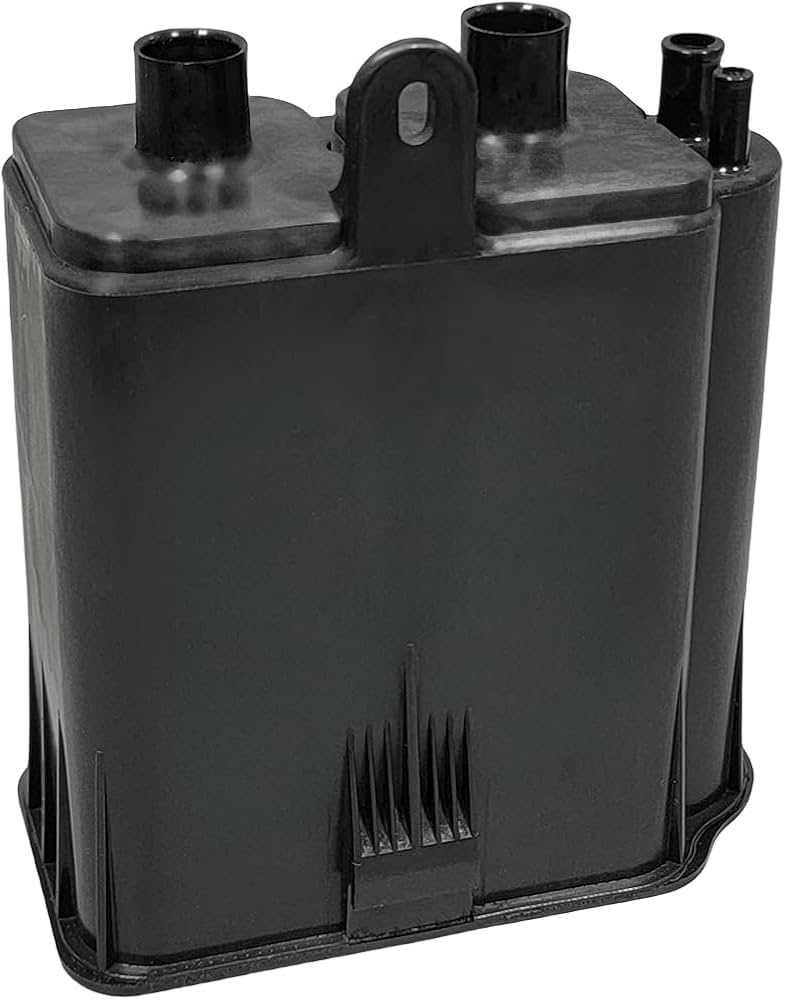
Est. part cost: $20-$50 - Clogged or Failed Charcoal Canister ⚪ Low Probability → Shop Vapor Canister Consistently overfilling the fuel tank (topping off after the pump clicks off) can force liquid gasoline into the charcoal canister, saturating it and causing it to fail. Over time, the canister can also break down internally, releasing charcoal pellets into the EVAP lines.
How to confirm: Symptoms include difficulty filling the fuel tank (pump clicks off repeatedly), a strong vacuum 'whoosh' when opening the gas cap, or finding black charcoal pellets in the EVAP lines or purge valve. A Reddit user with an E60 noted that if the car stalls showing empty but only accepts 9-10 gallons, it could point to a bad EVAP issue like the canister.
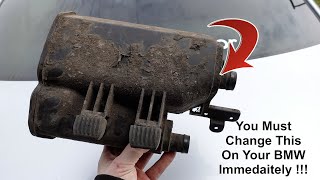
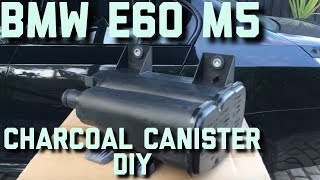
Typical fix: Replace the charcoal canister, located in the right rear wheel well. 🎬 See this step-by-step charcoal canister replacement guide If pellets are found, all EVAP lines and the purge valve must be cleaned or replaced to prevent repeat failure of the new valve.
Est. part cost: $150-$250
Rare But Worth Checking
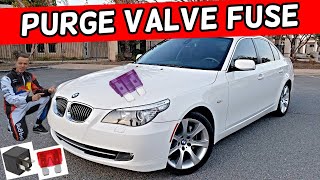
- Blown Fuse for Purge Valve Circuit: → Shop Vapor Canister A video for the E60 suggests the purge valve circuit is protected by fuse #2 or #3 in the engine management fuse block, located in the white electronics box on the passenger side under the hood. 🎬 Watch: How to find and check the purge valve fuse A blown fuse can prevent the valve from actuating.
- Faulty Fuel Tank Pressure Sensor: → Shop Fuel Tank While this sensor usually sets its own specific codes (e.g., P0453), if it provides incorrect readings to the DME, it could theoretically lead the computer to misinterpret the purge flow rate, triggering a P0441. This is an uncommon cause.
Diagnosis Steps
- Check the gas cap to ensure it is tight and the seal is not cracked or damaged. This is a simple first step, though unlikely to be the cause.
- Visually inspect the engine bay for any obvious cracked, broken, or disconnected vacuum hoses, particularly around the intake manifold where the purge valve is located.
- Locate the purge valve under the intake manifold. With the engine running, use a mechanic's stethoscope or a long screwdriver to listen for a rhythmic ticking sound, which indicates it is being commanded by the DME.
- Test the purge valve for being stuck open. With the engine running, disconnect the hose leading from the valve to the charcoal canister. Place your finger over the port; if you feel vacuum, the valve is stuck open and must be replaced.
- Test the purge valve's solenoid. Disconnect the electrical connector and apply 12V directly to the valve's pins. A healthy valve will produce an audible click. No click means the solenoid is dead.
- If the valve and hoses appear fine, disconnect the line from the purge valve that runs back to the charcoal canister and inspect it for black charcoal pellets. If found, the charcoal canister has failed and must be replaced along with cleaning the lines.
- If no other cause is found, a professional smoke test is the most definitive way to check the entire EVAP system for small, hard-to-see leaks in the lines that could affect flow.
Parts You'll Likely Need
- EVAP Purge Valve (Tank Breather Valve) for N52 Engines
(OEM #13907618643)— This is the most common failure point for code P0441. Fits models like the 525i, 528i, and 530i from roughly 2006-2010. This part number supersedes previous versions 13907572234 and 13904588396.
Trusted brands: Genuine BMW, Bosch, Febi-Bilstein, URO Parts
OEM price range: $115-$140
Aftermarket price range: $70-$90 - EVAP Purge Valve (Tank Breather Valve) for N54 Engines
(OEM #13907618652)— This is the most common failure point for code P0441 on the twin-turbo N54 engine. Fits the 535i from 2008-2010.
Trusted brands: Genuine BMW, URO Parts, Standard Motor Products
OEM price range: $125-$150
Aftermarket price range: $80-$100
Platform-Specific Known Issues
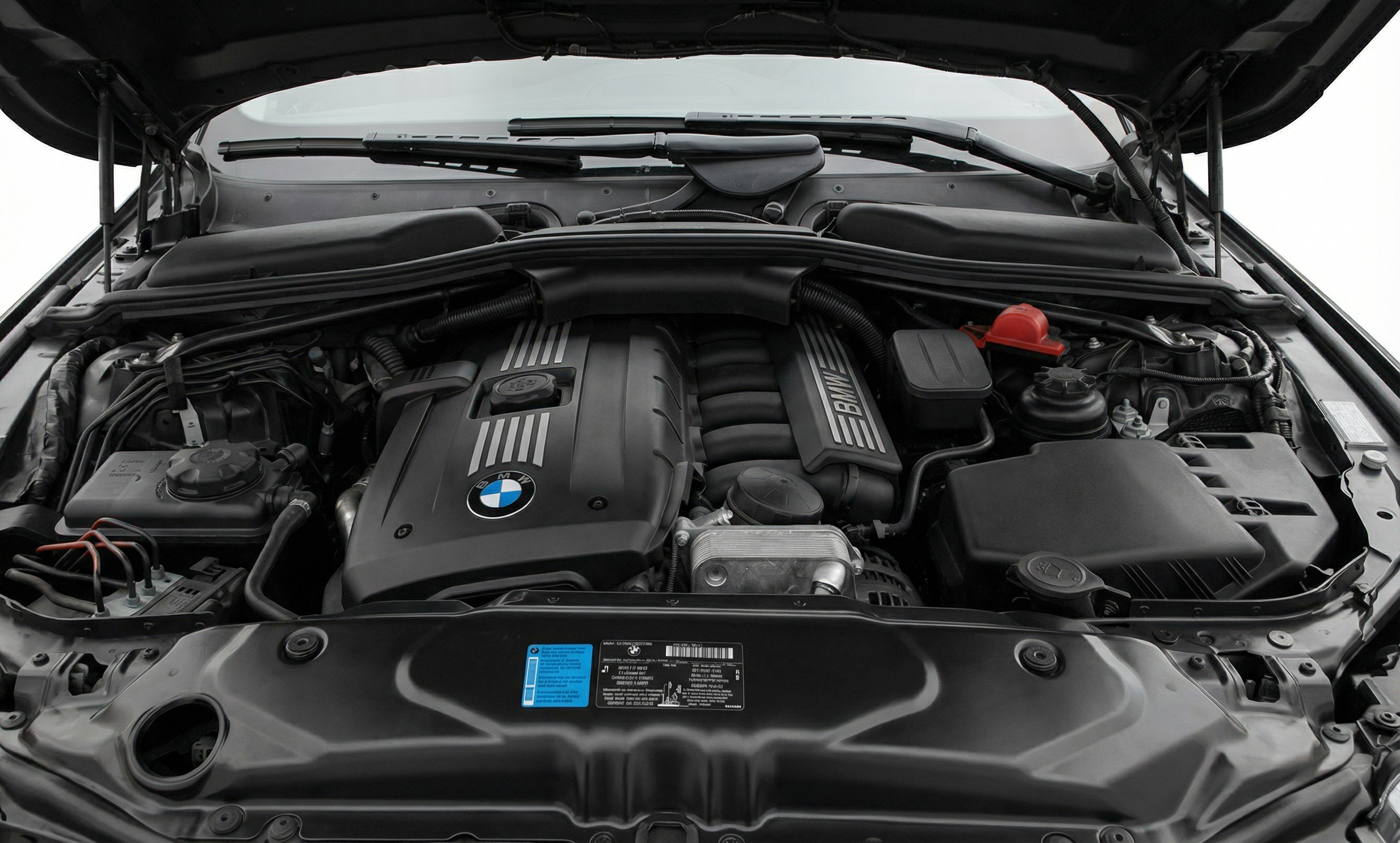
- Accessing the Purge Valve: → Shop Vapor Canister On both N52 and N54 engines, the purge valve is located under the intake manifold on the driver's side. Access is tight and may require removing the engine cover and cabin air filter housing cowl for better visibility and tool access. Some owners find it easier to access from underneath the vehicle.
Mechanic-Grade Diagnostic Values
- Purge Valve (TEV) Solenoid Resistance — expected: 27 - 29 Ohms. Failure: A significantly higher reading (e.g., over 100 Ohms) or an open circuit (infinite resistance) indicates a failed solenoid coil.
- Purge Valve Vacuum Test (at valve inlet port) — expected: No vacuum/suction at idle when the engine is cold. Vacuum should be present after the engine warms up and the DME commands the valve to open.. Failure: Feeling vacuum immediately after a cold start indicates the valve is stuck open. Feeling no vacuum after the engine is fully warm indicates the valve is stuck closed or not being commanded to open.
Hidden / Shadow Codes Worth Checking
- 2A17: DMTL (Diagnosis Module Tank Leakage) system fault. This code indicates a failure of the DMTL pump itself, which is responsible for pressurizing the EVAP system to test for leaks. While P0441 is an 'incorrect flow' code, a failing DMTL system can sometimes lead the DME to run its tests incorrectly, indirectly causing a P0441. (see via BMW-specific scan tool like ISTA, INPA, or a high-end aftermarket scanner.)
- 2A15 / 2A16: DMTL, minor leak detected. These codes are the BMW-specific equivalent of generic P0456 (very small leak) codes. They are triggered when the DMTL pump detects a small leak during its test cycle. This is most often a bad gas cap, but can also be a cracked hose or failing DMTL pump. An underlying leak can affect the pressure changes the DME expects to see during a purge cycle, causing a P0441. (see via BMW-specific scan tool like ISTA, INPA, or a high-end aftermarket scanner.)
- 250 (INPA): Functional Check, Tank Venting Valve (TEV). This is an older, INPA-specific code that directly corresponds to the generic P0441, indicating the DME did not detect the expected effect (a change in mixture/O2 sensor readings) when it commanded the purge valve to open. (see via INPA diagnostic software.)
Scan Tool Commands That Help
- ISTA / INPA: EVAP System Test / DMTL Cycle Test — This is a crucial bidirectional test to command the entire EVAP leak detection system to run. It seals the system and runs the DMTL pump to check for leaks. A 'pass' result from this test strongly suggests the system is sealed and that a P0441 code is more likely due to a flow restriction (like a clogged canister) or a faulty purge valve, rather than a simple leak.
- ISTA / INPA: Activate Tank Venting Valve (TEV) — This function allows the technician to manually command the purge valve to open at different duty cycles (e.g., 20% or 99%). While the valve is commanded open, the technician can feel for vacuum at the outlet port to confirm it is physically opening and check for a corresponding change in short-term fuel trims on live data to see if the DME is registering the effect.
Wiring & Ground Locations
- Purge Valve Fuses — In the engine management fuse block (a small black box of 5 fuses) located inside the white electronics box (E-box) on the passenger side of the engine bay, near the firewall.. The purge valve solenoid is powered by one of these fuses, specifically mentioned as fuse #2 or #3. A blown fuse will result in no power to the valve, preventing it from opening and causing a P0441 (no flow) or a P0444 (circuit open) code.
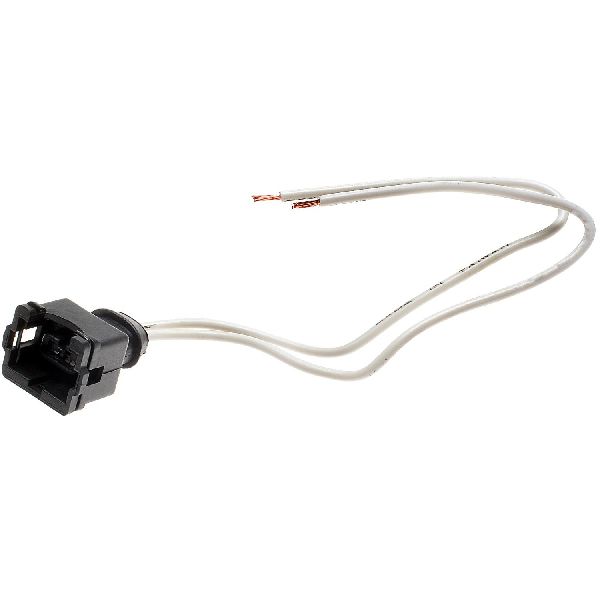
- Purge Valve Connector — A 2-pin connector attached directly to the purge valve solenoid, under the intake manifold.. One pin receives 12V+ power (with ignition on) from the fuse, and the other pin is the ground, which is switched on and off by the DME to cycle the valve. Testing for 12V at the connector confirms the fuse and wiring to the valve are good.
- Ignition Coil Ground Strap (N52 Engine) — A braided ground strap that bolts from the ignition coil wiring rail to a stud on the cylinder head, near the center of the engine above the exhaust manifold.. While not directly for the EVAP system, this ground is critical for stable ignition system operation. If this ground is loose or missing (often forgotten after a valve cover gasket job), voltage spikes from the coils can feed back and potentially damage the DME, leading to a variety of erratic and incorrect fault codes, including emissions-related ones.
Real Owner Repair Stories
- Xoutpost.com forum user (BMW X5 3.0 (M54 engine, similar EVAP architecture)) — Persistent P0441 (Incorrect Purge Flow) and INPA code 250, even after ~30 miles of driving.
❌ Tried (didn't work) Fixed all intake vacuum leaks (confirmed with smoke test)., Replaced the purge valve (TEV) with a new Genuine BMW part., Swapped gas caps with a known-good car., Verified the new purge valve was actuating correctly via INPA., Ran the DMTL leak test multiple times, which passed every time, confirming the system was sealed.
✅ What actually fixed it The user concluded that since the system was sealed and the valve was working, the only remaining possibilities were a partially blocked EVAP hose or, more likely, a clogged/saturated charcoal canister. The P0441 was being set because when the DME opened the purge valve, it did not see the expected change in O2 sensor readings, indicating no fuel vapor was actually flowing into the intake.
"I Checked Everything" — The Actual Cause
- In a well-documented case, an owner had a persistent P0441 code despite the EVAP system passing a smoke test and a DMTL pump test, and after installing a new OEM purge valve. The root cause was determined to be a clogged charcoal canister. The 'incorrect flow' was not due to a leak, but a complete lack of flow from a blockage. The DME correctly identified that when it commanded the purge valve open, no fuel vapors were being introduced into the engine, triggering the P0441.
OEM Part Supersession History
13907572234, 13904588396→13907618643— Standard part revision and improvement by BMW.
Model Year Variations Within This Range
- 2004-2005: Models from these years typically use the M54 6-cylinder engine. The EVAP system principles are the same, but the purge valve location, part numbers, and DME (MS45.1) are different from the later N52/N54-powered cars. Diagnosis remains similar, focusing on the purge valve, hoses, and canister.
- 2006-2010: These models use the N52 or N54 engines, which have their own specific purge valve part numbers and use the MSV70/MSD80 family of DMEs. The information in this guide is most applicable to these later-model E60s.
Diagnostic Flowchart
Other Known Issues on This Vehicle
Issues unrelated to this code that are worth knowing about as an owner of this generation:
- Electric Water Pump & Thermostat Failure (N52/N54) 🔴 High — Very common failure, typically between 60,000-90,000 miles. Failure can be sudden and lead to overheating.
- Oil Filter Housing Gasket & Valve Cover Gasket Leaks (N52/N54) 🟠 Medium — Extremely common oil leaks. The OFHG leak is critical as it can drip oil onto the serpentine belt, causing it to slip off and get ingested by the front main seal, leading to catastrophic engine damage.
- High-Pressure Fuel Pump (HPFP) Failure (N54 Engine) 🔴 High → Shop Fuel Pump — A notorious weak point on the N54 twin-turbo engine, causing long cranks, rough idle, and sudden loss of power. Multiple recalls and extended warranties were issued. (Ref: NHTSA Action Number: PE10036, BMW Recall 10E-A02.)
- iDrive CCC Unit Failure 🟠 Medium — The Car Communication Computer (CCC) unit in pre-LCI models (2004-~2008) is prone to failure, causing the screen to get stuck on the BMW logo, reboot continuously, or go blank.
- Clogged Sunroof Drains 🔴 High — The sunroof drain tubes clog with debris, causing rainwater to overflow and leak into the cabin, often flooding the trunk where sensitive electronic modules (like the fuel pump control module) are located, leading to no-start conditions.
- Positive Battery Cable Connector (Trunk Floor) 🔴 High — The connection for the positive battery cable at the trunk floor can loosen, causing high resistance, overheating, and a potential fire risk or no-start condition. (Ref: NHTSA Campaign ID: 12V126000.)
Used vs. New Parts: Buying Guide for This Vehicle
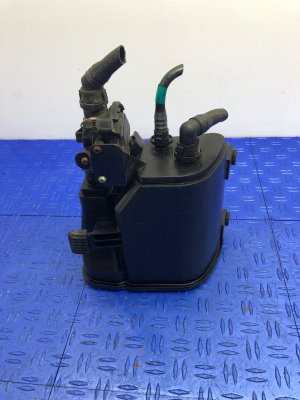
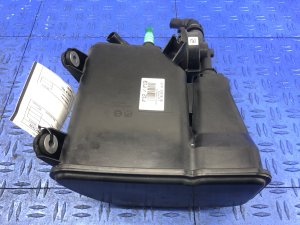
When a used part is the smart pick: For the charcoal canister, a used part from a documented low-mileage, accident-free vehicle can be a cost-effective option. It is a passive component that does not typically wear out unless contaminated.
Donor-vehicle mileage cap: roughly under 75000 miles for the part to have meaningful remaining life.
What to inspect on the donor part:
- Ensure the donor vehicle was not in a rear-end collision.
- Inspect the used canister for any physical cracks or damage.
- Ask the dismantler if the vehicle showed signs of being over-filled with fuel (strong fuel smell around the canister area).
- Check the ports for any signs of black charcoal pellets, which indicates internal failure.
OEM-only on this vehicle (don't cheap out):
- EVAP Purge Valve (Tank Breather Valve): Due to its function as a critical electronic solenoid, using a Genuine BMW or OEM supplier (Bosch) part is highly recommended to ensure correct operation and longevity. Aftermarket electronics can have incorrect coil resistance or fail prematurely.
Aftermarket brands forum-validated for this vehicle:
- Bosch (OEM supplier)
- Febi-Bilstein
Brands owners have reported issues with on this vehicle:
- URO Parts: While some non-critical URO parts are acceptable, forum discussions often show mixed reviews for their electronic components, suggesting a higher failure rate compared to OEM/OES parts. It may be a false economy for a part that is labor-intensive to access.
Real Owner Stories
Aggregated from forums and TSBs cited above. Mileages and costs reflect what owners reported in those sources.
2007 BMW 525xi N52
Symptoms: Long cranking and rough running immediately after filling the gas tank, accompanied by an EVAP system fault code.
What fixed it: Repair of the faulty purge system components.
Source hint: Reddit - r/e60 - Hard Start After Refueling
BMW E60 528i N52
Symptoms: The car stalls while the fuel gauge still shows fuel remaining, but the tank will only accept 9-10 gallons of gas at the pump.
What fixed it: Replacement of the charcoal canister or purge valve to resolve the EVAP flow issue.
Source hint: Reddit - r/e60 - Gas Problems Discussion
Related OBD-II Codes
Frequently Asked Questions
Where is the purge valve located on my N52 or N54 engine 5-Series?
Why does my E60 5-Series have a hard time starting specifically after I fill up the gas tank?
Can overfilling my gas tank cause the P0441 code on my BMW?
How can I tell if my charcoal canister has failed without a smoke test?
What is the electrical resistance for a healthy BMW 5-Series purge valve?
Is there a recall for fuel system issues on the N54 twin-turbo 5-Series?
Helpful Videos

Used OEM Parts in Stock
New Aftermarket Parts Available


The information in this article is provided for general reference and educational purposes only. Vehicle specifications, procedures, and part compatibility can vary by production date, trim level, and region. Always consult your vehicle's factory service manual and verify part numbers before purchasing or performing repairs. Safety-critical components such as airbags, seat belts, and braking systems should be installed by a qualified professional.
- BMW 5-Series:
- 🧭 Diagnostic Flowchart
- 🎬 Helpful Videos
- 🛍️ Shop This Part
- What's Unique About the 2004-2010 BMW 5-Series
- Symptoms You May Notice
- Most Likely Causes
- Rare But Worth Checking
- Diagnosis Steps
- Parts You'll Likely Need
- Platform-Specific Known Issues
- Mechanic-Grade Diagnostic Values
- Hidden / Shadow Codes Worth Checking
- Scan Tool Commands That Help
- Wiring & Ground Locations
- Real Owner Repair Stories
- "I Checked Everything" — The Actual Cause
- OEM Part Supersession History
- Model Year Variations Within This Range
- Other Known Issues on This Vehicle
- Used vs. New Parts: Buying Guide for This Vehicle
- Real Owner Stories
- 2007 BMW 525xi N52
- BMW E60 528i N52
- Related OBD-II Codes
- Frequently Asked Questions
- 🎟️ Get 5% Off