

P0441 on 2004-2011 Chevrolet Aveo: Incorrect Purge Flow Causes and Fixes
For a 2004-2011 Chevrolet Aveo, the P0441 code is most often caused by a faulty EVAP canister purge valve/solenoid. This part is known to stick open or closed. A key symptom is difficulty starting after refueling. Expect to pay around $30-$75 for the part, which is a straightforward DIY replacement for many owners.
- P0441 on a Chevy Aveo almost always points to a bad EVAP purge valve.
- The single most specific symptom is difficulty starting the car right after you fill the gas tank.
- Before buying any parts, check that the gas cap is tight and inspect the visible EVAP hoses for cracks.
- Replacing the purge valve is a relatively inexpensive and simple DIY job that can usually be done in under an hour.
What's Unique About the 2004-2011 Chevrolet Aveo
On the Chevrolet Aveo, the P0441 code is a very common issue, and owner experiences overwhelmingly point to the canister purge valve as the culprit. The valve's location, tucked behind the intake manifold near the firewall, can make it slightly difficult to access, but the repair itself is simple. Unlike some vehicles where this code can be ambiguous, on the Aveo it's a strong indicator of a purge valve failure, often confirmed by the tell-tale symptom of the engine struggling to start immediately after a fill-up.
Generation note: The 2004-2011 range covers the first generation Aveo, including the T200 (2004-2008) and the facelifted T250 (2009-2011). The 1.6L E-TEC II engine and its EVAP system design are consistent across these model years, meaning the common failure points for P0441 are the same.
Symptoms You May Notice
- Check Engine Light illuminated
- Rough or unstable idle
- Difficulty starting the engine, or engine stumbling, immediately after refueling
- Slightly reduced fuel economy
- Possible faint fuel smell
- Replacing the fuel filter. A clogged fuel filter will cause performance issues under load, but it is not related to the EVAP system and will not fix a P0441 code. A forum user initially suspected this before identifying the purge valve as the real issue.
Most Likely Causes
- Faulty EVAP Canister Purge Valve/Solenoid 🔴 High Probability → Shop Vapor Canister The purge valve on this platform is known to fail by either sticking open or closed due to internal wear and tear. When stuck open, it creates a constant vacuum leak, leading to rough idle and hard starting after refueling as raw fuel vapors flood the intake manifold.
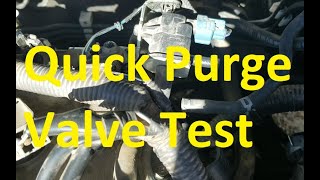
How to confirm: With the engine off, disconnect the purge valve and try to blow through it. If air passes, it's stuck open and must be replaced. You can also 🎬 Watch: How to test the purge valve with no tools use a scan tool to command the valve open while the engine is running and check for a change in vacuum on the outlet port. A user on AveoForum.com noted that this was the definitive cause for their hard-starting issue after getting gas.
Typical fix: Replace the canister purge valve. It is typically located on the back of the engine, near the firewall, bolted to the intake manifold.
Est. part cost: $30-$75 - Cracked or Disconnected EVAP Hoses 🟡 Medium Probability Rubber hoses become brittle and crack over time with exposure to heat and engine bay elements. The hoses connecting directly to the purge valve are the most common culprits.
How to confirm: Visually inspect all vacuum and EVAP lines connected to the purge valve and running to the intake manifold and charcoal canister. A smoke test is the most effective way to find small, hard-to-see leaks.
Typical fix: Replace the cracked or broken hose section.
Est. part cost: $5-$20 - Loose or Faulty Gas Cap ⚪ Low Probability → Shop Fuel Tank Cap While a loose or faulty gas cap more commonly causes a P0455 (large leak) or P0442 (small leak) code, it can sometimes contribute to general EVAP system faults. Aveo gas caps are noted by some owners as being prone to cracking.
How to confirm: Ensure the gas cap is tightened until it clicks. Check the cap's rubber seal for cracks or damage. An aftermarket cap was blamed by one user for causing the issue.
Typical fix: Tighten or replace the gas cap with an OEM part if possible.
Est. part cost: $10-$25
Rare But Worth Checking
- Clogged Charcoal Canister: → Shop Vapor Canister This can happen if you habitually 'top off' your fuel tank after the pump clicks off. Excess fuel can enter the canister, saturating the charcoal and causing a blockage that prevents proper vapor flow.
- Faulty EVAP Canister Vent Solenoid: → Shop Vapor Canister The vent solenoid, located near the charcoal canister by the rear of the car, allows fresh air into the system. If it's stuck closed, it can prevent proper purge flow when the purge valve opens, triggering a P0441. A forum user noted that this part was a player in their P0441 diagnosis.
Diagnosis Steps
- Read the code with an OBD-II scanner to confirm P0441 is present. 🎬 See these 4 DIY methods to fix a P0441 code
- Check the gas cap. Ensure it is tight and the seal is in good condition.
- Visually inspect the EVAP hoses in the engine bay, especially around the purge valve. Look for obvious cracks, breaks, or disconnections.
- Locate the purge valve. On the Aveo, it's typically on the back of the engine near the firewall, attached to the intake manifold.
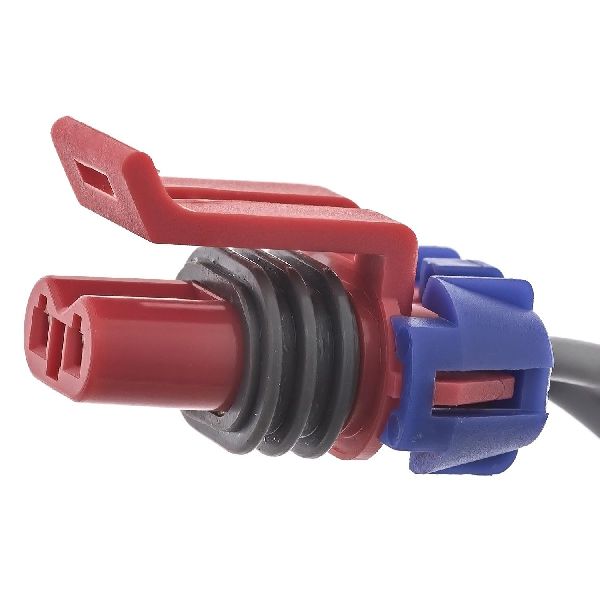
- Test the purge valve. Disconnect the electrical connector and vacuum lines. Try to blow through the valve; if air passes, it is stuck open and needs replacement. This is the most common failure.
- If the valve is not stuck open, you can test its operation using a 9V battery or a scan tool to briefly apply power to its electrical terminals. You should hear a 'click' as the solenoid opens and see if it holds vacuum when closed and passes air when open.
- If the purge valve and hoses appear to be in good condition, the next step is a smoke test to check the entire EVAP system for hard-to-see leaks.
- If no leaks are found, further diagnosis of the charcoal canister and vent valve (located near the fuel tank) may be necessary.
Parts You'll Likely Need
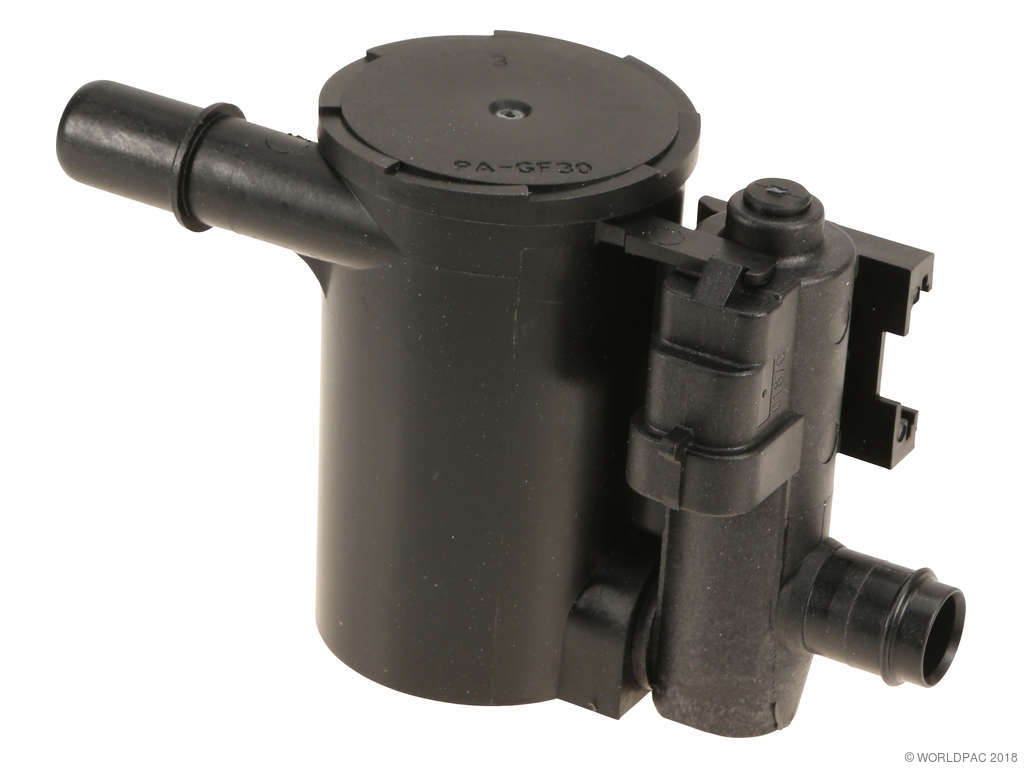
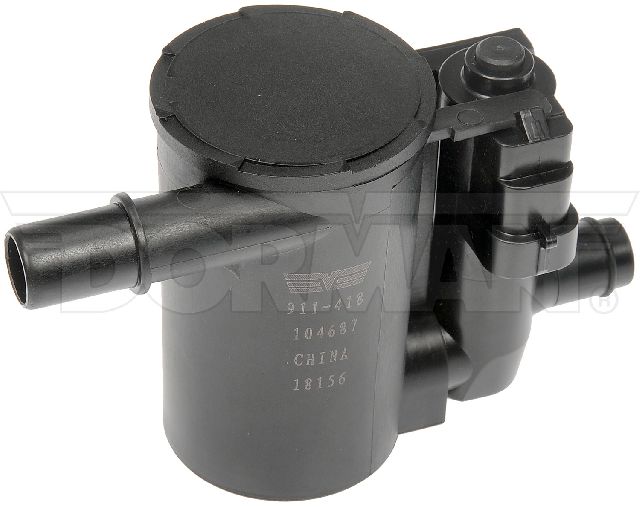
- EVAP Canister Purge Valve / Solenoid
(OEM #96800400, 96450590, 96553405)— This is the most frequent failure point for the P0441 code on this vehicle, typically sticking open or closed.
Trusted brands: ACDelco (GM Genuine), Dorman, Standard Motor Products
OEM price range: $45-$75
Aftermarket price range: $30-$60
Related Codes That Often Appear With This One
- P0496 — This code means 'EVAP Flow During a Non-Purge Condition,' which is often caused by the same faulty purge valve being stuck open.
- P0442 — This code for a 'Small EVAP System Leak' can sometimes accompany P0441 if the issue is a cracked hose or a purge valve that isn't sealing completely.
- P0455 — This code for a 'Large EVAP System Leak' can appear if a major hose is disconnected or the purge valve is severely damaged.
Technical Service Bulletins (TSBs) & Recalls
- While no TSB is specific to P0441 on the Aveo, GM TSB 21-NA-124 discusses general diagnostic procedures for EVAP codes P0442 and P0455, which share root causes like faulty valves and hose leaks. It advises technicians to check all line connections first before suspecting component failure.
Platform-Specific Known Issues
- Hard Start After Refueling: A very common owner complaint directly linked to a faulty, stuck-open purge valve. A user on AveoForum.com described how their girlfriend's car wouldn't start after getting gas without pressing the accelerator, a classic symptom that pointed to the purge valve.
- Confusion with Vent Solenoid: Some owners may confuse the purge valve (in the engine bay) with the vent solenoid/valve (near the fuel tank). A thread on AveoForum.com shows a user who replaced both solenoids before realizing a smoke test was needed to find the ultimate source of the code.
Mechanic-Grade Diagnostic Values
- EVAP Canister Purge Valve Solenoid Resistance — expected: 30 to 38 ohms (when engine is cool). Failure: A reading outside this range, or infinite resistance (open circuit), indicates a faulty solenoid coil.
- EVAP Canister Vent Solenoid Resistance — expected: 48 to 65 ohms. Failure: A reading outside this range suggests the solenoid winding is damaged.
- Fuel Tank Pressure (FTP) Sensor Voltage (Key On, Engine Off, Gas Cap Off) — expected: Approximately 1.3V to 1.7V. Failure: A voltage reading stuck low (e.g., 0.2V) or high (e.g., 5V) points to a bad sensor or a wiring issue.
Scan Tool Commands That Help
- GDS2 / Professional Scan Tool: EVAP System Test / Output Control — This bidirectional control is essential for professional diagnosis. It allows a technician to command the purge and vent valves to change state (open/closed) to test their function individually. For example, commanding the purge valve open at idle should cause a change in engine RPM and fuel trims, confirming its operation.
- GDS2 / Professional Scan Tool: EVAP Purge/Seal — This function seals the EVAP system by closing the vent valve and then allows the technician to command the purge valve on to create a vacuum. By monitoring the Fuel Tank Pressure (FTP) sensor, the technician can verify that the purge valve is capable of drawing a vacuum and that the system holds it, which helps diagnose flow problems.
Wiring & Ground Locations
- ECM Pin 4 (X2 Connector) — On the main Engine Control Module (ECM), which is located on the left front fender, near the battery.. This specific pin is the 'EVAP Canister Purge Solenoid Control' circuit. A technician can test for a control signal (a pulsed ground) at this pin to determine if the ECM is commanding the purge valve to open. A lack of signal here when a purge is expected points to an ECM or wiring issue, not a faulty valve.
- G103 — Below the Engine Control Module (ECM) on the driver's side of the engine compartment.. This is a primary ground point for the engine control system. A corroded or loose G103 can cause erratic behavior in multiple sensors and actuators, including the purge solenoid, leading to incorrect flow and triggering a P0441.
- G104 — Next to the starter motor on the engine block.. This is another critical engine ground. A poor connection at G104 can affect the ECM's ability to properly control its outputs, potentially causing intermittent or incorrect operation of the EVAP purge solenoid.
Real Owner Repair Stories
- AveoForum.com user 'MatchboxKiller' (Chevrolet Aveo (year not specified, but posted in 2010)) — Check Engine Light with a small EVAP leak code (number forgotten by user, but P0441 is a related flow code).
❌ Tried (didn't work) Multiple dealership visits, Replacing the purge solenoid, Replacing the battery
✅ What actually fixed it The user performed a smoke test themselves and discovered the EVAP line had been cut. Repairing the line resolved the issue.
OEM Part Supersession History
96450590→Unknown/Incorrect Listing— Part number 96450590 is listed by some GM parts vendors for the 2004-2005 Aveo, but it is described as a 'Console Body Cap' or 'Plug,Front Floor Upper Console Hole', not an EVAP valve.
Heads up: This highlights a potential parts catalog error. Ordering 96450590 for a P0441 fix will likely result in receiving an incorrect interior trim piece. Always verify the part description and diagram, not just the number. The correct purge valve part number is typically 96800400.
Model Year Variations Within This Range
- 2004-2011: The vehicle range covers two platform designations: the T200 (2004-2008) and the facelifted T250 (2009-2011). While the 1.6L engine and core EVAP components like the purge valve are functionally identical, some owners report the purge valve is particularly difficult to access on the T250 models due to its position behind the intake manifold, mounted to the firewall.
Diagnostic Flowchart
Other Known Issues on This Vehicle
Issues unrelated to this code that are worth knowing about as an owner of this generation:
- Premature Timing Belt Failure 🔴 High — A widely known issue. The original 60,000-mile replacement interval is considered by many owners to be optimistic, with failures sometimes occurring before this. Failure is catastrophic as it is an interference engine.
- Cracked Plastic Thermostat Housing 🟠 Medium — The original plastic thermostat housing is prone to cracking and warping from heat cycles, causing coolant leaks. This can lead to overheating if not addressed. An aftermarket metal replacement is a common and recommended upgrade.
- Faulty Automatic Transmission Shift Flare/Slipping 🟠 Medium — Owners report issues with the Aisin automatic transmission, including harsh shifting, slipping between gears, or a 'flare' where engine RPMs increase without a corresponding increase in speed. This can be due to worn internal components or faulty solenoids.
- Failing Wheel Bearings 🟡 Low — Noise from the rear wheels is often an indicator of worn-out wheel bearings, a common complaint among Aveo owners.
Used vs. New Parts: Buying Guide for This Vehicle
When a used part is the smart pick: A used EVAP purge valve from a junkyard can be a cost-effective option for this repair, as it is a simple, external, and easily testable component. Given the low cost of a new aftermarket part, a used part is most sensible if it's significantly cheaper or immediately available.
Donor-vehicle mileage cap: roughly under 80000 miles for the part to have meaningful remaining life.
What to inspect on the donor part:
- Physically inspect the valve for any cracks in the plastic housing.
- Ensure the electrical connector pins are clean and free of corrosion.
- Perform a 'blow-through' test: with the valve unpowered, you should NOT be able to blow air through it. If air passes, it's stuck open and bad.
- If possible, briefly apply 9-12V to the terminals to confirm you hear an audible 'click' of the solenoid activating.
OEM-only on this vehicle (don't cheap out):
- Gas Cap - While not expensive, aftermarket gas caps are a frequent source of EVAP codes due to improper sealing. Sticking with an OEM ACDelco cap is a wise investment to avoid future issues.
Aftermarket brands forum-validated for this vehicle:
- ACDelco (Professional or GM Genuine)
- Standard Motor Products (SMP)
- Dorman
Brands owners have reported issues with on this vehicle:
- No-name, ultra-cheap online marketplace brands have a higher reported failure rate, though some may work fine initially. Given the relatively low cost of reputable brands, it's often not worth the risk.
Real Owner Stories
Aggregated from forums and TSBs cited above. Mileages and costs reflect what owners reported in those sources.
2010 Chevrolet Aveo
Symptoms: The car would not start after getting gas without pressing the accelerator; the Check Engine Light was on with code P0441.
What fixed it: Replacing the sticking purge valve.
Source hint: AveoForum.com - 'Check Engine light P0441'
Chevrolet Aveo
Symptoms: Check engine light with code P0441. Owner replaced the purge valve on the intake manifold and the purge solenoid behind the passenger rear tire, but the code remained.
What fixed it: The source suggests a smoke test was needed to find the ultimate source of the code after initial parts replacement failed.
Source hint: AveoForum.com - 'Code P0441'
Related OBD-II Codes
Frequently Asked Questions
Why does my Chevrolet Aveo have trouble starting only after I fill up the gas tank?
Where is the purge valve located on a 2004-2011 Chevrolet Aveo?
Does GM TSB 21-NA-124 apply to my P0441 code?
Can I test the Aveo purge valve myself without a scan tool?
I replaced the purge valve but the P0441 code is still there. What else should I check on my Aveo?
Is it common for the gas cap to cause P0441 on this car?
Helpful Videos
![How to Fix P0441 Engine Code in 6 Minutes [4 DIY Methods / Only $3.50]](https://img.youtube.com/vi/NJYZiDhYhP8/mqdefault.jpg)
We Have This Part in Stock


The information in this article is provided for general reference and educational purposes only. Vehicle specifications, procedures, and part compatibility can vary by production date, trim level, and region. Always consult your vehicle's factory service manual and verify part numbers before purchasing or performing repairs. Safety-critical components such as airbags, seat belts, and braking systems should be installed by a qualified professional.
- Chevrolet Aveo:
- 🧭 Diagnostic Flowchart
- 🎬 Helpful Videos
- 🛍️ Shop This Part
- What's Unique About the 2004-2011 Chevrolet Aveo
- Symptoms You May Notice
- Most Likely Causes
- Rare But Worth Checking
- Diagnosis Steps
- Parts You'll Likely Need
- Related Codes That Often Appear With This One
- Technical Service Bulletins (TSBs) & Recalls
- Platform-Specific Known Issues
- Mechanic-Grade Diagnostic Values
- Scan Tool Commands That Help
- Wiring & Ground Locations
- Real Owner Repair Stories
- OEM Part Supersession History
- Model Year Variations Within This Range
- Other Known Issues on This Vehicle
- Used vs. New Parts: Buying Guide for This Vehicle
- Real Owner Stories
- 2010 Chevrolet Aveo
- Chevrolet Aveo
- Related OBD-II Codes
- Frequently Asked Questions
- 🎟️ Get 5% Off