

P0441 on 1998-2002 Chevrolet Camaro: EVAP Incorrect Purge Flow Causes and Fixes
On a 1998-2002 Camaro, code P0441 is most often caused by a faulty EVAP purge solenoid valve on the intake manifold, frequently contaminated by a deteriorating charcoal canister. Expect to replace the solenoid for about $25-$70, and potentially the canister as well for $100-$200. Always check the solenoid for charcoal debris before replacing just one part.
- P0441 on your Camaro almost always points to the EVAP purge system.
- The most likely cause is a bad EVAP purge solenoid, located on the passenger side of the intake manifold.
- Before replacing the solenoid, check it for black charcoal dust. If you find any, you must also replace the charcoal canister (behind the driver's rear wheel) to prevent the new solenoid from failing.
- While less likely, also check for cracked vacuum lines and ensure your gas cap is sealing properly.
- This is a DIY-friendly repair that can be done with basic hand tools.
What's Unique About the 1998-2002 Chevrolet Camaro
For the fourth-generation Camaro and its platform-mate, the Pontiac Firebird, this code is very commonly a two-part failure. The charcoal canister, located in the rear driver's side wheel well area, degrades over time. Small charcoal pellets break loose, travel through the long EVAP line running to the front of the car, and jam the purge solenoid valve located on the engine's intake manifold, causing it to stick open. Simply replacing the solenoid without addressing the failing canister often results in the new part failing shortly after, as the contamination continues.
Symptoms You May Notice
- Check Engine Light is on
- Rough or unstable idle, especially if the purge valve is stuck open, which creates a constant vacuum leak
- Difficulty starting the engine immediately after refueling. This happens because a stuck-open purge valve allows raw fuel vapor to flood the intake, creating a rich condition.
- A faint smell of gasoline around the vehicle, particularly near the rear driver's side wheel or engine bay
- Audible clicking from the purge solenoid when it's attempting to operate (this can be normal, but a lack of clicking could indicate failure)
- Replacing only the purge solenoid without checking for charcoal contamination. If the canister is bad, the new solenoid will quickly fail as well. This is the most common mistake made on this platform.
- Replacing the gas cap when the issue is a stuck valve. While a bad cap can cause other EVAP codes, it's a less frequent cause for an incorrect flow fault.
- Assuming the V6 and V8 purge solenoids are in the same location. While both are on the intake, their exact position differs slightly between the 3.8L and 5.7L engines.
Most Likely Causes
- Faulty EVAP Purge Solenoid Valve 🔴 High Probability → Shop Vapor Canister This valve is a common failure point. It can fail on its own or, more likely on this platform, get clogged with charcoal debris from a failing charcoal canister. The valve is normally closed, but debris can force it to stick open.
How to confirm: Remove the solenoid from the passenger side of the intake manifold. Tap it on a clean white paper towel to see if black, sand-like charcoal pellets fall out. You can also test it with a hand vacuum pump; it should hold vacuum when unpowered (normally closed). When 12V is applied to its terminals, it should click open and allow vacuum to pass. If you can blow through it when it's unpowered, it's stuck open and has failed.
Typical fix: Replace the EVAP purge solenoid valve. If charcoal particles are found, you MUST also replace the charcoal canister and blow out the EVAP lines with compressed air to prevent repeat failure.
Est. part cost: $25-$70 - Deteriorated Charcoal Canister 🟡 Medium Probability → Shop Vapor Canister The activated charcoal media inside the canister can break down with age and vibration, sending particles into the EVAP system that clog the purge solenoid and lines.
How to confirm: This is often diagnosed when black particles are found inside the purge solenoid or its connecting hoses. The canister is located behind the rear driver's side wheel, behind the plastic splash shield. If you remove it and shake it, a rattling sound indicates the internal structure has failed and the charcoal is loose.
Typical fix: Replace the charcoal canister. This is typically done at the same time as the purge solenoid if contamination is found. All lines between the canister and the solenoid must be thoroughly cleaned with compressed air.
Est. part cost: $100-$200 - Cracked or Disconnected EVAP Hoses ⚪ Low Probability The plastic and rubber vacuum lines in the engine bay and under the car become brittle and crack over two decades of heat cycles and exposure. A leak can cause an incorrect flow reading.
How to confirm: Visually inspect all accessible EVAP lines, particularly the hard plastic lines near the engine and the connections running from the canister to the front of the car. A smoke test is the most effective way to find hard-to-see leaks, especially for lines above the fuel tank.
Typical fix: Replace the cracked section of hose or the entire line assembly.
Est. part cost: $10-$50
Rare But Worth Checking
- Loose or Faulty Gas Cap: → Shop Fuel Tank Cap While a bad gas cap more commonly causes a P0442 (small leak) or P0455 (large leak) code, it can occasionally contribute to EVAP system faults. It's the easiest and cheapest thing to check first.
- Faulty EVAP Canister Vent Valve/Solenoid: → Shop Vapor Canister This valve, located near the charcoal canister, is normally open and closes to allow the system to be tested for leaks. While its failure more commonly causes a P0446 code, a stuck vent valve can sometimes affect the purge flow test and contribute to a P0441.
Diagnosis Steps
- Check the gas cap. Ensure it is tight and the seal is not cracked or worn.
- Visually inspect all accessible EVAP hoses in the engine bay and under the car for obvious cracks, breaks, or disconnections.
- Locate the EVAP purge solenoid on the passenger side of the intake manifold. Disconnect the electrical connector and the two vacuum lines.
- Check the ports of the solenoid and the inside of the attached hoses for black, sand-like charcoal particles. Tap the solenoid on a white paper towel to make this easier to see.
- If charcoal is present, the charcoal canister has failed. Both the canister (behind rear driver's wheel) and the purge solenoid must be replaced. The lines running between them must be blown clear with compressed air.
- If no charcoal is found, test the solenoid itself. It is normally closed. Try to blow through it; if air passes, it's stuck open and bad. If it's closed, use a hand vacuum pump to confirm it holds vacuum. Then, apply 12V from a battery to its electrical pins; it should click open and allow air/vacuum to pass. If it fails any of these tests, replace it. 🎬 Watch: Two quick DIY methods to fix a P0441 code.
- If the solenoid and lines are good, the issue may be a leak elsewhere. A professional smoke test is the most reliable method to find the source of the leak, which could be a cracked line over the fuel tank or a faulty vent valve.
Parts You'll Likely Need
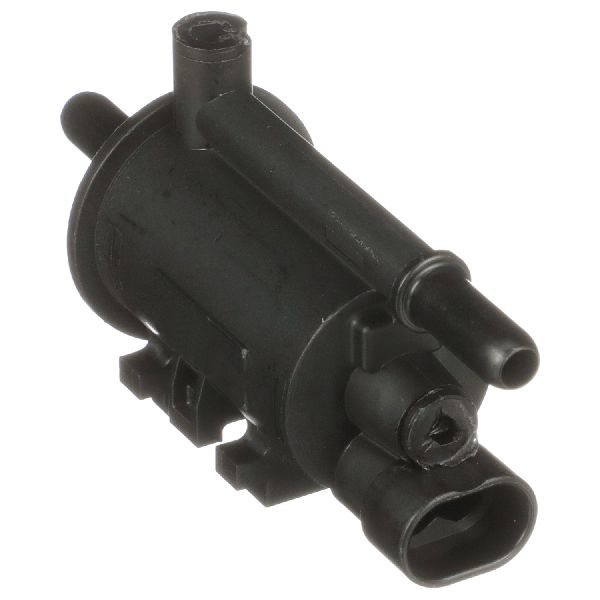
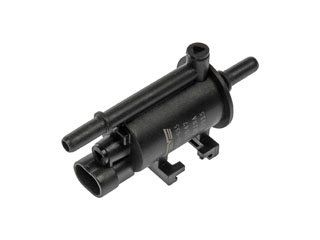
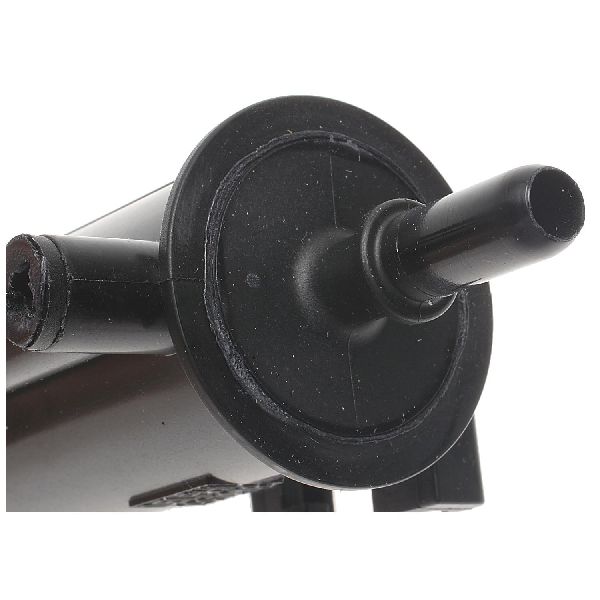
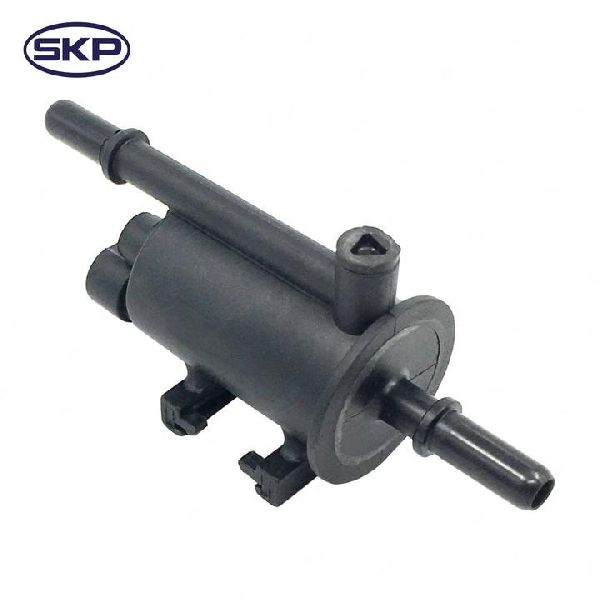
- EVAP Vapor Canister Purge Solenoid Valve
(OEM #1997278)— This is the most common failure point for code P0441 on this vehicle, as it either fails electrically or becomes mechanically stuck from debris.
Trusted brands: ACDelco (OEM - P/N 214-641), Standard Motor Products (SMP), Dorman
OEM price range: $50-$70
Aftermarket price range: $25-$50 - EVAP Charcoal Canister
(OEM #17113327)— Frequently degrades with age, releasing charcoal particles that contaminate and destroy the purge solenoid. If particles are found, this part is a required replacement.
Trusted brands: ACDelco (OEM), Dorman (P/N 911-264), Wells
OEM price range: $190-$250
Aftermarket price range: $75-$150
Related Codes That Often Appear With This One
- P0440 — P0440 indicates a general EVAP system malfunction. P0441 is a more specific fault related to flow, and they can sometimes appear together if the PCM is unsure of the exact failure.
- P0446 — This code points to a fault in the EVAP vent control circuit, located near the canister. If both the purge and vent sides of the system have issues, you might see both codes.
- P0496 — This code indicates 'High Purge Flow', often seen on other GM vehicles. It's functionally very similar to P0441, pointing to a purge valve stuck open or flowing when not commanded.
Platform-Specific Known Issues
- Real-World Repair Story: A user on LS1TECH.com described the classic failure sequence: 'Most common is a stuck open purge solenoid. Should be normally closed. If there's little black bits in the line then your canister is breaking up and causing the purge solenoid to get jammed open. Then you need to fix that too or it will keep happening.' This perfectly summarizes the linked failure that is so common on this platform.
- Component Location V6 vs V8: While the charcoal canister is in the same location for both V6 and V8 models (rear driver's side wheel well), the purge solenoid's exact position on the intake manifold differs slightly. On the 5.7L LS1, it's on the passenger side, easily accessible. On the 3.8L V6, it's also on the passenger side but may be tucked in a slightly different orientation.
Mechanic-Grade Diagnostic Values
- EVAP Purge Solenoid Coil Resistance — expected: 15 to 38 ohms. General sources cite ranges between 15-30 ohms and 30-38 ohms.. Failure: A reading of infinite resistance (open circuit) or zero resistance (short circuit) indicates a failed coil. A reading far outside the expected range also suggests a problem.
- Voltage at EVAP Purge Solenoid Connector — expected: One pin should have 12V+ with the key in the 'ON' position (supplied by the ENG CTRL fuse). The other pin is the ground side, which is pulsed by the PCM to activate the solenoid.. Failure: No voltage on the power feed pin indicates a wiring or fuse issue. The PCM supplies ground, so it will not be present with the solenoid disconnected.
Scan Tool Commands That Help
- GM Tech2: EVAP System Service Bay Test or Purge/Seal — This bidirectional command allows the technician to manually command the EVAP purge solenoid and vent valve to open and close. This is used to verify the solenoids are responding to PCM commands (audible click) and to seal the system for a smoke or vacuum decay test. It is the definitive way to test the solenoid's electronic function without removing it.
Wiring & Ground Locations
- EVAP Purge Solenoid Connector — On the passenger side of the intake manifold, connected to the purge solenoid.. This is the primary connector to test for power and PCM control signals. The Pink (PNK) wire is typically the 12V+ ignition feed, and the other wire (often Green/White) goes to the PCM, which provides the ground to activate the solenoid.
- Engine Ground Straps — Key grounds are located on the back of the driver's and passenger's side cylinder heads, and from the engine block to the chassis.. A poor engine ground can cause a host of electrical issues, including incorrect sensor readings and improper solenoid operation. The PCM relies on a stable ground reference. A faulty ground can cause voltage drops that may affect the EVAP system's performance and trigger false codes.
- G101 — Left front shock tower.. This is a major chassis ground point in the engine bay. While not directly for the EVAP solenoid, ensuring it is clean and tight is critical for overall electrical system health.
Real Owner Repair Stories
- LS1TECH.com forum user (1997 Z28 (similar LT1-based EVAP system, but same failure pattern)) — P0441 code, bits of charcoal found in the EVAP lines under the hood.
❌ Tried (didn't work) Replaced the purge solenoid., Replaced a cracked EVAP line elbow.
✅ What actually fixed it The code and charcoal debris kept returning until the charcoal canister itself was replaced. The user noted their original canister was dripping gasoline, likely from a previous owner repeatedly overfilling the fuel tank, which accelerates canister failure.
"I Checked Everything" — The Actual Cause
- For the P0441 code on this platform, a smoke test passing is not unusual and can be misleading. This code specifically flags 'Incorrect Purge Flow', not necessarily a system leak (which would be P0442 or P0455). The PCM tests flow by commanding the purge solenoid open and monitoring the fuel tank pressure sensor for a corresponding drop in pressure (increase in vacuum). If the solenoid is stuck closed or clogged, no flow occurs and the pressure doesn't change, triggering P0441. If it's stuck open, vacuum is pulled when it shouldn't be. In these common scenarios, the system can be perfectly sealed, causing a smoke test to pass while the flow-related fault remains.
OEM Part Supersession History
1997301→1997278— Standard part consolidation and revision by the manufacturer.
Heads up: None, the new part is a direct replacement for the old one.
Model Year Variations Within This Range
- 1998 only: The 1998 model year used a 15.5-gallon steel fuel tank and a corresponding unique EVAP system design, including different lines, canister, and fuel pump assembly. The PCM and wiring connectors also differ from later years.
- 1999-2002: These models use a larger plastic fuel tank with an integrated, tank-mounted charcoal canister and vent solenoid assembly for some years. The fuel lines and EVAP system routing are different from the 1998 models. While the purge solenoid on the intake remains the primary cause of P0441, diagnosing the rear components requires awareness of this tank difference.
Diagnostic Flowchart
Other Known Issues on This Vehicle
Issues unrelated to this code that are worth knowing about as an owner of this generation:
- Bubbling Sail Panel 🟠 Medium — Extremely common on 1999+ models and late-1998 builds. Caused by factory adhesive seeping through the panel material due to heat/UV exposure. The only permanent fix is panel replacement. (Ref: A TSB existed but has long since expired. GM covered some repairs under warranty or goodwill in the past.)
- Cracked Dashboard Pad 🟠 Medium — Very common across all years. The plastic becomes brittle from sun exposure and age, leading to cracks, especially around the defroster vents.
- Failing Power Window Motors 🔴 High — A notoriously frequent failure. The motors are weak and wear out, causing slow operation or complete failure. Replacement is common, and many owners opt to cut an access hole in the door rather than removing the entire regulator assembly.
- Cracked Interior Door Panels 🟡 Low — Common on 1998-2002 models which used a different door panel design than earlier years. Hairline cracks develop near the top of the panel where it meets the window.
- LS1 Engine Oil Consumption & Piston Slap 🟠 Medium — Affects 1999-2002 LS1 V8 models. Some engines consumed more oil than expected due to piston ring design, and could exhibit a 'slapping' noise on cold starts. GM issued a TSB to address this during the warranty period. (Ref: Yes, a TSB was issued by GM for high oil consumption related to piston rings.)
Used vs. New Parts: Buying Guide for This Vehicle
When a used part is the smart pick: For this specific repair, only structural or passive components like mounting brackets or connector pigtails should be considered from a used donor vehicle. Due to the high failure rate from age-related degradation, sourcing the primary functional components used is strongly discouraged.
Donor-vehicle mileage cap: roughly under 50000 miles for the part to have meaningful remaining life.
What to inspect on the donor part:
- For hoses: Check for flexibility; avoid any that are hard, brittle, or show visible cracks.
- For brackets: Ensure they are not bent or cracked and that mounting points are intact.
- For connectors: Inspect for broken locking tabs, corrosion on pins, or frayed wires.
OEM-only on this vehicle (don't cheap out):
- EVAP Charcoal Canister: This part fails by breaking down internally. A used one is likely near the end of its life or already failed. To ensure a lasting repair, a new OEM (ACDelco) or high-quality aftermarket part is essential.
- EVAP Purge Solenoid: Given that this part is relatively inexpensive new and is the most common failure point, installing a used one is not worth the risk of repeat labor.
Aftermarket brands forum-validated for this vehicle:
- ACDelco (OEM supplier)
- Standard Motor Products (SMP) / Standard Ignition
Brands owners have reported issues with on this vehicle:
- Unbranded / 'White-box' parts: While Dorman is a major supplier, some user reviews for their EVAP solenoids report premature failure. Cheaper, no-name parts from online marketplaces carry a significant risk of being dead-on-arrival or failing shortly after installation.
Real Owner Stories
Aggregated from forums and TSBs cited above. Mileages and costs reflect what owners reported in those sources.
1998-2002 Chevrolet Camaro LS1
Symptoms: I had the same code. I replaced the EVAP solenoid on the passenger side.
What fixed it: Replaced the EVAP solenoid.
Source hint: LS1TECH owner report in 'owner_reports' section
1998-2002 Chevrolet Camaro
Symptoms: Most common is a stuck open purge solenoid. Should be normally closed. If there's little black bits in the line then your canister is breaking up and causing the purge solenoid to get jammed open.
What fixed it: Fix the canister and the purge solenoid or it will keep happening.
Source hint: LS1TECH.com user description in 'Real-World Repair Story'
Frequently Asked Questions
Where is the EVAP purge solenoid located on my 5.7L LS1 Camaro?
Is the charcoal canister in the same place on the V6 Camaro as the V8?
Why does my Camaro struggle to start only after I fill up the gas tank?
I found black sand-like particles in my purge solenoid; do I need to replace more than just the valve?
Is there a TSB for the oil consumption issues on my 2000 LS1 Camaro?
Can a bad gas cap cause P0441 on this vehicle?
Helpful Videos
![How to Fix P0441 Engine Code in 3 Minutes [2 DIY Methods / Only $4.50]](https://img.youtube.com/vi/ifwpcNQCSvI/mqdefault.jpg)
We Have This Part in Stock


The information in this article is provided for general reference and educational purposes only. Vehicle specifications, procedures, and part compatibility can vary by production date, trim level, and region. Always consult your vehicle's factory service manual and verify part numbers before purchasing or performing repairs. Safety-critical components such as airbags, seat belts, and braking systems should be installed by a qualified professional.
- Chevrolet Camaro:
- 🧭 Diagnostic Flowchart
- 🎬 Helpful Videos
- 🛍️ Shop This Part
- What's Unique About the 1998-2002 Chevrolet Camaro
- Symptoms You May Notice
- Most Likely Causes
- Rare But Worth Checking
- Diagnosis Steps
- Parts You'll Likely Need
- Related Codes That Often Appear With This One
- Platform-Specific Known Issues
- Mechanic-Grade Diagnostic Values
- Scan Tool Commands That Help
- Wiring & Ground Locations
- Real Owner Repair Stories
- "I Checked Everything" — The Actual Cause
- OEM Part Supersession History
- Model Year Variations Within This Range
- Other Known Issues on This Vehicle
- Used vs. New Parts: Buying Guide for This Vehicle
- Real Owner Stories
- 1998-2002 Chevrolet Camaro LS1
- 1998-2002 Chevrolet Camaro
- Frequently Asked Questions
- 🎟️ Get 5% Off