

P0441 on 2005-2010 Chevrolet Cobalt: Incorrect Purge Flow Causes and Fixes
For a 2005-2010 Chevrolet Cobalt, code P0441 is almost always caused by a failed EVAP purge solenoid valve located on the engine. This is an inexpensive part, typically costing $25-$50, and is very easy to replace for most DIYers. A stuck-open valve is the most common failure mode, which also causes the common symptom of difficulty starting after refueling.
- P0441 on a Cobalt is most likely a bad EVAP purge solenoid valve located on the engine.
- Symptoms are usually minor, including a Check Engine Light and possibly a rough idle or difficulty starting after refueling.
- This is a very DIY-friendly repair, typically taking less than 15 minutes with basic tools.
- Always test the old valve by trying to blow through it; if air passes, it's faulty.
- The correct OEM part is GM 12597567 or ACDelco 214-1680.
What's Unique About the 2005-2010 Chevrolet Cobalt
On the 2005-2010 Cobalt and its platform mates (Pontiac G5, Saturn Ion), the EVAP purge solenoid is a well-documented, high-failure-rate item. Unlike some vehicles where P0441 can be a diagnostic challenge involving multiple components, on the Cobalt, this specific part is the overwhelming cause. The replacement is straightforward, located directly on the engine intake manifold, making it a common and simple DIY repair that often takes less than 15 minutes.
Symptoms You May Notice
- Check Engine Light is on
- Rough idle, especially after starting or when stopped in gear
- Difficulty starting the engine immediately after refueling. This occurs because a stuck-open purge valve allows excess fuel vapors into the intake, creating an overly rich mixture that floods the engine.
- Slight fuel smell (less common)
- A subtle 'whoosh' sound of vacuum when removing the gas cap may be absent if the valve is stuck open, preventing the system from holding a vacuum.
- Replacing the gas cap when the purge solenoid is the actual problem.
- Replacing the rear vent solenoid (near the tank) when the front purge solenoid (on the engine) is the cause for P0441.
- Assuming a major vacuum leak elsewhere in the system without first testing the purge solenoid, which is the most common and easiest-to-test component.
Most Likely Causes
- Faulty EVAP Purge Solenoid Valve 🔴 High Probability → Shop Vapor Canister This component is a known common failure point on this platform, often getting stuck open or closed due to age and carbon buildup. Its location on the hot intake manifold may contribute to its failure rate.
How to confirm: The valve is located on the driver's side of the intake manifold. Disconnect the electrical connector and the two EVAP lines. Attempt to blow through the valve; if any air passes, it is stuck open and faulty (it is a normally-closed valve). You can also apply 12V to the terminals to see if it clicks open and closed. A scan tool can also command the valve's duty cycle to test for engine vacuum changes.
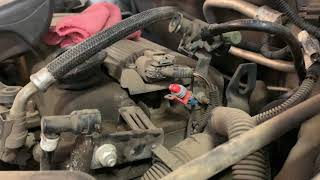
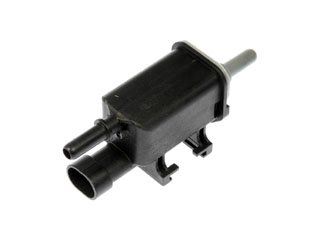
Typical fix: Replacement of the purge solenoid valve. This is a simple procedure involving disconnecting two hoses (one is a quick-disconnect fitting, the other has a clamp) and one electrical connector, then sliding the valve off its mounting bracket. 🎬 Watch: Step-by-step guide to replacing the purge valve
Est. part cost: $25-$60 - Cracked or Disconnected EVAP Hoses 🟡 Medium Probability The plastic and rubber hoses in the engine bay can become brittle over time due to heat cycles and age, leading to cracks or loose connections, particularly at the fittings on the purge valve itself.
How to confirm: Visually inspect all EVAP hoses connected to the purge solenoid and intake manifold for visible cracks, brittleness, or disconnections. Pay close attention to the plastic elbows and connectors. A smoke test is the most effective way to find small, hard-to-see leaks.
Typical fix: Replace the damaged section of hose or the entire hose assembly.
Est. part cost: $10-$30 - Loose or Faulty Gas Cap ⚪ Low Probability → Shop Fuel Tank Cap While a loose gas cap typically sets a small or large leak code (like P0442 or P0455), it can sometimes contribute to incorrect flow issues. It's a simple and common check that should not be overlooked.
How to confirm: Ensure the gas cap is tightened until it clicks multiple times. Inspect the rubber O-ring seal on the cap for cracks, dirt, or damage. An OEM replacement is often recommended over cheaper aftermarket caps which may not seal correctly.
Typical fix: Tighten or replace the gas cap.
Est. part cost: $10-$25
Rare But Worth Checking
- Faulty EVAP Vent Solenoid: → Shop Vapor Canister This valve is located near the charcoal canister by the fuel tank. It's more likely to cause a P0449 code (Vent Valve Circuit), but if it's stuck closed, it can prevent the system from drawing in fresh air, affecting the purge flow test and potentially triggering P0441.
- Clogged Charcoal Canister: → Shop Vapor Canister If the canister becomes saturated with fuel (often from habitually 'topping off' the gas tank after the pump clicks off) or the filter media breaks down, it can restrict vapor flow and trigger a P0441 code.
- Damaged Purge Valve Wiring/Connector: → Shop Vapor Canister The wiring harness to the purge valve can sometimes chafe against its metal mounting bracket, causing a short or open circuit. Inspect the two wires leading to the connector for any signs of rubbing or damage.
Diagnosis Steps
- Read the code with an OBD-II scanner to confirm P0441 is present and note any other codes.
- Inspect the gas cap. Ensure it is tight and the seal is intact and pliable.
- Locate the EVAP purge solenoid on the driver's side of the intake manifold.
- Visually inspect the vacuum hoses connected to and surrounding the purge solenoid for any obvious cracks, breaks, or loose connections.
- Perform the 'blow test' on the purge solenoid. Disconnect the electrical connector and both hoses. Try to blow through the valve. If any air passes through, the valve is stuck open and must be replaced. It should be completely sealed when unpowered.
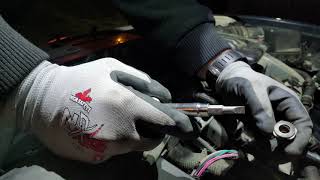
- If the blow test passes, test for electrical function. Use a 12V power source (like a Power Probe or jumper wires from the battery) to apply power to the two pins on the valve. 🎬 See how to test and change the solenoid yourself The valve should make an audible 'click' and open, allowing air to pass through. If it doesn't click or open, it is electrically faulty.
- If the valve tests good, a smoke test is the next logical step to check the entire EVAP system for hard-to-see leaks in the lines or canister.
- If no leaks are found, further diagnosis may be needed on the vent valve or charcoal canister, though these are much less common causes for this specific code on a Cobalt.
Parts You'll Likely Need
- Vapor Canister Purge Solenoid Valve
(OEM #12597567)— This is the most frequent cause of P0441 on the 2005-2010 Cobalt. It gets stuck open or closed, causing the incorrect flow detection. The ACDelco part number is 214-1680. Note: GM part 12597567 may be superseded by 12735397, but is still widely available.
Trusted brands: ACDelco (OEM), Dorman, Standard Motor Products (SMP), Bosch
OEM price range: $40-$70
Aftermarket price range: $25-$50 - Gas Cap
(OEM #GT284 (ACDelco))— A worn-out gas cap seal can cause various EVAP codes. It's an inexpensive and easy part to replace as a first step or if the seal is visibly cracked. Using an OEM cap is highly recommended for proper sealing.
Trusted brands: ACDelco (OEM), Stant, Gates
OEM price range: $15-$25
Aftermarket price range: $10-$20
Related Codes That Often Appear With This One
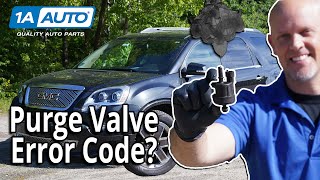
- P0496 — P0496 (EVAP Flow During a Non-Purge Condition) is very common with P0441 because it often points to the same root cause: a purge valve that is stuck open, allowing vapor to flow when the computer has commanded it closed. 🎬 Watch: How to diagnose common GM EVAP flow problems
- P0442 — A P0442 (EVAP System Small Leak Detected) code can appear if the purge valve isn't sealing perfectly, creating a small leak in the system that the computer detects during its leak test.
- P0455 — A P0455 (EVAP System Large Leak Detected) can occur if the purge valve is stuck wide open or a hose has become completely disconnected.
Platform-Specific Known Issues
- GM issued a Technical Service Bulletin (TSB) for similar models regarding the wiring harness rubbing against the purge solenoid's metal bracket, which could cause a short. While inspecting or replacing the valve, check the wiring for any chafing.
- Owner experiences consistently point to the purge valve replacement as a 10-15 minute job, often solving both the P0441 code and the symptom of hard starting after refueling.
Mechanic-Grade Diagnostic Values
- EVAP Purge Solenoid Coil Resistance — expected: 30 to 38 ohms at room temperature.. Failure: A reading of 0 ohms (short circuit), infinite/OL (open circuit), or a value significantly outside the expected range indicates a faulty solenoid coil.
- EVAP Purge Solenoid Connector Voltage — expected: With the key on, engine off, one pin should have battery voltage (approx. 12V) and the other is the control wire from the ECM.. Failure: No voltage on the power supply pin indicates a wiring or fuse issue. The control wire is pulse-width modulated by the ECM when the engine is running and purge is commanded.
Scan Tool Commands That Help
- Tech2 / GDS2 (GM Dealer Tool): EVAP Purge/Seal — This function allows a technician to manually command the purge solenoid ON/OFF and seal the system by closing the vent valve. This is used to verify the solenoid clicks and to monitor the Fuel Tank Pressure (FTP) sensor to see if the system holds a vacuum, which directly tests the function related to P0441.
- Tech2 / GDS2 (GM Dealer Tool): EVAP Service Bay Test — This is an automated test that runs the vehicle's onboard EVAP diagnostic sequence on demand. It can help confirm if a repair has been successful without needing to complete a full drive cycle, and can sometimes pinpoint whether the failure is in the purge, vent, or leak detection phase.
Wiring & Ground Locations
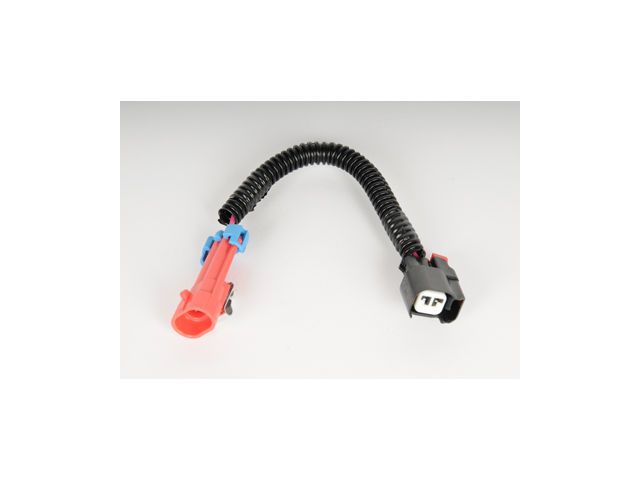
- EVAP Purge Solenoid Connector — On the EVAP purge solenoid, located on the driver's side of the intake manifold.. This 2-pin connector provides power and control to the solenoid. A corroded or damaged connector (or its pigtail, ACDelco PT2784) can cause intermittent or total failure of the solenoid, triggering P0441. The wires are susceptible to chafing on the metal mounting bracket.
- G101 — Located at the left front of the engine, on the lower block.. This is a primary ground for the Engine Control Module (ECM). A poor connection at this ground can cause a wide range of erratic engine management behavior, including incorrect operation of emissions components like the purge solenoid.
- G103 / G105 — G103 is on the body behind the driver's side headlight. G105 is on the transmission stud. A ground cable often links these points.. These are major engine and body grounds. G105 specifically grounds the ECM, TCM, and other critical sensors. Corrosion or looseness at these points is a known issue on Cobalts and can cause many difficult-to-diagnose electrical problems, including EVAP codes.
Real Owner Repair Stories
- YouTube video by user Jim Dandy (2007 Chevy Cobalt) — Check Engine Light with code P0446 (EVAP Vent Control Circuit).
❌ Tried (didn't work) Initial diagnosis pointed towards the EVAP vent solenoid located near the fuel tank.
✅ What actually fixed it Despite the code pointing to the vent valve, the problem was actually solved by replacing the engine-mounted EVAP purge valve. The owner noted, "it's actually the solution to the trouble code that I was getting although the trouble code led me to believe it was the vent solenoid... sometimes you just don't argue with success."
OEM Part Supersession History
12597567→12735397— Standard part evolution, likely for improved durability or manufacturing efficiency. Other older numbers that also lead to this part include 12570469, 12597566, and 12606684.ACDelco 214-1680→This is the service part number for GM 12597567. There is no direct supersession for the service part itself, but it corresponds to the latest GM OEM part.— N/A
Heads up: Be aware of another common GM EVAP solenoid, ACDelco 214-2149. While it looks similar, it is a vent solenoid for different applications and is not interchangeable with the 214-1680 purge solenoid.
Diagnostic Flowchart
Other Known Issues on This Vehicle
Issues unrelated to this code that are worth knowing about as an owner of this generation:
- Faulty Ignition Switch 🔴 High — Extremely widespread, subject of a major safety recall (NHTSA Campaign 14V047000). Can cause the engine to shut off while driving, disabling power steering, brakes, and airbags. (Ref: Recall 14V047000)
- Electric Power Steering (EPS) Motor Failure 🔴 High — Very common failure, subject to a safety recall (NHTSA Campaign 10V073000). Results in a sudden loss of power steering assist, making the vehicle difficult to steer at low speeds. (Ref: Recall 10V073000; TSB 07-02-32-007B)
- Fuel Leaks from Fuel Pump Module or Lines 🔴 High → Shop Fuel Pump — Common, especially in warmer climates or areas with road salt. Subject to recalls and investigations (NHTSA Campaign 09V419000). Cracks in the fuel pump's plastic ports or corrosion of fuel lines can cause dangerous fuel leaks. (Ref: Recall 09V419000; NHTSA Investigation PE20-009)
- Shifter Cable / Interlock Failure 🟡 Low — A common annoyance where the key gets stuck in the ignition or the shifter cannot be moved from Park. Often caused by a failed shifter cable bushing or a faulty ignition lock cylinder.
- Timing Chain and Tensioner Wear 🟠 Medium — The timing chain tensioners on Ecotec engines can wear, leading to chain rattle on startup, and if ignored, can lead to jumped timing or chain failure, causing significant engine damage.
Used vs. New Parts: Buying Guide for This Vehicle
When a used part is the smart pick: For this specific repair, buying a used purge solenoid is not recommended. The part is a known high-failure item, has a low cost for a new aftermarket or OEM part ($25-$60), and the labor to replace it again if the used part fails quickly negates any small cost savings.
Donor-vehicle mileage cap: roughly under 20000 miles for the part to have meaningful remaining life.
What to inspect on the donor part:
- If forced to use a salvaged part, visually inspect for cracks in the plastic housing.
- Check that the electrical pins are clean and free of corrosion.
- Perform the 'blow test' before purchase; no air should pass through when unpowered.
OEM-only on this vehicle (don't cheap out):
- Gas Cap - While not strictly 'OEM-only', aftermarket gas caps are notorious for not sealing correctly and causing persistent EVAP codes. It is highly recommended to use an ACDelco (OEM) gas cap to avoid this common issue.
Aftermarket brands forum-validated for this vehicle:
- ACDelco (Professional/GM Genuine)
- Standard Motor Products (SMP)
- Bosch
- Dorman
Brands owners have reported issues with on this vehicle:
- No-name, unbranded parts from online marketplaces should be avoided due to inconsistent quality control, even for a simple part like this.
Real Owner Stories
Aggregated from forums and TSBs cited above. Mileages and costs reflect what owners reported in those sources.
2007 Chevy Cobalt
Symptoms: Check engine light was on with code P0441.
What fixed it: Installed a new purge valve.
Source hint: owner_reports source Jim Dandy
2006 Chevrolet Cobalt LS
Symptoms: P0441 code present.
What fixed it: Replacement of the purge solenoid on the intake manifold.
Source hint: CobaltSS.net thread titled 'P0441 code on 06 cobalt ls'
2005-2010 Chevrolet Cobalt
Symptoms: Hard-starting issue specifically after filling the gas tank and a P0441 code.
What fixed it: Replaced the purge valve.
Source hint: YourCobalt.com thread titled 'P0441 Evap Incorrect Purge Flow'
2005-2010 Chevrolet Cobalt (LSJ Engine)
Symptoms: Simultaneous P0441 and P0496 codes.
What fixed it: Replaced the purge solenoid valve (part number 12597567).
Source hint: CobaltSS.net thread titled 'P0441 and P0496'
Related OBD-II Codes
Frequently Asked Questions
Where is the EVAP purge solenoid located on my 2005-2010 Chevrolet Cobalt?
Why does my Cobalt struggle to start only after I fill up the gas tank?
Is there a specific TSB regarding the wiring for the purge solenoid on this vehicle?
Can I test the purge valve myself before buying a new one?
What is the recommended replacement part number for the purge solenoid?
Will a loose gas cap cause a P0441 code on my Cobalt?
Helpful Videos
Used OEM Parts in Stock
New Aftermarket Parts Available


The information in this article is provided for general reference and educational purposes only. Vehicle specifications, procedures, and part compatibility can vary by production date, trim level, and region. Always consult your vehicle's factory service manual and verify part numbers before purchasing or performing repairs. Safety-critical components such as airbags, seat belts, and braking systems should be installed by a qualified professional.
- Chevrolet Cobalt:
- 🧭 Diagnostic Flowchart
- 🎬 Helpful Videos
- 🛍️ Shop This Part
- What's Unique About the 2005-2010 Chevrolet Cobalt
- Symptoms You May Notice
- Most Likely Causes
- Rare But Worth Checking
- Diagnosis Steps
- Parts You'll Likely Need
- Related Codes That Often Appear With This One
- Platform-Specific Known Issues
- Mechanic-Grade Diagnostic Values
- Scan Tool Commands That Help
- Wiring & Ground Locations
- Real Owner Repair Stories
- OEM Part Supersession History
- Other Known Issues on This Vehicle
- Used vs. New Parts: Buying Guide for This Vehicle
- Real Owner Stories
- 2007 Chevy Cobalt
- 2006 Chevrolet Cobalt LS
- 2005-2010 Chevrolet Cobalt
- 2005-2010 Chevrolet Cobalt (LSJ Engine)
- Related OBD-II Codes
- Frequently Asked Questions
- 🎟️ Get 5% Off