

P0441 on 2012-2017 Chrysler 200 2.4L: EVAP Incorrect Purge Flow Causes and Fixes
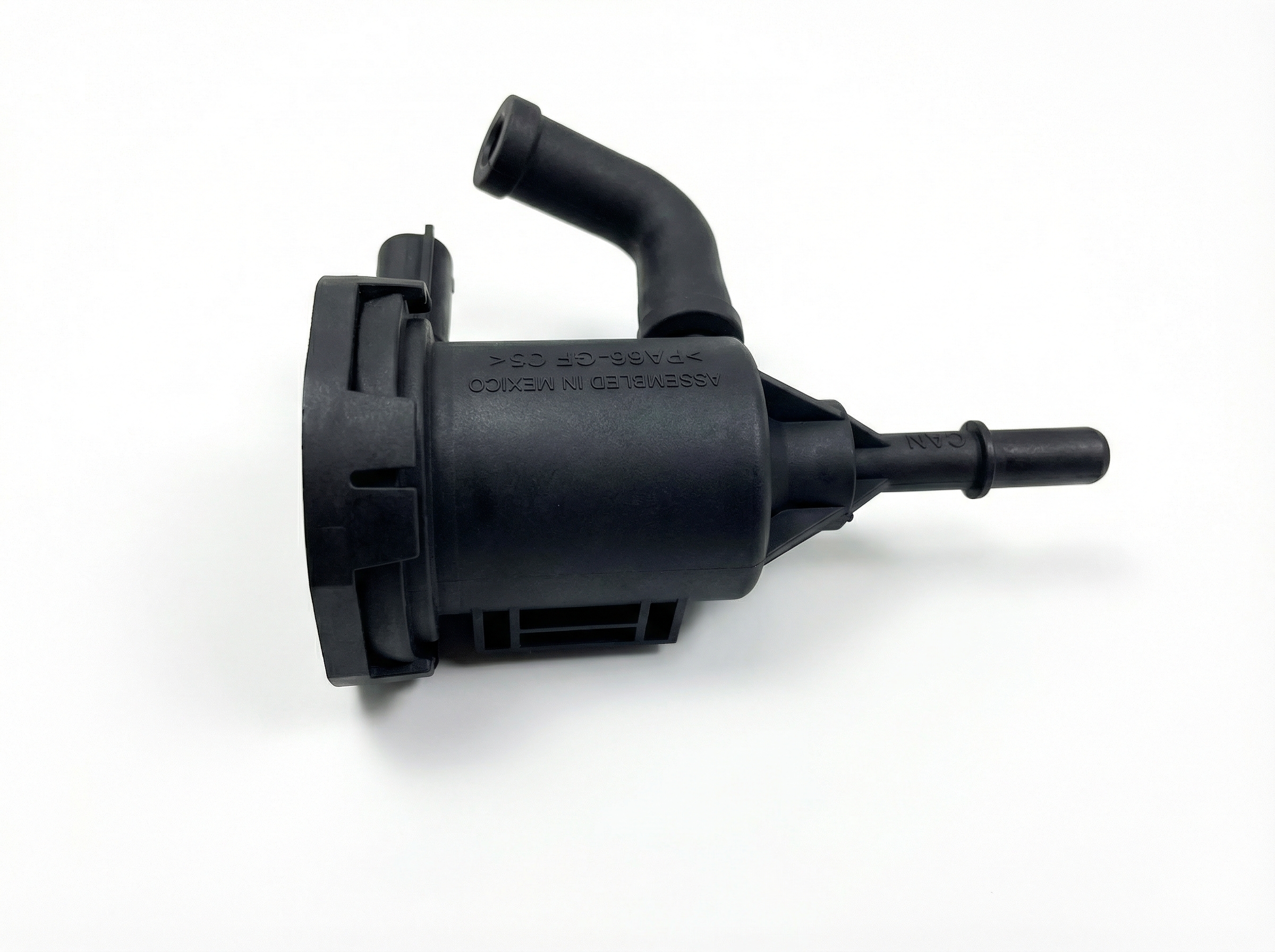
On a 2012-2017 Chrysler 200 with the 2.4L engine, code P0441 is almost always caused by a faulty EVAP purge valve (solenoid). This is an inexpensive part (around $25-$70) and is a common, straightforward DIY replacement located in the engine bay. A hard start immediately after refueling is a classic symptom of this failure.
- P0441 on the 2.4L Chrysler 200 almost always points to a bad EVAP purge valve.
- A hard start after getting gas is a tell-tale symptom of a stuck-open purge valve.
- The part is cheap and the repair is simple for DIYers, especially on 2015-2017 models.
- For 2015 models, a dealer software update (TSB #18-022-17 REV. A) might be the actual fix, not a new part.
- Always check the gas cap seal first.
- This is a shared problem across many Dodge, Jeep, and Chrysler vehicles using the 2.4L Multiair engine.
What's Unique About the 2012-2017 Chrysler 200
The 2.4L Multiair engine is used across many Chrysler, Dodge, and Jeep vehicles, and a failing purge valve is a very common issue that triggers P0441. For the second-generation Chrysler 200 (2015-2017), it's important to be aware of potential software issues. Chrysler issued a Technical Service Bulletin (TSB #18-022-17 REV. A) for the 2015 model year suggesting that a PCM software update could be the required fix, as the original software was potentially too sensitive and could trigger the code without a mechanical fault. Additionally, manufacturer service bulletin #1810216 notes that P0441 can sometimes be found alongside communication codes like U0140 (Lost Communication With Body Control Module) or catalyst efficiency codes like P0420.
Generation note: The 2012-2017 year range covers two generations of the Chrysler 200: the first generation (JS) from 2012-2014 and the second generation (UF) from 2015-2017. While the most common cause (purge valve) is the same for both, the part number and exact location may differ slightly. A specific PCM software update TSB applies mainly to the 2015 model year. The purge valve for the 1st gen is located lower down by the firewall, while on the 2nd gen it is on top of the engine near the intake manifold.
Symptoms You May Notice
- Check Engine Light is on
- Difficulty starting the engine immediately after refueling (a strong sign of a stuck-open purge valve)
- Slightly rough idle
- Minor decrease in fuel economy
- A faint fuel smell (less common)
- Remote start may be disabled by the active fault code.
- Replacing the charcoal canister when the much cheaper and more common failure is the purge valve.
- Replacing oxygen (O2) sensors if lean codes (like P0171 or P2172) are also present. A stuck-open purge valve creates a vacuum leak that can cause lean conditions, but the root cause is the purge valve, not the O2 sensors.
Most Likely Causes
- Faulty EVAP Purge Valve / Solenoid 🔴 High Probability → Shop Vapor Canister This is a very common failure item on vehicles equipped with the 2.4L Multiair engine family across Chrysler, Dodge, and Jeep brands.
How to confirm: Locate the valve in the engine bay. With the engine off, disconnect the hoses and try to blow through it. It should be sealed and not allow air to pass. If air passes, it is stuck open and faulty. You can also apply 12V power to the electrical connector pins; a healthy valve will make an audible click. A rough idle is also a common secondary symptom of a stuck-open valve.
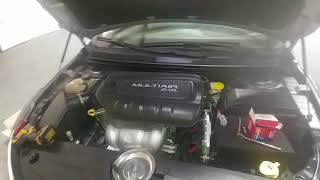
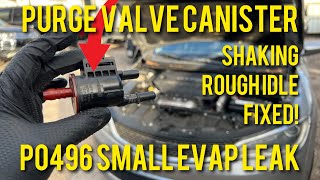
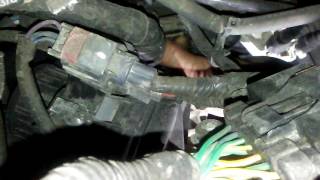
Typical fix: Replace the purge valve. This involves disconnecting two hoses and one electrical connector. On 2012-2014 models, it is located toward the firewall below the master cylinder. 🎬 See this walkthrough for diagnosing P0441 on a 2014 Chrysler 200. On 2015-2017 models, it is easily accessible on the back of the engine. 🎬 Watch: See the exact purge valve location on the 2015 model.
Est. part cost: $25-$70 - Loose or Damaged Gas Cap ⚪ Low Probability → Shop Fuel Tank Cap The rubber seal on the gas cap can dry out and crack over time, especially with exposure to ethanol in fuel, preventing the system from holding pressure.
How to confirm: Ensure the gas cap is tightened until it clicks multiple times. Inspect the rubber O-ring seal on the cap for any cracks, tears, or signs of being compressed flat.
Typical fix: Tighten the cap correctly. If the seal is damaged, replace the cap, preferably with an OEM part to ensure a proper seal.
Est. part cost: $15-$30 - Cracked or Disconnected EVAP Hoses ⚪ Low Probability Vacuum hoses can become brittle and crack over time due to engine heat and age. A hose can also be accidentally left disconnected after other maintenance.
How to confirm: Visually inspect the small vacuum lines running to and from the purge valve for any obvious cracks, breaks, or loose connections.
Typical fix: Replace the damaged section of the hose or reconnect it securely.
Est. part cost: $5-$20
Rare But Worth Checking
- PCM Software Update Needed: For 2015 models specifically, Chrysler issued TSB #18-022-17 REV. A, which calls for a PCM software update to correct the logic that triggers P0441 and other codes like P0456 and P2172. The original software could be overly sensitive. If you have a 2015 model, it's worth checking with a dealer before replacing parts.
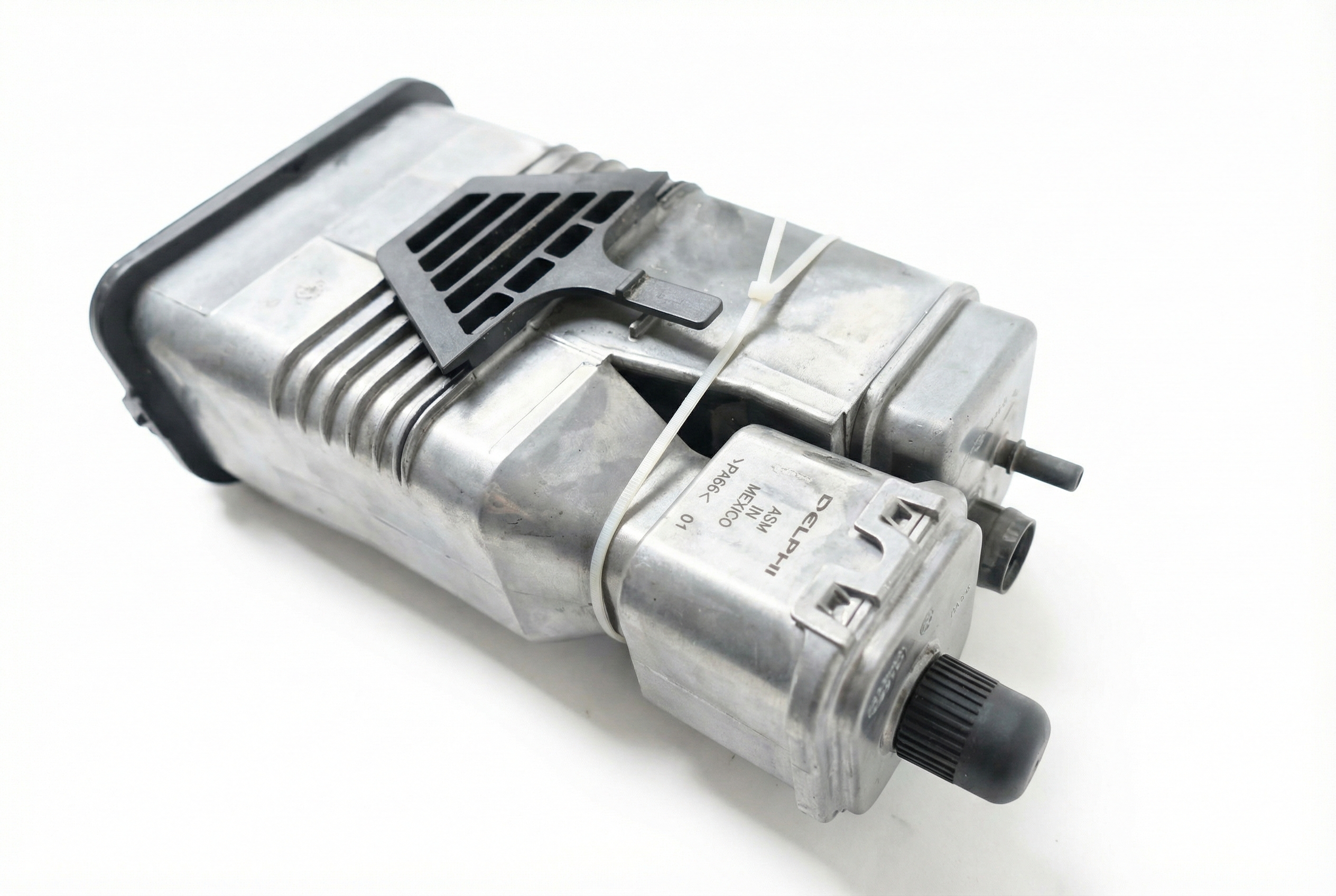
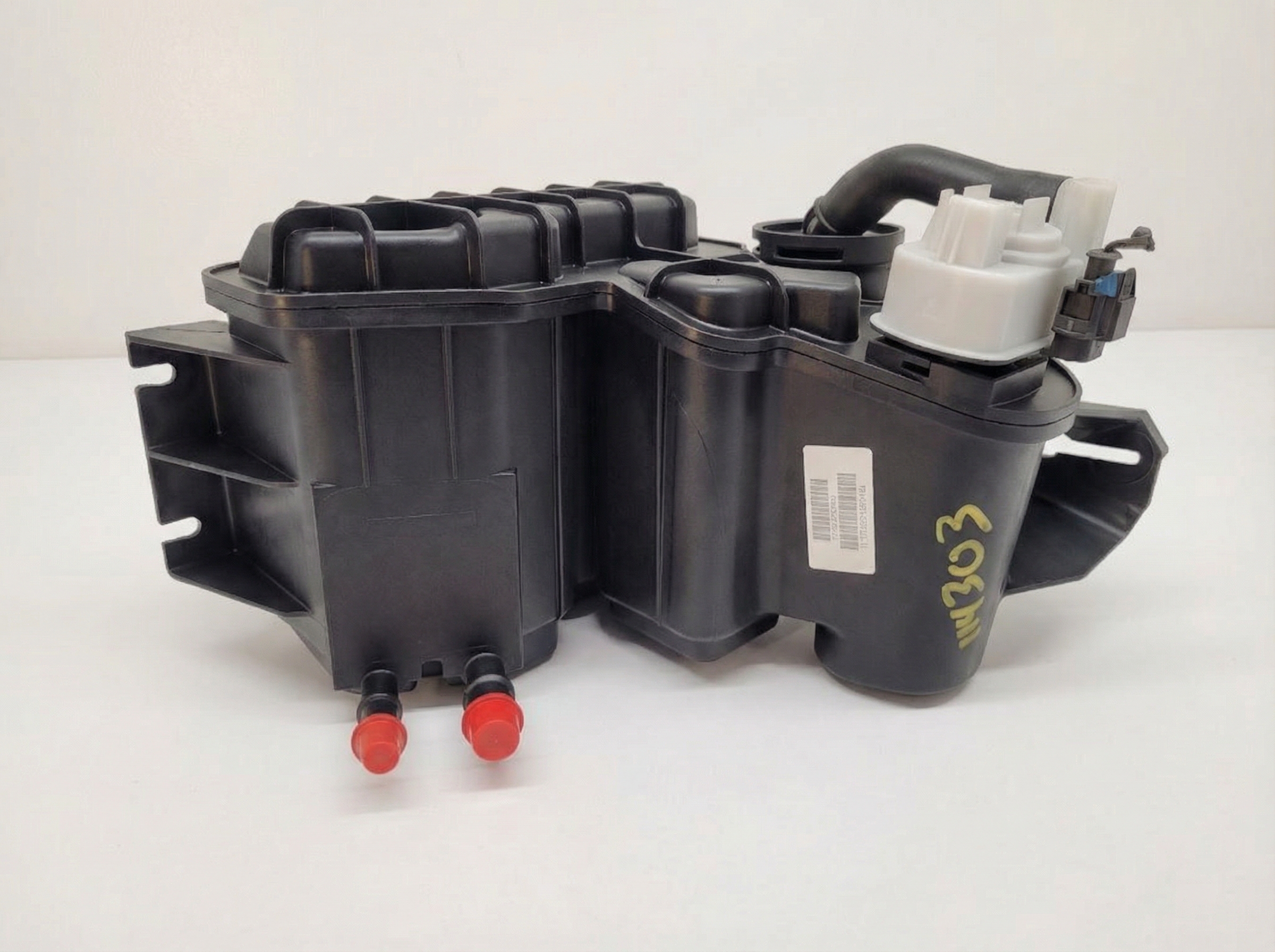
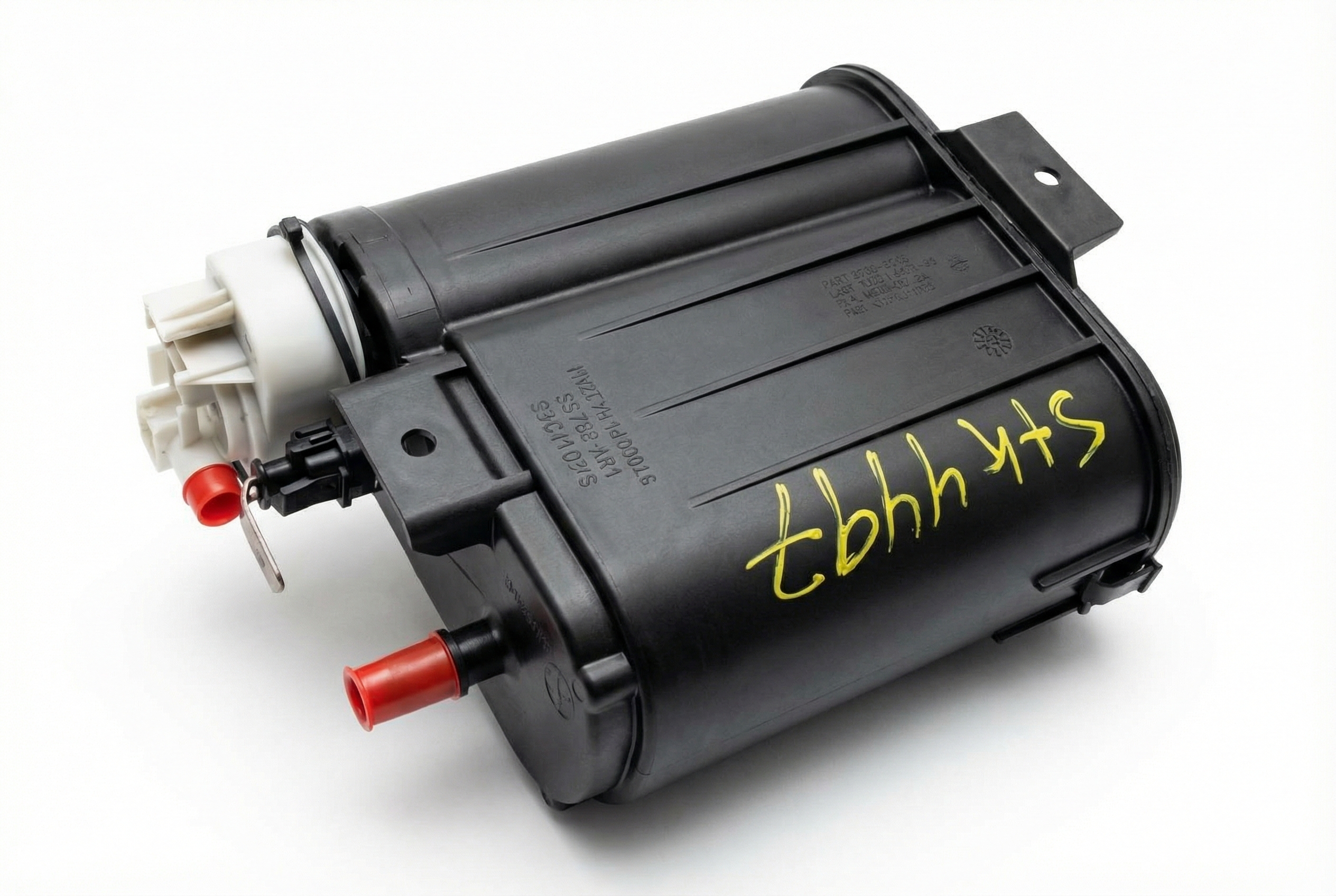
- Clogged Charcoal Canister: → Shop Vapor Canister Consistently overfilling the fuel tank can saturate the charcoal canister with liquid fuel, causing it to fail. In some cases, charcoal pellets can break loose and get drawn into the purge lines, clogging the purge valve itself. If you find black pellets in the hose when replacing the purge valve, the canister is failing and should also be replaced.
- Faulty Evaporative System Integrity Monitor (ESIM): → Shop Vapor Canister On related Chrysler platforms, a faulty ESIM (also called a Natural Vacuum Leak Detection or NVLD unit) is a known cause for P0441. This component is located on or near the charcoal canister and contains a small valve and switch to test system integrity. If it fails, it can incorrectly report a flow problem.
Diagnosis Steps
- Read the code with an OBD-II scanner to confirm P0441 is the primary code.
- Inspect the gas cap. Ensure it is tight and the seal is not cracked or worn.
- Visually inspect the EVAP hoses in the engine bay, especially those connected to the purge valve, for obvious cracks or disconnections.
- Locate the purge valve. On the 2.4L engine, it is typically mounted near the intake manifold.
- Test the purge valve. With the engine off, remove the valve and try to blow through it. No air should pass. If it does, the valve is stuck open and must be replaced.
- While the purge valve hose is disconnected, inspect it for small black charcoal pellets. If found, the charcoal canister is likely failing and will also need replacement.
- If the valve seems okay, you can test its electrical function by applying a 12-volt source to its pins; it should click open.
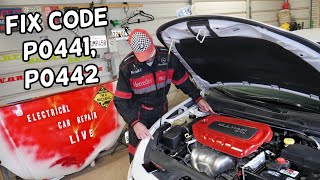
- If the gas cap and purge valve are confirmed to be good, the next step is to perform a smoke test on the EVAP system 🎬 Watch: A helpful guide on common causes and fixes for P0441. to check for any hard-to-see leaks in the lines or charcoal canister.
- For 2015 models, if no physical fault is found, contact a Chrysler dealership with your VIN to inquire about TSB #18-022-17 REV. A for a PCM software update.
Parts You'll Likely Need
- Vapor Canister Purge Valve / Solenoid
(OEM #04891741AA (for 2012-2014 models); 4627694AB or 4627694AA (for 2015-2017 models))— This is the most frequent point of failure for the P0441 code on this specific vehicle and engine combination.
Trusted brands: Mopar, Dorman, Standard Motor Products (SMP), Wells, SKP
OEM price range: $50-$80
Aftermarket price range: $25-$50
Related Codes That Often Appear With This One
- P0442 — This code for a small EVAP leak can sometimes appear with P0441 if the purge valve is not sealing correctly, causing both a flow issue and a leak.
- P0456 — Similar to P0442, this code for a 'very small leak' can be triggered by a faulty purge valve that fails to close completely. It is also listed alongside P0441 in TSB #18-022-17 REV. A.
- P0443 — This code points specifically to an electrical circuit failure in the purge valve solenoid. If you see P0443, the problem is almost certainly electrical (wiring or the solenoid coil itself) rather than a mechanical blockage.
- P2172 — This code for 'High Airflow/Vacuum Leak Detected' is also mentioned in TSB #18-022-17 REV. A. A purge valve stuck open acts as a vacuum leak, which can trigger this code.
- P0116 — Engine Coolant Temperature Sensor 1 Performance. This code is noted in manufacturer bulletin #18-023-16 as potentially appearing alongside P0441 on certain models.
Technical Service Bulletins (TSBs) & Recalls
- TSB #18-022-17 REV. A - Flash: Powertrain Diagnostic and System Improvements. Addresses P0441, P0456, P2172 and others on 2015 Chrysler 200 and 2013-2015 Dodge Dart with 2.4L engine by reprogramming the PCM.
- Bulletin #1810216 - Notes that P0441 may be set in conjunction with U0140 (Lost Communication With Body Control Module) and catalyst efficiency codes P0420 or P0430.
- Bulletin #18-023-16 - Identifies that P0441 may occur with P2172 (High Airflow/Vacuum Leak Detected) and P0116 (Engine Coolant Temperature Sensor Performance) and includes software improvements to address these issues.
Platform-Specific Known Issues
- PCM Software Update TSB: A Technical Service Bulletin (TSB #18-022-17 REV. A) exists for some 2015 Chrysler 200 models with the 2.4L engine, indicating that a Powertrain Control Module (PCM) software update may be required to fix a false P0441 code caused by overly sensitive monitoring logic.
- Hard Start After Refueling: A very common owner complaint associated with P0441 on this platform is difficulty starting the engine right after filling the gas tank. This symptom strongly points to a purge valve that is stuck in the open position, allowing un-metered fuel vapor to flood the intake.
Mechanic-Grade Diagnostic Values
- EVAP Purge Valve Solenoid Coil Resistance — expected: 14 - 36 Ohms. Failure: An open circuit (infinite resistance) or a dead short (near zero resistance) indicates a failed coil.
- EVAP Purge Solenoid Connector Voltage (Key On, Engine Off) — expected: Approximately 12V (Battery Voltage) on one pin (power feed). The other pin is the PCM control wire.. Failure: No voltage on the power feed pin points to a fuse or wiring issue. If the control wire voltage doesn't drop to near 0V when commanded on with a scan tool, it indicates a wiring fault or a bad PCM driver.
Hidden / Shadow Codes Worth Checking
- Mode $06, TID $88: This Test ID relates to 'Gas Flow Average Ratio' on some Chrysler products. A value outside the manufacturer's specified minimum/maximum range can indicate a failure in the purge flow monitor test, which is directly related to P0441. (see via A professional scan tool capable of reading Mode $06 non-continuous monitor test results.)
Scan Tool Commands That Help
- wiTECH or equivalent professional scan tool: ESIM Force Monitor Test — After replacing a suspected faulty ESIM, this function can be used to run a system self-test to confirm the repair was successful and the system passes its leak and flow checks.
- wiTECH or equivalent professional scan tool: EVAP Purge Solenoid Control — This bidirectional command allows a technician to manually open and close the purge valve while monitoring fuel tank pressure sensor data. This directly tests the valve's mechanical and electrical operation, confirming if it's sticking or not responding to PCM commands.
Wiring & Ground Locations
- EVAP Purge Solenoid Connector (2015+) — At the rear of the engine, below the master cylinder on the 2.4L engine.. This is the connection point for the most common failed part. For the 2015 model, Pin 1 is a Pink/Light Green wire (power) and Pin 2 is a Dark Green/Light Green wire (PCM control). Testing for voltage and signal here is a primary diagnostic step.
- G924A — At the base of the right 'D' pillar (rear passenger side).. This is the ground point for the Evaporative System Integrity Monitor (ESIM) on 2015-2017 models. A poor ground here could cause the ESIM to report incorrect data, potentially leading to a false P0441.
- G309 — On the left side of the engine compartment.. For 2012 models, this is a ground point that serves the EVAP/purge solenoid. Corrosion or a loose connection at this point could cause electrical issues for the purge valve, triggering P0441 or P0443.
Real Owner Repair Stories
- YouTube video from J&R Auto Repair (2015 Chrysler 300 (similar platform and EVAP system design)) — P0441 EVAP Purge System Performance code.
❌ Tried (didn't work) Initial scan showed the purge valve was being commanded on and vacuum was being created in the tank, which would normally suggest the purge valve is working.
✅ What actually fixed it The ESIM switch was not closing when vacuum was present. The technician bypassed the switch with a jumper wire to confirm the wiring to the PCM was good. The old ESIM was removed and found to have corrosion on its terminals. Replacing the ESIM switch resolved the issue, and a subsequent scan tool system test passed. - NHTSA ODI #10575614 — An owner reported that after the check engine light illuminated, a technician diagnosed the vehicle with code P0441 and determined the EVAP purge valve required replacement.
"I Checked Everything" — The Actual Cause
- In cases where a smoke test shows no leaks, the P0441 code is more likely caused by a functional failure rather than a physical leak. This could be a purge valve that is mechanically stuck closed (so it holds pressure but doesn't flow), a faulty ESIM that isn't correctly sensing the pressure change during the purge cycle, or the PCM software issue outlined in TSB #18-022-17 REV. A for 2015 models.
OEM Part Supersession History
4627694AA→4627694AB— Standard part revision by the manufacturer, likely for improved durability or minor design change.
Model Year Variations Within This Range
- 2012-2014 (JS Platform): The purge valve (PN 04891741AA) is located lower on the firewall. The EVAP system uses a different ground point (G309) for the purge solenoid circuit. This generation does not use the ESIM found on later models.
- 2015-2017 (UF Platform): The purge valve (PN 4627694AB) is located on the back of the engine. This system uses an Evaporative System Integrity Monitor (ESIM) on the charcoal canister, which is a known failure point and has its own ground (G924A). The 2015 model year is specifically subject to a TSB for a PCM software update to fix false P0441 codes.
Diagnostic Flowchart
Real Owner Stories
Aggregated from forums and TSBs cited above. Mileages and costs reflect what owners reported in those sources.
2014 Chrysler 200 2.4L
Symptoms: Check Engine Light illuminated with code P0441.
What fixed it: Replaced the EVAP purge solenoid (part number CP646) located below the master cylinder.
Source hint: YouTube comment (via Vertex AI Search Summary) / 'P0441 on 2012-2015 Chrysler 200: EVAP Incorrect Purge Flow Causes and Fixes'
2013 Chrysler 200
Symptoms: Check Engine Light on with a P0441 code.
What fixed it: A technician diagnosed the vehicle and replaced the EVAP purge valve.
Source hint: NHTSA ODI #10575614
Related OBD-II Codes
Frequently Asked Questions
Does TSB #18-022-17 REV. A apply to my Chrysler 200?
Why is my 2.4L Chrysler 200 hard to start right after getting gas?
Where is the EVAP purge valve located on my Chrysler 200?
Can a bad gas cap cause the P0441 code on this car?
Why did my remote start stop working when the check engine light came on?
How can I test the purge valve on my 2.4L Multiair engine?
Helpful Videos

Used OEM Parts in Stock
New Aftermarket Parts Available


The information in this article is provided for general reference and educational purposes only. Vehicle specifications, procedures, and part compatibility can vary by production date, trim level, and region. Always consult your vehicle's factory service manual and verify part numbers before purchasing or performing repairs. Safety-critical components such as airbags, seat belts, and braking systems should be installed by a qualified professional.
- Chrysler 200:
- 🧭 Diagnostic Flowchart
- 🎬 Helpful Videos
- 🛍️ Shop This Part
- What's Unique About the 2012-2017 Chrysler 200
- Symptoms You May Notice
- Most Likely Causes
- Rare But Worth Checking
- Diagnosis Steps
- Parts You'll Likely Need
- Related Codes That Often Appear With This One
- Technical Service Bulletins (TSBs) & Recalls
- Platform-Specific Known Issues
- Mechanic-Grade Diagnostic Values
- Hidden / Shadow Codes Worth Checking
- Scan Tool Commands That Help
- Wiring & Ground Locations
- Real Owner Repair Stories
- "I Checked Everything" — The Actual Cause
- OEM Part Supersession History
- Model Year Variations Within This Range
- Real Owner Stories
- 2014 Chrysler 200 2.4L
- 2013 Chrysler 200
- Related OBD-II Codes
- Frequently Asked Questions
- 🎟️ Get 5% Off