

P0441 on 2006-2010 Dodge Charger: EVAP Incorrect Purge Flow Causes and Fixes
For a 2006-2010 Dodge Charger, code P0441 is most often caused by a faulty EVAP purge valve/solenoid. This is an affordable and easy DIY replacement, typically costing $25-$60. Before replacing it, check for any cracked or disconnected vacuum hoses near the engine, which is a common and free fix. A YouTube video shows this exact scenario on a Charger where the hose was simply unplugged.
- P0441 means the EVAP system has an incorrect purge flow, which is a problem with moving stored fuel vapors to the engine.
- The most likely cause on a 2006-2010 Charger is a bad purge valve, which is an easy and inexpensive DIY rep
What's Unique About the 2006-2010 Dodge Charger
The 2006-2010 Dodge Charger (LX platform) has a relatively straightforward EVAP system. Unlike later generations which are known to have software glitches that can trigger this code, the P0441 on this first-generation model almost always points to a physical component failure. The most common culprits are the purge solenoid itself or a vacuum hose that has become disconnected or brittle from engine heat. The system uses either a Leak Detection Pump (LDP) or an Evaporative System Integrity Module (ESIM) near the rear of the vehicle for its self-tests, but the P0441 code is specifically for purge flow, which focuses diagnostics on the front of the car, in the engine bay. A key difference within this generation is the transition from LDP systems to ESIM systems around the 2007-2008 model years.
Symptoms You May Notice
- Check Engine Light is on.
- Loss of 'ECO' mode indicator on the dash (if equipped).
- A faint fuel smell may be present in rare cases.
- Difficulty starting after refueling (less common).
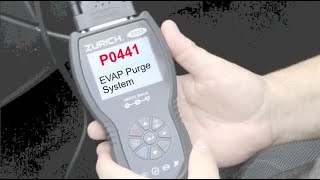
- Replacing the gas cap. While a bad gas cap can cause other EVAP codes (like P0455 or P0456 for leaks), it is not a typical cause for an 'Incorrect Purge Flow' code like P0441. The system is detecting a lack of flow, not a leak to the atmosphere. 🎬 Watch: A breakdown of common causes for the P0441 code.
Most Likely Causes
- Faulty EVAP Purge Valve/Solenoid 🔴 High Probability → Shop Vapor Canister The purge valve is a constantly working solenoid that is subject to wear and tear. It can get stuck open or closed, or fail electrically, which is a very common failure on many vehicles, including this platform. It is the most frequently replaced part for this code.
How to confirm: With the engine running at idle, disconnect the EVAP hose from the purge valve that leads to the intake manifold. There should be no vacuum felt. If you feel suction, the valve is stuck open and needs replacement. You can also remove the valve and try to blow through it; if air passes, it's stuck open. A scan tool can also command the valve to open and close to verify its operation audibly.
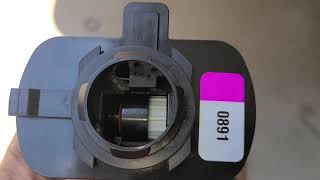
Typical fix: Replace the purge valve. It is located on the engine near the intake manifold (on the passenger side for the 5.7L V8) 🎬 See this step-by-step purge valve replacement on a 5.7 Hemi. and is held in place by one or two bolts, with two hoses and an electrical connector attached.
Est. part cost: $25-$60 - Cracked or Disconnected EVAP/Vacuum Hose 🟡 Medium Probability → Shop Vacuum Hose The vacuum hoses in the engine bay are exposed to constant heat cycles, which can make the rubber and plastic brittle over time. A hose can easily crack or even pop off a connection, causing an incorrect purge flow.
How to confirm: Visually inspect all vacuum lines connected to and surrounding the purge solenoid. Pay close attention to the rubber elbows and plastic connectors. A YouTube video for a Charger with P0441 showed the cause was simply a disconnected hose right at the purge valve. A smoke test is the professional method to find leaks that are not visually obvious.
Typical fix: Reconnect any disconnected hoses. Replace any hoses that are cracked, brittle, or swollen. Vacuum hose can be purchased by the foot from any auto parts store.
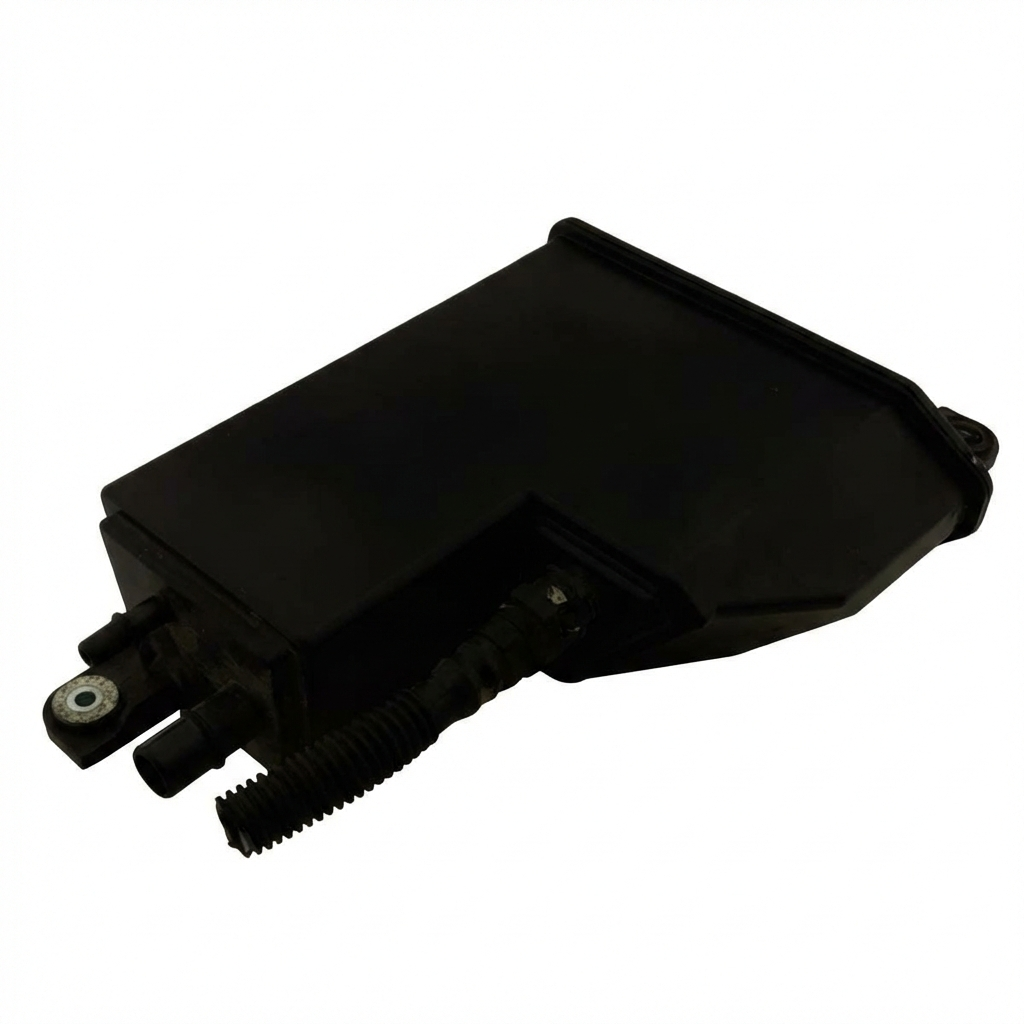
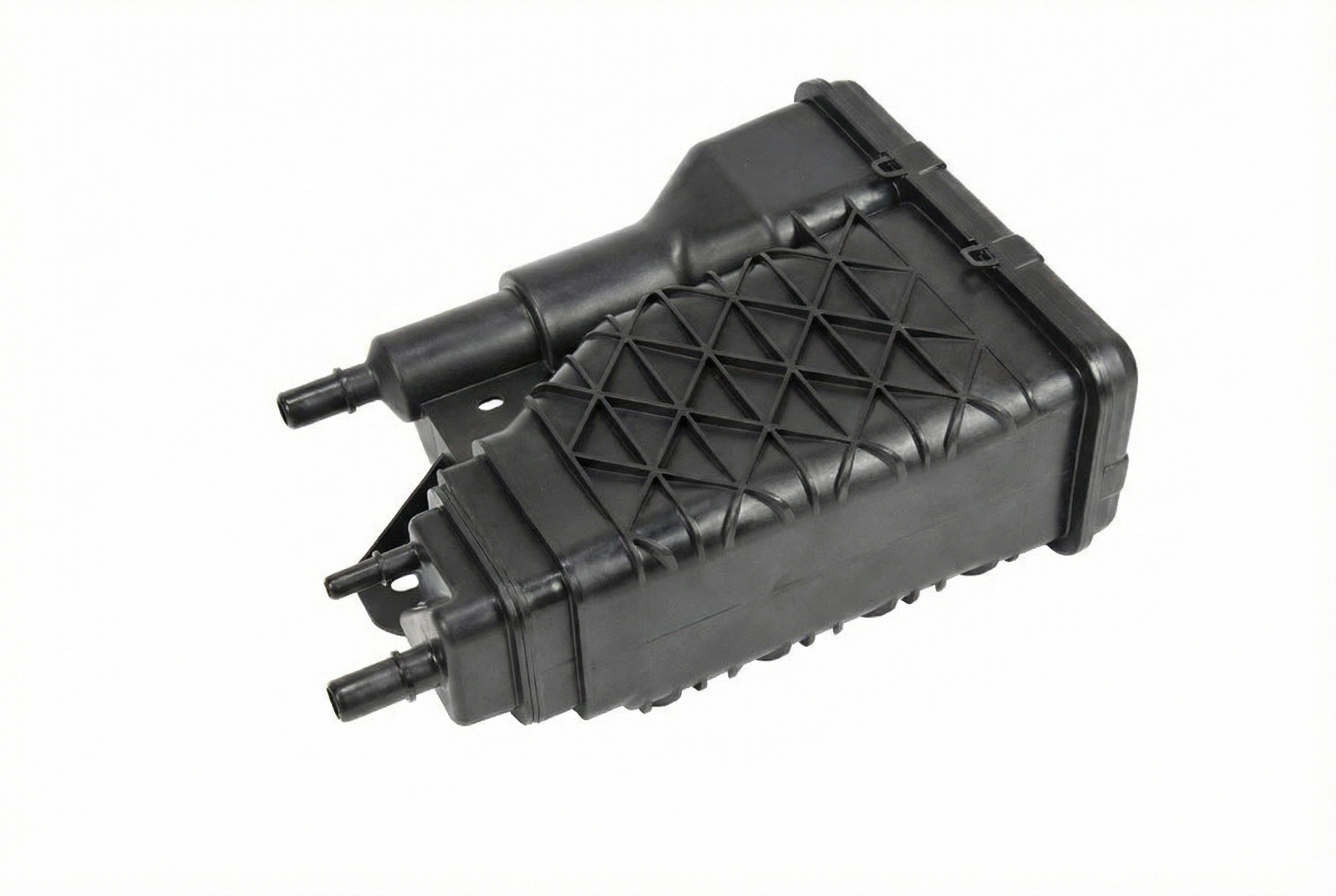
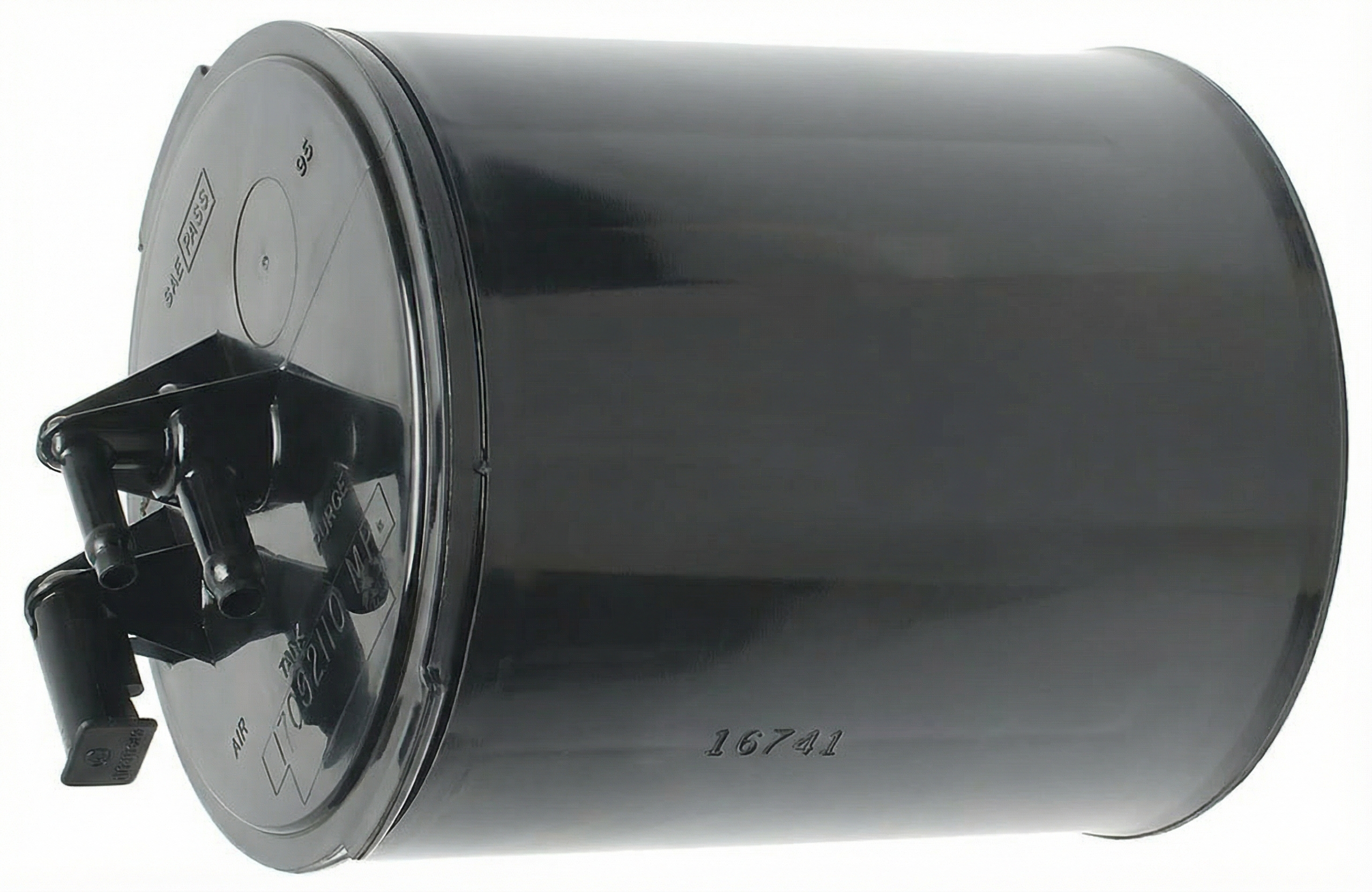
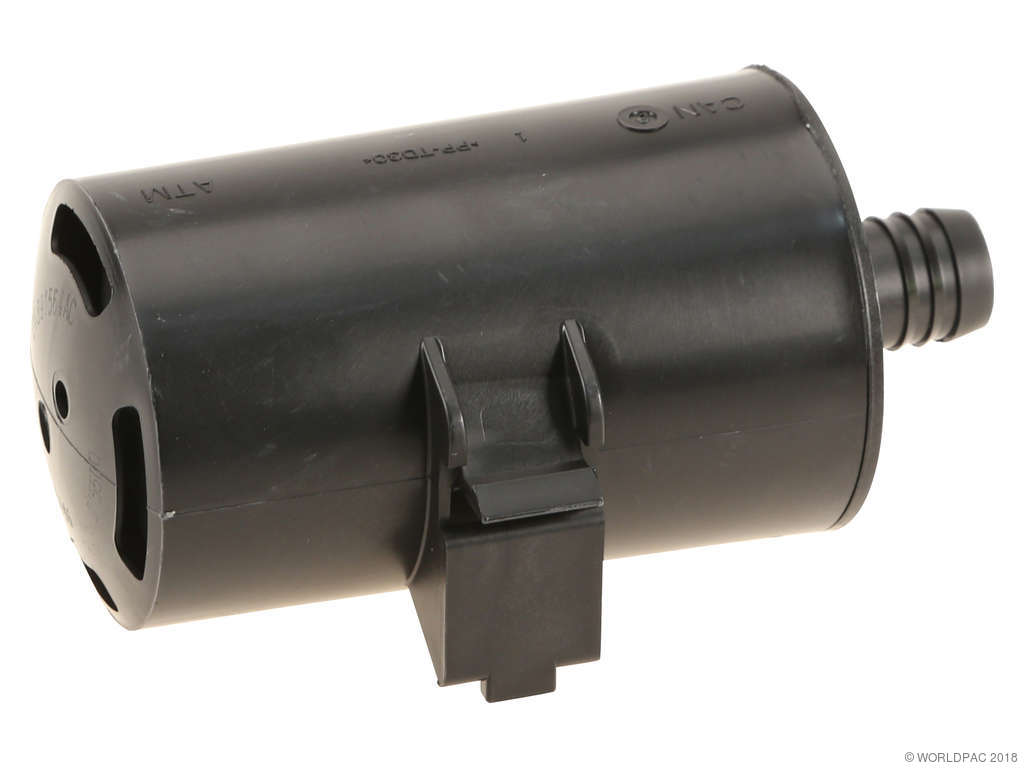
Est. part cost: $5-$20 - Clogged or Saturated Charcoal Canister ⚪ Low Probability → Shop Vapor Canister Consistently overfilling the fuel tank (continuing to pump gas after the nozzle clicks off) can force liquid fuel into the charcoal canister. This saturates the charcoal pellets, turning them into a solid blockage that prevents vapor from flowing when the purge valve opens.
How to confirm: If the purge valve and its lines are confirmed to be working, the canister is the next suspect. It is located near the fuel tank, typically behind the passenger-side rear wheel well liner. A blockage can be confirmed if no flow is possible from the canister to the purge valve. Shaking the canister may reveal a rattling sound if the internal charcoal media has broken apart.
Typical fix: Replace the charcoal canister. This is more expensive and labor-intensive than replacing the purge valve.
Est. part cost: $100-$200
Rare But Worth Checking
- Faulty Leak Detection Pump (LDP) or ESIM: → Shop Evaporative Emissions System Leak Detection Pump While P0441 is a flow code, not a leak code, a malfunctioning leak detection system (called an ESIM on these models) can sometimes interfere with the EVAP monitor's ability to correctly diagnose the system, leading to a P0441. The ESIM is located on top of the charcoal canister. Incorrect installation of a replacement ESIM (it must be clocked correctly with the connector at the 3:00 position) is a known issue that can cause persistent EVAP codes.
- Faulty Powertrain Control Module (PCM): A bad PCM is extremely rare but possible. It should only be considered after all other components and wiring in the EVAP system have been thoroughly tested and proven to be good.
Diagnosis Steps
- Read the code with an OBD-II scanner to confirm P0441 is the only code present.
- Perform a thorough visual inspection of the engine bay. Look for any vacuum hoses that are disconnected, cracked, or appear worn out, especially around the purge solenoid near the intake manifold. A disconnected hose is a common, simple fix.
- Check the gas cap to ensure it is tight and the seal is intact, although this is an unlikely cause for this specific code.
- Test the purge valve. With the engine idling, disconnect the hose between the valve and the intake. There should be no suction. If there is, the valve is stuck open and must be replaced.
- Command the purge valve open with a bi-directional scan tool. With the valve commanded open, there should now be strong vacuum at the port. If there isn't, and the valve clicks, there is a blockage between the valve and the charcoal canister.
- If you do not have a scan tool, you can remove the valve and apply 12V and ground to its pins. It should make an audible click. You should be able to blow through it when energized, and not be able to when de-energized.
- If the purge valve tests good, the next step is a low-pressure smoke test. Introduce smoke into the EVAP service port (often with a green cap) to check the entire system for hard-to-see cracks or leaks in the lines running to the rear of the vehicle.
- If no leaks are found and the purge valve is functional, inspect the lines running from the valve back to the charcoal canister for blockages or kinks.
- If no other issues are found, the charcoal canister itself may be clogged and require replacement.
Parts You'll Likely Need
- EVAP Purge Valve / Solenoid
(OEM #4891738AD (or superseding numbers like 4627973AD))— This is the most common failure point for a P0441 code. It's a mechanical solenoid that operates frequently and is prone to sticking or failing over time.
Trusted brands: Mopar, Standard Motor Products (SMP), Dorman, Bosch
OEM price range: $45-$75
Aftermarket price range: $25-$60 - EVAP Vapor Canister
(OEM #68421012AB (supersedes 68421012AA))— This part is typically replaced if it becomes saturated with fuel from over-filling the gas tank, or if its internal structure collapses, causing a blockage.
Trusted brands: Mopar
OEM price range: $150-$250
Aftermarket price range: $100-$200
Platform-Specific Known Issues
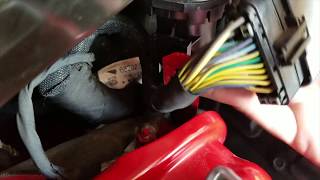
- Disconnected Hose at Purge Valve: → Shop Vapor Canister A surprisingly common real-world fix for P0441 on this platform is simply finding the vacuum hose disconnected right at the purge solenoid in the engine bay, which can be knocked off during other service. 🎬 Watch: A real-world example of fixing a disconnected hose. Always check this first.
Technical Service Bulletins (TSBs) & Recalls
- TSB Bulletin #1809423: This bulletin notes that P0441 (EVAP Purge System Performance) may be set alongside P0455, P0456, or P0440, and involves reprogramming the PCM with the latest available software.
- TSB Bulletin #25-003-20: A manufacturer service bulletin indicates that technicians may find P0441 set in conjunction with P0452 (EVAP Pressure Switch Stuck Closed).
- TSB Bulletin #1807517: This record lists P0441 as a potential code alongside several others, including P0455, P0456, and crankshaft position sensor circuit codes (P0335, P0339).
- TSB Bulletin #1809416: A manufacturer bulletin describes cases where P0441 is set along with P1115 (General Temperature Rationality), P0456, P2610, and multiple cylinder misfires (P0300, P0301).
- TSB Bulletin #18-067-15: This bulletin identifies that P0441 may be present along with U0401-00 (Implausible Data Received From ECM/PCM) and P0340 (Camshaft Position Sensor Circuit), noting that a software update includes improvements for fuel performance.
Mechanic-Grade Diagnostic Values
- EVAP Purge Valve Solenoid Coil Resistance — expected: 14 to 30 Ohms. Failure: A reading outside this range, or an Open Line (OL) / infinite reading, indicates a faulty solenoid coil.
- EVAP Purge Valve Connector Voltage (Key On, Engine Off) — expected: Approximately 11-12 Volts DC (Battery Voltage). Failure: No voltage or significantly low voltage points to a problem in the power supply circuit, such as a blown fuse, a bad relay, or a wiring fault between the power source and the solenoid.
Scan Tool Commands That Help
- wiTECH (Chrysler/Dodge/Jeep Dealer Tool) or equivalent professional scanner: EVAP Purge Solenoid Actuation Test — This command allows the technician to manually open and close the purge solenoid while the engine is running. It's used to verify the solenoid is mechanically functioning (an audible click should be heard) and to check for vacuum flow when commanded open and no flow when commanded closed. This is a definitive functional test of the solenoid itself.
- wiTECH or equivalent: View ESIM Switch State — When diagnosing the rear part of the EVAP system, this allows a technician to see if the Evaporative System Integrity Module (ESIM) switch is reporting 'open' or 'closed' correctly as vacuum or pressure is applied. This is crucial for diagnosing a faulty ESIM that could indirectly contribute to a P0441.
Wiring & Ground Locations
- G100 — Located on the left front inner fender, near the front of the Totally Integrated Power Module (TIPM) / fuse box in the engine compartment.. This is a primary engine bay ground point. A poor connection here can cause intermittent electrical issues for various components, including the power supply or control circuit for the EVAP purge solenoid.
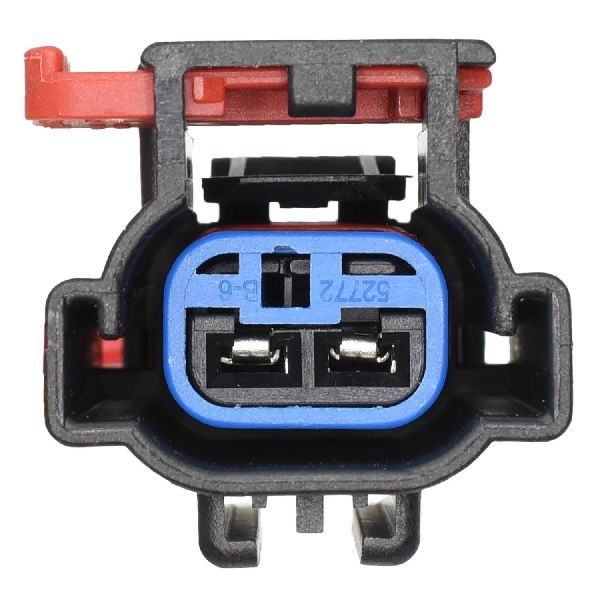
- Purge Solenoid Connector — On the EVAP purge solenoid itself, located on the engine near the intake manifold.. This is the direct connection point for testing voltage and control signals. One pin should have battery voltage with the key on, and the other is the control wire that the PCM pulses to ground to activate the solenoid.
"I Checked Everything" — The Actual Cause
- In a documented case on a similar Dodge platform (Ram 1500), a vehicle repeatedly set EVAP codes (P0440, P0456) after a P0441 was initially found. A smoke test showed no leaks, and the purge valve tested good. The actual cause was a previously replaced Evaporative System Integrity Monitor (ESIM) that was installed in the wrong orientation. The ESIM must be installed with the electrical connector at the 3:00 position to function correctly. Once re-oriented, the codes were resolved.
OEM Part Supersession History
4891738AA, 4891738AB→4891738AD— Standard part revision and improvement by the manufacturer.
Heads up: The newer part number 4891738AD is a direct replacement for the older versions and is fully compatible with the 2006-2010 Charger models.
Model Year Variations Within This Range
- Approximately 2006-2007 vs 2008-2010: Early models in this range may use a Leak Detection Pump (LDP) for EVAP system self-tests. Later models transitioned to the Evaporative System Integrity Module (ESIM). While both serve a similar function, their diagnosis and failure modes can differ. The P0441 code, however, remains focused on the purge flow circuit at the front of the vehicle regardless of the rear leak detection method.
Diagnostic Flowchart
Other Known Issues on This Vehicle
Issues unrelated to this code that are worth knowing about as an owner of this generation:
- Front Suspension Clunk/Wear 🟠 Medium — Very common. Owners report replacing tension struts, sway bar links/bushings, and tie rods frequently. Noise over bumps is the primary symptom.
- Shifter Stuck in Park ('Pink Thingy' Failure) 🔴 High — Extremely common, especially on 2005-2007 models, but can affect up to 2010. A small plastic lever in the shifter assembly breaks, immobilizing the vehicle. (Ref: Not a recall, but a well-known failure with aftermarket metal replacement parts available (e.g., Dorman 924-706).)
- 5.7L/6.1L HEMI Lifter/Camshaft Failure 🔴 High — A significant known issue, though not guaranteed to happen. Often presents as a persistent 'tick' at idle. Caused by a combination of lifter design and oiling issues, particularly for the MDS (Multi-Displacement System) lifters. Failure can lead to major engine damage.
- Premature Engine Failure (2006 Model Year) 🔴 High — The 2006 model year specifically has a higher-than-average number of complaints about major engine problems, including complete failure.
- Transmission Control Module (TCM) Software Issues 🟡 Low — Some owners of 2006-2010 models reported hard shifting or shuddering that could be resolved with a dealer software update to the TCM. (Ref: Software updates were issued by dealers to address this.)
Used vs. New Parts: Buying Guide for This Vehicle
When a used part is the smart pick: A used charcoal canister can be a cost-effective option if a new OEM part is prohibitively expensive, especially if the failure is a blockage and not saturation from over-filling. However, it is a gamble as the history of the donor car (i.e., if the owner frequently topped off the tank) is unknown.
Donor-vehicle mileage cap: roughly under 80000 miles for the part to have meaningful remaining life.
What to inspect on the donor part:
- For a charcoal canister, ensure there are no visible cracks in the plastic housing.
- Check that all hose ports are intact and not broken or brittle.
- If possible, verify the donor vehicle does not have any active EVAP trouble codes.
- Avoid canisters that appear to have been submerged in water or show heavy corrosion on associated metal parts.
OEM-only on this vehicle (don't cheap out):
- While not strictly 'OEM-only', the EVAP Purge Valve is so inexpensive new from reputable aftermarket brands ($25-$60) that buying a used one is not recommended. The risk of receiving a part that is near the end of its service life outweighs the minimal cost savings.
Aftermarket brands forum-validated for this vehicle:
- For the EVAP Purge Valve: Standard Motor Products (SMP), Dorman, Bosch.
Brands owners have reported issues with on this vehicle:
- No specific brands were consistently cited as problematic for this part on this vehicle, but ultra-cheap, unbranded parts from online marketplaces carry a higher risk of premature failure.
Real Owner Stories
Aggregated from forums and TSBs cited above. Mileages and costs reflect what owners reported in those sources.
2006-2010 Dodge Charger
Symptoms: The vacuum hose was found disconnected right at the purge solenoid in the engine bay.
What fixed it: Simply reconnecting the vacuum hose at the purge valve.
Source hint: YouTube: 'Dodge Charger P0441 EVAP code fix' by user WJHandyDad
2009 Dodge Charger
Symptoms: Check engine light came on with code P0456 and later P0441.
What fixed it: The owner was investigating the EVAP system after the 'money light' appeared.
Source hint: r/MechanicAdvice
Related OBD-II Codes
Frequently Asked Questions
Where is the purge valve located on my 5.7L V8 Dodge Charger?
Why did my 'ECO' mode indicator disappear when the P0441 code triggered?
I'm having trouble starting my Charger only after I fill up at the gas station; is this related to P0441?
Could my habit of 'topping off' the gas tank be causing this code on my Charger?
Is there a common part I should check first before buying expensive sensors?
Where is the charcoal canister located if I need to inspect it for a blockage?
Helpful Videos

Used OEM Parts in Stock
New Aftermarket Parts Available


The information in this article is provided for general reference and educational purposes only. Vehicle specifications, procedures, and part compatibility can vary by production date, trim level, and region. Always consult your vehicle's factory service manual and verify part numbers before purchasing or performing repairs. Safety-critical components such as airbags, seat belts, and braking systems should be installed by a qualified professional.
- Dodge Charger:
- 🧭 Diagnostic Flowchart
- 🎬 Helpful Videos
- 🛍️ Shop This Part
- What's Unique About the 2006-2010 Dodge Charger
- Symptoms You May Notice
- Most Likely Causes
- Rare But Worth Checking
- Diagnosis Steps
- Parts You'll Likely Need
- Platform-Specific Known Issues
- Technical Service Bulletins (TSBs) & Recalls
- Mechanic-Grade Diagnostic Values
- Scan Tool Commands That Help
- Wiring & Ground Locations
- "I Checked Everything" — The Actual Cause
- OEM Part Supersession History
- Model Year Variations Within This Range
- Other Known Issues on This Vehicle
- Used vs. New Parts: Buying Guide for This Vehicle
- Real Owner Stories
- 2006-2010 Dodge Charger
- 2009 Dodge Charger
- Related OBD-II Codes
- Frequently Asked Questions
- 🎟️ Get 5% Off