

P0441 on 2018-2020 Dodge Durango: EVAP Incorrect Purge Flow Causes and Fixes
For a 2018-2020 Dodge Durango, code P0441 most often points to a faulty EVAP purge valve (solenoid), especially when accompanied by P0456 (small leak). This is a relatively inexpensive part, costing around $30-$70 for an aftermarket replacement, and is a straightforward DIY repair for many owners. On some 2020 models, a disconnected hose from the factory is also a known cause covered by a TSB.
- P0441 on your Durango means the EVAP system has an incorrect vapor flow.
- The most likely cause is a bad EVAP purge valve, which is an affordable and accessible part to replace yourself.
- Always check your gas cap first; make sure it's tight and the seal is intact.
- This code will cause an emissions test failure but is not a critical safety issue and you can continue driving.
- If a new purge valve and gas cap don't fix the issue, a smoke test may be needed to find a leak in an EVAP hose.
What's Unique About the 2018-2020 Dodge DURANGO

On this generation of Dodge Durango and its platform-mate, the Jeep Grand Cherokee, the P0441 code is a well-documented issue. Dodge has issued multiple Technical Service Bulletins (TSBs) that cover this exact code for the 2018-2020 model years. Specifically, TSB 18-035-20 points to a fuel vapor hose that may not have been connected at the factory on some 2020 models with the 3.6L engine, directly causing P0441, P0455, and P0456. This highlights a specific manufacturing issue beyond the common component failures seen on other vehicles. These models use an Evaporative System Integrity Monitor (ESIM) which detects leaks and flow using a weighted switch, a system that differs from the NVLD pumps on some older Chrysler products.
Diagnostic Flowchart
Tap your situation to follow the diagnostic path that matches what you're seeing on this vehicle.
Symptoms You May Notice
- Check Engine Light is on
- Possible faint fuel smell, particularly near the left rear wheel well if a hose is disconnected per TSB 18-035-20
- Slightly rough idle in some cases
- Remote start feature may be disabled
- Replacing the gas cap when the purge valve is the actual problem. While a gas cap is a possible cause, the purge valve is a more frequent culprit for a P0441 flow code.
- Replacing the purge valve without checking for charcoal pellets inside. If the charcoal canister has failed, the new purge valve will quickly be contaminated and fail as well.
Most Likely Causes

- Faulty EVAP Purge Valve/Solenoid 🔴 High Probability → Shop Vapor Canister The purge valve is a common failure point in many modern vehicles, including the Durango and Grand Cherokee. It can get stuck open or closed, directly causing the incorrect flow detected by the PCM. Aftermarket brands like Dorman are available, but some mechanics report they fail more quickly than the OEM Mopar part.
How to confirm: The valve is located on top of the engine and is easy to access. With the engine running, you can sometimes feel it ticking, which is normal. A definitive test is to remove the valve (engine off), and try to blow through it; it should be closed (no air passes) when no power is applied. If air passes, it's stuck open and bad. A scan tool can also command the valve to cycle, confirming electrical function.
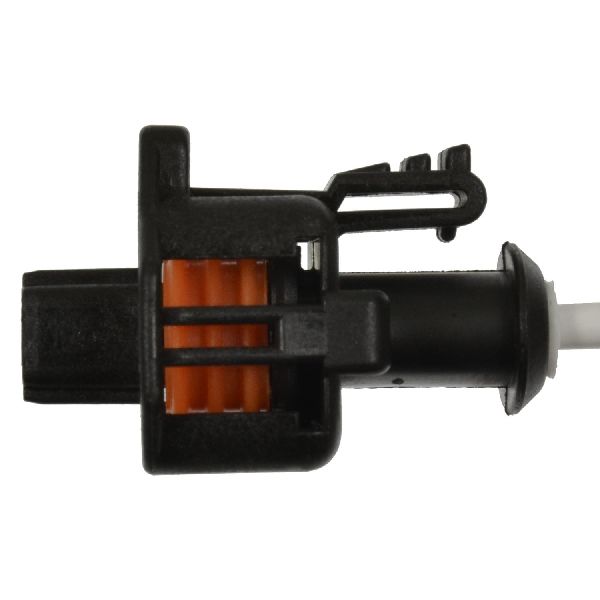
Typical fix: Replacement of the purge valve. This is a common DIY repair that involves disconnecting an electrical connector, a red slide-lock clip, and two hoses.
Est. part cost: $30-$70 - Disconnected Fuel Vapor Hose (2020 3.6L V6) 🔴 High Probability TSB #18-035-20 was issued specifically for 2020 Durango and Grand Cherokee models built between Nov 2019 and March 2020. It states a fuel vapor hose in the left rear wheel well area may not have been connected at the factory, causing P0441, P0455, and P0456.
How to confirm: The vehicle must be a 2020 model with a 3.6L engine. The diagnosis involves raising the vehicle, removing the left rear tire and wheel well liner, and visually inspecting the EVAP hoses for a disconnected line. A fuel smell in that area is also a strong indicator.
Typical fix: Securely connect the loose hose. The TSB provides instructions for dealers to perform this inspection and repair.
Est. part cost: $0 (if hose is present and just needs connecting) - Loose or Faulty Gas Cap 🟡 Medium Probability → Shop Fuel Tank Cap While more likely to cause a leak code (P0455/P0456/P0457), a bad gas cap seal can disrupt the entire EVAP system's pressure, sometimes contributing to a P0441 code. It's always the first, easiest, and cheapest thing to check.
How to confirm: Inspect the gas cap for cracks or damage to the rubber seal. Ensure it is tightened until it clicks at least once. If the seal is worn or damaged, it needs replacement.
Typical fix: Tighten or replace the gas cap. It's recommended to use an OEM Mopar cap, as some owners report issues with aftermarket caps not sealing properly.
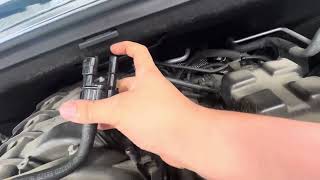
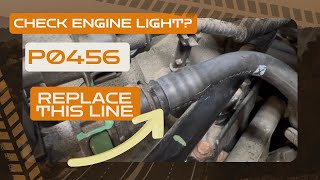
Est. part cost: $15-$35 - Cracked or Disconnected EVAP Hoses 🟡 Medium Probability Rubber and plastic hoses in the engine bay become brittle over time due to heat and age, leading to cracks or loose connections. This is a common issue on many vehicles as they age. A plastic purge line on a 2018 Durango with the 3.6L engine was shown to be cracked, causing a P0456 leak code, 🎬 See how to find and fix this common hose failure. which is often seen with P0441.
How to confirm: Visually inspect all accessible EVAP lines running from the engine bay back towards the charcoal canister for any visible cracks, breaks, or disconnections. A professional smoke test is the most effective way to find hard-to-see leaks.
Typical fix: Replace the damaged section of hose. In some cases, a pre-formed hose assembly from the manufacturer is required, like the purge hose assembly that includes the valve itself.
Est. part cost: $10-$100 - Clogged or Faulty Charcoal Canister ⚪ Low Probability → Shop Vapor Canister Overfilling the fuel tank (continuing to pump after the nozzle clicks off) can force liquid gasoline into the charcoal canister, saturating the carbon pellets and causing a blockage or damage. This is a common cause of canister failure across all makes and models. If the canister fails, it can send charcoal granules into the purge valve, causing it to jam.
How to confirm: This is often diagnosed after other, more common parts have been ruled out. If the purge valve is removed and found to be full of black charcoal granules, the canister has failed and needs replacement along with the valve and any contaminated lines.
Typical fix: Replacement of the charcoal canister and cleaning out any debris from the connected EVAP lines.
Est. part cost: $150-$300
Rare But Worth Checking
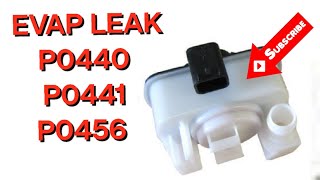
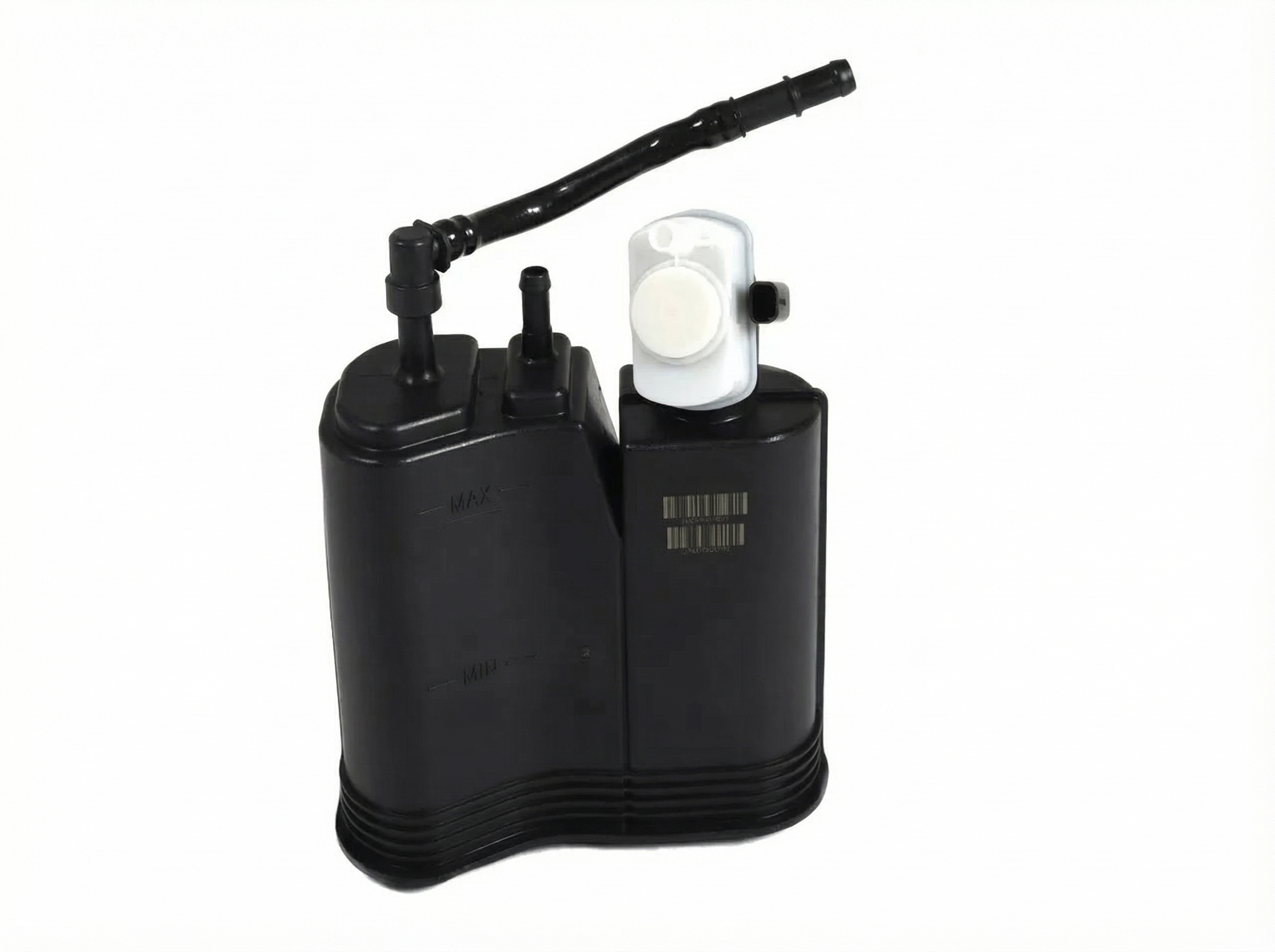
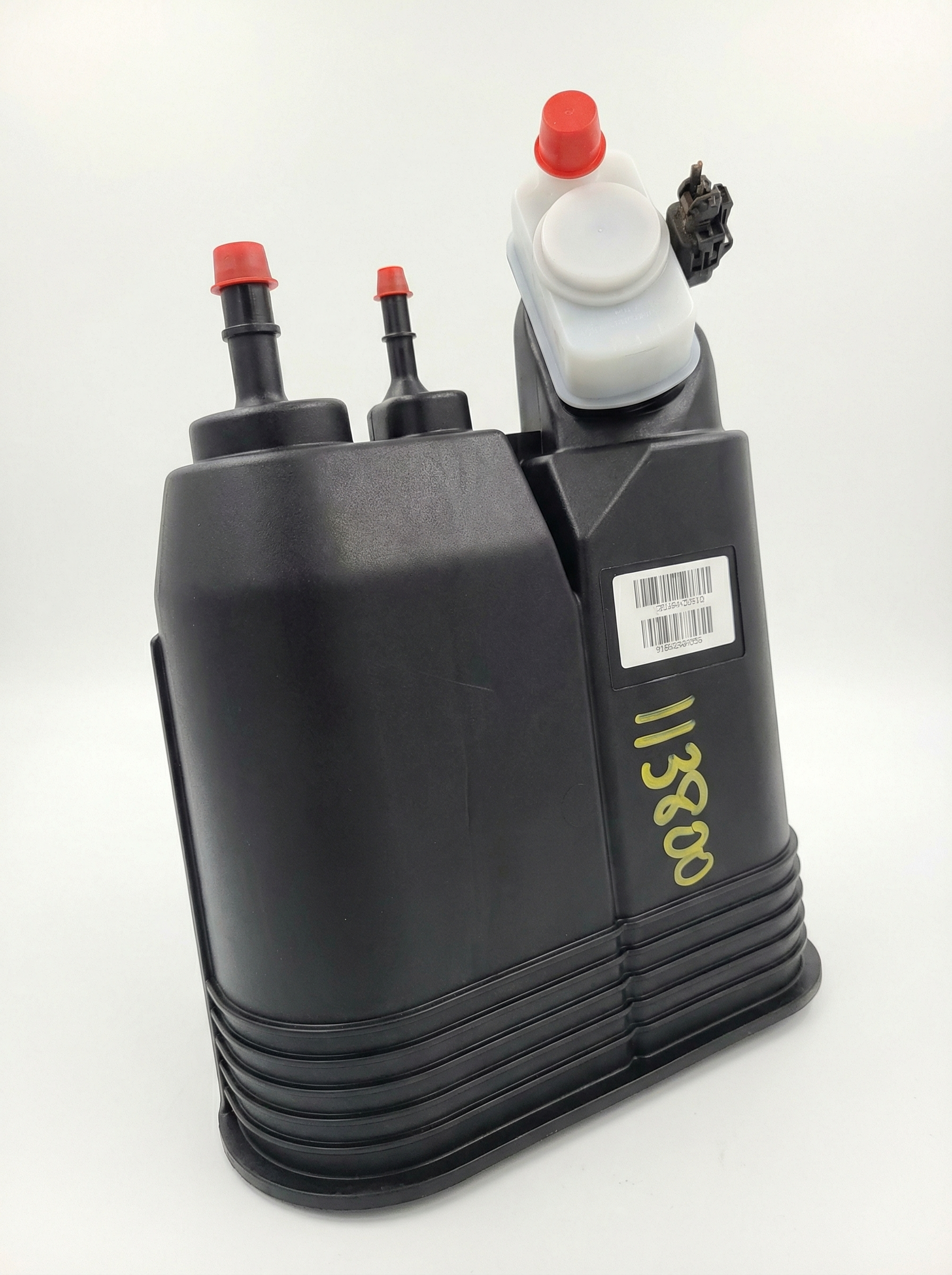
- Faulty EVAP Leak Detection Pump (NVLD) or ESIM: → Shop Vapor Canister Chrysler/Dodge systems use a Natural Vacuum Leak Detection (NVLD) unit or an Evaporative System Integrity Monitor (ESIM) switch, typically located on or near the charcoal canister. If this component fails, it can incorrectly report a flow or leak issue, triggering codes like P0441 or P0456. A YouTube video for a 2019 Durango with P0440/P0456 showed a fix by replacing this part in the left rear fender area. 🎬 Watch: How to replace the ESIM to clear these codes.
- Faulty Powertrain Control Module (PCM): This is extremely rare. The PCM should only be considered after all other possibilities, including wiring, TSBs, and all other EVAP components, have been thoroughly tested and ruled out.
Diagnosis Steps

- Read the code with an OBD-II scanner to confirm P0441 and check for any other related codes, especially P0456 or P0455.
- Inspect the gas cap. Ensure it's tight and the seal is not cracked or worn.
- Visually inspect the EVAP purge valve and its connecting hoses in the engine bay. Look for obvious cracks, damage, or loose connections.
- Test the purge valve. With the engine off, disconnect the valve and try to blow through it. It should be closed. If air passes, the valve is stuck open and must be replaced. Check for charcoal debris inside the valve's ports.
- If you have a 2020 3.6L model, check if TSB #18-035-20 applies. Inspect the left rear wheel well area for a disconnected EVAP hose.
- If you have a capable scan tool, command the purge valve to open and close while the engine is running to verify its operation and check for vacuum.
- If the purge valve and gas cap are good, visually inspect all other accessible EVAP hoses and the charcoal canister (usually located near the fuel tank) for damage.
- If no visual faults are found, the most reliable next step is to have a professional perform a smoke test to find any hard-to-see leaks in the EVAP system.
Parts You'll Likely Need
- Vapor Canister Purge Valve / Solenoid
(OEM #68189065AD)— This is the most frequent failure point for a P0441 code. It's a small electronic valve that gets stuck open or closed, disrupting the flow of fuel vapors. The part number 68189065AD is listed for the 5.7L V8 engine in 2014-2015 models and may have been superseded; always verify with VIN. A different part is used for the 3.6L V6.
Trusted brands: Mopar, Dorman, Wells, ACDelco
OEM price range: $50-$90
Aftermarket price range: $30-$70 - Fuel Cap — A worn or damaged gas cap seal can cause EVAP system pressure issues that may lead to this code. It's an inexpensive and easy first step in diagnosis.
Trusted brands: Mopar, Stant
OEM price range: $25-$40
Aftermarket price range: $15-$25
Related Codes That Often Appear With This One
- P0456 — EVAP System Small Leak. This code is explicitly mentioned alongside P0441 in multiple manufacturer TSBs (#18-035-20, #18-040-25, #1807723, #1810123). A small leak can disrupt the system's ability to achieve correct purge flow. This is the most common companion code.
- P0455 — EVAP System Large Leak. Also mentioned in TSB #18-035-20, often related to a disconnected hose or a very bad seal.
- P0420 / P0430 — Catalyst System Efficiency Below Threshold. TSB #18-040-25 links these codes. An EVAP system issue can, in some cases, affect the air-fuel mixture by introducing unmetered fuel vapors, contributing to conditions that may impact catalyst efficiency over time.
Technical Service Bulletins (TSBs) & Recalls
- 18-035-20: Mentions P0441 along with large and small EVAP leak codes (P0455, P0456). Specifically for some 2020 3.6L models where a fuel vapor hose may not have been connected at the factory.
- 18-040-25: Groups P0441 with catalyst codes (P0420, P0430) and the small leak code (P0456). This is for a PCM software update.
- 1807723: Cites P0441 and P0456 as potential codes found during investigation of a Check Engine Light, related to a PCM software update.
- 1810123: Again links P0441 and P0456 for North American market vehicles, related to a PCM software update.
Platform-Specific Known Issues
- Dodge has issued multiple Technical Service Bulletins (TSBs) for the 2018-2020 Durango that include P0441, often in conjunction with EVAP leak codes. This indicates a known pattern of issues with the EVAP system on this platform.
- TSB 18-035-20 is highly specific, calling out a disconnected fuel vapor hose from the factory on some 2020 3.6L models, which is a direct cause for P0441 and related codes.
- Owners on forums for the Durango and its platform-mate, the Jeep Grand Cherokee, frequently discuss P0441 and P0456 appearing together, with the consensus fix being the purge valve/solenoid on the engine.
Mechanic-Grade Diagnostic Values
- Fuel Tank Pressure Sensor Voltage (Key On, Engine Off) — expected: ~2.5 Volts. Failure: Voltage significantly different from 2.5V when the tank is at atmospheric pressure.
- Fuel Tank Pressure (Key On, Engine Off) — expected: 0 in-H2O (inches of water). Failure: A reading of significant vacuum or pressure indicates a sensor fault or pressure trapped in the system.
- ESIM Switch State vs. Fuel Tank Pressure — expected: The ESIM switch PID on a scan tool should change from 'Open' to 'Closed' when vacuum in the system reaches approximately -1.0 in-H2O.. Failure: If the scan tool shows vacuum is building in the tank (e.g., -2.0 in-H2O or more) but the ESIM switch state remains 'Open', it points to a faulty ESIM switch or its wiring.
Hidden / Shadow Codes Worth Checking
- ESIM Switch State (PID): This is not a trouble code but a specific data parameter (PID) visible on a capable scan tool. It shows the physical state ('Open' or 'Closed') of the Evaporative System Integrity Monitor switch. The PCM uses this switch's feedback to confirm the system can seal and that purge is occurring. A basic code reader may not display this PID. (see via Use a professional-level scan tool (like the dealer's wiTECH) or an advanced consumer scanner with live data capabilities for Chrysler vehicles. Monitor the ESIM switch state alongside the Fuel Tank Pressure sensor data.)
Scan Tool Commands That Help
- wiTECH or equivalent professional scanner: ESIM Force Monitor Test — Use this function after a repair to verify the entire EVAP system is functioning correctly. The tool commands the vehicle's computer to run the internal EVAP monitor tests (like the large leak test) on demand and provides a pass/fail result, confirming the fix without waiting for a full drive cycle.
- Most bidirectional scan tools: Purge Solenoid Duty Cycle / Activation — This command allows you to manually open the purge solenoid while monitoring the fuel tank pressure sensor. It's used to confirm the solenoid is opening and that there is an open flow path from the canister to the engine (i.e., vacuum builds in the tank).
Wiring & Ground Locations
- Alternator Ground Strap — On the 3.6L V6, a thin ground strap is reported to attach to the back of the alternator and connect to the chassis.. While not directly part of the EVAP circuit, a poor or missing engine/alternator ground can introduce electrical noise and voltage issues throughout the vehicle's systems. This can lead to erratic behavior from sensors and solenoids, potentially contributing to false codes. Ensuring all main grounds are clean and secure is a crucial, though often overlooked, diagnostic step.
Real Owner Repair Stories
- YouTube channel J&R Auto Repair & Diagnosis (2015 Chrysler 300 (uses a similar ESIM-based EVAP system)) — P0441 - EVAP System Incorrect Purge Flow
❌ Tried (didn't work) N/A, technician went directly to advanced diagnostics.
✅ What actually fixed it The technician diagnosed a faulty Evaporative System Integrity Monitor (ESIM) switch. Live data showed that when the purge valve was commanded on and vacuum was building in the tank, the ESIM switch state never changed from 'Open' to 'Closed'. The wiring was confirmed to be good by shorting the connector, which correctly updated the scan tool reading. The old ESIM switch was removed and found to have internal corrosion. Replacing the ESIM switch and running the 'ESIM force monitor test' confirmed the fix. - YouTube channel Drews Shop Life (2018 Dodge Durango 3.6L) — P0456 - EVAP System Small Leak (a code often seen with P0441 per TSBs)
❌ Tried (didn't work) N/A, diagnosed with a smoke machine.
✅ What actually fixed it A cracked plastic EVAP purge line located on the driver's side of the engine. The video shows the exact location of the brittle, broken hose and its replacement. A crack in this line would prevent the system from developing the correct vacuum during a purge cycle, which could also trigger a P0441 flow performance code.
"I Checked Everything" — The Actual Cause
- A common scenario for P0441 on these vehicles is passing a smoke test but still having the code return. This often points away from a physical leak and towards a component monitoring failure. A prime example is a faulty ESIM switch. The system can be perfectly sealed (passing a smoke test), but if the ESIM switch is internally corroded or electrically failed, it cannot report to the PCM that vacuum is being achieved during the purge test. The PCM interprets this lack of feedback as a flow failure, setting P0441 even though no leak exists.
OEM Part Supersession History
68189065AB, 68189065AC→68189065AD— Part revision by manufacturer, likely for improved durability or material changes.
Heads up: This part number is for the purge hose assembly on the 5.7L V8 engine. The newer 'AD' version replaces the older 'AB' and 'AC' versions.
Model Year Variations Within This Range
- 2018-2020: These model years utilize an Evaporative System Integrity Monitor (ESIM) for leak detection and flow monitoring. This system uses a weighted mechanical switch to detect vacuum and pressure changes, and does not have a solenoid like the older Natural Vacuum Leak Detection (NVLD) systems found on other Chrysler products. This is a critical diagnostic difference, as troubleshooting focuses on the ESIM switch's mechanical and electrical function rather than an NVLD pump/solenoid.
Helpful Videos
Used OEM Parts in Stock
New Aftermarket Parts Available


The information in this article is provided for general reference and educational purposes only. Vehicle specifications, procedures, and part compatibility can vary by production date, trim level, and region. Always consult your vehicle's factory service manual and verify part numbers before purchasing or performing repairs. Safety-critical components such as airbags, seat belts, and braking systems should be installed by a qualified professional.
- Dodge DURANGO:
- 🧭 Diagnostic Flowchart
- 🎬 Helpful Videos
- 🛍️ Shop This Part
- What's Unique About the 2018-2020 Dodge DURANGO
- Symptoms You May Notice
- Most Likely Causes
- Rare But Worth Checking
- Diagnosis Steps
- Parts You'll Likely Need
- Related Codes That Often Appear With This One
- Technical Service Bulletins (TSBs) & Recalls
- Platform-Specific Known Issues
- Mechanic-Grade Diagnostic Values
- Hidden / Shadow Codes Worth Checking
- Scan Tool Commands That Help
- Wiring & Ground Locations
- Real Owner Repair Stories
- "I Checked Everything" — The Actual Cause
- OEM Part Supersession History
- Model Year Variations Within This Range
- 🎟️ Get 5% Off