

P0441 on 2021-2024 Ford Bronco: Incorrect EVAP Purge Flow Causes and Fixes
On a 2021-2024 Ford Bronco, code P0441 is most often caused by a faulty vapor canister purge valve located on the engine's intake manifold. Symptoms may include a rough idle or stalling immediately after refueling. Replacing the purge valve is a common fix, with the part costing approximately $35-$75 for an aftermarket replacement.
- P0441 means the EVAP system has an incorrect amount of vapor flow going to the engine.
- The most likely cause on a 2021-2024 Bronco is a faulty vapor canister purge valve located on the engine.
- A key symptom is a rough idle or engine stumbling right after you get gas.
- Replacing the purge valve is a relatively simple and inexpensive DIY job that can be done in under an hour.
- Always check the EVAP hoses for black charcoal bits when replacing the valve; if you find them, the charcoal canister also needs to be replaced.
What's Unique About the 2021-2024 Ford Bronco
While P0441 is a generic code, its common causes can be platform-specific. For modern Ford EcoBoost engines like those in the Bronco, the most frequent trigger for this code and its related symptoms (like rough idle after fueling) is a failing vapor canister purge valve. This part can get stuck open or closed, leading the engine computer to detect improper flow. This is a well-documented issue across the Ford lineup, affecting vehicles with similar engines. Forum discussions on Bronco6G.com confirm that Bronco owners experience this issue, with dealers often replacing the purge valve to resolve EVAP-related check engine lights.
Symptoms You May Notice
- Check Engine Light is on
- Rough idle, stumbling, or stalling immediately after refueling
- Slightly reduced fuel economy
- A faint smell of fuel (less common)
- Inconsistent idle RPM at a stop 🎬 Watch: A breakdown of common bad purge valve symptoms
- Replacing the O2 sensors. While O2 sensors can cause performance issues, they are not directly related to the EVAP system's purge flow test.
- Replacing the fuel injectors. Unless there are other codes pointing to a fuel delivery or misfire issue, the injectors are not a likely cause for P0441.
Most Likely Causes
- Faulty Vapor Canister Purge Valve (Solenoid) 🔴 High Probability → Shop Vapor Canister This is a very common failure point on many modern Ford vehicles, including the Bronco. The valve can become stuck open or closed due to wear or contamination, directly causing an incorrect purge flow reading. A stuck-open valve is a primary cause of rough idling after refueling.
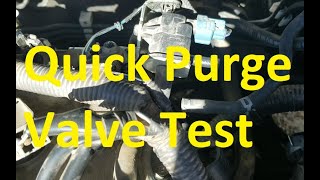
How to confirm: With the engine off, disconnect the hose leading from the purge valve to the intake manifold. Use a hand-held vacuum pump to see if the valve holds a vacuum; it should. If it doesn't, it's stuck open. Alternatively, you can apply 12V power to the valve's electrical connector; you should hear a click and the valve should open. If it's silent or already open, it has failed. You can also try blowing through the valve with it disconnected; no air should pass when unpowered. 🎬 Watch: How to test your purge valve without special tools
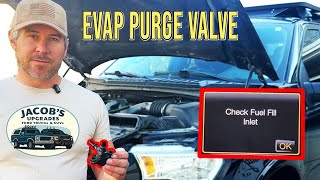
Typical fix: Replace the vapor canister purge valve located on the intake manifold. 🎬 See this walkthrough for replacing a Ford purge valve
Est. part cost: $35-$75 - Loose or Faulty Gas Cap / Capless Fuel Filler Neck ⚪ Low Probability → Shop Fuel Filler Neck While a leak at the filler neck typically sets a P0455, P0456, or P0457 code, a faulty seal can contribute to general EVAP system faults. The Bronco's capless fuel filler can have its sealing spring wear out or get debris in it, preventing a proper seal. One owner on the Bronco6G forums had a persistent EVAP leak resolved by replacing the entire fuel filler neck assembly.
How to confirm: Ensure the capless fuel filler neck is free of debris and that the internal flap seals tightly. You can try cleaning the seal with a clean cloth. If you recently fueled up, ensure you fully inserted the nozzle and allowed the flap to close properly.
Typical fix: Clean the capless filler neck seal or replace the fuel filler neck assembly if the spring or seal is damaged.
Est. part cost: $5-$150 - Cracked or Disconnected EVAP Hoses ⚪ Low Probability
How to confirm: Visually inspect all accessible EVAP system hoses, particularly the lines running to and from the purge valve on the engine and the charcoal canister (located near the fuel tank). Look for obvious cracks, loose connections, or damage. A smoke test is the most effective way to find small, hard-to-see leaks.
Typical fix: Replace the damaged section of hose or reconnect it securely.
Est. part cost: $10-$50
Rare But Worth Checking
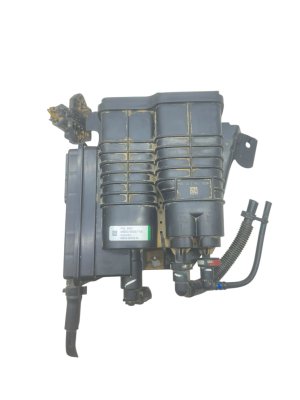
- Faulty Charcoal Canister: → Shop Vapor Canister The canister can become saturated with fuel (often from habitually overfilling the gas tank) or the internal filter can break down, sending charcoal pellets into the EVAP lines and clogging the purge valve. If you find black pellets in the purge valve hoses, the canister must be replaced along with the valve.
- Faulty EVAP Vent Valve/Solenoid: → Shop Vapor Canister This valve, located near the charcoal canister, is normally open to allow air into the system. If it gets stuck closed, it can cause a vacuum issue that may trigger a P1450 code, but can also contribute to a P0441, though it more commonly sets other codes.
Diagnosis Steps
- Read the Code: Confirm P0441 is the primary code stored. Note any other EVAP-related codes like P0455 or P0456.
- Check After-Fueling Behavior: The most telling symptom is a rough start or stumbling idle right after filling the gas tank. If this happens consistently, the purge valve is the top suspect.
- Inspect the Purge Valve: Locate the vapor canister purge valve on the engine's intake manifold. It will have an electrical connector and two hoses attached.
- Test the Purge Valve: Disconnect the electrical connector and the two hoses. Try to blow through the valve. It should be closed when no power is applied. If you can blow through it, it's stuck open and needs to be replaced.
- (Optional) Advanced Purge Valve Test: If the valve is closed, use jumper wires to apply 12V power from the battery to its electrical pins. You should hear a distinct click as it opens. Now, you should be able to blow through it. If it doesn't open with power, it has failed electrically.
- Inspect Hoses: While the purge valve is disconnected, inspect the hoses for black charcoal pellets. If found, the charcoal canister is failing and must be replaced along with the purge valve and the lines cleaned out.
- Inspect for Leaks: If the purge valve tests good, visually inspect all EVAP lines for obvious cracks or disconnections. A professional smoke test is the best way to find hairline cracks.
- Check the Gas Cap/Filler Neck: Ensure the capless fuel filler is clean and sealing correctly. Check for debris obstructing the flap.
- Clear Code and Test Drive: After performing a repair, clear the code with a scanner and drive the vehicle for a few days to see if the Check Engine Light returns.
Parts You'll Likely Need
- Vapor Canister Purge Valve / Solenoid
(OEM #Motorcraft GL3Z-9B325-B (For 2.7L/3.0L V6) or 6M6Z-9C915-A (For 2.3L I4))— This is the most common failure point for P0441 on modern Ford vehicles. It gets stuck open or closed, causing the incorrect flow reading.
Trusted brands: Motorcraft, Standard Motor Products (SMP), Duralast (PV967)
OEM price range: $80-$120
Aftermarket price range: $35-$75
Related Codes That Often Appear With This One
- P0440 — General EVAP System Malfunction. P0441 is a more specific version of this.
- P0455 — EVAP System Leak Detected (Large Leak). This can occur if a hose is completely disconnected or the purge valve is stuck wide open.
- P0456 — EVAP System Leak Detected (Very Small Leak). This points to a tiny crack in a hose or a bad seal, which could also affect the purge flow measurement. One Bronco6G user reported a recurring P0456 code that was ultimately fixed by replacing the purge valve.
Platform-Specific Known Issues
- Persistent EVAP Leaks Leading to Multiple Dealer Visits: Some owners on the Bronco6G.com forums have reported needing multiple dealer visits to resolve persistent EVAP leak codes. In one case, after several attempts, a Ford field engineer identified a faulty fuel filler neck as the root cause, which resolved the issue after replacement.
Mechanic-Grade Diagnostic Values
- Vapor Canister Purge Valve Solenoid Resistance — expected: Typically 15 to 37 Ohms, but is temperature-dependent.. Failure: An open circuit (infinite resistance) or a very low reading (e.g., under 14 Ohms) indicates a likely failure.
- Fuel Tank Pressure (FTP) Sensor Voltage (Key On, Engine Off) — expected: Approximately 2.6V to 2.65V.. Failure: A static value significantly different from this range, or a value that immediately drops upon startup without the purge valve being commanded, can indicate a stuck-open purge valve or a faulty sensor.
- EVAP System Vacuum during Purge (Scan Tool Live Data) — expected: Approximately -2.0 to -4.0 inches of H2O during normal purge operation.. Failure: No vacuum when the purge valve is commanded open indicates a blockage or failed (stuck closed) valve. Excessive vacuum (e.g., greater than -8.0 in. H2O) can indicate a blocked vent line or stuck-closed vent valve, potentially setting a P1450 code.
Scan Tool Commands That Help
- Ford IDS (Integrated Diagnostic System) or FORScan: Manual EVAP System Test / Purge/Seal — This function allows a technician to manually command the canister purge valve (solenoid) open and closed, and also command the canister vent solenoid closed to seal the system. By monitoring the Fuel Tank Pressure (FTP) sensor's reaction (voltage or pressure reading), a technician can confirm if the purge valve is opening, if it's drawing a vacuum, and if the system can hold that vacuum, which directly tests the functionality related to P0441.
Wiring & Ground Locations
- G110, G120, etc. — Specific ground point locations for the 2021-2024 Bronco are detailed in the official Ford Service Manual within the 'Component Location Views' section. Accessing these diagrams is necessary to pinpoint the exact chassis or engine block locations for grounds related to the PCM and emissions components.. The canister purge valve is an electronic solenoid controlled by the Powertrain Control Module (PCM). A poor ground connection for the PCM or the solenoid's circuit can cause erratic operation or a complete failure of the valve to actuate, leading the PCM to incorrectly flag a flow fault like P0441.
OEM Part Supersession History
FL3Z-9B325-A, GL3Z-9B325-A→GL3Z-9B325-B— Standard part revision and improvement by the manufacturer.
Heads up: The physical part may have a stamped engineering number like GL34-9B325-DB, which corresponds to the service part number GL3Z-9B325-B. Ensure you are purchasing the latest revision for best results.
Diagnostic Flowchart
Other Known Issues on This Vehicle
Issues unrelated to this code that are worth knowing about as an owner of this generation:
- 2.7L V6 EcoBoost Engine Valve Failure 🔴 High — Affects a specific batch of 2021-2022 models, typically failing at low mileage (<20,000 miles). NHTSA investigated, leading to a recall. (Ref: Ford Safety Recall 24S55. NHTSA investigation began in May 2022 after numerous reports of catastrophic engine failure.)
- Molded-in-Color (MIC) Hardtop Quality Issues 🟠 Medium — Widespread on early production 2021-2022 models. Issues include cosmetic blemishes (honeycomb pattern, chalky finish), warping, and poor sealing. (Ref: Ford initiated a customer satisfaction program to replace all affected hardtops from the initial supplier (Webasto).)
- Weak Steering Rack and Tie Rods 🟠 Medium — Failures reported by owners, especially those with larger tires or who engage in off-roading. Can result in binding, noise, or complete failure. (Ref: No official recall, but Ford Performance released a heavy-duty 'Severe-Duty Steering Rack' (Part M-3200-WT) as an upgrade.)
- Water Leaks 🟡 Low — Common complaint for both hardtop and soft top models, often around door seals and roof panel junctions, leading to water in the cabin during rain.
- Electrical Glitches 🟡 Low — Owners report various intermittent issues with the infotainment system (frozen screens), rearview camera, and other electronic modules. (Ref: Multiple recalls exist, including for the rearview camera (26V124000).)
Used vs. New Parts: Buying Guide for This Vehicle
When a used part is the smart pick: For this P0441 repair, sourcing used parts is generally not recommended for the electronic solenoids. However, larger mechanical components like the fuel filler neck assembly or sections of hard plastic EVAP lines could be sourced from a low-mileage wrecking yard vehicle as a cost-saving measure if the OEM new price is high.
Donor-vehicle mileage cap: roughly under 40000 miles for the part to have meaningful remaining life.
What to inspect on the donor part:
- For a fuel filler neck, inspect the internal spring-loaded flap for smooth operation and ensure the sealing surface is clean and free of damage.
- For any hoses or lines, inspect for brittleness, cracking, or heat damage. Ensure connectors are not broken.
- Avoid parts from vehicles that show signs of significant impact near the fuel tank or engine bay.
OEM-only on this vehicle (don't cheap out):
- Vapor Canister Purge Valve: Given this is the most common failure point and is a relatively inexpensive wear item, installing a new OEM (Motorcraft) or reputable aftermarket part is the most reliable repair strategy. A used valve has unknown remaining life and may fail soon after installation.
Aftermarket brands forum-validated for this vehicle:
- Standard Motor Products (SMP)
- Duralast
Brands owners have reported issues with on this vehicle:
- No-name, unbranded parts from online marketplaces should be avoided, as their internal components may not meet the precise flow and sealing specifications, leading to the code returning.
Real Owner Stories
Aggregated from forums and TSBs cited above. Mileages and costs reflect what owners reported in those sources.
2022 Ford Bronco Sasquatch — 1030 miles
Symptoms: Check engine light illuminated at very low mileage.
What fixed it: The dealer diagnosed and replaced a faulty EVAP purge valve.
Source hint: Bronco6G.com - A user with a 2022 Bronco Sasquatch reported a check engine light at 1030 miles with code P0456; the dealer diagnosed and replaced a faulty EVAP purge valve.
2021-2024 Ford Bronco
Symptoms: Persistent EVAP leak codes that required multiple dealer visits to resolve.
What fixed it: A Ford field engineer identified a faulty fuel filler neck as the root cause and replaced the assembly.
Source hint: vehicle_specific_issues - Persistent EVAP Leaks Leading to Multiple Dealer Visits
Ford Owner Report — NHTSA ODI #11405532
Symptoms: The vehicle stumbles excessively for a couple of minutes after refueling, accompanied by a check engine light for code P0441.
What fixed it: This report highlights the classic purge valve failure symptom where the engine struggles specifically after gas is added to the tank.
Source hint: NHTSA ODI #11405532 - Owner reported excessive stumbling after refueling with P0441.
Related OBD-II Codes
Frequently Asked Questions
Why does my Bronco stumble or stall specifically after I fill up at the gas station?
Is there a recall for the engine issues on my 2021-2022 Bronco 2.7L?
Can the capless fuel filler on my Bronco cause an EVAP code?
I found black charcoal pellets in my EVAP hoses while checking the purge valve. What does this mean?
Does the Ford Ranger share this P0441 issue with the Bronco?
How can I test the purge valve on my Bronco at home?
Helpful Videos
![How to Fix P0441 Engine Code in 6 Minutes [4 DIY Methods / Only $3.50]](https://img.youtube.com/vi/NJYZiDhYhP8/mqdefault.jpg)

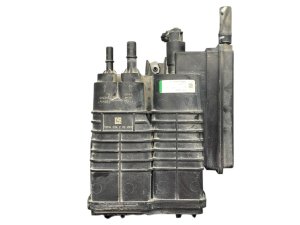
Used OEM Parts in Stock
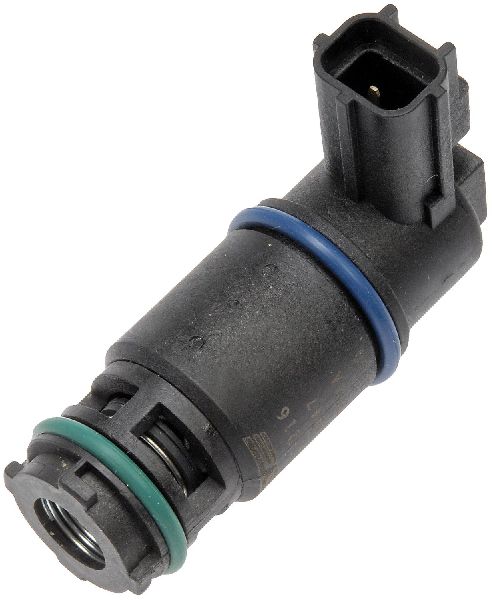
New Aftermarket Parts Available


The information in this article is provided for general reference and educational purposes only. Vehicle specifications, procedures, and part compatibility can vary by production date, trim level, and region. Always consult your vehicle's factory service manual and verify part numbers before purchasing or performing repairs. Safety-critical components such as airbags, seat belts, and braking systems should be installed by a qualified professional.
- Ford Bronco:
- 🧭 Diagnostic Flowchart
- 🎬 Helpful Videos
- 🛍️ Shop This Part
- What's Unique About the 2021-2024 Ford Bronco
- Symptoms You May Notice
- Most Likely Causes
- Rare But Worth Checking
- Diagnosis Steps
- Parts You'll Likely Need
- Related Codes That Often Appear With This One
- Platform-Specific Known Issues
- Mechanic-Grade Diagnostic Values
- Scan Tool Commands That Help
- Wiring & Ground Locations
- OEM Part Supersession History
- Other Known Issues on This Vehicle
- Used vs. New Parts: Buying Guide for This Vehicle
- Real Owner Stories
- 2022 Ford Bronco Sasquatch — 1030 miles
- 2021-2024 Ford Bronco
- Ford Owner Report — NHTSA ODI #11405532
- Related OBD-II Codes
- Frequently Asked Questions
- 🎟️ Get 5% Off