

P0441 on 2013-2018 Ford Focus ST: Incorrect Purge Flow, Recall, and Fixes
On a 2013-2018 Focus ST, code P0441 is almost always caused by a faulty EVAP canister purge valve located in the engine bay. This is a known issue covered by Ford Safety Recall 18S32 and Customer Satisfaction Program 19S22. The part is relatively inexpensive (~$50-$100) and is a common 5-minute DIY fix for most owners.
- For a 2013-2018 Focus ST, P0441 is most likely a bad canister purge valve.
- Check if your vehicle is eligible for Safety Recall 18S32 or CSP 19S22, as you may get a free repair from a Ford dealer.
- The purge valve is a simple and fast DIY replacement for most owners, located in the engine bay under the plastic engine cover.
- Never 'top off' your fuel tank, as it can damage the charcoal canister and lead to more complex and expensive EVAP system problems.
- Before buying parts, test the purge valve by trying to blow through it; if air passes, it's bad.
What's Unique About the 2013-2018 Ford Focus ST
The 2.0L EcoBoost in the Focus ST is highly susceptible to a failing canister purge valve (CPV). The issue is so prevalent that Ford issued a major safety recall (18S32 / NHTSA 18V-735) because a CPV stuck open can create excessive vacuum, deforming the plastic fuel tank and potentially causing the engine to stall. Therefore, unlike many other vehicles where P0441 could have numerous causes, on the Focus ST, the investigation should almost always start with the purge valve. Some owners report replacing the valve multiple times, suggesting even replacement parts can fail.
Symptoms You May Notice
- Check Engine Light illuminated
- Rough idle, engine hesitation, or stalling, especially right after getting gas.
- Difficulty starting the engine, sometimes requiring a few tries, almost exclusively after refueling.
- Inaccurate or erratic fuel gauge readings (related to the fuel tank deformation recall issue).
- Slight decrease in fuel economy
- Fuel smell (rare).
- Audible 'whoosh' or suction noise from the fuel tank area after driving.
- Replacing the gas cap (this vehicle has a capless system)
- Replacing other EVAP system components like the vent solenoid or charcoal canister before thoroughly testing the canister purge valve.
Most Likely Causes
- Faulty Canister Purge Valve (Solenoid) 🔴 High Probability → Shop Vapor Canister This is a very common failure item on this platform, leading to Ford Safety Recall 18S32 and Customer Satisfaction Program 19S22. The valve can get stuck open or closed, or fail electrically.
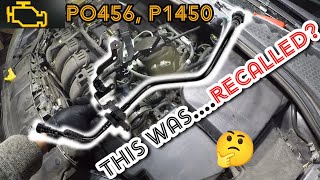
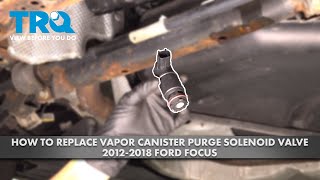
How to confirm: The valve is normally closed. With the engine off, disconnect the valve's hoses and try to blow through it. If air passes, it is stuck open and must be replaced. The valve is located in the engine bay 🎬 Watch this step-by-step guide to replacing the vapor canister solenoid. and is part of a hose assembly.
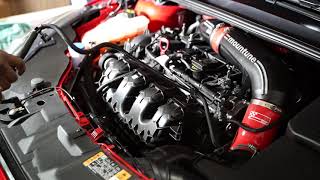
Typical fix: Replace the canister purge valve and its attached hoses. It is sold as a complete assembly. 🎬 Watch: A quick walkthrough on replacing the Focus ST purge valve. The job takes 5-10 minutes with basic tools like a flathead screwdriver or hose clamp pliers.
Est. part cost: $50-$100 - Leaking or Debris in Capless Fuel Filler Neck ⚪ Low Probability → Shop Fuel Filler Neck The capless system's internal spring-loaded flap and seal can wear out or get blocked by debris, preventing a proper seal for the EVAP system. This is a common issue on many Ford models with this system.
How to confirm: Visually inspect the fuel filler opening for any debris or damage to the internal flap and seal. Use the emergency fuel funnel provided with the vehicle to test its mechanical function and ensure it opens and closes smoothly.
Typical fix: Clean any debris from the filler neck opening with a clean cloth. If the seal is damaged or the mechanism is broken, the entire fuel filler neck assembly must be replaced.
Est. part cost: $70-$150
Rare But Worth Checking
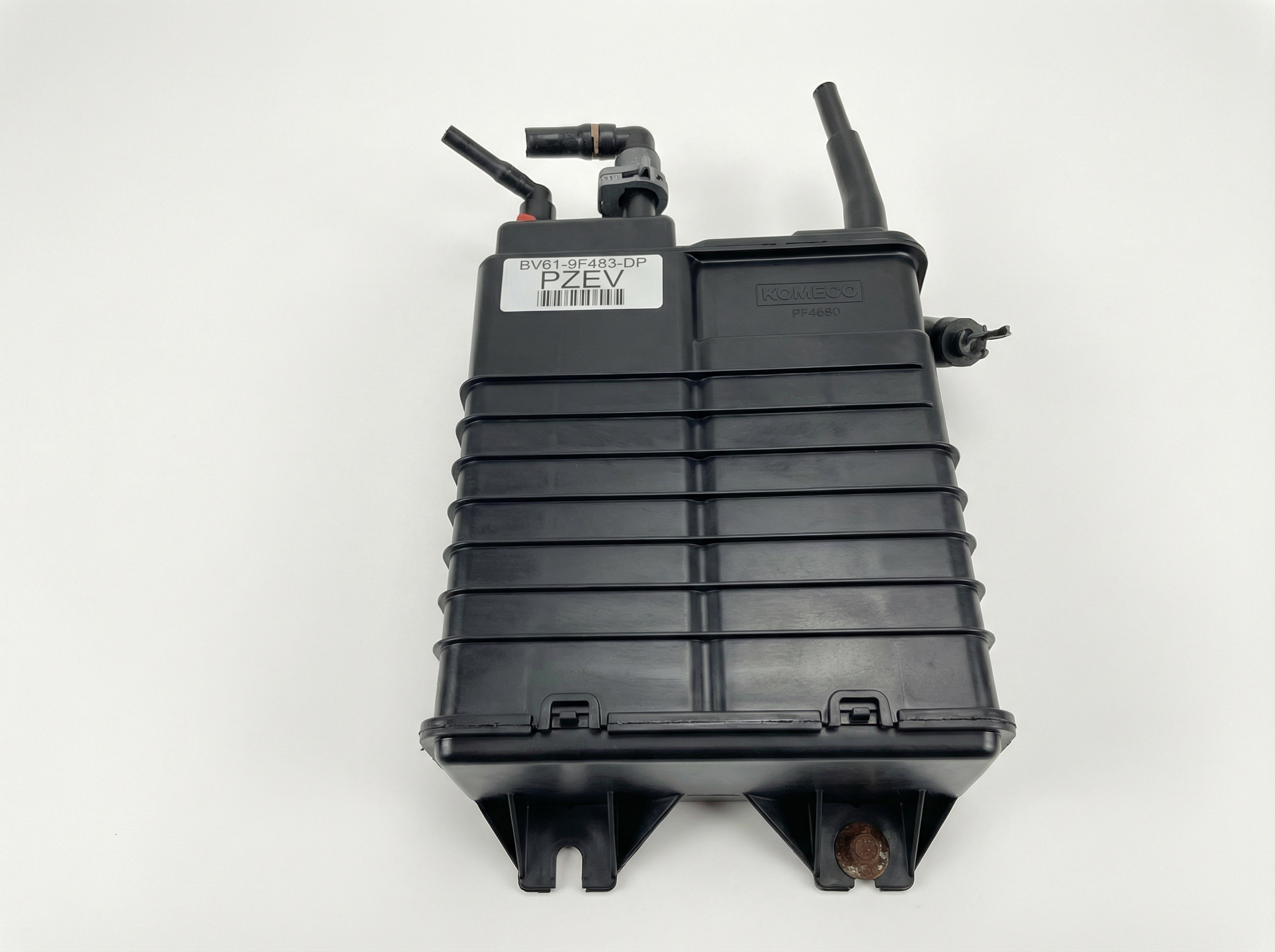
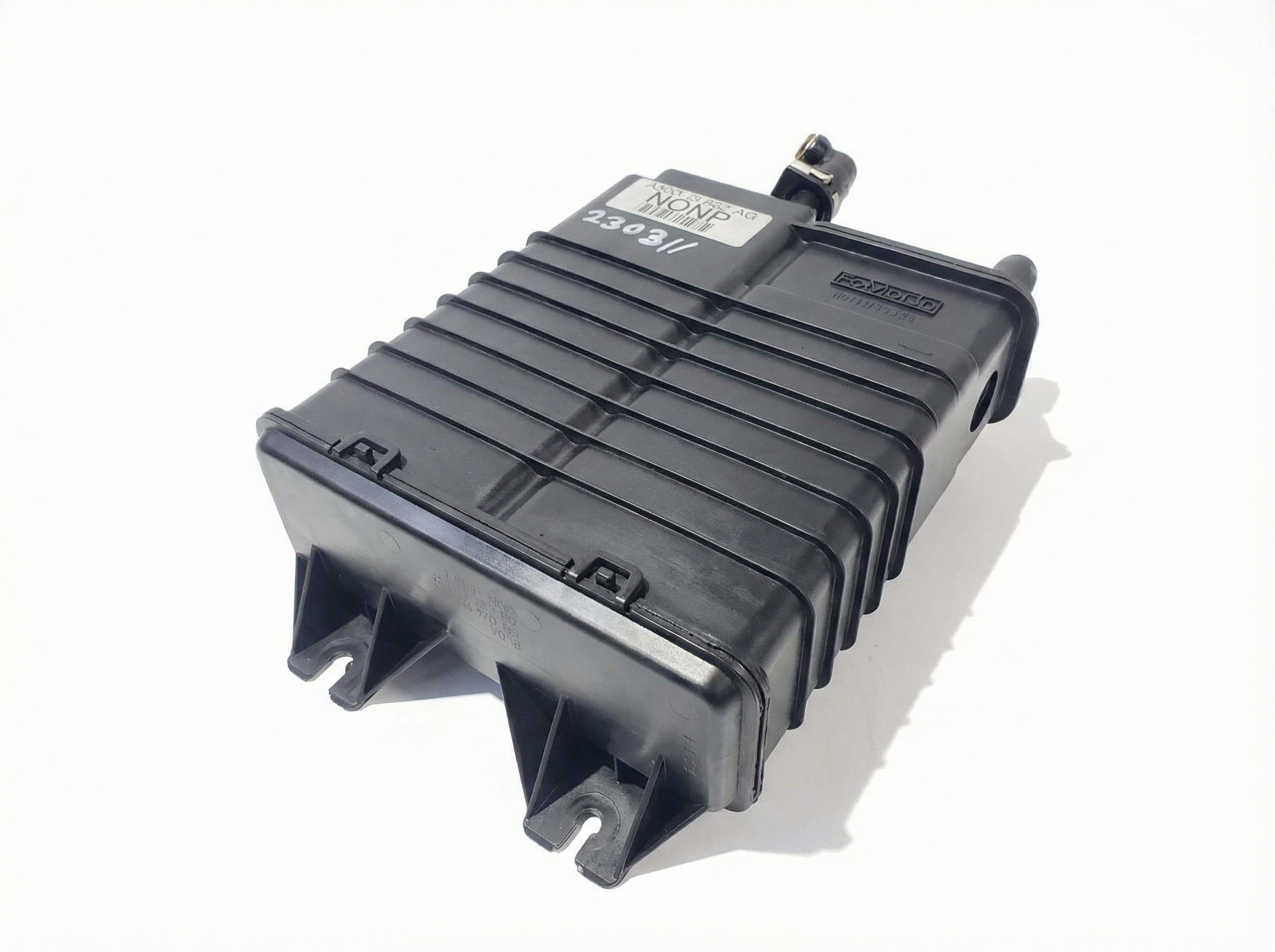
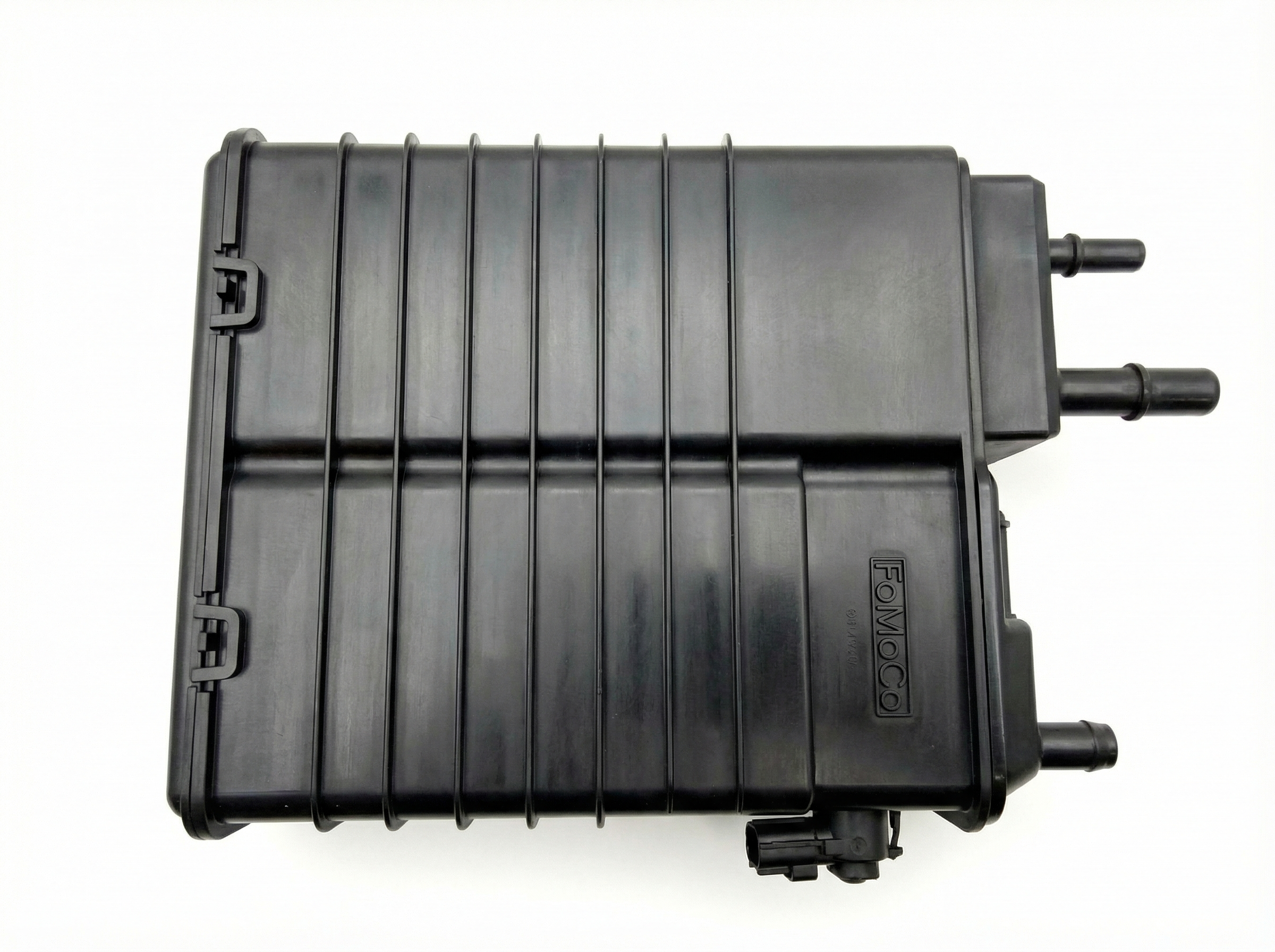
- Clogged Charcoal Canister: → Shop Vapor Canister This is most often caused by habitually overfilling the fuel tank ('topping off'). Liquid fuel saturates the canister, causing charcoal pellets to break down and clog the EVAP lines. This can destroy a new purge valve, leading to a recurring P0441 code. Symptoms include the gas pump repeatedly shutting off during refueling.
- Leaking EVAP Hoses: While the purge valve assembly is the most common leak point, other rubber or plastic hoses in the EVAP system can crack or become disconnected, causing a leak that could contribute to or be misdiagnosed as P0441.
Diagnosis Steps
- Check for Recalls: First, check if your vehicle's VIN is covered under Ford Safety Recall 18S32 or Customer Satisfaction Program 19S22. A Ford dealer will perform the necessary repairs, which includes a PCM software update and, if necessary, replacement of the purge valve and potentially the fuel tank and carbon canister, free of charge.
- Scan for Codes: Use an OBD-II scanner to confirm P0441 and check for other related codes like P1450 or P0456. 🎬 See how to diagnose and fix these common EVAP codes.
- Locate the Canister Purge Valve: Open the hood and remove the plastic engine cover (it pulls straight off). The purge valve is part of a black plastic hose assembly located on the driver's side of the engine, near the intake manifold.
- Test the Purge Valve: With the engine off, disconnect the electrical connector and the two hoses from the valve assembly. The hose connectors have white or colored clips that need to be pressed to release. Try to blow air through the valve/hose assembly. It should be closed and block all airflow. If you can blow through it, it's stuck open and is faulty.
- Inspect Hoses: While the valve is disconnected, inspect the attached EVAP hoses for any cracks, brittleness, or loose connections.
- Inspect Capless Fuel Filler: Open the fuel door and inspect the capless filler neck for any dirt, debris, or damage that could prevent it from sealing properly.
- Consider a Smoke Test: If the purge valve tests good and no visible issues are found, a professional may need to perform a smoke test to find a leak elsewhere in the EVAP system. This is rarely necessary for P0441 on this car.
Parts You'll Likely Need
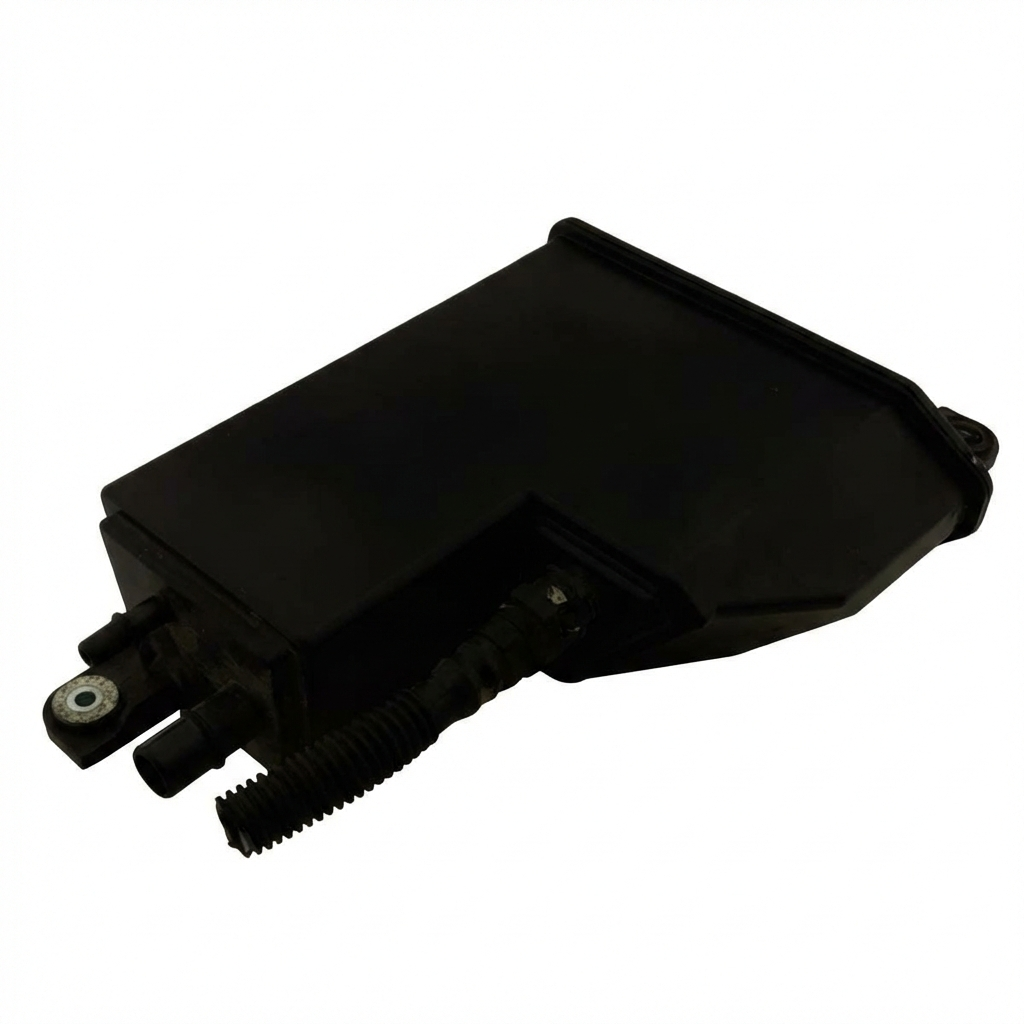
- Canister Purge Valve / Fuel Vapor Separator Tube Assembly
(OEM #BV6Z-9D289-R)— This is the most common failure point for code P0441 on this specific vehicle and is the subject of a major safety recall. This part number supersedes previous versions like BV6Z-9D289-A and BV6Z-9D289-B.
Trusted brands: Motorcraft (Ford OEM), Dorman (e.g., PV964), Bosch
OEM price range: $70-$100
Aftermarket price range: $40-$70
Related Codes That Often Appear With This One
- P1450 — This code for 'Unable to Bleed Up Fuel Tank Vacuum' is specifically mentioned in Ford's recall documentation (18S32) as being directly caused by a stuck-open canister purge valve.
- P0456 — Indicates a 'Very Small EVAP System Leak'. This can be triggered by the same faulty purge valve or a separate small leak elsewhere in the system. It is also listed as a related DTC in the recall notice.
- P0442 — Indicates a 'Small EVAP System Leak'. If the purge valve is failing in a way that creates a small leak, or if the capless filler neck is not sealing, this code can appear alongside P0441.
- P0420, P0443, P0452, P0460, P2196 — These codes were also listed in the official NHTSA documentation for recall 18S32 as potential companion codes related to the malfunctioning CPV and its effects on the fuel and emissions system.
Technical Service Bulletins (TSBs) & Recalls
- Ford Safety Recall 18S32 / NHTSA 18V-735: Addresses a stuck-open canister purge valve that can cause fuel tank deformation and engine stalling. The fix involves a PCM software update and potential replacement of the purge valve, canister, and fuel tank.
- Ford Customer Satisfaction Program 19S22 / NHTSA 19V-515: A follow-up to 18S32 for vehicles that did not receive the correct PCM software update during the initial recall repair.
Platform-Specific Known Issues
- Safety Recall 18S32 / NHTSA 18V735 was issued for a malfunctioning canister purge valve (CPV) that can stick open. This can cause excessive vacuum in the fuel system, deforming the fuel tank, leading to inaccurate fuel gauge readings, and potentially causing the engine to stall while driving.
- Customer Satisfaction Program 19S22 was issued to address vehicles where the PCM software was not properly updated during the initial 18S32 recall, requiring a second reprogramming to ensure the faulty CPV is correctly detected.
Mechanic-Grade Diagnostic Values
- Canister Purge Valve (CPV) Connector Voltage — expected: One pin should have 12V+ (battery voltage) with the key on. The other pin is the ground-side control from the PCM.. Failure: No voltage on the power supply pin indicates a wiring or fuse issue. The control pin is pulse-width modulated (PWM) by the PCM during operation.
- Fuel Tank Pressure (FTP) Sensor Voltage (Key On, Engine Off) — expected: Approximately 2.40 to 2.80 volts, representing atmospheric pressure.. Failure: A voltage significantly outside this range suggests a faulty FTP sensor or a pre-existing vacuum/pressure in the tank. If voltage drops immediately upon starting the engine (with purge commanded off), it indicates a stuck-open purge valve.
Scan Tool Commands That Help
- Ford IDS (Integrated Diagnostic System): EVAP System Test / Manual EVAP Test — This is a guided diagnostic function that allows a technician to manually command the canister purge valve and vent valve on/off to check for function and seal the system for a leak test. It's the dealer-level method for confirming component operation without relying solely on the automated monitor.
- High-End Bidirectional Scanner: Purge Valve Control / Active Test — Allows the user to command the purge valve open by a certain percentage (e.g., 0%, 10%, 50%). At 0%, no vacuum should pass through the valve. Commanding it open while the engine is running should cause a change in idle and fuel trims, confirming the valve is opening.
Wiring & Ground Locations
- Main Chassis Ground — Underneath the air cleaner box on the driver's side fender area.. The main engine harness, which includes wiring for the canister purge valve, relies on a clean, secure chassis ground. A poor ground at this location can cause erratic behavior in various engine sensors and solenoids, although it is not a primary cause of P0441.
- Canister Purge Valve Connector — On the purge valve assembly, located on the driver's side of the engine near the intake manifold.. This is the direct electrical connection for the valve. Pin 1 (Yellow-Red wire) is the 12V+ power supply from the battery junction box (Fuse F46, 15A). Pin 2 (Violet-Green wire) is the control signal (ground-side switched) from the PCM. Testing voltage and signal at these pins is critical for diagnosing a circuit fault vs. a failed valve.
Real Owner Repair Stories
- r/FocusST (Reddit) (2017 Focus ST, 156k miles) — Hard start after filling the gas tank, requiring holding RPMs at 2k to stabilize the idle. Check engine light for P0441 and sometimes a small EVAP leak code.
❌ Tried (didn't work) The owner had the official Ford recall performed previously, but the issue returned.
✅ What actually fixed it Replacing the canister purge valve assembly for a second time resolved the symptoms. The owner noted that even after the recall, the replacement parts can and do fail again. - r/FocusST (Reddit) (2015 Focus ST (US-spec in Europe)) — Rough idle.
❌ Tried (didn't work) The owner took the car to a dealer for the 18S32 recall. The dealer only performed the PCM software update and inspected the tank but did not replace the physical purge valve, and the rough idle symptom remained.
✅ What actually fixed it The owner concluded they would have to replace the purge valve assembly themselves, as the recall service performed was incomplete and did not fix the root cause of the symptom. This highlights that a dealer reporting the recall as 'complete' does not guarantee the valve was replaced. - NHTSA ODI #11405532 — An owner of a related Ford Focus model reported that the vehicle bubbles excessively for a couple of minutes after being able to drive after refueling, with the check engine light on for code P0441.
OEM Part Supersession History
BV6Z-9D289-A, BV6Z-9D289-B→BV6Z-9D289-R— Part revisions to address the high failure rate of the purge valve solenoid.
Heads up: All versions are physically interchangeable, but using the latest revision (-R or newer) is highly recommended.BV6Z-9D289-D→BV6Z-9D289-E— Further part revisions. Note that some parts catalogs show -E as the latest for ST, while others show -R. Both are used on 2.0L Focus models.
Heads up: Both -R and -E are considered current replacements for the original part on this vehicle.
Model Year Variations Within This Range
- 2013-2014 vs 2015-2018: The primary differences are cosmetic (facelift for 2015+) and infotainment (SYNC 2 vs SYNC 3). Mechanically, the engine and the failure-prone EVAP system components, including the purge valve assembly, are effectively the same. A minor suspension retune and a slightly different steering rack were implemented in the 2015 refresh, but this has no bearing on code P0441.
- 2013-2014: During the initial rollout of recall 18S32, the PCM software update for 2013-2014 models was delayed compared to the 2015-2018 models. This was a temporary logistical issue but meant some early models had to wait longer for the official fix.
Diagnostic Flowchart
Other Known Issues on This Vehicle
Issues unrelated to this code that are worth knowing about as an owner of this generation:
- Low-Speed Pre-Ignition (LSPI) 🔴 High — A risk inherent to small-displacement, direct-injection turbo engines. Caused by applying heavy throttle at low RPM in high gears (lugging the engine). Can cause catastrophic engine failure.
- Cracked Cylinder Head 🔴 High — Less common, but a known catastrophic failure where the integrated exhaust manifold ('headifold') design can crack, often near the turbo flange, due to heat cycles.
- Passenger-Side Engine Mount Failure 🟠 Medium — The hydraulic passenger-side engine mount is a very common failure item. It will leak its fluid and collapse, causing excessive engine vibration to be felt in the cabin.
- Intake Valve Carbon Buildup 🟠 Medium — As a direct-injection engine, fuel doesn't wash over the intake valves. This leads to carbon accumulation over time (e.g., 60k-90k miles), requiring a manual cleaning (walnut blasting) to restore performance and smooth operation.
- Manual Transmission Synchronizer Wear 🟠 Medium — The Getrag 6-speed manual can develop issues with worn or broken synchronizers, leading to grinding or difficulty shifting into certain gears, especially during aggressive driving.
- Electric Steering Rack Failure/Faults 🟠 Medium — Some owners report intermittent 'Steering Assist Fault' warnings on startup, which can sometimes become a permanent failure requiring expensive steering rack replacement. Clunking noises can also develop internally in the rack.
Used vs. New Parts: Buying Guide for This Vehicle
When a used part is the smart pick: Never. Given the extremely high and well-documented failure rate of this specific part, even on low-mileage vehicles, installing a used canister purge valve is a significant risk. The cost of a new part is low enough that the labor and potential for a repeat failure within weeks or months make a used part a poor economic choice.
What to inspect on the donor part:
- Not applicable, do not buy this part used.
OEM-only on this vehicle (don't cheap out):
- Canister Purge Valve Assembly: While some aftermarket brands exist, owner forums frequently report repeat failures with non-OEM parts. Given the critical safety role this part plays in preventing fuel tank deformation and stalling, sticking with the latest revision Ford/Motorcraft part (BV6Z-9D289-R or -E) is the most reliable option.
Aftermarket brands forum-validated for this vehicle:
- While OEM is preferred, Bosch is a primary OEM supplier for many Ford components and is generally considered a reliable alternative if a Motorcraft part is unavailable.
Brands owners have reported issues with on this vehicle:
- Generic, unbranded parts from online marketplaces.
- Some owners on forums have reported premature failure with store brands like Duralast, requiring another replacement sooner than expected.
Real Owner Stories
Aggregated from forums and TSBs cited above. Mileages and costs reflect what owners reported in those sources.
2013-2018 Ford Focus ST 2.0L EcoBoost
Symptoms: Hard starting after refueling even after a previous recall fix was performed.
What fixed it: Replacement of the canister purge valve assembly.
Source hint: r/FocusST (Reddit) - 'Purge Valve Replacement'
2013-2018 Ford Focus ST 2.0L EcoBoost
Symptoms: The owner noted the failure mechanism of the factory hose assembly and sought a more robust, serviceable replacement using quick-connect fittings.
What fixed it: Created a custom 'FUFF' (F You Ford Fix) setup with quick-connect fittings to avoid replacing the entire expensive hose assembly in the future.
Source hint: focusst.org - Thread 'The Purge Valve FU&F# (F You Ford Fix) Parts 1, 2 & 3'
2013-2018 Ford Focus ST 2.0L EcoBoost
Symptoms: Engine stalling while driving and inaccurate fuel gauge readings caused by fuel tank deformation.
What fixed it: Ford dealer performed Safety Recall 18S32, which included a PCM software update and replacement of the purge valve, and potentially the fuel tank and carbon canister.
Source hint: Ford Safety Recall 18S32 / NHTSA 18V-735
2013-2018 Ford Focus ST 2.0L EcoBoost
Symptoms: An owner reported that the vehicle bubbles excessively for a couple of minutes after being able to drive after refueling, with the check engine light on for code P0441.
What fixed it: Diagnostic investigation into the fuel/propulsion system as detailed in NHTSA ODI #11405532.
Source hint: NHTSA ODI #11405532
Related OBD-II Codes
Frequently Asked Questions
Is there a recall for the purge valve issue on my 2013-2018 Ford Focus ST?
What happens if I don't fix the P0441 code on my Focus ST?
Why does my Focus ST struggle to start only after I fill up at the gas station?
Can I test the purge valve myself before buying a new one?
I already had the 18S32 recall performed, but the symptoms returned. Why?
Is the purge valve easy to replace on the 2.0L EcoBoost?
Helpful Videos

Used OEM Parts in Stock
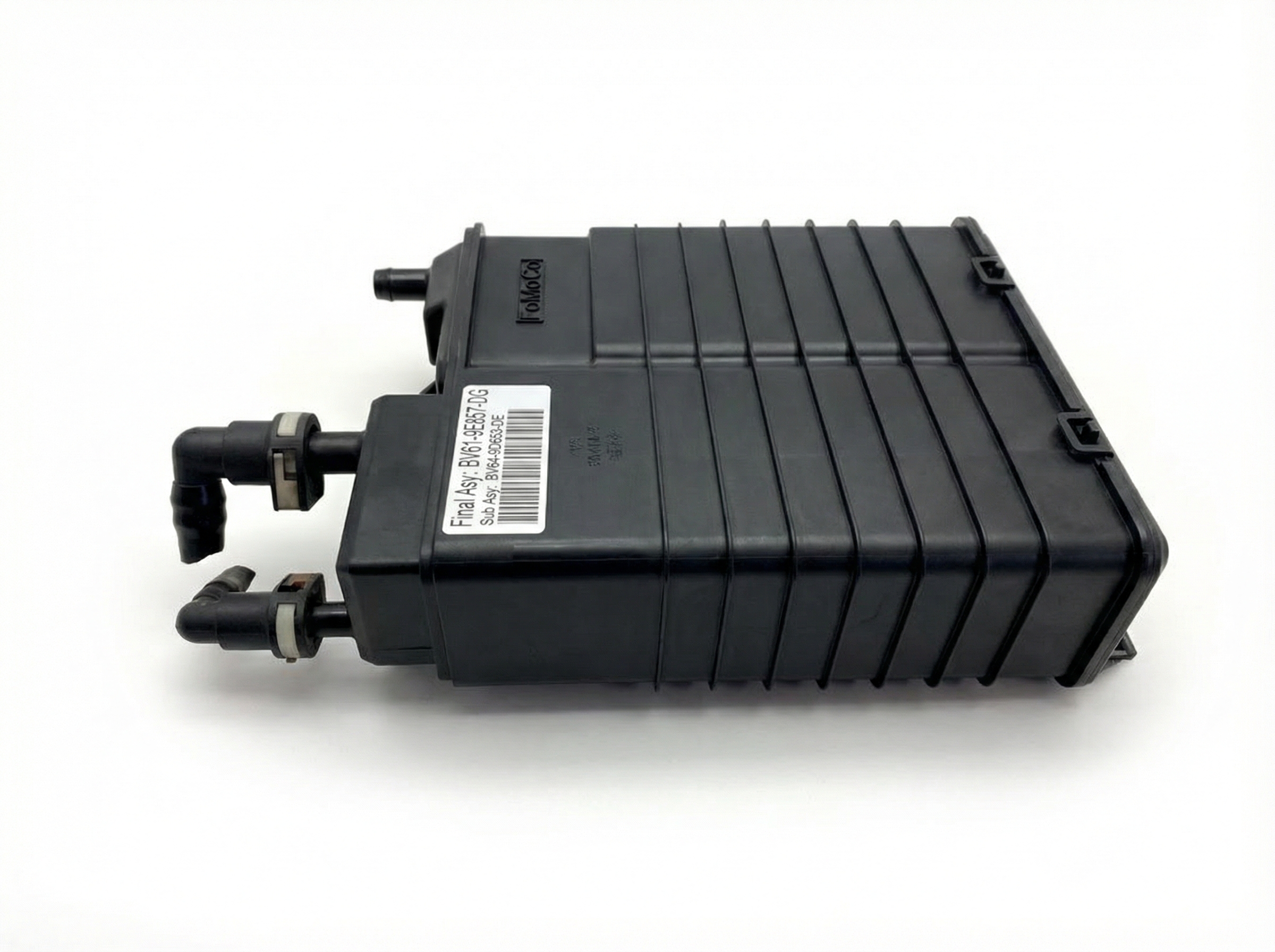
New Aftermarket Parts Available

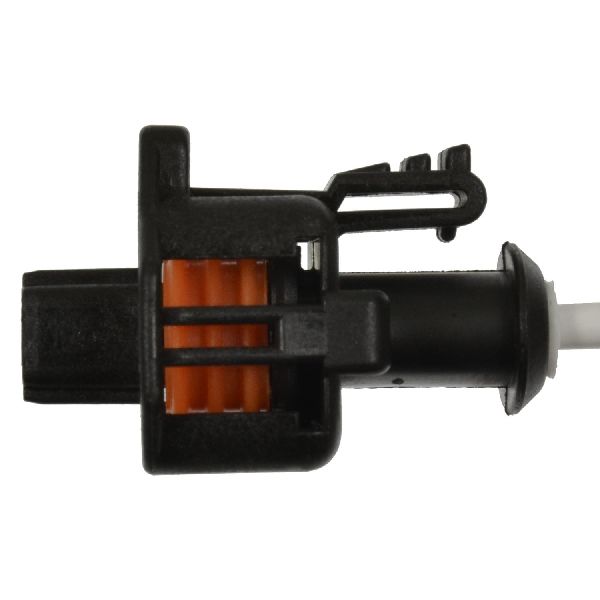

The information in this article is provided for general reference and educational purposes only. Vehicle specifications, procedures, and part compatibility can vary by production date, trim level, and region. Always consult your vehicle's factory service manual and verify part numbers before purchasing or performing repairs. Safety-critical components such as airbags, seat belts, and braking systems should be installed by a qualified professional.
- Ford Focus ST:
- 🧭 Diagnostic Flowchart
- 🎬 Helpful Videos
- 🛍️ Shop This Part
- What's Unique About the 2013-2018 Ford Focus ST
- Symptoms You May Notice
- Most Likely Causes
- Rare But Worth Checking
- Diagnosis Steps
- Parts You'll Likely Need
- Related Codes That Often Appear With This One
- Technical Service Bulletins (TSBs) & Recalls
- Platform-Specific Known Issues
- Mechanic-Grade Diagnostic Values
- Scan Tool Commands That Help
- Wiring & Ground Locations
- Real Owner Repair Stories
- OEM Part Supersession History
- Model Year Variations Within This Range
- Other Known Issues on This Vehicle
- Used vs. New Parts: Buying Guide for This Vehicle
- Real Owner Stories
- 2013-2018 Ford Focus ST 2.0L EcoBoost
- 2013-2018 Ford Focus ST 2.0L EcoBoost
- 2013-2018 Ford Focus ST 2.0L EcoBoost
- 2013-2018 Ford Focus ST 2.0L EcoBoost
- Related OBD-II Codes
- Frequently Asked Questions
- 🎟️ Get 5% Off