

P0441 on 2011-2014 Hyundai Sonata: Incorrect Purge Flow Causes and Fixes
On a 2011-2014 Hyundai Sonata, code P0441 is almost always caused by a faulty canister purge valve. It's a relatively inexpensive part, costing between $40-$80 for an OEM replacement, and is a straightforward DIY fix for most home mechanics. A stuck-open valve can also cause difficulty starting immediately after refueling.
- P0441 on a 2011-2014 Sonata almost always points to a bad canister purge valve.
- Before buying parts, check that the gas cap is tight and its seal is intact.
- A key symptom of a stuck-open purge valve is the engine stalling or running rough right after you fill up with gas.
- The purge valve is easy to access on top of the engine and can be tested by trying to blow through it or using a hand-held vacuum pump.
- This is a very DIY-friendly repair that can be completed in under 30 minutes with basic tools.
- Consider using an OEM Hyundai purge valve (part # 28910-2E000), as some aftermarket versions have been reported to be less reliable.
What's Unique About the 2011-2014 Hyundai Sonata
For the sixth-generation (YF) Hyundai Sonata, the P0441 code is a very common and well-documented issue. The canister purge valve is the most frequent point of failure. Unlike some other Hyundai models that have had software updates (TSBs) to address this code, the 2011-2014 Sonata's issue is almost always mechanical, pointing directly to the purge valve itself. Mechanics and owners often recommend using an OEM replacement part, as some aftermarket versions have been reported to fail prematurely or not work correctly out of the box. The failure is so common that many owners can diagnose it based on the code and the symptom of a rough idle or stalling after getting gas.
Symptoms You May Notice
- Check Engine Light is on
- Difficulty starting, rough idle, or stalling immediately after refueling
- A slight fuel odor (uncommon)
- Slightly rough idle (rare)
- Decreased fuel economy; as noted in NHTSA ODI #11449571 regarding a similar Hyundai model, the incorrect purge flow can "eat away at your gas mileage."
- Replacing the charcoal canister before testing the purge valve. The canister is more expensive and less likely to be the cause of an 'incorrect flow' code than the purge valve itself.
Most Likely Causes
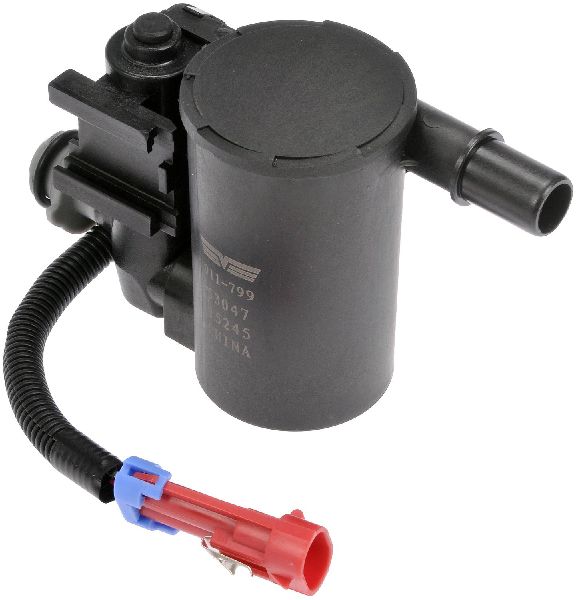
- Faulty Canister Purge Valve (Purge Control Solenoid) 🔴 High Probability → Shop Vapor Canister This specific component is a known high-failure item on this and other Hyundai/Kia models. The internal solenoid can stick open or closed, or the diaphragm can fail, preventing it from holding a vacuum. It is the most common cause for P0441.
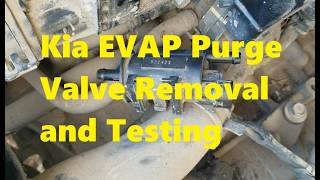
How to confirm: Remove the valve, which is easily accessible on top of the engine. A simple test is to try and blow through the valve when it's disconnected; if air passes through, it is stuck open and faulty. 🎬 Watch: How to remove and test the purge valve yourself. A more definitive test is to use a hand-held vacuum pump on the port that leads to the canister. The valve should hold vacuum when not energized. If it loses vacuum, it is faulty and needs to be replaced.
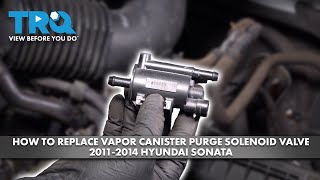
Typical fix: Replace the canister purge valve. It is mounted on the intake manifold and held by a clip or small bracket, 🎬 See this walkthrough on replacing the purge solenoid valve. with two hoses and one electrical connector.
Est. part cost: $40-$80 - Loose or Faulty Gas Cap 🟡 Medium Probability → Shop Fuel Tank Cap
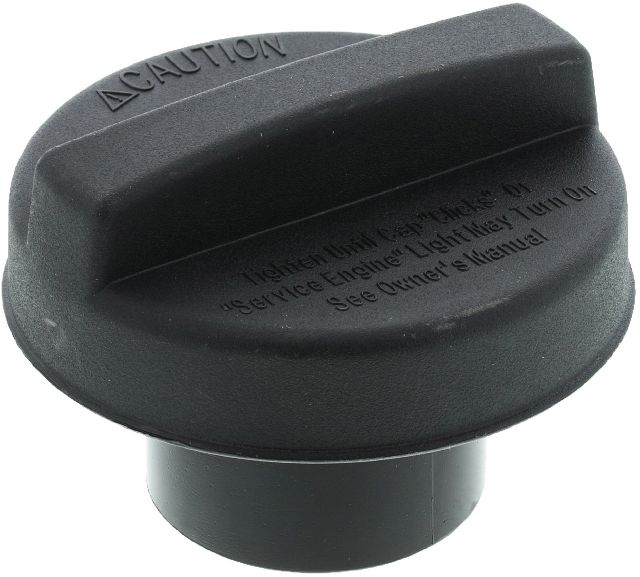
How to confirm: Inspect the gas cap for any visible cracks or damage to the seal (O-ring). Ensure it is tightened until it clicks at least three times. If the seal is worn or cracked, the cap should be replaced. It is recommended to use an OEM cap as some aftermarket ones can cause issues.
Typical fix: Tighten or replace the gas cap. After replacement, the code may need to be cleared with a scan tool, or it may clear on its own after several drive cycles.
Est. part cost: $15-$30 - Cracked or Disconnected EVAP Hoses ⚪ Low Probability Hoses can become brittle over time due to heat and age, particularly the short sections connecting directly to the purge valve.
How to confirm: Visually inspect the vacuum hoses running to and from the purge valve and charcoal canister for cracks, breaks, or loose connections. A smoke test is the most effective way to find small, hard-to-see leaks in the EVAP system.
Typical fix: Replace the damaged section of hose and ensure all connections are secure.
Est. part cost: $10-$50
Rare But Worth Checking
- Faulty Charcoal Canister or Vent Valve: → Shop Vapor Canister While not a common cause for P0441 specifically, a failing canister or vent valve (often located near the fuel tank) can cause various EVAP system codes. This is usually considered after the purge valve and gas cap have been ruled out. A saturated canister can sometimes cause a fuel smell.
- Wiring Harness Issue: Damage to the wires leading to the purge valve solenoid can prevent it from operating correctly. Check for frayed or broken wires at the connector.
Diagnosis Steps
- Check the Gas Cap: Ensure the gas cap is tight and clicks when closed. Remove it and inspect the rubber O-ring for cracks or damage. If it looks worn, it's a cheap first step to replace it.
- Visually Inspect Hoses: Look at the vacuum hoses connected to the purge valve on top of the engine. Check for obvious cracks, breaks, or loose connections.
- Test the Purge Valve: This is the most likely culprit. Disconnect the two hoses and the electrical connector from the purge valve. Try to blow air through it; if air passes, it's stuck open and bad. For a more thorough test, attach a hand-held vacuum pump to the port that runs toward the back of the car (the canister side). Pump vacuum and see if it holds steady. If the needle on the gauge drops, the valve is leaking internally and must be replaced.
- Check for Power: If the valve holds vacuum, the issue could be electrical. With the key on, use a multimeter to check for voltage at the electrical connector for the purge valve. You should have battery voltage on one pin.
- Perform a Smoke Test: 🎬 Watch: A step-by-step guide to diagnosing the P0441 code. If the purge valve tests good and has power, the next step is to introduce smoke into the EVAP system to check for leaks in hoses, the charcoal canister, or the fuel tank filler neck.
Parts You'll Likely Need
- Canister Purge Valve / Purge Control Solenoid Valve
(OEM #28910-2E000)— This is the most common failure point for the P0441 code on this specific vehicle. It gets stuck open or closed, failing to regulate vapor flow correctly.
Trusted brands: Hyundai (OEM), Bosch, Dorman, Genuine
OEM price range: $40-$80
Aftermarket price range: $25-$60 - Fuel Cap
(OEM #31010-3L600)— A worn-out gas cap seal can cause an EVAP system integrity failure, which can sometimes manifest as a P0441 code.
Trusted brands: Hyundai (OEM), Stant
OEM price range: $20-$35
Aftermarket price range: $15-$25
Related Codes That Often Appear With This One
- P0440 — P0440 indicates a general EVAP system malfunction, which can be triggered by the same faulty purge valve that causes P0441.
- P0442 — P0442 indicates a small EVAP system leak. A faulty purge valve that is not sealing correctly can be interpreted by the system as a small leak, sometimes triggering both codes.
- P0170 / P0173 — In some cases, a stuck-open purge valve can create a vacuum leak large enough to affect the air-fuel ratio, triggering fuel trim codes.
- P0507 & P0420 — As documented in NHTSA ODI #11434136, P0441 can appear alongside P0507 (Idle air control system RPM higher than expected) and P0420 (Catalyst system below threshold).
- P0014, P0300, & P0301 — A report for a similar Hyundai platform (NHTSA ODI #11468646) noted P0441 appearing with misfire and camshaft timing codes, which in that specific instance was associated with a recommendation for engine replacement.
Technical Service Bulletins (TSBs) & Recalls
- Bulletin #5NP-S5Y6V-04: While specifically issued for the Veloster, this manufacturer bulletin notes that an ECM software update was developed to address DTC P0441 regarding incorrect canister purge valve flow, stating there is often no vehicle performance concern associated with the condition.
Platform-Specific Known Issues
- Owner Experience with Aftermarket Purge Valves: → Shop Vapor Canister Multiple forum users on hyundai-forums.com and Reddit report that while cheaper aftermarket purge valves are available, they sometimes fail quickly or are dead-on-arrival. Many users who initially used an aftermarket part and had the code return found that switching to a genuine Hyundai OEM part (28910-2E000) resolved the issue permanently.
- Stalling After Refueling: A very common owner-reported symptom tied directly to a failed (stuck open) purge valve on this platform is the engine running rough, stumbling, or stalling immediately after filling the gas tank. This happens because the engine is flooded with fuel vapors from the canister that are being drawn into the intake manifold at idle, when they should not be.
Mechanic-Grade Diagnostic Values
- Canister Purge Valve (Solenoid) Coil Resistance — expected: 15 to 30 Ohms. Failure: A reading of infinite ohms (open circuit) or zero ohms (short circuit) indicates a failed coil.
- Canister Purge Valve Connector Voltage — expected: Approximately 12V (Battery Voltage). Failure: No voltage at the power supply pin indicates a blown fuse or an open in the wiring harness.
- Fuel Tank Pressure (FTP) Sensor Live Data — expected: Values should vary within a defined range as the system self-tests.. Failure: A reading stuck at zero, jumping to maximum, or that never changes at all can indicate a failed sensor providing false data to the ECM.
Scan Tool Commands That Help
- Hyundai GDS (Global Diagnostic System) or equivalent advanced scan tool: EVAP System Leakage Test — This is a bidirectional function that allows a technician to command the purge valve and vent valve to close, sealing the system. The tool then monitors the fuel tank pressure sensor to see if the system holds vacuum. This can definitively test the function of the valves and check for leaks without a smoke machine.
Wiring & Ground Locations
- Engine Ground Strap — Bolted to the frame rail in the engine compartment.. On some early 2011 Sonatas, the frame was painted before the main engine ground strap was attached, leading to poor electrical contact. While this typically causes more severe no-start issues, an intermittent or poor ground can cause unpredictable behavior in various electronic components, including the ECM that controls the EVAP system. A technician noted Hyundai's official fix was to drill out the hole and use a larger 8mm bolt with a star washer to ensure metal-to-metal contact.
- Purge Valve Connector — On top of the intake manifold, connected to the purge valve.. This 2-pin connector provides power and ground signal to the purge valve solenoid. One pin should have battery voltage with the key on. The other is the control wire that the ECM pulses to ground to activate the valve. Checking for voltage here is a key step in differentiating a bad valve from a wiring problem.
Real Owner Repair Stories
- NHTSA ODI #10394376 — An owner reported that whenever the check engine light produced code P0441, the car would experience hard starts and continual stalling specifically after adding gas to the tank.
- YouTube video from user 'Hyundai Elantra - Code P0441' (2008 Hyundai Elantra (similar EVAP system and valve)) — Check Engine Light with code P0441.
❌ Tried (didn't work) Checking the gas cap, which was fine., Removing and cleaning the purge valve with carburetor cleaner. The valve seemed to seal correctly after cleaning.
✅ What actually fixed it The P0441 code returned after about 40 miles of driving. Replacing the purge valve with a new part permanently resolved the issue. - YouTube video from user 'Car Confections' (2012 Hyundai Sonata) — Check Engine Light with code P0455 (Gross EVAP Leak), but also relevant to P0441.
❌ Tried (didn't work) Initially planned to replace the purge valve and vent valve as common failure items.
✅ What actually fixed it During the replacement of the purge valve, the mechanic discovered the short rubber hose connecting the valve to the hard line was split on the back side. This small, hard-to-see crack was the actual source of the EVAP leak. Replacing the small section of hose was the true fix.
OEM Part Supersession History
Unknown→28910-2E000— This is the current, widely available OEM part number for the canister purge valve for this vehicle generation.
Heads up: Some earlier or different Hyundai models use part number 28910-26900, which may look physically similar but have different electrical or flow specifications. Ensure the part is 28910-2E000 for the 2011-2014 Sonata.
Diagnostic Flowchart
Other Known Issues on This Vehicle
Issues unrelated to this code that are worth knowing about as an owner of this generation:
- Theta II Engine Failure (Connecting Rod Bearings) 🔴 High — Widespread across 2.0L and 2.4L engines, leading to multiple class-action lawsuits and recalls. Can occur at various mileages, often without warning. (Ref: Multiple recalls (e.g., NHTSA 15V568000) and a lifetime warranty extension for affected vehicles contingent on a Knock Sensor Detection Software (KSDS) update.)
- Steering Motor Coupler Degradation 🟠 Medium — Extremely common. Owners notice a clicking or ticking sound from the steering column when turning the wheel. The flexible rubber coupler inside the electronic power steering motor disintegrates. (Ref: Hyundai extended the warranty for this part to 10 years/100,000 miles via TSB 17-ST-002. The replacement part is 56315-2K000-FFF.)
- Peeling White Paint 🟡 Low — Very common on vehicles painted with specific white colors ('Pearl White'). Large flakes of paint delaminate and peel off the hood, roof, and trunk. (Ref: Hyundai USA issued a warranty extension (Z05) to 10 years/unlimited miles for this issue on certain models and years.)
Used vs. New Parts: Buying Guide for This Vehicle
When a used part is the smart pick: For this specific repair, obtaining a used purge valve from a junkyard is generally not recommended. The part is a known high-failure item with a limited lifespan, and its internal condition cannot be visually verified. One user reported testing five used valves from a junkyard, all of which had inconsistent and incorrect resistance readings. Given the low cost of a new part, a used valve presents a poor value proposition.
Donor-vehicle mileage cap: roughly under 30000 miles for the part to have meaningful remaining life.
What to inspect on the donor part:
- If a used part must be considered, choose one from the lowest-mileage vehicle possible.
- Avoid parts from vehicles that show signs of engine fire, flood, or severe front-end damage.
- Test the resistance with a multimeter before purchase; it should be between 15-30 ohms.
OEM-only on this vehicle (don't cheap out):
- Canister Purge Valve - While not strictly 'OEM-only', numerous owner reports and mechanic recommendations strongly advise using a genuine Hyundai/Kia OEM part (28910-2E000) or a premium aftermarket brand like Standard Ignition or Gates. Cheaper, no-name aftermarket valves are frequently reported to be dead-on-arrival or fail within a short period.
Aftermarket brands forum-validated for this vehicle:
- Standard Ignition (SMP)
- Gates
- Dorman (often cited as a viable alternative)
Brands owners have reported issues with on this vehicle:
- Unbranded, low-cost parts from online marketplaces are frequently cited in forums as being unreliable for this specific component.
Real Owner Stories
Aggregated from forums and TSBs cited above. Mileages and costs reflect what owners reported in those sources.
2011 Hyundai Sonata
Symptoms: Car not wanting to start after filling the gas tank, accompanied by an Incorrect Purge Flow code.
What fixed it: Replacing the faulty purge valve.
Source hint: Reddit r/MechanicAdvice: 'Strange evap issues (Hyundai sonata 2011)'
2011-2014 Hyundai Sonata
Symptoms: Occasional sporadic drops in idle and a strong fuel smell.
What fixed it: Replacement of the purge valve to prevent a saturated charcoal canister.
Source hint: Reddit r/mechanicadvice: 'p0441_making_occasional_sporadic_drops_in_idle'
Related OBD-II Codes
Frequently Asked Questions
Why does my 2011-2014 Sonata stall or run rough specifically after I fill up the gas tank?
Should I use an aftermarket purge valve or a genuine Hyundai part (28910-2E000)?
Is there a specific TSB for the steering noise I'm hearing along with my P0441 code?
My white 2011 Sonata has peeling paint; is this covered by Hyundai?
Is the P0441 code related to the Theta II engine recall?
Can I test the purge valve myself before buying a new one?
Helpful Videos

Used OEM Parts in Stock

New Aftermarket Parts Available


The information in this article is provided for general reference and educational purposes only. Vehicle specifications, procedures, and part compatibility can vary by production date, trim level, and region. Always consult your vehicle's factory service manual and verify part numbers before purchasing or performing repairs. Safety-critical components such as airbags, seat belts, and braking systems should be installed by a qualified professional.
- Hyundai Sonata:
- 🧭 Diagnostic Flowchart
- 🎬 Helpful Videos
- 🛍️ Shop This Part
- What's Unique About the 2011-2014 Hyundai Sonata
- Symptoms You May Notice
- Most Likely Causes
- Rare But Worth Checking
- Diagnosis Steps
- Parts You'll Likely Need
- Related Codes That Often Appear With This One
- Technical Service Bulletins (TSBs) & Recalls
- Platform-Specific Known Issues
- Mechanic-Grade Diagnostic Values
- Scan Tool Commands That Help
- Wiring & Ground Locations
- Real Owner Repair Stories
- OEM Part Supersession History
- Other Known Issues on This Vehicle
- Used vs. New Parts: Buying Guide for This Vehicle
- Real Owner Stories
- 2011 Hyundai Sonata
- 2011-2014 Hyundai Sonata
- Related OBD-II Codes
- Frequently Asked Questions
- 🎟️ Get 5% Off