

P0441 on 2010-2015 Hyundai Tucson: EVAP Incorrect Purge Flow Causes and Fixes
For a 2010-2015 Hyundai Tucson, the P0441 code is most often caused by a faulty canister purge valve located on top of the engine. This is a common, inexpensive DIY fix, with the part costing between $25 and $85. A key symptom is difficulty starting the engine right after refueling.
- P0441 on a 2010-2015 Tucson almost always points to a bad canister purge valve.
- If your Tucson has trouble starting right after you get gas, the purge valve is the most certain culprit.
- The purge valve is located on top of the engine and is an easy, low-cost DIY replacement that often solves the problem.
- Always check the gas cap first, but don't be surprised if the issue is the purge valve.
- A smoke test is the best next step if a new purge valve doesn't fix the code.
What's Unique About the 2010-2015 Hyundai Tucson
On the second-generation Hyundai Tucson (2010-2015), the most common culprit for P0441, the canister purge valve, is conveniently located right on top of the engine, making it an especially accessible and straightforward DIY repair. A classic symptom on this platform is difficulty starting the engine right after refueling, which almost always points directly to a stuck-open purge valve that has allowed liquid fuel to flood the intake.
Symptoms You May Notice
- Check Engine Light is on
- Difficulty starting the engine immediately after refueling
- Slightly rough or unstable idle
- A faint fuel smell (less common)
- Slight decrease in fuel economy
- Replacing the gas cap when the purge valve is the actual problem.
- Replacing the charcoal canister when only a valve has failed.
- Using a cheap aftermarket purge valve that fails quickly or doesn't work correctly.
Most Likely Causes
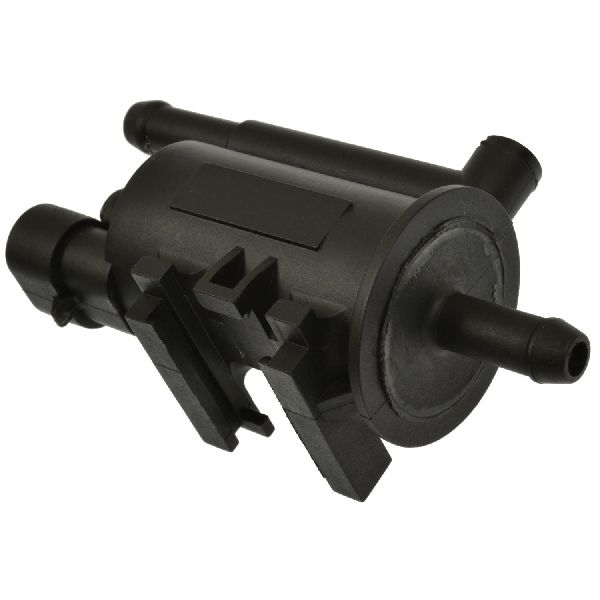
- Faulty Canister Purge Valve (Purge Control Solenoid Valve - PCSV) 🔴 High Probability → Shop Vapor Canister This valve cycles frequently and can get stuck open or closed due to wear or contamination over time. It is the most widely reported failure part for this code on Hyundai and Kia vehicles. Aftermarket replacements have been reported to fail prematurely, so using an OEM part is often recommended.
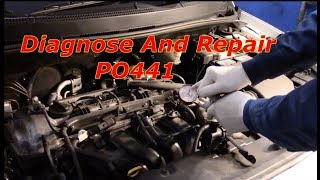
How to confirm: A classic sign is difficulty starting the car right after filling the gas tank. To test, with the engine off, remove the valve and try to blow through it; it should be closed (no air passes). If air passes, it's stuck open and faulty. Alternatively, with the engine running, disconnect the electrical connector and place a finger on the vacuum port; if you feel suction, the valve is stuck open. A vacuum gauge can also be used 🎬 Watch: A professional mechanic's guide to diagnosing P0441 on a Hyundai.; the valve should hold vacuum when not energized.
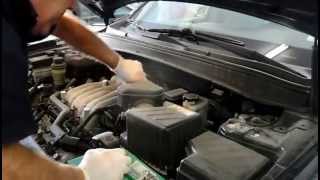
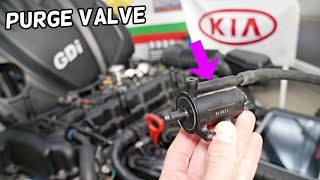
Typical fix: Replace the canister purge valve. It is located on top of the engine, held by a small bracket, with two hoses 🎬 See this walkthrough for locating and removing the purge control valve. and one electrical connector.
Est. part cost: $25-$85 - Cracked, Disconnected, or Clogged EVAP Hoses 🟡 Medium Probability The rubber and plastic hoses in the engine bay are exposed to heat and can become brittle and crack over time, causing a vacuum leak that disrupts the purge flow. The hose connecting to the purge valve is a common failure point.
How to confirm: Visually inspect the EVAP hoses connected to and surrounding the purge valve for any visible cracks, loose connections, or blockages. A smoke test is the most effective way to find small, hard-to-see leaks.
Typical fix: Replace the damaged section of hose. Ensure all connections are secure.
Est. part cost: $5-$30 - Faulty or Loose Gas Cap ⚪ Low Probability → Shop Fuel Tank Cap While more commonly associated with large leak codes (like P0455), a gas cap that doesn't seal properly can sometimes contribute to incorrect flow readings by allowing unmetered air into the system. It's a simple first check.
How to confirm: Check that the gas cap is tightened until it clicks. Inspect the rubber seal on the cap for cracks, stiffness, or damage. If it looks worn, it's a cheap and easy part to replace as a precaution. Using a non-OEM gas cap can sometimes cause issues.
Typical fix: Tighten or replace the gas cap, preferably with an OEM part.
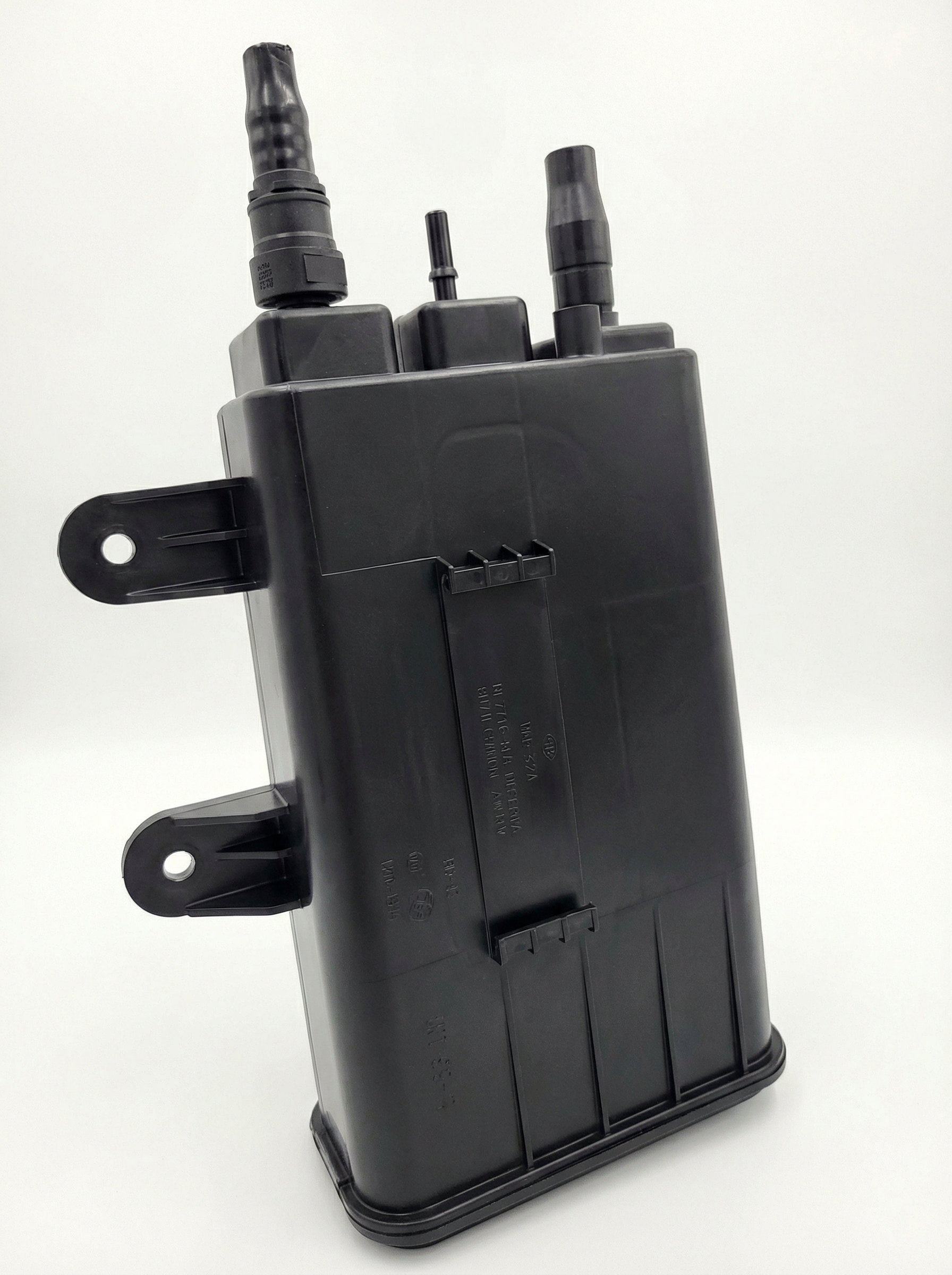
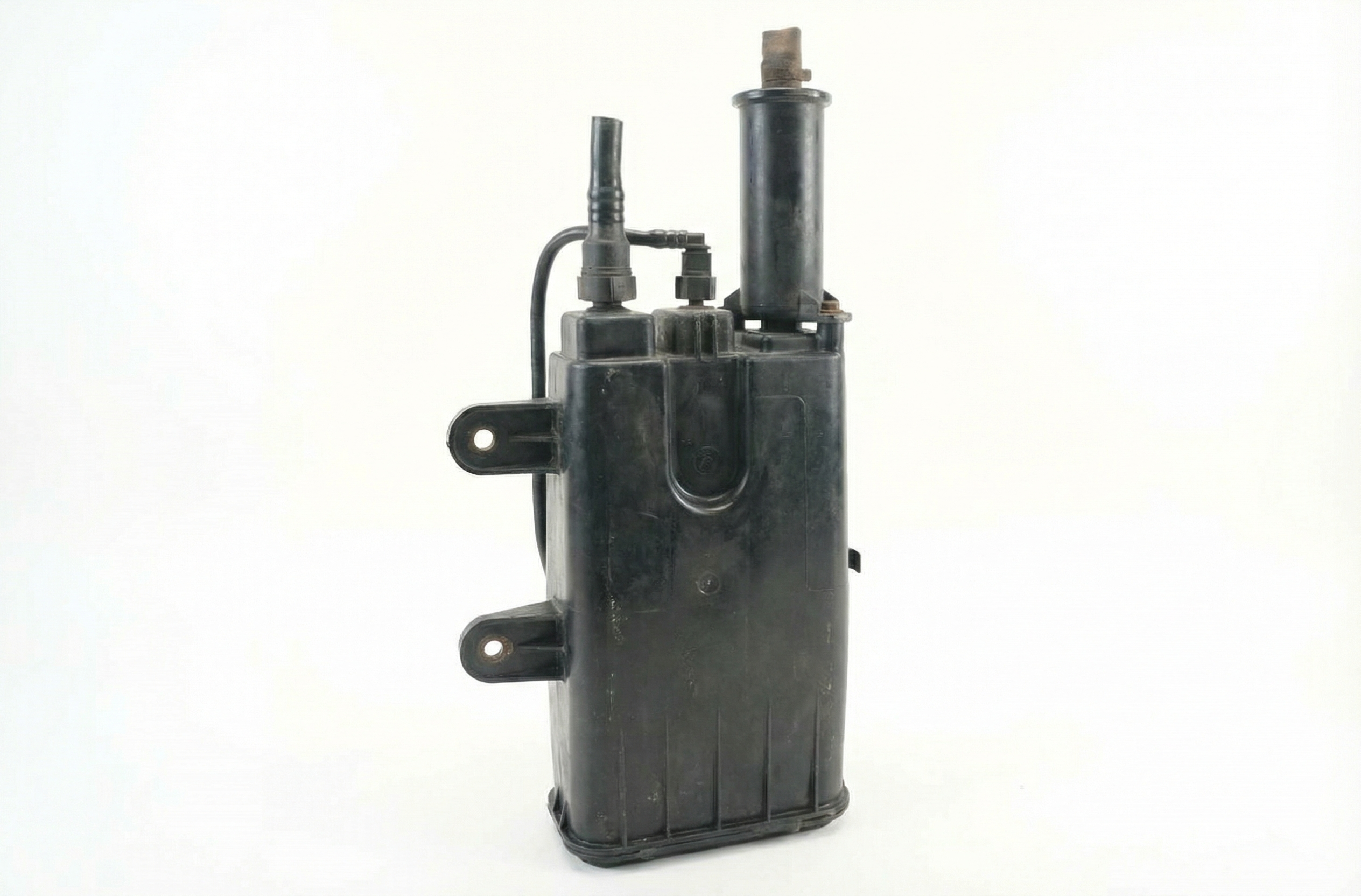
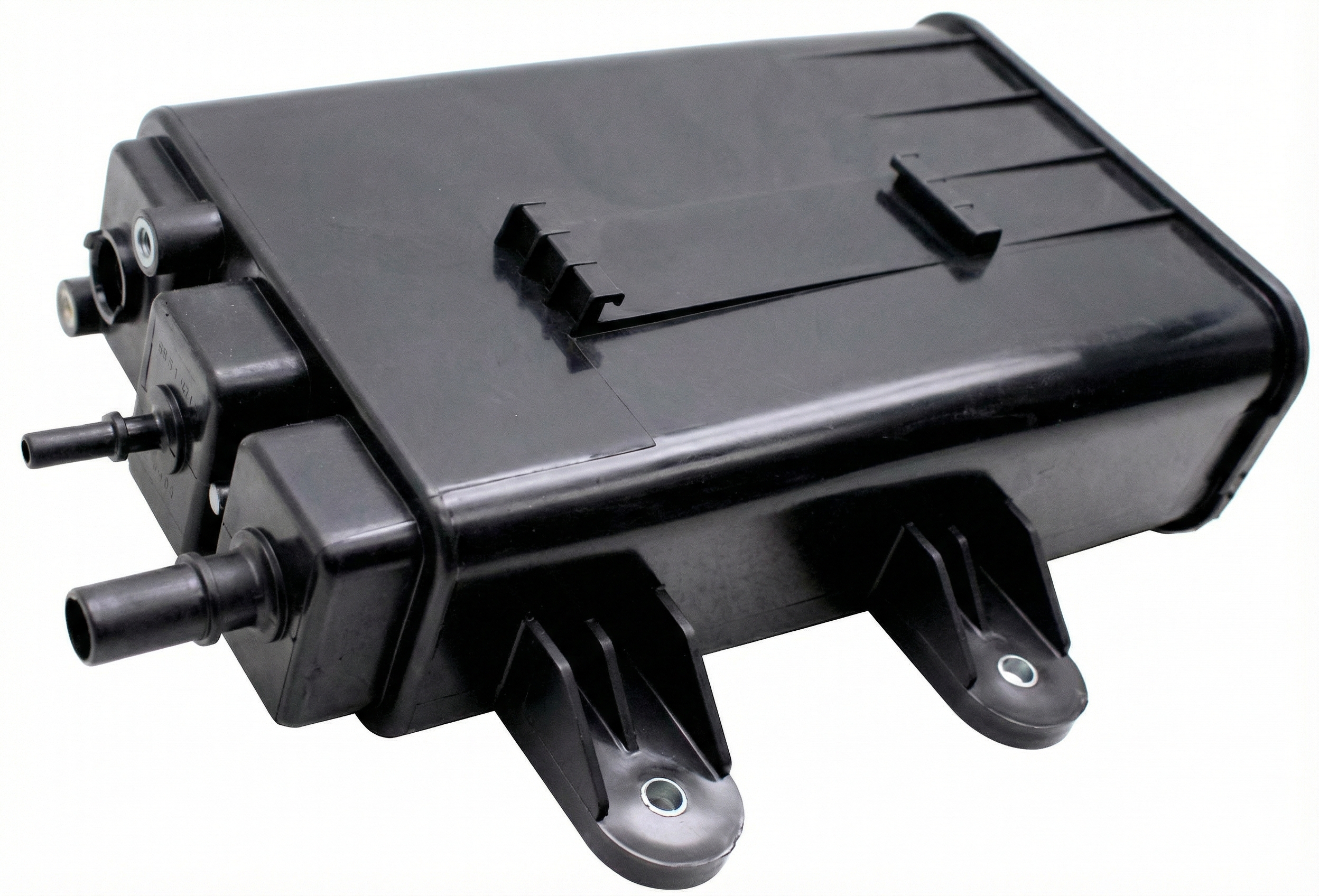
Est. part cost: $15-$35 - Faulty Canister Close Valve (CCV) ⚪ Low Probability → Shop Vapor Canister The CCV, located near the charcoal canister at the rear of the vehicle, can get stuck. This is less common than a purge valve failure for P0441 but does happen.
How to confirm: This valve is normally open and closes when the system runs a leak test. Testing requires a scan tool to command it closed and check if it holds vacuum, or applying 12V voltage directly to it. Accessing it on the Tucson can be difficult as it is near the rear axle and fuel tank.
Typical fix: Replace the canister close valve. This may require lowering the spare tire or subframe for access.
Est. part cost: $70-$125
Rare But Worth Checking
- Failed Charcoal Canister: → Shop Vapor Canister Overfilling the fuel tank (topping off) can saturate the canister with liquid fuel, causing it to fail. If it fails, it can send charcoal pellets into the EVAP lines, clogging the purge and vent valves. Check the purge valve inlet for black pellets when you remove it.
- Faulty Fuel Tank Pressure Sensor: → Shop Fuel Tank If the sensor that monitors EVAP system pressure provides incorrect readings to the computer, it can falsely trigger a P0441 code. This is uncommon and should be considered after other components have been checked.
Technical Service Bulletins (TSBs) & Recalls
Manufacturer records indicate that P0441 is often addressed through software updates. For example, Bulletin #5NP-S5Y6V-04 provides information regarding an ECM software update specifically for DTC P0441 (Incorrect CPV Flow) on other Hyundai models, noting that there may be no associated vehicle performance concern.
Diagnosis Steps
- Check the Gas Cap: Ensure it is tight and the seal is in good condition. A loose or damaged cap is a simple but sometimes overlooked cause.
- Inspect Engine Bay Hoses: Visually check the EVAP hoses around the purge valve on top of the engine. Look for obvious cracks, breaks, or loose connections, especially on the lines connected directly to the valve.
- Test the Purge Valve (PCSV): This is the most likely failure. If you experience hard starting after refueling, the valve is likely stuck open. You can remove it and try to blow through it; if air passes, it's bad. Alternatively, use a scan tool to command it open and closed while checking for an audible click and flow change.
- Replace the Purge Valve: Given its high failure rate 🎬 Watch: Two quick DIY methods to fix the P0441 engine code. and low cost, if the diagnosis points to the purge valve, replacement is the most common and effective fix. It is often recommended to use an OEM part for longevity.
- Perform a Smoke Test: If a new purge valve and visual inspection don't solve the issue, a smoke test is the definitive way to find leaks in the EVAP system lines or components.
- Test the Canister Close Valve (CCV): If no leaks are found, the CCV at the rear of the vehicle should be tested. This is a more involved job due to its location near the fuel tank.
Parts You'll Likely Need
- Canister Purge Valve / Purge Control Solenoid Valve (PCSV)
(OEM #28910-25100)— This is the most frequent point of failure for code P0441 on this vehicle. It gets stuck open or closed, causing incorrect vapor flow. Part is shared across many Hyundai/Kia models.
Trusted brands: Hyundai (OEM), Standard Motor Products, Dorman, Gates
OEM price range: $60-$85
Aftermarket price range: $25-$50 - Canister Close Valve (CCV)
(OEM #31431-2S550)— This valve can also fail, though less commonly than the purge valve. It is located at the rear of the vehicle and is more difficult to replace. Part number appears to fit 2009-2014 Tucson models.
Trusted brands: Hyundai (OEM), Bosch
OEM price range: $120-$170
Aftermarket price range: $70-$100
Related Codes That Often Appear With This One
- P0440 — P0440 indicates a general EVAP system malfunction. A component failure causing the incorrect flow of P0441 can also trigger the general system code.
- P0442 — P0442 indicates a small EVAP system leak. A cracked hose or failing valve seal causing the P0441 flow issue can also be detected as a small leak.
Mechanic-Grade Diagnostic Values
- Purge Control Solenoid Valve (PCSV) Coil Resistance — expected: 16 ± 2 Ω at 20°C / 68°F. Failure: A reading significantly outside this range (open circuit or short) indicates a failed coil.
- Fuel Tank Pressure Sensor (FTPS) Voltage Test — expected: With the key on and engine off (KOEO) and gas cap removed, probe the three wires at the sensor connector. You should find: 1) 5V reference power from ECM, 2) a ground wire, and 3) a signal wire reading approximately 2.5V.. Failure: No 5V reference indicates a wiring issue from the ECM. A signal voltage that is stuck high (near 5V) or low (near 0V) and does not change with pressure indicates a failed sensor.
- PCSV Power Supply Voltage — expected: With the key on, engine off (KOEO), one of the two terminals on the PCSV electrical connector should show battery voltage (~12V).. Failure: No voltage indicates a blown fuse or an open circuit in the power supply wire to the valve.
- ECM Diagnostic Threshold (Differential Tank Pressure) — expected: During the EVAP test cycle, the ECM expects to see a specific change in tank pressure.. Failure: The ECM will set code P0441 if the measured differential tank pressure is below -0.2 kPa or above -0.03 kPa when it expects a specific value, indicating the purge valve is stuck open or not flowing correctly.
Scan Tool Commands That Help
- Hyundai GDS (or equivalent professional scan tool): EVAP Leakage Test — This is an automated test function that commands the EVAP system components (PCSV, CCV) to operate and monitors the system's ability to hold pressure or vacuum. It provides a pass/fail result and is the next step after a visual inspection and basic component tests. Note: Test requires specific enable conditions, such as engine temperature and fuel level below 80%.
Wiring & Ground Locations
- ECM Connector Pin 29 — At the Engine Control Module (ECM), which is typically located in the engine bay.. This is the specific control output pin from the ECM for the Purge Control Solenoid Valve (PCSV). A technician can test for a control signal (a pulsing ground) at this pin to verify if the ECM is commanding the valve to open. This helps differentiate between a wiring problem, a faulty valve, or a faulty ECM driver.
- PCSV Wire Color (Example) — At the PCSV connector on the engine.. Service manual data for similar models suggests the control wire from the ECM is often Pink ('Pnk'). Verifying wire colors against a diagram helps ensure the correct wire is being tested for power and control signals.
Model Year Variations Within This Range
- 2009-2014: The Canister Close Valve (CCV), OEM part number 31431-2S550, is specifically listed for 2009-2014 Tucson models. Furthermore, some parts vendors specify this part is for '2.0L. California' emissions models, indicating a potential variation based on engine and original sales region. Owners of 2015 models or those with the 2.4L engine should double-check the part number for their specific vehicle.
Diagnostic Flowchart
Other Known Issues on This Vehicle
Issues unrelated to this code that are worth knowing about as an owner of this generation:
- Theta II Engine Failure 🔴 High — Widespread issue affecting 2.0L and 2.4L GDI engines, leading to recalls and class-action lawsuits. Failures are often due to manufacturing debris causing rod bearing failure. (Ref: Multiple recalls (e.g., NHTSA 19V063000) and a major legal settlement provide extended warranties and potential engine replacements for affected VINs.)
- Excessive Oil Consumption 🟠 Medium — Many owners report high rates of oil consumption, which can lead to engine damage if not monitored closely. This is often related to the underlying issues of the Theta II engine. (Ref: Covered under some engine-related TSBs and the extended warranty from the class-action settlement.)
- ABS Module Fire Risk 🔴 High — The Anti-Lock Brake System (ABS) module can leak brake fluid internally, causing an electrical short and potentially leading to an engine compartment fire, even when the vehicle is parked. (Ref: NHTSA Recall 23V651000. Owners are advised to park outside until the repair is completed.)
- GDI Carbon Buildup 🟡 Low — As a Gasoline Direct Injection (GDI) engine, the intake valves are prone to carbon buildup over time, as fuel is not sprayed over them to provide a cleaning effect. This can lead to reduced performance and misfires over 100k miles.
- Sudden Oil Leaks from Drain Pan 🟠 Medium — An NHTSA investigation was opened regarding oil drain pan assembly failures, which could lead to sudden and catastrophic oil loss, potentially causing engine seizure. (Ref: NHTSA Investigation opened Sep 12, 2022.)
Used vs. New Parts: Buying Guide for This Vehicle
When a used part is the smart pick: For this repair, used parts are generally not recommended for the electronic solenoids. However, sourcing simple, non-brittle EVAP hoses or mounting brackets from a junkyard is a reasonable way to save money.
Donor-vehicle mileage cap: roughly under 60000 miles for the part to have meaningful remaining life.
What to inspect on the donor part:
- For a charcoal canister: Inspect the donor vehicle for signs of fuel 'topping off' (staining around the fuel filler neck). Avoid canisters from vehicles with high mileage or visible damage.
- For hoses: Squeeze the hose to ensure it is still pliable and not hard or brittle. Check for any visible cracks or abrasions.
OEM-only on this vehicle (don't cheap out):
- Canister Purge Valve (PCSV): Forum and mechanic consensus strongly suggests that aftermarket purge valves have a high premature failure rate for Hyundai/Kia vehicles. Using a genuine Hyundai OEM part is highly recommended for longevity, even if it costs more initially.
- Gas Cap: A non-OEM gas cap can sometimes fail to seal correctly and cause persistent, hard-to-diagnose EVAP codes. Stick with an OEM cap to eliminate it as a variable.
Brands owners have reported issues with on this vehicle:
- Generic/unbranded online marketplace purge valves: While inexpensive, these are frequently cited as failing within a short period.
Real Owner Stories
Aggregated from forums and TSBs cited above. Mileages and costs reflect what owners reported in those sources.
2015 Hyundai Tucson
Symptoms: The check engine light illuminated and the vehicle was towed to a dealer. Mechanics retrieved codes P0014, P0300, P0301, and P0441. The owner was informed the engine required replacement.
What fixed it: The vehicle was not repaired as the manufacturer was not providing assistance at the time of the report.
Source hint: NHTSA ODI #11468646
Hyundai Owner Report
Symptoms: Whenever gas is added to the tank, the car experiences a hard start and continually stalls. The check engine light produces code P0441.
What fixed it: The owner identified the purge control as the likely source of the stalling and hard starting issues.
Source hint: NHTSA ODI #10394376
2017 Hyundai Tucson
Symptoms: The check engine light comes on every spring, suggesting a link to moisture or temperature changes. The dealer was unable to find a specific fault during inspection.
What fixed it: No fix found; the dealer could not identify the fault despite the recurring code.
Source hint: Reddit r/Hyundai
2015 Hyundai Tucson
Symptoms: P0441 code triggered; owner noted the extreme difficulty of accessing the Canister Close Valve (CCV) for testing or replacement.
What fixed it: The discussion noted that accessing the valve may require dropping the fuel tank.
Source hint: Hyundai-Forums.com
Documented NHTSA Reports
Additional reports from NHTSA provide further context on how P0441 manifests across the Hyundai lineup. NHTSA ODI #11434136 describes a vehicle throwing P0441 alongside P0507 (Idle air control system RPM higher than expected) and P0420 (Catalyst system below threshold). Another report, NHTSA ODI #11449571, notes that the P0441 code is related to incorrect purge flow and can negatively impact gas mileage.
Related OBD-II Codes
Frequently Asked Questions
Why does my 2010-2015 Tucson have trouble starting only after I fill up the gas tank?
Is there a recall for the engine issues on my 2010-2015 Tucson that might be related to my oil consumption?
I heard there is a fire risk with the 2010-2015 Tucson; should I be worried while diagnosing my P0441 code?
Can I use an aftermarket purge valve to fix the P0441 code on my Hyundai?
Where is the Canister Close Valve (CCV) located on a 2015 Tucson?
Does the Kia Sportage have the same P0441 issues as my Tucson?
Helpful Videos

![How to Fix HYUNDAI P0441 Engine Code in 3 Minutes [2 DIY Methods / Only $4.50]](https://img.youtube.com/vi/Pb-LTfC7HpE/mqdefault.jpg)
Used OEM Parts in Stock
New Aftermarket Parts Available


The information in this article is provided for general reference and educational purposes only. Vehicle specifications, procedures, and part compatibility can vary by production date, trim level, and region. Always consult your vehicle's factory service manual and verify part numbers before purchasing or performing repairs. Safety-critical components such as airbags, seat belts, and braking systems should be installed by a qualified professional.
- Hyundai Tucson:
- 🧭 Diagnostic Flowchart
- 🎬 Helpful Videos
- 🛍️ Shop This Part
- What's Unique About the 2010-2015 Hyundai Tucson
- Symptoms You May Notice
- Most Likely Causes
- Rare But Worth Checking
- Technical Service Bulletins (TSBs) & Recalls
- Diagnosis Steps
- Parts You'll Likely Need
- Related Codes That Often Appear With This One
- Mechanic-Grade Diagnostic Values
- Scan Tool Commands That Help
- Wiring & Ground Locations
- Model Year Variations Within This Range
- Other Known Issues on This Vehicle
- Used vs. New Parts: Buying Guide for This Vehicle
- Real Owner Stories
- 2015 Hyundai Tucson
- Hyundai Owner Report
- 2017 Hyundai Tucson
- 2015 Hyundai Tucson
- Documented NHTSA Reports
- Related OBD-II Codes
- Frequently Asked Questions
- 🎟️ Get 5% Off