

P0441 on 2014-2021 Hyundai Tucson: Incorrect Purge Flow Causes and Fixes
For a 2014-2021 Hyundai Tucson, the P0441 code is most often caused by a failing canister purge valve located on the engine. A hard start after refueling is a key symptom. Replacing the purge valve is a common, relatively inexpensive DIY fix. The most common OEM part number for the purge valve is 28910-2E000.
- P0441 on a Hyundai Tucson almost always points to a problem with the EVAP system's purge flow.
- The most likely culprit is a faulty canister purge valve, which is a relatively inexpensive and accessible part to replace for a DIYer.
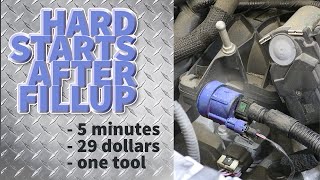
- A key symptom pointing to a bad purge valve is difficulty starting the vehicle immediately after getting gasoline.
- Always check the gas cap first; ensure it's tight and the seal is not cracked. This is the simplest possible fix.
- While you can drive the car with this code, you will not pass an emissions inspection until it is resolved.
What's Unique About the 2014-2021 Hyundai Tucson
The 2014-2021 Tucson spans two vehicle generations (late 2nd-gen and all of the 3rd-gen), but the P0441 fault is consistently tied to the same core components across the 2.0L Nu, 2.4L Theta II, and 1.6L Gamma Turbo engines. Across many Hyundai and Kia models of this era, the canister purge valve is a very frequent failure point. While some Hyundai models (like the Veloster and Accent) received a software update via TSB 17-01-019 to address an overly sensitive P0441 trigger, this was not issued for the Tucson, meaning the cause is almost always a mechanical failure of the purge valve itself.
Generation note: The 2014-2021 range covers the end of the second generation Tucson (2010-2015) and the entire third generation (2016-2021). The causes and primary fix (canister purge valve) for P0441 are consistent across both generations and their respective engines (2.0L, 2.4L, 1.6T).
Symptoms You May Notice
- Check Engine Light is on
- Difficulty starting the engine, especially right after refueling (a 'long crank' or 'hard start').
- Slightly rough or fluctuating idle.
- A faint fuel smell (in rare cases).
- Reduced fuel economy (minor).
- Replacing the charcoal canister when the problem is just the purge valve. The canister is more expensive and less likely to be the cause of P0441 unless you find charcoal pellets in the EVAP lines.
- Replacing the gas cap when the purge valve is stuck open. While a bad gas cap can cause other EVAP codes (like P0455 or P0456), the 'hard start after fueling' symptom is a strong pointer towards the purge valve. 🎬 See why your car struggles to start after refueling.
Most Likely Causes
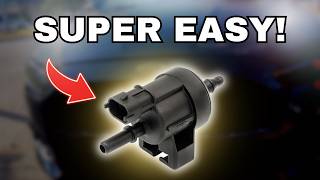
- Faulty Canister Purge Valve (Purge Control Solenoid Valve) 🔴 High Probability → Shop Vapor Canister This specific valve is a known high-failure item across many Hyundai and Kia models of this era, including the Elantra, Sonata, and Kia Sportage. It commonly gets stuck open due to internal wear or carbon buildup, creating a constant vacuum leak.
How to confirm: With the engine running at idle, disconnect the hose leading from the purge valve to the intake manifold. Place your finger over the port on the valve; if you feel a constant vacuum, the valve is stuck open and is faulty. The valve should be closed (no vacuum) at idle. Alternatively, you can try to blow through the disconnected valve (engine off); if air passes through, it is stuck open.
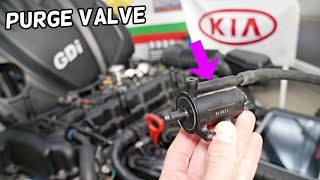
Typical fix: Replacement of the canister purge valve. It is located on the intake manifold and is easily accessible on the 2.0L and 2.4L engines. 🎬 Watch: How to locate and replace the purge control valve.
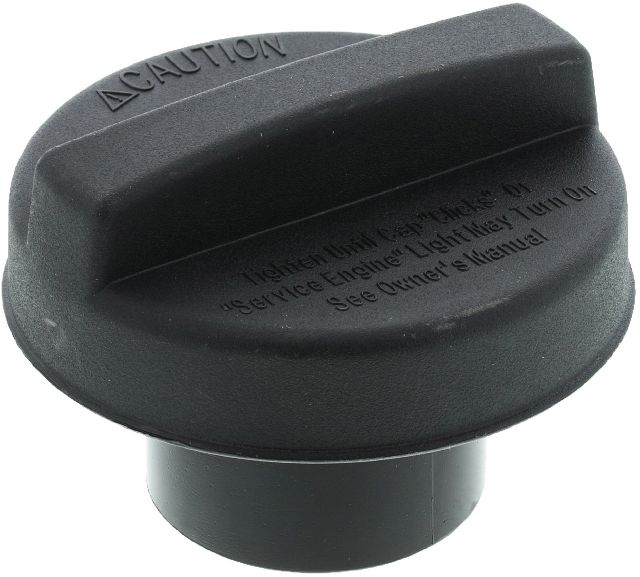
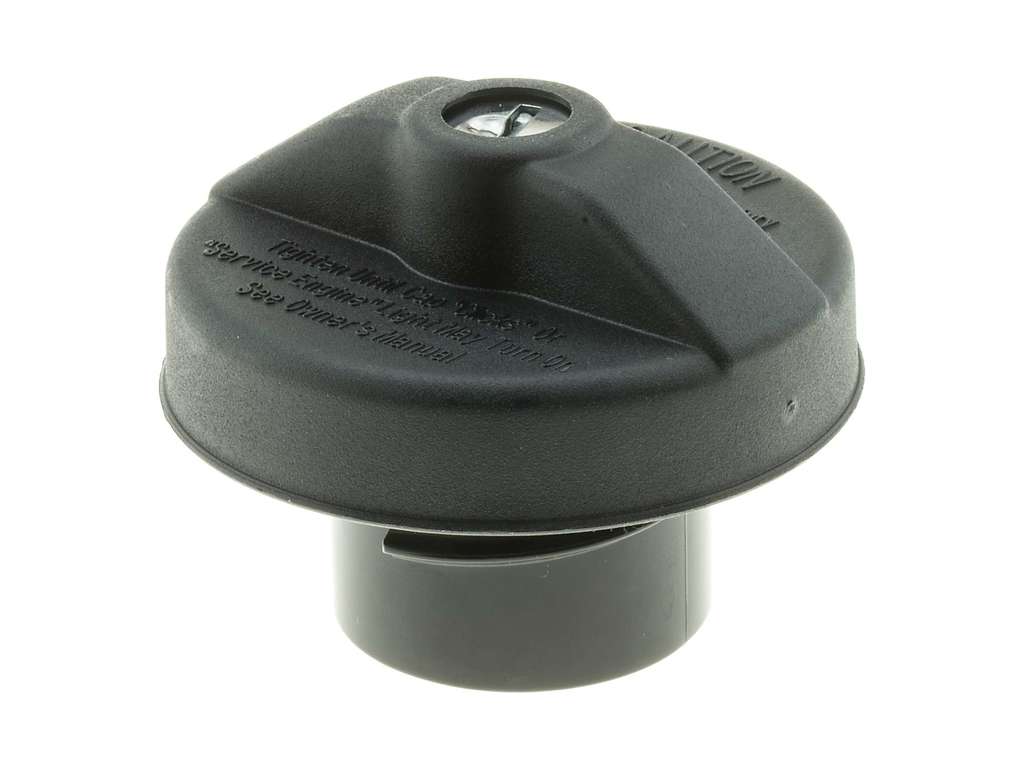
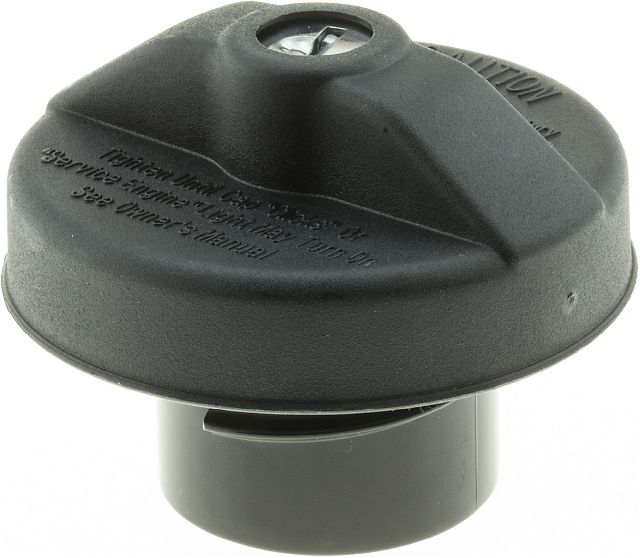
Est. part cost: $25-$70 - Loose or Faulty Gas Cap 🟡 Medium Probability → Shop Fuel Tank Cap The gas cap is a critical sealing point for the EVAP system. An old, worn, or improperly tightened cap can cause the system to fail its pressure/vacuum test, which can sometimes lead to a purge flow fault.
How to confirm: Inspect the gas cap for cracks or damage to the rubber O-ring seal. Ensure it is tightened until it clicks at least once. If the cap is old or looks worn, replacement is a cheap and easy first step.
Typical fix: Tighten or replace the gas cap. The common OEM part number is 31010-3L600.
Est. part cost: $15-$30 - Cracked or Disconnected EVAP Hoses ⚪ Low Probability The rubber hoses in the engine bay can become brittle and crack over time due to heat and age. A cracked hose connecting to the purge valve is a common failure point.
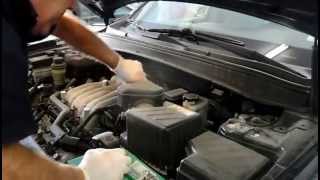
How to confirm: Visually inspect all rubber hoses connected to the purge valve and the charcoal canister for cracks, splits, or loose connections. Pay close attention to the bends and connection points. A smoke test, where smoke is pumped into the EVAP system, is the professional method to find hard-to-see leaks. 🎬 Watch: A professional mechanic's guide to diagnosing the P0441 code.
Typical fix: Replacement of the cracked or disconnected hose section.
Est. part cost: $10-$40
Rare But Worth Checking
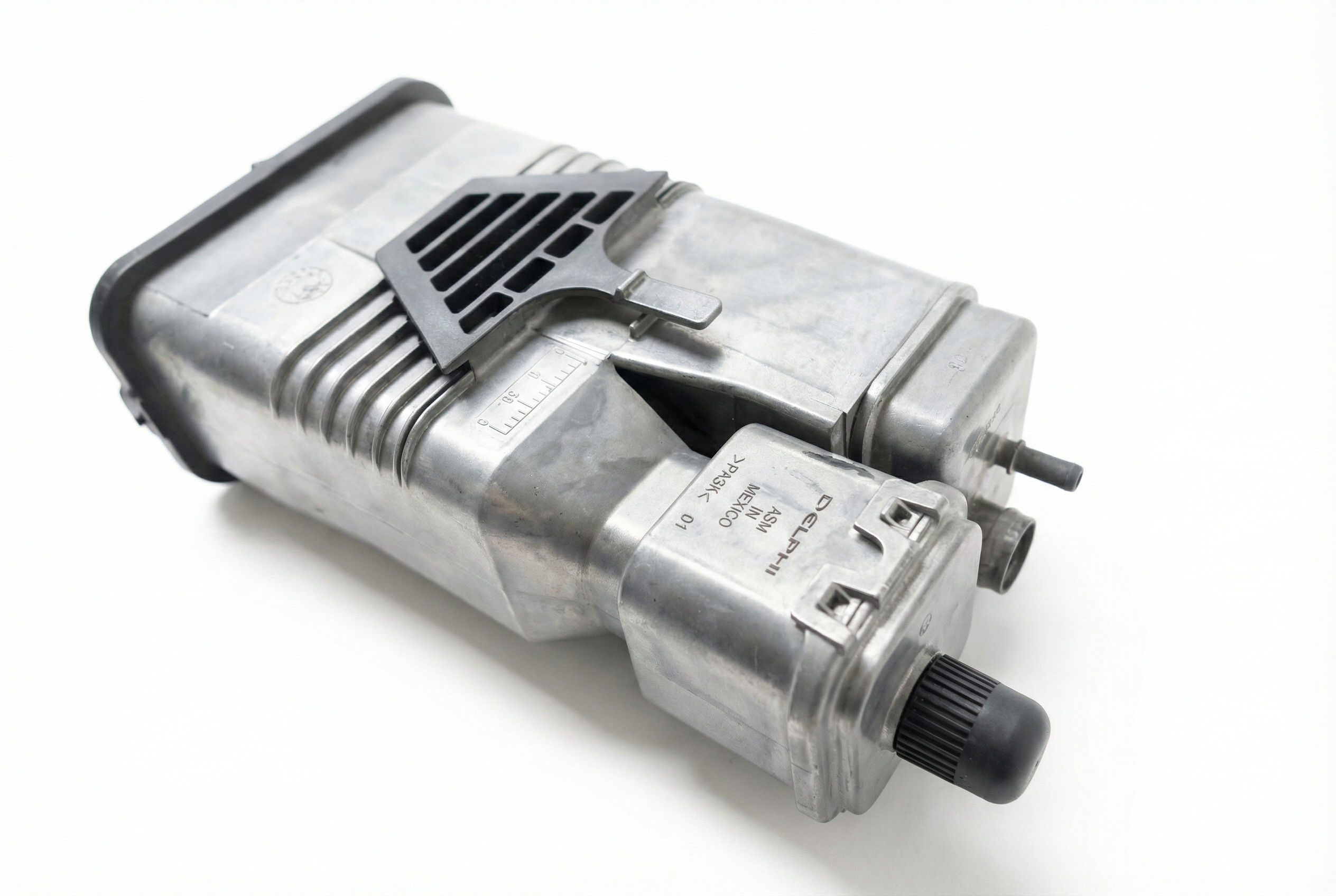
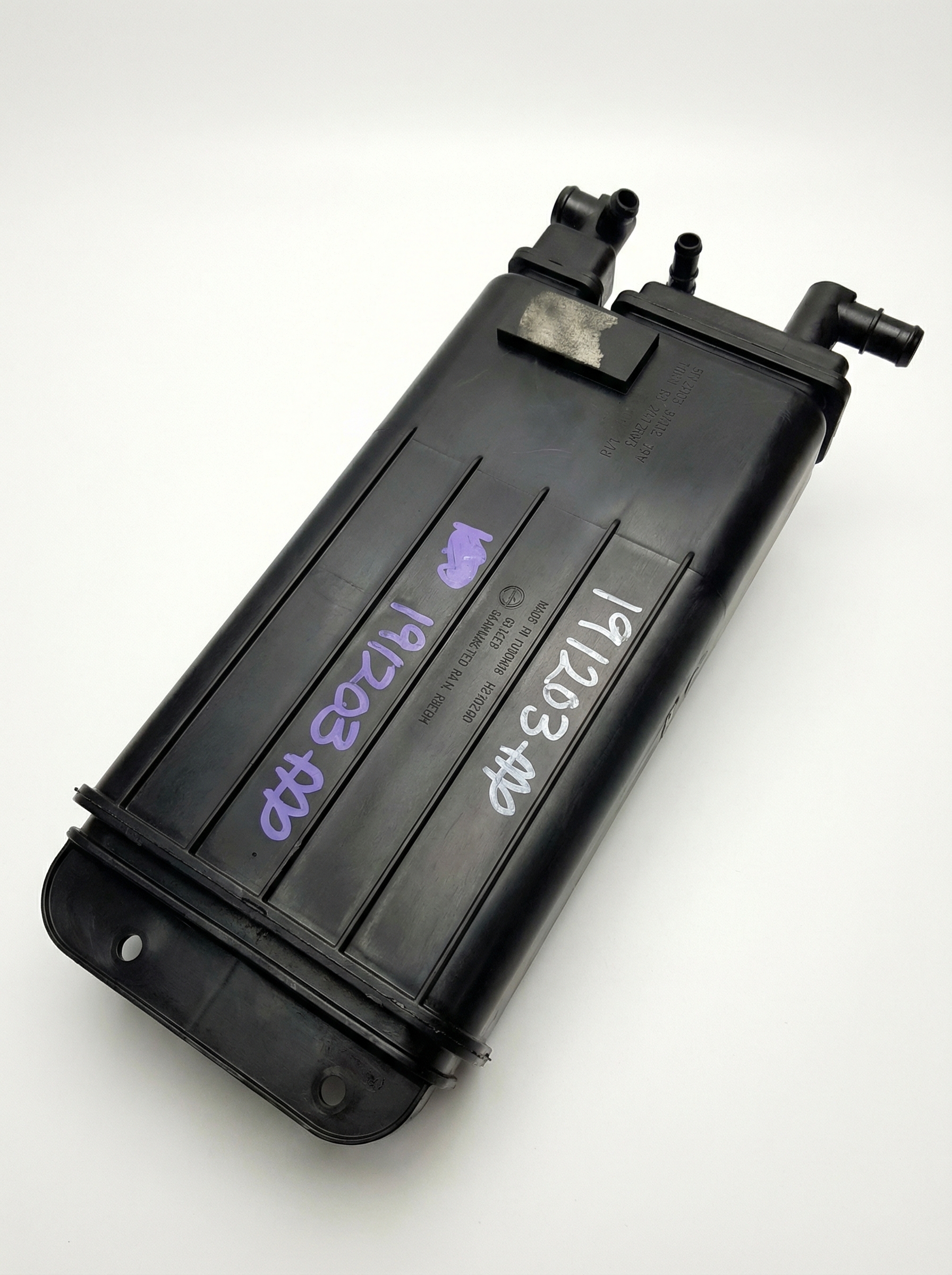
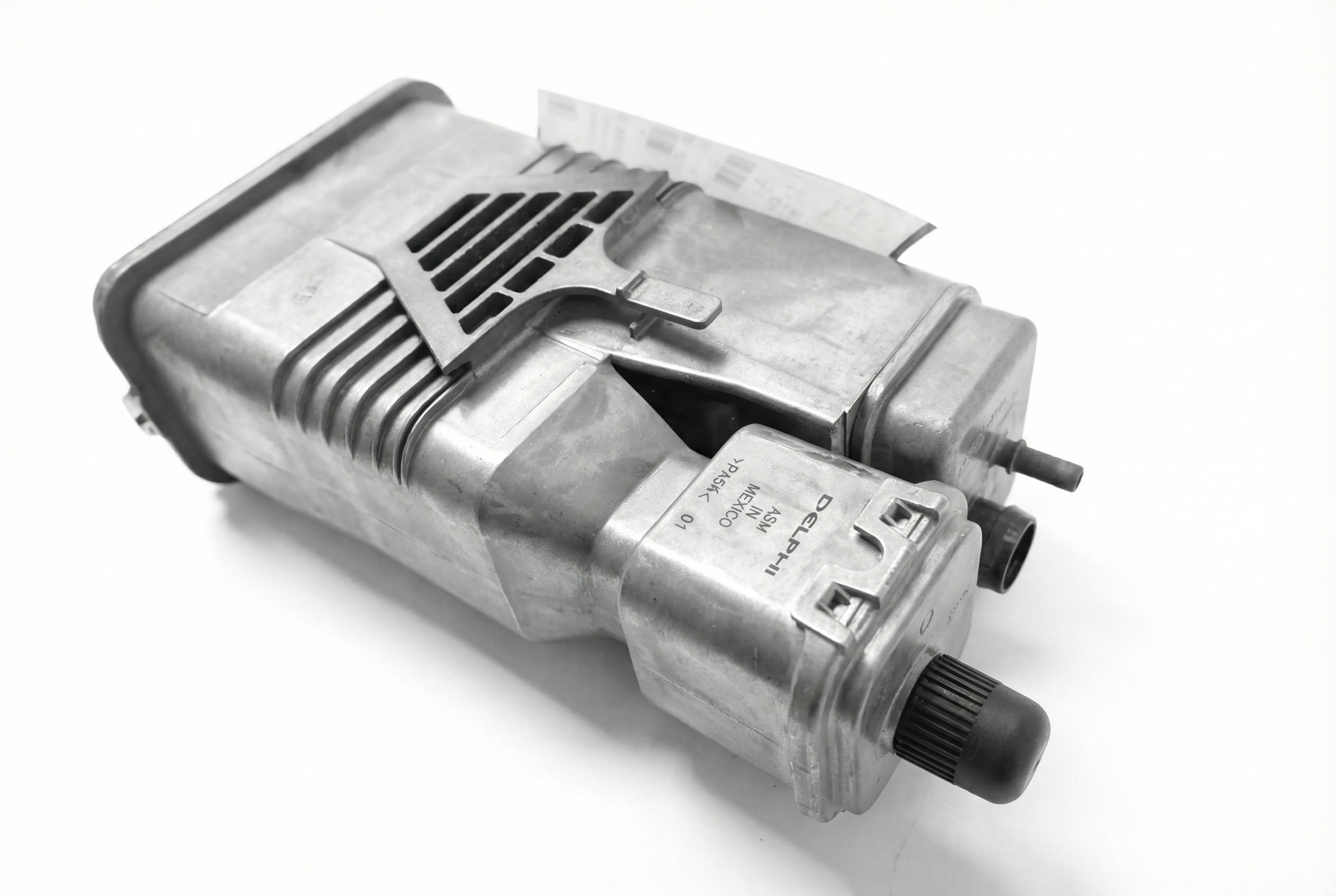
- Faulty Charcoal Canister or Vent Valve: → Shop Vapor Canister This is less common for a P0441 code, which points to flow *rate* issues, but a clogged canister (sometimes from overfilling the gas tank) or a stuck-closed vent valve can restrict flow and trigger the code. Check for this if a new purge valve doesn't solve the problem. Some owners have found charcoal pellets in the EVAP lines, indicating a failed canister.
- Faulty Fuel Tank Pressure Sensor: → Shop Fuel Tank If the sensor that reports the system's pressure to the computer fails, it can provide incorrect data, leading the computer to believe there is a purge flow problem when there isn't. This is rare and would likely be accompanied by other codes.
- Blown Fuse for EVAP System: The purge valve is an electronic solenoid that requires power. A blown fuse can prevent it from operating, causing a no-flow condition. The fuse may be labeled 'Sensors 2' or similar in the fuse box.
Diagnosis Steps
- Read the code with an OBD-II scanner to confirm P0441 is present.
- Inspect the gas cap for damage and ensure it is tight. If in doubt, replace it with OEM part 31010-3L600 as it's an inexpensive first step.
- Locate the canister purge valve on the engine's intake manifold. Visually inspect the connected hoses for any obvious cracks or loose connections.
- Test the purge valve. With the engine at idle, disconnect the vapor line running from the canister to the valve. Place your finger over the valve's inlet port. There should be no vacuum at idle. If there is, the valve is stuck open and needs replacement.
- If the valve passes the idle test, use the scanner's function to command the purge valve open. You should hear a click and feel vacuum. If not, check for power at the valve's electrical connector. If power is present but it doesn't open, the valve is faulty.
- If the valve seems okay, the next step is to check for leaks in the EVAP lines using a smoke machine.
- If no leaks are found, further diagnosis may be needed to check the charcoal canister, vent valve, and fuel tank pressure sensor, which may require professional assistance.
Parts You'll Likely Need
- Canister Purge Valve / Purge Control Solenoid
(OEM #28910-2E000)— This is the most frequent failure point for the P0441 code on this vehicle, often getting stuck open. This part number is listed for the 2.0L Tucson and also fits many other Hyundai/Kia models.
Trusted brands: Hyundai (Genuine), Bosch, Standard Motor Products (SMP)
OEM price range: $40-$70
Aftermarket price range: $25-$50 - Fuel Cap
(OEM #31010-3L600)— A faulty or loose gas cap can disrupt the EVAP system's integrity, sometimes contributing to this code. It's an easy and inexpensive part to rule out. This part fits a wide range of Hyundai vehicles from 2005-2021+.
Trusted brands: Hyundai (Genuine), Stant, Gates
OEM price range: $20-$40
Aftermarket price range: $15-$30
Related Codes That Often Appear With This One
- P0440 — P0440 indicates a general EVAP system malfunction. A purge flow problem (P0441) can be the root cause that also triggers the general system code.
- P0442 — P0442 indicates a small EVAP system leak. A faulty purge valve that isn't sealing properly can be interpreted by the system as a small leak, causing both codes to appear.
- P0455 / P0456 — These codes indicate a large or small leak, respectively. A stuck-open purge valve can be interpreted as a leak by the system, and a faulty gas cap is a very common cause for these codes as well.
Technical Service Bulletins (TSBs) & Recalls
- TSB 17-01-019 / Service Campaign T1T: While not for the Tucson, this TSB for the 2016 Veloster and Accent with the 1.6L GDI engine addresses a P0441 code via an ECM software update due to over-sensitivity. This highlights Hyundai's acknowledgment of P0441 logic issues, though the fix for the Tucson remains mechanical replacement.
- TSB 17-FL-001: A similar ECM update for P0441 was issued for 2012-2014 Velosters, further confirming a history of software-related triggers on other Hyundai platforms.
- Bulletin #5NP-S5Y6V-04: This manufacturer bulletin for the Veloster provides information regarding an ECM software update for DTC P0441 (Incorrect CPV Flow) and notes that there is no vehicle performance concern associated with this condition.
Platform-Specific Known Issues
- On the 2.0L Nu and 2.4L Theta II engines, the purge valve is very accessible, mounted directly on the top/side of the intake manifold with two bolts, making for a very quick replacement.
- Some owners on forums report the P0441 code appearing seasonally, particularly in the spring when weather changes, suggesting a sensor may be sensitive to moisture or temperature swings.
- NHTSA ODI #11434136 notes that P0441 can sometimes appear alongside P0507 (Idle air control system RPM higher than expected) and P0420 (Catalyst system below threshold) on related Hyundai models like the Sonata.
Mechanic-Grade Diagnostic Values
- Canister Purge Solenoid Valve (PCSV) coil resistance — expected: 18.9 to 22.5 Ohms (for 2018+ 2.0L models). Failure: A reading outside of this range, especially an open circuit (infinite resistance) or short (near zero), indicates a failed coil.
- Voltage at PCSV electrical connector — expected: ~12 Volts (Battery Voltage). Failure: Significantly low or no voltage with the key on indicates a problem in the power supply circuit, such as a blown fuse or broken wire, not a faulty valve.
Scan Tool Commands That Help
- Hyundai GDS (Global Diagnostic System): Active Test -> Canister Purge Solenoid Valve — This bidirectional control allows a technician to manually command the purge valve to open and close while the engine is running. It directly tests the solenoid's electrical and mechanical function to see if it's stuck or not responding to ECM commands.
- Hyundai GDS (Global Diagnostic System): EVAP Leakage Test — This is an automated, guided diagnostic function where the GDS commands the EVAP system to seal itself (by closing the vent valve) and then monitors for pressure changes to test the whole system's integrity.
Wiring & Ground Locations
- PCSV Connector — On the canister purge valve itself, which is mounted on or near the intake manifold in the engine bay.. This is the connection point for testing voltage supply and the command signal from the ECM. On a 2018 Tucson, the wires are yellow with a black tracer and solid white. A poor connection here can mimic a failed valve.
Real Owner Repair Stories
- AliExpress Product Review / User Story (2015 Hyundai Elantra (shares platform and PCSV with Tucson)) — Check Engine Light with code P0441.
❌ Tried (didn't work) Initial diagnosis considered the charcoal canister and gas cap.
✅ What actually fixed it The mechanic confirmed the issue was the solenoid-style purge valve (part 28910-2E000) being stuck closed. Replacing the valve resolved the code. - Reddit user comment (Hyundai (model not specified, but common issue)) — EVAP code, likely P0441 or similar.
❌ Tried (didn't work) A cheap, generic aftermarket purge valve.
✅ What actually fixed it Replacing the generic part with an OEM purge valve solved the issue. This highlights potential quality/compatibility issues with non-OEM parts for this specific component. - NHTSA ODI #10394376 (Hyundai Sonata) — An owner reported that whenever they added gas to the tank, the car would hard start and continually stall, producing code P0441.
- NHTSA ODI #11449571 (Hyundai Veloster) — A driver noted that an incorrect purge flow code P0441 was reported to be harmful and "eats away at your gas mileage."
OEM Part Supersession History
28910-2E000→29010-03AA0— Model year update / potential design change.
Heads up: Part 28910-2E000 is listed for the 2.0L Tucson up to 2018, while 29010-03AA0 is listed for 2018-2021 2.0L models. They may not be interchangeable. Always verify the part number with the vehicle's VIN.
Model Year Variations Within This Range
- 2014-2018 (2.0L Engine): Uses Canister Purge Valve P/N 28910-2E000.
- 2018-2021 (2.0L Engine): Uses Canister Purge Valve P/N 29010-03AA0. This indicates a change occurred during the 2018 model year.
- 2017+ (1.6L Turbo Engine): May use Canister Purge Valve P/N 28910-3L000, which is common on other 1.6L Hyundai models.
Diagnostic Flowchart
Other Known Issues on This Vehicle
Issues unrelated to this code that are worth knowing about as an owner of this generation:
- Engine Failure (Theta II, Nu, Gamma engines) 🔴 High — Widespread across multiple model years and engines, leading to major class-action lawsuits and recalls. Failures often relate to connecting rod bearing wear. (Ref: Multiple recalls (e.g., NHTSA 21V727000) and warranty extensions (Service Campaign 966/982) have been issued. Hyundai extended warranties for affected engines after installing a Knock Sensor Detection System (KSDS).)
- 7-Speed Dual-Clutch Transmission (DCT) Hesitation and Failure 🔴 High — Common on 1.6L Turbo models. Owners report severe hesitation from a stop, shuddering, and complete failure to engage gears. (Ref: Recall NHTSA 16V628000 was issued for 2016 models to reprogram the Transmission Control Module (TCM) due to acceleration issues.)
- Excessive Oil Consumption 🟠 Medium — Reported frequently by owners of various engine types, can be a precursor to more serious engine damage. (Ref: Often addressed as part of the broader engine failure investigations and warranty extensions.)
- ABS Module Fire Risk 🔴 High — Affects 2016-2021 models. The Anti-lock Brake (ABS) Hydraulic Electronic Control Unit (HECU) can corrode and short circuit, potentially causing an engine compartment fire even when the car is off. (Ref: Recall NHTSA 20V543000 (Hyundai recall 195) was issued. The remedy involves replacing a fuse and advising owners to park outdoors until repaired.)
Used vs. New Parts: Buying Guide for This Vehicle
When a used part is the smart pick: For this specific repair, a used part is not recommended. The canister purge valve is an electro-mechanical part with a high failure rate due to internal wear and contamination. Sourcing from a junkyard is a significant gamble.
Donor-vehicle mileage cap: roughly under 15000 miles for the part to have meaningful remaining life.
What to inspect on the donor part:
- If forced to buy used, source from the lowest mileage vehicle possible.
- Avoid parts from vehicles showing signs of poor maintenance or high engine bay contamination.
OEM-only on this vehicle (don't cheap out):
- Canister Purge Valve - While not strictly 'OEM-only', forum reports suggest that some generic aftermarket valves may not resolve the code, while the OEM part does. Given the small price difference, OEM is the safer choice.
Aftermarket brands forum-validated for this vehicle:
- Bosch
- Standard Motor Products (SMP)
- Dorman (widely available, but check for vehicle-specific reviews)
Brands owners have reported issues with on this vehicle:
- Unbranded, low-cost parts from online marketplaces can have inconsistent quality control and are a common source of unresolved issues.
Real Owner Stories
Aggregated from forums and TSBs cited above. Mileages and costs reflect what owners reported in those sources.
2017 Hyundai Tucson
Symptoms: The check engine light came on for code P0441. The owner noted the code appears consistently every spring.
What fixed it: The owner was advised to check the gas cap first and then the purge valve, following the standard diagnostic path for this platform.
Source hint: Reddit r/AskAMechanic - '2017 Hyundai Tucson, check engine light came on for code P0441'
2014-2021 Hyundai Tucson (General)
Symptoms: Error code P0441 present; discussion focused on the commonality of the purge valve failing.
What fixed it: Checking the gas cap first, then suspecting and likely replacing the purge valve.
Source hint: Hyundai Forums - 'Error code p0441'
2015 Hyundai Tucson
Symptoms: The check engine light illuminated and the vehicle was towed to a dealer. A mechanic retrieved fault codes P0014, P0300, P0301, and P0441.
What fixed it: In this severe instance, the owner was informed that the engine needed to be replaced, though P0441 was part of the initial diagnostic report.
Source hint: NHTSA ODI #11468646
Related OBD-II Codes
Frequently Asked Questions
Does TSB 17-01-019 apply to my 2014-2021 Hyundai Tucson?
What is the specific OEM part number for a replacement gas cap on my Tucson?
Why does my Tucson have a hard start only after I fill up the gas tank?
Is the P0441 code related to the major engine recalls on the 2.0L and 2.4L Tucson?
Where is the purge valve located on the 2.0L Nu engine?
Could the P0441 code be triggered by weather changes?
Helpful Videos
Used OEM Parts in Stock
New Aftermarket Parts Available


The information in this article is provided for general reference and educational purposes only. Vehicle specifications, procedures, and part compatibility can vary by production date, trim level, and region. Always consult your vehicle's factory service manual and verify part numbers before purchasing or performing repairs. Safety-critical components such as airbags, seat belts, and braking systems should be installed by a qualified professional.
- Hyundai Tucson:
- 🧭 Diagnostic Flowchart
- 🎬 Helpful Videos
- 🛍️ Shop This Part
- What's Unique About the 2014-2021 Hyundai Tucson
- Symptoms You May Notice
- Most Likely Causes
- Rare But Worth Checking
- Diagnosis Steps
- Parts You'll Likely Need
- Related Codes That Often Appear With This One
- Technical Service Bulletins (TSBs) & Recalls
- Platform-Specific Known Issues
- Mechanic-Grade Diagnostic Values
- Scan Tool Commands That Help
- Wiring & Ground Locations
- Real Owner Repair Stories
- OEM Part Supersession History
- Model Year Variations Within This Range
- Other Known Issues on This Vehicle
- Used vs. New Parts: Buying Guide for This Vehicle
- Real Owner Stories
- 2017 Hyundai Tucson
- 2014-2021 Hyundai Tucson (General)
- 2015 Hyundai Tucson
- Related OBD-II Codes
- Frequently Asked Questions
- 🎟️ Get 5% Off