

P0441 on 2016-2020 Kia Sorento: Incorrect Purge Flow Causes and Fixes
On a 2016-2020 Kia Sorento, the P0441 code is almost always caused by a faulty purge control valve. A common symptom is difficulty starting the engine right after refueling. Replacing the valve is a simple, DIY-friendly fix, with the part costing between $25 and $75. The most common OEM part number for this valve is 28910-2GGA0 or a similar variant.
- P0441 on a 2016-2020 Sorento is most likely a bad purge control valve.
- A key symptom is the engine struggling to start right after you fill up the gas tank.
- This is an easy and inexpensive DIY repair. The purge valve is located in the engine bay and is simple to replace.
- Before buying parts, check that the gas cap is tight and inspect the visible EVAP hoses for cracks.
- If a new purge valve doesn't fix the issue, a professional smoke test to find a system leak is the next step.
What's Unique About the 2016-2020 Kia Sorento
For this generation of Kia Sorento, like many other Kia and Hyundai vehicles, the P0441 code is exceptionally common and points overwhelmingly to a single, high-failure part: the purge control valve. While other Kia models like the Soul and Rio have known Technical Service Bulletins (TSBs) for an ECU software update to correct faulty P0441 logic (TSB ENG164), no specific, widely-cited TSB for this issue on the 2016-2020 Sorento has been found. Therefore, diagnosis on the Sorento typically starts and ends with the mechanical purge valve itself, which is known to stick or fail frequently.
Symptoms You May Notice
- Check Engine Light is on
- Difficulty starting the engine immediately after refueling
- Rough idle, especially after filling the gas tank
- Engine stalling after refueling
- Slight fuel odor (rare)
- Slight decrease in fuel economy
- Replacing the gas cap first without checking the purge valve.
- Replacing the charcoal canister when the issue is a simple stuck valve or cracked hose.
- Confusing the Purge Control Valve (in the engine bay) with the Canister Close Valve (near the fuel tank).
Most Likely Causes
- Faulty Purge Control Valve (PCV / Purge Solenoid) 🔴 High Probability This specific part has a very high failure rate across the Hyundai/Kia family for this era. The internal solenoid fails or the valve gets stuck open, allowing continuous, un-commanded vapor flow.
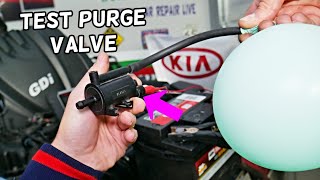
How to confirm: With the engine off, remove the valve (located on the engine intake manifold). Try to blow through it. A healthy valve should be closed, and no air should pass. If you can blow through it, it's stuck open and needs to be replaced. You can also apply 12V to the electrical pins to see if it clicks open and closed.
Typical fix: Replace the purge control valve. This is a straightforward job requiring minimal tools, often just a pair of pliers for the hose clamps and a 10mm socket.
Est. part cost: $25-$75 - Cracked or Disconnected EVAP Hoses 🟡 Medium Probability The rubber and plastic hoses in the engine bay are exposed to heat and can become brittle and crack over time, especially at the connection points to the purge valve.
How to confirm: Visually inspect all hoses connected to the purge valve and running along the intake manifold. Look for visible cracks, breaks, or loose connections. A smoke test is the professional method to find hard-to-see leaks.
Typical fix: Replace the damaged section of hose or re-secure the connection.
Est. part cost: $5-$20 - Faulty or Loose Gas Cap ⚪ Low Probability → Shop Fuel Tank Cap While more likely to cause a large leak code (P0455), a failing gas cap seal can sometimes contribute to incorrect flow readings. It's a simple and common first check.
How to confirm: Ensure the cap is tightened until it clicks multiple times. Inspect the rubber seal on the cap for cracks or damage. If in doubt, replacement is cheap.
Typical fix: Replace the gas cap, preferably with an OEM part to ensure a proper seal.
Est. part cost: $15-$30
Rare But Worth Checking
- Faulty Canister Close Valve (CCV): → Shop Vapor Canister This valve is located near the charcoal canister under the car, by the fuel tank. If it's stuck, it can prevent the system from purging correctly, but it's a much less common failure than the engine-bay purge valve for this specific code.
- Clogged Charcoal Canister: → Shop Vapor Canister This can happen from habitually overfilling the fuel tank ("topping off"), which forces liquid fuel into the canister and saturates the charcoal pellets. This creates a blockage rather than a leak.
- Outdated ECU Software: While no specific TSB for the Sorento is widely documented, other Kia models of the same era have TSBs (e.g., ENG164 for Soul/Rio) for P0441 that require a dealer software update to change the sensitivity of the monitoring logic. If all hardware checks out, this remains a remote possibility.
- Blown Fuse: The purge valve solenoid is powered by a fuse, often labeled 'Sensors' or 'SENSORS 2' in the engine bay fuse box. While rare, a blown fuse will prevent the valve from operating at all, which can trigger a P0441 code.
Diagnosis Steps
- Read the code with an OBD-II scanner to confirm P0441 is present.
- Check the gas cap. Ensure it is tight and the seal is not cracked or worn.
- Locate the purge control valve on the engine's intake manifold. It will have two hoses and an electrical connector.
- Visually inspect the EVAP hoses connected to and surrounding the purge valve for any obvious cracks, brittleness, or disconnections.
- Test the purge control valve. Disconnect it and attempt to blow through it. If air passes, the valve is stuck open and is faulty. This is the most common failure.
- If the valve holds air, you can test its electrical function by applying a 12V source to its pins and listening for a distinct click. No click means a failed solenoid. 🎬 Watch: How to test the purge control valve solenoid
- If the purge valve and hoses are good, the next step is a professional smoke test to check the entire EVAP system for hidden leaks.
- If no leaks are found, consider testing the canister close valve (near the fuel tank) or investigating a potential ECU software issue with a dealer.
Parts You'll Likely Need
- Purge Control Valve / Solenoid
(OEM #28910-2GGA0 (for 2.4L GDI), 28910-3C200 (for 3.3L V6). Verify with VIN.)— This is the most common failure point for code P0441 on this vehicle, often getting stuck open or closed.
Trusted brands: Kia (OEM), Hyundai (OEM), Dorman (e.g., 911-676), Standard Motor Products
OEM price range: $50-$90
Aftermarket price range: $25-$60
Technical Service Bulletins (TSBs) & Recalls
- TSB ENG164 (Rev 2): While not for the Sorento, this TSB for the Rio and Soul demonstrates Kia's history of addressing overly sensitive P0441 logic with ECU updates, which remains a theoretical possibility for the Sorento if hardware is confirmed good.
- Bulletin #TSB-ENG164R1: This manufacturer bulletin for the Rio model provides information related to an ECU software upgrade specifically for DTC P0441 logic improvement.
- Bulletin #TSB-ENG164: A combination TSB and Service Action for the Soul model that outlines an ECU upgrade to address P0441 logic issues.
- Bulletin #TSBENG164_R2: A revised bulletin for the Soul model confirming that the ECU upgrade for P0441 logic improvement is no longer a Service Action but remains a relevant technical reference for the Engine Control Unit.
Platform-Specific Known Issues
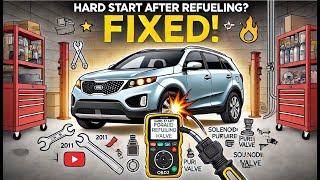
- Hard Start After Refueling: The most frequently reported owner experience with P0441 on this Sorento is the engine cranking for a long time or stalling right after filling the gas tank. This is a classic symptom of a purge valve stuck open, flooding the intake with fuel vapor. 🎬 See how to fix a hard start after refueling
Mechanic-Grade Diagnostic Values
- Canister Purge Solenoid Valve (PCSV) Coil Resistance — expected: 15 to 30 Ohms. Failure: A reading significantly outside this range indicates a bad internal coil.
- Fuel Tank Pressure Sensor (FTPS) Voltage at atmospheric pressure (0 PSI) — expected: ~2.5 Volts. Failure: A reading significantly different from 2.5V with the system at rest (e.g., gas cap off) points to a faulty sensor.
- Fuel Tank Pressure Sensor (FTPS) Voltage under vacuum/pressure — expected: 0.5 Volts at -0.54 PSI (vacuum); 4.5 Volts at +0.54 PSI (pressure). Failure: Sensor voltage does not change appropriately when vacuum or pressure is applied to the tank, indicating a failed sensor.
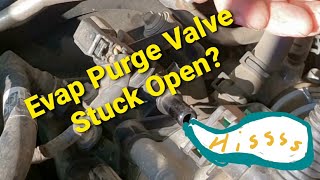
- Vacuum at Purge Valve Inlet Port (Engine Running, Connector Unplugged) — expected: 0 inHg (no vacuum). Failure: Any measurable vacuum indicates the valve is mechanically stuck open and defective.
Scan Tool Commands That Help
- Professional Scan Tool (e.g., Kia GDS, Autel, Snap-on): EVAP System Test / Purge Valve Activation / Vent Valve Activation — This bidirectional control is used to command the purge and vent valves to open or close manually. It allows a technician to verify the valves are responding to electrical commands (by listening for a click) and to seal the system for a smoke or pressure test.
Wiring & Ground Locations
- Fuse 'SENSORS 2' — In the under-hood fuse and relay box.. This fuse provides power to the purge control solenoid valve. If this fuse is blown, the valve will not operate, leading to a P0441 code. It is a critical first electrical check before replacing parts.
- Y104 — On the engine intake manifold; this is the purge control valve itself.. This is the official component designator for the EVAP canister purge valve on Kia wiring diagrams. Using this identifier helps ensure you are testing the correct wires for power, ground, and the control signal from the ECU.
Real Owner Repair Stories
- Reddit user comment in r/kia (2016 Kia Rio (platform relative)) — Check Engine Light with P0441 code.
❌ Tried (didn't work) The initial user only replaced the gas cap, which worked. A second user implies that one part alone may not have worked.
✅ What actually fixed it For one user, replacing only the gas cap resolved the issue. A second user replied that replacing both the gas cap and the purge flow valve finally fixed the problem for them after 1,000 miles of driving.
"I Checked Everything" — The Actual Cause
- If a smoke test confirms the EVAP system has no leaks, but the P0441 code persists, the most likely culprit is a faulty Fuel Tank Pressure Sensor (FTPS). The ECU relies on the FTPS to verify that purge flow is occurring by detecting a change in tank pressure (vacuum). If the sensor is bad and not reporting this change, the ECU will incorrectly flag a P0441 'Incorrect Purge Flow' code even if the mechanical flow is perfectly fine. Technicians may miss this by focusing solely on leaks and the high-failure purge valve.
Model Year Variations Within This Range
- 2016-2020: No significant variations affecting the diagnosis or repair of code P0441 were found within this model year range. The primary difference is the specific purge valve part number between the 2.4L I4 (28910-2GGA0) and 3.3L V6 (28910-3C200) engines, but the failure mode and diagnostic procedure are identical.
Diagnostic Flowchart
Other Known Issues on This Vehicle
Issues unrelated to this code that are worth knowing about as an owner of this generation:
- Theta II GDI Engine Failure 🔴 High — Widespread across 2.0L Turbo and 2.4L GDI engines. Can occur at various mileages, often between 60,000-120,000 miles. Subject to class-action lawsuits and recalls. (Ref: Multiple recalls (e.g., 17V-224) and a lifetime warranty extension for connecting rod bearing failure for original and subsequent owners. Also, a Knock Sensor Detection System (KSDS) software update campaign was initiated.)
- Excessive Oil Consumption 🟠 Medium — Commonly reported on the 2.4L GDI engine, often starting after 50,000 miles. Can be a precursor to more serious engine issues. (Ref: Related to the broader Theta II engine issues and lawsuits.)
- Tow Hitch Harness Fire Risk 🔴 High — Affects vehicles with factory or dealer-installed tow hitch wiring harnesses. Debris and moisture can cause a short circuit. (Ref: Recall 22V703000 (NHTSA) / Kia recall SC249.)
- Crankshaft Failure (3.3L V6) 🔴 High — Affects some 2017 models with the 3.3L V6 engine due to improper heat treatment of the crankshaft during manufacturing. (Ref: Recall 17V223000 (NHTSA).)
- Sticking Electric Steering Gear 🟡 Low — Reported in 2016-2018 models, where the steering wheel can feel 'stuck' on-center during sustained straight-line driving, requiring extra effort to initiate a turn. (Ref: No specific recall, but dealer repair involves replacing the electric steering gear and reprogramming.)
Used vs. New Parts: Buying Guide for This Vehicle
When a used part is the smart pick: Using a part from a salvage yard is generally not recommended for the core components of this repair (purge valve, gas cap). However, it can be a cost-effective option for non-wear items like mounting brackets or short, undamaged sections of EVAP hose.
Donor-vehicle mileage cap: roughly under 75000 miles for the part to have meaningful remaining life.
What to inspect on the donor part:
- For hoses, ensure they are still pliable, not brittle, and show no signs of cracking or swelling.
- Verify the donor vehicle is from a similar climate (avoid sun-baked parts from desert regions if possible).
- Inspect plastic connectors for broken tabs or corrosion on the pins.
OEM-only on this vehicle (don't cheap out):
- Gas Cap: Many forum users and mechanics strongly recommend using an OEM gas cap to ensure a perfect seal, as some aftermarket caps can cause persistent, small EVAP leak codes.
Aftermarket brands forum-validated for this vehicle:
- Dorman
- Standard Motor Products (SMP)
Brands owners have reported issues with on this vehicle:
- No specific brands were consistently cited in repair forums as problematic for this part on this vehicle.
Real Owner Stories
Aggregated from forums and TSBs cited above. Mileages and costs reflect what owners reported in those sources.
2016-2020 Kia Sorento
Symptoms: The engine would crank for a long time or stall immediately after filling the gas tank.
What fixed it: Replacing the purge control valve, which was stuck open and flooding the intake with vapor.
Source hint: vehicle_specific_issues section titled 'Hard Start After Refueling'
2007 Hyundai Santa Fe 2.7L (Platform Mate)
Symptoms: P0441 code present on the sister platform sharing similar EVAP logic.
What fixed it: Replacement of the purge control valve.
Source hint: Hyundai-Forums.com: A thread titled 'Code P0441 2007 Santa Fe 2.7L'
2016-2020 Kia Sorento
Symptoms: P0441 code and difficulty starting after refueling; community consensus describes it as a common failure.
What fixed it: A 10-15 minute DIY replacement of the purge control valve.
Source hint: SorentoForum.com / Kia-Forums.com
Hyundai Santa Fe 2.7 GLS
Symptoms: P0441 code persisted even after replacing the purge valve twice, suggesting other system leaks.
What fixed it: Investigation into hidden leaks beyond just the purge valve.
Source hint: Reddit r/MechanicAdvice: A thread titled 'P0441 Code Hyundai Santa Fe 2.7 GLS'
Related OBD-II Codes
Frequently Asked Questions
Why does my Kia Sorento struggle to start only after I fill up the gas tank?
Is there a specific TSB for the P0441 code on the 2016-2020 Sorento?
Can I use an aftermarket gas cap to clear the P0441 code on my Sorento?
Where is the purge control valve located on the 2.4L or 3.3L Sorento engine?
How can I quickly test if the purge solenoid is the cause of my P0441?
Are there any major engine recalls I should be aware of while fixing this EVAP issue?
Helpful Videos

The information in this article is provided for general reference and educational purposes only. Vehicle specifications, procedures, and part compatibility can vary by production date, trim level, and region. Always consult your vehicle's factory service manual and verify part numbers before purchasing or performing repairs. Safety-critical components such as airbags, seat belts, and braking systems should be installed by a qualified professional.
- Kia Sorento:
- 🧭 Diagnostic Flowchart
- 🎬 Helpful Videos
- What's Unique About the 2016-2020 Kia Sorento
- Symptoms You May Notice
- Most Likely Causes
- Rare But Worth Checking
- Diagnosis Steps
- Parts You'll Likely Need
- Technical Service Bulletins (TSBs) & Recalls
- Platform-Specific Known Issues
- Mechanic-Grade Diagnostic Values
- Scan Tool Commands That Help
- Wiring & Ground Locations
- Real Owner Repair Stories
- "I Checked Everything" — The Actual Cause
- Model Year Variations Within This Range
- Other Known Issues on This Vehicle
- Used vs. New Parts: Buying Guide for This Vehicle
- Real Owner Stories
- 2016-2020 Kia Sorento
- 2007 Hyundai Santa Fe 2.7L (Platform Mate)
- 2016-2020 Kia Sorento
- Hyundai Santa Fe 2.7 GLS
- Related OBD-II Codes
- Frequently Asked Questions
- 🎟️ Get 5% Off