

P0441 on 2013-2016 Mazda CX-5: Incorrect Purge Flow Causes and Fixes
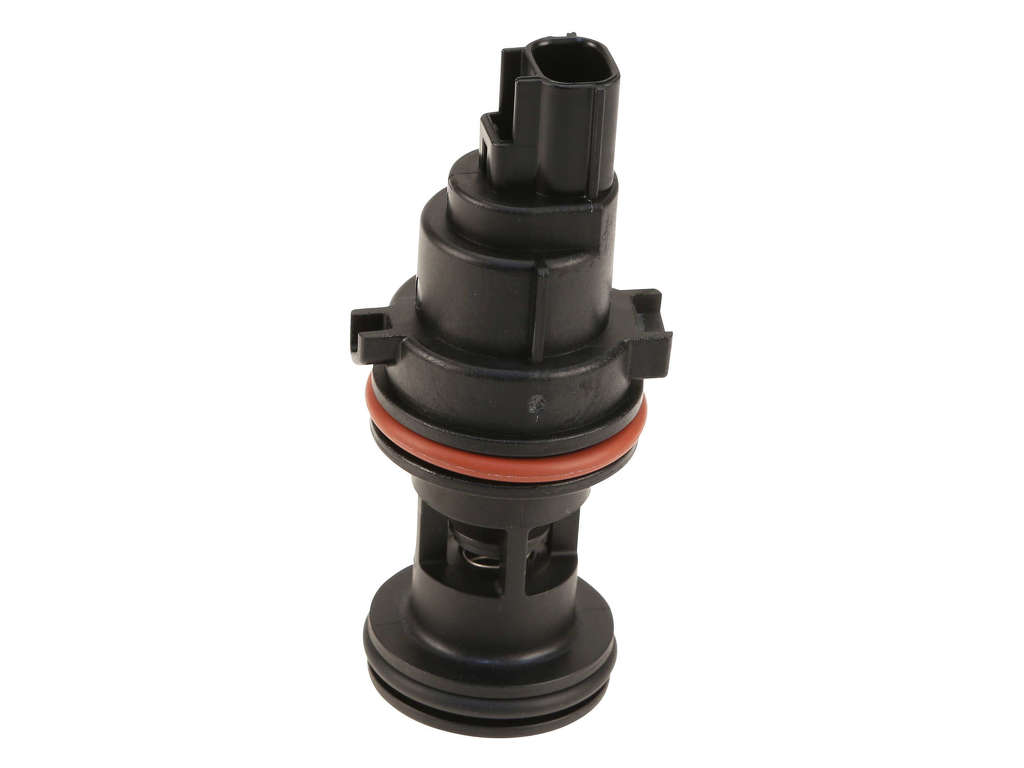
For the 2013-2016 Mazda CX-5, code P0441 is almost always caused by a failing vapor canister purge valve in the engine bay. Symptoms can include a rough idle, especially after 10-15 minutes of driving. Expect to pay around $60-$100 for an OEM part, with a DIY difficulty of 2/5.
- P0441 on a 2013-2016 CX-5 points to an incorrect flow in the EVAP system.
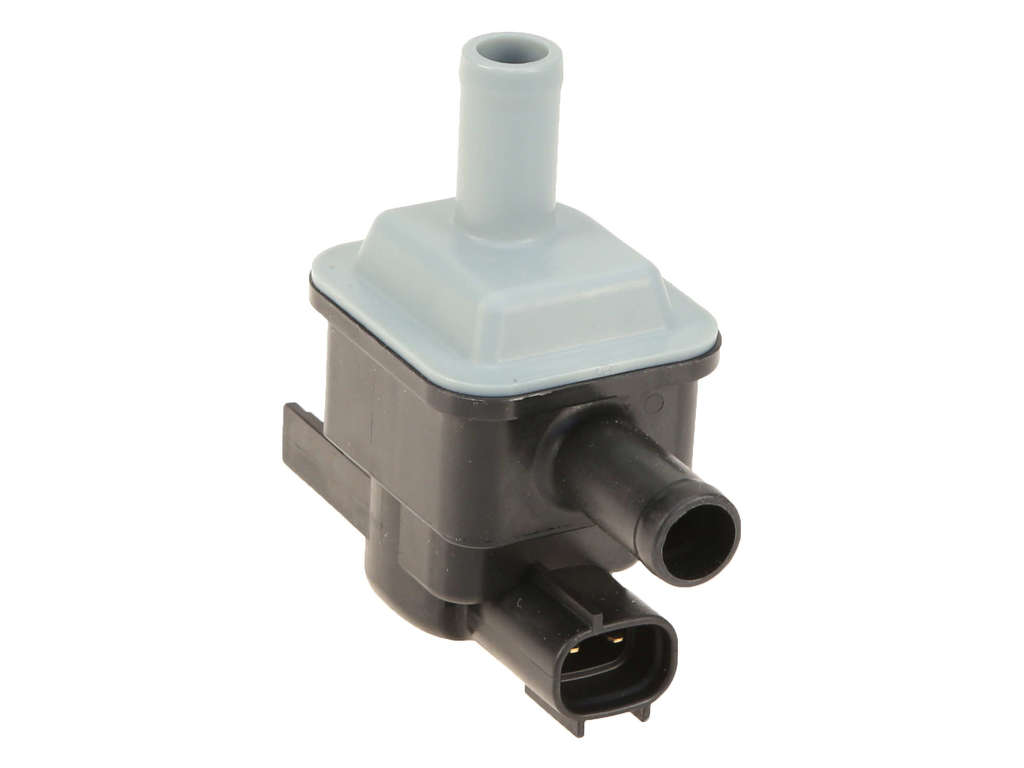
- The most likely cause by a wide margin is a faulty vapor canister purge valve (OEM Part #: PE01-18-751).
- Symptoms can include not only a Check Engine Light but also a rough or unstable idle, particularly after the engine has warmed up.
- Diagnosis is straightforward: check the gas cap, inspect hoses, and test the purge valve in the engine bay to see if it's stuck open.
- The fix is typically a simple DIY replacement of the purge valve, costing under $100 for the OEM part.
What's Unique About the 2013-2016 Mazda CX-5
The 2013-2016 Mazda CX-5 belongs to the first generation (KE) featuring Skyactiv technology. While the P0441 code is common across many brands, on this specific platform it is very frequently traced back to a simple failure of the vapor canister purge valve, sometimes called a purge solenoid. Some owners often report secondary symptoms like a rough or erratic idle that dips low, which can be a key indicator that the purge valve is the culprit, not just a random vacuum leak. Some owners note this hesitation and low idle is most noticeable after the car has been running for 10-15 minutes.
Symptoms You May Notice
- Check Engine Light is on
- Rough, erratic, or low idle, sometimes dipping to ~500 RPM
- Engine may stall at idle
- Slight fuel odor, especially after starting the vehicle
- Difficulty starting the engine, especially after refueling
- Replacing the oxygen (O2) sensors. O2 sensors are not related to the EVAP system's purge flow.
- Replacing the mass airflow (MAF) sensor. While a vacuum leak from a stuck-open purge valve can affect air-fuel ratio, the MAF sensor itself is rarely the cause of P0441.
Most Likely Causes
- Faulty Vapor Canister Purge Valve (Solenoid) 🔴 High Probability → Shop Vapor Canister This is the most common failure point for this code on Mazda vehicles of this era. The valve can get stuck open, causing a constant vacuum leak, or stuck closed, preventing any vapor flow. Forum users across multiple Mazda models report this part failing and causing P0441.
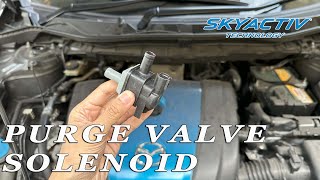
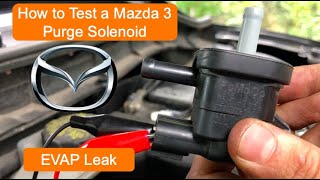
How to confirm: With the engine off, disconnect the purge valve's electrical connector and the hose leading to the intake manifold. Try to blow through the valve. If air passes through, the valve is stuck open and is faulty. The purge valve is normally closed when de-energized. 🎬 See how to test your purge valve with no tools.
Typical fix: Replace the vapor canister purge valve located in the engine bay.
Est. part cost: $50-$100 - Cracked or Disconnected EVAP Hoses 🟡 Medium Probability Hoses, especially the vacuum lines around the purge valve and intake manifold, can become brittle and crack over time due to heat and age.
How to confirm: Visually inspect all accessible EVAP hoses between the charcoal canister, the purge valve, and the engine intake for obvious cracks, breaks, or loose connections. A smoke test can be used to find less obvious leaks.
Typical fix: Replace the damaged section of hose.
Est. part cost: $5-$20 - Loose or Faulty Gas Cap ⚪ Low Probability → Shop Fuel Tank Cap While more commonly associated with large leak codes (P0455), a gas cap that isn't sealing properly can sometimes contribute to incorrect flow dynamics during the EVAP system's self-test. Some owners have reported that replacing the gas cap resolved their P0441 issue, even if the cap appeared visually okay.
How to confirm: Ensure the gas cap is tightened until it clicks at least once. Inspect the cap's rubber O-ring for cracks or damage. Consider replacing it as a low-cost first step if it is old.
Typical fix: Tighten or replace the gas cap.
Est. part cost: $15-$30
Rare But Worth Checking
- Failing Charcoal Canister: → Shop Vapor Canister This can happen if the vehicle is frequently 'topped off' during refueling, which can saturate the canister with liquid fuel. The canister can also break down internally, sending charcoal pellets into the purge lines and clogging the purge valve. If you find black pellets in the purge lines, the canister must be replaced. A strong fuel smell around the rear of the vehicle can also indicate a saturated canister.
- Faulty Canister Vent Valve: → Shop Vapor Canister Located near the charcoal canister, this valve allows fresh air into the system. If it's stuck closed, it can prevent proper purge flow. This part may be integrated with the vapor canister on some models.
- Fuel Pressure Sensor or Shutter Valve: → Shop Fuel Pressure Sensor Although documented on different models, manufacturer service bulletin #SA-059-25 notes that P0441 can sometimes be caused by concerns with the fuel pressure sensor or shutter valve operation.
Diagnosis Steps
- Check the Gas Cap: Ensure it is tight and the seal is in good condition. Clear the code and see if it returns. Some owners report success by simply replacing an old cap.
- Visually Inspect Hoses: Check the EVAP hoses in the engine bay near the purge valve for any obvious cracks, disconnections, or brittleness.
- Test the Purge Valve: Locate the purge valve in the engine bay. With the engine off, disconnect the electrical connector and hoses. Try to blow through it; no air should pass. If it does, the valve is stuck open and needs replacement.
- Check for Voltage: If the valve isn't stuck open, check the electrical connector for voltage with the key on. You can also use a scan tool to command the valve to open and close to verify its operation.
- Inspect Purge Lines for Blockage: Disconnect the lines and check for obstructions, especially small black charcoal pellets which indicate a failed charcoal canister.
- Perform a Smoke Test: If no issues are found, a smoke test is the most effective way to find hairline cracks or leaks in the EVAP system that aren't visually apparent. Manufacturer bulletin #01-002-18-3417 suggests this procedure to determine the location of leaks when P0441 is stored alongside other EVAP codes.
Parts You'll Likely Need
- Vapor Canister Purge Valve
(OEM #PE01-18-751)— This is the most frequent cause of P0441 on the 2013-2016 CX-5. It controls the flow of fuel vapors and is prone to sticking open or closed. This part is shared across many Mazda models from the era.
Trusted brands: Mazda (OEM), Standard Motor Products (e.g., CP737), Bosch
OEM price range: $60-$100
Aftermarket price range: $30-$70 - Charcoal Canister
(OEM #PY1J-13-96ZB or PE1C-13-96ZA)— Needed if the old canister is saturated with fuel or has failed internally, sending charcoal granules into the EVAP lines. Verify the correct part number with your vehicle's VIN.
Trusted brands: Mazda (OEM), Standard Motor Products
OEM price range: $190-$250
Aftermarket price range: $150-$200
Related Codes That Often Appear With This One
- P0442 — Indicates a small EVAP leak. A component causing incorrect flow (P0441) might also be creating a small leak.
- P0455 — Indicates a large EVAP leak. If the purge hose is completely disconnected, it could trigger both a flow fault and a large leak code.
- P0171 — Indicates the engine is running lean. If the purge valve is stuck open, it creates a vacuum leak that allows unmetered air into the engine, which can cause a lean condition.
Technical Service Bulletins (TSBs) & Recalls
- 01-002/18 - This multi-model Mazda TSB provides a diagnostic procedure for several EVAP codes, including P0441. It specifically instructs technicians to check the gas-tightness of the purge valve when P0441 is stored.
- 01-002-18-3417 - This bulletin notes that some vehicles may have MIL illumination with DTC P0441, P0442, P0455, or P0456 stored in memory and provides a repair procedure to determine the location of the evaporative system leak.
- SA-059-25 - A manufacturer service bulletin indicating that P0441 may be caused by a concern with the fuel pressure sensor or shutter valve operation.
Mechanic-Grade Diagnostic Values
- Purge Valve Solenoid Coil Resistance — expected: 15 to 30 Ohms. Failure: A reading far outside this range indicates a damaged internal electrical circuit in the valve.
- Short-Term Fuel Trim (STFT) via Scan Tool — expected: When the purge valve is commanded open with a bidirectional scanner, the STFT value should go negative.. Failure: If STFT does not change when the valve is commanded open, it suggests the valve is stuck closed or there is a blockage. If STFT is already negative at idle with the valve commanded closed, the valve is likely stuck open.
Hidden / Shadow Codes Worth Checking
- Mode 6, Test ID $39, $3A: These Test IDs provide raw data from the PCM's self-tests for the EVAP system, including purge flow and system leak checks. These values can show if the system is on the edge of passing or failing its self-test, even before a DTC is set. (see via Requires an OBD-II scanner with Mode 6 functionality. Interpreting the specific Component IDs (CID) and values may require a factory service manual.)
Scan Tool Commands That Help
- Mazda Modular Diagnostic System (M-MDS/IDS): Simulation Function [PRG_DUTY] — This function allows a technician to command the purge solenoid valve to a specific duty cycle (e.g., 0% to 100%) while monitoring the Short-Term Fuel Trim (SHRT_FUEL_TRIM11) PID. It's used to verify if the valve is responding to PCM commands and if fuel vapor is flowing.
- Professional Bidirectional Scanner (e.g., Autel, Launch): EVAP System Active Test / Purge Valve ON/OFF — This command manually opens and closes the purge valve while the engine is running. It provides an immediate way to confirm if the valve is physically working and to observe its effect on engine vacuum and fuel trims, helping to quickly isolate a stuck or non-responsive valve.
Wiring & Ground Locations
- Purge Solenoid Valve Connector — On the purge solenoid valve, located at the right rear of the engine.. This is the connection point for testing voltage and resistance of the purge valve. One pin (Terminal B) should receive power from the main relay, and the other (Terminal A) is the control circuit to the PCM (Terminal 1AW). An open or short in this wiring can mimic a failed valve.
- G07 — A primary engine ground point located at the left rear of the engine.. A poor engine ground can cause a variety of electrical issues and incorrect sensor readings. While not a direct cause of P0441, ensuring this ground is clean and tight is a good practice when diagnosing any electrical fault in the engine bay.
- Transmission Ground — A ground cable from the negative battery terminal bolts to a bracket on top of the transmission.. This is a main ground path for the powertrain. A loose or corroded connection here can lead to intermittent and difficult-to-diagnose electrical problems, potentially affecting the PCM's operation and its control over components like the purge valve.
Real Owner Repair Stories
- YouTube channel 'KY Home Garage' (2007 Mazda 3 (similar EVAP system design)) — P0441 code present.
❌ Tried (didn't work) The technician performed a full diagnostic, including testing the purge valve (which passed the bench test), smoke testing the system (no leaks found), and checking the vent valve and leak detection pump.
✅ What actually fixed it The issue was determined to be intermittent. All components tested correctly at the time of diagnosis, but one was failing sporadically. The technician could not justify replacing parts without a confirmed failure and advised the customer to return if the code reappeared, suspecting either the purge valve or the leak detection pump was failing under specific conditions not present during the test. - NHTSA ODI #10162479 — An owner reported bringing their vehicle in for a specific P0441 code (EVAP Emissions Control-Incorrect Purge Flow), but noted that the dealership mechanic instead pulled a code for a slipping torque converter (P0741), highlighting the importance of verifying the specific code stored.
OEM Part Supersession History
PE01-18-751→PE01-18-751 is the current part number.— This part number has remained consistent and fits a wide range of Mazda vehicles from 2012 through 2025.
Diagnostic Flowchart
Other Known Issues on This Vehicle
Issues unrelated to this code that are worth knowing about as an owner of this generation:
- Daytime Running Light (DRL) Failure 🟡 Low — Common on 2016 models. The LED DRLs can flicker or fail completely due to a faulty sealing gasket on the wiring connector. (Ref: Recall 4320A (NHTSA Campaign ID: 20V062000))
- Cracked Windshield 🟠 Medium — Owners report windshields are prone to cracking from minor impacts or even stress, seemingly without an impact.
- Failing Power Liftgate Struts/Motors 🟠 Medium — On models equipped with a power liftgate, the motorized struts can fail, causing grinding noises, jerky operation, or complete failure to open/close. Older models had a recall for non-powered struts corroding. (Ref: TSB 09-006/24 addresses noises; TSB 09-013/25 addresses switch corrosion.)
- Cracked Cylinder Head (2.5L w/ Cylinder Deactivation) 🔴 High — Primarily affects later models (2018+) but is a known, severe issue with the Skyactiv engine design where cracks can form near the exhaust manifold, causing coolant and oil leaks. (Ref: Multiple TSBs exist, including MC-10200939-0001 and others related to coolant leaks.)
- Shifter Assembly Park Sensor Failure 🟡 Low — A faulty switch in the shifter assembly can prevent the vehicle from recognizing it is in Park, causing the accessories/radio to stay on and drain the battery.
- Noisy Rear Wheel Bearings 🟠 Medium — Premature failure of rear wheel bearings, causing a humming or grinding noise that increases with speed, is a commonly reported issue.
Used vs. New Parts: Buying Guide for This Vehicle
When a used part is the smart pick: For this specific repair, buying a used part is generally not recommended. The primary cause, the purge valve, is a known failure item that wears out. A used valve from a junkyard has an unknown history and may fail soon after installation. Other EVAP components like hoses are also prone to age-related cracking and should be purchased new.
Donor-vehicle mileage cap: roughly under 50000 miles for the part to have meaningful remaining life.
What to inspect on the donor part:
- If considering a used charcoal canister, ensure the donor vehicle shows no signs of front or rear collision damage.
- Ask for the VIN of the donor car to verify it wasn't part of a flood or fire sale.
- Visually inspect any used part for cracks, brittleness, or signs of contamination (like fuel saturation on a canister).
OEM-only on this vehicle (don't cheap out):
- Vapor Canister Purge Valve: While some aftermarket brands are reliable, many forum users across Mazda platforms report that using a non-OEM purge valve can cause the P0441 code to return. Sticking with the genuine Mazda part (PE01-18-751) is the safest bet for a one-time fix.
Aftermarket brands forum-validated for this vehicle:
- Bosch
- Standard Motor Products (SMP)
- Dorman
Brands owners have reported issues with on this vehicle:
- Unbranded, no-name parts from online marketplaces are frequently cited as being unreliable or failing shortly after installation.
Real Owner Stories
Aggregated from forums and TSBs cited above. Mileages and costs reflect what owners reported in those sources.
2015 Mazda CX-5
Symptoms: Check engine light for a small EVAP leak, gurgling sound when filling the fuel tank to full, followed by a small amount of gas spilling out. Slight gas smell near the gas cap.
What fixed it: The initial attempt to fix it with a new gas cap did not work.
Source hint: Reddit r/MechanicAdvice
2008 Mazdaspeed3
Symptoms: Persistent P0441 code (EVAP System Incorrect Purge Flow).
What fixed it: Replacing the gas cap after a non-OEM purge valve replacement failed to resolve the issue.
Source hint: MazdaSpeeds.org - Thread '[SOLVED] - P0441 EVP System Incorrect Purge Flow'
2013-2016 Mazda CX-5
Symptoms: Check engine light accompanied by occasional sporadic drops in idle and a strong fuel smell after starting the vehicle.
What fixed it: Community consensus points toward replacing the purge valve or checking the charcoal canister.
Source hint: Reddit r/mechanic - Thread 'P0441, making occasional sporadic drops in idle sometimes.'
Related OBD-II Codes
Frequently Asked Questions
Is there a specific TSB for the P0441 code on my Mazda CX-5?
Which specific purge valve part number is used in the 2013-2016 Mazda CX-5?
Why does my CX-5 idle roughly and dip to 500 RPM when the check engine light is on?
Could my gas cap be causing the P0441 code even if it looks okay?
I see charcoal pellets in my EVAP lines; what does this mean?
Is the P0441 code related to the Daytime Running Light recall on my 2016 CX-5?
Helpful Videos

We Have This Part in Stock


The information in this article is provided for general reference and educational purposes only. Vehicle specifications, procedures, and part compatibility can vary by production date, trim level, and region. Always consult your vehicle's factory service manual and verify part numbers before purchasing or performing repairs. Safety-critical components such as airbags, seat belts, and braking systems should be installed by a qualified professional.
- Mazda CX-5:
- 🧭 Diagnostic Flowchart
- 🎬 Helpful Videos
- 🛍️ Shop This Part
- What's Unique About the 2013-2016 Mazda CX-5
- Symptoms You May Notice
- Most Likely Causes
- Rare But Worth Checking
- Diagnosis Steps
- Parts You'll Likely Need
- Related Codes That Often Appear With This One
- Technical Service Bulletins (TSBs) & Recalls
- Mechanic-Grade Diagnostic Values
- Hidden / Shadow Codes Worth Checking
- Scan Tool Commands That Help
- Wiring & Ground Locations
- Real Owner Repair Stories
- OEM Part Supersession History
- Other Known Issues on This Vehicle
- Used vs. New Parts: Buying Guide for This Vehicle
- Real Owner Stories
- 2015 Mazda CX-5
- 2008 Mazdaspeed3
- 2013-2016 Mazda CX-5
- Related OBD-II Codes
- Frequently Asked Questions
- 🎟️ Get 5% Off