

P0441 on 2006-2010 Mazda MX-5: Incorrect Purge Flow Causes and Fixes
For the 2006-2010 (NC) Mazda MX-5, code P0441 is most often caused by a faulty EVAP purge solenoid valve. This is a relatively inexpensive part, costing around $80-$120 for an OEM replacement, and is easy to replace for a DIYer. In many cases, this is the only component that needs to be addressed.
- P0441 on a 2006-2010 MX-5 almost always points to a problem with the purge solenoid valve.
- The purge valve is easy to access in the engine bay, making this a very DIY-friendly fix.
- Before replacing parts, try the simple step of cleaning the gas cap seal and fuel filler neck, as this has resolved the issue for some owners.
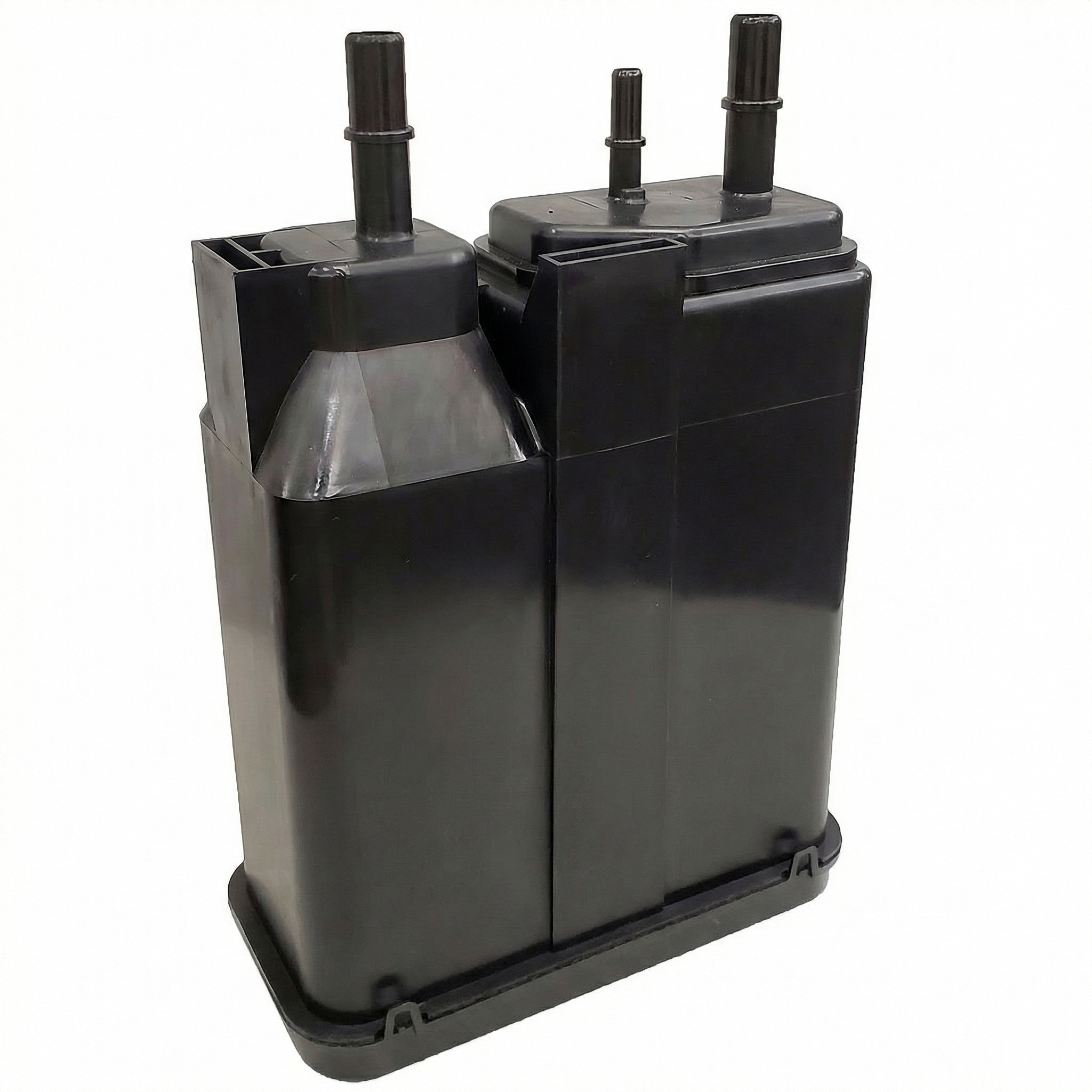
- If you find black charcoal pellets in the EVAP lines, the charcoal canister must be replaced along with the purge valve.
- Difficulty refueling (gas pump clicking off) is a strong indicator of a clogged charcoal canister or vent line, not just a faulty purge valve.
What's Unique About the 2006-2010 Mazda MX-5
The 2006-2010 Mazda MX-5, known as the NC generation, has a straightforward EVAP system. The most common failure point leading to a P0441 code is the purge solenoid valve, which is conveniently located in the engine bay near the oil dipstick, making it very accessible for diagnosis and replacement. While other EVAP codes can be caused by a loose gas cap, P0441 specifically points to a flow problem, making the purge valve the primary suspect on this vehicle.
Diagnostic Flowchart
Tap your situation to follow the diagnostic path that matches what you're seeing on this vehicle.
Symptoms You May Notice
- Check Engine Light is on
- A slight fuel odor may be noticeable, especially when the car is parked.
- In some cases, difficulty starting or a rough idle immediately after refueling.
- Difficulty refueling where the gas pump nozzle clicks off repeatedly before the tank is full. This is a classic sign of a clogged canister or vent path.
- Replacing the gas cap. While a loose or faulty gas cap is a common cause for general EVAP leak codes like P0455 or P0457, it is not a typical cause for an 'Incorrect Purge Flow' (P0441) code, which points to a functional problem rather than a system seal leak. However, some owners have reported fixing the code by simply cleaning the gas cap seal and filler neck.
Most Likely Causes
- Faulty Purge Solenoid Valve 🔴 High Probability → Shop Vapor Canister This is the most frequently reported failure part for this specific code on the NC Miata and other Mazdas of the era. The valve can get stuck open or closed, or fail to operate when commanded by the ECU.
How to confirm: The valve is normally closed. Disconnect the hoses and try to blow through it; no air should pass. Apply 12V power to its electrical connector; you should hear a click and be able to blow through it. Also check the wiring and connector for corrosion or damage. A bidirectional scan tool can also command the valve closed while monitoring fuel tank pressure; a drop in pressure indicates the valve is stuck open.
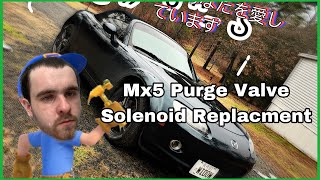
Typical fix: Replace the purge solenoid valve. It is located in the engine bay on the driver's side, near the oil dipstick, held by a rubber mount. 🎬 Watch this step-by-step guide to replacing the purge valve.
Est. part cost: $80-$140 - Cracked or Disconnected EVAP Hoses 🟡 Medium Probability The vacuum hoses connected to the purge valve can become brittle and crack over time due to engine heat and age, causing a vacuum leak or a blockage.
How to confirm: Visually inspect the hoses running to and from the purge solenoid valve for any visible cracks, loose connections, or blockages. A smoke test can be used to find leaks that are not visible.
Typical fix: Replace the damaged section of hose.
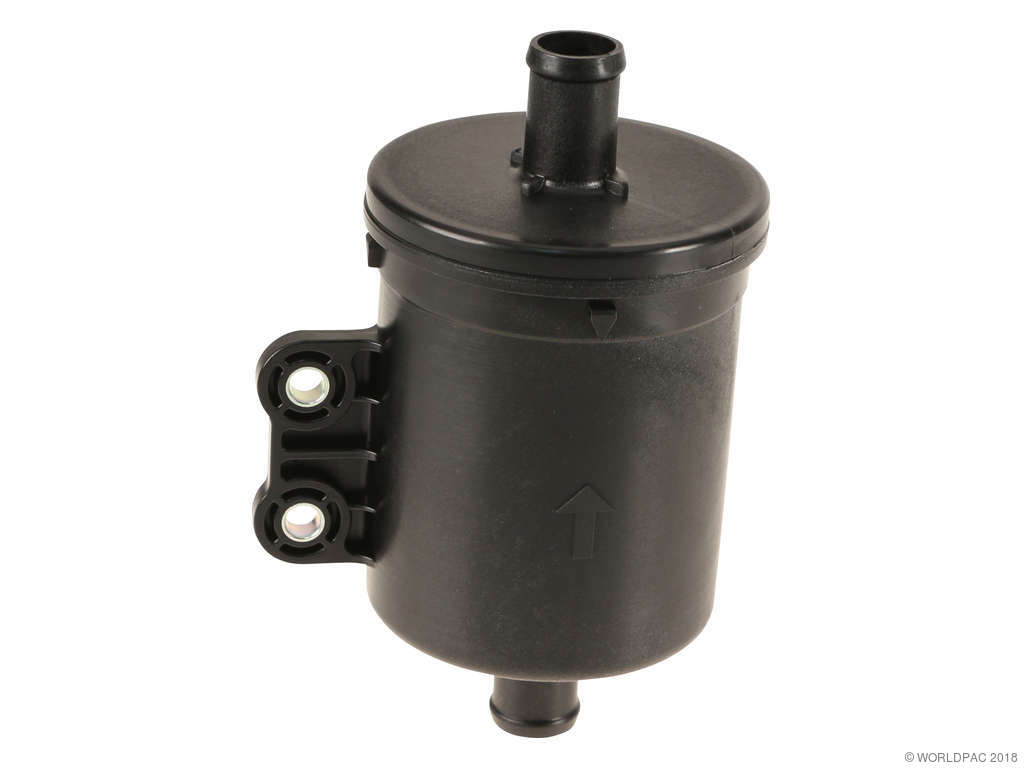
Est. part cost: $10-$30 - Clogged Charcoal Canister ⚪ Low Probability → Shop Vapor Canister Over-filling the fuel tank can saturate the canister with liquid fuel, causing it to fail. Over time, charcoal pellets from an aging canister can also break loose and travel down the purge line, clogging the purge valve or the line itself.
How to confirm: When removing the purge valve, check its inlet and the attached hose for black charcoal pellets. If pellets are present, the canister is failing and needs replacement. Another key symptom is the gas pump repeatedly shutting off during refueling.
Typical fix: Replace the charcoal canister (Part # L3P5-13-970) and clean out or replace the affected EVAP lines.
Est. part cost: $150-$250
Rare But Worth Checking
- Faulty Fuel Tank Pressure Sensor: → Shop Fuel Tank A bad pressure sensor can give the computer incorrect data about the EVAP system's status, leading to a P0441 code. However, this will usually be accompanied by other pressure-related codes (e.g., P0451, P0452, P0453).
- Wiring Issue or Blown Fuse: The purge solenoid requires power to operate. A short or open in the wiring, or a blown fuse in the circuit, can prevent the valve from opening and trigger a P0441 code. It's important to check for voltage at the connector before replacing the valve.
Diagnosis Steps
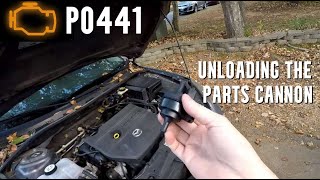
- Read the code with an OBD-II scanner to confirm P0441 is present. 🎬 See how to diagnose and fix incorrect purge flow codes.
- Visually inspect the engine bay on the driver's side near the oil dipstick for the purge solenoid valve.
- Check the vacuum hoses connected to the purge valve for any cracks, brittleness, or loose connections.
- Test the purge solenoid valve. Disconnect it and check if it's stuck open or closed. With the engine off, you should not be able to blow through it. Apply 12V and ground to the pins; it should click open, allowing air to pass.
- While the valve is removed, inspect its ports and the attached hoses for black charcoal pellets. Their presence confirms a failed charcoal canister.
- If the valve tests good and no pellets are found, check for voltage at the valve's electrical connector with the key on to rule out a wiring or fuse issue.
- If no issues are found with the valve or lines, the next step would be a smoke test of the EVAP system to check for obscure leaks.
- As a last resort, check the wiring and connector for the purge valve for damage or corrosion.
Parts You'll Likely Need
- Vapor Canister Purge Solenoid Valve
(OEM #LFG1-18-741B)— This is the most common failure part for a P0441 code on this vehicle. It controls the flow of fuel vapors and is prone to sticking or failing electronically. This part number supersedes LFG1-18-741 and LFG1-18-741A. A later part number, L518-18-741, is also listed for 2009+ models.
Trusted brands: Mazda (Genuine OEM), Dorman, Standard Motor Products
OEM price range: $80-$120
Aftermarket price range: $40-$70
Related Codes That Often Appear With This One
- P0442 — Indicates a small leak in the EVAP system, which could be related to the same faulty component causing the incorrect flow.
- P0455 — Indicates a large leak in the EVAP system. A purge valve stuck open can sometimes be interpreted by the system as a large leak.
- P2187 — Indicates the system is too lean at idle. A stuck-open purge valve can cause this by creating a vacuum leak, allowing unmetered air and fuel vapors into the intake manifold. 🎬 Watch: Fixing P2187 and P0455 codes on an NC Miata.
- P0456 — Indicates a very small leak in the EVAP system. All these codes point to the same system and are mentioned in Mazda's TSB. [⭐ MANUFACTURER TSB — highest authority]
Technical Service Bulletins (TSBs) & Recalls
- 01-002-18-3417: Addresses MIL illumination with DTCs P0441, P0442, P0455, or P0456 and provides a procedure to determine the location of an evaporative system leak.
Platform-Specific Known Issues
- Mazda issued Technical Service Bulletin (TSB) #01-002-18-3417 which includes P0441 and outlines a diagnostic procedure for finding leaks in the evaporative system. [⭐ MANUFACTURER TSB — highest authority]
- On the Miata.net forums, multiple owners confirm that replacing the purge solenoid valve is the most common and effective fix for P0441 on the NC generation.
- A user on MiataTurbo.net shared an experience where after replacing the solenoid and fixing an exhaust leak without success, the P0441 code was finally resolved by thoroughly cleaning the gas cap and fuel filler neck, suggesting this as a simple first step.
Mechanic-Grade Diagnostic Values
- Purge Solenoid Valve Airflow (Bench Test) — expected: No airflow should be possible when blowing through the valve with no voltage applied. Airflow should be present when 12V is applied to the terminals.. Failure: Airflow when no voltage is applied (stuck open) or no airflow when 12V is applied (stuck closed or failed coil).
- Fuel Tank Pressure (FTP) via Scan Tool — expected: With the engine idling, after commanding the purge valve OFF and the vent valve ON (closed), the FTP value should remain steady or slightly increase.. Failure: A steady drop in pressure (increase in vacuum) indicates the purge valve is mechanically stuck open, allowing the engine to pull a vacuum on the sealed EVAP system.
Scan Tool Commands That Help
- Mazda IDS or equivalent bidirectional scanner: EVAP System Test / Purge Valve Command & Vent Valve Command — This is used to definitively test if the purge valve is mechanically stuck open without removing it. By commanding the purge valve closed and the vent valve closed, you seal the EVAP system. If engine vacuum still pulls the fuel tank pressure down, the purge valve is leaking internally.
Wiring & Ground Locations
- G1 — Left rear corner of the engine compartment.. This is a primary ground point for components in the engine bay. A poor connection here could potentially affect the operation of the purge solenoid valve or other sensors, leading to intermittent electrical issues.
- Purge Solenoid Valve Connector — On the purge solenoid valve, near the oil dipstick.. This 2-pin connector provides power and ground to the solenoid. The pins must be inspected for corrosion or damage, and voltage should be checked here during diagnosis.
Real Owner Repair Stories
- YouTube channel 'Auto Motivate' (2006-2008 (NC1) Mazda Miata) — Check Engine Light with codes P0455 (Evap Leak) and P2187 (Lean Idle). Also experienced hard starting and rough idle specifically after refueling.
❌ Tried (didn't work) The owner implies a previous negative experience with non-OEM parts, leading him to strongly recommend the genuine Mazda part for this repair.
✅ What actually fixed it Replacing the vapor canister purge solenoid valve with a genuine OEM Mazda part (LFG1-18-741B) resolved all symptoms and cleared the codes.
When the Usual Fixes Don't Work
- While aftermarket purge valves are available and cheaper, at least one owner who documented their repair strongly advised using the genuine Mazda OEM part (LFG1-18-741B), implying from experience that alternatives may not be reliable and fail to resolve the code. Given the relatively low cost of the OEM part, this suggests that trying to save a small amount on an aftermarket version may lead to wasted time and repeated repairs.
OEM Part Supersession History
LFG1-18-741, LFG1-18-741A→LFG1-18-741B— Standard part revision and improvement by the manufacturer.
Heads up: Owners strongly recommend using the genuine OEM part, suggesting potential issues with aftermarket alternatives.
Model Year Variations Within This Range
- 2006-2008 (NC1): These pre-facelift models use purge valve part number LFG1-18-741B. The repair procedure is well-documented for this range.
- 2009-2010 (NC2): The 2009 facelift model and later may use a different part number (L518-18-741 is cited in some catalogs) and the repair process may vary from the earlier NC1 models.
Helpful Videos

Used OEM Parts in Stock
New Aftermarket Parts Available


The information in this article is provided for general reference and educational purposes only. Vehicle specifications, procedures, and part compatibility can vary by production date, trim level, and region. Always consult your vehicle's factory service manual and verify part numbers before purchasing or performing repairs. Safety-critical components such as airbags, seat belts, and braking systems should be installed by a qualified professional.
- Mazda MX-5:
- 🧭 Diagnostic Flowchart
- 🎬 Helpful Videos
- 🛍️ Shop This Part
- What's Unique About the 2006-2010 Mazda MX-5
- Symptoms You May Notice
- Most Likely Causes
- Rare But Worth Checking
- Diagnosis Steps
- Parts You'll Likely Need
- Related Codes That Often Appear With This One
- Technical Service Bulletins (TSBs) & Recalls
- Platform-Specific Known Issues
- Mechanic-Grade Diagnostic Values
- Scan Tool Commands That Help
- Wiring & Ground Locations
- Real Owner Repair Stories
- When the Usual Fixes Don't Work
- OEM Part Supersession History
- Model Year Variations Within This Range
- 🎟️ Get 5% Off