

P0441 on 2004-2011 Mazda RX-8: EVAP Incorrect Purge Flow Causes and Fixes
On a 2004-2011 Mazda RX-8, code P0441 is almost always caused by a faulty EVAP purge solenoid valve located on the intake manifold. Replacing this valve is a common DIY fix, with the part costing between $30 for an aftermarket version and $100+ for an OEM part. Before replacing the valve, check the gas cap for a tight seal.
- P0441 on an RX-8 strongly points to a bad EVAP purge solenoid valve.
- Before buying parts, first check that your gas cap is tight and its seal is intact.
- The repair is DIY-friendly and the part is located in an accessible spot in the engine bay.
- Be sure to buy the correct purge valve for your car's series (Series 1: 2004-2008 vs. Series 2: 2009-2011).
What's Unique About the 2004-2011 Mazda RX-8
While P0441 is a generic code, the Mazda RX-8, like many Mazdas of its era, has a high probability of the failure being the purge solenoid valve itself. The valve is known to stick or fail electronically over time. Due to the Renesis engine's sensitivity to vacuum changes, a stuck-open purge valve can sometimes cause a noticeable rough idle, which might not be as apparent on other vehicles.
Generation note: The 2004-2011 range covers the entire production of the RX-8, which includes the Series 1 (2004-2008) and the facelifted Series 2 (2009-2011). The most common cause, the purge solenoid valve, uses a different part number for each series. Ensure you purchase the correct part for your specific model year.
Symptoms You May Notice
- Check Engine Light is on
- Slight fuel smell, particularly around the engine bay
- Rough or unstable idle (if the purge valve is stuck open)
- Difficulty starting immediately after refueling (rare, but can happen if the valve is stuck open, flooding the intake with vapor)
- A slight decrease in fuel economy
- Replacing the oxygen sensors. O2 sensors are not related to the EVAP system's purge flow test.
- Replacing the catalytic converter. This is an expensive repair that has no connection to a P0441 code.
Most Likely Causes
- Faulty EVAP Purge Solenoid Valve 🔴 High Probability → Shop Vapor Canister This specific solenoid is a common failure point on many Mazda vehicles from this period, including the Mazda 3 and Mazda 6. The internal valve mechanism can stick or the electronic solenoid can fail.
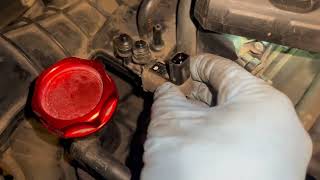
How to confirm: Locate the valve on the upper intake manifold. With the engine off, disconnect the hoses and try to blow through it; it should be closed (no air passes). Apply 12V to its electrical connector; you should hear a click and be able to blow through it. Failure of either test confirms it's bad. 🎬 Watch: How to test if your purge valve is good or bad.
Typical fix: Replace the purge solenoid valve. It is located near the oil filler neck on the intake manifold and is typically held in by a single bolt or simply pressed in with a seal. The job is considered very easy for a DIYer. 🎬 See this quick and easy RX-8 purge valve replacement walkthrough.
Est. part cost: $30-$120 - Loose or Defective Gas Cap 🟡 Medium Probability → Shop Fuel Tank Cap
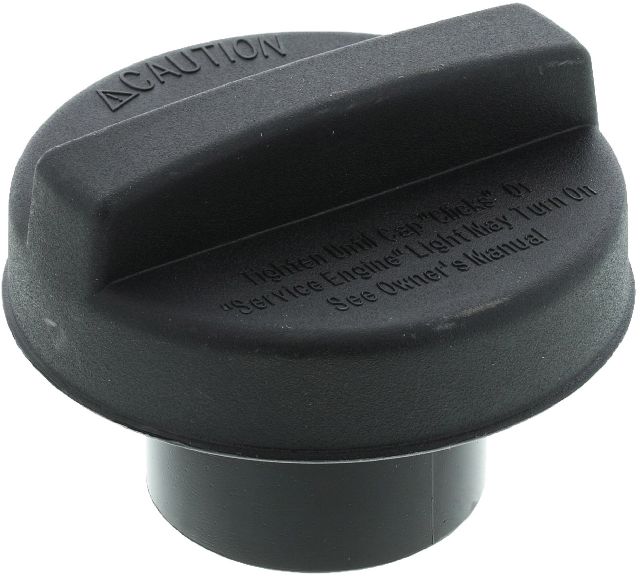
How to confirm: Check that the gas cap clicks at least once when tightened. Inspect the rubber seal on the cap for cracks, stiffness, or damage. A P0441 code is for flow, not a leak, but a bad cap can prevent the system from achieving the correct vacuum levels for the test to run properly.
Typical fix: Tighten the cap correctly. If the seal is damaged or the cap is old, replace it with a new OEM or high-quality aftermarket cap.
Est. part cost: $15-$40 - Cracked or Disconnected EVAP Hoses ⚪ Low Probability The vacuum lines in the engine bay are exposed to heat and can become brittle and crack over time.
How to confirm: Visually inspect the small rubber hoses connected to the purge solenoid valve and running to the intake manifold and back towards the firewall. Look for obvious cracks, splits, or loose connections.
Typical fix: Replace the damaged section of vacuum hose. It is often inexpensive and can be purchased by the foot from an auto parts store.
Est. part cost: $5-$20
Rare But Worth Checking
- Clogged or Failed Charcoal Canister: → Shop Vapor Canister This is uncommon, but if the canister fails, charcoal pellets can break loose and clog the purge valve and lines. If you replace a purge valve and find black granules inside, the charcoal canister is the root cause and must be replaced as well.
Diagnosis Steps
- Read the code with an OBD-II scanner to confirm P0441 is present.
- Inspect the gas cap. Ensure it is tightened until it clicks. Check the seal for cracks or damage. A loose or faulty cap is a common, simple fix.
- Locate the purge solenoid valve on the upper intake manifold, near the oil filler neck.
- Visually inspect the vacuum hoses connected to the purge valve. Follow them to the intake and back toward the firewall, looking for any visible cracks, breaks, or loose fittings.
- Test the purge solenoid. Disconnect the electrical connector and hoses. Try to blow through the valve; it should be closed (no air should pass). Apply 12 volts and ground to the two pins on the solenoid; it should click open, and you should now be able to blow through it. If it fails either of these tests, it is faulty and needs replacement.
- If the valve and hoses appear to be in good condition, the next step is a smoke test. This involves injecting pressurized smoke into the EVAP system to find leaks that are not visible to the naked eye. This is often best performed by a professional shop.
- If a new purge valve becomes clogged with black particles, inspect and replace the charcoal canister, which is located near the fuel tank.
Parts You'll Likely Need
- EVAP Purge Solenoid Valve (2004-2008)
(OEM #Z504-18-741A)— This is the most frequent cause of P0441 on the Series 1 RX-8.
Trusted brands: Mazda (OEM), Dorman (p/n 911-706), Standard Motor Products (p/n CP720)
OEM price range: $90-$130
Aftermarket price range: $30-$60 - EVAP Purge Solenoid Valve (2009-2011)
(OEM #L518-18-741)— This is the most frequent cause of P0441 on the Series 2 RX-8.
Trusted brands: Mazda (OEM), Dorman
OEM price range: $100-$150
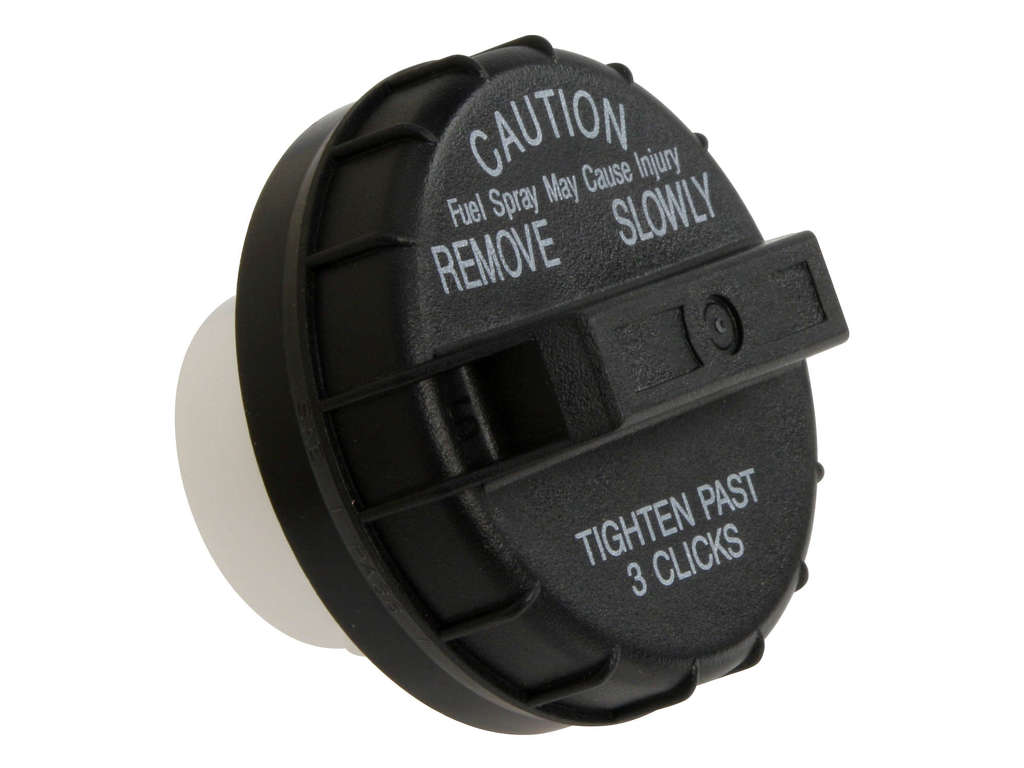
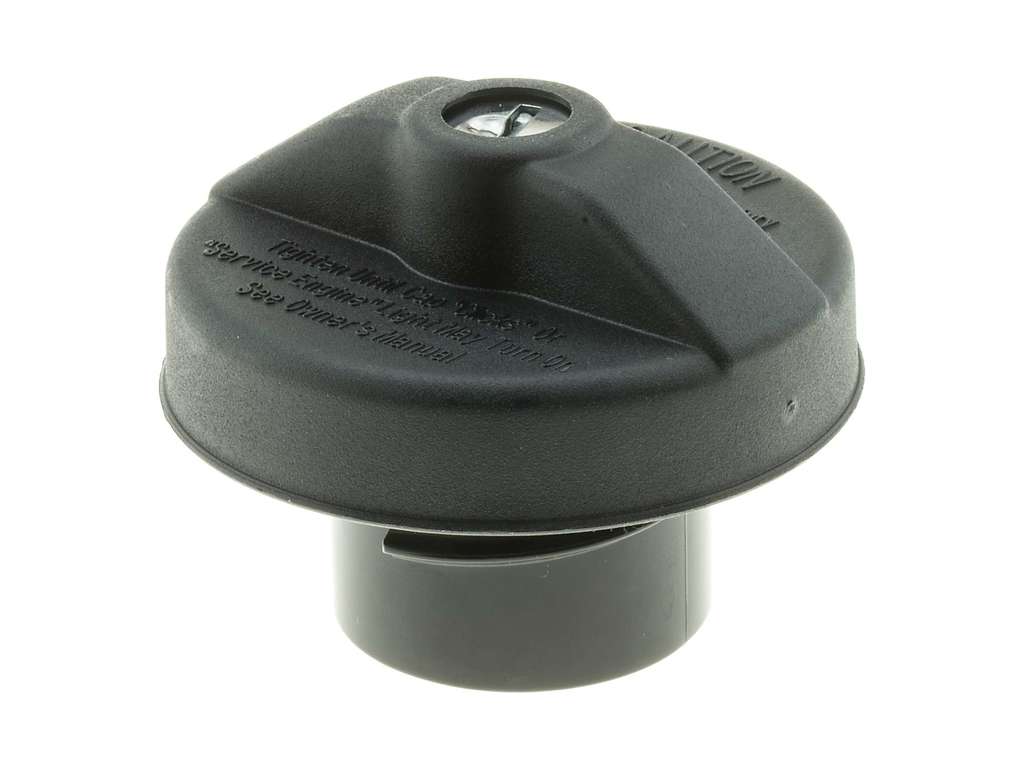
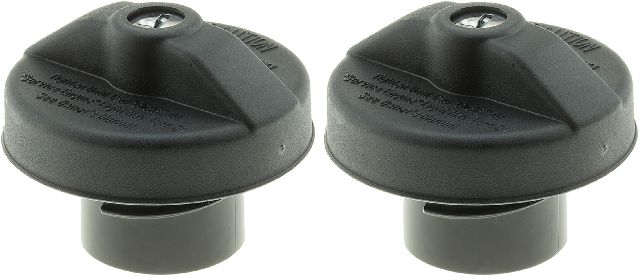
Aftermarket price range: $40-$70 - Fuel Cap
(OEM #F151-42-250B)— A worn-out gas cap seal can cause various EVAP issues and is a simple, low-cost item to rule out.
Trusted brands: Mazda (OEM), Gates, Stant (p/n 10838)
OEM price range: $25-$40
Aftermarket price range: $15-$25
Related Codes That Often Appear With This One
- P0442 — If a hose is cracked or the purge valve is not sealing correctly, it can cause both an incorrect flow (P0441) and be detected as a small leak (P0442).
- P0455 — A large leak, such as a completely disconnected hose or a very bad purge valve, can trigger both a gross leak code (P0455) and the incorrect flow code.
- P0456 — Indicates a very small leak. This can be triggered along with P0441 if the fault is related to a component that is both leaking slightly and not allowing proper flow.
Technical Service Bulletins (TSBs) & Recalls
- Mazda TSB 01-002/18: "MULTI-MODEL - DETERMINING EVAPORATIVE SYSTEM LEAK LOCATION FOR DTCs P0441 / P0442 / P0455 / P0456". While the RX-8 is not on the 'Applicable Models' list for this specific TSB version, the document provides the official Mazda diagnostic logic for these interrelated EVAP codes. It confirms that P0441, a flow code, can be caused by a leak (like a bad gas cap) and provides steps for testing the purge solenoid valve.
- Manufacturer TSB Bulletin #01-002-18-3417: This bulletin for other Mazda models notes that vehicles may have a MIL illumination with DTCs P0441, P0442, P0455, or P0456 stored in memory and provides procedures to determine the location of the evaporative system leak.
- Manufacturer TSB Bulletin #SA-059-25: A manufacturer service bulletin for other Mazda models notes that P0441 may be caused by a concern with the fuel pressure sensor or shutter valve operation.
Platform-Specific Known Issues
- Real World Repair Story: Gas Cap First, Then Purge Valve: → Shop Vapor Canister On the r/RX8 subreddit, a user with code P0441 asked for advice. Another user replied, "Purge valve. I had the same issue and fixed it with a new gas cap." This highlights the two most common fixes and the recommended order of operations: start with the cheapest and easiest part (the gas cap) before moving to the slightly more involved (but still easy) purge valve.
- source — A user on RX8Club.com with a high-mileage (165,000 miles) original engine received a P0441 code after doing work in the trunk area. The forum and an Autozone scan pointed to the standard list of causes: faulty canister, purge valve solenoid, damaged hose, or leak detection pump. This demonstrates the consistency of the diagnosis for this code on the platform.
Mechanic-Grade Diagnostic Values
- Vehicle Power (VPWR) PID Value during WDS EVAP Test — expected: Above 11.0 Volts. Failure: If the VPWR PID value falls below 11.0 V, the PCM will cancel the EVAP system test.
- Fuel Tank Pressure (FTP) Sensor Live Data — expected: Values should vary within a defined range during system self-tests.. Failure: A reading that is stuck at zero, jumps to maximum, or never changes at all indicates a likely sensor failure.
Scan Tool Commands That Help
- Mazda WDS (Worldwide Diagnostic System) or equivalent: On-Demand EVAP System Test (KOEO) — This function can substitute for a full drive cycle to confirm an EVAP system repair. It runs a comprehensive system check while the vehicle is in a Key On, Engine Off state.
- Mazda WDS (Worldwide Diagnostic System) or equivalent: Mode 08: On-Board Device Control - Close Change-Over Valve (COV) — This command is used to manually close the change-over valve on the leak detection pump, sealing the system for pressure or leak testing without having to physically access and command the valve.
Wiring & Ground Locations
- PCM Connector Pin 2P — At the Powertrain Control Module (PCM) connector.. This is the low-side driver pin from the PCM that controls the purge solenoid. A wiring fault between this pin and the solenoid will cause the P0441 code.
- PCM Connector Pin 2F — At the Powertrain Control Module (PCM) connector (confirmed for 2009 models).. This is the other wire for the purge solenoid on Series 2 models, likely the power feed. A fault in this circuit would also trigger the code.
- Engine Bay Ground Points — Key grounds are located on the lower intake manifold, on the crossmember under the airbox/battery, and on the chassis from the main wiring harness near the passenger-side strut mount.. A poor ground connection for the PCM or related sensors can cause erratic electrical behavior and false codes. Checking that these points are clean and tight is a crucial step in diagnosing electrical faults.
OEM Part Supersession History
z50418740, z50418741→Z504-18-741A— Standard part revision and consolidation by the manufacturer.
Model Year Variations Within This Range
- 2004-2008 (Series 1) vs. 2009-2011 (Series 2): The EVAP Purge Solenoid Valve is a different part number for each series. S1 uses p/n Z504-18-741A, while S2 uses p/n L518-18-741. They are not interchangeable.
- 2004-2008 (Series 1): The EVAP system uses a leak detection pump with an internal motor to pressurize the system for self-tests. This pump itself can be a point of failure.
Diagnostic Flowchart
Other Known Issues on This Vehicle
Issues unrelated to this code that are worth knowing about as an owner of this generation:
- Engine Failure (Low Compression / Apex Seal Wear) 🔴 High — A notorious issue, especially on earlier 2004-2005 models and cars with poor maintenance history. Can occur at any mileage, but risk increases after 60,000 miles. Symptoms include difficulty starting when hot, rough idle, and significant power loss. Failure requires a complete engine rebuild or replacement. (Ref: Mazda extended the engine core warranty for some model years due to this issue (MSP16), but this program has long since expired.)
- Ignition Coil Failure 🔴 High — Ignition coils are considered a frequent replacement item. Failure can lead to misfires, which dumps unburnt fuel into the exhaust, potentially destroying the catalytic converter and even contributing to engine damage. Coils are located in a hot area of the engine bay, contributing to their short lifespan. Several revisions of the coils were made during production. (Ref: TSB 01-016/07 provides an updated inspection procedure. TSB 01-014/16, for other Mazda models, describes similar failures due to temperature changes and identifies specific manufacturer production lots that were problematic.)
- Weak Starter Motor (Especially 2004-2005) 🟠 Medium — Early models (2004-2005) were equipped with a slower, less powerful starter motor (11-tooth cog). This can exacerbate hot start issues common with rotary engines, especially those with borderline compression. Upgrading to the later, faster starter (13 or 14-tooth) from a Series 2 RX-8 is a very common and recommended modification to improve starting speed and reduce the chance of flooding. (Ref: TSB E011/07 mentions a starter motor insulator, but the primary fix is the community-driven upgrade to the more powerful starter motor (e.g., part number N3Z1-18-400).)
- Catalytic Converter Failure 🟠 Medium — Often a secondary failure caused by failing ignition coils or a rich-running condition. The high exhaust temperatures of the rotary engine combined with unburnt fuel can cause the catalytic converter to overheat and clog or melt, leading to a severe loss of power.
- High Oil Consumption 🟡 Low — The Renesis engine is designed to inject oil into the combustion chambers to lubricate the apex seals, so burning oil is normal. Owners must check and top off oil frequently (e.g., every other fuel fill-up). Failure to do so will lead to rapid engine wear and catastrophic failure. The rate of consumption was a point of concern, and Mazda even issued a TSB for high consumption caused by incorrect service parts. (Ref: TSB 01-030/09 addresses high oil consumption due to incorrect air intake hose service parts.)
Used vs. New Parts: Buying Guide for This Vehicle
When a used part is the smart pick: For the primary cause of P0441, the EVAP purge solenoid, a used part is not recommended. It is a relatively low-cost electro-mechanical part with a known high failure rate; the risk of a used part failing shortly after installation is significant.
OEM-only on this vehicle (don't cheap out):
- EVAP Purge Solenoid Valve
Brands owners have reported issues with on this vehicle:
- Dorman (p/n 911-706): Multiple owner reviews report premature failure, with some units failing in under six months or causing loud ticking noises.
Real Owner Stories
Aggregated from forums and TSBs cited above. Mileages and costs reflect what owners reported in those sources.
2004-2011 Mazda RX-8 13B-MSP
Symptoms: Check Engine Light with code P0441.
What fixed it: Replacing the gas cap with a Stant 10838.
Source hint: r/RX8 Reddit Thread (2025)
2004-2011 Mazda RX-8 13B-MSP — 165000 miles
Symptoms: Received a P0441 code after performing work in the trunk area.
What fixed it: Diagnosis pointed to standard causes: faulty canister, purge valve solenoid, damaged hose, or leak detection pump.
Source hint: RX8Club.com P0441 CEL Code Thread (2012)
Mazda 626 Owner Report
Symptoms: An owner reported bringing their vehicle in for a specific P0441 code (EVAP Emissions Control-Incorrect Purge Flow).
What fixed it: In this instance, the dealership mechanic pulled a different code, P0741, relating to a slipping torque converter.
Source hint: NHTSA ODI #10162479
Related OBD-II Codes
Frequently Asked Questions
Does Mazda TSB 01-002/18 apply to my RX-8 for the P0441 code?
Where is the purge solenoid valve located on the 13B-MSP Renesis engine?
Can a bad gas cap really cause a P0441 'incorrect flow' code on an RX-8?
Is there a specific aftermarket gas cap recommended for the RX-8 to fix this?
What should I check if my new purge valve gets clogged with black particles?
How can I manually test the RX-8 purge solenoid before buying a new one?
Helpful Videos
![How to Fix P0441 Engine Code in 6 Minutes [4 DIY Methods / Only $3.50]](https://img.youtube.com/vi/NJYZiDhYhP8/mqdefault.jpg)
We Have This Part in Stock


The information in this article is provided for general reference and educational purposes only. Vehicle specifications, procedures, and part compatibility can vary by production date, trim level, and region. Always consult your vehicle's factory service manual and verify part numbers before purchasing or performing repairs. Safety-critical components such as airbags, seat belts, and braking systems should be installed by a qualified professional.
- Mazda RX-8:
- 🧭 Diagnostic Flowchart
- 🎬 Helpful Videos
- 🛍️ Shop This Part
- What's Unique About the 2004-2011 Mazda RX-8
- Symptoms You May Notice
- Most Likely Causes
- Rare But Worth Checking
- Diagnosis Steps
- Parts You'll Likely Need
- Related Codes That Often Appear With This One
- Technical Service Bulletins (TSBs) & Recalls
- Platform-Specific Known Issues
- Mechanic-Grade Diagnostic Values
- Scan Tool Commands That Help
- Wiring & Ground Locations
- OEM Part Supersession History
- Model Year Variations Within This Range
- Other Known Issues on This Vehicle
- Used vs. New Parts: Buying Guide for This Vehicle
- Real Owner Stories
- 2004-2011 Mazda RX-8 13B-MSP
- 2004-2011 Mazda RX-8 13B-MSP — 165000 miles
- Mazda 626 Owner Report
- Related OBD-II Codes
- Frequently Asked Questions
- 🎟️ Get 5% Off