

P0441 on 2008-2017 Mitsubishi Lancer: EVAP Incorrect Purge Flow Causes and Fixes
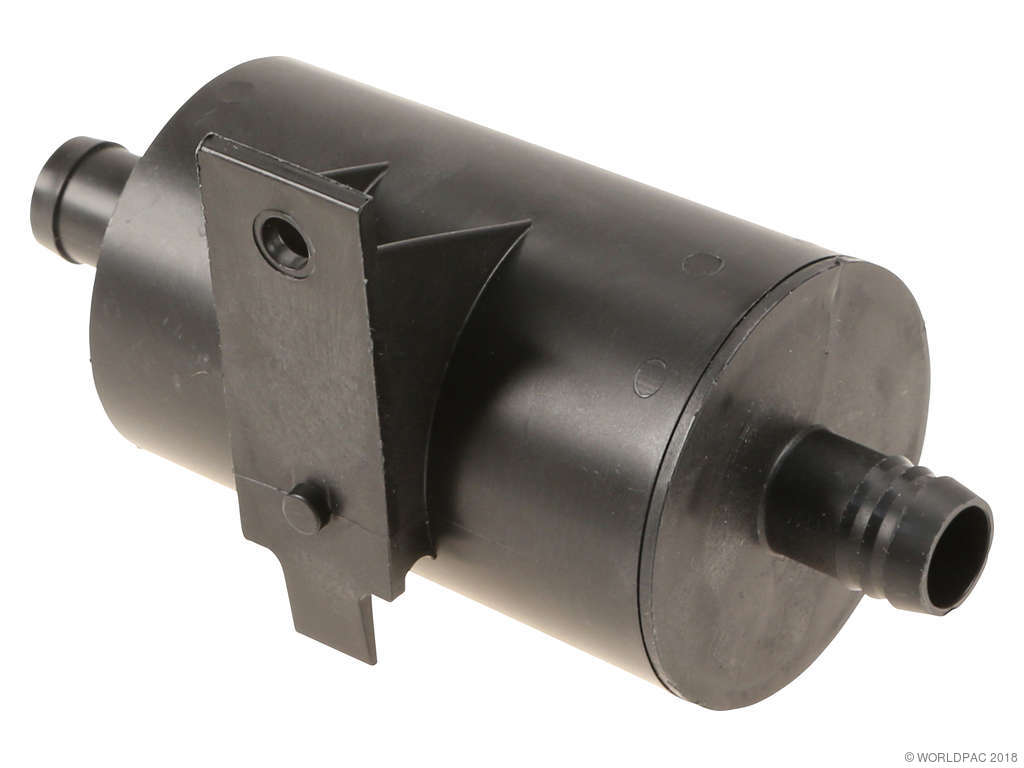
On a 2008-2017 Mitsubishi Lancer, code P0441 is most often caused by a faulty EVAP purge solenoid valve located in the engine bay. The OEM part numbers are K5T46693 and 8657A049. Replacing this part is a common DIY fix and typically costs between $60 and $140.
- P0441 on a 2008-2017 Lancer points to an incorrect flow in the EVAP system, usually detected when the system should be off.
- The most probable cause is a faulty EVAP purge solenoid valve in the engine bay, which may be stuck open.
- Symptoms can range from just a Check Engine Light to a rough idle or even the engine stalling when you come to a stop.
- Diagnosis involves checking the purge solenoid for correct operation, inspecting hoses for cracks, and potentially testing the vent solenoid near the fuel tank.
- Avoid overfilling your gas tank, as this can damage the charcoal canister and lead to this code.
What's Unique About the 2008-2017 Mitsubishi Lancer
For this generation of Mitsubishi Lancer, the diagnostic logic for P0441 is quite specific. The ECM primarily looks for a stuck-open purge solenoid or a stuck-closed vent solenoid by monitoring fuel tank pressure when the purge system is supposed to be inactive. While these components fail on many cars, owner reports suggest the purge solenoid is a particularly common failure point on the Lancer. In some cases, a stuck-open purge valve can cause a noticeable vacuum leak, leading to a rough idle or even stalling when coming to a stop, a symptom reported by multiple Lancer owners. Another key vehicle-specific symptom is difficulty starting the engine immediately after refueling.
Symptoms You May Notice
- Check Engine Light is on
- Rough or unstable idle, particularly when stopping
- Engine stalling when coming to a stop
- Difficulty starting the engine right after refueling
- A faint smell of fuel (rare)
- Trouble filling the gas tank (pump clicks off early)
- No noticeable symptoms other than the light
- Replacing the gas cap. While a loose or faulty gas cap can cause other EVAP codes (like P0455 or P0457), it is not a primary cause for the specific 'Incorrect Purge Flow' logic of P0441 on a Mitsubishi.
Most Likely Causes
- Failed EVAP Purge Solenoid Valve 🔴 High Probability → Shop Vapor Canister This is the most frequently cited failure point in both official service documents and owner forums for the Lancer and its platform mates. It often gets stuck open, creating a vacuum leak.
How to confirm: The solenoid is located under the intake manifold on the passenger side. With the engine off, disconnect the hose from the intake manifold side of the solenoid and attempt to blow through it; it should be closed. Use a scan tool's actuator test to command it open; you should hear a click and be able to blow through it.
Typical fix: Replace the purge solenoid valve. Ensure the hoses are reconnected to the correct ports, as swapping them is a common mistake that will still cause the code.
Est. part cost: $60-$140 - Failed EVAP Canister Vent Solenoid 🟡 Medium Probability → Shop Vapor Canister Listed as a primary potential cause in Mitsubishi's diagnostic procedure. A stuck-closed vent solenoid prevents the system from stabilizing pressure, leading the ECM to misinterpret the state of the purge valve.
How to confirm: The vent solenoid is usually located on the charcoal canister near the fuel tank. Use a scan tool's actuator test to command it open and closed, listening for a click. Check for blockages in the valve or its filter.
Typical fix: Replace the canister vent solenoid/valve. On some models, it may be integrated with the charcoal canister.
Est. part cost: $70-$150 - Clogged or Failed Charcoal Canister ⚪ Low Probability → Shop Vapor Canister Consistently overfilling the fuel tank can saturate the canister with liquid fuel, causing it to become clogged and fail. One owner of an '08 Lancer reported this as the fix for their P0441 code after other parts didn't solve it.
How to confirm: Inspect the canister (located near the fuel tank, by the rear driver's side wheel) for physical damage, cracks, or signs of fuel saturation. A diagnostic smoke test is the most effective way to check for internal blockages or cracks.
Typical fix: Replace the charcoal canister assembly.
Est. part cost: $140-$250 - Cracked or Disconnected EVAP Hoses ⚪ Low Probability Rubber hoses can become brittle and crack over time due to heat and age. A user on EvolutionM noted they checked all hoses before replacing other parts.
How to confirm: Visually inspect all vacuum and vapor lines between the engine's intake, the purge solenoid, and the charcoal canister for cracks, loose connections, or blockages. A smoke test is the most reliable method to find small leaks.
Typical fix: Replace the damaged section of hose.
Est. part cost: $10-$30
Rare But Worth Checking
- Failed Fuel Tank Pressure Sensor: → Shop Fuel Tank This is a possible cause according to service documents, but it would likely be accompanied by other codes, such as P0451, P0452, or P0453. One owner chased P0441 and P0455 by replacing multiple parts before suspecting the sensor due to out-of-spec voltage readings.
Diagnosis Steps
- Read the codes: Use an OBD-II scanner to confirm P0441 is present and check for any other related codes like P0451, P0452, or P0455.
- Inspect Hoses: Perform a thorough visual inspection of all EVAP hoses and lines running from the engine bay to the rear of the car. Look for any obvious cracks, disconnections, or damage. Pay close attention to the lines connected to the purge solenoid.
- Test the Purge Solenoid: Locate the purge solenoid in the engine bay, on the passenger side, under the intake manifold. With the engine off, disconnect the electrical connector and the two hoses. Try to blow through the solenoid; it should be closed (no air passes). Apply 12V to its pins; you should hear a click, and the valve should open, allowing air to pass. If it fails either test, it's faulty and needs replacement.
- Test the Vent Solenoid: Locate the vent solenoid on or near the charcoal canister under the car, near the rear driver's side wheel. Use a scan tool to perform an actuator test, listening for a click. Alternatively, apply 12V to test its function.
- Inspect the Charcoal Canister: While under the vehicle, inspect the canister for any cracks or signs of being saturated with fuel.
- Perform a Smoke Test: If the solenoids appear to be working and there are no visible hose cracks, the next best step is to have a professional perform an EVAP smoke test. This will pressurize the system with smoke and quickly reveal any hard-to-see leaks in hoses, the canister, or seals.
- Check Pressure Sensor Data: If you have an advanced scan tool, monitor the fuel tank pressure sensor data (in mV or Pa) to see if its readings are logical or erratic, which could indicate a faulty sensor.
Parts You'll Likely Need
- EVAP Purge Solenoid Valve
(OEM #K5T46693, 8657A049)— This is the most common failure part for code P0441 on this vehicle, responsible for controlling the flow of fuel vapors to the engine.
Trusted brands: Mitsubishi Genuine, Denso, Standard Motor Products (CP588), NTY (EFPMS001)
OEM price range: $100-$150
Aftermarket price range: $60-$100 - Charcoal Canister
(OEM #1780A029)— This part can become clogged, especially if the fuel tank is habitually overfilled, or fail internally. Part number 1780A029 is confirmed to fit Lancer, Outlander, and RVR/Outlander Sport models.
Trusted brands: Mitsubishi Genuine
OEM price range: $200-$250
Aftermarket price range: $140-$200
Related Codes That Often Appear With This One
- P0451 — This code indicates a problem with the Fuel Tank Pressure Sensor's performance. Since the ECM uses this sensor to diagnose P0441, a fault in the sensor itself can trigger both codes.
- P0452 — Indicates the Fuel Tank Pressure Sensor input is low. This can happen alongside P0441 if the sensor is faulty or if there's a related wiring issue.
- P0455 — Indicates a large EVAP system leak. While P0441 is about incorrect flow, a massive leak could potentially confuse the system's pressure readings and trigger both codes, though they point to different primary faults.
Platform-Specific Known Issues
- Incorrect Hose Routing on Purge Solenoid: → Shop Vapor Canister A YouTube video on a 2007 Outlander (platform mate) with P0441 showed the issue was caused by a previous repair where the inlet and outlet hoses on the purge solenoid were swapped. The car ran, but the incorrect flow path triggered the code.
Mechanic-Grade Diagnostic Values
- Fuel Tank Pressure Sensor Voltage (with fuel cap removed) — expected: 1,500 to 3,500 millivolts (1.5V to 3.5V). Failure: Voltage outside this range indicates a potential sensor or wiring fault.
- Fuel Tank Pressure Sensor Supply Voltage — expected: 4.9 to 5.1 volts. Failure: Voltage outside this range points to a problem with the ECM's 5V reference circuit or wiring.
- P0441 DTC Set Threshold — expected: Pressure in the fuel tank is -1.96 kPa (-0.58 in.Hg) or less for 0.1 second while the purge solenoid is commanded OFF.. Failure: This condition indicates an unwanted vacuum is being pulled on the tank, typically by a stuck-open purge valve.
Scan Tool Commands That Help
- Mitsubishi M.U.T.-III: Actuator Test - Item 10: Evaporative Emission Purge Solenoid — Use this to force the purge solenoid to operate. You should hear a click and feel a vibration. This directly tests the solenoid's electrical and mechanical function without having to remove it.
- Mitsubishi M.U.T.-III: Actuator Test - Item 15 (or 29): Evaporative Emission Ventilation Solenoid — Use this to command the vent solenoid (on the charcoal canister) to operate. A click should be heard. This helps differentiate between a purge solenoid fault and a vent solenoid fault.
- Mitsubishi M.U.T.-III: Data List - Item 52: Fuel Tank Differential Pressure Sensor — Use this to monitor the live voltage output of the pressure sensor to check if it's within the expected range (1.5V-3.5V with cap off) and responds logically to pressure changes.
Wiring & Ground Locations
- Fuel Tank Pressure Sensor Wiring (example for one engine variant) — At the Fuel Tank Pressure Sensor connector.. The ECM uses this sensor to detect the incorrect purge flow. A wiring issue can mimic a sensor failure. Pin 1 is the signal wire to ECM pin 112, Pin 2 is the ground via ECM pin 113, and Pin 3 is the 5V supply from ECM pin 114.
Real Owner Repair Stories
- EvolutionM Forum User (2008 Mitsubishi Lancer ES) — Recurring P0441 Check Engine Light, especially when the fuel tank was half full and ambient temperature was below 60°F. No other performance issues noted.
❌ Tried (didn't work) Clearing the code with a scanner (code would return).
✅ What actually fixed it The owner replaced the charcoal canister. They suspected it was clogged from a habit of overfilling the fuel tank. The fix was successful and the P0441 code did not return. - EvolutionM Forum User (Lancer Ralliart (specific year not mentioned, but within 2009-2015)) — Engine would drop idle and stall when coming to a stop. This eventually triggered a P0441 code.
❌ Tried (didn't work) Resetting the code (stalling continued and the code was expected to return).
✅ What actually fixed it The user did not post the final fix, but another user correctly diagnosed the likely cause as a stuck or dead purge solenoid valve, which is known to cause these exact symptoms (stalling due to a vacuum leak).
Documented NHTSA Reports
- NHTSA ODI #10679585 — A manufacturer report for a platform-related vehicle (Galant) noted P0441 appearing alongside several other codes, including P0431, P0174, P0171, P0335, and P0300, indicating that electrical system issues can sometimes trigger a cascade of faults including incorrect purge flow.
OEM Part Supersession History
K5T46693→8657A049— Standard part number update/revision.
Heads up: No incompatibility is noted. Both part numbers, along with aftermarket cross-references like Standard Motor Products CP588 and Dorman 911-805, are considered interchangeable for this application.
Diagnostic Flowchart
Other Known Issues on This Vehicle
Issues unrelated to this code that are worth knowing about as an owner of this generation:
- CVT Transmission Failure/Shudder 🔴 High — Commonly reported between 80,000-120,000 km (50k-75k miles). Symptoms include shuddering, hesitation, whining noises, and lack of acceleration. (Ref: TSB-20-23-001REV addresses a shudder/surge condition. Recall SR-16-006 was issued for some 2016 models for CVT hesitation.)
- Clear Coat Paint Peeling 🟡 Low — Widespread issue, particularly on darker colors like red and black. Often begins as white spots on horizontal surfaces (roof, trunk) before peeling. Not a mechanical issue but affects resale value. (Ref: No official recall, generally considered a cosmetic issue by Mitsubishi and warranty claims are often denied.)
- Front Crossmember Corrosion 🔴 High — Affects vehicles in regions that use road salt. The front crossmember can rust severely, potentially leading to the detachment of a lower control arm. (Ref: Recall #18V220000 was issued for 2008-2010 Lancers in specific 'salt belt' states.)
- A/C System Failure (Relay or Compressor) 🟠 Medium — Failures of the A/C compressor or its control relay are frequently reported, leading to no cold air. Some models had recalls for faulty electrical relays that could cause stalling or overheating. (Ref: TSB-15-55-003 was issued for some related models regarding A/C compressor clutch failure, though not specific to all Lancers.)
- Engine Stalling at Idle 🟠 Medium — Owners report intermittent stalling when coming to a stop or at idle. While sometimes linked to a P0441 stuck-open purge valve, it can also be caused by a faulty MAP sensor or clogged throttle body.
Used vs. New Parts: Buying Guide for This Vehicle
When a used part is the smart pick: A used EVAP purge solenoid from a junkyard is a reasonable choice for a budget repair, as it is a simple electro-mechanical part that is easy to access and replace if the used part is also faulty. Used EVAP hoses can also be sourced if they are in good, pliable condition.
Donor-vehicle mileage cap: roughly under 80000 miles for the part to have meaningful remaining life.
What to inspect on the donor part:
- For a purge solenoid, check for cracks in the plastic housing and ensure the electrical connector pins are not corroded.
- For a charcoal canister, avoid any unit that has visible cracks, smells strongly of raw fuel, or feels heavy/sloshes as if saturated with liquid fuel.
- Inspect rubber hoses for pliability; avoid any that are hard, brittle, or show surface cracking.
OEM-only on this vehicle (don't cheap out):
- While not strictly required, using an OEM or a reputable OEM-supplier (like Denso) purge solenoid is often recommended on forums for best reliability.
Aftermarket brands forum-validated for this vehicle:
- Standard Motor Products (SMP)
- Denso
- Dorman
Brands owners have reported issues with on this vehicle:
- No-name, unbranded parts from online marketplaces are frequently cited as having poor quality control and may fail prematurely.
Real Owner Stories
Aggregated from forums and TSBs cited above. Mileages and costs reflect what owners reported in those sources.
2011 Lancer Ralliart
Symptoms: Engine stalling when coming to stops and a rough idle at approximately 750 RPM.
What fixed it: Identified the purge solenoid located under the intake manifold on the passenger side as the fault.
Source hint: EvolutionM - P0441 help!? (2011-10-29)
2008 Lancer ES
Symptoms: Recurring P0441 code that would not stay cleared.
What fixed it: Replacing the charcoal canister assembly.
Cost: $140-$140
Source hint: EvolutionM - P0441 EVAP Emission Control System Purge Flow Fault (2011-03-21)
2007 Mitsubishi Outlander
Symptoms: Hard starting after refueling and a P0441 code.
What fixed it: Correcting the hose routing on the purge solenoid; the inlet and outlet hoses had been swapped during a previous repair.
Source hint: YouTube video on a 2007 Outlander (platform mate) with P0441
Related OBD-II Codes
Frequently Asked Questions
Where is the purge solenoid located on my Lancer, and how can I test it?
My 2008 Lancer has severe rust on the front crossmember; is there a recall for this?
I just replaced the purge solenoid on my Mitsubishi, but the P0441 code is still there. What did I do wrong?
Can overfilling my gas tank cause the P0441 code on a Lancer?
Is there a TSB for the CVT shuddering I'm experiencing alongside the check engine light?
Why does my Lancer struggle to start only after I fill it up with gas?
Helpful Videos
Used OEM Parts in Stock
New Aftermarket Parts Available


The information in this article is provided for general reference and educational purposes only. Vehicle specifications, procedures, and part compatibility can vary by production date, trim level, and region. Always consult your vehicle's factory service manual and verify part numbers before purchasing or performing repairs. Safety-critical components such as airbags, seat belts, and braking systems should be installed by a qualified professional.
- Mitsubishi Lancer:
- 🧭 Diagnostic Flowchart
- 🎬 Helpful Videos
- 🛍️ Shop This Part
- What's Unique About the 2008-2017 Mitsubishi Lancer
- Symptoms You May Notice
- Most Likely Causes
- Rare But Worth Checking
- Diagnosis Steps
- Parts You'll Likely Need
- Related Codes That Often Appear With This One
- Platform-Specific Known Issues
- Mechanic-Grade Diagnostic Values
- Scan Tool Commands That Help
- Wiring & Ground Locations
- Real Owner Repair Stories
- Documented NHTSA Reports
- OEM Part Supersession History
- Other Known Issues on This Vehicle
- Used vs. New Parts: Buying Guide for This Vehicle
- Real Owner Stories
- 2011 Lancer Ralliart
- 2008 Lancer ES
- 2007 Mitsubishi Outlander
- Related OBD-II Codes
- Frequently Asked Questions
- 🎟️ Get 5% Off