

P0441 on 2003-2007 Saturn Ion: EVAP Incorrect Purge Flow Causes and Fixes
On a 2003-2007 Saturn Ion, code P0441 is most often caused by a faulty EVAP purge valve solenoid located on the engine. This is a common, inexpensive, and easy DIY fix, with the part typically costing between $20 and $40. Before replacing any parts, ensure the gas cap is tight and its seal is intact.
- P0441 on a Saturn Ion almost always points to the EVAP purge valve on top of the engine.
- Before buying parts, check that your gas cap is tight and its seal is intact.
- The purge valve is a simple, 15-30 minute DIY replacement with basic hand tools.
- Do not replace the more expensive charcoal canister unless you also have trouble filling the gas tank or a smoke test confirms a canister fault.
- Driving with P0441 is not dangerous, but it will cause an automatic failure on an emissions test.
What's Unique About the 2003-2007 Saturn Ion
For the Saturn Ion and other GM vehicles on the Delta platform from this era, the P0441 code is very commonly traced back to the canister purge valve solenoid located on the engine, rather than more complex issues like the charcoal canister or vent valve near the tank. This specific part is known to fail by sticking open or closed. Its location on top of the engine makes it significantly easier to diagnose and replace than on many other vehicles where it might be buried deeper in the engine bay.
Symptoms You May Notice
- Check Engine Light is on
- Difficulty starting the engine, especially after refueling 🎬 Watch: Fixing hard starts after refueling by replacing the purge valve
- Rough or uneven idle, particularly if the purge valve is stuck open
- Slight fuel smell
- A 'whoosh' or vacuum pop sound when opening the gas cap if the vent valve is stuck closed
- Replacing the charcoal canister when only the purge valve is bad. The canister is much more expensive and less likely to be the sole cause of P0441 unless symptoms like refueling difficulty are also present.
- Confusing the purge valve (on the engine) with the vent valve (near the fuel tank) and replacing the wrong part.
- Replacing parts without testing. Some owners on forums have replaced the purge valve and gas cap only for the code to return, indicating a less common issue like a cracked hose or faulty vent valve.
Most Likely Causes
- Faulty EVAP Canister Purge Valve (Solenoid) 🔴 High Probability → Shop Vapor Canister This GM-family part is known to fail over time due to carbon buildup or simple wear, causing it to stick open or closed. Debris from deteriorating EVAP hoses can also contaminate and clog the valve.
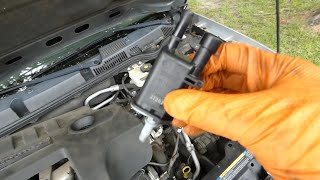
How to confirm: With the engine off, disconnect the two hoses from the purge valve. Try to blow through it. If air passes through, the valve is stuck open and is faulty. If it's not stuck open, you can use a scan tool to command it open while applying light vacuum to see if it functions, or apply 12V directly to its terminals to listen for a click. 🎬 See this video for four DIY methods to fix code P0441
Typical fix: Replace the canister purge valve. It is located on top of the engine, held by a bracket with one nut, making it a simple replacement.
Est. part cost: $20-$40 - Loose or Damaged Gas Cap 🟡 Medium Probability → Shop Fuel Tank Cap While more commonly associated with leak codes (like P0455), a faulty gas cap seal can disrupt the entire EVAP system's ability to manage pressure, sometimes contributing to flow-related codes. It's the easiest and cheapest potential fix to check first.
How to confirm: Inspect the gas cap for cracks or a worn, brittle, or flattened O-ring seal. Ensure it clicks at least three times when tightened. If the seal looks suspect, replacement is a low-cost diagnostic step.
Typical fix: Replace the gas cap. An OEM cap is often recommended for best fit.
Est. part cost: $10-$25 - Cracked or Disconnected EVAP Hoses ⚪ Low Probability The rubber hoses in the engine bay become brittle and crack over time due to heat and age. The connections at the purge valve itself are common points of failure.
How to confirm: Visually inspect the vacuum lines running to and from the purge valve on the engine and back towards the charcoal canister for any visible cracks, brittleness, or loose connections. Flex the hoses to see if they crack.
Typical fix: Replace the damaged section of hose.
Est. part cost: $5-$20
Rare But Worth Checking
- Clogged or Saturated Charcoal Canister: → Shop Vapor Canister This is less common for a P0441 code alone but possible. It's often caused by repeatedly overfilling the fuel tank, which forces liquid gasoline into the canister, ruining the charcoal pellets. A key symptom is difficulty filling the fuel tank because the pump nozzle clicks off repeatedly. In some cases, the charcoal media can break apart and clog the lines or purge valve.
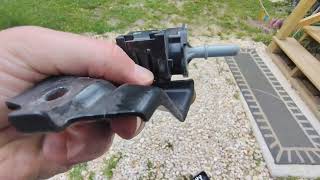
- Faulty EVAP Vent Solenoid: → Shop Vapor Canister This valve is located near the fuel tank and is more commonly associated with code P0446 🎬 Watch: A deep dive into diagnosing the EVAP vent system or P0449. However, a failure in this component (e.g., stuck closed) can sometimes cause general EVAP system faults that may manifest as P0441.
Diagnosis Steps
- Check the gas cap. Ensure it is tight and the seal is not cracked or worn. If in doubt, replace it as it's an inexpensive first step.
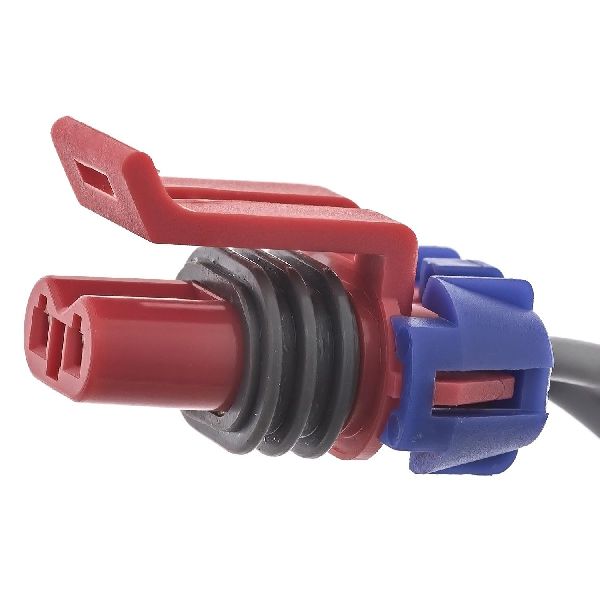
- Locate the EVAP purge valve on top of the engine. It's a small black plastic valve with two hoses and an electrical connector.
- Inspect the electrical connector and hoses attached to the purge valve for any visible damage or loose connections. Squeeze the rubber hoses to check for brittleness or cracks.
- Perform a mechanical test: With the engine off, disconnect the hoses from the valve. Attempt to blow air through the valve with your mouth. If air passes, the valve is stuck open and must be replaced.
- If the valve is not stuck open, perform an electrical test. Use a multimeter to check for resistance across the two pins on the valve. The expected resistance is between 30 and 38 Ohms. You can also briefly apply 12V power to the pins and listen for an audible 'click', indicating the solenoid is activating.
- If the valve and hoses appear fine, the next step is often a smoke test. A mechanic can inject smoke into the EVAP system to visually identify hard-to-see leaks in any of the lines or components, including the charcoal canister or vent valve.
- If no leaks are found, more advanced diagnostics may be needed to check the fuel tank pressure sensor or the vent valve solenoid, located near the fuel tank.
Parts You'll Likely Need
- EVAP Canister Purge Valve / Solenoid
(OEM #12597567 (supercedes 214-1680))— This is the most common failure point for the P0441 code on this vehicle. It gets stuck open or closed, causing incorrect vapor flow.
Trusted brands: ACDelco (GM OE), Dorman (911-032)
OEM price range: $30-$50
Aftermarket price range: $20-$40 - Fuel Cap — A worn seal on the gas cap can cause various EVAP system issues and is an easy and inexpensive part to rule out.
Trusted brands: ACDelco, Stant
OEM price range: $15-$30
Aftermarket price range: $10-$20 - EVAP Charcoal Canister
(OEM #215-627)— This part is needed if it becomes saturated with fuel (often from overfilling the tank) or clogged, which restricts flow. It's a less common cause for P0441 alone and is usually suspected if refueling is difficult.
Trusted brands: ACDelco, Dorman
OEM price range: $180-$220
Aftermarket price range: $160-$190
Related Codes That Often Appear With This One
- P0496 — This code indicates 'EVAP Flow During a Non-Purge Condition,' which is often caused by the same issue: a purge valve that is stuck open.
- P0443 — This code points to an electrical circuit malfunction for the purge valve, such as a bad solenoid coil or wiring issue, which would prevent proper flow.
- P0455 — Indicates a large leak in the EVAP system. While often a loose gas cap, it can appear with P0441 if a hose is completely disconnected or the purge valve is stuck wide open.
Platform-Specific Known Issues
- There is a known safety recall (NHTSA ID: 03V468000, GM Recall #: 03068) for 2003-2004 Ions concerning a fuel filter that can corrode and leak. While this does not directly cause a P0441 code, it can produce a fuel smell, which might be confused with an EVAP system fault.
- The rubber EVAP lines in the engine bay are prone to becoming hard and brittle with age, leading to cracks, especially at the connection points to the purge valve.
Mechanic-Grade Diagnostic Values
- EVAP Canister Purge Valve Solenoid Coil Resistance — expected: 30 - 38 Ohms. Failure: A reading significantly outside this range (e.g., open circuit or a low reading like 10 Ohms) indicates a faulty coil.
- Fuel Tank Pressure (FTP) Sensor Voltage (Key On, Engine Off) — expected: Approximately 1.5 Volts. Failure: A voltage that is stuck high (e.g., 2.2V) or does not change when pressure changes (like removing the gas cap) points to a faulty sensor.
Scan Tool Commands That Help
- GM Tech2 / Advanced Aftermarket Scanners: EVAP Purge/Seal or EVAP Purge Solenoid Command — This bidirectional control allows a technician to manually command the purge solenoid open and closed to verify its function. You can monitor fuel tank pressure sensor data or listen for an audible click from the valve to confirm it is responding to the command.
- GM Tech2 / Advanced Aftermarket Scanners: EVAP Vent Solenoid Command — Used to command the vent valve (near the tank) closed during a smoke test to seal the system, or to test the valve's function by listening for a click. This helps differentiate a purge valve issue from a vent valve issue.
Wiring & Ground Locations
- EVAP Purge Solenoid Connector — On the purge solenoid itself, located on the driver's side of the engine.. The connector has two pins. One is a Pink wire which should have 12V+ with the key on (powered by the IGN fuse). The other is a Dark Green/White wire that the PCM pulses to ground to activate the solenoid. Checking for voltage and ground signal here is critical for diagnosing a P0443 (circuit code) that may accompany P0441.
- G105 — Lower left rear of the engine block.. This is a primary engine ground point. While not exclusively for the EVAP system, a poor connection at this ground could cause a variety of intermittent electrical issues for engine components and sensors, potentially affecting the PCM's ability to control the purge solenoid correctly.
Real Owner Repair Stories
- YouTube channel K&D_Enterprise (2003+ Saturn Ion 2.2L Ecotec) — Car is very difficult to start after refueling. The owner had to press the gas pedal to the floor while cranking to get the engine to start.
❌ Tried (didn't work) The owner went straight to diagnosing the most likely cause.
✅ What actually fixed it The owner removed the EVAP purge valve and performed a simple blow-through test; air passed through freely, confirming it was stuck open. Replacing the faulty purge valve resolved the starting issue.
OEM Part Supersession History
214-1680 (Purge Valve)→12597567 (Purge Valve)— Standard part revision and consolidation by GM.25321964 (Vent Valve)→22865590 (Vent Valve)— Part redesign by GM/ACDelco.
Heads up: CRITICAL: The superseded part 22865590 has a different electrical connector design and is NOT a direct fit for early models like the 2003 Ion. Using it will cause an immediate 'Service Vehicle' warning. The correct aftermarket alternative is Dorman 911-036.
Model Year Variations Within This Range
- 2003-2004: The EVAP Canister Vent Valve (near the fuel tank) may use an older connector style. A newer GM replacement part may not fit correctly, requiring either sourcing the original part number (25321964) or using a specific aftermarket part like Dorman 911-036 that retains the old connector style.
Diagnostic Flowchart
Other Known Issues on This Vehicle
Issues unrelated to this code that are worth knowing about as an owner of this generation:
- Electric Power Steering (EPS) Failure 🔴 High — Extremely common across all model years. Can occur at any time, leading to a sudden loss of steering assist. (Ref: GM Safety Recalls 14115 and others. GM extended warranty coverage for the power steering motor on many affected vehicles.)
- Faulty Ignition Switch 🔴 High — Widespread issue leading to one of GM's largest recalls. The switch can move out of the 'Run' position if bumped or weighed down, causing the engine to stall and disabling airbags. (Ref: GM Safety Recall 14V047 / 14063. Affects all 2003-2007 Saturn Ions.)
- Timing Chain Failure (2.2L L61 Ecotec) 🔴 High — Common after 100,000 miles. The plastic timing chain guides can break or the tensioner can fail, causing the chain to jump time or snap, resulting in catastrophic, engine-destroying interference between valves and pistons.
- VTi CVT Transmission Failure (2003-2004 models) 🔴 High — The early continuously variable transmission (VTi) used in 2003-2004 Ions was notoriously unreliable and prone to complete failure at low mileage. (Ref: No recall, but led to numerous warranty claims and a class-action lawsuit.)
- Key Stuck in Ignition 🟡 Low — A common annoyance where the key cannot be removed from the ignition cylinder, often related to the shifter cable or ignition lock cylinder.
Used vs. New Parts: Buying Guide for This Vehicle
When a used part is the smart pick: A used part is generally not recommended for the electronic solenoids (purge or vent valve) as they are common failure items with a limited lifespan. However, larger mechanical components like the charcoal canister or mounting brackets can be sourced from a junkyard if they are visually inspected for cracks and damage.
Donor-vehicle mileage cap: roughly under 100000 miles for the part to have meaningful remaining life.
What to inspect on the donor part:
- For a used purge valve, perform the blow-through test on the spot. If air passes through, it's already failed.
- For a charcoal canister, check for any cracks in the plastic housing or broken hose ports.
- Gently shake the canister; if you hear loose pellets rattling inside, the internal structure has failed and it should be avoided.
OEM-only on this vehicle (don't cheap out):
- Fuel Cap: While many aftermarket caps work, the surest fit and seal often comes from an OEM (ACDelco) part, which is critical for the EVAP system to pass its self-test.
Aftermarket brands forum-validated for this vehicle:
- ACDelco (OEM)
- Dorman (Purge Valve: 911-032, Vent Valve: 911-036)
- Standard Motor Products (SMP)
- Gates
Brands owners have reported issues with on this vehicle:
- Unbranded, low-cost parts from online marketplaces can be a gamble, with higher rates of out-of-box failure or shorter service life.
Real Owner Stories
Aggregated from forums and TSBs cited above. Mileages and costs reflect what owners reported in those sources.
2003-2007 Saturn Ion
Symptoms: Owners confirmed the purge solenoid on the engine was the primary culprit for the check engine light.
What fixed it: Replacement of the purge solenoid as a simple DIY job.
Source hint: SaturnFans.com
2003-2007 Saturn Ion
Symptoms: P0441 and P0443 codes present; noted that deteriorated rubber hoses likely contributed to the valve failure.
What fixed it: Identified that particles from deteriorating rubber hoses can break off and contaminate/clog the valve.
Source hint: CorvetteForum
2003-2007 Saturn Ion 2.2L Ecotec — ~115000 miles
Symptoms: Sudden engine stall.
What fixed it: This specific failure was a snapped timing chain, a known catastrophic issue for this engine after 100,000 miles, rather than an EVAP fault.
Source hint: Reddit (r/MechanicAdvice)
Related OBD-II Codes
Frequently Asked Questions
Is there a recall for the fuel smell I'm experiencing on my 2003 Saturn Ion along with the P0441 code?
I'm having trouble starting my Ion after getting gas; is this related to P0441?
Where is the purge valve located on the 2003-2007 Saturn Ion for replacement?
Can I use a used purge valve from a junkyard to fix this code?
What is the correct electrical resistance for a healthy purge solenoid on this car?
Could my gas cap be the reason for the P0441 code?
Helpful Videos
![How to Fix P0441 Engine Code in 6 Minutes [4 DIY Methods / Only $3.50]](https://img.youtube.com/vi/NJYZiDhYhP8/mqdefault.jpg)
Used OEM Parts in Stock
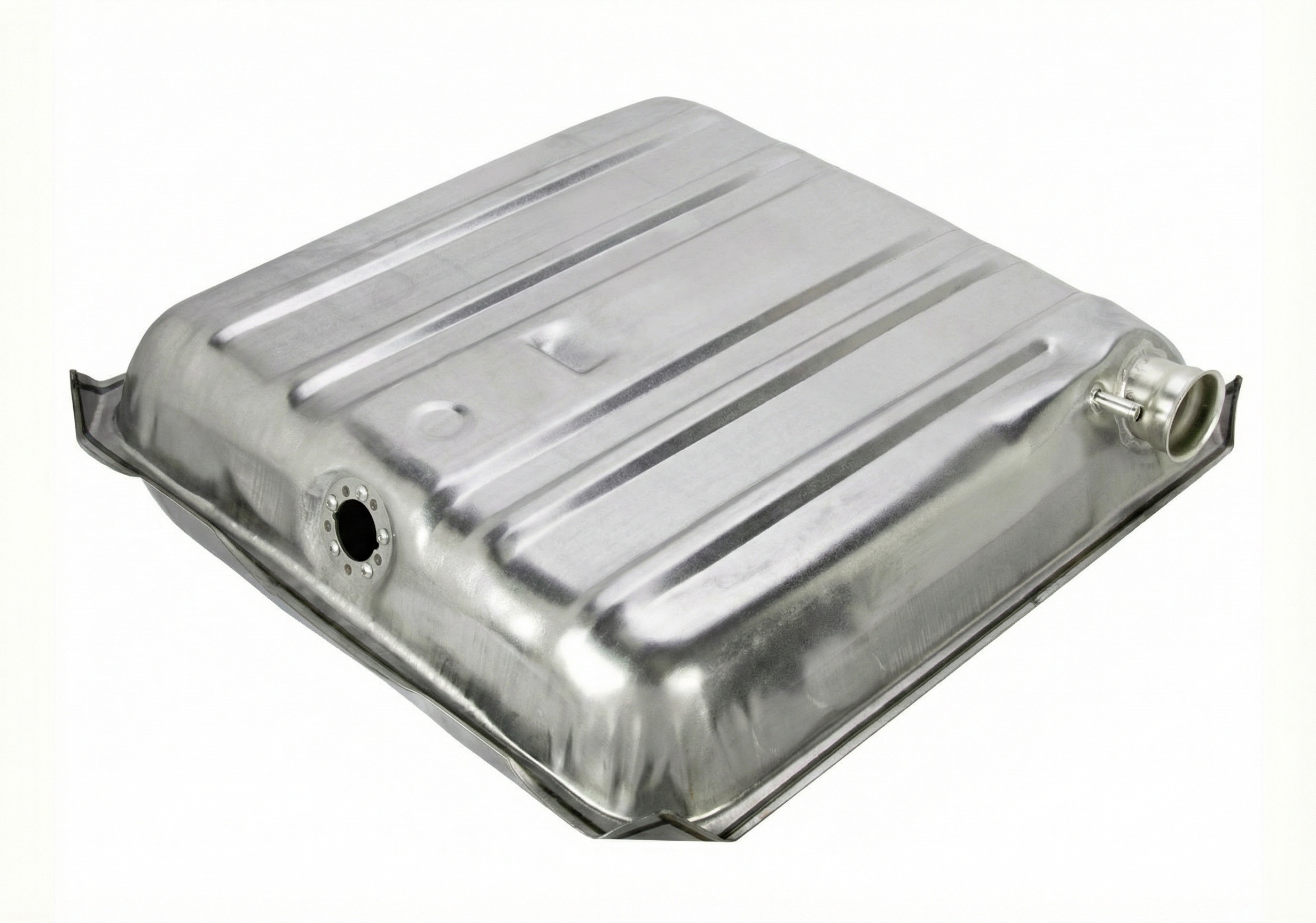
New Aftermarket Parts Available


The information in this article is provided for general reference and educational purposes only. Vehicle specifications, procedures, and part compatibility can vary by production date, trim level, and region. Always consult your vehicle's factory service manual and verify part numbers before purchasing or performing repairs. Safety-critical components such as airbags, seat belts, and braking systems should be installed by a qualified professional.
- Saturn Ion:
- 🧭 Diagnostic Flowchart
- 🎬 Helpful Videos
- 🛍️ Shop This Part
- What's Unique About the 2003-2007 Saturn Ion
- Symptoms You May Notice
- Most Likely Causes
- Rare But Worth Checking
- Diagnosis Steps
- Parts You'll Likely Need
- Related Codes That Often Appear With This One
- Platform-Specific Known Issues
- Mechanic-Grade Diagnostic Values
- Scan Tool Commands That Help
- Wiring & Ground Locations
- Real Owner Repair Stories
- OEM Part Supersession History
- Model Year Variations Within This Range
- Other Known Issues on This Vehicle
- Used vs. New Parts: Buying Guide for This Vehicle
- Real Owner Stories
- 2003-2007 Saturn Ion
- 2003-2007 Saturn Ion
- 2003-2007 Saturn Ion 2.2L Ecotec — ~115000 miles
- Related OBD-II Codes
- Frequently Asked Questions
- 🎟️ Get 5% Off