

P0441 on 2004-2006 Scion xA: EVAP Incorrect Purge Flow Causes and Fixes
This code almost always points to a faulty vapor purge valve (solenoid) located on top of the engine or a cracked/disconnected vacuum hose connected to it. Replacing the purge valve is a simple, sub-$100 DIY fix that often resolves the issue. Always check for disconnected hoses near the air filter box first, especially after recent service.
- P0441 on a Scion xA is most often caused by a bad purge valve or a cracked vacuum hose connected to it.
- Always start with a visual inspection. Check the gas cap and the small rubber hoses on and around the engine before buying any parts.
- The purge valve is located on top of the engine and is very easy to access and replace, making this a great DIY repair.
- If you also have trouble filling your gas tank, suspect a problem with the charcoal canister or vent valve.
What's Unique About the 2004-2006 Scion xA
On the Scion xA and other Toyotas from this era with the 1NZ-FE engine, the EVAP system components are generally robust, but the rubber vacuum hoses and the purge valve itself are common failure points. The purge valve (which Toyota often calls a Vacuum Switching Valve or VSV) is conveniently located right on top of the engine next to the airbox, making it exceptionally easy to inspect and replace compared to many other vehicles where it might be buried. This accessibility is a key reason it's a popular DIY repair.
Symptoms You May Notice
- Check Engine Light is on.
- A slight fuel smell may be noticeable.
- Slightly rough idle in some cases.
- Difficulty starting the engine, especially after refueling (if the purge valve is stuck open).
- On Scion models, the VSC (Vehicle Stability Control) and Trac Off lights may also illuminate along with the Check Engine Light when this code is present.
- Replacing the charcoal canister when the problem is just a simple purge valve or hose. A canister failure is less common for a P0441 code unless other symptoms like refueling difficulty are present.
- Immediately assuming a major leak when the issue is a disconnected hose near the airbox, which is a very common occurrence after routine maintenance like an air filter change. 🎬 See how to check for common EVAP leaks and purge valve issues
Most Likely Causes
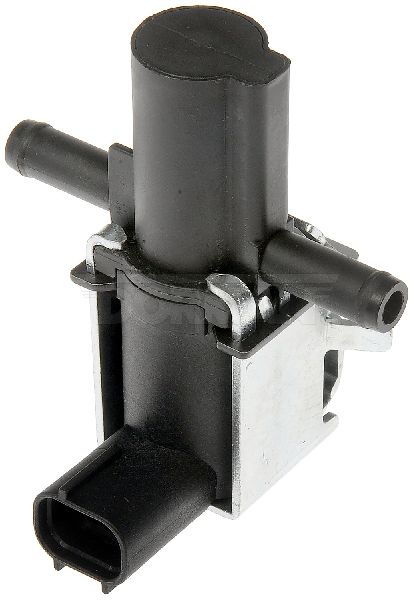
- Faulty Vapor Purge Valve (Solenoid) 🔴 High Probability → Shop Vapor Canister This valve cycles thousands of times and can fail by sticking open or closed, or by failing electrically. It's the most common failure point for this specific code on this platform, as confirmed by countless owner experiences.
How to confirm: With the engine cold and off, disconnect the hose from the valve that goes to the intake manifold and try to blow through it; it should be closed (no air passes). You can also apply 12V power to the valve's two terminals; you should hear a distinct click and the valve should open, allowing you to blow through it. A handheld vacuum pump can also be used to see if it holds vacuum when closed.
Typical fix: Replace the vapor purge valve. It is located on top of the engine, often attached to the air filter housing, and held by a single 10mm bolt or Phillips screw. 🎬 Watch: How to replace the purge valve on your Scion
Est. part cost: $40-$100 - Cracked or Disconnected EVAP Hoses 🟡 Medium Probability The rubber vacuum hoses in the engine bay are exposed to constant heat and can become brittle, cracked, or disconnected over time. A very common scenario reported by owners is a hose being accidentally disconnected during an air filter change. Another owner on ScionLife noted that the hose near the firewall is notorious for cracking at the clamp.
How to confirm: Visually inspect all vacuum lines connected to the purge valve and running along the intake manifold and firewall. Pay close attention to the ends of the hoses where they connect to fittings, as this is where cracks often appear. A ScionLife user found their issue was a loose hose near the EVAP sensor and fixed it with $3 clamps, avoiding a $900+ dealer quote for a new canister.
Typical fix: Replace the cracked section of vacuum hose. This is often inexpensive and can be done with a small piece of new hose and clamps.
Est. part cost: $5-$20 - Faulty or Loose Gas Cap ⚪ Low Probability → Shop Fuel Tank Cap While a bad gas cap typically triggers a large leak code (P0455) or small leak code (P0456), a faulty seal can sometimes contribute to incorrect flow readings. It's an easy and cheap first check that is frequently recommended. However, some mechanics note that P0441 is specifically a flow code, not a leak code, making the gas cap a less likely direct cause.
How to confirm: Ensure the gas cap clicks several times when tightened. Inspect the rubber O-ring on the cap for cracks, stiffness, or damage. Some owners have reported that even a visually good cap can be faulty, and replacement with an OEM part is the only way to be sure.
Typical fix: Replace the gas cap with a high-quality OEM or equivalent part. Avoid cheap aftermarket caps if possible.
Est. part cost: $15-$30
Rare But Worth Checking
- Clogged or Failed Charcoal Canister: → Shop Vapor Canister This is more likely if you have trouble filling the gas tank (the pump nozzle clicks off repeatedly) or if you consistently overfill the tank. The canister can become saturated with fuel, or internal charcoal pellets can break down and clog the lines or the purge valve itself. One Reddit user replaced the canister and purge valve for P0441, but the code returned, indicating it's not always the solution.
- Wiring Issue to Purge Valve: → Shop Vapor Canister The electrical connector or wiring for the purge valve can become damaged, corroded, or brittle from engine heat, preventing the valve from operating even if the valve itself is good. A YouTube video shows a 2006 Scion xB where the wires to the purge valve connector had broken off completely due to vibration, causing a P0441 code. Another video details replacing just the pigtail connector for about $32.
Diagnosis Steps
- Read the code with an OBD-II scanner to confirm P0441 and check for any other related codes (e.g., P0442, P0446, P0455).
- Inspect the gas cap. Make sure it is tight and the seal is in good condition. Consider replacing it with an OEM cap as a cheap first step if it's old.
- Visually inspect the vacuum hoses in the engine bay, especially those connected to the purge valve on top of the engine and near the air filter housing. A disconnected hose here is a very common cause. Follow the hoses to the firewall and check for cracks, especially at bends and connection points.
- Locate the purge valve (VSV) on top of the engine. Check its electrical connector and wiring for breaks, corrosion, or damage. Wiggle the connector to see if it's loose.
- Test the purge valve's function. It should be closed (hold vacuum) with no power and open (pass air/vacuum) when 12V is applied.
- If the purge valve and hoses are good, check the wiring and connector to the purge valve for damage or corrosion.
- If the issue persists, the problem may be a clogged line or a faulty charcoal canister. A smoke test is the most effective way to find hard-to-see leaks in the system. 🎬 Watch: A detailed diagnostic and repair walkthrough for the Scion xA
Parts You'll Likely Need
- Vapor Canister Purge Valve / Solenoid (VSV)
(OEM #90910-12276)— This is the most frequent cause of P0441. It's an electromechanical valve that wears out over time and gets stuck open or closed.
Trusted brands: Denso (OEM supplier), Standard Motor Products (SMP), Dorman (e.g., 911-601, though cross-reference should be verified for the xA specifically)
OEM price range: $70-$100
Aftermarket price range: $30-$70 - Vacuum Hose — Hoses become brittle and crack, especially the small lines around the purge valve and intake manifold. Often a very small, hard-to-see crack is the culprit.
Trusted brands: Generic vacuum hose by the foot from any auto parts store.
OEM price range: $10-$25 for pre-formed OEM hoses
Aftermarket price range: $5-$10 for generic hose - Charcoal Canister Assembly
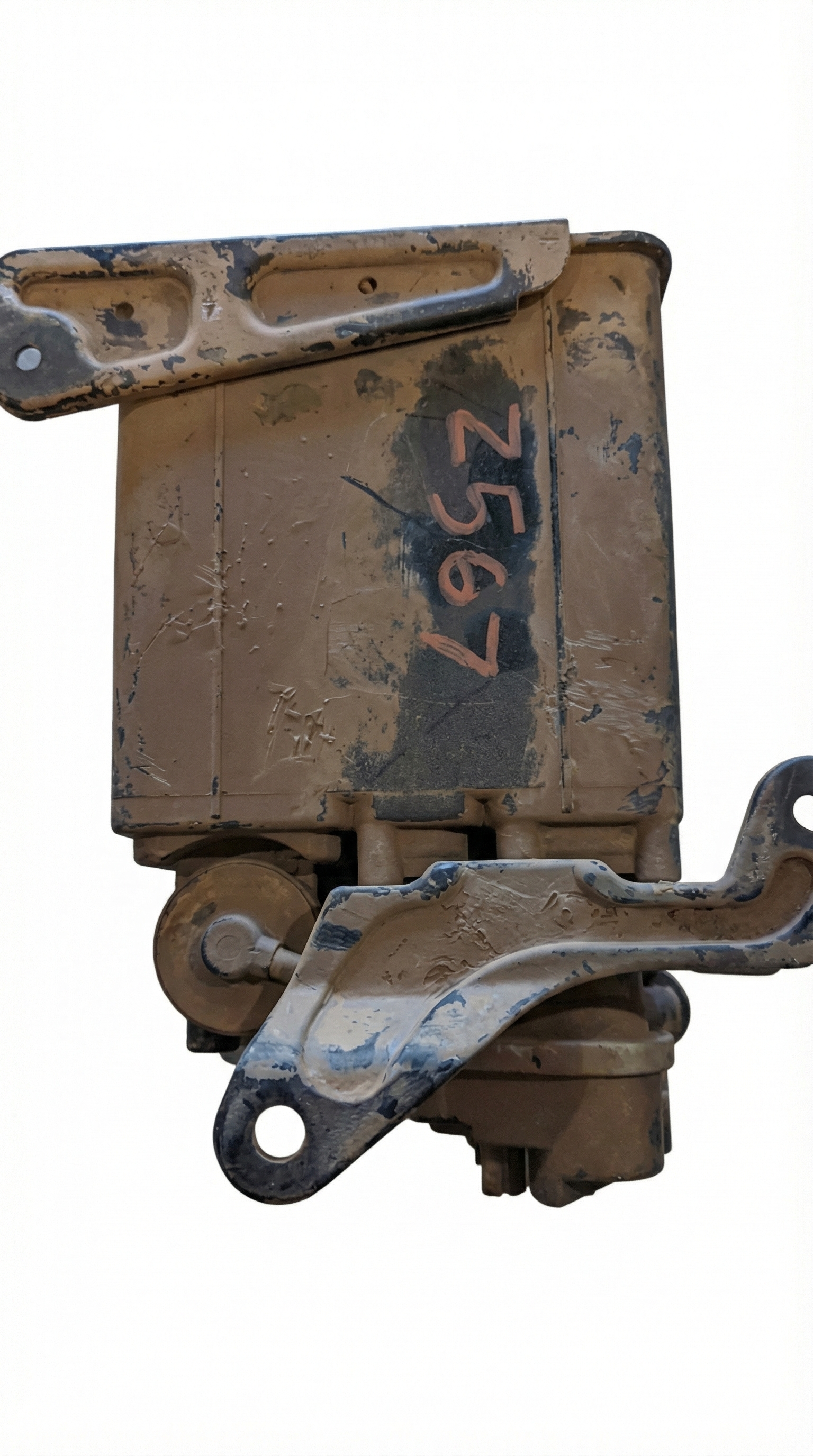
(OEM #77740-52070)— Needed if the canister is cracked, saturated with fuel from overfilling, or internally clogged, which can happen but is less common for this code. Note: There was a part number split in 2005; early '05 models use 77740-52070, while late '05 and '06 models use 77740-52100. A replacement can be very expensive.
Trusted brands: Toyota (OEM), Dorman
OEM price range: $240-$300
Aftermarket price range: $180-$250
Related Codes That Often Appear With This One
- P0442 — Stands for "EVAP System Leak Detected (Small Leak)." A cracked hose or failing purge valve can be interpreted by the ECM as both an incorrect flow and a small leak. These codes frequently appear together on the Scion xA/xB.
- P0446 — Stands for "EVAP System Vent Control Circuit." This points to a problem with the vent side of the system, but sometimes a purge flow issue can cause the system's self-test to fail in a way that flags the vent circuit as well. It is very common to see P0441, P0442, and P0446 all at once.
- P0455 — Stands for "EVAP System Leak Detected (Large Leak)." This can appear with P0441 if a hose is completely disconnected or the purge valve is stuck wide open.
Technical Service Bulletins (TSBs) & Recalls
- S-SB-0030-09 Rev1 (for Scion tC, but relevant context for P0441)
- Toyota TSB EL011-05 (2005): While for different models, this TSB addresses P0441, P0442, and P0446 and points to an improved design for the Canister Closed Valve (CCV) and vacuum switching valve (VSV), indicating Toyota was aware of issues with these components in this era.
- NHTSA ODI #10493611: A manufacturer service bulletin (Action Number 10033635) notes that some Scion vehicles may exhibit a MIL on condition with DTCs P0441, P0455, or P0456.
Platform-Specific Known Issues
- Disconnected Hose After Air Filter Service: A recurring theme on ScionLife forums is owners discovering a P0441 code immediately after an oil change or air filter replacement. The cause is almost always a vacuum hose attached to the air filter box that was disconnected by the technician and not reattached. This is the first place to look.
- Brittle Wiring at Purge Valve Connector: → Shop Vapor Canister Due to age and engine heat, the wires leading to the purge valve's electrical connector can become brittle and break. In some cases, the connector pigtail itself needs to be replaced, which is a more involved but still manageable DIY repair.
Mechanic-Grade Diagnostic Values
- Purge Valve (VSV) Coil Resistance — expected: 30 - 33 Ohms at 68°F (20°C). Failure: A reading significantly outside this range, or an open circuit (infinite resistance), indicates a faulty coil.
- Purge Solenoid Duty Cycle (Live Data) — expected: 5% - 20% at idle. Failure: A value stuck at 0% or 100% at idle suggests the valve is either not being commanded or is electrically faulty.
- Voltage at Purge Valve Connector — expected: ~6.4 Volts (when commanded by ECU). Failure: 0 volts when the ECU should be activating the valve points to a wiring or ECU driver issue.
- Fuel Tank Pressure (DTC Set Condition) — expected: Pressure does not drop below -1.96 kPa (-0.58 in.Hg). Failure: If pressure drops below -1.96 kPa for 0.1 seconds when the purge solenoid duty cycle is at 0%, the ECU may set the P0441 code, indicating a stuck-open valve.
Hidden / Shadow Codes Worth Checking
- P043E, P043F, P2401, P2402, P2419: This specific combination of five DTCs points to a known issue of water intrusion into the EVAP system, likely from a faulty fuel tank filler pipe cover holder. This is a documented issue in a Toyota Technical Service Bulletin (TSB). (see via A standard OBD-II scanner. If all five codes are present simultaneously, it strongly suggests this specific failure scenario over a simple purge valve fault.)
Scan Tool Commands That Help
- Toyota Techstream (or equivalent professional scanner): Automatic EVAP System Check — This function forces the vehicle to run the entire EVAP monitor sequence, which normally requires a 5-hour 'soak time' after turning the engine off. It is essential for verifying that a repair was successful without having to wait. The test takes approximately 8-18 minutes and will set a pending code if a fault is detected.
- Toyota Techstream (or equivalent professional scanner): Active Test: Control the Purge VSV — This bidirectional command allows you to manually open and close the purge valve while the engine is running. You can command it open and listen for a click or a change in engine idle, confirming the valve is responding to the ECU's signal. This helps isolate a bad valve from a wiring problem.
Wiring & Ground Locations
- Ec — Located on the left (driver's side) top of the engine.. This is a primary engine ground point. A poor connection here could cause a variety of sensor and actuator issues, including erratic operation of the purge valve solenoid.
- ED — Located on the front fender apron on the left-hand (driver's) side of the engine compartment.. This is a major ground point for the engine room main wire harness. Corrosion or a loose connection at this point can affect multiple systems controlled by the ECU, including the EVAP purge valve.
- Purge Valve Connector — Two-wire connector plugging directly into the purge valve (VSV) on top of the engine, near the airbox.. The wires at this connector are prone to becoming brittle and breaking from engine heat and vibration. One wire is a power feed (often from the EFI relay) and the other is the ground-side control wire from the ECU. A break here is a common cause of P0441.
Real Owner Repair Stories
- YouTube channel JDC Auto (2005 Scion xA) — Check Engine Light with codes P0441, P0442, and P0446.
❌ Tried (didn't work) The owner was quoted over $1,000 by another shop to replace the purge valve and charcoal canister.
✅ What actually fixed it A detailed inspection revealed a broken wire right at the electrical connector for the purge valve solenoid, as well as a separate cracked vacuum hose. The final repair was fixing the broken wire and replacing the small hose, not replacing the expensive components. - YouTube channel RB The Mechanic (2005 Scion xA) — Check Engine Light with codes P0441, P0442, and P0446.
❌ Tried (didn't work) Visual inspection of hoses and gas cap did not reveal an obvious fault.
✅ What actually fixed it The electrical connector pigtail for the purge valve was corroded and failing. Replacing the entire pigtail (costing ~$32) resolved all three codes. The valve itself was still functional. - ScionLife forum user 'tribe' (2005 Scion xA) — Check Engine Light with code P0442 (often appears with P0441).
❌ Tried (didn't work) Initially suspected the VSV on the charcoal canister based on other user reports.
✅ What actually fixed it The actual cause was a cracked vacuum hose in the engine compartment connected to the purge valve (the one in the engine bay, not the one on the canister). This highlights that even when multiple EVAP codes are present, the fault is often a simple hose in the engine bay.
"I Checked Everything" — The Actual Cause
- In cases where the P0441 is caused by a broken wire or faulty electrical connector at the purge valve, a smoke test will come back clean. The system has no physical leak, but the valve cannot be commanded to open or close correctly, leading the ECU to log an 'Incorrect Flow' fault. The valve itself may also test good with a multimeter if the break is in the harness-side connector, making this a commonly missed diagnosis.
When the Usual Fixes Don't Work
- While the vast majority of P0441 fixes involve the purge valve or its adjacent hoses in the engine bay, some owners have had to address other parts of the system. In one forum thread, after a gas cap replacement failed to fix P0441 and P0442, the owner ultimately had to replace the charcoal canister and the VSV mounted on it (the vent valve) to resolve the codes. This indicates that while less common, a failure at the canister end of the system can also manifest as an incorrect flow code.
Model Year Variations Within This Range
- 2006: A Technical Service Bulletin (TSB) was issued for some 2006 models where water intrusion into the EVAP system via a faulty fuel tank filler pipe cover holder could cause a specific set of five DTCs (P043E, P043F, P2401, P2402, P2419). This is a unique failure mode not typically seen on earlier years.
- 2005: As noted in Pass 2, there is a critical part number split for the charcoal canister during the 2005 model year. Early production models use part number 77740-52070, while late production 2005 and all 2006 models use 77740-52100. Visual confirmation or VIN lookup is required before ordering.
Diagnostic Flowchart
Real Owner Stories
Aggregated from forums and TSBs cited above. Mileages and costs reflect what owners reported in those sources.
2006 Scion xA — 50000 miles
Symptoms: Check engine light turned on while driving on the freeway, but the car seemed to run fine. Scanned and found codes P0441, P0442, and P0446.
What fixed it: Found a detached vacuum hose by the air filter. Put it back and the issue was fixed.
Source hint: ScionLife.com: 'Scion xA check engine light codes P0441 P0442 P0446'
2004-2006 Scion xA
Symptoms: Check engine light was on and the owner was quoted $900-$1000 by the dealer for a charcoal canister replacement.
What fixed it: Tightened loose EVAP hoses near the EVAP sensor with clamps, avoiding the expensive canister replacement.
Cost: $3-$3
Source hint: ScionLife.com: 'Scion Xa Charcoal Canister Problems'
Scion tC
Symptoms: Triggered a P0441 EVAP Incorrect Purge Flow code.
What fixed it: Replaced a notorious EVAP hose that had cracked near the firewall.
Source hint: ScionLife.com: 'P0441 EVAP Incorrect Purge Flow'
Related OBD-II Codes
Frequently Asked Questions
I just changed the air filter on my 2004-2006 Scion xA and got a P0441 code. What happened?
Along with the Check Engine Light, my VSC and Trac Off lights came on. Is this related to P0441?
Does Toyota TSB EL011-05 apply to my Scion xA's P0441 code?
The dealer quoted me $900 to replace the charcoal canister for P0441 on my xA. Is there a cheaper fix?
I replaced the purge valve on my 1.5L 1NZ-FE but the code came back. What else should I check?
Is my gas cap causing the P0441 code on my Scion xA?
Helpful Videos
Used OEM Parts in Stock
New Aftermarket Parts Available


The information in this article is provided for general reference and educational purposes only. Vehicle specifications, procedures, and part compatibility can vary by production date, trim level, and region. Always consult your vehicle's factory service manual and verify part numbers before purchasing or performing repairs. Safety-critical components such as airbags, seat belts, and braking systems should be installed by a qualified professional.
- Scion xA:
- 🧭 Diagnostic Flowchart
- 🎬 Helpful Videos
- 🛍️ Shop This Part
- What's Unique About the 2004-2006 Scion xA
- Symptoms You May Notice
- Most Likely Causes
- Rare But Worth Checking
- Diagnosis Steps
- Parts You'll Likely Need
- Related Codes That Often Appear With This One
- Technical Service Bulletins (TSBs) & Recalls
- Platform-Specific Known Issues
- Mechanic-Grade Diagnostic Values
- Hidden / Shadow Codes Worth Checking
- Scan Tool Commands That Help
- Wiring & Ground Locations
- Real Owner Repair Stories
- "I Checked Everything" — The Actual Cause
- When the Usual Fixes Don't Work
- Model Year Variations Within This Range
- Real Owner Stories
- 2006 Scion xA — 50000 miles
- 2004-2006 Scion xA
- Scion tC
- Related OBD-II Codes
- Frequently Asked Questions
- 🎟️ Get 5% Off