

P0441 on 2007-2011 Toyota Camry: EVAP Incorrect Purge Flow Causes and Fixes
For a 2007-2011 Camry, code P0441 is most often a faulty purge valve in the engine bay or a failed charcoal canister near the gas tank. Start by checking the gas cap is tight. A new purge valve is around $60-$120, while a canister can be several hundred dollars.
- P0441 on a 2007-2011 Camry is an emissions code that will not affect driving safety.
- Always check that the gas cap is tight and its seal is intact before buying any parts. Use an OEM cap for replacement.
- The two most likely failed parts are the purge valve (in the engine bay) and the charcoal canister (under the rear of the car).
- If you have trouble filling your gas tank, the charcoal canister is the most probable cause.
- A smoke test is the most effective way to diagnose the problem if it's not an obvious gas cap or purge valve issue.
What's Unique About the 2007-2011 Toyota Camry
On the 2007-2011 (XV40 generation) Camry, the two most common culprits for P0441 are distinct and well-documented. The first is a faulty purge valve (also called a VSV or vapor switching valve) located in the engine bay. The second is a cracked or internally failed charcoal canister, located under the rear of the car. While older Camrys were famous for canisters that would break down and send charcoal pellets through the system, this generation is more prone to the plastic canister housing itself cracking from age and exposure.
Symptoms You May Notice
- Check Engine Light is on.
- VSC/Trac light may also illuminate with the Check Engine Light. This is a standard Toyota safety feature to draw attention to the CEL.
- A faint smell of gasoline, particularly near the rear of the car.
- Difficulty refueling (the gas pump nozzle clicks off repeatedly before the tank is full), which strongly points to a clogged charcoal canister.
- Slightly rough or surging idle in some cases.
- Car may be hard to start immediately after filling up with gas, which can be caused by a purge valve stuck open.
- Replacing the charcoal canister when only the purge valve is bad. The purge valve is cheaper and easier to replace, and should be tested first unless there are clear symptoms of canister failure (like refueling issues).
- Replacing other EVAP components before checking for a loose or worn gas cap, which is the simplest and cheapest fix.
- Using an aftermarket gas cap which fails to seal properly, causing the code to return.
Most Likely Causes
- Faulty Purge Valve / Solenoid (VSV) 🔴 High Probability → Shop Vapor Canister This is a common failure item across many Toyota models of this era. The solenoid can fail electrically, get stuck open or closed, or respond too slowly to the computer's command. The electrical connector can also corrode or have wires break from vibration.
How to confirm: The valve is located in the engine bay, near the air filter housing on the 2.4L and on the intake manifold on the 3.5L V6. With the engine running, you can sometimes feel or hear it clicking. A more definitive test is to disconnect it and apply 12V power to see if it actuates 🎬 Watch: How to test if your purge valve is good or bad., or use a hand vacuum pump to see if it holds vacuum when closed. A slow response when power is applied can also trigger the code.
Typical fix: Replace the purge valve assembly. It is typically held by one bolt and has two vacuum hoses and an electrical connector.
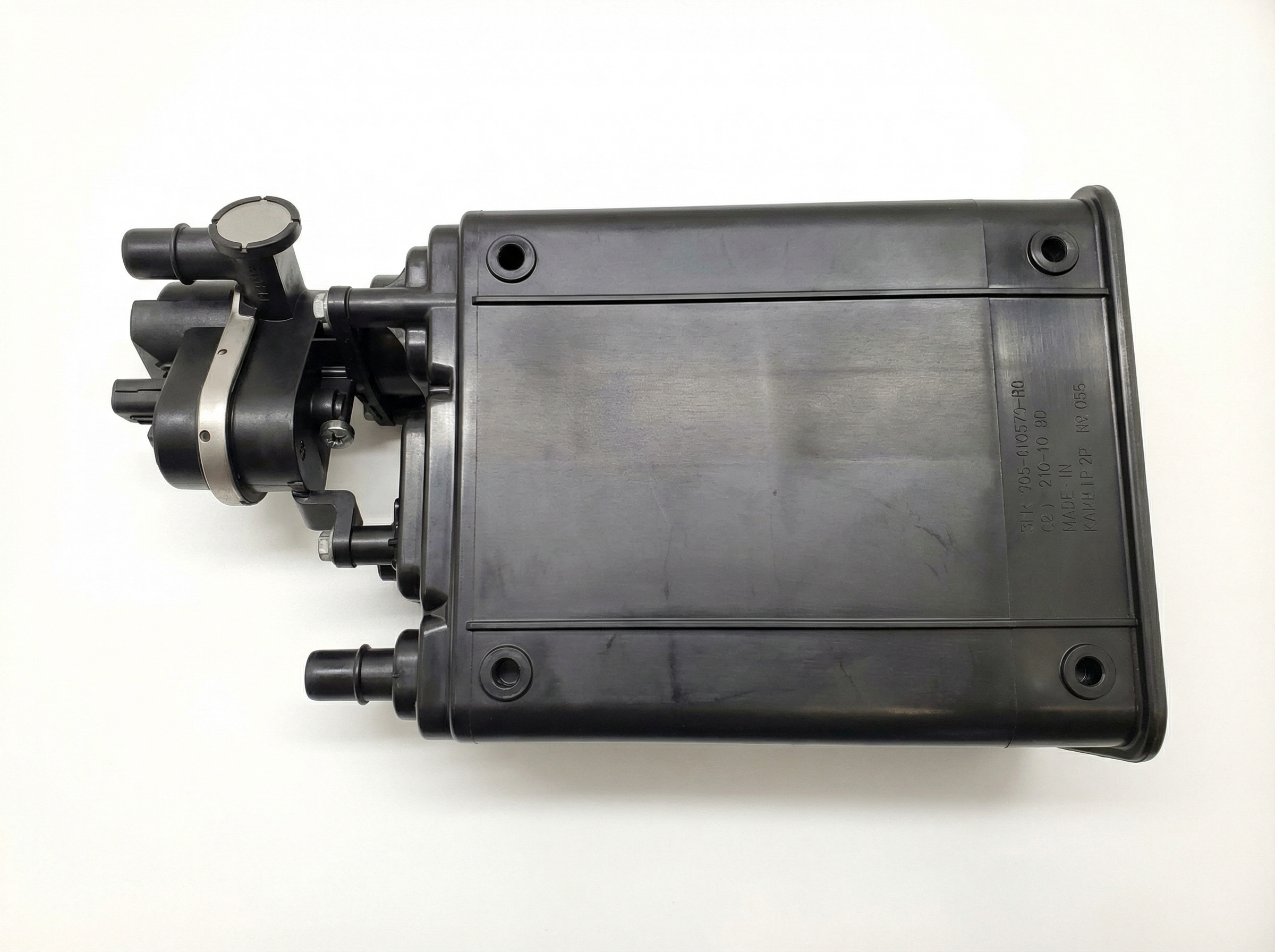
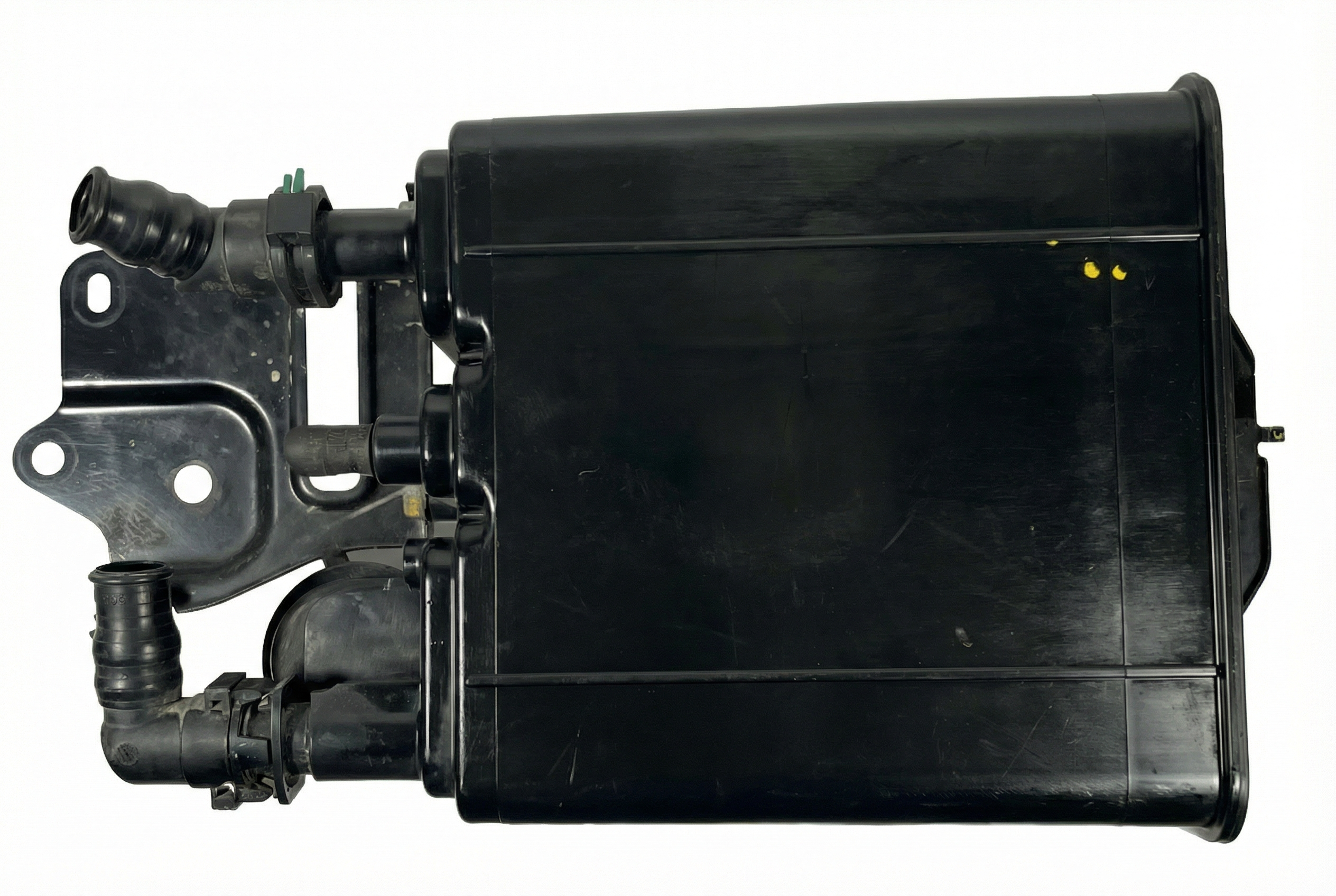
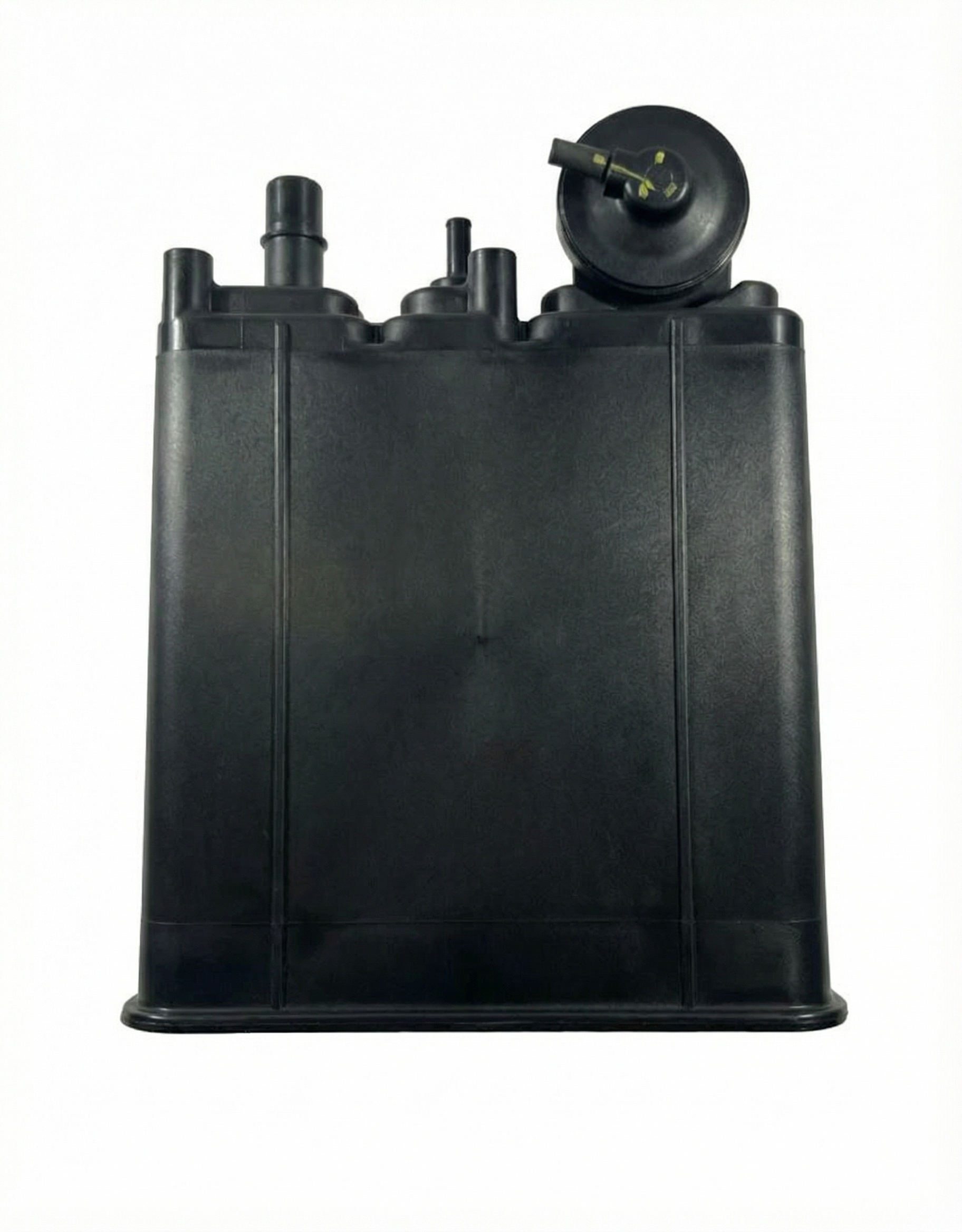
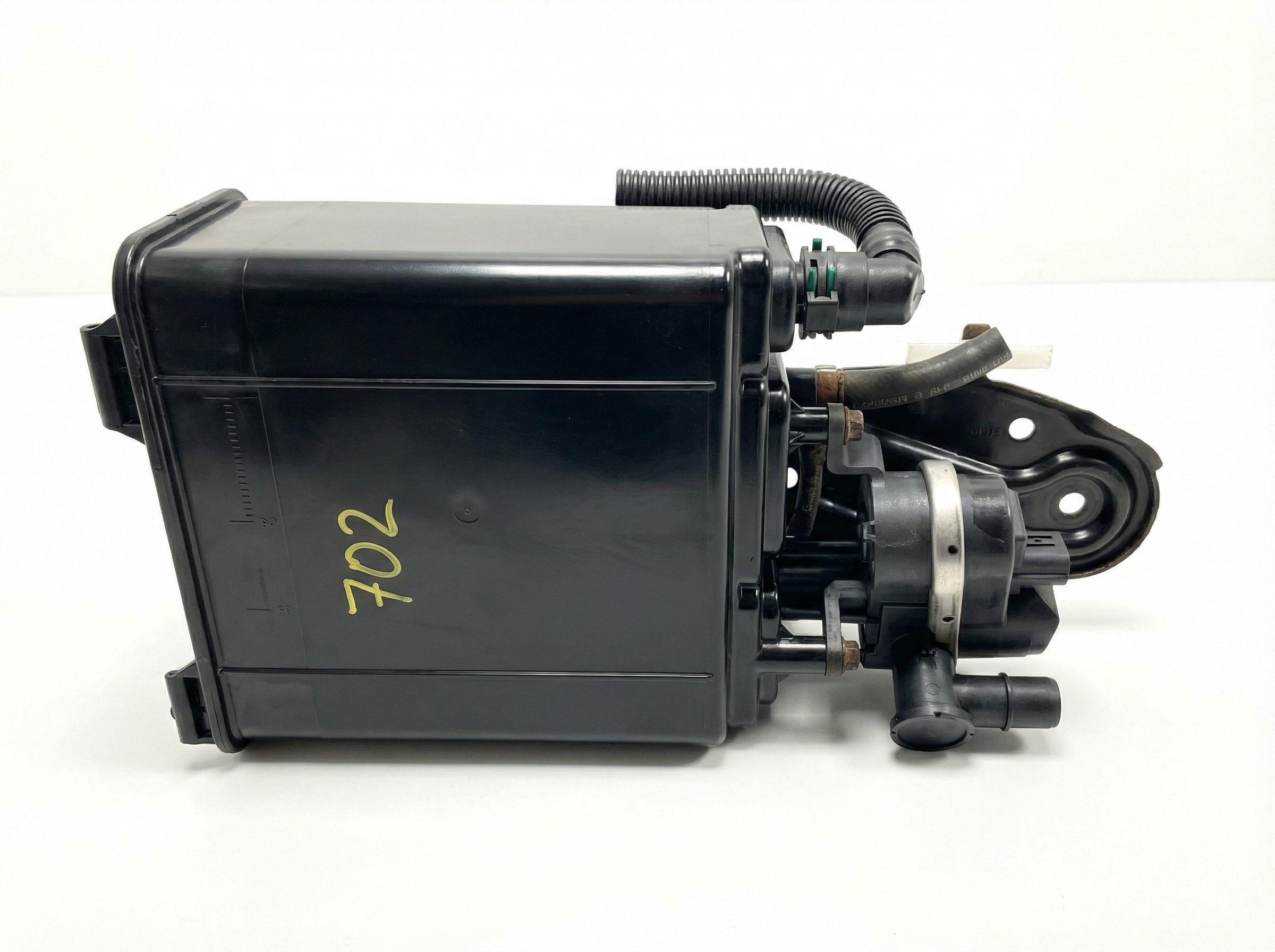
Est. part cost: $70-$130 - Cracked or Failed Charcoal Canister 🔴 High Probability → Shop Vapor Canister The canister is located under the rear of the car, where it is exposed to road debris and the elements. The plastic housing can develop hairline cracks over time, creating a leak. It can also become clogged internally, often from habitually overfilling the fuel tank, which prevents proper vapor flow.
How to confirm: A visual inspection may reveal cracks. Difficulty filling the fuel tank is a very strong symptom of a clogged canister. 🎬 See how to remove and replace the charcoal canister yourself. The most reliable method is a professional smoke test, which will show smoke leaking from the canister body if it is cracked or from an associated hose.
Typical fix: Replace the entire charcoal canister assembly. This is a more expensive and involved repair than the purge valve.
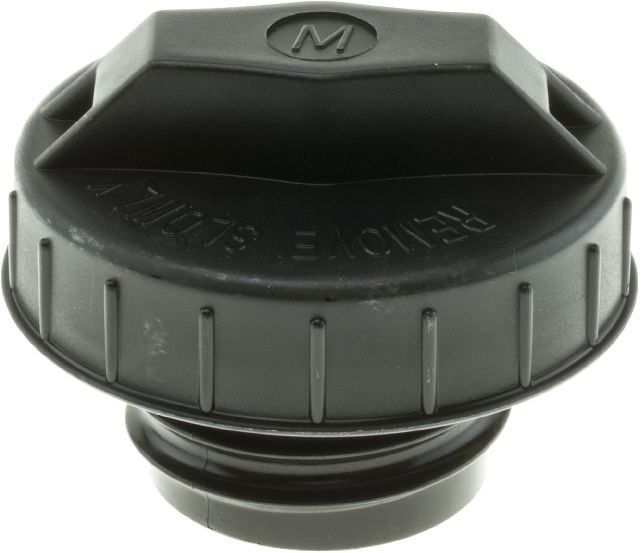
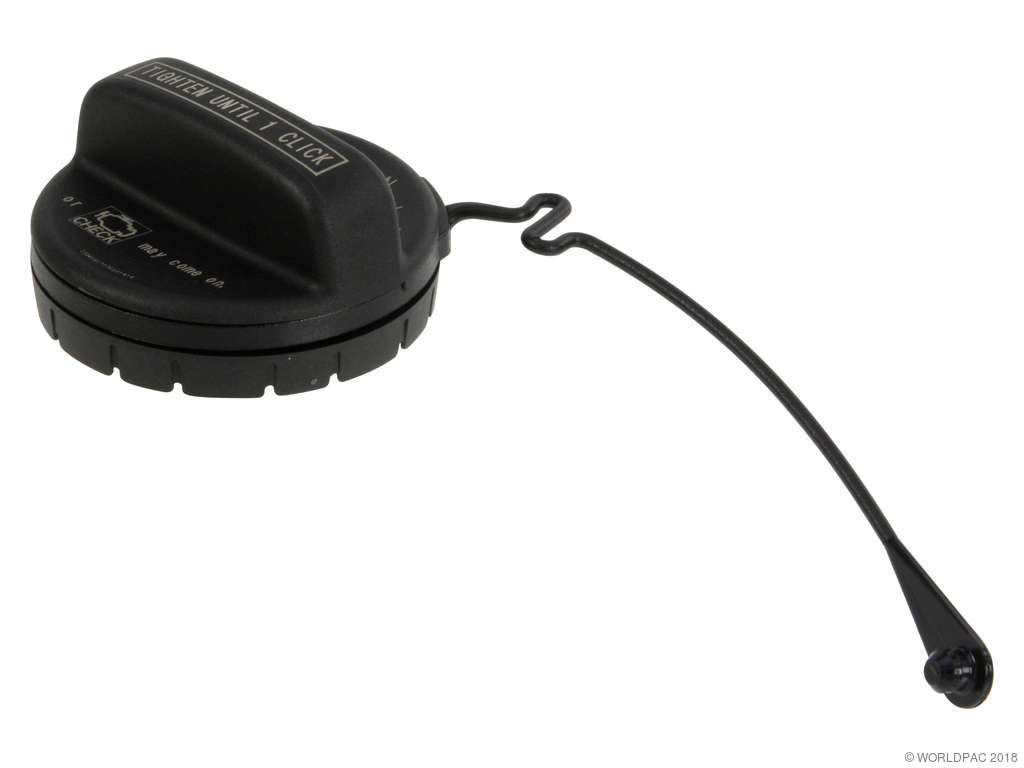
Est. part cost: $250-$450 - Loose or Faulty Gas Cap 🟡 Medium Probability → Shop Fuel Tank Cap The rubber O-ring on the gas cap degrades over time, preventing a proper seal. This is a common issue on all vehicles. Using a non-OEM cap is a frequent cause of recurring EVAP codes.
How to confirm: First, ensure the cap is tightened until it clicks. Inspect the rubber seal for cracks, stiffness, or damage. If it looks worn, replacement is recommended as a first step. 🎬 Watch: How a bad gas cap causes these specific error codes.
Typical fix: Replace the gas cap. It is highly recommended to use a genuine OEM Toyota cap, as many aftermarket caps are known to cause sealing issues.
Est. part cost: $25-$40 - Cracked or Disconnected EVAP Hoses ⚪ Low Probability Rubber vacuum hoses in the engine bay become brittle with age and heat cycles, leading to small cracks, especially at the connection points to the purge valve.
How to confirm: Visually inspect all vacuum lines connected to the purge valve and intake manifold for obvious cracks, breaks, or loose connections. A smoke test is the most effective way to find small hose leaks.
Typical fix: Replace the cracked section of hose.
Est. part cost: $10-$30
Rare But Worth Checking
- Faulty Vapor Pressure Sensor: This sensor tells the computer the pressure within the EVAP system. If it fails, it can send incorrect data, triggering a P0441. This failure usually triggers other codes alongside P0441, such as P0451, P0452, or P0453.
- Faulty Engine Control Module (ECM): This is extremely rare. The ECM should only be considered if the purge valve, its wiring, the canister, and all hoses have been tested and confirmed to be in good working order. A manufacturer report for a related Toyota model (NHTSA ODI #10314949) noted that P0441 was resolved by replacing the Engine Control Module when accompanied by transmission-related codes like P2716.
Diagnosis Steps
- Check the Gas Cap: Ensure it is tight and clicks. Inspect the seal for any cracks or damage. If in doubt, replace it with a Genuine Toyota OEM part as the first step.
- Inspect Engine Bay Hoses: Visually inspect the vacuum hoses connected to and surrounding the purge valve (located on top/side of the engine) for any visible cracks or disconnections.
- Test the Purge Valve (VSV): With the engine off, disconnect the vacuum lines from the valve and try to blow through it. It should be closed. You can also use a scan tool to command it open and listen for a click, or apply 12V directly to its terminals. If it's stuck open, doesn't click, or seems to respond slowly, it has likely failed.
- Check for Canister Clogs: If you have difficulty refueling (the pump clicks off repeatedly), the charcoal canister is almost certainly clogged and needs replacement.
- Perform a Smoke Test: If the above steps do not identify the issue, the next step is to have a smoke test performed. A mechanic will inject pressurized smoke into the EVAP system to find the source of the flow issue, which could be a cracked canister or a hard-to-see leak in a line.
Parts You'll Likely Need
- Vapor Canister Purge Valve / Solenoid
(OEM #90910-12276 (superseded by 90910-TC001))— This is one of the most common failure points for P0441. It gets stuck open or closed, causing incorrect vapor flow. Part number 90910-12276 is used for both the 2.4L and 3.5L engines in this generation.
Trusted brands: Genuine Toyota, Denso (OEM Supplier), Dorman, Standard Motor Products
OEM price range: $100-$135
Aftermarket price range: $60-$100 - Charcoal Canister Assembly
(OEM #77740-06210)— The canister housing is known to crack on this Camry generation, and it can also become clogged, especially if the fuel tank is frequently overfilled. This part number is cited for 2007-2011 models, but always verify with your VIN as Federal vs. California emissions models can differ.
Trusted brands: Genuine Toyota
OEM price range: $300-$450
Aftermarket price range: $150-$250 - Fuel Tank Cap
(OEM #77300-06040)— A worn gas cap seal is a very common cause of all EVAP codes. It's the first, easiest, and cheapest part to replace. This part number supersedes older versions.
Trusted brands: Genuine Toyota, Gates
OEM price range: $25-$40
Aftermarket price range: $10-$20
Related Codes That Often Appear With This One
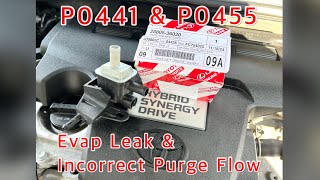
- P0455 — Indicates a large EVAP leak. A stuck-open purge valve or a cracked charcoal canister can be interpreted by the computer as both an incorrect flow (P0441) and a large leak (P0455). NHTSA ODI #11703613 describes a case where P0441 and P0455 appeared together, indicating a large leak alongside the incorrect flow fault.
- P0456 — Indicates a small EVAP leak. A failing component like a purge valve that doesn't seal perfectly or a hairline crack in a hose can trigger both a flow fault and a small leak code.
- P0171 — System Too Lean. This often appears with P0441 (as seen in NHTSA ODI #11331260) when an EVAP fault affects the fuel/air mixture, potentially causing performance issues.
Technical Service Bulletins (TSBs) & Recalls
- While several TSBs exist for P0441 on older Toyota models (e.g., T-EG003-98 for 1998 models), no specific TSB for the 2007-2011 Camry with this code was found during research. However, TSB T-SB-0049-12 exists for the 2010-2011 Camry for code P0456 (small leak), which involves a logic update to the ECM, indicating Toyota has addressed EVAP system sensitivity on this platform.
Platform-Specific Known Issues
- Owner Experience: P0441 and P0455 on a 2012 Camry Hybrid: A user on YouTube with a 2012 Camry Hybrid (which shares many components with the 2007-2011 generation) documented their diagnosis of P0441 and P0455. After getting the codes, they suspected the purge valve. Upon testing the original valve by applying power, they noted it was slow to respond. After replacing it with a new OEM purge valve (costing around $130), they noted the new valve had a much louder and faster 'click'. After replacement and clearing the codes, the issue was resolved, confirming the old valve was faulty despite not being completely dead.
Mechanic-Grade Diagnostic Values
- EVAP Purge Valve (VSV) Coil Resistance — expected: 23 to 26 Ω at 20°C (68°F). Failure: An open circuit (infinite ohms) or a shorted circuit (near-zero ohms) indicates a failed solenoid coil.
- Purge Valve Connector - Power Pin Voltage — expected: 9-14V with ignition ON. Failure: No voltage indicates a problem with the power supply, such as the EFI relay or a fuse, not the valve itself.
Scan Tool Commands That Help
- Toyota Techstream: Active Test: 'Activate the VSV for EVAP Control' — This command allows a technician to manually cycle the purge valve on and off. It is used to confirm if the valve is physically responding (clicking) to the ECM's command, which helps isolate a bad valve from a wiring or ECM driver issue.
- Toyota Techstream: EVAP System Check — This is an automated test sequence that commands the various EVAP solenoids and monitors the fuel tank pressure sensor to check the entire system for leaks and proper flow, similar to the monitor the ECM runs automatically. It can be used to confirm a repair is successful without waiting for a full drive cycle.
Wiring & Ground Locations
- Purge Valve Connector Pin 1 — On the two-pin connector at the EVAP purge valve in the engine bay.. This pin receives 12V power from the EFI relay. A lack of voltage here points to a power supply issue (fuse, relay) rather than a faulty valve.
- Purge Valve Connector Pin 2 (PRG) — On the two-pin connector at the EVAP purge valve, this wire runs back to the ECM.. This is the control wire. The ECM provides a pulsed ground signal on this pin to open the valve. A break in this wire is a common cause of a P0443 (circuit) code but can also be related to a P0441 flow issue if the signal is intermittent.
- Engine Control Module (ECM) — Behind the right side of the dash (glove box area).. This is the final destination for the purge valve control wire. Testing for continuity between the valve connector and the ECM connector can confirm if the wiring harness is intact.
Real Owner Repair Stories
- YouTube user 'T-TEN', a Toyota technician (2012 Toyota Camry Hybrid (shares EVAP components with 2007-2011 models)) — Check Engine Light with codes P0441 and P0455.
❌ Tried (didn't work) A smoke test was performed and passed, indicating no significant leaks in the system.
✅ What actually fixed it The technician tested the original purge valve by applying power and noted it was slow to respond and the click was weak. He replaced it with a new OEM purge valve, which had a much faster and louder click. This resolved both codes, indicating the 'Incorrect Purge Flow' was due to a lazy, slow-opening solenoid, not a complete failure or a leak. - NHTSA ODI #11415574 (Toyota RAV4 - cross-manufacturer reference) — ❌ Tried (didn't work) An owner reported replacing the leak detection pump and the vapor canister purge solenoid, but the P0441 and P0455 codes remained.
"I Checked Everything" — The Actual Cause
- A common scenario for P0441 is that a smoke test will pass, showing no leaks. This is because P0441 is an 'Incorrect Purge Flow' code, not necessarily a leak code (like P0455/P0456). The system can be perfectly sealed, but if the purge valve is stuck closed, clogged, or responding too slowly, no flow will occur when the ECM commands it, triggering the code without any visible smoke leak.
Documented NHTSA Reports
- An owner reported in NHTSA ODI #11331260 that their vehicle was not performing properly and displayed multiple codes including P0441, P0455, and P0171, while noting a noise from the fuel pump.
- In NHTSA ODI #11651658, an owner of a related Toyota model noted that the P0441 code appeared alongside brake and traction control warnings (C1391), and was discussed in relation to a customer service program.
OEM Part Supersession History
90910-12276→90910-TC001— Standard part revision and update by Toyota.
Heads up: The new part number is a direct replacement and fully compatible.77740-33180→77740-06210— Standard part revision for the charcoal canister assembly.
Heads up: The new part number is the correct replacement for the 2007-2011 Camry.
Model Year Variations Within This Range
- 2007-2009 vs 2010-2011: The 2.4L (2AZ-FE) engine was used in 2007-2009 models, while the 2.5L (2AR-FE) engine was introduced for the 2010-2011 model years. While the purge valve part number (90910-12276) remained the same, its exact location and mounting on the 2.5L engine may differ slightly from the 2.4L, though it remains in the engine bay near the air intake assembly.
Diagnostic Flowchart
Other Known Issues on This Vehicle
Issues unrelated to this code that are worth knowing about as an owner of this generation:
- Excessive Oil Consumption (2.4L 2AZ-FE Engine) 🔴 High — Very common, particularly on 2007-2009 models. Can start as early as 60,000 miles. Was subject to a warranty enhancement program (ZE7). (Ref: TSB-0094-11)
- Melting/Sticky Dashboard 🟠 Medium — Widespread issue, especially in warmer climates. The dashboard surface becomes shiny, sticky, and can crack. Onset varies with sun exposure. (Ref: Warranty Enhancement Program ZLD)
- Water Pump Failure (3.5L 2GR-FE V6) 🟠 Medium — A known weak point on the V6 engine, often failing between 80,000 and 120,000 miles, causing a coolant leak.
- Transmission Shift Flare/Harshness 🟡 Low — Some owners report harsh shifting or a 'flare' (RPMs jump between gears). Often addressed with an ECM software update. (Ref: TSB-0045-09)
Used vs. New Parts: Buying Guide for This Vehicle
When a used part is the smart pick: A used purge valve (VSV) can be a cost-effective option if sourced from a low-mileage donor vehicle, as it is an external electronic part that is easy to replace if it fails. A used charcoal canister assembly is also a viable option, especially given the high cost of a new OEM part, provided it is inspected carefully.
Donor-vehicle mileage cap: roughly under 80000 miles for the part to have meaningful remaining life.
What to inspect on the donor part:
- For a used purge valve, ensure the plastic housing and connector are not cracked or brittle.
- For a used charcoal canister, visually inspect the entire plastic body for hairline cracks, especially around the hose ports and mounting tabs.
- Shake the canister gently; there should be no rattling sound, which would indicate broken internal charcoal media.
- Ensure all hose ports are clear and free of debris or broken-off hose remnants.
OEM-only on this vehicle (don't cheap out):
- Fuel Tank Cap - Aftermarket gas caps are notoriously unreliable and a frequent cause of recurring EVAP codes. Always use a genuine OEM Toyota cap for this part.
Aftermarket brands forum-validated for this vehicle:
- Denso (for Purge Valve - OEM supplier)
- Standard Motor Products (for Purge Valve)
- Dorman (for Purge Valve)
Brands owners have reported issues with on this vehicle:
- No specific brands are consistently cited as problematic, but ultra-cheap, unbranded purge valves and canisters from online marketplaces carry a higher risk of premature failure.
Real Owner Stories
Aggregated from forums and TSBs cited above. Mileages and costs reflect what owners reported in those sources.
2012 Camry Hybrid
Symptoms: The owner observed P0441 and P0455 codes. Upon testing the purge valve, it was found to be slow to respond to power.
What fixed it: Replacement of the purge valve with a new OEM unit. The owner noted the new valve had a much louder and faster 'click'.
Cost: $130-$130
Source hint: vehicle_specific_issues: Owner Experience: P0441 and P0455 on a 2012 Camry Hybrid
2009 Toyota Camry
Symptoms: The vehicle triggered a P0441 code; the owner was advised that flow issues are more common than leaks for this specific code.
What fixed it: The recommended diagnostic path was replacing the gas cap first, followed by the purge valve.
Source hint: Reddit r/MechanicAdvice - A user with a 2009 Camry and code P0441
Related OBD-II Codes
Frequently Asked Questions
Is there a TSB for P0441 on my 2010-2011 Toyota Camry?
Why does my VSC/Trac light come on at the same time as the Check Engine Light for P0441?
I'm having trouble filling my gas tank; the pump keeps clicking off. Is this related to P0441?
Should I use an aftermarket gas cap to fix this code?
Where is the purge valve located on my 2.4L Camry versus the 3.5L V6?
My car is hard to start only after I fill up at the gas station. What causes this?
Helpful Videos
![[SOLVED]: P0441, P0455 & P0456 Codes - Evaporative Emission Control System Leak - Bad Fuel Tank Cap](https://img.youtube.com/vi/iNTcP6D32ww/mqdefault.jpg)
Used OEM Parts in Stock
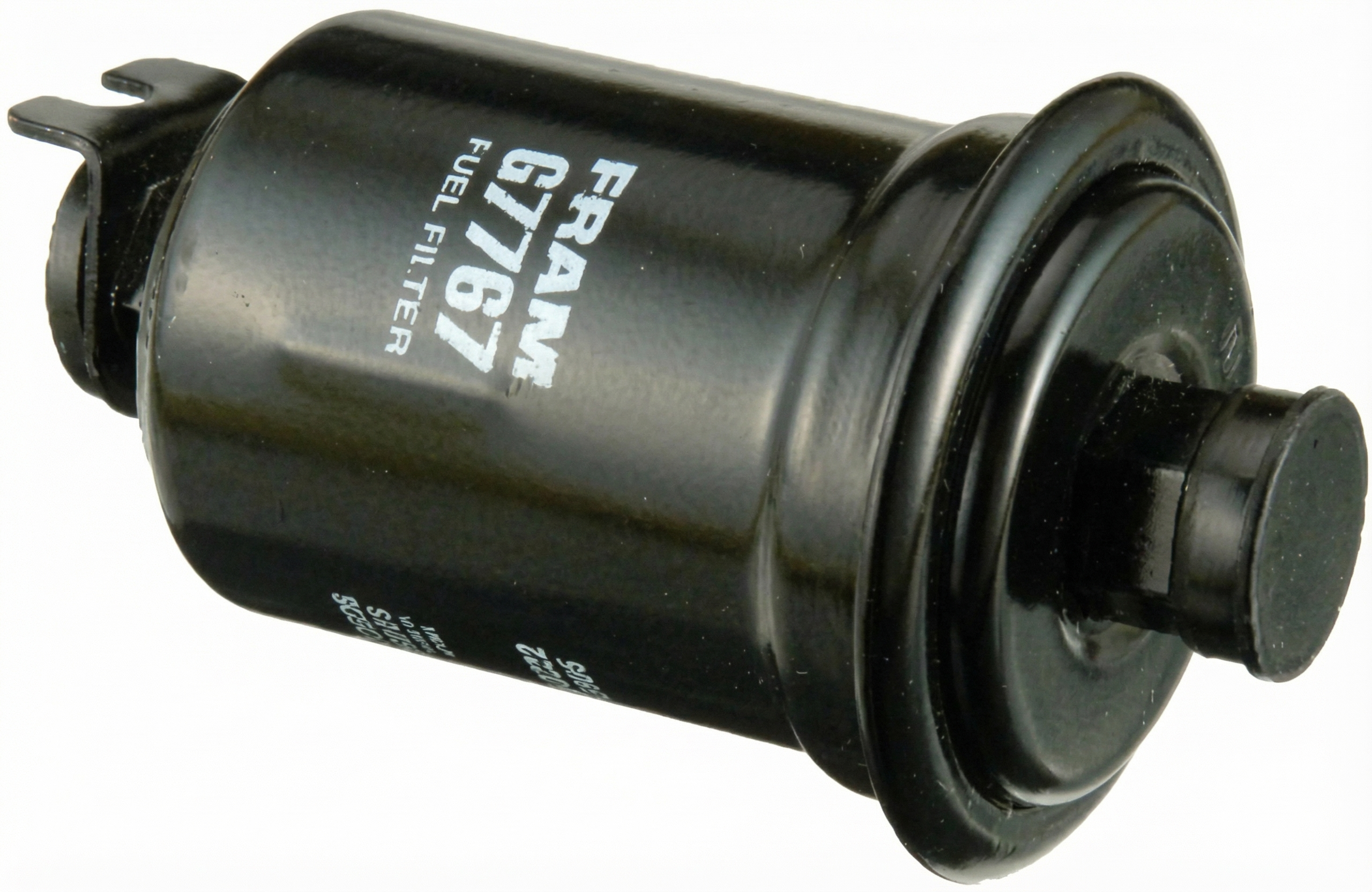
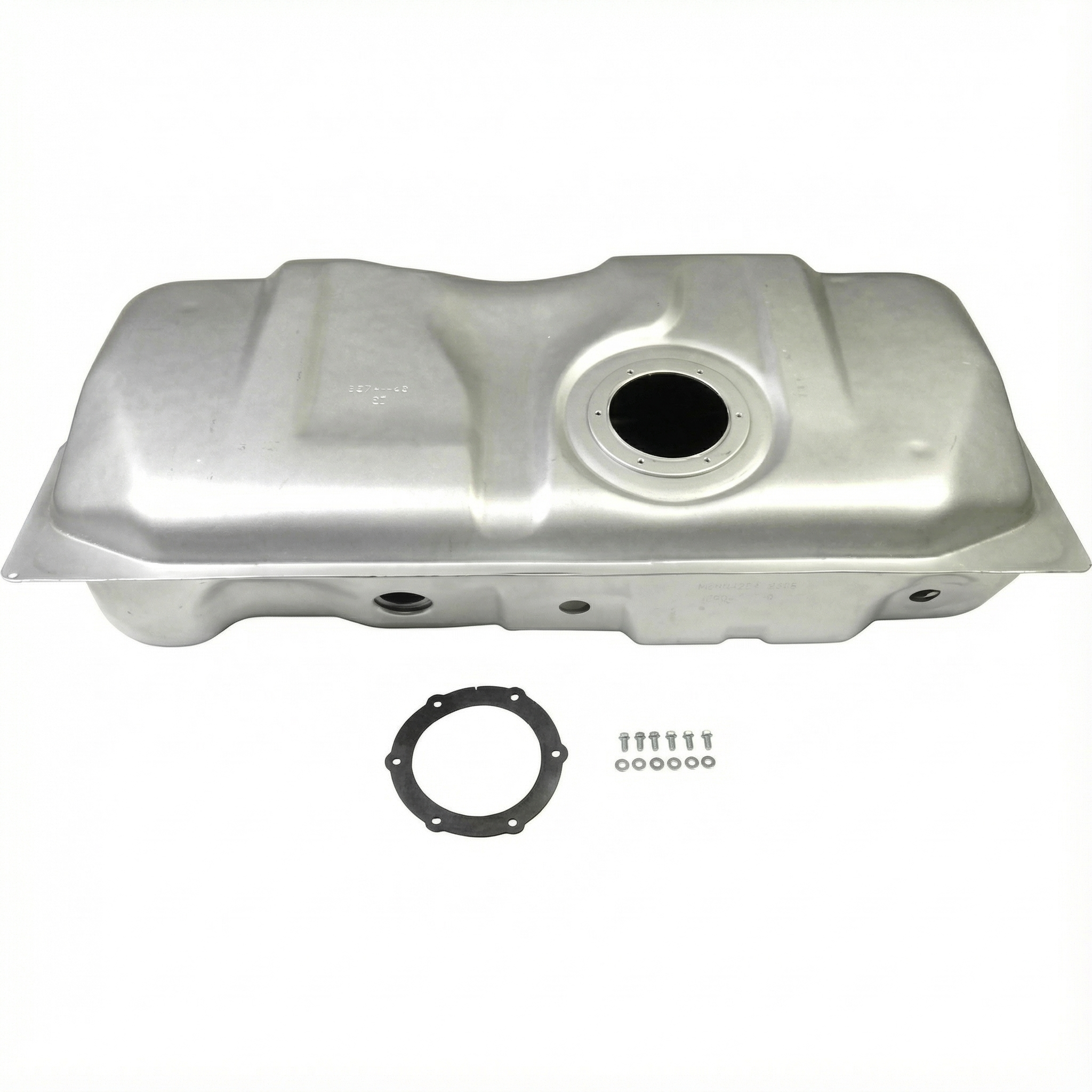
New Aftermarket Parts Available


The information in this article is provided for general reference and educational purposes only. Vehicle specifications, procedures, and part compatibility can vary by production date, trim level, and region. Always consult your vehicle's factory service manual and verify part numbers before purchasing or performing repairs. Safety-critical components such as airbags, seat belts, and braking systems should be installed by a qualified professional.
- Toyota Camry:
- 🧭 Diagnostic Flowchart
- 🎬 Helpful Videos
- 🛍️ Shop This Part
- What's Unique About the 2007-2011 Toyota Camry
- Symptoms You May Notice
- Most Likely Causes
- Rare But Worth Checking
- Diagnosis Steps
- Parts You'll Likely Need
- Related Codes That Often Appear With This One
- Technical Service Bulletins (TSBs) & Recalls
- Platform-Specific Known Issues
- Mechanic-Grade Diagnostic Values
- Scan Tool Commands That Help
- Wiring & Ground Locations
- Real Owner Repair Stories
- "I Checked Everything" — The Actual Cause
- Documented NHTSA Reports
- OEM Part Supersession History
- Model Year Variations Within This Range
- Other Known Issues on This Vehicle
- Used vs. New Parts: Buying Guide for This Vehicle
- Real Owner Stories
- 2012 Camry Hybrid
- 2009 Toyota Camry
- Related OBD-II Codes
- Frequently Asked Questions
- 🎟️ Get 5% Off